4 Shots From 4 Films is just what it says it is, 4 shots from 4 of our favorite films. As opposed to the reviews and recaps that we usually post, 4 Shots From 4 Films lets the visuals do the talking!
Today, we pay tribute to the year 1946. It’s time for….
4 Shots From 4 1946 Films
Beauty and the Beast (1946, dir by Jean Cocteau, DP: Henri Arinal)
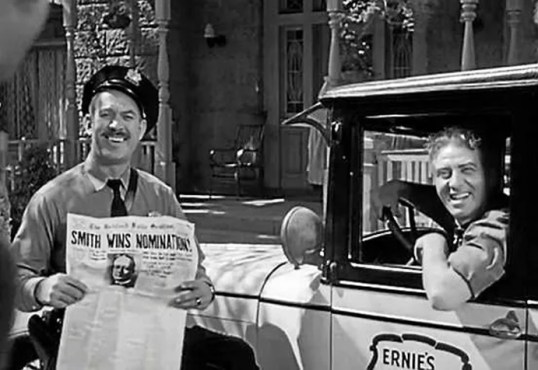
It’s A Wonderful Life (1946, dir by Frank Capra, DP: Joseph Walker and Joseph Biroc)
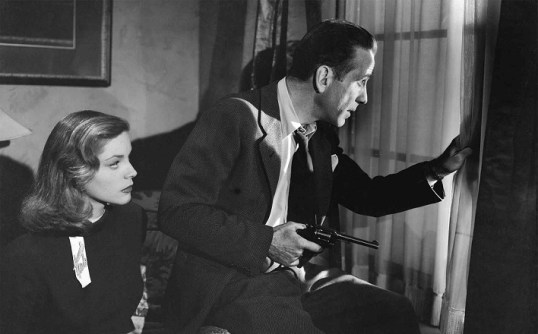
The Big Sleep (1946, dir by Howard Hawks, DP: Sidney Hickox)
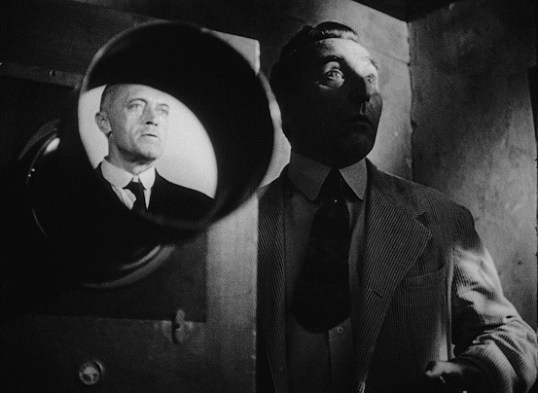
The Stranger (1946, dir by Orson Welles, DP: Russell Metty)
First released (after being delayed by the COVID lockdowns) in 2021, The God Committee tells the story of a group of doctors faced with a difficult decision.
They’re the so-called God Committee, the ones who have been tasked with deciding which one of their patients will be receiving a new heart. When the original “next name on this list” suddenly dies while being prepped for surgery, it comes down to three other possibilities. One is a cranky old woman who has said that she doesn’t even want a new heart. Another is a middle-aged, obese Black family man who suffers from bipolar disorder and who, years earlier, attempted to commit suicide. And finally, there’s a young white guy who is famous for his addictions and his wild lifestyle. He’s just arrived at the hospital, in critical condition. Normally, his history of cocaine addiction would rule him out as a possible recipient but his father (Dan Hedaya) is rich and the hospital is in desperate need of money.
“I’m not going to let a good heart go to waste,” the brilliant Dr. Andre Boxer (Kelsey Grammer) says and he has a point. Most candidates for a heart transplant die before a suitable heart is found. This heart, taken from a teenage boy was hit by a car while returning home from a date, is a good one but it won’t stay viable forever. Boxer, who is scheduled to leave the hospital in another month to set up his own private practice, is torn between the candidates. Dr. Valerie Gilroy (Janeane Garofalo) and Father Dunbar — a disbarred lawyer-turned-priest — both feel the heart should go to the patient whose father can afford to fund the hospital. Even if the decision is made just for the money, it’ll still do some good. Dr. Jordan Taylor (Julie Stiles), who is Dr. Boxer’s former lover, is not so sure. Psychiatrist Dr. Allen Lau (Peter Kim) recuses himself from voting for personal reasons and Nurse Wilkes (Patricia R. Floyd) eventually casts a vote that takes everyone by surprise.
While the God Committee debates who should get the heart, the film occasionally flashes forward. Dr. Boxer, who is now dying and in need of a heart transplant himself, is working on a project that, if successful, will revolutionize the organ transplant business. But will he survive long enough to see it completed? Dr. Taylor, now in charge of the God Committee, tracks him down and asks him if he’s ready to see his son. Though it takes a while for us to understand why and how, the decision that Doctors Boxer and Taylor made in the past will continue to have repercussions in the present.
The God Committee is based on a play. Even if I didn’t already know that, I would have guessed as much from watching the film. The God Committee is type of melodrama that tends to work better on stage than on film. The artificiality of the stage allows for a story to be a bit overbaked and heavy handed. On the other hand, as a film, The God Committee‘s arguments are stacked so heavily to one side that it weighs down the plot. It’s not enough for the rich candidate to be a former drug addict. He also has to beat his pregnant girlfriend and leave her with a roadmap of cuts crisscrossing across her face. It’s not for the good candidate to simply be a nice guy with a family. Instead, he’s presented as being almost saintly. There’s nothing subtle about it.
Fortunately, the talented cast steps up and keeps the story from going off the rails, with Julia Stiles, Colman Domingo, and Kelsey Grammer especially bringing some much-needed shading and nuance to their roles. Grammer especially does well as the genius who can save lives and change the world but who struggles to connect with anyone on an emotional level. In the end, The God Committee works due to the strength of its performers, all of whom bring their characters to multi-layered life and who remind us that it’s never easy to play God.
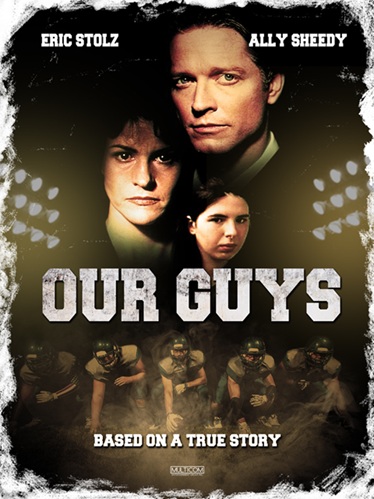
If there’s any true crime book that I recommend without hesitation, it’s Our Guys by Bernard Lefkowitz.
First published in 1997, Our Guys deals with a terrible crime that occurred in the leafy suburban community of Glen Ridge, New Jersey. In 1989, it was an affluent community that loved its high school football team and where conformity and financial success were the most valued qualities the someone could have. On March 1st, a 17 year-old girl was invited to a house party where, after she was convinced to head down to the basement, she was raped with a broomstick and a baseball bat by several members of the football team. The girl was intellectually disabled and was later determined to have an IQ of 64. Her name has never been revealed to the public. In his book, Lefkowitz assigned her the pseudonym of Leslie Faber.
The crime was terrible. So was the aftermath. When one of the witnesses went to a teacher with what he saw happen in the basement, the town responded by rallying around the accused. Initially, Leslie was accused of lying. Then, as it became clear that something actually had happened in that basement, Leslie was accused of bringing it on herself. Leslie, who was desperate to have friends and who was later determined to be psychologically incapable of saying “no” or even understanding what consent meant, was cast as a wanton seductress who led the members of the football team astray. A girl who went to school with Leslie even tape recorded a conversation with Leslie in which Leslie was manipulated into saying that she had made the entire thing up. It also undoubtedly didn’t help that some of the accused boys had fathers who were on Glen Ridge’s police force.
It’s a book that will leave you outraged. Lefkowitz not only examined the crime itself but also the culture of the town and its general attitude that “boys will be boys.” Despite the fact that they had a losing record and the fact that one of them was infamous for exposing himself every chance that he got, the football team was viewed as being made up as winners. They were allowed to party every weekend with their parties becoming so legendary that they bragged about them in their yearbook quotes. With a group of supportive girlfriends doing their homework for them, the football team was free to do whatever they wanted and, by the time they were seniors, they were infamous for being voyeurs. While one football player would have sex, all the others would hide in a closet and watch. When one of the football players stole $600 from one of his classmates, his father paid back the money and no one was ever punished. In a town that valued material success above all else and viewed being different as a sign of weakness, Leslie and her family were treated as being outcasts. In the end, three of the football players were sentenced to prison. One was sentenced to probation. A few others accepted plea deals and had their arrests expunged from the record. Years later, one of the guys who was in the basement but not charged would murder his wife while home on leave from the military.
In 1999, Our Guys was adapted into a made-for-television movie. Featuring Heather Matarazzo as Leslie, Ally Sheedy as the detective who investigated her rape, Eric Stoltz as the lawyer who prosecuted the case, and Lochlyn Munro as a cop who starts out on the side of the football team before realizing the truth, Our Guys simplifies the story a bit. While the book focused on Glen Ridge and the culture of celebrating winners no matter what, the film focuses on Sheedy as the detective and her disgust with the suburbs in general. Unfortunately, by not focusing on the culture of the town, the film presents the rape as being the bad actions of a group of dumb jocks as opposed to an expression of Glen Ridge’s contempt for anyone who was viewed as being on the outside. What Lefkowitz showed through a precise examination of the town and its citizens, the film quickly dispenses by having Stoltz and Sheedy make a few pithy comments about how much the town loves it football team. The story will still leave you outraged and Heather Matarazzo gives a heart-breaking performance as Leslie. But, for those wanting the full story of not only what happened in Glen Ridge but also how it happened, the book is the place to find it.
Toshiro Mifune is one of the all time great actors in the history of world cinema, and he’s also one of my personal favorites. Charles Bronson may sit alone at the top of Mt. Bradmore, but there’s a tier of actors just below him who I also obsess over. That tier includes people like Chow Yun-Fat, Clint Eastwood, Lau Ching-Wan, Roy Scheider, James Woods, Rutger Hauer, John Wayne, Jimmy Stewart and Toshiro Mifune. I have read voluminous books about Mifune, and I’ve collected so many of his Japanese films. His work with Kurosawa is amazing, but he’s also done impressive work with other great Japanese directors like Kihachi Okamoto, Masaki Kobayashi, and Hiroshi Inagaki.
It makes me so happy that Charles Bronson and Toshiro Mifune had the opportunity to make the enjoyable East meets Western, RED SUN, together. Although Mifune had more range than Bronson as an actor, they both had such a magnificent screen presence. And the one time they worked together, Bronson actually had the more showy role. Watching Bronson underplay his scalawag cowboy against the honorable samurai played by Mifune is a true delight to any person who appreciates macho cinema. Henry Brooks really hones in on their macho personas in his song “Toshiro and I” from his new musical, CHARLES BRONSON – More Than a Vigilante – THE MUSICAL. It’s my favorite song in the entire musical, and I’m glad to be able to share it on the legendary Toshiro Mifune’s 105th birthday! Enjoy!
Seriously, whenever you watch any of the movies that Leigh made early in her career, your heart just goes out for. She was always either getting stalked or getting abused or getting lost or struggling through a pregnancy scare. In Fast Times At Ridgemont High, she actually did get pregnant and had to go to the abortion clinic on her own after Mike Damone failed to keep his promise to be there for her. It doesn’t get quite as bad as that for her in 1981’s I Think I’m Having A Baby but she still has to put up with a lot.
In I Think I’m Having A Baby, Jennifer Jason Leigh plays 15 year-old Laurie, who is not only socially awkward but also has the worst haircut that has even been inflected on an otherwise attractive person. Laurie idolizes her older cousin, Phoebe (Helen Hunt). Phoebe is dating a lunkhead jock named Peter (Shawn Stevens). Phoebe does Peter’s homework for him and Peter complains that Phoebe won’t go beyond some mild making out in his car. That’s the kind of relationship that they have. On the night of his birthday, Peter and Phoebe have an argument at the outdoor party that Phoebe went out of her way to set up. Peter drives off in his car, little realizing that the shy Laurie is hiding in the backseat. When Peter notices Laurie there, he pulls over and starts talking about how difficult (cue a massive eye roll from me) his life is. By the end of the night, Peter has revealed himself to be a whiny jerk and Laurie is no longer a virgin.
Soon afterwards, Laurie starts to feel ill. Her nerdy best friend, Marsha (Samantha Paris), thinks that Laurie might have the flu. Laurie, however, fears that it’s definitely not the flu. When Laurie tells Peter that she thinks she might be pregnant, Peter freaks out. He tells her to take care of it and makes it clear that he has no interest in being a father. Marsha says that she can’t understand why anyone would want to have a baby. She announces that she’s never going to have one. Instead, she’ll just adopt a dog. That really doesn’t help out Laurie, though. Eventually, Marsha and Laurie head to the clinic to discover whether or not Laurie is actually pregnant.
Meanwhile, Laurie’s little sister, Carrie (Tracey Gold), makes the mistake of letting her pet rabbits all socialize with each other. Carrie learns a lesson about the importance of keeping a safety barrier between male and female rabbits. At school, the students smirk as Mr. Fenning (David Birney) ties to teach a sexual education class. One of the students is played by future Breakfast Club member Ally Sheedy, making her television acting debut by uttering a handful of lines. The ultimate message is that no one knows anything and all of the education that they’ve gotten so far has been inadequate.
It’s pretty heavy-handed and some of the acting is a bit less than award-worthy. (Samantha Paris shouts nearly every line that she has.) But Jennifer Jason Leigh gives a good performance as Laurie, perfectly capturing not only Laurie’s fear of being pregnant but also the sadness that comes from being painfully shy. Your heart breaks for her when you watch this film. If nothing else, hopefully Laurie realizes, by the time the end credits roll, that she can do far better than Peter. For that matter, so can Phoebe. While everyone has a bright future ahead of them, Peter is destined to spend the rest of his life wondering why he peaked at 17.
In this 1986 melodrama, Kate (Meredith Baxter) has a secret. She may look like healthy and young and blonde. She may have a beautiful house and a handsome husband (Ben Masters). She and her fitness instructor best friend (Shari Belafonte) may spend their time making fun of how fat everyone else. But deep down, Kate is convinced that she’s overweight. She gets on the scale and that declaration of 120 pounds feels like a slap in the face.
How does Kate lose weight? She exercises frequently. And she spends a lot of time staring at herself in the mirror, as if trying to mentally burn away the pounds. Mostly, though, Kate just binges on food whenever she gets stressed and then she throws up. Kate has a lot of reasons to be stressed and they are almost entirely due to her mother (Georgann Johnson), who rarely has a nice word to say to Kate and who constantly tells Kate that she’s going to lose her husband to his assistant (Leslie Bevis).
(Who does everyone always assume that assistants are going to be homewreckers?)
Now, to be clear, eating disorders are a serious thing. I know more than a few people who have had eating disorders. During my first semester of college, I got very used to the sound of the girl in the room next to mine throwing up every morning. There’s nothing funny about the idea of someone having an eating disorder. However, there is something funny about an overwritten movie about an eating disorder that features Meredith Baxter literally attacking a chocolate cake then blaming the mess in the kitchen on the dogs. This is one of those well-intentioned programs that takes a real problem and then goes so overboard in portraying it that it’s more likely to make you snicker than feel horrified. You might not feel good about laughing but the crazed look in Meredith Baxter’s cake-filled eyes will make it difficult not to. Hence, the term guilty pleasure.
As always happens in these type of movies, Kate ends up in a treatment center where a doctor (Edward Asner) tries to reach her and the other patients are all either extremely nice or extremely rude. Kate’s roommate (Tracy Nelson) is a model with anorexia. Another patient (Mindy Seeger) harps on Kate’s “perfect life.” Meanwhile, poor Deyna (Mackenzie Phillips) freaks out when someone moves the garbage can. It’s all very well-meaning but also very over-written and overacted to the point that, once again, it’s more likely to illicit a guilty laugh than anything else.
In the end, Kate realizes that it’s all her mother’s fault. That was kind of obvious from the first time her mother told Kate that her husband was obviously planning on leaving her. “I’m getting better,” Kate says as the credits roll. Yay, Kate!
The 2011 film, Reach Me, opens with a rapper named E-Ruption (Nelly) appearing on a morning show and talking about how, while he was serving a prison sentence, he read a self-help book called Reach Me. It asked him to consider whether or not his childhood self would be happy with his adult self. The book was written by a mysterious man named Teddy Raymond. No one knows who this Teddy Raymond is. He’s never appeared in public. People film themselves reading the book online and then upload to YouTube as a way of sharing Teddy’s wisdom. I honestly can think of nothing more annoying and boring than watching someone else read a self-help book but whatever. I live in Texas. The movie takes place in California.
Tabloid editor Gerald (Sylvester Stallone) takes a break from action painting to order one of his reporters, Roger King (Kevin Connolly), to track down Teddy Raymond. Roger wants to write the great American novel. He doesn’t care about self-help. He meets Teddy’s associates, Wilson (Terry Crews) and Kate (Lauren Cohan) and Wilson talks about how Teddy magically cured Kate’s stutter. Roger then wanders around the beach, asking random people, “Teddy Raymond? Are you Teddy Raymond?” Oh look! There’s a guy named Teddy (Tom Berenger) who reluctantly cures Roger of his smoking addiction by ordering Roger to yell at the ocean …. over and over and over again.
Collette (Kyra Segdwick) has just been released from prison. Reading Teddy’s book has inspired her to try to become a fashion designer. Collette’s daughter, Eve (Elizabeth Henstridge), is an aspiring actress who was earlier groped by a sleazy star named Keating (Cary Elwes). Collette and Eve literally crash their car into a car being driven by Wolfie (Thomas Jane), a sociopathic undercover cop who enjoys killing people and who goes to confession after every shooting. (At the start of the movie, he guns down Danny Trejo.) The alcoholic priest, Father Paul (Danny Aiello), refuses to hear any more of his confessions.
Meanwhile, wannabe mob boss Frank (Tom Sizemore) is upset because another mob boss, Aldo (Kelsey Grammer), doesn’t treat him with any respect. Frank sends two of his hitmen, Thumper (David O’Hara) and Dominic (Omari Hardwick), to kill a man who owes him money and to also shoot the man’s dog. Thumper has been reading Teddy Raymond’s book and doesn’t want to shoot the dog. Dominic realizes that his heart isn’t into the mob life so, taking the book’s message to heart, he calls Frank and says, “My heart’s not in it.”
(Don’t try that with any real mobsters.)
Eventually, all of the characters do come together. They don’t exactly come together in a plausible manner but they do all end up at the same location so let’s give the film credit for that. Let’s also give this film credit for leaving me seriously confused. I have no idea whether this film was meant to a parody or a celebration of the self-help industry. At first, I suspected that it meant to be a parody because all of Teddy Raymond’s advice was painfully shallow and the type of basic crap that anyone could come up with. I actually found myself losing respect for the people who claimed that Teddy had changed their lives. But at the movie progressed, I realized that I was supposed to take Teddy and his advice seriously. This was a film that I guess was meant to have something to say but who knows what exactly that was.
That said — hey, everyone’s in this movie! Director John Herzfeld was a former college roommate of Sylvester Stallone’s and, once Stallone agreed to appear, that apparently convinced a lot of other “name” actors to take the risk as well. There’s a lot of talent in this film but little of it is used correctly. Kelsey Grammer as an Italian mobster instead of the editor? Sylvester Stallone as the editor instead of the Italian mobster? Thomas Jane as a sociopath who has a girlfriend by the end of the movie, one who smiles and tells him, “Try not to shoot anyone?” Kyra Sedgwick as an ex-con? These are all good actors but just about everyone, with the exception of the much-missed Danny Aiello, is miscast.
It’s a true Icarus File. It was a just a little more self-aware, this would have been a Guilty Pleasure. But, in the end, self-help cannot help itself.
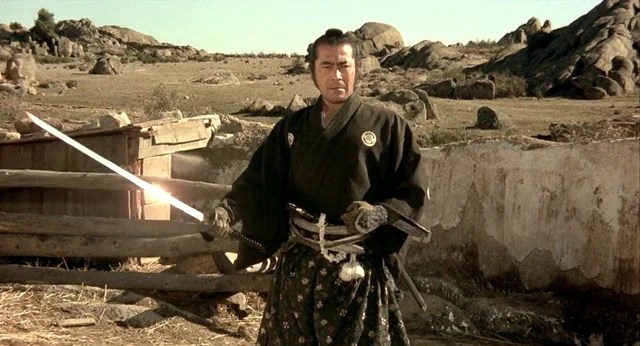
In today’s scene that I love, two icons of cinematic cool meet in 1968’s Hell In The Pacific.
In this scene, Lee Marvin comes across Toshiro Mifune on the island on which they have both crashed. There’s not much dialogue in this scene but, when you’ve got two actors like Marvin and Mifune, there doesn’t need to be much dialogue.
4 Shots From 4 Films is just what it says it is, 4 shots from 4 of our favorite films. As opposed to the reviews and recaps that we usually post, 4 Shots From 4 Films lets the visuals do the talking!
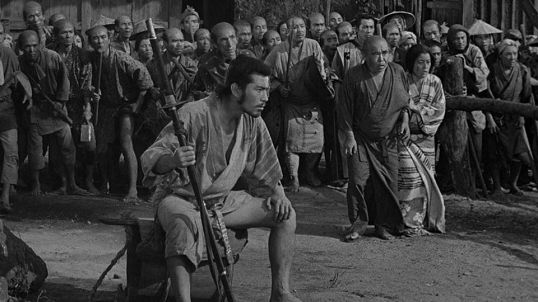
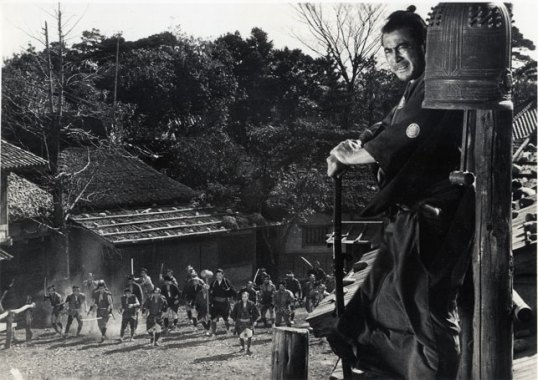
Today would have been the 105th birthday of the great actor, Toshiro Mifune. It’s time for….
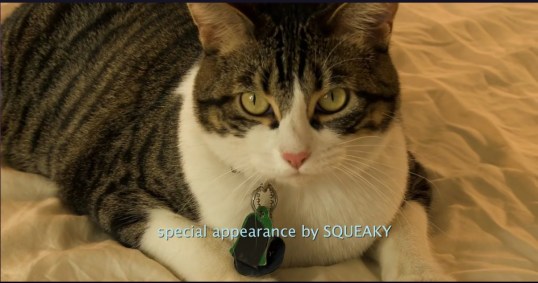
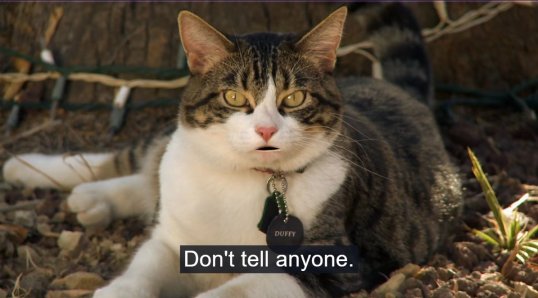
In 2009’s A Talking Cat!?, an adorable kitty named Squeaky stars as Duffy, a cat who can speak with the voice of Eric Roberts! It’s all due to a magic collar that Duffy is wearing. Not only do we hear Duffy’s thoughts but he can actually talk to people. He can only do it once per person and it’s not something that he really enjoys doing. He usually prefers to keep quiet and just inspire the humans with his cuteness but occasionally, the human are so dumb that Duffy has to speak up.
Over the course of A Talking Cat!?!, Duffy helps two families become one. Phil (Johnny Whitaker) has just retired from writing code and he has a huge home, a sullen son named Chris (Justin Cone), and too much free time on his hands. Chris has a crush on Fannie (Alison Sieke), who he is tutoring in English. Frannie obviously like Chris and enjoys swimming in the house’s pool but how will she react when she discovers that Chris doesn’t know how to swim? A few miles down, single mother Susan (Kristine DeBell) is trying to start her own company while her children, Tina (Janis Peebles) and Trent (Daniel Dannas), does their own thing. Tina wants to do something with computers. Trent is still struggling to find himself. He enjoys teaching people how to swim. Hey, Phil is a programmer! Chris needs to learn how to swim! Do your thing, Duffy!
Somehow, this film has gotten a reputation for being bad. Look, as far as I’m concerned, it features two really nice houses, an adorable cat, and the voice of Eric Roberts. It’s great! From what I’ve read, Eric recorded his dialogue over the course of a few hours. His somewhat cynical and world-weary voice is actually the way most cats would probably sound. Does his tone frequently not match what’s happening on the screen? Yes, but that’s a part of the film’s charm. Someone said, let’s get the cutest cat we can find and then have him speak in the voice of Eric Roberts. As far as I’m concerned, that’s all this film needed for it to totally work. Cats have been there. They’ve seen stuff. Cats are like, “Meow, things got dark!”
Thanks, Duffy!
Previous Eric Roberts Films That We Have Reviewed:







 Through the Shattered Lens