10 Reasons Not To Sit In A Theater Full Of Old People


This is the most difficult post I’ve ever had to write.

This is largely because I wore my glasses (instead of my contacts) last night because I knew I was going to be sleeping over at Jeff’s place.  Now, it’s the morning and we can’t find my glasses.  So, while he continues to search, I am sitting here trying to write despite being blind.  Seriously, as I type this, my face is less than half-an-inch away from Jeff’s monitor.  If I squint real hard, I can kinda sorta make out the letter-shaped blobs that are blinking in front of me.

In other words, there might be some typos in this post.  Sorry — I’ll correct them once I can see again.

This post came to me last night as we were watching the new Robert Duvall film Get Low at the Regal Keystone Park 16 in Richardson, Texas.  Get Low is a good movie and Duvall gives a brilliant performance but, from the minute we first found our seats, I realized that I was literally the youngest person in the audience. 

I suppose I should define just what exactly this article’s definition of “old” is.  Originally, I was thinking of old as being anyone who is older than me (that is, anyone born before 1985).  However, that would include Jeff, all three of my sisters, and just about every other contributor to this site.  So, I revised my definition. 

From now on, old is anyone over the age of 40.

With that cleared up, on to this list:

1) Old people never show up for the movie on time.  Seriously, the first 20 minutes of Get Low were pretty much dominated by fat old people wandering around in the dark, searching for a seat.  Considering that movies never actually start when they’re supposed to and even then there’s about 15 minutes worth of commercials and trailers, there’s really no excuse for being that late.  Beyond, I guess, the arrogance that comes from being old.

2) Old people are mean.  It’s true!  And who wants to sit in the dark with a bunch of mean people?

3) Old people reek of buttery popcorn and stale nachos.  Listen, I like popcorn and I like butter on my popcorn.  And I like nachos too though I prefer the real thing as opposed to the lukewarm American version.  And, sometimes, I’ll get some popcorn to eat during the movie.  That, in itself, is not a sin.  That’s just being American.  However, I don’t use popcorn as a substitute for any of the major food groups.  But my God — what is the deal with old people who come waddling into the theater late and, of course, they’ve got a giant tub of popcorn in one hand and a giant tray of nachos in the other.  And since they waddle, what that means is that every step they take means that popcorn is going to be flying everywhere.  And then, once they do find a seat, they seem to feel the need to shake their giant tub of popcorn every few minutes as if to remind the rest of us that they’ve got a giant tub of popcorn and we don’t.  I mean, seriously, it’s time that the obese old people of the world accept the fact that not everything has to revolve around them.

4) Many old people are obese.  Before anyone says anything, I don’t feel good about writing that.  Obesity is a legitimate health concern and it’s often more the result of low self-esteem than anything else.  If I had enough money to get every obese old person liposuction, I would.  But I don’t and it doesn’t change the fact that obese old people make it difficult to enjoy a night out at the movies.  Whether it’s the fact that it takes them forever to find a seat and sit down or just the fact that they remind me of death, the grotesquely obese can be an issue.

5) Old people can’t drive.  This is less an issue when you’re watching the movie but definitely a concern when you’re trying to leave the theater afterward.  I mean, I understand that cars worked differently back in the Middle Ages but  seriously, we’ve reached a point where the engine’s not going to explode just because you tap the accelerator a little.

6) Old people can’t hear.  I love movies that are full of twists and turns.  What I can’t stand, however, is when I have to listen to the person behind me explaining all those twists and turns as they happen just because her companion is too freaking stubborn to get a hearing aid! 

7) Old people always want to do the whole Roger Ebert thing.  By this, I mean that after the movie ends, old people always want to sit there and go, “I didn’t like that…” or “The plot was too predictable.”  Okay, good for you, you’ve got an opinion.  So do I.  But I, at least, try to express my opinions in an interesting way.  “That plot was too predictable.”  Seriously, with all your years of life experience, you can be more witty than that.

8 ) Old people make weird noises.  Seriously, if you have to clear your throat that many times, you should probably be at the ER instead of the movies.

9) Old people don’t respect your privacy.  Seriously, what me and a friend choose to do while the movie is playing is our own business.  Keep your eyes on the screen, you old perverts.

10) Old people create awkward situations.  Seriously, no disrespect is meant by this but if someone in the audience dies while the movie’s playing, what is my obligation here beyond calling 911?  Is it acceptable for me to then watch the rest of the movie once I’ve called 911 or would that be considered a faux pas on my part?  I mean, what if it’s a really good movie?
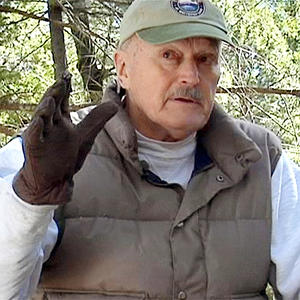
Film Review: Winnebago Man (dir. by Ben Stienbauer)


Yesterday, me and my sister Erin saw the documentary Winnebago Man at the Dallas Angelika.  The Angelika is absolutely my favorite theater in the entire world.  It’s also just about the only place in Dallas that you can see offbeat, out-of-the-mainstream movies like Winnebago Man.  Add to that, the Angelika is located right next to the Mockingbird DART rail station and it’s right next to the Townhouse Irish Pub.  There’s also a Virgin Megastore, an Urban Outfitters, and a Victoria’s Secret (among other stores) right next to the theater.  So, for me, a taking the train to see a movie at the Dallas Angelika is like a scaled-down version of one of those “shopping spree” montages that always seem to turn up in romantic comedies.  It’s like catch the train, shop for lingerie, see an art film, get drunk on Guinness, and then take the train back home.  What could be better?

Well, there is one problem with the Dallas Angelika and that is that it is located right next to Southern Methodist University.  For those of you who aren’t natives of Dallas, SMU is where the rich kids go to major in Business, Rohypnol, and youthful fascism.  Going to the Angelika means you’re always going to have the risk of having more than a few SMU toadsuckers and dumbfugs in the audience with you.  You can always spot them because they’re the ones who make it a point to laugh the loudest at the most obvious of jokes.  I guess it’s their way of trying to convince the rest of us that they actually are capable of semi-intelligent thought.

Quite a few of them were in the audience for Winnebago Man.  Erin and I were unlucky enough to attract the attention of two of them.  They sat down in front of us and, as we waited for the movie to begin, they turned around in their seats and asked us if 1) we lived nearby and 2) if we wanted to “hang out sometime.”  And while I’m certainly not a stranger to occasionally lowering my standards for the sake of a good time, I do have a problem with people who ask me if I want to “hang out,” as if I should just be so flattered to have the opportunity to be a part of their social circle.  So, I smiled and said, “No, but my sister’s available.”  Erin still hasn’t forgiven me.

Now, you may be wondering why these two idiots would have any interest in seeing a documentary not entitled Jackass or Girls Gone Wild.  Well, once the film started, it quickly became obvious that they (and most of the other SMU blackshirts in the audience) were fans of the original Winnebago Man video that inspired this documentary.  That video consists of outtakes of a man named Jack Rebney attempting to film a promotional video for Winnebago.  In the outtakes, Rebney continually forgets his lines, angrily curses, complains about the heat, and continually fights with an intern who, at one point, literally throws a towel at him.  An excerpt from the video can be found below:

Now, I have to be honest.  Up until I first saw the trailer for this documentary, I had never heard of the “Winnebago Man,” (also known as the Angriest Man In The World) and I’m almost as addicted to searching YouTube as I am to divulging TMI details of my life on twitter.  However, apparently, the Winnebago Man is one of the most popular videos on Youtube.  As director and narrator Ben Stienbauer explains in this documentary, a large part of the appeal of the Winnebago Man outtakes is that you’re literally seeing the worst day of Jack Rebney’s life.  Not only is he making a video promoting the Winnebago (or as I call them, Murdermobiles, because it’s impossible for me to imagine anyone other than a serial killer owning one) but he’s apparently doing it in the worst heat possible and getting attacked by flies as he does so.  It’s hard for the viewer not to relate his bad day to her own bad days.  However, what  really makes the video memorable is that Rebney doesn’t just quietly accept the heat, the flies, and the frustration.  Instead, he fights back in the only way he can — with constant variations on the “F” word.  Just watching the excerpts included in the documentary, I found myself wishing that I had simply told the two guys sitting in front of us, “Do me a kindness and fuck off.”

The documentary Winnebago Man beings with Ben Stienbauer telling us how he first saw the footage in the early 90s (in those pre-youtube days, it was apparently passed around on VHS tapes) and how the sight of angry, dehydrated Jack Rebney came to obsess both him and several other filmmakers.  Eventually, Steinbauer decides to try to track down Rebney (though he initially believes that there’s a good chance that Rebney’s dead) to find out what happened the day that infamous Winnebago video was filmed and whether or not Jack Rebney is indeed the angriest man in the world.

The first half of Stienbauer’s film is taken up with the search and for me, this is the best part of Winnebago Man.  Stienbauer makes for a likable protagonist and the aspiring detective in me loved watching as he explained, step-by-step, how he went about finding the elusive Jack Rebney. 

Even better, Stienbauer devotes a good deal of Winnebago’s Man first half examining why and how people become internet celebrities.  As Stienbauer correctly points out, most Internet celebrities are not known for being succesful.  Instead, they — like Jack Rebney — often become famous as a result of having something humiliating and degrading happen to them while being filmed.  One example that Stienbauer makes effective use of is the infamous “Star Wars” kid who became the most popular video on YouTube and ended up having a nervous breakdown as a result.  In many ways, Internet fame is the cruelest fame because not only is it a fame based on failure but the failure is usually very personal.   Stienbauer himself admits that there’s a certain morbidity behind his desire to find Jack Rebney.  He wants to see is Rebney has survived being known as the “Winnebago Man.”

Well, Stienbauer does find Jack Rebney and it turns out that Rebney has survived.  In his 80s, Rebney is nearly blind and lives an isolated existence in a cabin on a mountain.  Stienbauer finally visits his idol and discovers just who exactly the angriest man in the world really is.

For me, Winnebago Man is far less effective once Stienbauer actually finds Jack Rebney because it turns out that, in real life as opposed to in outtakes from a 20 year-old promotional video, Rebney is kind of a pain.  While Rebney first attempts to present himself as being a calm, rather mild man (in an attempt to counter his angry reputation), he soon starts to make regular phone calls to Stienbauer (all of which were, of course, recorded by the filmmaker) and gradually, he reveals his true self.

What is that true self?

Well, he’s kind of an asshole, to be honest.  He’s essentially an angry, incredibly boring old man who still can’t get over the fact that it’s not 1955 anymore.  When Stienbauer asks him what he wants to do with his Internet fame, Rebney says he wants to deliver a political message to everyone younger than him.  That message, by the way, is that Dick Cheney’s a crook.  Well, no shit.  Thanks for sharing.  Rebney doesn’t seem to get that my generation figured that out way before his generation did.  In the end, Jack Rebney just comes across as an angry old crank who wants to complain about the world being fucked up when he’s a part of the group that fucked it up in the first place. 

I mean, thanks for trying to tell me how to live my life but I think I’ll survive quite nicely without the advice.  Quite frankly, I don’t have much use for the Jack Rebneys of the world.

Winnebago Man is an interesting documentary that examines just what exactly it means to be famous in today’s world.  Though Jack Rebney himself eventually proves to be unworthy of such interest, the story of how Ben Stienbauer tracked him down and the “relationship” (it’s never exactly a friendship) that is created as a result is fascinating and thought-provoking.  I remained interested in Jack Rebney’s story even as I found myself wanting to ask him to do me a kindness and shut the fuck up.

Scenes I Love: Inferno


Inferno is Dario Argento’s 1980 sequel to Suspiria.  Inferno seems to bring out the extreme reactions in Argentonians — it’s either loved or hated.  I happen to love it.

Below is one of the film’s best known sequences, the one where Irene Miracle ends up taking a surreal swim through a basement.  To me, this sequence is almost Fulciesque in it’s dream-like approach (punctuated, of course, by one sudden grotesque shock at the end).  Lucio Fulci’s The Beyond, which is often compared to Inferno, featured a similarly flooded basement. 

Words of warning: This scene lasts 6 and a half minutes.  Also, the first few minutes are nearly ruined by Keith Emerson’s bombastic score.  Fortunately, once Miracle takes her fateful dive, Mr. Emerson is silenced.

6 More Wonderful Trailers


Here’s the latest installment of my series on some of my favorite grindhouse and exploitation trailers.

1) Death Has Blue Eyes — This is actually a really, really bad Greek movie, a movie that is not only generally incoherent but deadly dull as well.  Of course, some of my reaction has to do with the fact that I’ve only seen a scratchy, fuzzy version of it on an imported VHS tape.  This film is also known as The Para-Psychics but I think Death Has Blue Eyes sounds so much better, don’t you?

2) Massacre Mafia Style — I haven’t seen this movie and, unlike Death Has Blue Eyes, coming across the trailer didn’t fill me with any real desire to track it down.  I really don’t even care much for the trailer but I’m including it here because its just so over-the-top and violent.  How many people get killed over the course of this trailer?  I lost count.

\

3) The Boogeyman (1980) — This is actually a pretty good and atmospheric little horror film.  Not to be confused with the terrible Barry Watson movie that came out a couple of years ago.

4) The Pack — This trailer once again establishes that I am right to be scared of dogs.  According to my paternal grandmother, Joe Don Baker is somehow related to me but I’ve never been sure how.   I’ve always been more interested in just how exactly grandma became a Joe Don Baker fan.

5) Switchblade Sisters — One of the ultimate “girl gang” films and a perfect example of how a movie can both be grindhouse and feminist at the same time.  I love this movie.

6) Strange Behavior — Finally, let’s wrap up this installment with the trailer for one of the greatest film’s ever made, 1981’s Strange Behavior (a.k.a. Dead Kids).

Review: Piranha 3-D (directed by Alexandre Aja)


Yesterday, I had two concerns about going to see the new horror film, Piranha 3-D.

First off, I know that 3-D has been hailed as “the future of movies” and that apparently, Webster’s is considering whether to recognize 3Dgasm (which is the response that certain film goers have to 3-D regardless of whether the movie itself is actually good or if it’s just Avatar) for inclusion in the next edition of the dictionary.  However, 3-D often makes me sick to my stomach and I mean that literally.  3-D makes me feel car sick.  Considering that I love movies, if 3-D is the “future” than I’m probably being punished for something.  That’s right.  Avatar was just a result of my bad karma. 

As for the second concern, I can’t swim and I am terrified of being underwater.  Hanging onto the edge while wading in the shallow side of my uncle’s swimming pool is about as submerged as I can get without having a major freak out.  It’s not just drowning that scares me.   When I was 17, my family spent the summer in Hawaii and my sisters (being the meanies that they are) had a lot of fun with the fact that I’d spend hours lying out on the beach but I refused to even step into the ocean.  It made sense to me.  There were jellyfish and sharks and those weird little black coil things just floating around in the ocean.  Thanks to seeing Piranha 3-D, I now know that there are also cute little fish that will eat you.

I dealt with my fear of the water by asking my sister Erin (who can actually swim because she’s cool and I’m not) to see the movie with me and to keep me calm if I started to have a panic attack.  She agreed and she did an admirable job.  She also helped me deal with my fear of 3-D when, during the coming attractions, she said, “Why don’t you take a Dramamine?”  Now, according to Erin, the only reason she said this was because apparently I was “going on and on” about it.  That’s not how I remember it but I just happened to have some Dramamine in my purse and I quickly popped a few.

If you’ve ever taken Dramamine then you know the way that it works is by basically kicking your ass until you pass out for a few hours.  (I occasionally resort to using it whenever I’m getting hit with insomnia.)  Within minutes of taking it, the Dramamine was saying, “Sleep, Lisa…”  “But I want to see the movie,” I replied.  “That wasn’t a request,” the pill responded.  “Dammit, will you two shut up!?” Erin snapped.  (That may have not actually happened.) 

The point of all this is that I stayed awake through the entire movie, despite having taken the most powerful sleeping pill in existence.  True, my mind did go a little bit goofy (Erin says I was “babbling” through the entire film) but it never shut down.  That’s the type of movie Piranha 3-D is.  The story moves so quickly and the mayhem is so over-the-top and excessive that the brain never gets a chance to relax enough to check out.

Piranha 3-D begins with an earthquake in Arizona.  The earthquake opens up a passageway to an underground lake.  As look would have it, the underground lake is full of a bunch of prehistoric piranha.  These piranha quickly move up to an above-ground lake where they promptly eat Richard Dreyfuss.  Having gotten a taste of Dreyfuss, they apparently decide to eat every other human being they come across and who can blame them?

Actually, the bloody and graphic demise of Richard Dreyfuss was the first clue I had that this film was going to work.  Needless to say, Dreyfuss is the last surviving star of the original killer fish movie, Jaws.  In Jaws, Dreyfuss is plays a character named Matt Hooper.  In Piranha, he’s just named Matt.  By introducing him and then promptly killing him off, Piranha lets us know that it understands the legacy of previous horror blockbusters (like Jaws) but that it has no intention of respecting it.  In other words, this scene lets us know early on that the film is on the side of the fish.

Anyway, it turns out that its spring break and as a result, Lake Victoria, Arizona is full of stupid, drunken college students who are determined to hang out in the water no matter how many people get eaten.  Sheriff Julie Forrester (Elisabeth Shue) struggles to maintain order on the streets with the help of her loyal deputy (a very likeable Ving Rhames).  Julie is also a single mother and, the morning after ol’ Richard Dreyfuss gets devoured, her oldest son Jake (Steven R. McQueen, grandson of the star of Enemy of the People) blows off his baby-sitting duties and agrees to help sleazy Derrick Jones (Jerry O’Connell) film the latest installment of Girls Gone Wild on the lake.  Sleazy, speedo-clad Derrick (and the fact that O’Connell looks really good in it doesn’t make that red speedo any less ludicrous) attempts to initiate Kelly (Jessica Szhor), the “good” girl who Jake likes into the world of straight-to-video, jailbait porn.  Kelly, by the way, kinda has a boyfriend, a guy named Todd who will eventually end up killing a lot of people with a motorboat.  Even before this, we know he’s a bad guy because he’s named Todd.  Nobody named Todd or Tad is ever good in a horror movie.

Director Alexandre Aja doesn’t take much time introducing his cast of characters and he takes even less time in letting the fish devour them.  So, no, the characters aren’t exactly all that developed.  But it doesn’t matter really.  With what little they have to work with, the cast works wonders.  They know exactly what type of film that they’re in and they know why they are there and they embrace their roles as piranha fodder with an impressive sense of commitment.  Best of all is O’Connell who turns sleazy, coke-fueled egomania into some sort of art form.

The real star of the film, of course, is director Alexandra Aja who takes a mainstream genre piece and who, much like his fellow French director, Jean Rollin, transforms it into a piece of pure grindhouse exploitation.  Aja may use the clichés of the genre but he never blindly embraces them.  Instead, he uses them to comment on both the genre and the audiences expectations of what those cliches mean.  Aja takes everything we’ve come to expect — the blood and gore, the standard plot device of Shue’s children being stranded out on the lake, and the sudden death of nameless extras — and he then pushes them just a little further than the audience is expecting,  As a result, he not only comments on those expectations but he forces the audience to question them as well.

This is never more apparent than in the film’s climatic piranha attack.  This is when the piranha finally get around to attacking all of the swimmers at once.  This is the scene that we all know is coming and that we’ve all been expecting and Aja does not disappoint.  Things start out as you might expect.  Close-up of bikinis.  Drunk idiots in the water.  A wet t-shirt contest.  Rhamas and Shue come up in a boat and start yelling, “Everybody out of the water!”  Because they’re a bunch of drunk dumbfugs, everyone responds by jumping into the water.  Cut to an ominous piranha point-of-view shot.  Suddenly, one woman — floating out in an inntertube — shouts, “Something bit me!”  And suddenly, all Hell breaks loose.

This is the scene you knew was coming and you’ve seen it a hundred times before.  What makes it memorable here is just how far director Aja takes things.  These fish don’t just bite their victims.  They literally devour them while the camera lingers over every piece of flesh that floats through the ocean.  As everyone struggles to get out of the water, they get their skulls split open by passing boats.  In the background, we see various feet, hands, and other body parts randomly floating in the water.  One older man pulls his friend’s torso onto the beach and cradles it while screaming, “I love you, man!  I love you!”  As Shue tries to pull people out of the water, we see a teenager that’s already on the boat start to shake as his life expires.  As I mentioned before, Todd tries to escape by forcing his motorboat through the crowd of terrified swimmers and graphically dismembers a lot of people in the process.  It’s an incredibly graphic sequence, one that starts out as fun but which just keeps going and going,  Director Aja understands that the audiences is expecting — probably even looking forward to — seeing a little blood.  So, instead he assaults us with a lot of blood and he does so in such a way that the audience is forced to question why a little blood is fun but a lot of blood is disturbing.  It’s as if Aja is saying, “You wanted to see people die, well — here they are, dead.  You feel better now?”

As for the 3-D, Aja proves himself to be one of the few filmmakers to understand that 3-D is not the future of movies.  It’s just another gimmick to be exploited and exploit it he does.  However, he does so brilliantly and he is so shameless about it that watching Piranha 3-D simply serves to reiterate just how silly the whole 3-D craze really is.  Every short is a tracking shot.  The CGI piranha float across the screen, stopping momentarily to stare straight out at the audience and almost wink.  The men in the audience seemed to be especially happy about all the boobs that literally seem to swing out of the screen and across the theater but they were a bit less enthused when a disembodied penis came floating out of the screen.  By not only fully embracing the ludicrous possibilities of 3-D but by also doing so without any shamefaced attempts to justify its use, Piranha 3-D is perhaps the greatest 3-D movie ever made.

Scenes I Love: Two Orphan Vampires


Sometimes, I feel that there are only two types of people in the world.  There’s the minority who appreciate the dreamlike atmosphere and sensual obsessions that dominate the vampire films of French director (and genius) Jean Rollin.

And then there’s the majority who don’t.  We refer to this majority as being “the idiots.”

As for me, Jean Rollin is one of my favorite directors.  I’ve previously reviewed his low-budget masterpiece, Night of the Hunted, on this site.  I hope, in the future, to review even more of his films.

For now, I’d just like to share a scene from one of his later films, the hauntingly beautiful and elegiac Two Orphan Vampires. 

Rollin is a director best known for spending the past five decades making films in which he continually and obsessively returns to a few key themes: the importance of memory, a nostalgia for the innocence of youth mixed with the knowledge that youthful innocence could also be destructive, a fascination with the beach, an obvious love of architecture (Rollin films old castles the way that an American director might film an action sequence), and — most notoriously — the use of two female protagonists who are usually portrayed as possessing a very strong, sister-like bond even though it’s rare that they actually are blood-related. 

A good deal of Rollin’s current following comes from men who feel that there’s an erotic element to Rollin’s portrayal of female friendship.  And to an extent, they’re right.  But to an even greater extent, it doesn’t matter.  Regardless of why the relationships between Rollin’s protagonists exists, the important thing is that they are portrayed as sharing an unbreakable bond.  Whether they’re linked by lust, friendship, or just memory, Rollin’s women are bonded by a very true, very real love and that’s what makes his movies special to me.

This is what the scene below is all about.  The two orphan vampires of the title are two teenage sisters.  During the day, they are blind but when the sun goes down, they can not only see but they become vampires as well.  Two Orphan Vampires is a surprisingly sad and haunting look at their attempts to survive in a world that has no place for them.  In the scene below, after failing in several attempts to get the blood they need to continue to live, each sister resorts to drinking the blood of the other.  To me, every thing that Rollin had directed before was leading up to this scene.

(This scene is also prototypical Rollin in that the budget is obviously low, the actors are more than adequate but, at the same time, are obviously not professionals, and the English dubbing is poorly done.  And yet the scene itself — especially when seen in the larger context of both the entire film and Rollin’s movies as a whole — is actually more sincere and memorable than the majority of what is produced by the mainstream.  In short, this is pure Rollin in that you either get it or you don’t.)


Rooney Mara as Lisbeth Salander?


It’s official.  The role of Lisbeth Salander in the thoroughly unnecessary and borderline insulting American remake of The Girl With The Dragon Tattoo will be played by Rooney Mara.

It’s hard for me to say how I feel about this casting.  When I first heard about it, my initial thought was, “Who’s that and how could she be better suited for the role than Jena Malone?”  However, after talking to Arleigh, I realized that I actually do know Rooney Mara.  She was the lead in another remake, this year’s Nightmare on Elm Street.  In that movie, Mara was a likable presence but she was no Lisbeth.  Then again, woman like Lisbeth Salander — independent women who refuse to be solely defined as either a good virgin or a bad whore — don’t appear in slasher films.  What is important is that Mara has proven she can carry a film.  She hasn’t proven that she can carry The Girl With The Dragon Tattoo.

Then again, considering just how iconic a figure as Lisbeth has become (both in the original novel and in the original film) it’s probably for the best that director David Fincher went with an unknown.  Rooney appears to be a talented young actress but she’s got a very difficult job ahead of her.

It’s probably not a coincidence that Rooney also has a small role in Fincher’s upcoming film, The Social Network (which is going to suck, by the way).  It’s possible that Fincher saw something in Rooney that she hasn’t been allowed to show the rest of the world.  Me, I’m just happy that if there is going to be an American version of Lisbeth Salander, at least she’s going to be played by an Irish-American.  At heart, Lisbeth is as Irish as a Swede can get.

(Though again, the ideal Irish-American to play Lisbeth would have been and still is Jena Malone.)

As I’ve stated before, I have mixed feelings about the remake of the Girl With The Dragon Tattoo.  (And yes, it is a remake regardless of what they’re saying over at Awardsdaily.com.)  On the one hand, the entire literary Millenium Trilogy (of which The Girl with the Dragon Tattoo was the 1st part) is one of the best recent works of pop cultural fiction.  Lisbeth Salander is destined to be an iconic noir figure.  On a personal note, even though she’s ultimately just a fictional character, she is a fictional character who has provided a great deal of strength and hope to abuse survivors (such as myself).  When we read about her and her refusal to allow herself to be victimized or to be dependent on even as well-meaning a man as Mikael Blomkvist, the book’s nominal hero, Lisbeth Salander becomes the vehicle for our own wish-fulfillment fantasies.  She is a character who transcends the page to become a role model in real life as well.  In many ways, she is the 21st century version of Scarlett O’Hara.  Scarlett gave hope to aging Southern belles.  Lisbeth gives hope to bipolar neurotics like me.  And much as everyone couldn’t wait to see Scarlett on-screen, a lot of us couldn’t wait to see Lisbeth on-screen.

And that is the biggest hurdle that director David Fincher and Rooney Mara are going to face with this much-hyped remake of The Girl With The Dragon Tattoo.  We’ve already seen Libseth onscreen and, in our mind’s eye, she’s not Rooney Mara.  Instead, she’s Noomi Rapace.  Both Fincher and Mara have a difficult task ahead of them.  Not only do they have to meet the expectations of the people who have read the original novel, they have to exceed the expectations of the people who have seen the original Swedish film.

And that, to me, is the issue that is being avoided, the proverbial Elephant in the room.  For all the wannabe, internet-based film critics who are currently gleefully devouring any crumbs of information concerning Fincher’s production, nobody has yet to answer the question as to why this film needs to be made at all?  (Beyond the obvious fact that there’s money to be made…) 

I found it interesting that, at the end of the EW article concerning Mara’s casting, it is mentioned that the film is set to begin filming in Sweden.  Why exactly?  Hasn’t a film about a girl with a dragon tattoo who helps a smug journalist investigate a disappearance in Sweden already been made?  It would seem that the “American version” has little to offer beyond offering up a fantasy Sweden where everyone speaks English and those viewing the film are freed from having to try to read subtitles and rattle their jumbo tubs of popcorn at the same time.  Or are we just sending David Fincher over to Sweden because we think we’ve got a thing or two to teach the nation that gave us Ingmar Bergman?

It’s easy to find a lot of people trying to convince themselves that this film is a guaranteed classic.  (“I’m so happy they cast Robin Wright!” they exclaim.  “I usually hate remakes but with David Fincher aboard, I’m looking forward to this,” another one will say.  And, of course, my favorite: “This movie is not a remake!”)  But nobody seems to be willing to address just why exactly we would need a new Lisbeth Salander when she’s already been created to perfection by Noomi Rapace.

Seriously, both Rapace and Lisbeth deserves better.

For that matter, so does Rooney Mara.

Film Review: The Expendables (Dir. by Sylvester Stallone)


I know that I really should have hated The Expendables.  For one thing, it’s a very, traditional, let’s-blow-up-Eric-Roberts-and-save-the-damsel-in-distress action film.  Storywise — well, there really isn’t a story beyond a bunch of inarticulate, muscle-bound men blowing shit up.  The Expendables is perhaps the most hyper-masculine film since Avatar, the type of movie that was obviously not made with anyone possessing a brain or a vagina in mind. 

In short, the Expendables is the type of mainstream, action movie that — based on everything I’ve ever written on this site — I should have hated.  But you know what?  I didn’t hate it.  I’m not saying that I loved the movie (because I certainly did not) but on the whole, The Expendables is a fun movie and sometimes, that’s more than enough.

The Expendables are a group of mercenaries, led by Sylvester Stallone and Jason Stathan.  They are, of course, the best at what they do.  They must be as their existence is apparently a well-kept secret despite the fact that they all have prominent Expendables tattoos and all they drive motorcycles covered with colorful Expendable decals.  So, the question is — can you accept the fact that the movie tells us the Expendables are a secret even though they clearly would never be able to pull that off in real life?  If the answer is yes, read on.  And if the answer is no, please don’t ever talk to me because you probably lack a proper appreciation for the absurd.

Anyway, The Expendables are hired by Mr. Church.  Mr. Church is played by Bruce Willis who, in his very short scene, manages to chew up more scenery than a termite in heat.  (That’s a lot of scenery.)  Mr. Church wants the Expendables to go to a poor, island nation and overthrow the military dictator.  Or something like that.  To be honest, I never really figured out what the exact mission was other than it involved blowing a lot of shit up. 

Oh, I nearly forgot to mention that Eric Roberts is on the island too.  He’s a bad guy.  You know he’s a bad guy because he’s always stopping the action to tauntingly explain his evil plans.  (It also helps that he’s played by Eric Roberts.)  Roberts is a bit of let down as a villain and its hard not to feel that his performance was basically made up of deleted scenes from The Dark Knight.  Then again, in Roberts’ defense, he’s having to compete with memories of Jason Patric playing a similar character in The Losers.

If Roberts’ villain is disappointing, the Expendables themselves are played well enough.  While Sylvester Stallone is hardly a great actor, he knows how to play an action hero and he brings just the right mix of self-aware parody and self-righteous fury to his role.  His second-in-command is played by Jason Stathan who displays something resembling charisma for the 1st time in his odd film career.  The other Expendables don’t get much to do beyond deliver a few quirky lines of dialogue and blow stuff up.  One of them is played by Jet Li who dominates his few scenes even though he doesn’t really get to do much.  Another Expendable is played by the Old Spice Guy who, according to Wikipedia, is actually a pro-athlete named Terry Crews.  However, all of the Expendables appear to enjoy hanging out together.  You get the feeling that they had a good time making this movie and, as a result, you feel almost guilty for worrying about stuff like logic or ambiguity.

The main selling point of The Expendables is that it apparently features every single action star in existence.  Even Arnold Schwarzenegger gets to make a largely pointless cameo and deliver the film’s worst one liners while, in real life, the state he’s supposed to be running descends further and further into financial doom.  While I recognized Stallone, Stathan, Willis, Roberts, Mickey Rourke, and Jet Li, apparently everyone else in the cast used to be someone at some point as well.  Luckily, I saw this movie with my friend Jeff who got very excited as he explained to me who everyone was and why their presence on-screen was making all the men in the audience so positively giddy.  To be honest, I think I probably actually understood a little less than a fourth of the information that Jeff provided me with but he was so incredibly cute trying to explain it all.

(I imagine I probably gave him the same look that he gave me when I attempted to explain Sex and the City 2 to him.)

As I explained at the start of this review, the Expendables is not, technically, a good film but it is a lot of fun.  As opposed to the Avatars of the world, the Expendables is a movie that is at peace with what it is.  There’s no attempt to try to fool the audience into thinking that they’re seeing a work of art.  There’s something to be said for that type of honesty, especially when you consider that we’re approaching that time in the film season when every movie is going to be marketed as a sure-fire Oscar contender.

And if the film is a hyperactive overload of testosterone — well, it is what it is.  After sitting through hundreds of films based on books by Nicholas Sparks, all featuring Miley Cyrus, Emma Roberts, or Amanda Seyfried haunting the beach all to win the love of some sensitive lifeguard eunuch, there’s something undeniably appealing about watching a bunch of guys acting like guys.  Zac Efron might have the heart and soul of poet but can he blow shit up?

And Then There Were Six More…


I recently came to the realization that my destiny is to list and share 666 of my favorite grindhouse and exploitation film trailers.  Previously, I’ve shared 12.  Here’s 6 more.

Part One and Part Two of my trailer survey can be found here.

1) Liquid Sky — Have you seen Liquid Sky and if the answer is no, why not?  Liquid Sky is one of the great underground films of the early 80s, an epic about drugs, aliens, bisexuality, and performance art.  Quite simply put, you must see this movie.

2) Blacula — When I first saw this trailer, my first thought was, “Oh, that is sooooo wrong.”  But, the movie actually isn’t that bad.  William Marshall is wonderfully dignified and haunted as the tragic title character.

3) Bio-Zombie — I haven’t actually seen this movie but I love this energetic trailer (and the Hello Kitty reference, as well).

4) Martin — This trailer for George Romero’s vampire movie features the film’s star, John Amplas, speaking to the audience in character.  Martin is one of the unacknowledged great vampire movies.  Supposedly, there’s a remake in the works which, needless to say, is not necessary in the least.  The original is more than good enough.

5) Near Dark — Speaking of vampire movies, here’s Near Dark.  Before Kathryn Bigelow won an Oscar for The Hurt Locker, she made her debut with Near Dark.  Of the two, Near Dark is the better film.

6) Rabid — This is an early David Cronenberg film and probably one of his first stabs at being a “commercial” filmmaker (I would have to ask R-Lee for sure on this as he’s the resident Cronenberg expert).  The late Marilyn Chambers plays a young woman who gets infected with rabies and proceeds to spread the disease throughout Montreal.  As you might expect with a Cronenberg film, the Canadian government quickly turns fascist and a lot of Canadians die as a result.  The movie’s not totally succesful but the trailer is.  As a sidenote: in 2004, Marilyn Chambers Taylor was the vice-presidential candidate of the Personal Choice Party.  I cast my first vote ever for her.

Scenes I Love: Scum of the Earth


You know how there are certain scenes in certain movies that you just can’t get out of your mind?  Below is one of my favorites, the infamous “you’re damaged goods and this is a fire sale!” monologue from Herschell Gordon Lewis’s 1963 expose of the Hollywood smut trade, Scum of the Earth.