Scenes That I Love: President Merkin Muffley in Dr. Strangelove


Since today is Presidents Day, my scene that I love features one of my favorite fictional presidents!  In this scene from 1964’s Dr. Strangelove, President Merkin Muffley (Peter Sellers) attempts to explain why something funny might happen with the bomb to his Russian counterpart.

Sellers reportedly based President Muffley on Adlai Stevenson, the self-styled “rational intellectual” who twice ran for President against Dwight Eisenhower.

Ah, Eisenhower.  There’s a President that I wish I could have voted for.

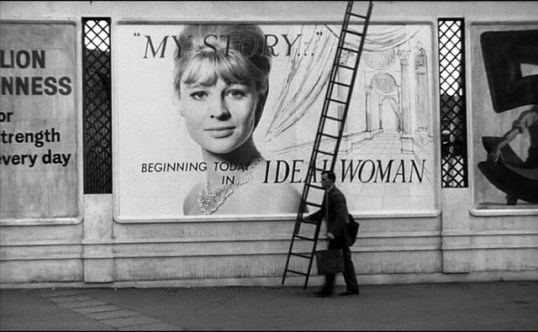
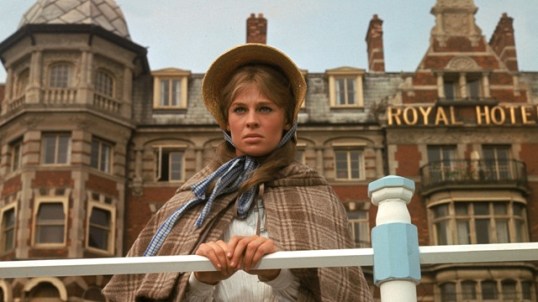
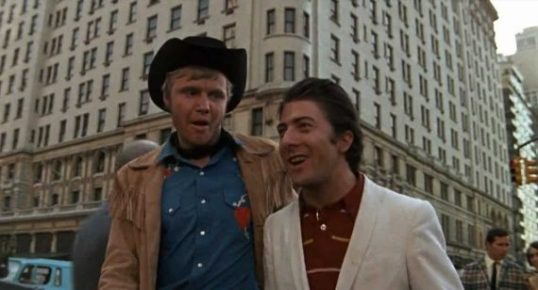
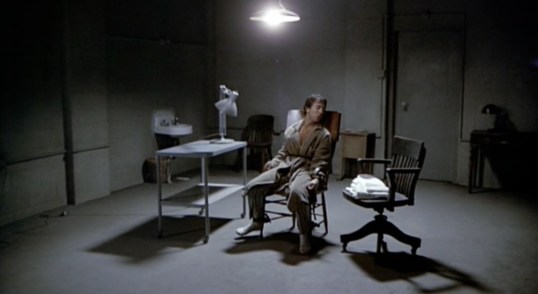
4 Shots From 4 Films: Special John Schlesinger Edition


4 Or More Shots From 4 Or More Films is just what it says it is, 4 shots from 4 of our favorite films. As opposed to the reviews and recaps that we usually post, 4 Shots From 4 Films lets the visuals do the talking!

Today would have been the birthday of director John Schlesinger.  It’s time for….

4 Shots From 4 John Schlesinger Films

Darling (1965, dir by John Schlesinger, DP: Kenneth Higgins)

Far From The Madding Crowd (1967, dir by John Schlesinger, DP: Nicolas Roeg)

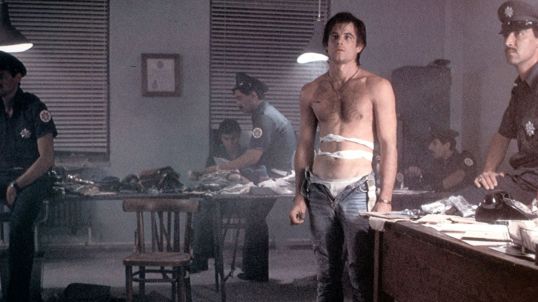
Midnight Cowboy (1969, dir by John Schlesinger, DP: Adam Holender)

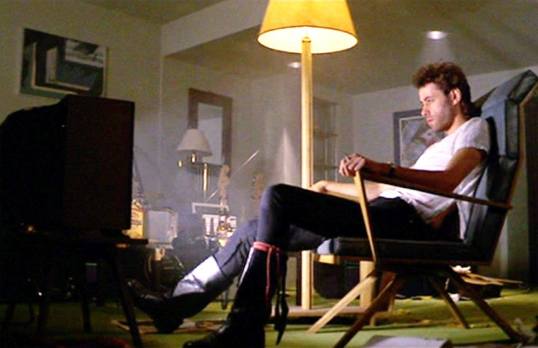
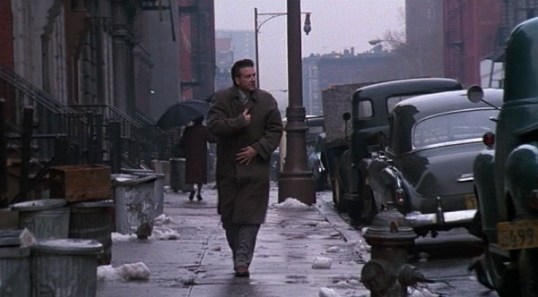
Marathon Man (1976, dir by John Schlesinger, DP: Conrad Hall)

Monday Live Tweet Alert: Join Us for Programmed To Kill!


As some of our regular readers undoubtedly know, I am involved in hosting a few weekly live tweets on twitter and occasion ally Mastodon.  I host #FridayNightFlix every Friday, I co-host #ScarySocial on Saturday, and I am one of the five hosts of Mastodon’s #MondayActionMovie!  Every week, we get together.  We watch a movie.  We snark our way through it.

Tonight, for #MondayActionMovie, the film will be 1987’s Programmed To Kill!

It should make for a night of fun viewing and I invite all of you to join in.  If you want to join the live tweets, just hop onto Mastodon, pull up Programmed To Kill on YouTube, start the movie at 8 pm et, and use the #MondayActionMovie hashtag!

Enjoy!


A Late Tribute To Bud Cort


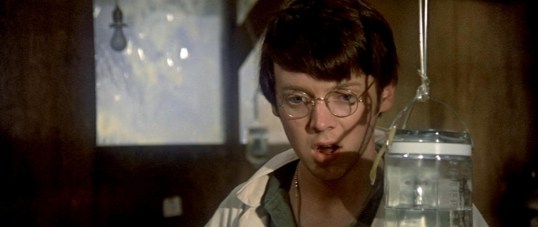
Bud Cort died on February 11th, at the age of 77.  He was a beloved character actor, one who had a real skill for bringing eccentric characters to life.  He became a star briefly with films like Brewster McCloud and especially Harold and Maude but Hollywood never really knew what to do with him.  After he was nearly killed in a car accident in 1979, his momentum stalled.  Smart directors still cast him because he always gave good performances but he spent most of his career in small roles.  (In Heat, he was the obnoxious restaurant manager who drove Dennis Haysbert back into a life of crime.)

When Cort died, most of the stories focused on his performance in Harold and Maude.  That was understandable.  That said, I’ve always been touched by Cort’s performance in 1970’s MASH and I wanted to take a moment to just express how wonderful I thought he was in the role of Private Boone.

Though he had previously appeared in two earlier films, Cort got an “introducing” credit for his role in MASH.  He played Boone, a usually quiet corpsman who speaks with a slight stutter.  When a patient in Post-Op develops complications, Major Frank Burns (Robert Duvall) tells Boone to get a cardiac needle.  Boone obviously isn’t sure what Burns needs but Burns snaps at him to get it.  When Boone comes back with a needle, the patient has already died.  Burns calls Boone an idiot for getting the wrong needle.  Burns offers to get a nurse.  “It’s too late, Boone,” Burns says, motioning at the dead man, “you killed him.”  Burns walks away as Boone, a look of shock on his face, tries not to cry.

And I have to admit that I want to cry with him.  It’s one of the more shocking scenes in Altman’s film and it works because of not only Robert Duvall’s memorably nasty turn as Burns but also Bud Cort’s emotional vulnerability of Boone.  Boone, who is in Korea because he was drafted, has not only seen a man die but he’s been told that he’s responsible.  With just the slightly cocking of his head and the sniffling of a young man who doesn’t want to cry on duty, Bud Cort shows us just how devastated Boone is.

And, of course, Boone was not responsible.  Trapper John (Elliott Gould) takes one look at the patient’s chart and sees that it was Burns’s own incompetence that is to blame.  When Trapper punches out Burns, it’s a cathartic moment.  The only thing you regret is that Boone wasn’t in the room to see it.

That was Bud Cort’s big moment in MASH, though he appears throughout the film.  Indeed, if you watch carefully, there’s a subplot in which Boone starts dating one of the nurses and eventually becomes much more confident in himself.  We don’t know much about Boone but we do see that he’s become a member of the gang.  Unlike Burns or David Arkin’s Sgt. Vollmer, Boone is accepted by the inhabitants of the Swamp.

He even gets to attend the mock suicide of Painless..  Reportedly, Boone’s line of “You’re throwing away your whole education,” was improvised on the spot by Bud Cort.

Ah, Bud Cort.  Rest in peace, you wonderful actor.

Retro Television Review: Homicide: Life on the Street 4.22 “Work Related”


Welcome to Retro Television Reviews, a feature where we review some of our favorite and least favorite shows of the past!  On Sundays, I will be reviewing Homicide: Life On The Street, which aired from 1993 to 1999, on NBC!  It  can be viewed on Peacock.
Oh my God, this episode….

Episode 4.22 “Work Related”

(Dir by Jean de Segonzac, originally aired on May 17th, 1996)

At first, the fourth season finale of Homicide: Life On The Street feels like a typical episode of Homicide.

Lewis, having just returned from his honeymoon, obsesses on a case in which a man was killed by a bowling ball dropped from an overpass.  Kellerman doesn’t feel that the case can be solved.  The murder was just too random.  Lewis, however, refuses to let it go.  As Kellerman soon deduces, Lewis doesn’t want to go home because he and his new wife are already fighting.

Meanwhile, Bayliss is frustrated by Pembleton’s refusal to act like a sentimental new father.  While Bayliss talks about the wonder of life, Pembleton coldly talks about how expensive it’s going to be to raise a child.  It’s the typical Bayliss/Pembleton dynamic.  Bayliss wants his partner to open up.  Pembleton wants to keep things strictly business.  Bayliss wants to find the deeper meaning of every event.  Pembleton wants to remain rational and focused on doing his job.  They’re both spiritual men, in their way.  It’s just that Bayliss is a seeker whereas Pembleton is a man on a mission.

Bayliss and Pembleton investigate a shooting at a fast food restaurant.  It doesn’t take much of an investigation to realize that the shooter was a recently fired employee and that his accomplice was a friend who still worked there.  When Pembleton and Bayliss get the friend into the box, it seems like it’s going to be an easy investigation.

That’s until Pembleton suddenly yells out, grabs his head, and has a violent seizure.  He collapses into the lap of a venal defense attorney who quickly shoves Pembleton away.  Pembleton is rushed to the hospital.  He’s had a stroke.  The rest of the Homicide squad sees a comatose Pembleton lying in bed.  But the viewer has seen the inside of Pembleton’s mind, where Pembleton is currently lying in a coffin and screaming to be released.

Agck!

I knew this episode was coming.  Ever since I started reviewing Homicide, people have told me about the stroke episode.  That said, it still took me by surprise when Pembleton collapsed.  Pembleton has always been the strongest character on the show, the one who never lost control and whose mind could unravel any alibi and solve any mystery.  Pembleton crashing to the ground, helpless and unable to speak, was not easy to witness.  Andre Braugher was a great actor and he proved it in this episode.

That was how the fourth season ended, with Pembleton lying in a hospital bed and Giardello trying to keep the squad focused on doing their job while Bayliss — poor Bayliss! — found himself once again trying to understand the cruelty of fate.  It was powerful, it was disturbing, it was sad, and I think it was the type of thing that only a show as good as Homicide could have pulled off.

Next week, we begin season 5.  I’m almost scared to see what happens.

Late Night Retro Television Review: Saved By The Bell 1.12 “The Mamas and the Papas”


Welcome to Late Night Retro Television Reviews, a feature where we review some of our favorite and least favorite shows of the past!  On Saturdays, I will be reviewing Saved By The Bell, which ran on NBC from 1989 to 1993.  The entire show is currently streaming on Prime and Tubi!

This episode, a select few are getting married.

Episode 1.12 “The Mamas and the Papas”

(Dir by Don Barnhart, originally aired on November 11th, 1989)

For a class project, the students are all spending a week seeing what it’s like to be married.  What’s odd is that there are only three couples despite the fact that there are a bunch of other students in the class.  Basically, six people are taking part in the project and the rest of the class is just there to watch.  That sounds like an incredibly boring week for the rest of the class but whatever.

Zack has been paired up with Kelly.  Slater has been paired up Jessie.  Lisa has been paired up with Screech.  When Lisa complains about having to be Screech’s wife, Mr. Belding says that the couples were selected alphabetically.  However, if that were true, Screech Powers would be married to Jessie Spano and A.C. Slater would be married to Lisa Turtle.  Seriously, Mr. Belding’s a liar.  How much did Screech pay him?

Lisa starts to twitch violently whenever Screech is near.  When Screech announce that he’s moving into her bedroom, she nearly has a seizure and, quite frankly, I don’t blame her.  This is a terrible class project.  Because the project is putting Lisa’s health at risk, she is allowed to annul her marriage to Screech.  Yay!  Instead, she is reassigned to be Slater and Jessie’s daughter while Screech becomes Zack and Kelly’s son.  When Kelly sees how negatively Zack reacts to being Screech’s father, she wonders if he’s the man to whom she wants to be fake married.

The stuff with Kelly and Zack and Lisa and Screech is pretty dumb.  Slater and Jessie is where the action’s at.  This is the first episode to really establish that Slater is a sexist pig and the Jessie is a straw feminist.  Jessie wants to keep her maiden name.  Jessie wants to have a job outside of the home.  Jessie feels that she should be an equal partner in the marriage.  What’s funny is that I agree with Jessie on all of these matters and yet I still laughed whenever Slater said, “Oink oink, baby.”  That’s largely due to the fact that Jessie was written to be so strident and shrill that her feminism and her politics often felt rather performative.  Slater may have been a chauvinist but at least he was honest about it and he was loyal to his friends.  Plus, he was cute.  (It’s high school, folks.  People are shallow in high school.)

This episode ends with Jessie apologizing to Mr. Belding for not being able to make her marriage to Slater work.  Belding says that sometimes, two people just aren’t meant to be together and there’s no shame in that.  (As a child of divorced parents, I always appreciated the fact that this episode was honest about the fact that not every marriage can be saved.)  Zack and Kelly’s marriage survives, at least until the project ends.

This episode …. actually, it really wasn’t that bad.  By the standards of Saved By The Bell, it was actually one of their better episodes.  As a general rule, the more time that is spent with Jessie and Slater fighting, the better the episode.  Still, forcing Lisa to marry Screech …. that’s just mean.

Lisa Marie’s Week In Television: 2/8/26 — 2/14/26


The Winter Olympics (All week, Peacock and NBC)

I wrote about Korey and Cory this week.  On Tuesday, I watched as they won the Silver Medal in a match with Sweden and I have to admit that I was depressed for the rest of the day.  That’s nothing against the Swedish team.  They did a good job and they earned the win.  It’s just that I had gotten so invested in Korey and Cory that it was hard for me to accept that 1) it was over and 2) it ended with them coming in second.

I’ve watched the Olympics off-and-on since then but I have to admit none of the other athletes have really captured my attention the way that Korey and Cory did.  I do like our hockey teams, because they’re all blue collar and they don’t talk badly about my country.  Our skiers appear to be a bunch of spoiled rich kids.

I’ll definitely rewatch the figure skating.

Also watched and reviewed:

  1. Baywatch (Tubi)
  2. CHiPs (Prime)
  3. Decoy (Tubi)
  4. Degrassi: The Next Generation (Tubi)
  5. 1st & Ten (Tubi)
  6. Freddy’s Nightmares (Tubi)
  7. Highway to Heaven (Tubi)
  8. Homicide (Peacock)
  9. The Love Boat (Paramount Plus)
  10. Miami Vice (Prime)
  11. Pacific Blue (Tubi)
  12. Saved By The Bell (Tubi)
  13. Saved By The Bell: The New Class (Prime)
  14. St. Elsewhere (Daily Motion)

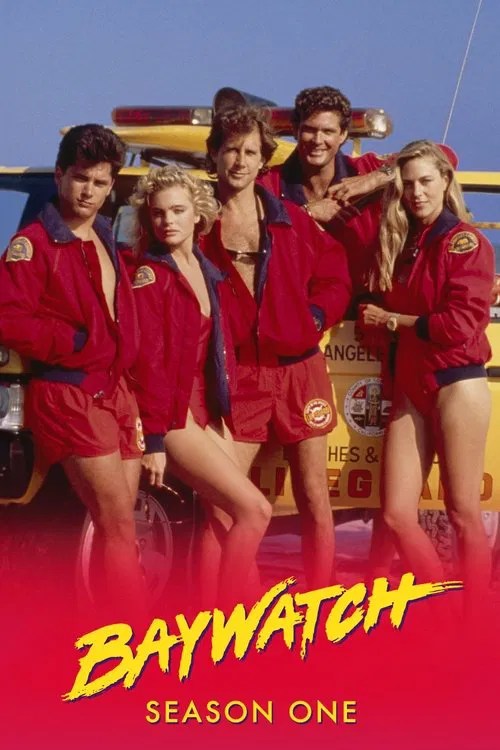
Retro Television Review: Baywatch 1.13 “Home Cort”


Welcome to Retro Television Reviews, a feature where we review some of our favorite and least favorite shows of the past!  On Saturdays, I will be reviewing Baywatch, which ran on NBC and then in syndication from 1989 to 2001.  The entire show can be viewed on Tubi.

This week, we meet John D. Cort.

Episode 1.13 “Home Cort”

(Dir by Paul Schneider, originally aired on January 12th, 1990)

There’s a new lifeguard on the beach!

His name is John D. Cort (John Allen Nelson) and he’s a former Navy SEAL with a dark and mysterious past.  He drives a motorcycle.  He wears a cowboy hat.  He has a quick smile.  He’s dangerous and he’s now a member of the cast.  I’m going to guess that he was added to bring some mystery to the show.  Originally, Eddie Kramer was supposed to be the dangerous lifeguard with the mysterious past but Billy Warlock was just too earnest and young to really pull that off.  John D. Cort, on the other hand, is at least 40.

Now, I said that Cort was the “new lifeguard on the beach.”  That’s not quite true.  It turns out that he’s actually an old lifeguard who was a friend of Mitch’s and Craig’s.  In fact, it’s insinuated that their friendship is legendary amongst the lifeguards.  Of course, no one’s ever mentioned Cort before but whatever.  Baywatch was never exactly known for its continuity.

Cort says that he’s returned to the beach so that he can work as a lifeguard for ten days and keep his eligibility.  Actually, he’s been hired to retrieve a mysterious package that’s at the bottom of the ocean.  He recruits his old friend, Sam (Bruce Fairbairn), to take him out into the ocean so that he can retrieve the package.  However, an explosion costs Sam his life and forces Cort to deal with the fact that someone wants him dead.  Who wants Cort dead?  Some guy named Jack Burton (Drew Snyder).  Why does he want Cort dead?  Who cares?  I got bored with the whole thing so I missed his motive.  I could go back and find out but, as far as I’m concerned, if the answer was worth knowing, I wouldn’t have gotten bored the first time around.  The story is really just an excuse to introduce Cort.  At the end of the episode, he inherits Sam’s surf shop and makes peace with being a regular member of the cast for at least the rest of the season.

As for the B-plot, Shauni and and Jill go into business selling sandwiches on the beach!  They take a lot of business away from crooked sandwich hustler Buddy Semple (played by George Clooney’s future production partner, Grant Heslov).  Buddy reacts by hiring two women in bikinis to hand out his sandwiches.  That’s the entire plot.

Oh, this episode.  I’ll be so happy when the first season of Baywatch is over with and the show fully and cheerfully embraces the stupidity of its concept.  Until then …. welcome to the beach, John Cort!

4 Shots From 4 Films: Special Alan Parker Edition


4 (or more) Shots From 4 (or more) Films is just what it says it is, 4 (or more) shots from 4 (or more) of our favorite films. As opposed to the reviews and recaps that we usually post, 4 (or more) Shots From 4 (or more) Films lets the visuals do the talking.

82 years ago, on this date, the late director Alan Parker was born in London.  One of the many British directors, like the Scott brothers and Adrian Lyne, who began by directing advertisements, Parker went on to become a director known for both his intense visual style and his revolutionary use of music as a storytelling device.  It’s time for….

4 Shots From 4 Alan Parker Films

Midnight Express (1978, dir by Alan Parker, DP: Michael Seresin)

Fame (1980, dir by Alan Parker, DP: Michael Seresin)

Pink Floyd — The Wall (1982, dir by Alan Parker, DP: Peter Bizou)

Angel Heart (1987, dir by Alan Parker, DP: Michael Seresin)