Retro Television Review: The Elvira Show


Welcome to Retro Television Reviews, a feature where we review some of our favorite and least favorite shows of the past!  This Thursday, I will be reviewing the unaired pilot for The Elvira Show, which was produced in 1993.  The show can be found on YouTube!
Episode 1.1 “Pilot”

(Dir by Peter Bonerz, never aired)

Elvira, the Mistress of the Dark (Cassandra Peterson), is living in the small town of Manhattan, Kansas. She lives with her eccentric aunt Minerva (Katherine Helmond) and their black cat, Renfield (voice of John Paragon). Renfield can speak, but only witches like Elvira and Minerva can hear him. Renfield has a sarcastic personality, as all cats do. Elvira makes her living by telling fortunes and selling love potions. No one in the small town ever seems to notice anything strange about her, despite the fact that she’s… well, she’s Elvira. She’s the Mistress of the Dark. She’s also very funny. Though this pilot never even aired, it’s a wonderful showcase for Peterson’s comedic timing. She’s one of those performers who can make even a weak or predictable joke funny.

Over the course of the pilot, Elvira’s niece Paige (Phoebe Augustine, who later had a small but pivotal role on Twin Peaks) shows up on her doorstep and explains that she’s been sent to live with Aunt Elvira and Great-Aunt Minerva. At first, Elvira and Minerva worry that Paige appears to be “normal.” She says that she likes to clean and study. But when Paige overhears Renfield talking, they realize she’s a witch as well. They’re definitely going to need Paige’s powers because Elvira has accidentally cast a spell on an undercover police officer and now the rest of the cops are coming. “You’ll never take me alive, coppers!” Minerva shouts, just because she’s always wanted to say it.

The show, with its talking cat and its two eccentric aunts, definitely brought to mind Sabrina the Teenage Witch, which would go into production three years after the Elvira pilot was filmed. That said, the presence of Elvira and her unapologetic way with a double entendre definitely gave this pilot a feel of its own. It was a good pilot, even if it seemed like the frantic pace would be difficult to maintain over an entire season. I’m surprised it didn’t lead to a series.

The pilot may not have led to a television series, but it’s now on YouTube for everyone to watch and enjoy.

The Adventures of a History Nerd: Sitcom by Chuck Lorre


What happens when a successful but somewhat self-important television producer gets it into his head that he’s the modern-day equivalent of Robert Evans?

He ends up writing a memoir like Sitcom.

Now, don’t get me wrong. Chuck Lorre has both produced and written for a number of shows that were very successful. In his book, he admits that old-style network sitcom is pretty much a dying breed, so one should be prepared to give him some credit for being one of the few people around still finding consistent success with the format. As I read his book, I was amazed to be reminded of just how many shows he was involved with, one way or another. Of course, he was also involved in quite a few shows that were not successful. (As of right now, the true secret of his success seems to be doing nostalgic period spin-offs based on The Big Bang Theory.) Lorre’s habit of posting “vanity cards” at the end of his shows is either brilliant or annoying, depending on how you look at it. He includes a few of his favorite vanity cards in his memoir, and none of them are particularly profound. But, as long as I’m posting random Thoughts on the Culture, who am I to judge? Part of being a successful writer is truly believing that people really want to know your thoughts and opinions on every little thing.

That said, his book is kind of a strange read. He discusses each of his shows but doesn’t really go into much detail beyond complaining about the people he worked with. On Twitter, everyone’s already discussed his bizarrely dismissive (and frustratingly vague) comments about Anna Faris. Throughout the book, he promises to tell us the story of his widely publicized feud with Charlie Sheen, but he really doesn’t. He gives us some details, but he doesn’t really dig too much into any of it, and what he does share isn’t anything that isn’t already well-known. (Wow, did you know that Charlie Sheen has addiction issues?) He also promises to tell us how he and Charlie Sheen reconciled, but again, he really doesn’t. Instead, one gets the feeling that they just magically stopped being mad at each other. Maybe that’s what happened; I don’t know. I’ve noticed that guys have a strange ability to just get over things. Reading the book, it becomes apparent that it’s not just actors who Lorre has issues with. Almost everyone who has ever worked with him—from producers to other writers—is portrayed as being duplicitous. He criticizes his father for being a Republican. He criticizes his mother for even existing. There’s an old saying: If everyone you meet is a jerk, then you’re the jerk. Lorre’s even a bit rude to the few people he does like. Melissa McCarthy may be a good actress, but did you know that she owes her entire career to Chuck Lorre?

This is the sort of thing that Robert Evans was able to pull off while he was alive. That’s because, deep down, Robert Evans seemed to understand that he was playing the role of Mr. Hollywood. Reading Lorre’s book, one gets the feeling that he takes himself way too seriously. Yes, he’s the guy behind the goofy shows like Two and a Half Men and The Big Bang Theory. He’s also the guy who helped to produce The United States of Al and Mom, two of the most depressing sitcoms ever made. (Mom had its moments, but, speaking as someone with ADHD, I’ve never quite gotten over Allison Janney’s character having to see a therapist just because she got diagnosed with something that I’ve successfully navigated my entire life.)

That said, I am a history nerd, and Sitcom does provide a reminder of some of the shows that, for better or worse, shaped our current culture. If nothing else, Chuck Lorre will probably be remembered as the last network sitcom impresario. His book shows how much things have changed over just the past twenty years. Today, multi-camera sitcoms with live audiences and laugh tracks feel like an artifact from a soon-to-be-forgotten age.

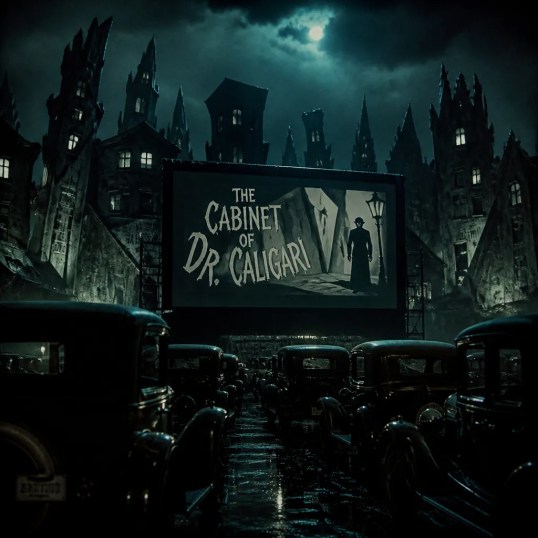
Bonus Horror on the Lens: The Cabinet of Dr. Caligari (dir by Robert Wiene)


The Cabinet of Dr. Caligari is a film that I’ve shared many times previously on the Shattered Lens.  The first time was in 2011 and then I shared it again in 2014, 2015, 2016, 2017, 2018, 2019, 2020, 2021, 2022, and 2024!  Well, you know what?  I’m sharing it again because it’s a classic, it’s Halloween, and everyone should see it!  (And let’s face it — it’s entirely possible that some of the people reading this post right now didn’t even know this site existed in any of those previous years.  Why should they be deprived of Caligari just because they only now arrived?)

Released in 1920, the German film The Cabinet of Dr. Caligari is one of those films that we’ve all heard about but far too few of us have actually seen.  Like most silent films, it requires some patience and a willingess to adapt to the narrative convictions of an earlier time.  However, for those of us who love horror cinema, The Cabinet of Dr. Caligari remains required viewing.  Not only did it introduce the concept of the twist ending (M. Night Shyamalan owes his career to this film) but it also helped to introduce German expressionism to the cinematic world.

My initial reaction to The Cabinet of Dr. Caligari was that it simply wasn’t that scary.  It was certainly interesting to watch and I was happy that I was finally experiencing this film that I had previously only read about.  However, the film itself was obviously primitive and it was difficult for my mind (which takes CGI for granted) to adjust to watching a silent film.  I didn’t regret watching the film but I’d be lying (much like a first-year film student) if I said that I truly appreciated it after my first viewing.

But you know what?  Despite my dismissive initial reaction, the film stayed with me.  Whereas most modern films fade from the memory about 30 minutes after the end credits,The Cabinet of Dr. Caligari has stuck with me and the night after I watched it, I even had a nightmare in which Dr. Caligari was trying to break into my apartment.  Yes, Dr. Caligari looked a little bit silly staring through my bedroom window but it still caused me to wake up with my heart about to explode out of my chest.

In short, The Cabinet of Dr. Caligari passes the most important test that a horror film can pass.  It sticks with you even after it’s over.

For the curious with an open mind to watch with, here is Robert Wiene’s The Cabinet of Dr. Caligari!

Enjoy!

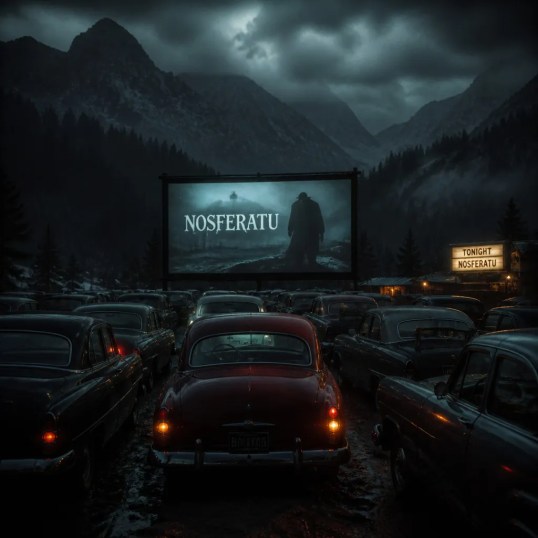
Horror on the Lens: Nosferatu (dir by F.W. Murnau)


Today’s Horror on the Lens is a classic film that really needs no introduction!  Released in 1922, the German silent film Nosferatu remains one of the greatest vampire films ever made.  It’s a film that we share every October and I’m happy to do so again this year!

Enjoy!

Lisa Marie Reviews The Amazing Race 39.6 “A Fine Line Between Confidence And Stupidity”


Watching last night’s episode of The Amazing Race, I realized that I’ve just about had it with Riley and Ann-Marie.

Everything about them just strikes me as being fake. Yes, they’re big fans of teams working together and, every episode, we get at least one self-righteous monologue about running the race the right way and not being mean. But I can’t help but notice that, for the most part, when Riley and Ann-Marie say, “Let’s work together,” what they really mean is “Help us.” As well, the whole “Boss Lady Alliance” thing would be a lot more impressive if they weren’t constantly finishing at the back of the pack. When you look at how well Ann-Marie and Riley work together and also at how athletic the two soccer players are, you have to really wonder if maybe they’d be doing better if they concentrated on running their own race instead of worrying about an alliance that Ann-Marie and Riley decided to start because they had some time to kill in an airport. (To me, the best part of last night’s episode was Ann-Marie and Riley insisting that the back six teams should all work together at the intersection and then leading everyone to the wrong location.) It seems that every episode will feature at least one clip of Riley bragging about being a Marine, one clip of Ann-Marie bragging about how nice they are, and one clip of them briefly getting frustrated because they think they deserve more help than they’ve been given. I don’t care how much they chant “BLA,” this is a race. No one is watching this show to see people work together. We’re watching to see them compete.

On the other hand, Matt and Michelle are regularly presented as being this season’s villains, just because they’ve rejected the whole “Let’s help each other!” thing. But Matt and Michelle are consistently finishing in first place and they’re working well together, so really, it seems like they’ve found what works for them. When Matt said that he wasn’t good at working in a group, I wanted to cheer. Some people just aren’t group people. Erin and I have often joked about going on The Amazing Race. If we did, we wouldn’t help anyone.

Actually, we probably would help Doug and Dylan. They’re nice and I felt bad for them at the Intersection, when the teams actually were required to work together and no one wanted to work with Doug or Dylan. (The fact that Dylan and Erin ended up finishing the task relatively quickly was very satisfying.) Doug and Dylan were the last to arrive at the pit stop but, fortunately, this was the first non-elimination leg of the race. Yay!

Here’s how everyone finished tonight:

Matt and Michelle came in first and Daisha and Dalton came in second. They did it by running their own race and not following someone to the wrong location. Matt and Michelle also used their express pass. (For some reason, it didn’t register with me that they were lying when they earlier told Anuar and Andrea that they had already used it. So, I was genuinely surprised.)

Conner and Garrett, my favorite team, used their express pass and came in third. Conner and Garrett are a good example of how to be nice without being obnoxiously self-righteous about it.

Anuar and Andrea came in fourth. They’re proving to be a much stronger team than I expected.

Erin and Javi managed to come from behind and come in fifth. They’ve struggled with consistency but they do work well together.

Ann-Marie and Riley came in sixth and Ali and Joanna came in seventh. Again, for all the talk about being boss ladies, it’s been a while since either team has had a really strong finish.

And finally, Doug and Dylan came in last but yay! Non-elimination!

At the end of this episode, the teams flew to Sri Lanka and met Phil on a beach, where he announced that it was time for the teams to vote for who would get hit with the dreaded Double U-Turn! We ended on a cliffhanger but I would be surprised if Matt and Michelle don’t get U-turned. Hopefully, they’ll survive.

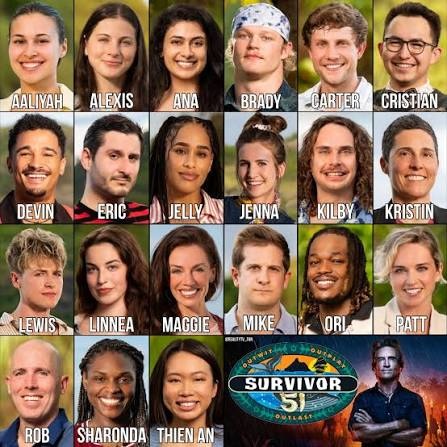
Lisa Marie Reviews Survivor 51.6 “I Love Crying”


This episode was entitled “I Love Crying.” I can’t really remember for sure who said the line. It sounds like something Devin would have said in an attempt to promote his own self-image of being some sort of benign guru. But I could also imagine Kilby saying it after Dina returned from Tribal Council.

There was a lot of crying in this episode. It started at the Dina tribe, with Eric sobbing while talking about how betrayed he felt by his “best friend” Kilby. It can sometimes be easy to forget when the show only airs once a week, but each episode of Survivor only covers two or three days of gameplay. So, Eric’s breakdown was over being betrayed by someone he had really only known for four days. According to his Survivor bio, Eric is a mental health professional.

Over at Toka, Maggie was crying because the rest of the tribe wasn’t as serious and humorless as she was. They made themselves a swing. She went to catch fish. Mike spent this episode worried that he was going to get voted out, but he shouldn’t have been worried—not as long as the Savu tribe consisted of only Devin, Jelly, and Ori.

It’s still difficult for me to believe just how completely the Savu tribe fell apart during the final part of the immunity challenge. They had been doing pretty well up until that point. Actually, now that I think about it, Ori was the one who had been doing well. He was the one who pulled over the puzzle pieces. He was the one who threw the beanbags that knocked all of the puzzle pieces to the ground. He was the one who, briefly, gave Savu a lead in the challenge. Then Jelly and Devin, both of whom regularly brag about their genius, spent the rest of the challenge staring at the puzzle pieces and trying to figure out how to put them back together. Admittedly, some people aren’t good at puzzles. I absolutely suck at puzzles, but I’m also willing to admit that. Devin has spent this entire game bragging about his abilities, but he’s yet to really back any of it up.

Before Tribal Council, Jelly secured her safety by telling Devin and Ori that she had an immunity idol. With Ori voting for Devin and Devin voting for Ori, it came down to Jelly’s decision, and there really wasn’t any doubt that she was going to stick with Devin. I, honestly, would have stuck with Ori because Ori can actually do things, but Jelly and Devin have an unbreakable bond. Ori gave up his vote to play his Shot in the Dark, which is one of those moves that I’ve only seen succeed once in the history of Survivor. As such, Ori was voted out of the game by a vote of 2-0.

Along with everything else, this episode also featured one of those terrible summit meetings. The three tribes sent one representative each to the summit. Ori, Sharonda, and Kristen met on the beach and were told that two would be able to take food back to their tribe and one would go to Exile Island. Sharonda and Ori both waited for Kristen to volunteer to go to Exile and, of course, that’s what Kristen did. Sharonda bragged about how she manipulated Kristen into giving up food, but to me, I don’t really get that strategy. Anyone who goes to Exile is going to have a chance to get an advantage. Manipulating Kristen into doing something that could be good for her game really isn’t something to brag about.

By going to Exile, Kristen got the tether idol, which means that she can give immunity to either Sharonda or Ori (whoops) up until the top five. However, if Sharonda and Ori are both voted out, it becomes a regular immunity idol. Ori is now gone, so all Kristen has to do now is hope that Sharonda follows.

Next week—the tribes merge! Oh, this is going to be a mess. There will be 7 former Toka members and 4 former Savu members on the tribe, along with Carter, who was a member of both tribes before the shakeup. It’ll be interesting to see who stays loyal to whom.

Lisa Marie

Join #TubiThursday For The Giant Claw!


Hi, everyone!  Tonight, on Mastodon, I will be hosting the #TubiThursday watch party!  Join us for The Giant Claw!

You can find the movie on Tubi and YouTube and you can join us on Mastodon at 9 pm central time!  (That’s 10 pm for you folks on the East Coast.)  We will be using #TubiThursday hashtag!  See you then!

Horror Song of the Day: Tubular Bells by Mike Oldfield


Mike Oldfield didn’t write Tubular Bells specifically for The Exorcist but it’s a song that works perfectly for the film.  Oldfield’s song, which was rumored to have originally envisioned as being a Christmas instrumental, become an iconic horror them.

Horror Scenes That I Love: The Work Party From Cabin In The Woods


Today’s scene that I love comes from one of the best horror films of the past twenty years, 2012’s Cabin In The Woods.  In this scene, the party starts just a little bit early….

4 Shots From 4 Horror Films: October 29th


4 Shots From 4 Films is just what it says it is, 4 shots from 4 of our favorite films. As opposed to the reviews and recaps that we usually post, 4 Shots From 4 Films lets the visuals do the talking!

4 Shots From 4 Horror Films

Die Screaming, Marianne (1971, dir by Pete Walker)

The Flesh and Blood Show (1972, dir by Pete Walker)

Frightmare (1974, dir by Pete Walker)

House of Whipcord (1975, dir by Pete Walker)