Retro Television Review: The Love Boat 7.22 “The Lady and the Maid/Love Is Blind/The Babymakers”


Welcome to Retro Television Reviews, a feature where we review some of our favorite and least favorite shows of the past!  On Wednesdays, I will be reviewing the original Love Boat, which aired on ABC from 1977 to 1986!  The series can be streamed on Paramount Plus!
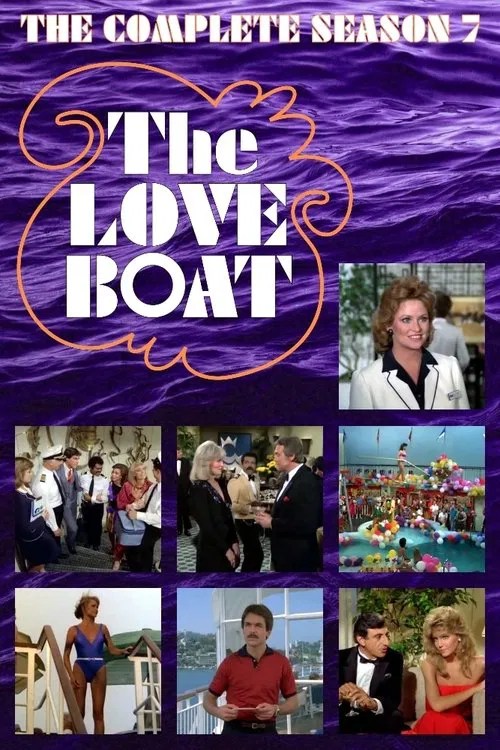
This week, it’s all about maids and bartenders!

Episode 7.22 “The Lady and the Maid/Love Is Blind/The Babymakers”

(Dir by Richard Kinon, originally aired on March 3rd, 1984)

This week, it’s a busy cruise!

Dorothy Fielding (Luise Rainer) boards the boat and immediately runs into her twin sister, Maggie (also played by Rainer).  Maggie is working as a maid and she resents her sister.  But when Dorothy agrees to switch places with Maggie, Maggie gets to date the charming and rich Stewart Coolidge (Don Ameche).  This storyline features not one but two Oscar winners.  Ameche won an Oscar for his role in Cocoon, albeit after this show aired.  Rainer won two Oscars, back-to-back, in the 30s and then seemingly vanished from film screens.  Unfortunately, while Ameche is charming, Rainer comes across as if she would rather be anywhere than playing twins on an episode of The Love Boat.  There were several scenes in which Rainer spoke with Rainer.  They were obviously included to show off the show’s split-screen approach but, unfortunately, Rainer never seemed to be sure which direction either twin should be looking while interacting with the other.

Sheila (Jennilee Harrison) is desperately trying to get pregnant.  Doc mentions to her husband (Kim Shriner) that most babies are conceived during makeup sex.  Guess who starts a totally random argument with his wife?  This was a silly story but, to be honest, the main appeal of this show has always been its silliness.  Harrison and Shriner were beyond adorable.

Finally, Isaac’s blind friend, Darnell Hall (LeVar Burton), boards the ship and takes part in Isaac’s bartending school.  Darnell and Isaac also compete for the attention of Terry Cook (Shari Belafonte).  And before anyone says anything — yes, I know Burton played a blind guy on Star Trek: The Next Generation.  I don’t care.  As for who Terry picks …. well, Isaac is a regular character and Terry isn’t.  It’s not that hard to guess how things are going to turn out.

That said, I know what you really want to know.

Julie doesn’t do much in this episode but she does sound rather excited about wishing everyone a happy day in Mexico.  I’m going to say seven out of ten.
Cleaning Out The DVR #30: The Great Ziegfeld (dir by Robert Z. Leonard)


(For those following at home, Lisa is attempting to clean out her DVR by watching and reviewing 38 films by the end of this Friday.  Will she make it?  Keep following the site to find out!)

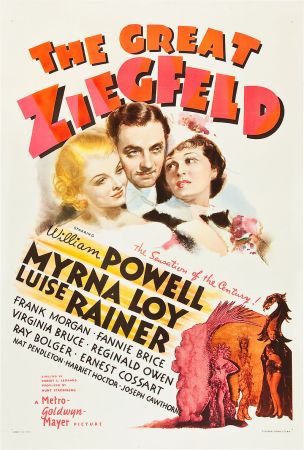
Great-Ziegfeld-1936-Poster

Do you know who Florence Ziegfeld was?

Don’t feel bad if you don’t because, until I saw the 1936 film The Great Ziegfeld, I had no idea and history is my number one obsession.  Florence Ziegfeld was a theatrical producer who, in the early days of the 20th Century, produced huge spectacles.  He was a showman who understood the importance of celebrity and gossip.  He produced a show called The Ziegfeld Follies, which was considered quite risqué at the time but which looks remarkably tame today.  Florence Ziegfeld was so famous that he even got his own Oscar-winning biopic.

The Great Ziegfeld features the always smooth William Powell as Ziegfeld.  When we first meet him, he’s promoting a strongman and a belly dancer and nobody takes him seriously.  But through hard work, good luck, and his own instinct for showmanship, he becomes famous and his shows gets bigger and bigger.  The film follows Ziegfeld as he gets married, both times to someone he is grooming to be a star.  His first wife is Anna (Luise Rainer), who loves him but divorces him when it becomes obvious that Ziegfeld’s life will always revolve around his work.  His second wife is Billie Burke and we know that she is Ziegfeld’s true love because she’s played by Myrna Loy.  Whenever you see William Powell and Myrna Loy in the same film, you know that they belong together.

The majority of The Great Ziegfeld is taken up with recreations of Ziegfeld’s stage shows.  In fact, the film almost feels more like a musical variety show than a real biopic.  (Judging from the credits, quite a few of Ziegfeld’s stars played themselves and recreated their acts on the big screen.)  I can understand why this was attractive to audiences in the 1930s.  With no end in sight to The Great Depression and Ziegfeld himself recently deceased, this movie was their only opportunity to see one of his spectacles.  The film made sure that they got their money’s worth.

However, for modern audiences, all of the acts just add to what is already an oppressive running time.  My main impression of The Great Ziegfeld was that it was really, really long.  The movie itself is well-produced and William Powell and Myrna Loy are always fun to watch but the movie just goes on and on.  As well, this biopic is so worshipful of Ziegfeld — the title is meant to be taken literally — that, as a result, he comes across as being one-dimensional.  I did appreciate the film as a historical artifact but otherwise, it didn’t do much for me.

However, it did something for the Academy.  The Great Ziegfeld was named the best picture of 1936!  Luise Rainer won best actress despite only being on-screen for a handful of scenes.  So many people were critical of Rainer’s award that, the very next year, the Academy introduced the award for best supporting actress.

As for why Ziegfeld won that Oscar — well, if you look at its competition and some of the other 1936 films that received nominations, you’re struck by the lack of truly memorable films.  It would appear that, in a weak year, the Academy decided to give the award to the biggest production they could find.

And that was The Great Ziegfeld.

(Incidentally, if Flo Ziegfeld were alive today, he would probably be a reality TV producer.)

Cleaning Out The DVR #22: The Good Earth (dir by Sidney Franklin)


(For those following at home, Lisa is attempting to clean out her DVR by watching and reviewing 38 films by this Friday.  Will she make it?  Keep following the site to find out!)

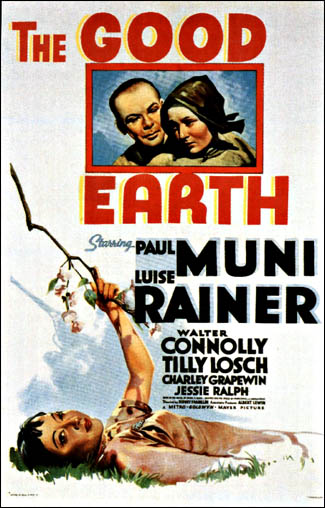
Good_earth_(1937)

The 1937 film The Good Earth is a strange one.

It’s a big, epic film about life in China in the years before World War I.  It opens with a poor farmer named Wang (Paul Muni) marrying a servant girl named O-Lan (Luise Rainer).  O-Lan is quiet but strong and, with her support, Wang eventually starts to prosper.  He buys land and they have children.  Together, Wang and O-Lan manage to survive both famine and a political upheaval.  In fact, it’s China’s volatile politics that occasionally allow the family to survive.  When a revolutionary mob loots a mansion, O-Lan joins in just long enough to come across a bag of diamonds that the Wang uses to eventually buy the biggest house in town.  Once he’s become wealthy and complacent, Wang ends up taking on a younger, second wife (Tilly Losch) and O-Lan finds herself competing for his attention.  Ultimately, it’s only when Wang is again forced to tend to the Earth that he understands what is really important.

So, here’s the weird thing about The Good Earth.  It’s a film about China.  It covers several years of Chinese history and the story itself is rooted in Chinese culture.  All of the characters are meant to be Chinese.  When the movie was filmed, China was at war with Japan so it’s not surprising that the film was shot in California.  But what is interesting (though not really surprising when you consider the history of Hollywood) is that there are very few Chinese people in the cast and none of them play any of the major roles.

Instead, Wang was played by Austria-born, Chicago-raised Paul Muni.  O-Lan was played by German Luise Rainer.  Wang’s comic relief uncle was played by American character actor Walter Connolly while his father was played by a former vaudeville star from Ohio named Charley Grapewin.  All of the actors are heavily made up so that they’ll look Chinese but none of them act or sound Chinese.  It makes for a very strange viewing experience.

And it’s a bit unfortunate because there are some very good scenes in The Good Earth.  Technically, it’s a very strong film.  Towards the end, there’s a locust invasion that is still thrilling to watch.  The sets look great.  The costumes look great.  If you’re a history nerd like me, the story has the potential to be interesting.  But, whenever you start to get sucked into the film’s story, Wang starts to speak and sounds totally like a guy from Chicago and it takes you out of the movie.  The uneven mix of quality and miscast actors makes for a rather disjointed viewing experience.

As a big epic, it’s probably not surprising that The Good Earth was nominated for best picture.  However, it lost to another Paul Muni film, The Life of Emile Zola.