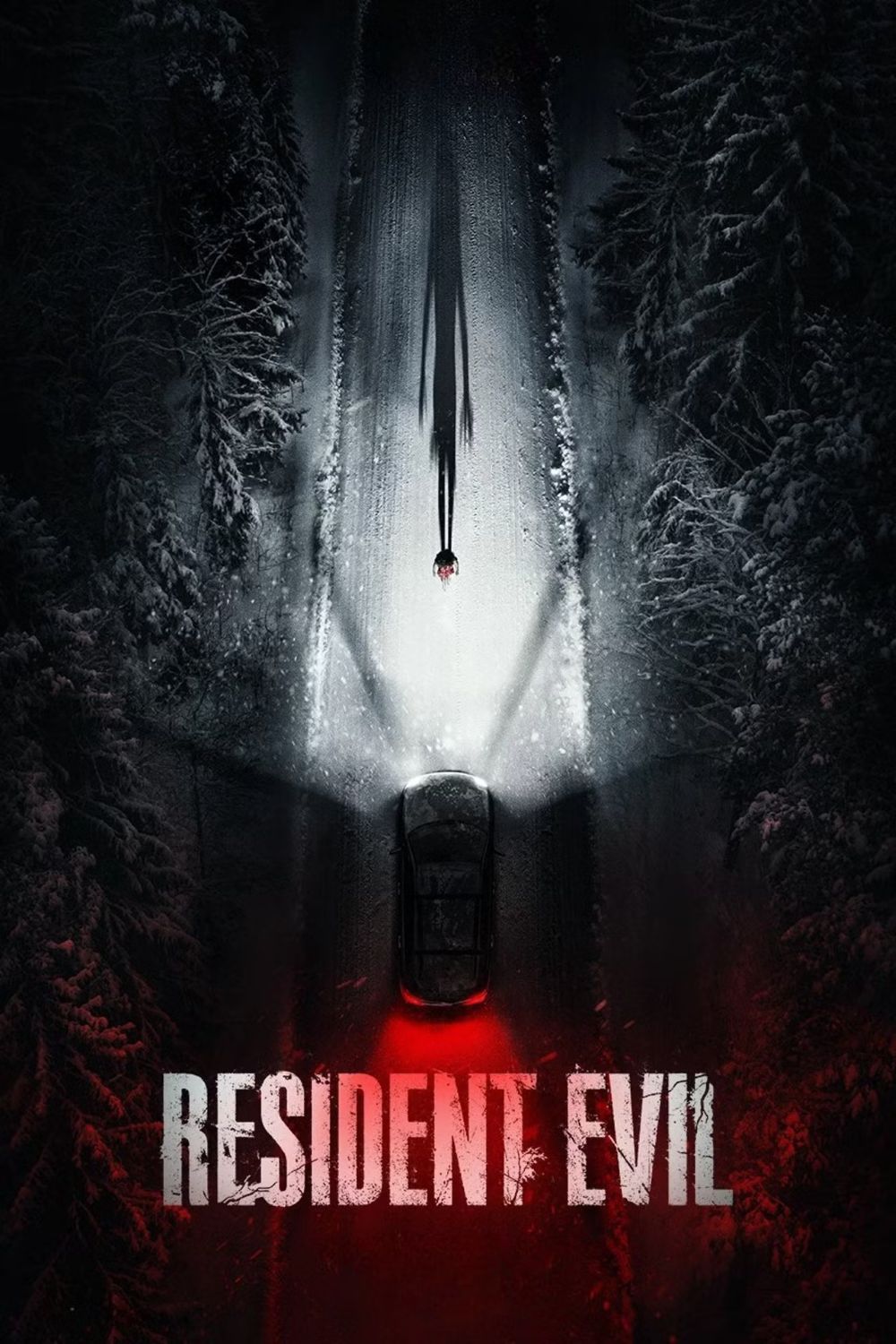
Review: Resident Evil (dir. by Zac Cregger)


“I’ve only used a gun in video games.” — Bryan

Resident Evil is a smart, tense, and surprisingly faithful reinvention of Capcom’s long-running survival-horror series—not because it tries to copy a single game beat for beat, but because it understands what makes the games unnerving in the first place. Written and directed by Zac Cregger, the film uses the world of Resident Evil as its foundation while telling a new story during the Raccoon City outbreak. Its main character is Bryan, played by Austin Abrams, an ordinary medical courier whose attempt to complete a delivery to Raccoon City General Hospital drops him into the early stages of a biological disaster. He is not a S.T.A.R.S. officer, a government agent, or a pre-established franchise hero. He is simply a guy trying to finish a job and survive a night that becomes more horrifying, chaotic, and impossible with every block he crosses.

That basic setup proves to be one of the movie’s smartest choices. Resident Evil has no shortage of iconic protagonists, from Chris Redfield and Jill Valentine to Leon S. Kennedy and Claire Redfield, but Bryan gives the film a fresh perspective on its apocalypse. He is not entering Raccoon City with a gun, years of training, or inside knowledge of Umbrella. He starts as someone who does not understand why parts of the city are suddenly locked down, why emergency rooms are overwhelmed, or why ordinary people are behaving with terrifying violence. That makes him a natural audience surrogate, but he is not just a blank stand-in. Austin Abrams gives Bryan a nervous, tightly wound energy that fits someone constantly trying to keep pace with a situation that has already moved beyond anyone’s control.

The decision to center an everyman is also a strong way of translating the vulnerability of the games. In a great Resident Evil game, the player might eventually find a shotgun, healing items, and enough ammunition to handle a dangerous enemy, but the first hours are defined by instability. There is never quite enough ammo. There is never a guarantee that the room ahead is safe. You learn the layout of a location because you have to, not because exploration is relaxed. Cregger’s movie cannot reproduce the exact tension of an inventory screen or the anxiety of deciding whether to use a green herb now or save it for later, but it captures the emotional logic behind those mechanics. Bryan makes choices with incomplete information, moves through increasingly hostile spaces, and keeps going even when every instinct tells him to turn around and run.

What makes the film especially interesting is that it does not adapt any one game in the series. This is not a straight retelling of the Spencer Mansion incident from Resident Evil, Leon and Claire’s first night in Resident Evil 2, or Jill’s escape from Nemesis in Resident Evil 3. Instead, Cregger uses the games as backdrop and inspiration for an original story set in the franchise’s universe. The film takes place alongside the Raccoon City outbreak associated with Resident Evil 2, but Bryan’s journey is separate from the established storylines that fans already know. That may disappoint viewers who want an exact cinematic recreation of every familiar character and location, but it is ultimately the movie’s greatest advantage.

A strict adaptation would have to navigate an almost impossible set of fan expectations. If the movie directly followed Resident Evil 2, viewers would be waiting for the exact arrival at the Raccoon City Police Department, the exact early meetings between Leon and Claire, the exact role of Ada Wong, the exact appearances of William Birkin and Mr. X, and the exact descent into Umbrella’s underground facilities. A direct version of the original Resident Evil would carry the same burden with the Spencer Mansion, the S.T.A.R.S. team, the laboratory, and the Tyrant. That approach can quickly make a movie feel less like a story and more like a checklist. Cregger avoids that trap by taking the series’ atmosphere, visual identity, rules, and mythology, then building a new nightmare around them.

That freedom restores a sense of uncertainty. Even viewers who know Resident Evil 2 inside and out cannot assume they know where Bryan’s route will take him, who can be trusted, or when the next threat will appear. The film can nod toward familiar Resident Evil concepts without making them feel like obligatory fan-service stops. A locked facility, an Umbrella insignia, a contaminated corridor, or the emergence of a more elaborate biological threat carries weight because it serves the story first. The pleasure comes from seeing the franchise’s DNA interpreted in a fresh way, not from watching the movie pause so the audience can recognize a collectible reference.

Umbrella is treated as much more than a logo or a few bits of background lore. The company remains the central force behind the horror, and that gives the film a more specific personality than a typical zombie outbreak story. Umbrella is terrifying because it represents private power with no moral limit: a corporation able to hide experiments, manipulate information, weaponize biology, and treat ordinary people as expendable collateral. Its infected victims and bio-organic weapons are not random monsters wandering into the story. They are products. Someone designed them, approved them, tested them, and determined that whatever potential value they offered was worth the risk. That is the darker edge of Resident Evil: the monsters are terrible, but the systems that created them are worse.

Cregger understands that this corporate horror needs to feel physical. A zombie is frightening because it is a person reduced to a violent, decaying shell. A more advanced creature is frightening because it reveals experimentation that has pushed life beyond recognizable limits. The body horror works best when it does not feel ornamental. It should make the audience imagine the research process behind the mutation, the human cost of the experimentation, and the awful combination of arrogance and indifference that allowed it to happen. Resident Evil does not need to constantly escalate into larger monsters merely for spectacle. Its creatures matter when they feel like increasingly disturbing evidence of what Umbrella has been building in secret.

Cregger’s background makes him an unusually strong fit for this material. Barbarian worked because it transformed a familiar location into a space of escalating dread. The house at the center of that film is not just a setting; it becomes a trap, a maze, and a place with its own buried history. Cregger knows how to make architecture feel dangerous. He understands that a corridor, a basement, an unlit stairwell, or a locked door can generate more tension than an explosion if the audience believes something might be waiting just outside the frame. That is basically the visual language of Resident Evil.

The games have always relied on locations that feel compromised. The Spencer Mansion in Resident Evil, the Raccoon City Police Department in Resident Evil 2, and the ruined streets in Resident Evil 3 turn places that should represent order, security, or civilization into traps. A police station becomes a fortress that cannot protect anyone. A hospital becomes a source of infection. A laboratory becomes proof that the disaster was not an accident. Cregger’s film channels that environmental fear well. Bryan’s path through Raccoon City is not just a string of monster encounters. It becomes a worsening descent through spaces that are failing one after another, with every new location offering a possible route forward while also revealing another level of the catastrophe.

The basic premise involving Bryan’s medical delivery gives the movie a focused sense of movement without spoiling the larger story. He has a practical objective, but each step toward completing it pushes him deeper into Raccoon City’s outbreak. The film lets the audience learn alongside him through half-understood warnings, panicked strangers, sealed-off areas, fragments of information, and signs that the official story does not add up. Cregger does not rush to explain every piece of Umbrella’s involvement immediately. He lets the mystery build around Bryan’s immediate need to survive, which is exactly how the strongest Resident Evil games turn scattered notes, hidden rooms, and locked pathways into part of their storytelling.

The influence of Weapons is especially clear in that willingness to let confusion and dread hang in the air. Cregger has shown an interest in narratives where the audience slowly pieces together a larger horror from incomplete perspectives and disturbing details. Resident Evil applies that instinct to a world built around secrecy. Umbrella does not announce itself with a complete explanation. Its presence is felt through the consequences: infected civilians, closed facilities, experiments that have slipped into the open, and the growing realization that Raccoon City’s crisis has roots much deeper than a random medical emergency. That approach turns exposition into suspense. The audience wants answers, but it also understands that every answer is likely to lead somewhere worse.

The film’s tone is another area where Cregger’s sensibility helps. Resident Evil should be scary, but it should not pretend that the series is grounded, ordinary horror. The franchise has always mixed genuine survival dread with B-movie science fiction, action-movie intensity, melodrama, and moments of pure, glorious weirdness. The same series that can make a player afraid of opening a narrow hallway door can also introduce giant mutant reptiles, insects, experimental super-soldiers, and outlandish biological mutations. Cregger seems comfortable operating in that space. Barbarian showed that he can move between dark humor, disgust, shock, and legitimate tension without flattening the experience into parody. That balance is crucial for Resident Evil, which should be intense without becoming embarrassed by its own pulp imagination.

The film is strongest when it lets the strange material land through the characters’ reactions rather than making a joke of it. Bryan does not become an instant action hero who dispatches monsters with effortless confidence. His fear, exhaustion, and disbelief help ground the increasingly bizarre developments around him. When the story introduces threats beyond the initial infected, those moments work because they feel like the next horrible stage of Umbrella’s hidden program rather than a required entry in a franchise encyclopedia. Cregger understands that a recognizable monster or concept only matters if it changes the stakes for the character in front of it.

There is also welcome restraint in the scale of the movie. Raccoon City’s outbreak is huge, but Resident Evil keeps the experience close to the ground. It is not mainly about elite military units, globe-spanning conspiracies, or invincible heroes fighting through armies of infected. It is about one man trying to get through a city that has become a death trap. A blocked street becomes a serious obstacle. A working car becomes a lifeline. A few infected people can be overwhelming when Bryan has limited ammunition, no clear escape route, and no way to know who has already turned. That survival focus lets the film preserve the essential question behind every good Resident Evil scenario: not “How can the hero kill everything?” but “How can the hero make it through the next room?”

Cregger’s narrative choices will probably alienate a certain segment of the fanbase, and that is understandable. Some viewers will want a movie built around Leon, Claire, Chris, Jill, or another established character. Others will want a cleaner adaptation of a specific game, with its canonical set pieces, key relationships, and familiar story beats intact. Those are reasonable desires, especially because Resident Evil has such an enormous cast of beloved characters and such a rich backlog of stories that have never been adapted faithfully. Cregger’s movie is taking a chance by prioritizing an original protagonist and a separate narrative over direct adaptation.

But that risk is also what makes the film work. Fans who go in with open expectations may be surprised by how naturally it fits inside the Resident Evil universe. It does not need to repeat every event from the games to understand their identity. The movie has the oppressive spaces, the escalating survival pressure, the corporate conspiracy, the infection-driven horror, and the feeling that any new revelation will only lead deeper into a nightmare. Bryan’s story feels like a side route through Raccoon City’s catastrophe—a story that could exist in the margins of the games without contradicting the dread, danger, and bizarre biohazard logic that define them. The film asks fans to accept that it is not trying to replace the games they love. It is trying to tell another story that could only happen in this universe.

Ultimately, Zac Cregger’s Resident Evil succeeds because it recognizes that the franchise’s appeal is not limited to familiar names, costumes, creatures, or Umbrella logos. It is about the sickening feeling of being trapped in a hostile place with too little information, too few resources, and no guarantee that the person beside you will still be alive—or human—by the next scene. By making Bryan an ordinary medical courier caught in an outbreak, Cregger gives the audience a vulnerable and compelling guide through Raccoon City. By using the games as inspiration instead of adapting a single title word for word, he gives the story space to surprise viewers who already know the series inside and out.

As a fan of the games, the film more than hits the mark of what a Resident Evil movie should feel like. It has the oppressive locations, slow-burn conspiracy, grotesque biological horror, corporate corruption, and sense of escalating hopelessness that define the series at its best. More importantly, it captures the survival-horror tension that has always been at the heart of the games: the dread of stepping into an unfamiliar room, the suspicion that supplies will not last, and the sinking realization that every answer leads deeper into Umbrella’s nightmare.

As a horror fan, Resident Evil also confirms that Zac Cregger is one of the best filmmakers currently working in the genre. After Barbarian and Weapons, this makes him three for three. Each film has its own identity, but all three display the same gifts: command of suspense, strikingly unsettling imagery, a feel for dark humor that never entirely breaks the danger, and the confidence to take an audience somewhere more disturbing than it expects. Resident Evil turns Raccoon City into a living maze of infection, secrecy, and panic, where every locked door feels like it might lead to an escape—or to the worst possible decision. It is not merely a strong video-game adaptation. It is another major win for Cregger, and a reminder that the right filmmaker can make even one of horror gaming’s most familiar worlds feel frighteningly new.
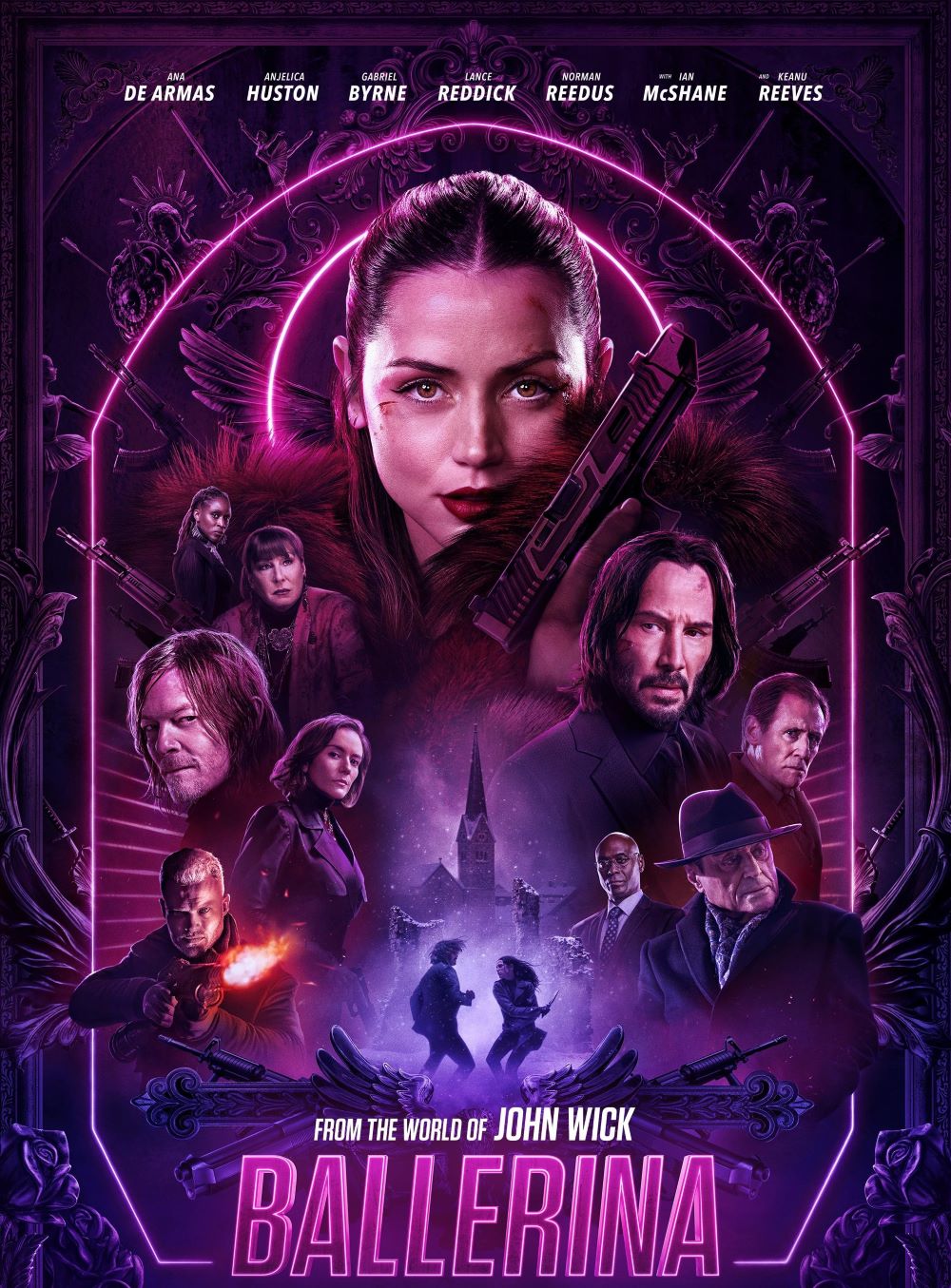
Review: Ballerina (dir. by Len Wiseman)


“You don’t choose to be a killer, you are chosen.” — The Chancellor

Ballerina lands in theaters feeling like someone finally turned the volume up on the quieter, more balletic side of the John Wick universe. Anchored by Ana de Armas’s poised, ferocious turn, the film doesn’t reinvent the neon‑lit, bullet‑cartoon rules of the franchise so much as rearrange them into a new rhythm. It’s still a very familiar kind of action movie—assassins, codes, bodies on the floor—but it carves out its own niche by centering a woman who’s not just another lethal accessory to John’s world, but someone the world has already trained into a weapon.

At the same time, Ballerina leans hard on the style and flourish of the later John Wick films, and that’s both its main selling point and its biggest limitation. The way shots linger on gun grips, the way the camera circles around bodies mid‑spin, the way every hallway fight feels like stage choreography—it’s all very familiar, very polished, and very much a continuation of the franchise’s visual language. That’s great if you’re here for the aesthetic, but it also means the film sometimes feels more like an extension of the Wick universe’s attitude than a story that confidently stands on its own two feet.

Ana de Armas plays Eve Macarro, a young assassin who grew up in the shadow of the Ruska Roma and the Continental, groomed to kill long before she fully understood what she was doing. The story unfolds in a loose “between films” slot in the Wick timeline, so fans who care about franchise continuity will get their little Easter eggs and cameos, but the film smartly never gets completely bogged down in explaining how this fits into every rulebook. Instead, it leans into the idea that the John Wick universe is big enough that other hunters can walk around in it, following their own grudges and grief. Eve’s motive is straightforward: she wants to track down the people she believes killed her father when she was a child, and along the way she has to square off against both the old guard of her upbringing and the cult‑like killers who seem to operate just outside the established order.

Like a lot of John Wick entries, though, Ballerina is ultimately more interested in expanding the world and reinforcing its rules than drilling deep into its own plot. Eve’s revenge‑driven quest gives the film its spine, but the mechanics of that revenge are often secondary to the chance to show off another assassin enclave, another weird code, or another showdown that feels like a set‑piece first and a character beat second. You can feel the priorities: where she travels, who she bumps into, and how this underworld operates often matter more than whether her arc is especially surprising or emotionally rich. The plotting starts to feel like connective tissue between bigger, more stylized sequences, and that’s where the reliance on franchise style starts to hurt more than help.

The film’s greatest strength is how it employs the language of ballet and violence in the same breath. The title Ballerina might make you expect a lot of literal tutus and pirouettes, and there’s a bit of that in the opening stretches, but the real choreography is in the fight scenes. Eve’s movement is light‑on‑her‑feet one moment—a few spins, a quick sidestep—and then suddenly brutal, close‑quarters savagery the next. The camera doesn’t just document her skills; it dances with them, letting wide‑angle shots show off the architecture of a fight before snapping into tight, impact‑heavy close‑ups. It’s unmistakably a Wick‑style approach, only dialed into a slightly more feminine, almost theatrical register.

De Armas deserves a lot of credit for making Eve feel like a real person, not just a killing machine with a pretty face. She’s cold, yes, but there’s weariness under the surface, the kind that comes from being raised in a world where emotions are a liability. The script doesn’t drown her in backstory; it just lets small moments—a hesitation, a glance at a photo, the way she holds a gun—do the work. When she finally loses her composure and starts to scream, grunt, and visibly struggle during later fights, the effect is more powerful than if she’d been effortlessly killing everyone from minute one. She sweats, she bleeds, she gets thrown around, and that makes her victories feel earned, not just cool.

Stylistically, Ballerina is very much in line with the rest of the franchise: glossy, slightly over‑the‑top, and hyper‑aware of its own aesthetic. The camera work is sleek, the color grading pops, and the score leans into synth textures that feel like a slightly more elegant cousin of the usual Wick pulse. There are also some deliberately playful musical choices—bits of Tchaikovsky and other classical motifs that echo in the background during key scenes—which tie the idea of ballet back to the film’s emotional core. The setting shifts from the familiar New York–style Continental spaces to a quieter, almost fairy‑tale European village that houses a different kind of assassins’ retirement community. It’s a neat trick: the filmmakers give us something that still feels like the same universe but just enough of a different flavor that it doesn’t feel like a rerun.

But that lush style also underlines how much the film is prioritizing world‑building over a tight narrative. Conversations about the Ruska Roma, the Continental, and the cult‑like assassins’ outpost are there less to advance Eve’s inner journey and more to remind us that the John Wick universe is vast, layered, and full of hierarchies. Fans who love the lore will probably eat that up, but if you’re hoping for a more self‑contained narrative, it can start to feel like you’re watching a very expensive lore compendium. The emotional core is there—it just has to fight for space amidst all the visual flexing and mythology maintenance.

Where Ballerina becomes a bit uneven is in its plotting. The basic “one girl, one very long night of revenge” template is solid, but the script doesn’t always give it enough depth or surprise. There are too many conversations where characters explain the rules of the world to each other, or recap what’s already been established, rather than using those moments to add nuance to the characters or relationships. The side figures—like various crime bosses, elders, and reluctant allies—do their jobs entertainingly enough, but they don’t all get the same level of interior life that Eve has. Some of the supporting performances are strong across the board, but the material doesn’t always push them to do anything more than punctuate the action beats.

Keanu Reeves drops in briefly as John Wick, and the cameo is handled with the kind of restraint that makes it feel like a favor rather than a stunt. He doesn’t hang around; he makes a sharp, efficient entrance, has a few quiet exchanges, and then exits, leaving the movie firmly in Eve’s hands. That’s crucial, because one of the criticisms of earlier spin‑off ideas was that they’d feel like vanity detours or glorified cameos. Here, John’s presence actually reinforces the idea that this is someone else’s story now, and that he’s just another player in a much larger ecosystem of killers.

The film’s worst moments are also some of its most visually striking: the bigger, more outlandish set‑pieces that lean fully into the franchise’s “go‑no‑go” action logic. The final third, in particular, is one long, almost goofy crescendo of fights, stunts, and absurdly lethal props. It’s a lot of fun in the moment, but it also underlines how thin the actual plotting can be. When the camera is spinning around a flamethrower‑wielding Eve or a hallway of assassins dropping in from the ceiling, the movie doesn’t always give us enough emotional context to care about who’s living or dying beyond the immediate spectacle. It’s the kind of sequence that will make fans cheer in the theater, but might look a bit clumsier on a second viewing.

One area where Ballerina arguably improves on the core series is its handling of gender dynamics. Eve isn’t fetishized; she’s allowed to be both emotionally grounded and physically dominant without being framed as some kind of fantasy object. The film nods to the idea of “girl power” in the assassin world, but it also lets the character operate within familiar constraints—tradition, hierarchy, and expectation—instead of pretending she’s a one‑woman revolution. She’s tough, but she’s also vulnerable, and that balance keeps the tone from tipping entirely into empty empowerment sloganeering. The way the movie treats her relationships—with her father’s memory, with her mentors, and with the people she’s ordered to kill—adds a layer of emotional sophistication that earlier entries in the franchise often glossed over for the sake of pure momentum.

If you’re coming into Ballerina expecting a radical reinvention of the series, you’ll probably leave a little underwhelmed. It doesn’t rip up the rulebook or deliver a huge thematic twist on what we already know about this universe. Instead, it refocuses the camera on a different kind of protagonist, lets the familiar style breathe a little differently, and proves that the world of John Wick is big enough to house more than just one lone wolf. It’s a stylish, violent, occasionally silly, definitely pulpy action film that knows exactly what it wants to be: a long, bloody ballet in which the lead is a woman who’s finally ready to dance on her own terms—even if the choreography sometimes matters more than the story it’s supposedly telling.

John Wick Franchise (spinoffs)

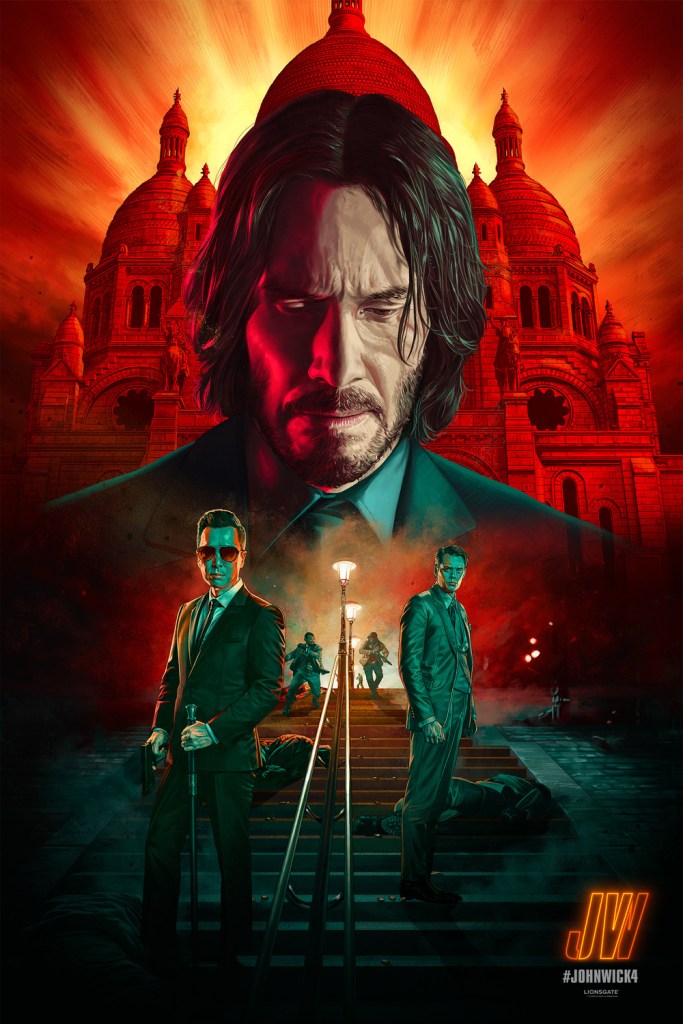
John Wick: Chapter 4 (dir. by Chad Stahelski) Review


“Those who cling to death; live. Those who cling to life; die.” – Caine

John Wick: Chapter 4 is the kind of action movie that doesn’t just lean into the spotlight—it steps into it, throws a flak vest over its suit, and then spends the next three hours filleting an entire world of assassins with brutal, balletic precision. At this point in the franchise, you’re either all‑in on the rules of the High Table, the Continental, and Wick’s endless mourning for his wife Helen, or you’re just here for the sheer spectacle of seeing Keanu Reeves beat up a continent’s worth of bad guys. The film not only respects that split audience, it tries really hard to satisfy both with a mix of operatic emotion, globe‑trotting locations, and a ridiculous amount of meticulously choreographed carnage.

One of the first things that stands out in John Wick: Chapter 4 is how much the world has expanded since the first film. The script doesn’t reinvent the core idea—Wick wants out, the system wants him broken, and the only way he can be free is by killing his way to the top—but it does layer on new zones, new factions, and a whole supporting cast of assassins who feel like they’re pulled out of their own B‑movies. From Morocco to Berlin, from New York to Paris, the film leans into a kind of hyper‑theatrical world‑building where every hotel lobby, nightclub, and underground fighting arena looks like it was designed by a comic‑book artist with a fetish for brutalism and neon lighting. That’s not a bad thing; it makes the universe feel lived‑in, even if it occasionally borders on self‑parody. The film also shuffles in a few fresh faces that give the usual assassin lineup some new flavors, including Donnie Yen as Caine, the stoic, blind assassin who carries both lethal efficiency and a quiet moral weight; Hiroyuki Sanada as the disciplined Shimazu, whose traditional demeanor and craftsmanship with a sword add a very grounded, almost old‑world element to the chaos; and Rina Sawayama as the high‑ranking assassin Akira, whose presence brings a mix of ruthless professionalism and a genuinely intriguing emotional arc that doesn’t feel like an afterthought.

There’s also Scott Adkins playing against his usual type as Killa Harkan, the head of the German Branch of the High Table, showing up in a surprisingly decent‑looking fat suit that gives him a grotesquely imposing presence while still hinting at the physicality audiences know from his other action roles. The character leans into the film’s tendency toward the theatrical, but he’s not just a walking gag; he fits into the world as one of the more visually exaggerated enforcers of the High Table’s rule. Alongside him, Shamier Anderson brings a lean, relentless energy as the Tracker, Wick’s shadowy, almost dog‑like pursuer whose loyalty to the system makes him more than just another interchangeable goon, while Marko Zaror crops up in the Berlin arena sequences as a brutal, wiry fighter whose style adds yet another distinct flavor to the movie’s unusually diverse fight roster. Taken together, these additions don’t just pad the body count; they give the film a sense that the John Wick universe is big enough to host everyone from classical swordsmen to modern martial‑arts specialists and even a few horror‑movie‑style fanatics, all orbiting the same doomed man.

The villain this time around is the Marquis Vincent Bisset de Gramont, played by Bill Skarsgård, and he’s the kind of High Table emissary who exists purely to make John’s life harder while reminding the audience that the system is more bureaucratic than it is mysterious. He’s got the cold, manipulative air of a corporate executive who’s never actually touched a gun but still has the power to ruin people’s lives on paper. His presence allows the film to spend more time on the politics of the assassin underground, which in turn forces John to pull in a wider network of allies, return favors, and, in a few cases, rebuild old friendships that were already on thin ice. That network includes the Bowery King, Caine, and the rest of the new cast, all of whom add texture to the usual slug‑fest even if the plot’s core emotional arc is still very much about a man who keeps remembering the wife he can’t get back.

Where Chapter 4 really flexes its muscles is in the action, and nowhere is that more obvious than in the extended Paris set‑piece that basically becomes the film’s centerpiece. It starts on the open city streets at night, with Wick already on the move, guns blazing and bodies piling up as the camera weaves through car‑chase energy and close‑quarters shoving. The chaos then escalates when the sequence shifts to the Arc de Triomphe roundabout, where the circular layout turns the whole area into a spinning, three‑dimensional shooting gallery. Cars whip around the monument, bullets ricochet off stone and metal, and the sheer spatial awareness of the choreography makes it feel like you’re watching a real‑time videogame map being systematically cleared in concentric circles, except the “map” is an iconic piece of Parisian infrastructure.

The escalation doesn’t stop there. The action migrates into a mostly empty, half‑abandoned apartment complex that feels like a brutalist concrete maze, each floor and hallway turning into a new arena for sprinting, reloading, and last‑minute dodges. The geography of the building becomes a character of its own, with shots that snake down stairwells, peer through doorways, and frame John as a lone figure ducking and weaving through a vertical death‑trap. It’s inside this apartment complex that the film drops one of its most memorable visual flourishes: a frenetic, prolonged shootout using dragon’s breath shotgun shells—incendiary rounds that send flaming pellets spraying outward—captured from an isometric, top‑down angle that directly evokes the look of indie action‑game favorites like The Hong Kong Massacre. The camera rides high above each room as Wick storms through, watching clusters of fire and bullets explode outward in geometric patterns, turning the interior layout into a living level map. It’s a moment that feels less like traditional cinema and more like a loving, hyper‑stylized homage to the way videogames can turn gunplay into a choreographed light show.

The final stretch of this extended Paris gauntlet is the brutal climb up the Rue Foyatier stairway to the Sacré‑Cœur steps, where the film’s choreographic and camera work reach their most expressionistic peak. The wide shots of Paris looming below, the narrowing of the stairway itself, and the way the camera sometimes drifts into an almost dreamlike, slightly elevated angle all combine to make the sequence feel like an endurance ritual rather than just another fight. By the time Wick reaches the top—after being hurled back down and forced to claw his way up again—the audience feels just as exhausted as he looks, which is exactly the point.

That’s part of what makes the film work when it isn’t just going hand‑to‑hand with you for nearly three hours. Beneath all the shooting and stabbing, John Wick: Chapter 4 is also quietly insistent on the idea that this is a tragedy. John Wick isn’t just a guy who happened to fall into a secret society of killers; he’s a man who has been reshaped by grief, loss, and the realization that every compromise he’s made along the way has only made his cage tighter. The film doesn’t over‑explain this; instead, it lets you watch him limp, cough up blood, and drag his battered frame through one more ambush, as if his body is the only thing strong enough to keep him breathing. The supporting characters—especially those tied to the High Table or to his past, including the newer faces like Caine, Shimazu, Akira, Killa Harkan, the Tracker, and the arena fighters—get a few moments to show that they’re not just cannon fodder, either. They have responsibilities, hierarchies, and codes that clash with the arbitrary cruelty of the Table, even if most of them still end up in the path of Wick’s bullets.

On the flip side, the movie is also unapologetically aware of how silly it is. There’s a knowing winking about the dialogue, the neon‑lit set designs, and the way lines like “You have until sunrise” are delivered with the gravity of a Shakespearean prophecy. The film doesn’t try to make you forget that this is ultimately a high‑end first‑person‑shooter turned into a live‑action ballet. It leans into the absurdity of escalating stakes, the way the world keeps conspiring to throw more and more assassins at John, and the fact that even when he’s bleeding out, he still insists on finishing a fight with a signature flourish. For some viewers, that will feel like a strength, a kind of self‑aware celebration of the genre. For others, it’ll feel like the moment the franchise tips from cool to camp, especially when the pacing starts to drag a bit in the middle section and the mix of formal duels, fat‑suited branch leaders, and endless negotiations begins to feel a little overstuffed.

The film’s length is its biggest liability. At around 169 minutes, John Wick: Chapter 4 is not shy about giving you more than enough time to live inside its world, but it also doesn’t always feel like it needs every last minute. The middle act, in particular, spends a lot of time on formalities, treaties, duels, and metaphysical negotiations with the High Table, which can slow the momentum when what you really want is for John to do another hallway‑fight or another truck‑pile‑up. There are times when the script feels like it’s stretching itself out to keep the spectacle going rather than tightening the storytelling, and that’s when the silliness of it all—like the deliberately over‑the‑top presence of Killa Harkan and the packed gallery of new faces—can start to work against the emotional weight the film is trying to build. A leaner, more ruthless edit would probably make the overall experience feel sharper and more focused.

Still, there’s a lot to admire in what the film manages to pull off. The sound design, the camera work, and the way the choreography is almost always shot in wide, relatively clear takes all combine to make the action feel substantial rather than edited into incomprehensible chaos. The supporting cast—Donnie Yen, Hiroyuki Sanada, Rina Sawayama, Scott Adkins, Shamier Anderson, Marko Zaror, and others—add texture and personality to a world that could otherwise feel like a series of interchangeable goons. They’re not just there to get shot; they’re there to give the film a sense of a larger, more complicated ecosystem of killers, each with their own rules and reasons.

In the end, John Wick: Chapter 4 is less a strict narrative continuation and more of a cinematic endurance event. It doesn’t reinvent the franchise, but it pushes the Wick formula into more extreme, more theatrical, and more emotionally committed territory. It’s messy in places, overstuffed in others, but it also has a few moments of pure, jaw‑dropping action that will probably end up in “best of the decade” lists among genre fans, especially that Paris mega‑set‑piece that starts on open streets, spirals through the Arc de Triomphe, invades an empty apartment complex for that dragon’s‑breath top‑down firefight, and climaxes on the Rue Foyatier stairs. If you’re someone who cares about emotional coherence and tight plotting, the film will probably test your patience. If you’re someone who’s here for the ballet of bullets, the operatic bloodshed, the eccentric new cast, and the sight of Keanu Reeves refusing to stay down no matter how many times the universe tries to kill him, then John Wick: Chapter 4 is a pretty satisfying send‑off—or at least a very loud, very stylish stop on the way there.

Weapons used by John Wick throughout the film

  • Glock 34 (TTI Combat Master Package) – His primary pistol early on, including the Morocco sequence against the new Elder and during the Osaka Continental battle.
  • Agency Arms Glock 17 – Used by Wick during the garden fight at the Osaka Continental after he takes it off a High Table enforcer.​​
  • TTI Pit Viper – The “hero gun” of the movie, custom‑built for Chapter 4, used heavily in the Paris staircase and duel lead‑up sequences.
  • Thompson Center Arms Encore pistol – custom-made single-shot pistols created specifically for the Sacre-Couer duel.
  • TTI Dracarys Gen‑12 – The dragon’s‑breath shotgun he grabs during the Paris apartment sequence, used in the isometric top‑down “videogame” style scene.
  • Spike’s Tactical Compressor carbine – Used by Wick after he takes it from High Table enforcers during the Osaka Continental fight.

John Wick Franchise (spinoffs)