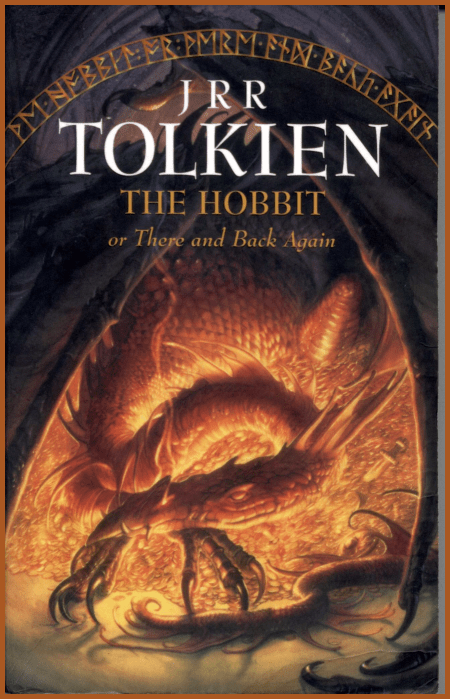
It just a littleunder 3 months before Peter Jackson takes us back to Middle-Earth with the first of three films that will make up The Hobbittrilogy.
There’s not much else to say other than this latest trailer for The Hobbit: An Unexpected Journeyjust continues to whet the appetite for all things Middle-Earth. It’s much more action-packed with some nice new scenes instead of just rehashing what was in the original teaser trailer from year ago.
Enough words. Just watch the trailer below and decide for yourself whether another trip to Middle-Earth (before all the War of the Ring brouhaha of the first trilogy) is worth your monies.
The Hobbit: An Unexpected Journeypremieres worldwide on December 14, 2012.
While Christopher Nolan’s The Dark Knight Rises is the most anticipated summer blockbuster for this upcoming 2012 then it would be safe to say that the most anticipated film for 2012 for some would be Peter Jackson’s The Hobbit: An Unexpected Journey.
This is a film that has been years in the making and even more years in development hell as the rights to J.R.R. Tolkien’s novel, The Hobbit, was entangled through many different studios. Once those entanglements were finally resolved and the film set to be put into production the film suffered more setbacks as budget and script rewrites kept things from starting. The original filmmaker picked to helm this two-part prequel, Guillermo Del Toro, had to back out after years of delays though he still remains as producer and his ideas and conceptual art and design has become the foundation for the film.
The film finally got the greenlight to start filming once Peter Jackson stopped searching for Del Toro’s replacement and took on the role as director once again. While Del Toro was a great choice I think most fans of the original trilogy were glad that Jackson decided to just take up the director’s chair once more. Who else knew the world of Middle-Earth on film better than the man who made what was called the unfilmable novel into the new millenium’s iconic film trilogy.
Like the production of the Lord of the Rings trilogy, Jackson and his geniuses at WETA have been pretty good with showing fans progress made on the films through video blogs released by Jackson himself. With just a year left to go before part one of this two-part prequel premieres we finally have the first official teaser trailer to the film and I must say that it’s great. Even from just snippets shown in the teaser one could see some of Del Toro’s more darker concepts and influence in the film’s look and tone. But then some of it also comes from Jackson himself whose early background as a filmmaker was all about dark, macabre subjects and themes.
The Hobbit: An Unexpected Journey is set for a December 14, 2012 release.
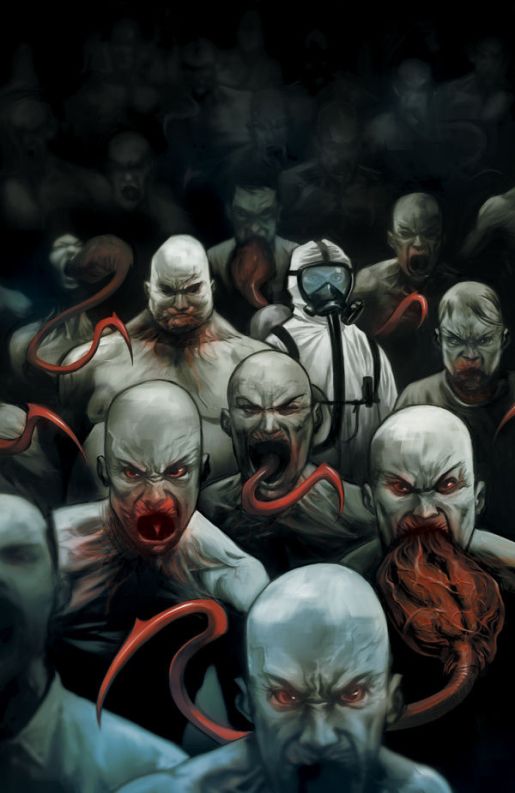
The vampires of The Strain appear to be the next step of the Reapers, Del Toro introduced in Blade II. These creatures far removed from the handsome angst filled vampires of True Blood, Twilight, etc and more in the line with the apex predators that caused nightmares.
Below is the breakdown of the hemophagic corpses (via the wiki page) Vampire Biology
The vector for vampirism is a capillary worm, which, once introduced into the human host’s bloodstream (either through a vampire’s feeding or direct invasion by the worm through a wound or orifice), introduces an incurable and fast-acting virus. By manipulating the host’s genes, the virus causes a human to undergo numerous radical physical changes.
Vampire Physicality
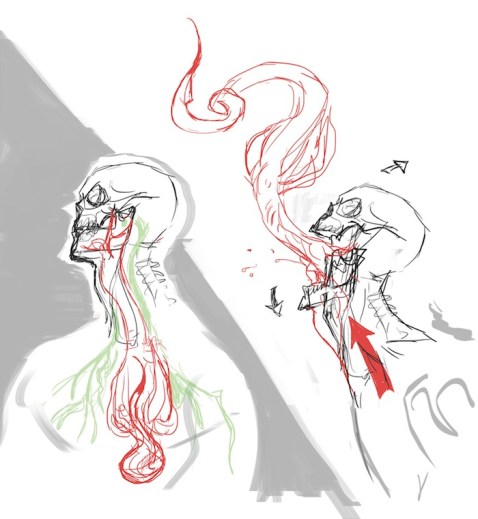
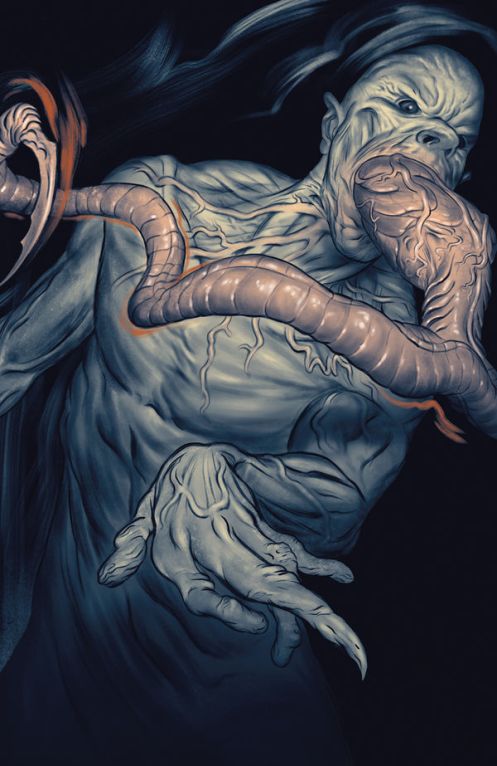
The first and most distinct vampire adaptation is the development of a long, retractile proboscis beneath the host’s tongue, which is able to extend up to six feet from the mouth. This “stinger” is both the vampire’s feeding and reproductive mechanism, shooting forth to latch onto human prey’s throat or thigh, both draining the victim’s blood for nutrition and infecting the human with capillary worms. The vampire’s jaw is set at a lower hinge than a human, the mouth gaping like a snake’s when the stinger is deployed. As the structure of the stinger is actually modified tissue from the human lungs and throat, vampires are incapable of physical speech.
A vampire’s physical appearance is governed mainly by the host body shedding those human traits that are obsolete to its new life cycle. Hair and fingernails are gradually lost, while the external nose and ears atrophy, leaving a fully matured vampire’s skin as smooth and featureless as marble. The vampire’s complexion is extremely pale between feedings, but appears a flushed red after a recent blood-meal. Eye coloration is a black pupil surrounded by a red sclera, with a white nictitating membrane sliding across for protection. The middle fingers of both hands grow and strengthen, and a thick talon develops in place of the lost fingernail. As vampire reproduction is achieved through viral infection of hosts and not through any sexual mechanism, the human genitalia also atrophy, leaving a mature vampire with no discernible gender.
The digestive and circulatory systems of a vampire are simplified and fused, the vampire’s interior organs most resembling a series of connected sacs. Nutrition from a blood feeding is transported throughout this system via a thick, viscous white fluid that forms the vampire equivalent of blood. The capillary worms are present in this fluid, swimming throughout the circulatory system and often visible beneath the vampire’s thin skin. Like rodents, a vampire is unable to vomit, its suction-based digestive process functioning only one way. All bodily waste is excreted from a single rectal orifice in the form of a pungent ammonia-based spray; a vampire will excrete for the entire duration of a feeding, purging old food as it consumes new blood.
The vampire’s body temperature runs extremely high, at 120 degrees Fahrenheit, and a human is able to feel their ambient heat from several feet away.
Many of the physical changes from human to vampire occur gradually following the initial worm infection, and are accompanied by great pain. A newly “turned” human will lie in a state of suspended animation for an entire day, rising the next night as a nascent vampire. The stinger is present for the vampire’s first foray, in order to facilitate feeding, but other traits (hairlessness, talons on the mid-digit, lack of distinct internal organs) will develop within the first seven nights following infection. The vampire’s mental state will also be confused at first, and its movements will be clumsy and awkward. As it matures, however, the vampire will become supremely agile, able to leap great distances and climb sheer surfaces with the aid of its talons. Full maturity, physically and mentally, occurs within the first thirty nights.
In spite of the vampire’s morbid biology stripping legend of most of its romance, the most famously admired trait of the undead remains intact: immortality. Unless slain by violence or sunlight, a vampire’s parasitic body structure will neither fade nor weaken with the passage of time, giving them an effectively endless “life”-span. Even in those cases where the host body is damaged beyond repair, a vampire of sufficient power can transfer their consciousness (via a torrential capillary worm transfer) from one human form to another.
Vampire Senses
The sensory apparatus of the vampire is highly adapted for their nocturnal life cycle. Color vision is replaced with the ability to sense heat signatures, and the world is perceived in a monochrome brightened by sources of warmth (such as human prey). Hearing is greatly enhanced, in spite of the loss of external ears.
The vampires’ greatest sensory asset, however, is the “hive mind” that all new vampires share with the Ancient that propagated them. Each vampire, through some undefined telepathic link, is able to send and receive thought and sensory information to and from their Ancient progenitor. In this manner, the Ancient vampires direct the actions of their individual spawn through mental communication, regardless of distance. Perhaps akin to its radiation shielding properties, the element lead has the effect of blocking this mental connection.
In spite of their biological inability to speak, vampires can communicate with humans through telepathy, transmitting thoughts directly into a person’s internal monologue. Those vampires seeking to pose as human can train themselves to move their lips in a pantomime of speech, but the actual communication is still via thought-transference.
An Ancient vampire is also able to use this telepathic ability as a weapon; known as the “murmur”, this mental shock-wave has the ability to completely overwhelm the minds of surrounding human beings, rendering them unconscious.
Vampires also experience an overwhelming compulsion to infect family members and those they cared about as humans (their “dear ones”). They possess a unique ability to locate such targets, this sense being likened to a pigeon’s homing instinct.
Vampire Weaknesses
Many of the traditional vampire “weaknesses” of common folklore remain effective, although their potency is explained in terms of specific effects on vampire biology.
Sunlight is the vampire’s ultimate destroyer, specifically ultraviolet light in the UVC range. This is due to the germicidal properties of the wavelength, as it breaks down the virus-laden tissues of the vampire’s body. A localized source of UVC light, such as a fluorescent lamp, can be used to repel a vampire, much as a burning torch can repel an animal. Complete exposure, either to direct sunlight or a powerful UVC source, will result in complete desiccation of the vampire’s body, leaving behind nothing but ashes.
Silver, whether in the form of a metal weapon or even a fine chemical mist, can also wound or kill a vampire. Much like sunlight, this is due to the disinfecting properties of the element damaging the vampire’s viral biology. While conventional weapons (lead bullets, steel blades) can cause physical damage, they will not repel a vampire. Silver causes vampires both debilitating pain and a certain amount of fear, and binding a vampire in silver will completely incapacitate them.
Severing the spinal column through any method is another effective way to destroy a vampire. While the vampire’s simplified internal organ structure makes them difficult to harm with attacks to the body, decapitation will result in the vampire’s death.
Although there appears to be no biological imperative behind it, vampires cannot cross running water. This is alluded to as having something to do with the origin of the Ancients, but no further explanation is given. This aversion to water can be overcome, however, if the vampire is assisted (or “invited”) by a human.
Traditional religious protections against vampires, such as a crucifix or holy water, display no practical effect. The prevalence of this lore is explained as having been the product of Bram Stoker’s “fevered Irish imagination”.
Garlic, another common folk defense, has no noticeable use in repelling vampires.
Silver-backed mirrors, while they will not harm a vampire, will reveal their presence. While vampires do indeed cast a reflection, it is blurred and distorted, akin to an image vibrating at an impossible speed. Modern chrome-backed mirrors, however, will not have this effect, and the vampire will appear normally in such a looking-glass.
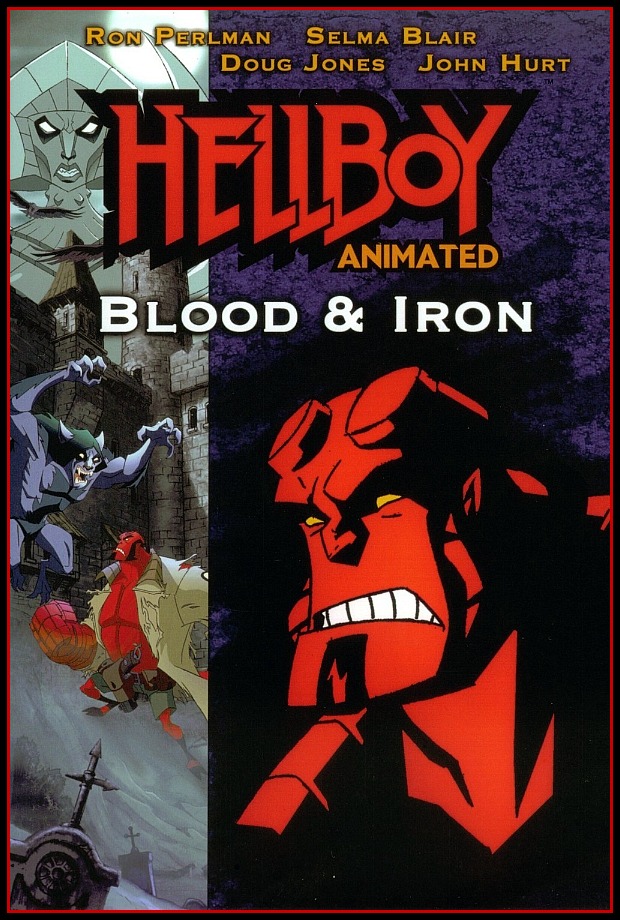
Guillermo Del Toro will forever be one of the heroes of comic book fans everywhere due to his bringing Mike Mignola’s Hellboy comic book franchise from the printed page to the silver screen. He first brought the Big Red Guy with the 2004 film adaptation of the same name. The film was a modest success and brought the titular character to a whole new group of fans. In 2008, Del Toro came out with the bigger and more epic sequel, Hellboy II: The Golden Army. What some fans of the character sometimes forget or didn’t even realize was that in-between these two films were two direct-to-dvd releases of the animated variety. The first to come out was Hellboy: Sword of Storms in 2006. While I enjoyed that animated film it would be the follow-up dvd release, Hellboy: Blood and Iron which truly captured the essence of the comic books even moreso than the two live-action films.
Hellboy: Blood and Iron would combine parallel storylines about Hellboy and his surrogate father’s, Trevor Bruttenholm, encounter with one Erzsebet Ondrushko also known in occult circles as Elizabeth Bathory the Blood Countess. According to the film, Erzsebet would bathe in the blood of innocent, young girls. The film also makes Erzsebet a follower and disciple of the Mediterranean goddess of witchcraft and sorcery, Hecate.
One storyline would play out in reverse chronological order and take place in 1939 as a much younger Trevor Bruttenholm travels to Eastern Europe to investigate a series of murders that locals have attributed to the return of the Blood Countess. The other storyline moves to the present as Hellboy and his teammates from the B.P.R.D. (Bureau for Paranormal Research and Defense) investigate the supposed hauntings of the estate of a wealthy businessman. This would be an estate that would be the center piece of a sort of haunted amusement park with the Blood Countess and the legends surrounding her as the main attraction.
Hellboy: Blood and Iron does a great job of mixing action, horror and the occult without one or the other overshadowing the rest. The film takes some of it’s ideas from Mike Mignola’s (creator of the Hellboy franchise) Hellboy graphic novel, Wake the Devil, and screenwriter Kevin Hopps does a good job of taking those ideas and creating something new yet similar as well. The film also benefited from the return of the cast of the live-action Hellboy films to voice their respective characters in this animated film. There’s Ron Perlman in his gruff and sardonic best as the title character. Selma Blair returns to voice Hellboy’s closest friend in the redheaded pyrokine Liz Sherman with Doug Jones and John Hurt rounding it out as Abe Sapien and Trevor Bruttenholm.
The animation is not the highest level but for a direct-to-dvd affair it more than holds up and really captures the look and feel of the comic books it was based on. Yet, while an animated film this one wouldn’t be appropriate for little kids to watch. For a “cartoon” it’s quite violent with themes of witchcraft, vampirism and blood sacrifice prevalent from beginning to end. It’s actually quite scary in certain sections especially whenever the resurrected Erzsebet appeared. I don’t think most animated films ever involved a sequence of a tub full of fresh, hot blood waiting to be used as bathwater.
For those willing to learn more and understand the appeal of the Hellboy comic books to legions of fans this animated film was a good example. Hellboy: Blood and Iron was great from beginning to end especially how it interwove not just the vampiric and pagan legends surrounding Erzebet Ondrushko, but also little tidbits of information and character development which added to the backstory of not just Hellboy but those closest to him. Plus, this animated film had two character’s whose names were variants of the name Lisa.
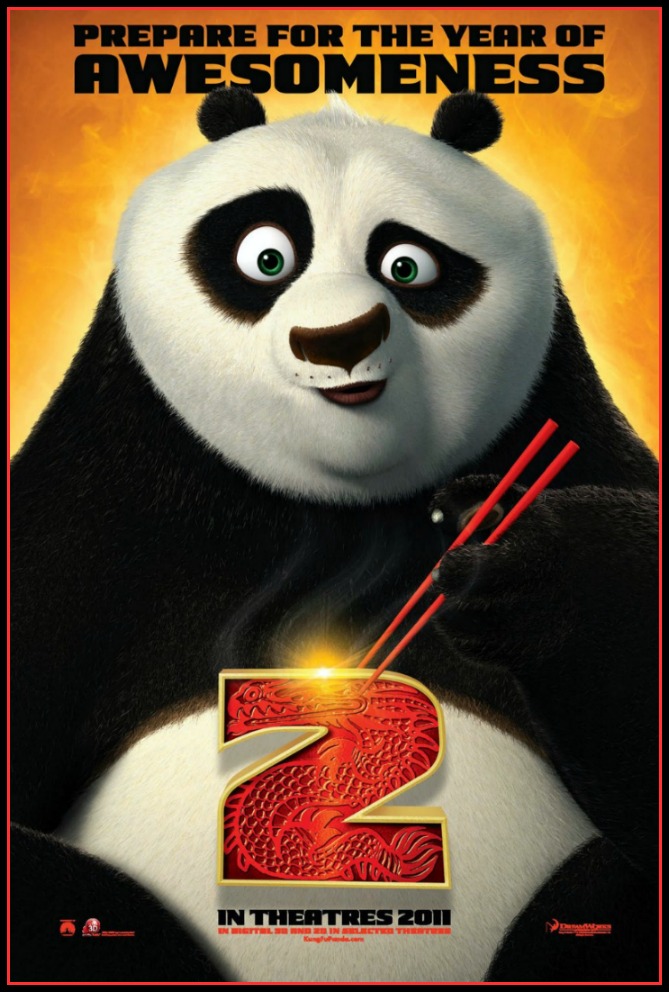
In 2008, Dreamworks Animation released what many had thought was one of their animated films. Some even went so far as to consider it on the same level as many of the Pixar animated offerings. This was high praise indeed and the praises from critics was awarded by public acclaim as Kung Fu Panda became an instant classic for Dreamworks Animation. It wasn’t a huge surprise that a sequel was quickly greenlit by the studio and now three years has passed and that sequel has finally come out. Kung Fu Panda 2 does one of those rare feats in film-making where it surpasses it’s original predecessor in all things. This was a sequel that was able to take what made the first one so fun and thrilling and build on it without losing the charm that made it so beloved in the first place.
Kung Fu Panda 2 brings back the Dragon Warrior Po (Jack Black returning in the role of the big fat panda) as he continues to live his dream of having become the Dragon Warrior and fighting evil, bandits and criminals with his fellow kung fu masters, the Furious Five. Instead of the film highlighting Po’s size as a detriment and keeping him a buffoonish character like in the beginning of the first film this sequel actually makes him an equal of his heroes, if not, surpassing them. This is a refreshing change since the writers could’ve easily banked on Po as a character who bungled and stumbled his way through most of the film.
This film was a continuation of Po’s journey as a hero which the first film was just the first step. Despite being a kung fu master in his own right his culture becomes threatened by a villain even more devious than the first film’s Tai Lung. Lord Shen (voiced by Gary Oldman) is the mad peacock heir to Gongmen City who has found an ultimate weapon through fireworks that he plans to defeat kung fu and conquer all of China. Kung fu is everything to Po and he journeys with the Furious Five to confront Lord Shen and stop his plans before it’s too late.
It’s during this journey that Po learns more about his true past and where he truly comes from. The sequences where Po’s adopted goose father tells of Po’s past was some of the best animations Dreamworks has done and I’d say surpasses some of Pixar’s own work. After seeing this film I’m sure many kids and some adults would want themselves their very own baby panda. Who would’ve thought that baby pandas sounded like human babies when they cried. It’s knowing his past that Po must now learn to find his inner peace if he’s to ever go beyond just being a kung fu master.
Kung Fu Panda 2 was actually quite a dark film in places as themes of genocide, destructive march of technology against nature, difficulties of adopted children finding their true origins and many others. That’s not to say that this sequel wasn’t fun to watch. The action took the kung fu fight scenes from the first film to a whole new level, but without turning it into all flash and no substance. It’s during some of the thrilling fight sequences that we see Po truly become part of the Furious Five and even affection from some of it’s members. It would be interesting to see how a third film would explore the growing relationship between Po and certain striped-feline.
The story gets a much needed infusion of creative help from one Guillermo Del Toro who served as creative producer. His inclusion in the film’s development was probably why the film had a much darker and serious tone in addition to the charm it continued from the first film. If there was anyone in Hollywood who knows how to further develop a character through a Campbellian hero’s journey then it’s Del Toro. If Dreamworks Animation is able to keep Del Toro on hand to further treat their other projects then it will be quite a coup for the studio.
The animation in this film is a step above the first film and anything Dreamworks Animation has ever done. With each passing year and release it looks like Dreamworks Animation has been able to come to the same level of animated work Pixar has set with their own projects. While I’m sure there’s no animosity between animators fo the two houses there probably is some sort of friendly rivalry which helps push both studios to improve on their animation work. All this means is that the public wins out in the end as we’re treated to better animated features from both Dreamworks and Pixar. It’s a good thing that Dreamworks Animation has also improved their storytelling with each new film that they’re not being called the weaker films when compared to Pixar’s latest.
In the end, Kung Fu Panda 2 more than lives up to it’s predecessor and actually surpasses it in every way. This sequel’s animation and use of stereoscopic 3D was some of the best in CG animation to date. It had a story that continued to explore and build the characters from the first film that they’ve gone beyond simple, basic animated characters but fully realized and complex individuals. Even the ending scene in the film which definitely sets-up a third film doesn’t seem tacked on but looks like something that would further continue Po’s hero’s journey. Sequels and milking of a franchise usually don’t sit well with serious film fans, but this franchise seems to be doing it correctly and using each new film to further an epic tale. Here’s to hoping we see Po and his Furious Five friends back for more in the coming years.
I love films, all films, in general but if there’s one particular film genre that really floats my boat then it would be in the horror category. This summer will see the release of a title that I’ve been anticipating since I heard about it at last year’s San Diego Comic-Con. The film I speak of is the remake of the 1973 tv horror film of the same name: Don’t Be Afraid of the Dark.
While Troy Nixey takes the director’s chair for this film he’s working on a story written by Guillermo Del Toro who’s been known to dabble in the horror genre (Cronos, The Devil’s Backbone). Del Toro promised a horror film that would bring back horror the way it’s meant to be and that’s with genuine scares and not horror predicated on torture and extreme use of gore. Don’t Be Afraid of the Dark will be a throwback to the atmospheric, almost gothic horror, that reached it’s peak during the late 70’s before the slasher boom hit.
The film has been delayed several times as Miramax Films was sold by Disney and the restructuring of the studio after it’s owners finalized it’s purchase put the film on the backburner. It now has an official August 26, 2011 release and it looks like the film got an R-rating from the MPAA for “pervasive scariness”. While Del Toro, Nixey and the rest of the film crew were hoping for a PG-13 rating the one given by the MPAA who seemed to really enjoy said “pervasive scariness” recommended it go out as an R-rated horror (one with little to no gore).
So, we have an upcoming horror film by an upcoming filmmaker handpicked by Del Toro. A film written by Del Toro himself and one which just got an R-rating which made Del Toro as happy as a clam. Plus, it’s a horror film that relies on genuine scares and not gore. My answer to that is August 26, 2011 cannot come sooner.
It looks like the unnamed horror project Guillermo Del Toro was quite coy about during this past week’s San Diego Comic-Con may turn out to be one of his dream projects finally getting a chance to be up on the big-screen. Mike Fleming over at Deadline has reported that Del Toro’s next directing project since leaving The Hobbitwill indeed be his long-gestating project to adapt H.P. Lovecraft’s classic scifi novella, At The Mountains of Madness.
He will not be going alone in this project as best buddy and confidant James Cameron has also joined Del Toro on his dream project as producer. Fresh off of the humngous success of Avatar has made Cameron the King of Hollywood once again and his name and clout should be able to give Del Toro the necessary muscle to get Universal not just to move the project forward but give Del Toro the budget he wants and the hands-off treatment he works best under.
Fleming also reports that the film will be in 3D which makes sense with Cameron being on-board and someone who can give Del Toro all the assistance he needs with the 3D tech Cameron has developed from his work with Avatar. The fact that Cameron will let his name be used in the promoting of the film speaks volumes as Cameron is known to be very choosy as to which projects he lends his name out to that he doesn’t direct.
There will be some moans and groans to the mention of 3D. Del Toro has never dismissed 3D, but didn’t see himself as having a particular project that worked best with it. Like any visually-gifted filmmaker, Del Toro knows how to use the tools of his trade both new and old so I don’t think Cameron’s 3D film-tech will be something he wouldn’t want to try out. Plus, if there was ever a story to be adapted onto the big-screen that would not just work well with Cameron’s 3D tech but also look beautiful it would have to be a Lovecraft tale and especially one with a setting and plot that’s not just epic but cosmic in scale. From the massive vistas of the non-Euclidean structures of the Elder Gods to the Plateau of Leng which may or may not have been the base for Cthulhu and his Star-spawns. Plus, we can’t forget the amorphous beings the “Shoggoths” which definitely would become even more terrifying in 3D.
I really hope that this project moves forward and with the speed with which Del Toro works I won’t be surprised if during San Diego Comic-Con in 2011 we get to see good footage of the film as a sneak-peek for a 2012 release.
The latest Song of the Day is from one of the best films of the past decade and, in my opinion, the best film of 2006. I speak of Pan’s Labyrinth by acclaimed Mexican-filmmaker Guillermo Del Toro.
“A Princess” was composed by Spanish composer Javier Navarrete and this particular piece of music from the film continues to use the main lullaby waltz-theme introduced in the beginning of the film. Where the music’s first time being heard by the audience is full of innocence and child-like magic in its tonal structure and melody in “A Princess” Navarrete dials back the innocent quality by adding in some of the hard-won wisdom the main character of Ofelia gains through her trials and tribulations throughout the film’s running time. While the song starts off with a sad and melancholy theme to its melody the song gradually moves back to it’s innocent and magical tone at it’s midway point to signify the main character’s final and complete transition from Ofelia to Princess Moanna.
It’s truly one of the best use of the leitmotif in a film score in quite a while. The fact that Navarrete was able to mine so man different emotional beats from a simple lullaby theme into one final distinct piece of music to end the film shows he was in tune with what director Guillermo Del Toro had in mind. He could easily have gone the usual fantasy music cliche of a huge number of brass and percussion to score the film, but instead went on a more subtle yet complex manner to accentuate a fairly simple fairy tale retelling which also happened to have many complexities in it’s narrative if one was willing to peel back the pages.
Now that Guillermo Del Toro has made it official that he’s leaving The Hobbit as director there’s now a scramble to find who will be replacing him on the project. Del Toro was universally hailed as the best choice the first time around when Peter Jackson made it known that he would only produce the two-part film and not get back to directing them. The many delays due to MGM’s financial troubles, script still not completed and casting still not done forced GDT to back away and could shelve the project for good.
The only thing keeping the project afloat is the fact that this project has a major fan-base already clamoring to see it made. With the huge success both critically and commercially of Jackson’s The Lord of the Rings Trilogy this two-part film adaptation of The Hobbit is pretty much a lock to do the same in the hands of the right filmmaker.
Jackson and studio heads holding the rights to the project will not want just any director. While Peter Jackson was still a little-known director and an outsider from the Hollywood scene when he began work on the original trilogy, this time around studio people will want a marketable name or, at the very least, a filmmaker who has the skills to follow Jackson’s work. Guillermo Del Toro was the perfect choice now someone else has to take up the baton.
Some have mentioned Peter Jackson as the only choice if he’d back off comments that he won’t direct but only produce. There’s a camp that say now’s the time to sign Sam Raimi who recently has left another mega-franchise and now available. Raimi is an interesting choice in that knows how to handle huge blockbuster projects and he definitely needs a home-run to follow-up a bad end as helmer of the Spider-Man franchise.
Another name to come up which I would welcome if Jackson doesn’t return as director is Guillermo Del Toro’s fellow countryman and one of his best friends: Alfonso Cuaron. Cuaron has shown himself to be one of his generation’s best. He’s done fantasy as helmer of the third Harry Potter film (universally seen as the best in the franchise) and may see tackling this blockbuster project as a major artistic challenge. I, for one, would hope Cuaron takes the job if offered.
The one dark horse name which has begun making the rumor mill about who may replace GDT is Jackson’s own protege, wunderkind filmmaker Neill Blomkamp. He’s worked with Jackson already and his first feature-length film, District 9, shows he has the storytelling and directing chops. The only drawback to him accepting the job if offered is that this will be a major-budgeted studio film which means it could turn into another Halo-clusterfuck where he commits and the project dies due to problems within the studio.
Other filmmakers have been mentioned like Brad Bird, Jean-Pierre Jeunet, Andrew Adamson, Tim Burton and Peter Weir just to name a few. In the end, my money is on either Jackson just taking the reins on the film if he thinks no one else would give the necessary commitment to the project it deserves, Cuaron takes on the job as a way to challenge himself or Jackson protege Blomkamp tackling something bigger as a way to add more cred to his growing reputation as one of the best young filmmaker of his generation.
Who do you think should take charge of The Hobbit now that Guillermo Del Toro has left?
Sad news for Tolkien fans worldwide as Guillermo Del Toro has announced that he will be leaving the planned two-part film project to adapt J.R.R. Tolkien’s classic novel, The Hobbit. As his announcement on TheOneRing.Net explains the many delays to the start of the project has made his role as director to the two films untenable. He had signed up to spend three years in New Zealand to do the films and has even moved his family to have them closer to him during the process, but the constant delays to getting an official start date would mean he would need to spend double the time he had originally signed up for.
These delays have made him put on the backburner his own film projects which seem very close and dear to him. He still has to finish off his Spanish Civil War Trilogy (The Devil’s Backbone and Pan’s Labyrinth being the first two). There’s also his wish to do a third Hellboy film (the second film setting up what could be an epic closing to the franchise). Then there’s his dream project to bring to the big-screen a film adaptation of H.P. Lovecraft’s novella, At the Mountains of Madness.
With Del Toro now gone as headliner for the two Hobbit films there’s surely going to be new rumors about who shall replace him. There was major scuttlebutt that Sam Raimi was in the running in the beginning before Del Toro signed on. I wouldn’t be surprised if Raimi’s name came up once again. He definitely has free time now that he’s off the Spider-Man franchise. Will Jackson do another “out of left field” decision and tap Blomkamp to take over for Del Toro. I think that’s a brave move if it happens, but also one that could backfire and stunt Blomkamp’s career. He’s already been part of plans to adapt a major franchise only to have it taken away from him.
In the end, it looks like The Hobbit may just end up not being made or, at the very least, not make a 2012 release date many insiders have set it two-part film for.
 It just a littleunder 3 months before Peter Jackson takes us back to Middle-Earth with the first of three films that will make up The Hobbit trilogy.