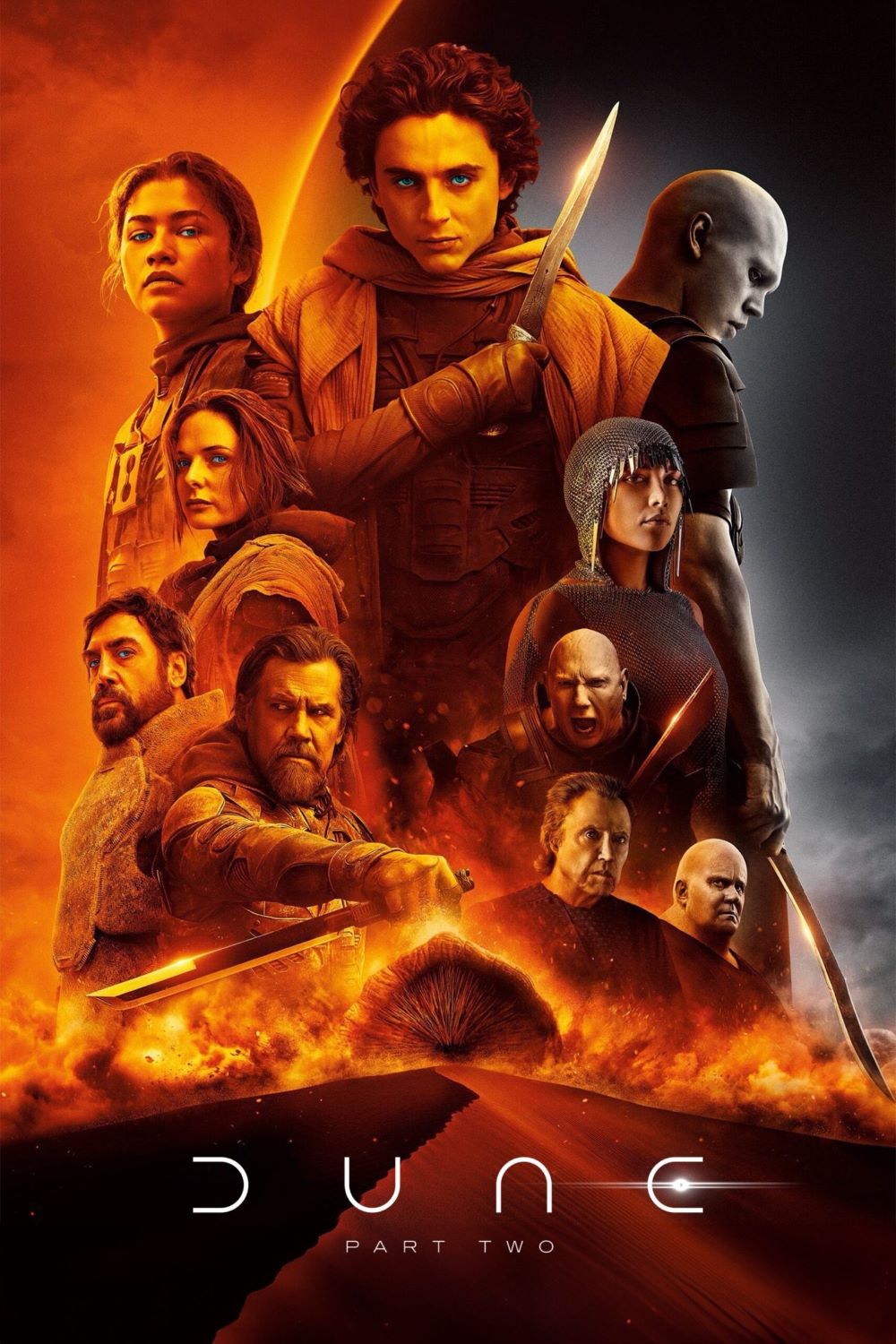
Dune: Part Two (dir. by Denis Villeneuve) Review


“The Mahdi is too humble to say he is the Mahdi. Even more reason to know he is!” — Stilgar

Dune: Part Two picks up right where the first film left off, diving headfirst into Paul Atreides’ quest for revenge on the desert world of Arrakis, and it absolutely delivers on the epic, operatic scale the setup promised. The first movie was all mood and table-setting; this one cashes in that patience with a story that’s bigger, louder, and way more emotionally volatile, without totally ditching the cerebral, slow-burn vibe that makes Dune feel different from other sci-fi tentpoles. Denis Villeneuve isn’t just continuing a story; he’s doubling down on the idea that this whole saga is less about a hero’s rise and more about the terrifying consequences of people begging for a savior and then getting exactly what they asked for.

Narratively, the film tracks Paul and his mother Jessica as they embed deeper into Fremen culture while House Harkonnen tightens its stranglehold on Arrakis. Paul trains, raids spice convoys, and slowly evolves from accepted outsider to full-on messianic figure, even as he keeps insisting he doesn’t want that role. The emotional throughline is his relationship with Chani, who acts as both partner and conscience, pushing back against the religious fervor gathering around him. At the same time, you’ve got Baron Harkonnen scheming from his grotesque oil-bath throne and Feyd-Rautha unleashed as the house’s rabid attack dog, chewing through enemies in gladiatorial arenas and on the battlefield. The stakes are clear and simple—control of Arrakis and its spice—but the film keeps twisting that into something more existential: control of the future itself and who gets to write it.

Visually, Dune: Part Two is just ridiculous in the best way. Arrakis still feels harsh and elemental, like the planet itself is a character that occasionally decides to eat people via sandworm. The desert exteriors are shot with that hazy, golden brutality where every wide shot makes the Fremen look tiny against an uncaring landscape. When Paul finally rides a sandworm, it’s not played as some clean, heroic moment but as a thrashing, chaotic stunt that looks legitimately dangerous—he’s clinging to this titanic creature, sand exploding in sheets around him, the camera swinging wide so you feel both the scale and the sheer lunacy of what he’s doing. The Harkonnen world, by contrast, is stark and stylized, all cold geometry and void-like skies, leaning into monochrome to make it feel like you’ve stepped into some industrial underworld. Villeneuve’s obsession with scale and texture pays off; every frame feels like it was composed to be stared at.

The action this time is more frequent and more brutal. Where Dune: Part One held back, this one goes for full war-movie energy. You get Fremen ambushes out of sand, night raids lit by explosions, and a final battle that’s basically holy war meets desert cavalry charge. Sandworms surf through shield walls, ornithopters slam into the ground, and a sea of troops gets swallowed by sand and fire. The choreography stays clean enough that you can track who’s doing what, but it never loses that messy, grounded feel—knife fights still feel close and ugly, even when they’re surrounded by massive spectacle. The duel between Paul and Feyd is the peak of that: sweaty, vicious, and personal, more about willpower and ideology than just skill.

Performance-wise, the film runs on the tension between Timothée Chalamet’s Paul and Zendaya’s Chani. Chalamet gets to shift from haunted survivor to someone who realizes he can pull the strings of history—and chooses to do it anyway. He plays Paul as a guy who genuinely hates what he sees in his visions but can’t stomach losing, which gives the final act a bitter edge. Zendaya finally gets the screen time the first film teased, and she makes the most of it. Chani isn’t just “the love interest”; she’s the one person in the story who consistently calls bullshit on prophecy, seeing how Fremen belief is being turned into a weapon. That skepticism, that refusal to be swept up, becomes the emotional counterweight to everything Jessica and the Bene Gesserit are engineering.

Rebecca Ferguson’s Jessica goes full political operator here, and it’s honestly one of the most interesting arcs in the film. Once she takes on the role of Reverend Mother, she leans into manipulating Fremen faith, playing up visions, symbols, and omens to lock in Paul’s status. She’s terrifyingly pragmatic about it, and the movie doesn’t let that slide as a “necessary evil”—it’s part of how this whole situation curdles into fanaticism. Austin Butler’s Feyd-Rautha is pure menace: feral, theatrical, and oddly charismatic, like a rock star who decided to become a warlord. He feels like the dark mirror of Paul, another bred product of a toxic system, but one who embraces cruelty instead of burden.

Then you’ve got Florence Pugh’s Princess Irulan and Christopher Walken’s Emperor Shaddam IV, introduced with real weight as the heir to the throne and the man who greenlit House Atreides’ betrayal—but then largely sidelined as bit characters rather than the shadowy power brokers they should be. On paper, they’re the architects of galactic order, pulling levers from opulent palaces while Paul scrambles in the sand. The film gives them poised entrances and sharp dialogue, but parks them as observers to Paul’s whirlwind, more like well-dressed cameos than forces reshaping the board. Walken nails the Emperor’s weary calculation, and Pugh hints at Irulan’s future scheming, but without deeper scenes of imperial intrigue, they orbit Paul’s story instead of challenging it head-on, underscoring how his rise eclipses even the old guard.

Hans Zimmer’s score keeps pushing that strange, alien soundscape he built in the first film and then amps it up. The music leans hard on percussion, guttural vocals, and warped instruments that feel half-organic, half-industrial, like you’re listening to the desert itself breathing. The score doesn’t really do the classic “themes you hum on the way out of the theater” thing; instead, it sits in your bones. During the big set pieces, it’s almost overwhelming—drones, chants, and pounding rhythms layering on top of each other until your seat feels like it’s vibrating. In quieter scenes, Zimmer pulls back just enough to let a harsh little motif peek through, usually when Paul is weighing his choices or when Chani realizes how far things are slipping away from what she hoped for.

Thematically, Dune: Part Two sinks its teeth deepest into the dangers of blind faith and the double-edged sword of prophecy—how it can shatter chains of oppression only to forge far heavier ones in their place. Frank Herbert’s original warning pulses through every frame: belief isn’t just a comfort or a spark for revolution; it’s a weapon that smart people wield to hijack desperate hearts. The Fremen, crushed under imperial boot and environmental hell, latch onto their Lisan al-Gaib legend like a lifeline, and figures like Jessica and the Bene Gesserit are all too happy to fan those flames. Lines like Stilgar’s “The Mahdi is too humble to say he is the Mahdi. Even more reason to know he is!” twist logic into a pretzel, showing how faith devours reason—Paul’s every hesitation or miracle just “proves” his divinity more. Chani’s gut-punch retort, “This prophecy is how they enslave us!” lays it bare: what starts as liberation from Harkonnen greed morphs into submission to a new myth, one engineered off-world to keep Arrakis in check.

Paul embodies this tragedy most painfully. His spice-fueled visions reveal futures of jihad consuming the stars, yet the “narrow path” he chooses—embracing the prophecy—breaks the Fremen’s subjugation to outsiders while binding them to him as unquestioning soldiers. It’s not accidental heroism; it’s a calculated gamble where prophecy empowers the oppressed to topple one empire, only for Paul to birth a deadlier one, fueled by the very zeal that freed them. Princess Irulan’s cool observation, “You underestimate the power of faith,” chills because it’s the Emperor admitting belief outstrips blades or thrones—faith doesn’t just win wars; it rewrites reality, turning Fremen riders into galaxy-scouring fanatics. Even the Reverend Mother Mohiam’s “We don’t hope. We plan” unmasks prophecy as cold manipulation, a multi-generational con that breakers colonial chains today while guaranteeing control tomorrow.

Villeneuve doesn’t glorify this cycle; he revels in its horror. The final rally, with Fremen chanting “Lisan al-Gaib!” as Paul seizes the throne, thrills like a rock concert and curdles like a cult initiation. Chani riding off alone isn’t defeat—it’s the last gasp of clear-eyed doubt in a tide of delusion. Faith topples the Baron and humbles Shaddam, sure, but it installs Paul as its high priest-emperor, proving Herbert right: saviors don’t save; they scale up the suffering. The film tweaks the book to amplify this, giving Chani more agency to voice the peril, making the “victory” feel like a velvet trap. It’s prophecy as breaker of chains—smashing Harkonnen spice rigs and imperial ornithopters—then creator of new ones, with Paul’s jihad looming not as triumph, but inevitable apocalypse.

If the film has a real sticking point, it’s that tension between being a massive, audience-pleasing sci-fi epic and being a deeply cynical story about the cost of belief. On a surface level, it totally works as a grand payoff: you get your worm rides, your duels, your big speeches, your villains being humbled. But underneath, Villeneuve keeps threading in this idea that what we’re watching isn’t a happy ending; it’s the start of something worse. The sidelining of Irulan and Shaddam reinforces how Paul’s myth-centered rise devours old powers, prophecy steamrolling politics.

As a complete experience, Dune: Part Two feels like the rare blockbuster that respects its audience’s patience and intelligence. It assumes you remember part one, assumes you’re willing to sit with long, quiet moments and sudden bursts of violence, and assumes you’ll notice that the “hero’s journey” here is more of a slow moral collapse dressed up as triumph. It’s messy in spots—some pacing jolts, some underused heavy hitters in the cast—but it swings so hard and with such confidence that the rough edges end up feeling like part of its personality. The result is a movie that works both as an immediate, visceral ride and as something you keep chewing on afterward, wondering if you were supposed to be as excited as you were by the sight of a new god-king being crowned in the desert.
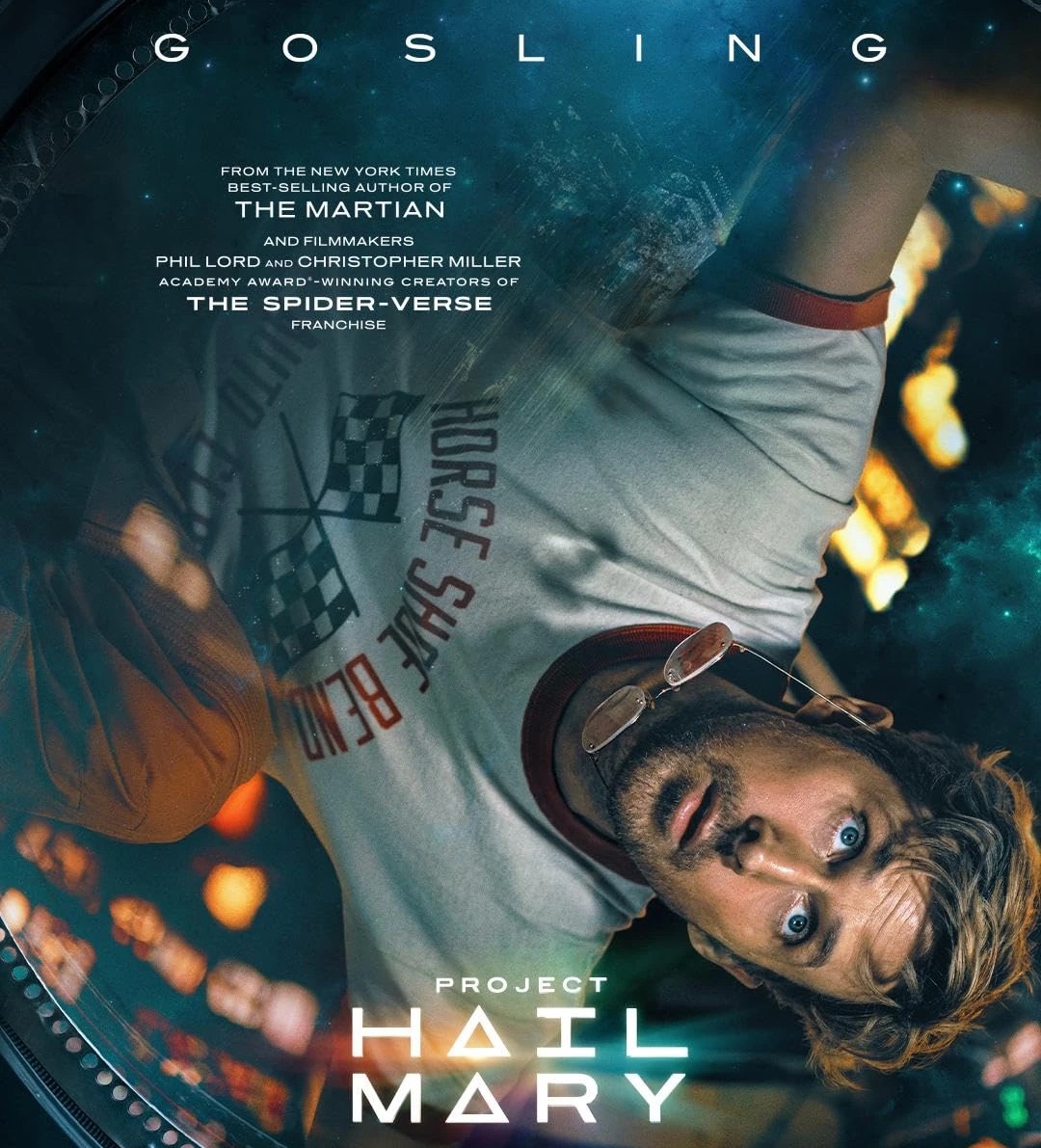

Review: Project Hail Mary (dir. by Phil Lord and Christopher Miller)


“I am happy. You no die. Let’s save planets!” — Rocky

Project Hail Mary delivers a crowd-pleasing space adventure that captures the spirit of Andy Weir’s bestselling novel without reinventing the sci-fi wheel. Ryan Gosling shines as the reluctant hero, carrying the film through its mix of brainy puzzles and heartfelt moments. Directed by Phil Lord and Christopher Miller, this big-budget adaptation balances wonder with some familiar tropes, making it a solid popcorn flick for fans of hard science fiction laced with humor.

The story kicks off with Dr. Ryland Grace, a brilliant but socially awkward science teacher played by Gosling, who wakes up alone on a spaceship hurtling through the solar system. He has amnesia, no crewmates, and a mission he can’t quite remember—saving Earth from a mysterious microbe called Astrophage that’s dimming the sun and threatening global catastrophe. As Grace pieces together his past through flashbacks, we see how he went from a disgraced academic debunking fringe theories to humanity’s last-ditch savior. The setup echoes The Martian, Weir’s previous hit, with its lone survivor using wit and science to beat impossible odds.

Gosling nails the everyman genius vibe, blending wide-eyed confusion with deadpan quips that keep things light. His Grace is no stoic astronaut; he’s a guy who’d rather teach middle school than lead a suicide mission, cracking jokes about his fear of commitment even as he’s rigging experiments with duct tape and hope. The performance anchors the film’s emotional core, especially in quieter moments where Grace grapples with isolation and doubt. Sandra Hüller adds gravitas as Eva Stratt, the no-nonsense project leader who strong-arms world governments into action—she’s all icy efficiency, a nice counterpoint to Gosling’s rumpled charm.

Lord and Miller, the duo behind The Lego Movie and Spider-Man: Into the Spider-Verse, bring their signature visual flair to the vastness of space. The Hail Mary ship feels lived-in and jury-rigged, with practical sets that pop against sweeping CGI vistas of alien planets and swirling Astrophage clouds. Early scenes use dreamlike tilts and blurred transitions to mirror Grace’s foggy memory, creating a disorienting but captivating rhythm. It’s not always seamless—the nonlinear structure can jolt you out of the immersion—but it builds tension effectively as revelations stack up.

Screenwriter Drew Goddard, who collaborated with Weir on The Martian, stays faithful to the book’s plot beats and scientific grounding. Astrophage isn’t just a plot device; it’s a clever microorganism that feeds on starlight, explained through Grace’s whiteboard scribbles and explosive demos. The film dives into real astrophysics—like orbital mechanics and xenobiology—without dumbing it down, yet it keeps the pace brisk with problem-solving montages set to a retro-futuristic score. Think Guardians of the Galaxy vibes, complete with a catchy farewell tune that hits surprisingly hard.

About halfway through, the story pivots to its most memorable element: Grace’s encounter with Rocky, an alien engineer from the 40 Eridani system. Voiced and puppeteered by James Ortiz, Rocky is a spider-like creature with a high-pitched ammonia-breathing voice, communicated via a bulky translation rig à la Arrival. Their friendship is the heart of Project Hail Mary, turning a solo survival tale into a buddy sci-fi romp. The xenolinguistics—figuring out math and music as common ground—feels fresh and fun, with practical effects making Rocky endearing rather than creepy.

That said, the film isn’t flawless. Clocking in around two hours, it rushes some of the book’s deeper world-building, like the global panic on Earth or the crew’s backstories, which get condensed into quick flashbacks. Grace’s arc from coward to hero leans on a simple mantra—”bravery is fighting for someone else”—that’s uplifting but predictable. It doesn’t push cinematic boundaries like Interstellar or Dune, settling for feel-good spectacle over profound philosophy. The massive budget shows in the polish, but it occasionally feels like a theme-park ride: thrilling set pieces, like a high-stakes EVA gone wrong, prioritize awe over subtlety.

Visually, the film excels in its alien encounters and spacewalk sequences, with IMAX-friendly shots of Eridani b’s jagged landscapes and bioluminescent horrors. The Astrophage effects are a standout—tiny, shimmering specks that swarm like deadly fireflies, rendered with meticulous detail. Sound design amplifies the isolation, from the hum of life support to Rocky’s echolocating chirps. It’s all wrapped in a score that mixes orchestral swells with synth grooves, evoking 80s space operas while feeling modern.

Thematically, Project Hail Mary champions collaboration across species and borders, a timely nod amid real-world divisions. Grace’s growth isn’t just about smarts; it’s about vulnerability, learning to trust Rocky despite zero shared language or biology. The film handles this with sincerity, avoiding preachiness by grounding it in humor—imagine two nerds bonding over thermodynamics while one’s in a pressurized suit and the other’s a five-eyed rock. It’s optimistic sci-fi that posits curiosity as humanity’s superpower, even if the execution stays safely within blockbuster lanes.

Supporting cast fleshes out the ensemble without stealing focus. Tracy Letts chews scenery as a blustery politician, while smaller roles like the multinational crew add diversity to the stakes. Production design nods to NASA realism, with the Beetle probes (Grace’s mini-shuttles) stealing scenes in their plucky, R2-D2 fashion. Pacing dips in the mid-act info dumps, but Goddard trims the fat smartly, ensuring the climax—a desperate race against entropy—delivers white-knuckle payoff.

Early reactions praise its fidelity to Weir’s page-turner, with fans thrilled by the faithful visuals and emotional beats. Detractors might call it formulaic, but in a genre crowded with grimdark dystopias, this one’s a breath of fresh (oxygenated) air. It’s not the most original sci-fi, but it’s entertaining as hell, blending laughs, tears, and light-speed thrills.

For book purists, the adaptation honors the source without copying verbatim—key twists land with impact, and the science holds up under scrutiny. Weir himself has endorsed it, chatting about Rocky’s creation and making quantum mechanics accessible. If you’re burned out on capes or zombies, Project Hail Mary offers smart, hopeful escapism that sticks the landing.

Ultimately, this is peak “movie medicine”—a fun, moving reminder that lone wolves become legends with the right friends, human or otherwise. Gosling’s charisma, paired with Lord and Miller’s playful direction, makes it soar higher than its plot alone might suggest. Worth the ticket for any sci-fi buff craving brains with their spectacle; just don’t expect it to redefine the stars.

Dune: Part One (dir. by Denis Villeneuve) Review


“I said I would not harm them and I shall not. But Arrakis is Arrakis and the desert takes the weak. This is my desert. My Arrakis. My Dune.” — Baron Vladimir Harkonnen

Denis Villeneuve’s Dune: Part One is one of those big, monolithic blockbusters that feels less like a movie night and more like being slowly lowered into someone else’s dream. It’s massive, deliberately paced, and sometimes emotionally chilly, but when it hits, it really hits, and you can feel a director absolutely obsessed with getting this universe right. The film adapts roughly the first half of Frank Herbert’s novel, following Paul Atreides, heir to House Atreides, as his family accepts control of the desert planet Arrakis, the only source of the spice melange that powers space travel and heightens human abilities. The setup is pure operatic space-feudalism: the Emperor orders House Atreides to take over Arrakis from their bitter rivals, House Harkonnen, in what is basically a beautifully staged death trap. Villeneuve leans into the political trap aspect; even if you’ve never read Dune, you can tell from minute one that this is not an opportunity, it’s a setup, and that sense of doom hangs over everything.

What Villeneuve really nails is the “ancient future” texture that people always talk about with Dune but rarely pull off on screen. The technology looks advanced but worn, ritualized, and heavy, from the gargantuan starships to the dragonfly-like ornithopters that rattle and pitch like actual aircraft instead of sleek sci-fi toys. The production design and Greig Fraser’s cinematography go all-in on scale: Caladan’s stormy oceans, Arrakis’s endless dunes, cavernous fortresses that make the human figures look insignificant. It’s not just pretty—it’s doing character work for the universe, selling you on the idea that people here live under forces (political, religious, environmental) that absolutely dwarf them. In theme terms, this is Villeneuve visually translating Herbert’s obsession with ecology and power structures, but he externalizes it more than the book: instead of living inside characters’ heads, you’re constantly being reminded how small they are against their environment.

All of that is backed by Hans Zimmer’s aggressive, sometimes overwhelming score, which sounds like someone trying to invent religious music for a civilization that doesn’t exist yet. It’s not subtle; there are bagpipes blaring on Caladan, guttural chants over Sardaukar warriors being ritually baptized in mud, and wailing voices that basically scream “destiny” every time Paul has a vision. But it syncs with Villeneuve’s approach: this is myth-making by way of blunt force, and the sound design and music are part of the same strategy of immersion and awe. Compared to the novel’s intricate, almost clinical tone, the film leans much harder into a mythic, quasi-religious mood. That means some of Herbert’s more sardonic or critical edges get smoothed out, but it also lets Villeneuve foreground the feeling of a civilization that already half-believes its own prophecies.

Narratively, Dune: Part One walks a weird tightrope. On one hand, this is a story about prophecies, chosen ones, and a messiah in the making, but on the other, the film quietly undercuts that fantasy. Villeneuve and his co-writers emphasize the Bene Gesserit’s centuries-long manipulation of bloodlines and myths, including seeding prophecies among the Fremen, so Paul’s “chosen one” status comes prepackaged with a lot of moral unease. That’s one of the places where Villeneuve stays very faithful to Herbert: the idea that religious belief can be engineered and weaponized. At the same time, by stripping out so much of the book’s interior commentary, the movie makes that critique more atmospheric than explicit. You feel that something is off about Paul’s destiny—the visions of holy war help with that—but you don’t hear the narrative voice outright interrogating the myth the way the novel does. It’s like Villeneuve wants the audience to experience the seduction of the messiah narrative first, and only slowly realize how poisonous it is.

Timothée Chalamet’s performance takes advantage of that approach by playing Paul as a kid who has been trained his whole life for greatness but absolutely does not want the role he’s being handed. Early on, he’s soft-spoken, almost recessive, but you see flashes of arrogance and temper, especially in the Gom Jabbar test and the later tent breakdown after his visions of a holy war in his name. Villeneuve doesn’t try to turn him into an instant charismatic leader; instead, he feels like a thoughtful, scared teenager caught in a machine that’s been running for centuries. That divergence from the source material is subtle but important: book-Paul, with all his internal analysis and mentat-like processing, comes off almost superhumanly composed. Film-Paul is less in control, more overwhelmed, which shifts the theme from “a superior mind learning to navigate fate” toward “a boy being crushed into a role he might never have truly chosen.”

The supporting cast is absurdly stacked, and the film uses them more as archetypes orbiting Paul than as fully fleshed-out characters, which is both a feature and a bug. Oscar Isaac’s Duke Leto radiates tired nobility, a man who knows he is walking into a trap but refuses to show fear because he needs his people to believe. Rebecca Ferguson’s Lady Jessica might be the most compelling presence in the movie: a Bene Gesserit trained in manipulation and control, visibly torn between her loyalty to the order and her love for her son. Ferguson gives Jessica a constant undercurrent of panic; even when she’s composed and commanding the Voice, you can feel the guilt and fear simmering underneath. In Herbert’s text, Jessica carries a heavy burden of calculation and self-critique through internal monologue; Villeneuve replaces that with rawer, more visible emotion. That choice makes Jessica more immediately relatable on screen but also shifts the theme slightly—from a cold, almost chess-like examination of breeding programs and long-term plans to a more intimate conflict between institutional programming and maternal love.

On the more purely fun side, Jason Momoa’s Duncan Idaho brings some sorely needed looseness and warmth. He’s one of the only characters who feels like he exists outside the grim political machinery, which makes his relationship with Paul read as genuinely affectionate instead of court-mandated mentorship. His big stand against the Sardaukar is shot like a mythic warrior’s last stand, and it sells Duncan as the kind of legend people would sing about after the fact. The tradeoff is that Duncan’s characterization leans into straightforward heroism; some of the book’s emphasis on the complexities and limits of loyalty gets compressed into a single grand gesture. Josh Brolin’s Gurney Halleck mostly glowers and shouts in this installment, but there’s enough there—especially in the training scene—that you get a sense of this gruff soldier-poet without the film ever stopping to spell it out. What’s missing, though, is the more overt sense of Atreides culture and camaraderie that the novel lingers on; Villeneuve sketches it, then moves on.

If the heroes lean archetypal, the villains almost go minimalistic to a fault. Stellan Skarsgård’s Baron Harkonnen is an imposing, bloated specter, more a presence than a personality; he spends a lot of time floating, brooding, and letting the makeup and lighting do the talking. In the book, the Baron is a much more talkative schemer, constantly plotting and vocalizing his nastiness, which underlines Herbert’s theme of decadence rotting the powerful from within. Here he’s closer to a horror-movie monster, which works visually but makes the political conflict feel a bit less textured. It’s a conscious trade: Villeneuve sacrifices some of Herbert’s satirical bite for a cleaner, more archetypal good-house-versus-evil-house dynamic. The Mentats, like Thufir Hawat and Piter de Vries, also get sidelined, and with them goes a lot of the book’s focus on human computation and the consequences of tech bans; the movie nods to that world-building but clearly doesn’t prioritize those themes.

Where Dune: Part One really shines is in its set-pieces that double as worldbuilding lessons. The spice harvester rescue sequence isn’t just about a sandworm attack; it’s a crash course in how dangerous Arrakis is, how unwieldy the spice operation can be, and how Paul reacts when the spice hits his system and his visions start intensifying. The hunter-seeker assassination attempt in his room does something similar for palace intrigue and surveillance, even if the staging (Paul standing unnervingly still as the device inches toward him) has rubbed some viewers the wrong way. These scenes make Arrakis feel like a living trap: environmental, political, and spiritual all at once. Compared to the novel’s detailed ecological and economic exposition, Villeneuve’s version is more experiential—you feel sandstorms and worm sign before you fully understand the larger ecological philosophy that Herbert spells out. That keeps the film more cinematic, but it also means the deeper environmental thesis is only hinted at rather than explored.

The downside of Villeneuve’s devotion to mood and worldbuilding is pacing. This is a two-and-a-half-hour movie that very much feels like “Part One,” and you can sense the absence of a conventional third-act climax. The story peaks emotionally with the fall of House Atreides—Leto’s death, Duncan’s sacrifice, Kynes’s end—but then keeps going, drifting into the deep desert with Paul and Jessica. The final duel with Jamis is thematically important—Paul’s first deliberate kill, a step toward becoming the kind of leader his visions imply—but as a closer for a blockbuster, it’s quiet and off-kilter. What’s interesting is how that duel distills one of Herbert’s key themes—the cost of survival and leadership—down to a single, intimate moment. The book wraps that in a ton of cultural detail and internal reflection; the film pares it down to body language, breath, and a few lines of dialogue. Villeneuve keeps the moral weight of the act but narrows the lens, trusting the audience to sit with what it means for Paul to cross that line without spelling it out.

If you come in as a Dune novice, the film is surprisingly navigable but not always emotionally generous. Villeneuve strips away the novel’s dense internal monologues and replaces them with visual suggestion and sparse dialogue, which keeps the movie from turning into a two-hour voiceover but also makes some motivations feel opaque. Characters like Dr. Yueh suffer the most from this approach; his betrayal happens so quickly and with so little setup that it plays more as a plot requirement than a tragic inevitability. That’s a clear case where the film discards a major thematic thread: Herbert uses Yueh to dig into ideas of conditioning, trauma, and the limits of “programmed” loyalty, but Villeneuve mostly uses him to push the plot into the Harkonnen attack. The tradeoff is understandable in a two-part film structure, but it’s a noticeable hollow spot for viewers who care about the story’s psychological underpinnings.

Still, as an opening movement, Dune: Part One feels like a deliberate choice to build the cathedral before lighting the candles. It’s more concerned with making Arrakis, its politics, and its religious machinery feel tangible than with delivering a neatly wrapped narrative. That can make it frustrating if you want a self-contained story, but it pays off in atmosphere: by the time Paul and Jessica join Stilgar’s Fremen and we get that final image of a sandworm being ridden across the dunes, you believe this is a place where myths can walk around as real people. Villeneuve stays true to Herbert’s broad thematic architecture—power, religion as control, ecology as destiny—but he discards a lot of the author’s density and interior commentary in favor of a more streamlined, sensory-driven experience. As a result, the film feels less like reading a dense political text and more like standing inside the legend that text would later be written about.

As a complete film, it’s imperfect—sometimes emotionally distant, sometimes so in love with its own scale that character beats get swallowed—but it’s also one of the rare modern blockbusters that feels handcrafted rather than committee-engineered. As an adaptation, it respects the spirit of Dune while making sharp, cinematic choices about what to emphasize and what to streamline, even if that means some beloved book moments get reduced or reconfigured. And as a foundation for a larger saga, it does exactly what “Part One” says on the label: it sets the board, crowns no clear winners, and leaves you with the distinct feeling that the real story—the dangerous one—is only just beginning.

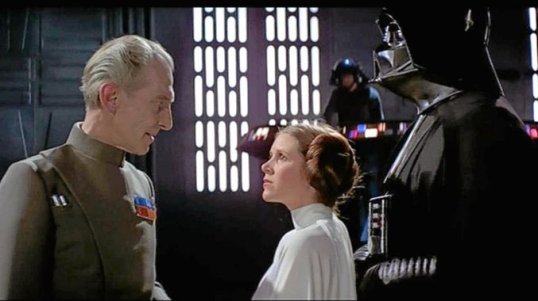
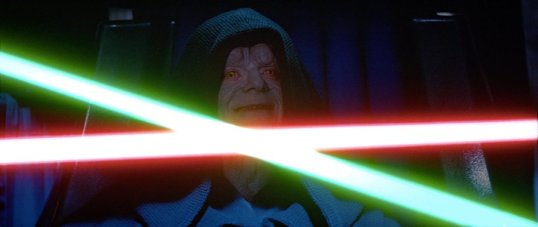
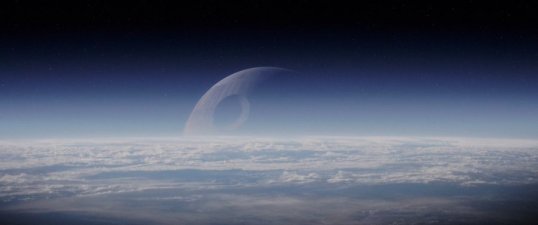
4 Shots From 4 Films: Special Star Wars Edition


4 Or More Shots From 4 Or More Films is just what it says it is, 4 shots from 4 of our favorite films. As opposed to the reviews and recaps that we usually post, 4 Shots From 4 Films lets the visuals do the talking!

Today, we wish all of our readers a happy May The Fourth Be With You Day!  It’s time for….

4 Shots From 4 Star Wars Films

Star Wars Episode IV: A New Hope (1977, dir by George Lucas, DP: Gilbert Talyor)

The Empire Strike Back (1980, dir by Irvin Kershner, DP: Peter Suschitzky)

Return of the Jedi (1983, dir by Richard Marquand, DP: Alan Hume and Alec Mills)

Rogue One (2016, dir by Gareth Edwards, DP: Greig Fraser)

4 Shots From 4 Films: Special Star Wars Edition


4 Or More Shots From 4 Or More Films is just what it says it is, 4 shots from 4 of our favorite films. As opposed to the reviews and recaps that we usually post, 4 Shots From 4 Films lets the visuals do the talking!

Today, we wish all of our readers a happy May The Fourth Be With You Day!  It’s time for….

4 Shots From 4 Star Wars Films

Star Wars Episode IV: A New Hope (1977, dir by George Lucas, DP: Gilbert Talyor)

The Empire Strike Back (1980, dir by Irvin Kershner, DP: Peter Suschitzky)

Return of the Jedi (1983, dir by Richard Marquand, DP: Alan Hume and Alec Mills)

Rogue One (2016, dir by Gareth Edwards, DP: Greig Fraser)

The Batman (dir. by Matt Reeves)


I slept on it before writing this, to let the euphoria pass.

Matt Reeves’ The Batman surprised me in a number of ways, some of which can’t be mentioned without throwing spoilers. I’ll perhaps write a second piece on this, but for now, understand that this film has effectively pushed The Dark Knight to the side as my favorite live-action Batman film (The Lego Batman Movie stands on a pedestal all it’s own above all the rest). My favorite Batman stories are the detective tales. Gotham by Gaslight. The Long Halloween. Hush.

On film, the Caped Crusader has moments of investigation, but they often took a backseat either to the action or the resolution came as quickly as a Batcomputer search. For me, The Batman had closer ties to films like David Fincher’s Seven, Alan J. Pakula’s Klute, Bruce Malmuth’s Nighthawks, and even Shane Black’s The Nice Guys to some degree. It does all this legwork while finding a way to avoid giving us the same clip of the Monarch Shooting of the Waynes. That alone is worth it for me. This is Batman. After more than 9 films, you’d be hard pressed to find anyone on the planet younger than maybe six who doesn’t know how he got that way.

Living in NYC, I can relate to Gotham City. On the surface, it’s beautiful. For those who can afford it, there are tons of amenities available to its citizens. Peel back that layer, though, and you’ll always have Crime in a city holding 9 million people. It’s a constant as rain. Gotham City is on the verge of breakdown. Looking at the torn poster filled streets and I was reminded of a cross between Walter Hill’s Streets of Fire and Alex Proyas’ The Crow .and the way most of Manhattan looks now with it’s closed down stores. The city almost serves as a character itself in The Batman. It’s a throwback to some of the classic black and white detective movies my parents grew up on like 1947’s Kiss of Death. For all his gadgets and resources, there’s an argument suggesting the Batman can never really save his beloved city, though we love his efforts.

“Forget it, Bruce. It’s Gotham.” one might as well say.

Visually, the movie is a little dark, but that makes sense given the tone of the film. Cinematographer Greig Fraser (Dune, Zero Dark Thirty) is somewhat new to me, but I’m liking his work, which felt a little like Janusz Kaminski’s Lost Souls. It wasn’t dark to the point where I couldn’t make out elements (and I was sitting in the front row, far left side in my theatre), I’ll say that much. I’ll keep an eye on him in the future.

The Batman takes place in our hero’s second to third year, according to an early narration (much like Blade Runner). Batman has a good rapport with Lt. James Gordon (Jeffrey Wright, No Time to Die) and his butler, Alfred (Andy Serkis, reuniting with Reeves since Dawn of the Planet of the Apes), for the most part, there are some results. Criminals flee when the bat symbol shines in the night sky, because no one really knows where The Dark Knight will strike. A new murder brings both Gordon and the Batman into play, as his opponent leaves various riddles for them to solve. The mystery brings Batman into various circles, including those of Selina Kyle (Zoe Kravitz, Kimi), crime boss Carmine Falcone (John Turturro, The Big Lebowski) and Oz (Colin Farrell, The Gentlemen). They all bring in great performances, including Peter Sarsgaard (Green Lantern), but it’s Paul Dano (Ruby Sparks, There Will Be Blood) who really runs away with things as The Riddler. I’ve never considered The Riddler to be a creepy villain, but this was quite dark, even for DC’s standards. I can’t imagine how it would have turned out if this was a Rated R film. I’m really curious to know.

Lt. James Gordon (Jeffrey Wright) and The Batman (Robert Pattinson) do some Detective work in Matt Reeves’ The Batman

Bruce Wayne has never been an easy character to handle on screen.

There are whole books written on the Psychology of the Batman. Here you have an individual who witnessed his parents being murdered as a kid and grows up in a near empty mansion with butlers and maids. The individual decides to dedicate his life (and vast resources) to studying criminal investigation techniques, martial arts and even Ninjitsu for a singular focus: To rid Gotham City of Crime. Add to this the concept of instilling fear in one’s enemies, and dressing up like a Bat to pummel thugs with fists and gadgets just adds to Wayne’s madness. Pattinson honed in on this and turns Bruce Wayne into a pretty isolated and brooding individual. For someone with nearly unlimited resources, he doesn’t seem happy with any of it at all. At least Keaton pretended to party and Clooney’s Wayne truly did party. Bale’s Wayne let Fox focus on research and development. Hell, even Affleck’s Wayne recognized he was rich and flaunted it like a superpower all its own. Pattinson’s Batman is lean and really looks like the kind of guy you might find stepping out of the shadows just past Wall Street late at night. No offense to Affleck’s Batman, who for some is the pinnacle of what the character should be, but I’ve always associated that look with the older, fresh out of retirement Batman of Frank Miller’s The Dark Knight Returns.

Together, Pattinson and Kravitz’ chemistry was really nice on screen. I’ll admit, I enjoyed the romance between the two. Both characters accept tha they’re Creatures of the Night, and there’s this sweet give and take between the two as they nudge each other. Selina doesn’t have to do crime, and Batman doesn’t have to be the spirit of Vengeance, but they’re caught up in what works best for them. I enjoyed that aspect.

At first listen (about a week ago), I thought Michael Giacchino’s theme needed something outside of the four note motif it had. Hearing the music with the movie is a different beast, and I have to say, it works really well here. In some places, it’s as minimalistic as Hans Zimmer’s Nolan scores.

Now, a little Devil’s Advocate. The main problem I had with The Batman was the same I had with Spider-Man: No Way Home. I understand DC & Warner Bros. want to draw people into the theatre, but in this age where every element of a trailer is scanned and studied, I’d argue that 40% of the action you watched on screen were already somewhat spoiled by the trailer (or trailers, if you watched every one the Warners released). I’m not saying one should refrain from watching trailers – I only watched the teaser and the main trailer – but I would have liked if they held some scenes back. One might also argue The Batman was lighter on action than the other films, but it’s the detective work and the character performances that make up for it.

There’s also a lot of rain. Almost too much. Remember the sequence in Jurassic Park with the first appearance of the T-Rex? I would say that most of The Batman is set under somewhat similar conditions. It felt like it either just rained, was about to, or you were in the middle of a downpour. Then again, so did The Crow. Perhaps that’s just a nitpick on my part.

Also, clocking in at 2 hours and 56 minutes, it’s a long film. You might not really notice it, but I’d go so far to say that the time didn’t feel wasted. I noticed 3 or 4 people who left for the restroom in my showing, if that’s any indication.

Overall, The Batman was a wonderful surprise from the DC side of things, and I’m liking the direction it’s going. It might not be a completely connected universe like Marvel’s lineup, but they’re proving they can still weave some amazing stories with the characters they have.

Here Are the 2021 Nominations of the Washington D.C. Area Film Critics!


The Washington D.C. Area Film Critics have announced their nominees for the best of 2021!  The winners will be announced tomorrow so that means you have exactly one day to see all the nominees.  GET TO IT!

Best Film
Belfast
The Green Knight
The Power of the Dog
tick, tick…BOOM!
West Side Story

Best Director
Kenneth Branagh – Belfast
Jane Campion – The Power of the Dog
David Lowery – The Green Knight
Steven Spielberg – West Side Story
Denis Villeneuve – Dune

Best Actor
Nicolas Cage – Pig
Benedict Cumberbatch – The Power of the Dog
Andrew Garfield – tick, tick…BOOM!
Will Smith – King Richard
Denzel Washington – The Tragedy of Macbeth

Best Actress
Olivia Colman – The Lost Daughter
Nicole Kidman – Being the Ricardos
Lady Gaga – House of Gucci
Kristen Stewart – Spencer
Tessa Thompson – Passing

Best Supporting Actor
Jamie Dornan – Belfast
Ciarán Hinds – Belfast
Troy Kotsur – CODA
Jesse Plemons – The Power of the Dog
Kodi Smit-McPhee – The Power of the Dog

Best Supporting Actress
Caitríona Balfe – Belfast
Ariana DeBose – West Side Story
Ann Dowd – Mass
Kirsten Dunst – The Power of the Dog
Aunjanue Ellis – King Richard

Best Acting Ensemble
Belfast
The French Dispatch
The Harder They Fall
Mass
The Power of the Dog

Best Youth Performance
Jude Hill – Belfast
Emilia Jones – CODA
Woody Norman – C’mon, C’mon
Saniyya Sidney – King Richard
Rachel Zegler – West Side Story

Best Voice Performance
Awkwafina – Raya and the Last Dragon
Stephanie Beatriz – Encanto
Abbi Jacobson – The Mitchells vs. the Machines
Kelly Marie Tran – Raya and the Last Dragon
Jacob Tremblay – Luca

Best Original Screenplay
Kenneth Branagh – Belfast
Mike Mills – C’mon, C’mon
Zach Baylin – King Richard
Paul Thomas Anderson – Licorice Pizza
Fran Kranz – Mass

Best Adapted Screenplay
Siân Heder – CODA
Jon Spaihts and Denis Villeneuve and Eric Roth – Dune
Jane Campion – The Power of the Dog
Steven Levenson – tick, tick…BOOM!
Tony Kushner – West Side Story

Best Animated Feature
Encanto
Flee
Luca
The Mitchells vs. the Machines
Raya and the Last Dragon

Best Documentary
The First Wave
Flee
The Rescue
Summer of Soul (…Or, When the Revolution Could Not Be Televised)
Val

Best International/Foreign Language Film
Drive My Car
A Hero
Lamb
Titane
The Worst Person in the World

Best Production Design
Jim Clay, Production Designer; Claire Nia Richards, Set Decorator – Belfast
Patrice Vermette, Production Designer; Richard Roberts and Zsuzsanna Sipos, Set Decorators – Dune
Adam Stockhausen, Production Designer; Rena DeAngelo, Set Decorator – The French Dispatch
Tamara Deverell, Production Designer; Shane Vieau, Set Decorator – Nightmare Alley
Adam Stockhausen, Production Designer; Rena DeAngelo, Set Decorator – West Side Story

Best Cinematography
Haris Zambarloukos – Belfast
Greig Fraser – Dune
Andrew Droz Palermo – The Green Knight
Ari Wegner – The Power of the Dog
Bruno Delbonnel – The Tragedy of Macbeth

Best Editing
Úna Ní Dhonghaíle – Belfast
Joe Walker – Dune
Andrew Weisblum – The French Dispatch
Peter Sciberras – The Power of the Dog
Myron Kerstein & Andrew Weisblum – tick, tick…BOOM!

Best Original Score
Bryce Dessner & Aaron Dessner – Cyrano
Hans Zimmer – Dune
Alexandre Desplat – The French Dispatch
Jonny Greenwood – The Power of the Dog
Jonny Greenwood – Spencer

Here Are The Nominations of the Costume, Make-Up, and Cinematography Guilds!


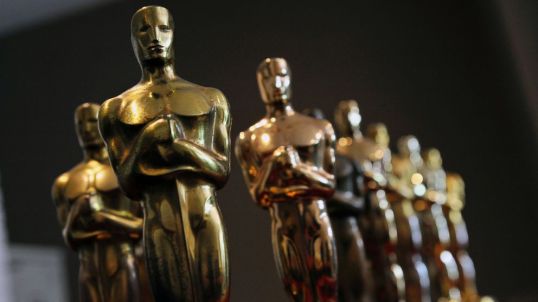
Oscars

Three more guilds announced their nominees for the best of 2016 last week and while none of them may have gotten as much attention as the DGA or the PGA, they all play in role in our attempts to predict which films will actually be nominated when the Oscar nominations are announced on Tuesday!

So, to help you out when you’re making your bets, here are the guilds!

Costume Designers Guild

Excellence in Contemporary Film

Absolutely Fabulous: The Movie – Rebecca Hale

Captain Fantastic – Courtney Hoffman

La La Land – Mary Zophres

Lion – Cappi Ireland

Nocturnal Animals – Arianne Phillips

Excellence in Period Film

The Dressmaker – Marion Boyce, Margot Wilson

Florence Foster Jenkins – Consolata Boyle

Hail, Caesar! – Mary Zophres

Hidden Figures – Renee Ehrlich Kalfus

Jackie – Madeline Fontaine

Excellence in Fantasy Film

Doctor Strange – Alexandra Byrne

Fantastic Beasts and Where to Find Them – Colleen Atwood

Kubo and the Two Strings – Deborah Cook

Miss Peregrine’s Home for Peculiar Children – Colleen Atwood

Rogue One: A Star Wars Story – David Crossman, Glyn Dillion

American Society of Cinematographers

Make-up And Hairstylists Guild

1. FEATURE-LENGTH MOTION PICTURE – BEST CONTEMPORARY MAKE-UP

CAPTAIN FANTASTIC
Make-Up Artists: Karen McDonald, Akemi Hart
LA LA LAND
Make-Up Artists: Torsten Witte, Angel Radefeld-Wright
MANCHESTER BY THE SEA
Make-Up Artists: Liz Bernstrom, Sherryn Smith
NOCTURNAL ANIMALS
Make-Up Artists: Donald Mowat, Malanie J. Romero, Elaine Offers
ZOOLANDER 2
Make-Up Artist: Maurizio Silvi

2. FEATURE-LENGTH MOTION PICTURE – BEST CONTEMPORARY HAIR STYLING

LA LA LAND
Hair Stylists: Barbara Lorenz, Jackie Masteran, Frida Aradottir
NOCTURNAL ANIMALS
Hair Stylists: Yolanda Toussieng, Jules Holdren
SULLY
Hair Stylists: Patricia Dehaney, Jose Zamora
THE GIRL ON THE TRAIN
Hair Stylist: Alan D’Angerio
ZOOLANDER 2
Hair Stylist: Aldo Signoretti

3. FEATURE-LENGTH MOTION PICTURE – BEST PERIOD AND/OR CHARACTER MAKE-UP


DOCTOR STRANGE
Make-Up Artist: Jeremy Woodhead
FANTASTIC BEASTS AND WHERE TO FIND THEM
Make-Up Artists: Fae Hammond, Marilyn MacDonald
HAIL, CAESAR!
Make-Up Artists: Jean Ann Black, Julie Hewett, Zoe Hay
LOVING
Make-Up Artists: Julia Lallas, Katie Middleton
SUICIDE SQUAD
Make-Up Artist: Alessandro Bertolazzi

4. FEATURE-LENGTH MOTION PICTURE – BEST PERIOD AND/OR CHARACTER HAIR STYLING

FANTASTIC BEASTS AND WHERE TO FIND THEM
Hair Stylists: Fae Hammond, Marilyn MacDonald
FLORENCE FOSTER JENKINS
Hair Stylist: J. Roy Helland
HAIL, CAESAR!
Hair Stylists: Cydney Cornell, Pauletta Lewis-Irwin, Matt Danon
JACKIE
Hair Stylists: Catherine Leblanc-Caraes, Tony Rochetti
LOVING
Hair Stylists: Kenneth Walker, Elizabeth Paschall

5. FEATURE-LENGTH MOTION PICTURE – BEST SPECIAL MAKE-UP EFFECTS

DEADPOOL
Make-Up Artists: Bill Corso, Andrew Clement
DOCTOR STRANGE
Make-Up Artist: Jeremy Woodhead
FANTASTIC BEASTS AND WHERE TO FIND THEM
Make-Up Artist: Fae Hammond
STAR TREK BEYOND
Make-Up Artists: Joel Harlow, Richie Alonzo
SUICIDE SQUAD
Make-Up Artists: Christopher Nelson, Sean Sansom, Greg Nicotero