Horror Film Review: C.H.U.D. (dir by Douglas Cheek)


There’s something living under the streets of New York City.

That’s the basic idea behind 1984’s C.H.U.D., a film that opens with an upper class woman and her little dog being dragged into the sewers by a creature the reaches out of a manhole.  People are disappearing all over the city but the authorities obviously aren’t revealing everything that they know.  Even after the wife of NYPD Captain Bosch (Christopher Curry) disappears, the city government doesn’t seem to be too eager to dig into what exactly is happening.

Instead, it falls to two activists.  Photographer George Cooper (John Heard) specializes in taking picture of the homeless, especially the one who live underground in the New York subways.  He’s like a well-groomed version of Larry Clark, I guess.  Social activist A.J. “The Reverend” Shepherd (Daniel Stern) runs a homeless shelter and is convinced that something is preying on the most vulnerable citizens of New York.  When the police won’t do their job, George and the Reverend step up!

So, what’s living in the sewers?  Could it be that there actually are cannibalistic humanoid underground dwellers out there?  Everyone in New York City has heard the legends but, much like stories of the alligators in the Chicago sewers, most people chose not to believe them.  Or could the disappearance have something to do with the cannisters labeled Contamination Hazard Urban Disposal that are being left in the sewers by the Nuclear Regulatory Commission?  Wilson (George Martin) of the NRC says that they would never purposefully mutate the people living underground but Wilson works for the government so who in their right mind is going to trust him?

C.H.U.D. is a horror film with a social conscience.  It’s very much an 80s films because, while you have Shepherd running around and attacking everyone for not taking care of the most vulnerable members of society, the true villain is ultimately revealed to be the members of a regulatory agency.  Instead of finding a safe way to get rid of their nuclear waste, they just found a sneaky way to abandon it all in New York and obviously, they assumed no one would care because …. well, it’s New York.  Everyone in the country knows that New York City isn’t safe so who is going to notice a few underground monsters, right?

The idea behind C.H.U.D. has a lot of potential but the execution is a bit lackluster.  For every good C.H.U.D. kill, there’s long passages where the story drags.  Considering that Heard spent most of his career typecast as the type of authority figure who would dump nuclear waste under New York City, it’s actually kind of interesting to see him playing a sympathetic role here.  Daniel Stern, on the other hand, is miscast and rather hyperactive as Shepherd.  You really do want someone to tell him to calm down for a few minutes.  Watching C.H.U.D., one gets the feeling that it’s a film with an identity crisis.  Is it a horror film, an action flick, a work of social commentary, or a dark comedy?  There’s no reason why it can’t be all four but C.H.U.D. just never really comes together.  It ultimately feels more like a mix of several different films instead of being a film made with one clear and coherent vision.

In the end, Death Line remains the film to see about underground cannibals.
Lisa Marie Reviews An Oscar Nominee: Mississippi Burning (dir by Alan Parker)


1988’s Mississippi Burning opens on a lonely Mississippi backroad in 1964.  A car is pulled over by the police.  Inside the car are three young men, one black and two white.  Judging from their nervous expressions and the sound of the people who stopped them and the fact that they’re in Mississippi during the 60s, we can guess what is about to happen to the people in the car.

With the three men, who were civil rights activists who were involved in voter registration efforts, officially considered to be missing, the FBI sends down two agents to find out what happened.  The two agents are Alan Ward (Willem DaFoe) and Rupert Anderson (Gene Hackman).  Ward is a Northerner who does things by the book and who resents having to deal with lax Southern law enforcement.  He is serious-minded and, just in case we need a reminder of how serious he is, he wears bar-rimmed glasses that make him look like the world’s most fearsome IRS agent.  Anderson is from Mississippi.  He’s a talkative good ol’ boy who was a sheriff before he joined the FBI.  “You know what has four eyes but can’t see?” Anderson asks, “Mississippi.”  It’s a tense partnership, as Ward sometimes disapproves of Anderson’s methods and Anderson thinks that Ward doesn’t understand how things work in Mississippi.

From the first minute we meet local law enforcement, we know that they’re the killers.  Just the fact that one of them are played by Brad Dourif is evidence enough.  However, no one in town is willing to say a word against the police or their cronies.  The white citizens are either too intimidated or they agree with what happened to the three civil rights workers.  (The three men are often referred to as being “outside agitators.”)  The black townspeople live in fear of the Klan and have no reason to trust the word of white FBI agents like Ward and Anderson.

Ward and Anderson investigate the case, hoping that they can find some bit of evidence that will prove the guilt of Sheriff Stuckey (Gailard Sartain), Deputy Pell (Brad Dourif), KKK leader Clayton Townley (Stephen Tobolowsky), and maybe even the town’s mayor (R. Lee Ermey).  One advantage that the FBI has is that the murderers are incredibly stupid.  Another is that Deputy Pell’s abused wife (Frances McDormand, giving the film’s best performance) might be persuaded to testify against her husband.

Mississippi Burning is an example of both powerful filmmaking and problematic history.  Like Ridley Scott, director Alan Parker got his start making commercials and he brought the same sensibility to his movies.  He knew what audiences wanted to see and he made sure to give it to them.  Mississippi Burning looks fantastic and is full of memorable performances.  (Both McDormand and Hackman received Oscar nominations).  The action moves quickly and the villains are so hateful that watching them end up getting humiliated really does bring about a sort of emotional release.

At the same time, this is a film about the Civil Rights era that presents the FBI as being the heroes.  And while it’s true that the FBI did investigate the real-life murders that inspired this film, Mississippi Burning leaves out the fact that the FBI was just a rigorous in harassing and wire tapping Martin Luther King as they were in keeping an eye on the leaders of the Klan.  It’s a film about racism in which the heroes are as white as the villains.  Gene Hackman gives a good performance as Rupert Anderson but the film never really delves all that deeply into Anderson’s feelings about racism in the South.  We’re told that he was a sheriff in Mississippi but we never learn much about what type of sheriff Anderson was.  He’s opposed to the Klan but, historically, the same can be said of many segregationists in the 60s, many of whom felt the Klan’s activities brought unwanted federal attention to what was happening in their home states.  By not delving into Anderson’s own history as a member of Mississippi law enforcement or the FBI’s own more problematic history when it comes to the civil rights movement, the film provides viewers with the escape of viewing the bad guys as being aberrations as opposed to being the norm in 1964.  In the end, Mississippi Burning is an effective thriller with strong heroes and hateful villains.  Just don’t watch it for historical accuracy.

Mississippi Burning was nominated for Best Picture but it lost to Rain Man.

Late Night Retro Television Review: Monsters 2.10 “The Mandrake Root”


Welcome to Late Night Retro Television Reviews, a feature where we review some of our favorite and least favorite shows of the past! On Wednesdays, I will be reviewing Monsters, which aired in syndication from 1988 to 1991. The entire series is streaming on YouTube.

This week, on Monsters, a root leads to temptation!

Episode 2.10 “The Mandrake Root” 

(Dir by Brian Thomas Jones, originally aired on December 10th, 1989)

While cleaning out her recently deceased grandmother’s basement, Angela (Melba Moore) discovers a Mandrake root that is not only sprouting though the floor but which also appear to be “wearing” her grandmother’s ring.  She grabs the ring but pricks her finger as she does so, allowing her blood to drip down onto the root.

The next day, the root has been replaced by a shirtless, handsome man (Byron Minns), who promises Angela a world of sensual pleasure on the condition that she provide the blood that he needs to live.  At first, Angela resists but the Root is persistent and he certainly seems to care more about her than her inattentive (if well-meaning) husband (Frankie Faison).

This episode was full of atmosphere, it had an intriguing premise, and it featured good performances from Melba Moore and Frankie Faison.  (It’s always interesting to see Faison playing someone other than a cop or a military officer.)  Unfortunately, Byron Minns was fairly bland in the role of Angela’s tempter.  He was handsome but he didn’t have the screen presence necessary to believable as a centuries-old tempter.  As a result, this episode is good without quite being the classic that it could have been.

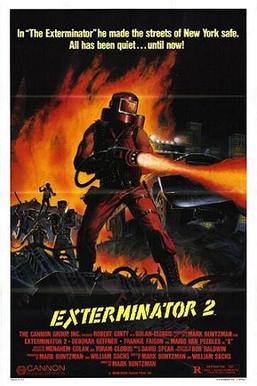
The TSL Grindhouse: Exterminator 2 (dir by Mark Buntzman)


Four years after the end of the first Exterminator, the man they drove too far is driven too far again….

As you may remember, the first Exterminator ended with the CIA shooting vigilante John Eastland (Robert Ginty) because Eastland’s anti-crime activities were somehow making the President look bad.  The wounded Eastland fell into the Hudson River.  “Washington will be pleased,” the CIA agent said to the gunman.  However, the film’s final shot revealed that Eastland had survived his plunge.

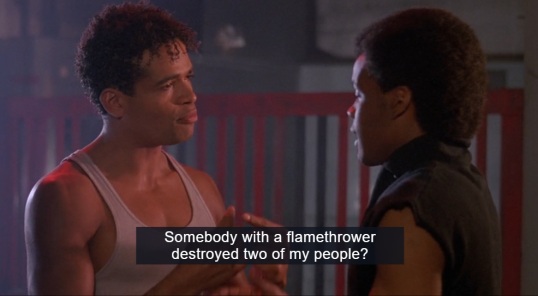
1984’s Exterminator 2 opens with Eastland returning to New York City.  He’s got a small apartment and a police scanner and when he hears a report that an elderly couple is being menaced by a group of thugs, he puts on a welding mask and uses his flame thrower to set the criminals on fire.  Of course, he doesn’t actually arrive in time to save the old couple from getting shot and killed.  Just because Eastland has decided to become a vigilante, that doesn’t mean that he’s particularly good at it.

The first Exterminator was a grim and gritty thriller that took itself very seriously.  In fact, one could argue that it took itself a bit too seriously.  Exterminator 2, which was produced by Cannon Films, takes a slightly different approach.  This is obvious as soon as Mario Van Peebles shows up as X, a cult leader who is looking to take over the New York drug trade.  Van Peebles, with his model good looks and his quick smile, is not exactly the most intimidating of villains.  And X is not exactly the most brilliant of bad guys.  For one thing, he drives a car with a big red X spray painted on one of the doors, which doesn’t seem to be the smartest thing to do when you have both the police and crazed vigilante hunting for you.

Fortunately, for X, John Eastland is easily distracted.  After he sets a few people on fire, he seems to lose interest in actually being a vigilante and instead, a large portion of the film is taken up with him getting a job collecting garbage with his friend, Be Gee (Frankie Fasion).  (Much like the previous film’s Michael Jefferson, Be Gree served with Eastland in Nam.)  Eastland also meets and falls in love with a dancer named Caroline (Deborah Geffner).  Unfortunately, a trip to Central Park leads to Caroline getting attacked by a bunch of X’s followers.  With Caroline in a wheelchair, Eastland has little choice but to pick up his flame thrower and transform his garbage truck into a tank of destruction….

Exterminator 2‘s production was a troubled one.  Director Mark Buntzman was one of the producers of the first Exterminator and apparently, Cannon disliked his first cut of Exterminator 2.  Director William Sachs (who was Cannon’s resident “film doctor”) was brought in to do extensive reshoots in Los Angeles.  Unfortunately, by the time Sachs was brought in, Robert Ginty had already moved on to another project and Sachs was forced to use his stunt double for any scenes involving Eastland.  (This is one reason why Eastland spends much of the film wearing a welder’s mask.)  Also because of Ginty’s absence, Sachs ended up adding a lot of scenes that focused on Van Peebles’s performance as X, with the end result being that the film often seems to be more about X and his gang than it is about Eastland and his hunt for revenge.  (Unfortunately, this also led to a lot of unresolved subplots, including one in which X orders one of his roller skating henchman to kidnap a woman off the street so she can be used to test a new batch of heroin.)  Many of the scenes featuring Ginty have a totally different feel to them from the scenes featuring Van Peebles and Ginty’s stunt double.

The end result is a film that really doesn’t have any sort of narrative momentum.  One is never really sure what either X or Eastland is hoping to accomplish.  Instead, they just kind of wander around until they have their final confrontation.  Along the way, there’s a few poorly edited fights but there’s also a lot of scenes that are just included to serve as filler.  As I already mentioned, Van Peebles is not a particularly menacing villain but Ginty also isn’t a particularly compelling hero.  Ginty’s goofy screen presence was nicely subverted by the grime and grit of the first Exterminator but, in the second film, he just comes across as being petulant and even a bit whiny.

The first Exterminator famously ended with the lines, “Washington will be pleased.”  I don’t think anyone would particularly be pleased with Exterminator 2.  As a final note, I will admit that I was so bored with this film that, when I watched it, I barely noticed when it ended and Tubi segued into showing a film called Executioner 2.  That pretty much sums up the entire Exterminator 2 experience.

Here Are The Gotham Winners!


The Gotham Awards were held last night and the big winners were CODA and Maggie Gyllenhaal’s The Lost Daughter.  The Gothams aren’t exactly the biggest or most influential of the Oscar precursors but they were are one of the first so a victory can only help!

The winners are listed in bold:

Best Feature
“The Green Knight”
“The Lost Daughter”
“Passing”
“Pig”
“Test Pattern”

Best Documentary Feature
“Ascension”
“Faya Dayi”
Flee”
“President”
“Summer Of Soul (…Or, When The Revolution Could Not Be Televised)”

Best International Feature
“Azor”
“Drive My Car”
“The Souvenir Part II”
Titane
“What Do We See When We Look at the Sky?”
“The Worst Person In The World”

Bingham Ray Breakthrough Director Award
Maggie Gyllenhaal for “The Lost Daughter”
Edson Oda for “Nine Days”
Rebecca Hall for “Passing”
Emma Seligman for “Shiva Baby”
Shatara Michelle Ford for “Test Pattern”

Best Screenplay
“The Card Counter,” Paul Schrader
“El Planeta,” Amalia Ulman
“The Green Knight,” David Lowery
“The Lost Daughter,” Maggie Gyllenhaal
“Passing,” Rebecca Hall
“Red Rocket,” Sean Baker & Chris Bergoch

Outstanding Lead Performance
Olivia Colman in “The Lost Daughter”
Frankie Faison in “The Killing of Kenneth Chamberlain”
Michael Greyeyes in “Wild Indian”
Brittany S. Hall in “Test Pattern”
Oscar Isaac in “The Card Counter”
Taylour Paige in “Zola”
Joaquin Phoenix in “C’mon C’mon”
Simon Rex in “Red Rocket”
Lili Taylor in “Paper Spiders”
Tessa Thompson in “Passing”

Outstanding Supporting Performance
Reed Birney in “Mass”
Jessie Buckley in “The Lost Daughter”
Colman Domingo in “Zola”
Gaby Hoffmann in “C’mon C’mon”
Troy Kotsur in “CODA”
Marlee Matlin in “CODA”
Ruth Negga in “Passing”

Breakthrough Performer
Emilia Jones in “CODA”
Natalie Morales in “Language Lessons”
Rachel Sennott in Shiva Baby”
Suzanna Son in “Red Rocket”
Amalia Ulman in “El Planeta”

Breakthrough Series – Long Format (over 40 minutes)
“The Good Lord Bird”
“It’s A Sin”
“Small Axe”
“Squid Game”
“The Underground Railroad”
“The White Lotus”

Breakthrough Series – Short Format (under 40 minutes)
“Blindspotting”
“Hacks”
“Reservation Dogs”
“Run the World”
“We Are Lady Parts”

Breakthrough Nonfiction Series
“City So Real”
“Exterminate All the Brutes”
“How To with John Wilson”
“Philly D.A.”
“Pride”

Outstanding Performance in a New Series
Jennifer Coolidge in “The White Lotus”
Michael Greyeyes in “Rutherford Falls”
Ethan Hawke in “The Good Lord Bird”
Devery Jacobs in “Reservation Dogs”
Lee Jung-jae in “Squid Game”
Thuso Mbedu in “The Underground Railroad”
Jean Smart in “Hacks”
Omar Sy in “Lupin”
Anya Taylor-Joy in “The Queen’s Gambit”
Anjana Vasan in “We Are Lady Parts”

(Incidentally, I’m probably the only person not involved with the show to have noticed the victory for Philly D.A.  I’m just going to be honest and say that is one of my least favorite results ever.  Philly D.A. was a pure propaganda, nothing more.)

What If Oscar Season Started And No One Noticed, Part 2: Here Are The Gotham Award Nominations


As a sign of how wrapped up I am in this year’s Horrorthon, consider this: the 2021 Gotham Nominations — the first precursor of Awards Season! — were announced on Thursday and I totally missed them!  This is actually not the first year that this has happened.  October is a busy month for me and sometimes, the Gotham noms get missed.

The Gothams, of course, only honor independent films and they have pretty strict rules as far as what they consider to be independent.  The budget has to come in at a certain relatively low amount, for one thing.  So, as a result, a lot of Oscar nominees are not Gotham eligible.  But, at the same time, those Gotham rules also allow some films that otherwise might get overlooked a chance to get some precursor love.  Being nominated for a Gotham is hardly a guarantee that the Academy will remember you.  But it certainly doesn’t hurt.

Better late than never, here are the 2021 Gotham Nominations!  As you’ll notice, the Gotham’s performance awards are gender neutral.  This is the first year that the Gothams have done this.  They also added categories for supporting performances and best performance in a series.

Anyway, here are the nominees:

Best Feature
“The Green Knight”
“The Lost Daughter”
“Passing”
“Pig”
“Test Pattern”

Best Documentary Feature
“Ascension”
“Faya Dayi”
“Flee”
“President”
“Summer Of Soul (…Or, When The Revolution Could Not Be Televised)”

Best International Feature
“Azor”
“Drive My Car”
“The Souvenir Part II”
Titane
“What Do We See When We Look at the Sky?”
“The Worst Person In The World”

Bingham Ray Breakthrough Director Award
Maggie Gyllenhaal for “The Lost Daughter”
Edson Oda for “Nine Days”
Rebecca Hall for “Passing”
Emma Seligman for “Shiva Baby”
Shatara Michelle Ford for “Test Pattern”

Best Screenplay
“The Card Counter,” Paul Schrader
“El Planeta,” Amalia Ulman
“The Green Knight,” David Lowery
“The Lost Daughter,” Maggie Gyllenhaal
“Passing,” Rebecca Hall
“Red Rocket,” Sean Baker & Chris Bergoch

Outstanding Lead Performance
Olivia Colman in “The Lost Daughter”
Frankie Faison in “The Killing of Kenneth Chamberlain”
Michael Greyeyes in “Wild Indian”
Brittany S. Hall in “Test Pattern”
Oscar Isaac in “The Card Counter”
Taylour Paige in “Zola”
Joaquin Phoenix in “C’mon C’mon”
Simon Rex in “Red Rocket”
Lili Taylor in “Paper Spiders”
Tessa Thompson in “Passing”

Outstanding Supporting Performance
Reed Birney in “Mass”
Jessie Buckley in “The Lost Daughter”
Colman Domingo in “Zola”
Gaby Hoffmann in “C’mon C’mon”
Troy Kotsur in “CODA”
Marlee Matlin in “CODA”
Ruth Negga in “Passing”

Breakthrough Performer
Emilia Jones in “CODA”
Natalie Morales in “Language Lessons”
Rachel Sennott in Shiva Baby”
Suzanna Son in “Red Rocket”
Amalia Ulman in “El Planeta”

Breakthrough Series – Long Format (over 40 minutes)
“The Good Lord Bird”
“It’s A Sin”
“Small Axe”
“Squid Game”
“The Underground Railroad”
“The White Lotus”

Breakthrough Series – Short Format (under 40 minutes)
“Blindspotting”
“Hacks”
“Reservation Dogs”
“Run the World”
“We Are Lady Parts”

Breakthrough Nonfiction Series
“City So Real”
“Exterminate All the Brutes”
“How To with John Wilson”
“Philly D.A.”
“Pride”

Outstanding Performance in a New Series
Jennifer Coolidge in “The White Lotus”
Michael Greyeyes in “Rutherford Falls”
Ethan Hawke in “The Good Lord Bird”
Devery Jacobs in “Reservation Dogs”
Lee Jung-jae in “Squid Game”
Thuso Mbedu in “The Underground Railroad”
Jean Smart in “Hacks”
Omar Sy in “Lupin”
Anya Taylor-Joy in “The Queen’s Gambit”
Anjana Vasan in “We Are Lady Parts”

Horror Film Review: The Grudge (dir by Nicolas Pesce)


Eh, who cares?

Released way back in January (and, in fact, I think it may have been the first horror movie released in 2020), The Grudge is the latest film to tell the story of a house where ghosts compel inhabitant after inhabitant to kill themselves and their families.  Look, we all know how it works.  We’ve all seen Ju-on.  We all know that it begins with someone dying while extremely angry or extremely sad and then a curse being passed on from person to person.  The original Japanese films are frightening while the American versions tend to get bogged down in all of the usual horror clichés.  We all know how these things work.

Anyway, this version of The Grudge takes place, for the most part, at 44 Reyburn Drive, where a number of people die over the course of the film.  The Grudge is told in a nonlinear fashion, so we hope back and forth in time.  We meet a lot of different people and sit through a lot of different stories but none of them are particularly interesting.  Two real estate agents discover that their unborn child is going to have a rare genetic disorder.  An elderly couple prepare for an assisted suicide.  A nurse is haunted by the things that she saw while she was working in Japan.  A detective obsesses on all of the murders.  In the present day, another detective (Andrea Riseborough) tries to figure out why so many murders are connected to the house.  It’s difficult to really get caught up in her investigation because we already know the answer.

It’s all pretty dull.  Maybe if I had never seen any of the other Grudge films, I would have found this movie more interesting but The Grudge doesn’t really bring anything new to the table.  All it really does is remind you of how formulaic the American version of franchise has always been.  Of course, everyone’s going to die and, of course, there’s going to be a shock ending.  (Interestingly enough, the international version has a different ending.)  It’s all rather boring and it’s hard not to get annoyed that the film assembled a truly amazing cast and then basically didn’t anything with them.  Consider some of the people in this film: Andrea Riseborough, Demian Bichir, John Cho, Betty Gilpin, Lin Shaye, Jacki Weaver, William Sadler, Frankie Faison.  Wasting a cast with that much talent really does amount to cinematic malpractice.  It seems like it should be an impossible mistake to make but The Grudge somehow manages to do it.

The film’s nonlinear format doesn’t add much to the story.  I mean, you know everyone’s going to die eventually so having the story told in random chunks and pieces doesn’t really add any sort of suspense.  One could argue that the film does deserve some credit for being as dark as it is.  I mean, it does kill the type of sympathetic characters who, normally, would survive other horror films.  But, even with that in mind, it’s all just kind of boring.  I don’t hold a grudge against anyone for trying to reboot the franchise but this film just doesn’t bring anything new to the table.


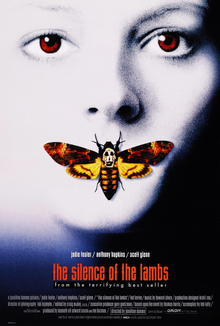
Lisa Reviews An Oscar Winner: The Silence of the Lambs (dir by Jonathan Demme)


Oh, The Silence of the Lambs, I have such mixed feelings about you.

On the one hand, I’m a horror fan and Silence of the Lambs is a very important film in the history of horror.  Back in 1992, it was the first horror film to win the Academy Award for Best Picture!  It even made history by winning all of the big “five” awards — Picture, Director, Actor, Actress, and Adapted Screenplay!  It was the first film since One Flew Over The Cuckoo’s Nest and It Happened One Night to pull that off!

Beyond that, it’s one of the most influential films ever made.  Every erudite serial killer owes a debt to Anthony Hopkins’s performance as Hannibal Lecter.  Every competent but untested and unappreciated female FBI agent owes a debt to Jodie Foster’s performance as Clarice Starling.  Even though the whole criminal profiler craze probably owes more to Manhunter (a film to which Silence of the Lambs is a sequel, though that often seems to go unacknowledged) than to anything else, this Oscar winner still definitely played a part.  I mean, how many people watched Manhunter for the first time, specifically because Lecter mentioned the events in that earlier film in Silence of the Lambs?

Plus, this won an Oscar for Jonathan Demme, one of my favorite directors!  And while I’m sure Jodie Foster would have gone on to have a strong career regardless of whether she had played Clarice Starling or not, it’s generally acknowledged that Silence of the Lambs revitalized the career of Anthony Hopkins.  So for that, we should all be thankful.

And yet, it can be strange to watch Silence of the Lambs today.  All of the imitations (not to mention some ill-thought sequels and prequels) have lessened its bite.  I can only imagine how it must have freaked out audiences when it was first released but I have to admit that I was slightly disappointed the first time that I watched the film.  Looking back, I can see that disappointment was due to having been told that it were one of the scariest movies of all time but, because, I had seen a countless number of imitations, parodies, and homages, I felt as if I had already watched the film.  So, I wasn’t shocked when Lecter turned out to be ruthlessly manipulative and dangerously charismatic.  Nor was I shocked when he managed to escape and poor Charles Napier ended up strung up in that cage.  I’m sure that audiences in 1991 were freaked out, though.

Actually, as good as Foster and Hopkins and Scott Glenn are, I think the best performance in the film comes from Ted Levine, playing Buffalo Bill.  Seriously, Levine’s performance still freaks me out.  It’s the voice and the way he says, “Precious.”  Levine’s performance, I found to be a hundred times more frightening than Anthony Hopkins’s and I think it’s due to the fact that Hannibal Lecter was clearly an author’s invention while Levin’s Buffalo Bill came across like he might very will be hiding in an alley somewhere, waiting for one of your friends to walk by. (Interestingly enough, I had the same reaction when I first saw Manhunter.  Brian Cox did a good job as Lecter but he still came across as a bit cartoonish.  Meanwhile, Tom Noonan was absolutely terrifying.)  Levine has subsequently gone on to play a lot of nice guy roles.  He was a detective on Monk, for instance.  Good for him.  I’m glad to see he was able to escape being typecast.  Admittedly, I do kinda wonder how many serial killer roles he had to turn down immediately after the release of The Silence Of The Lambs.

Still, it’s a good film.  Time may have lessened it’s power but The Silence of the Lambs is still an effective and well-directed thriller.  It’s impossible not to cheer for Clarice.  It’s impossible not to smile at the fun that Anthony Hopkins seems to be having in the role of Lecter.  Jonathan Demme creates a world of shadows and darkness and still adds enough little quirks to keep things interesting.  (I especially liked Lecter watching a stand-up special in his cell.)  It’s the little details that makes the world of The Silence of the Lambs feel lived in, like Clarice’s nervous laugh as she gives a civilian instructions on what to do in case she accidentally gets trapped in a storage locker.  Even the film’s final one liner will make you smile, even though it’s the type of thing that every film seemed to feel the need to do nowadays.  It’s still a good movie, even if it no longer feels as fresh as it once may have.

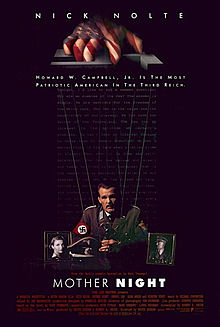
A Movie A Day #113: Mother Night (1996, directed by Keith Gordon)


Four years after she played the mysterious (and dead) Laura Palmer in Twin Peaks, Sheryl Lee starred as another mysterious (and possibly dead) woman in Mother Night.
Lee is cast as Helga Noth, the German wife of American expatriate Harold W. Campbell (Nick Nolte).  Harold is a playwright, living in Berlin and doing propaganda broadcasts for the Nazis.  Working with Frank Wirtanen (John Goodman), a military intelligence officer, Campbell has developed a series of verbal tics that are meant to secretly deliver information to the Allied Forces.  It is never clear whether Harold’s information serves any real purpose just as it is left ambiguous as to whether Harold believes any of the anti-Semitic propaganda that he broadcasts over the airwaves.  Working as both a propagandist and a double agent, Harold serves both the Allies and the Axis.

In the final days of the war, Helga is reportedly killed on the Eastern Front and Harold is captured by the Americans.  Frank arranges for Harold to be quietly sent to New York City but tells him that the government will never admit that they used him as a double agent.

Harold spends the next fifteen years living an isolated life in New York.  His only friend is an elderly painter, Kraft (Alan Arkin), with whom he plays chess.  Eventually, Harold opens up to the painter and talks about his past.  Kraft, for his own shady reasons, reveals Harold’s identity to a group of neo-Nazis.  Though Harold initially wants nothing to do with them, this changes when they reveal that they have Helga.

Or do they?  Almost no one in Mother Night is who they claim or what they seem to be, especially not Harold.

Based on a novel by Kurt Vonnegut, Mother Night suffers from the same uneven quality that seems to afflict most films based on Vonnegut’s work.  It is easy to go overboard when it comes to bringing Vonnegut’s unique mix of drama and satire to the screen and Mother Night does that in a few scenes, especially once Harold reaches New York.  It is still an intriguing and thought-provoking film, though.  Nick Nolte gives one of his best performances as Harold and Sheryl Lee does a good job in a difficult role.

The pinnacle of Vonnegut films remains George Roy Hill’s version of Slaughterhouse-Five but Mother Night is still superior to something like Alan Rudolph’s adaptation of Breakfast of Champions.

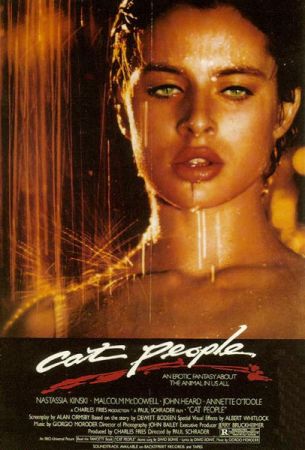
Horror Film Review: Cat People (dir by Paul Schrader)


Cat_People_1982_movie

Before I get around to actually reviewing Paul Schrader’s 1982 reimagining of Cat People, I’m going to suggest that you take a few minutes to watch the film’s opening credits.  Say what you will about Schrader’s Cat People, it has a great opening, one that perfectly sets up the rest of the film.

In this version of Cat People, Irena (Natassja Kinski) is a naive young woman (and virgin) who, after the death of her parents, has spent most of her previous life in foster care.  Irena travels to New Orleans, where she reconnects with her older brother, Paul (Malcolm McDowell).  From the minute that Irena meets her brother and his housekeeper (Ruby Dee), it’s obvious that something is off.  When Paul looks at her, he does so with an unsettling intensity.  At night, while Irena sleeps, Paul wanders the dark streets of New Orleans.

One morning, Irena wakes up to discover that Paul is missing.  Having nothing else to do, Irena wanders around New Orleans.  When she visits the zoo, she feels an immediate connection to a caged panther who stares at her with a familiar intensity.  It turns out that the panther was captured the previous night, after he mysteriously appeared in a sleazy motel and mauled a prostitute.

It’s at the zoo that Irena meets zookeeper Oliver Yates (John Heard).  Oliver gets Irena a job working at the zoo gift shop. where Irena is befriended by Oliver’s co-worker, Alice (Annette O’Toole).  One day, Irena witnesses the panther kill another zookeeper before it then escapes from its cage.

That night, Paul suddenly shows up in Irena’s bedroom.  He explains to her that they are a cursed species.  Having sex causes them to turn into panthers and the only way to avoid the curse is through incest.  A terrified Irena flees her brother and soon finds herself living with and falling in love with the increasingly obsessive Oliver, all the while knowing that giving herself to him physically will lead to her transformation.

From the very first second of the film. Schrader’s Cat People is an exercise in pure style.  If the original Cat People was largely distinguished by its restraint, Schrader’s version is all about excess.  Everything that was merely suggested in the original is made explicit in this version.  As tempting as it may be to try, it’s somewhat pointless to try to compare these two versions.  Though they may both be about a woman who turns into a panther when she has sex, they are two very different films.

Schrader’s Cat People walks a very fine line between moodiness and absurdity, which is perhaps why I enjoyed it.  Making great use of both the sultry New Orleans setting and Giorgio Moroder’s atmospheric score, Cat People is compulsively dream-like and enjoyably over-the-top.  Cat People is often described as being an example of a movie that could have only been made in the coked up 80s  and truly, this is one of those films that’s so excessive that it’s becomes fascinating to watch.

(I think that often we are too quick to assume that excess is necessarily a bad thing.  If you can’t be excessive when you’ve got Malcolm McDowell playing an incest-minded cat person in New Orleans, when can you be excessive?)

Schrader’s Cat People may not have much in common with the original version but the film’s best scene is the only one that is a direct recreation of a scene from the original.  In fact, in recreating the scene where Alice is menaced while swimming in a public pool, Schrader actually improves on the original.  Brilliantly performed by both Annette O’Toole and Natassja Kinski (whose cat-like features made her perfect for the role of Irena), it’s the only scene in the film that can truly be called scary.  Starting with a tracking shock that follows Alice as she jogs, the stalking scene is practically a master class in effective horror cinema.  If nothing else, you should see Cat People for that one scene.

And you should also see it for the wonderful soundtrack!  Let’s end this review with David Bowie’s theme song, which you may also remember from Quentin Tarantino’s Inglourious Basterds.