Film Review: Primetime (dir by Lance Oppenheim)


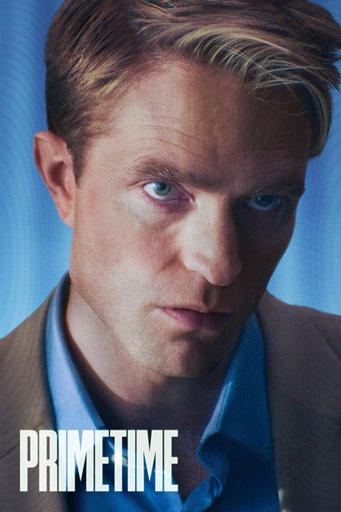
“What are you doing here?” Chris Hansen (Robert Pattinson) asks a man in a kitchen at the start of Primetime.

What are you doing here? That’s a question that several people struggle to answer over the course of the film. The man in the kitchen really doesn’t have an answer, though we know that he’s there because he thought he would be meeting an underage person for sex. And we know that Hansen is there because he’s the host of To Catch a Predator, a show that a lot of people now pretend they didn’t watch even though we all did.

What are you doing here? That’s a question that Dan Plum (Skyler Gisondo) also struggles to answer throughout the film. When we first see Dan, he’s being filmed as he explains that he doesn’t have an agent and that he’s not in the union but he has done some commercial work. Dan doesn’t know what he’s auditioning for. It’s only after he’s cast that he learns that he’s been cast not for his musical theater background but instead because he can convincingly pass for a 13-year-old. While the members of an organization called Perverted Justice entice pedophiles to come visit them at their “home,” Dan is the one who actually greets them at the door and gets them to come inside so that they can be confronted by Chris Hansen and his camera crew. At first, Dan feels awkward about being a decoy. Then, after one pedophile exposes himself, Dan is frightened by it. Chris’s producer, Andie (Merritt Wever), encourages Chris to take Dan under his wing as a protégé in order to keep Dan with the show. Soon, Dan is approaching his decoy work like an actor preparing for a great stage role.

What are we doing here? That’s the question that Andie wonders when Chris insists on filming an episode in the suburbs of Texas instead of on the then-hot Jersey Shore. Chris has been told by Xavier Von Erck (Matthew Maher), the founder of Perverted Justice, that he’s tracked down a pedophile who has political connections. Chris and Xavier are hoping for a Congressman or maybe someone even bigger. (When Andie expresses some reservations at not knowing for sure who they’re going after, “sensitive” guy Xavier descends very quickly into misogyny.) Instead, they have to settle for an assistant district attorney named Bill Conradt (Alex Winter). When Conradt, after talking to Dan on the phone and promising to come meet him at the house, fails to show up, Chris and Andie decide to confront Conradt at his home.

What am I doing here? Andie asks herself perhaps more than anyone else in the film. Having been with To Catch a Predator since the beginning, she’s been offered a chance to skip over to another network and produce a show called What Would You Do? What Would You Do? copies To Catch a Predator‘s humiliation format but instead of targeting pedophiles, it targets people who fail to return a wallet or who don’t speak up when an actor says something insensitive. If To Catch A Predator can at least claim to be putting bad people in jail, What Would You Do? can’t even pretend that it’s making the world a better place. Primetime suggests that humiliation, and not justice, was the true lifeblood of To Catch a Predator.

What are we doing here? That’s the question that the audience is forced to consider. Did we watch To Catch a Predator because we wanted to see bad people arrested or did we watch it because we enjoyed watching someone realize, on camera, that his life was essentially over? And are we watching Primetime because we’re interested in what it has to say about the show and the man at the center of it or are we watching because we’re nostalgic for the show that abruptly ended after Bill Conradt shot himself in his home? Did we watch originally because we were worried about the dangers of online predators or did we watch so we could laugh?

Primetime raises a lot of questions and, to its credit, it doesn’t offer up any easy answers. Indeed, it’s brave enough to admit that there is no either/or. Yes, To Catch a Predator‘s main appeal might be the spectacle of humiliation but that doesn’t mean that the men who appeared on the show weren’t deserving of it. The film’s ambiguity extends to its portrayal of Bill Conradt, who talks to someone whom he believes to be underage on the phone but who apparently changes his mind about going to the address that he’s given. Conradt suddenly finds himself staring out of his office window at an army of cops and cameramen. Earlier one of those cops is shown getting a Subway sandwich and glancing at a poster celebrating Jared Fogle. As Jeff Zucker (poorly playing himself) puts it to Chris Hansen, To Catch a Predator may be a sleazy show but it’s what America wants.

With the exception of Zucker, the entire cast is impressive. Not surprisingly the film is dominated by Robert Pattinson, who plays Chris Hansen as being neurotic and obsessive. While Hansen grills the men unlucky enough to be caught on camera and asks them how their families would feel, he cheats on his wife with another woman and his idea of a family night is to gather his kids in the living room so they can watch him on TV. Hansen enjoys his fame and he enjoys playing the righteous avenger but he’s full of envy for “serious” journalists like Stone Phillips (played, with the appropriate amount of smug smarminess, by Bill Heck). In one of the film’s strangest moments, he tells Dan about going to India and confronting an “ancient evil” that retreated into a cave only after the villagers that it tormented started to kill each other. Is Hansen telling the truth or is he playing a role? Even he doesn’t seem to know for sure.

The film starts out as a stylized and darkly humorous look at fame and the media in America. However, as it progresses, Primetime takes on the elements of a filmed nightmare, with Hansen moving through the shadows like an almost soulless demon. What is he doing there? By the end of the movie, not even Chris Hansen seems to know for sure.
4 Shots From 4 Films: Special Frederick Elmes Edition


4 Shots From 4 Films is just what it says it is, 4 shots from 4 of our favorite films. As opposed to the reviews and recaps that we usually post, 4 Shots From 4 Films lets the visuals do the talking!

Today, we wish a happy birthday to cinematographer Frederick Elmes!  It’s time for….

4 Shots From 4 Frederick Elmes Films

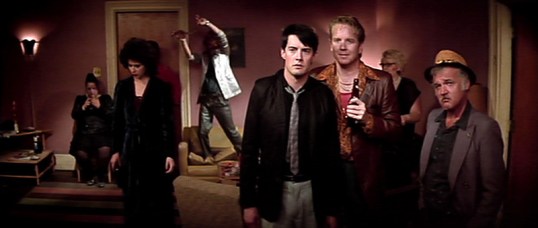
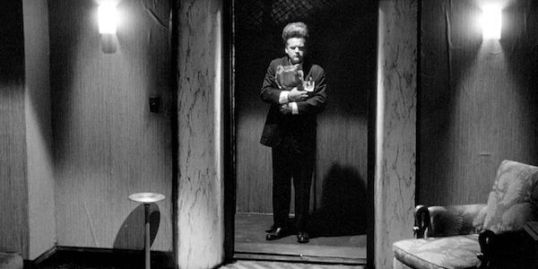
Eraserhead (1977, directed by David Lynch, DP: Frederick Elmes and Herbert Cardwell)

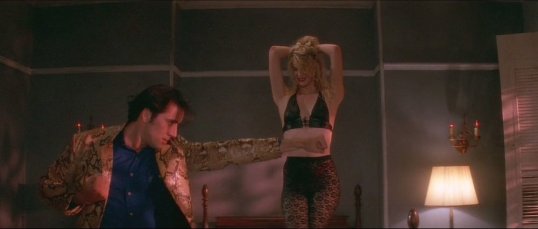
Blue Velvet (1986, dir by David Lynch, DP: Frederick Elmes)

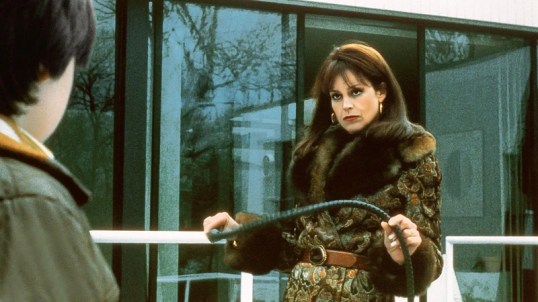
Wild At Heart (1990, dir by David Lynch, DP: Frederick Elmes)

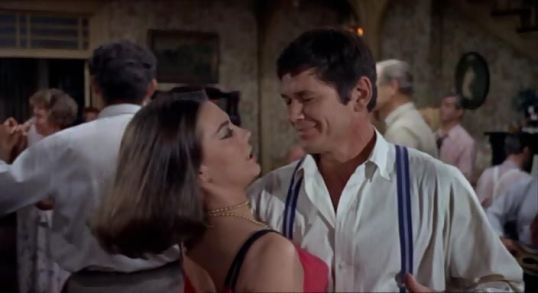
The Ice Storm (1997, dir by Ang Lee, DP: Frederick Elmes)

Film Review: This Property is Condemned (dir by Sydney Pollack)


1966’s This Property Is Condemned opens and closes with the same image. The time is the Great Depression. Willie Stark (Mary Badham), a teenage girl, walks on a set of abandoned railroad tracks in the dilapidated town of Dodson, Mississippi. Willie is wearing a dress that is too big for her and jewelry that she doesn’t seem old enough to own. She runs into a boy named Tom (Jon Provost) who is skipping school. Willie points over at the condemned and shuttered former boarding house in which she grew up and where she currently lives alone. She tells Tom the story of her sister Alva (Natalie Wood) and what happened when a stranger named Owen (Robert Redford) came to town.

Back when the boarding house was still open, it was owned by Alva and Willie’s mother, Hazel (Kate Reid). She was engaged to J.J. Nichols (Charles Bronson) and she made a good-enough living renting out rooms to the men who worked for the railroad. She pressured Alva to marry the much older and financially stable Mr. Johnson (John Harding) but Alva was restless and not ready to settle. Almost every man at the boarding house was in love with Alva, including Sidney (Robert Blake) and J.J. himself. However, when Owen arrived, Alva became fascinated by him. Unfortunately, Owen had been sent to town to close the local railroad depot and to put almost all of them in town out of work.

This Property Is Condemned is based on a play by Tennessee Williams and, like so many of the films adapted from Williams’s works, it’s a bit uneven. The dialogue occasionally feels a bit overwritten. (The screenplay was adapted by Fred Coe, Edith Sommer, and Francis Ford Coppola.) While Natalie Wood is well-cast as the flirtatious but deeply sad Alva and Robert Redford is a handsome (if somewhat dull) Owen, Mary Badham, Kate Reid, and Robert Blake all tend to overact. (Few dramatists can inspire otherwise good actors to chew the scenery quite like Tennessee Williams.) That said, when the film is good, it’s very, very good. Director Sydney Pollack captures the atmosphere of a town that’s slowly dying. Everyone knows that Owen’s visit is going to kill the town, including Owen. (One of the screenplay’s weaknesses is that Owen continually says that he dislikes his job but he never explains why he does it.) Pollack captures Williams’s sultry Southern atmosphere without allowing the film to sink into self-parody. The film is at its strongest when it just concentrates on Natalie Wood, who plays Alva as an intelligent young woman who knows that she’s never going to escape the prison of her mother’s demands or her own reputation. As someone who grew up in Hollywood and spent almost her entire life being watched and judged, one gets the feeling that Wood could relate to Alva and that comes through in her performance.

Of course, the main reason that I watched this film is because today is the 105th birthday of Charles Bronson. The film features Bronson as a character actor and he definitely makes an impression with limited screen time. Bronson plays J.J. as being a tough and unapologetic working man. From the minute the well-coifed Owen shows up in his nice suit and his polite manners, you can tell that J.J. isn’t going to like or trust him and, considering that Owen fires most of J.J.’s co-workers, it turns out that J.J.’s instincts were correct. Bronson may not have had the greatest range as an actor but he had something even more important. He was authentic in a way most actors weren’t. While the other actors are clearly acting, Bronson just is. J.J. Nichols is not a huge role but Charles Bronson is unforgettable.

Charles Bronson’s Greatest Line


The actor Charles Bronson, who was born 105 years ago today, was not a tall man. He stood at 5’8″ and yet always seemed like the biggest character in any film in which he appeared. If you follow modern American politics, just consider that Cenk Uygur is 5’8″. James Talarico claims to be 5’8″ though I’m guessing he’s probably closer to 5’6″. Abdul El-Sayed appears to be somewhere around 4’7″. Now, just try to imagine any of them dominating the screen like Bronson.

Bronson had presence. His charisma was not the usual movie star charisma. He didn’t come across as being overly friendly. Instead, his steely stare and his taciturn presence said, “Don’t mess with me.” And yet, when Charles Bronson is in a scene, he’s the one that you watch. He’s the one who catches your attention. That’s the pure power of screen presence. That’s not something that can be taught. That’s something you’ve either got or you don’t.

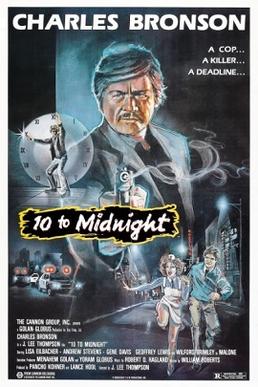
Few actors were as good with a one-liner as Bronson. A lot of that is because Charles Bronson didn’t play talkative characters. He played characters who only spoke when they had to. That’s one reason why his one-liners were so powerful. I’ve shared this before, but since it is his 105th birthday and we’re all big Bronson fans here on the Lens, here is Charles Bronson delivering his best one-liner at the end of 10 to Midnight.

“No, we won’t.”

Brad reviews RIDER ON THE RAIN (1970), starring Charles Bronson and Marlène Jobert!


Charles Bronson and Marlène Jobert!

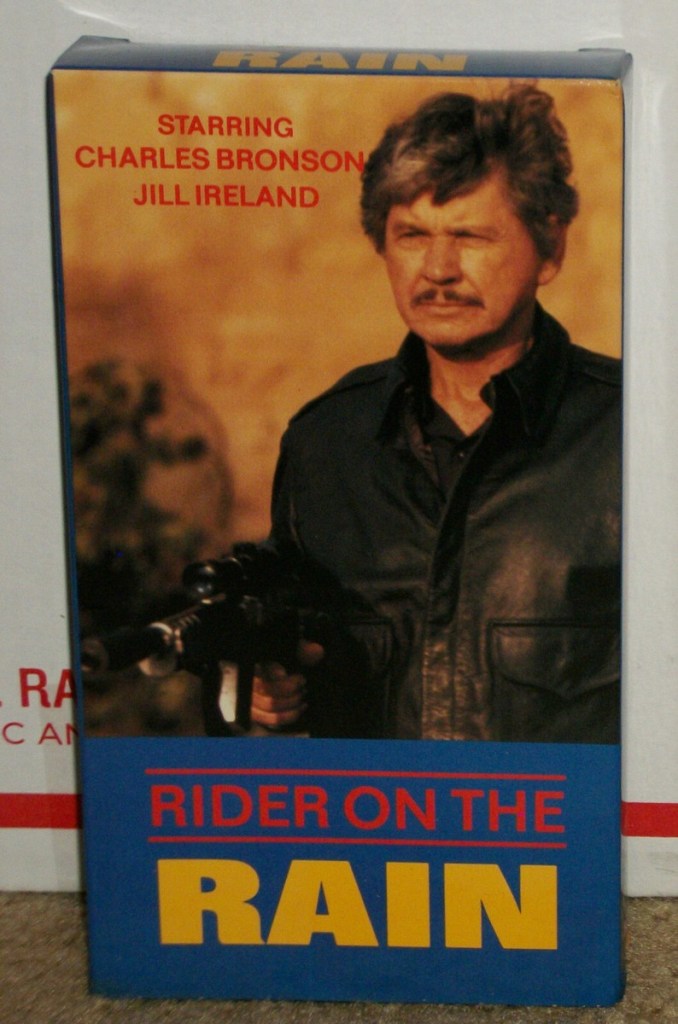
I saw RIDER ON THE RAIN early in my Bronson obsession, so this would have been sometime in the late 80s. As a young and naive teenager, I was a prime target for those folks out there selling older Bronson movies on VHS tapes whose advertising did not properly represent the film they contained. No matter what store our family went to, if they had any movies for sale, I’d always go check out the inventory. I remember this specific tape for RIDER ON THE RAIN that I bought from our local “Fred’s” discount store. It used pictures of Bronson from DEATH WISH 4, holding his high-powered rifle, to try to sell this suspenseful, character driven mystery. It was quite the education seeing how distributors shamelessly tried to sell Bronson’s older films. I do remember not liking the movie so much upon that first viewing, because I was looking for the Bronson of the 80’s, whose characters were mostly just required to blow away the scum. But it’s grown on me over the years, and I now consider it an excellent film, especially for those looking for the more charismatic Bronson before he got typecast after DEATH WISH.

I don’t still have that VHS tape from Fred’s, but this is what it looked like.

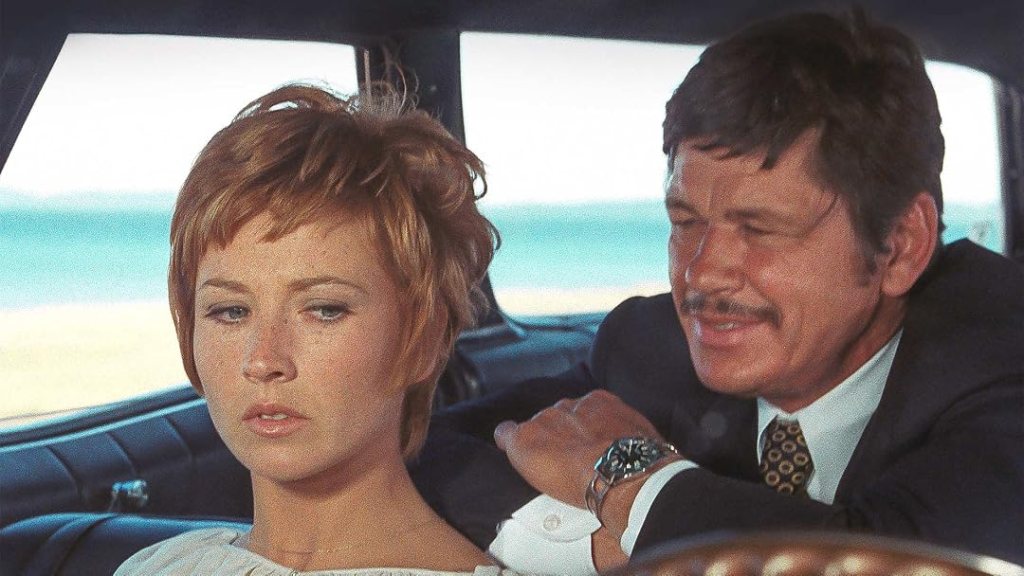
Directed by René Clément, this French Italian production opens with Mélancolie (Marlène Jobert), a young woman living in the South of France whose relatively quiet life is interrupted when a mysterious stranger breaks into her home and sexually assaults her. When she manages to kill her attacker in self-defense, she makes the unfortunate decision to dispose of his body rather than contact the authorities. Enter Colonel Harry Dobbs (Bronson), an American investigator who arrives seemingly knowing everything about what happened. Dobbs has a rather unusual way of questioning people, and his unpredictable behavior leaves Mélancolie wondering whether he’s there to help her, expose her, or perhaps something else entirely. As the two begin an increasingly complicated game of cat and mouse, it becomes clear that there’s considerably more going on than anyone initially lets on.

Watching the film now, one of my favorite things about RIDER ON THE RAIN is that it doesn’t play like a traditional Charles Bronson movie, or at least one that was made after DEATH WISH. Bronson only gets a couple of opportunities to kick butt throughout the entire film, and since he’s in prime physical condition, he’s an absolute badass during those times. However, what’s most intriguing about Bronson’s character here is that he’s initially mysterious and only over time are we given access to his true intentions. His Harry Dobbs can be charming one moment, bullying and intimidating the next, and he always seems to be several steps ahead of everyone else. It’s a different kind of performance, but one that demonstrates why he was such an interesting actor to watch. Bronson had recently become a worldwide phenomenon because of his performances in FAREWELL, FRIEND and ONCE UPON A TIME IN THE WEST, and RIDER ON THE RAIN was a smash hit in Europe, solidifying his status across most of the world.

Even though you wouldn’t have known it from that old VHS box I bought at Fred’s, the main character of the film is played by Marlène Jobert, who gives us a heroine who is vulnerable, resourceful, and increasingly caught up in circumstances she never could have anticipated. Yet she somehow can hold her own even though she never knows quite what Dobbs has up his sleeves. It’s an excellent performance, and the strong chemistry between her and Bronson, who doesn’t show up until over 25 minutes into the movie’s nearly two-hour running time, gives the film some real emotional punch. He sarcastically calls her “Love Love” throughout the film, and if the “walnut against the windowpane” trick is to be believed, he may even love her by the end. That trick is a fun little detail that I’ll preserve for you to discover when you watch, but it leaves me with a smile on my face as the credits roll. I always like to point out to everyone that Jobert’s daughter in real life is actress Eva Green. In supporting roles, Annie Cordy gives a solid performance as Mélancolie’s mom, Jill Ireland looks beautiful, and Marc Mazza is just plain creepy as the sexual deviant and “rider on the rain” whose much-deserved ending kicks off the story.

Clément brings his European sensibility to the proceedings, favoring atmosphere, suspense, and psychological games over the more straightforward action that would eventually become Bronson’s trademark. Looking back now, I get a sense of satisfaction seeing Bronson work with the same guy who directed classics like FORBIDDEN GAMES and PURPLE NOON. Bronson’s European phase produced some fascinating work with some equally fascinating filmmakers that I appreciate more over time. There’s also an impressive musical score from Francis Lai that adds to the film’s somewhat dreamlike, occasionally unsettling atmosphere. Interestingly, the same year he did this, he also composed LOVE STORY!

RIDER ON THE RAIN is a fascinating entry in Charles Bronson’s filmography. In my opinion, it’s one of his best films and features one of his best performances. It’s also a critically acclaimed film, having won the Golden Globe for Best Foreign Language Film. This movie is very different than his later work, as it takes its time with its intriguing premise and unpredictable characters, and gives us just enough twists and turns to keep things moving. And while we used to be stuck with bad copies on cheap VHS tapes and DVDs, a few years ago Kino Lorber restored the film on Blu Ray in all its glory, and it looks phenomenal. It’s a revelation if you haven’t revisited the film since the old days. While I’ll always make time for Charles Bronson movies in my life, I’ve grown to truly appreciate the films that give him the opportunity to do something a little different.

Brad’s “9 Shots from 9 Films” celebrates Charles Bronson’s 105th Birthday!


After a couple of decades as a working character actor on American films and TV shows, Charles Bronson left for Europe in the late 60s and became a massive worldwide film star. This set the stage for him to come back to America and establish his stardom in Hollywood as well. Today, on November 3rd, 2026, Bronson’s 105th birthday, I celebrate that important phase of his career with 9 shots from 9 films!

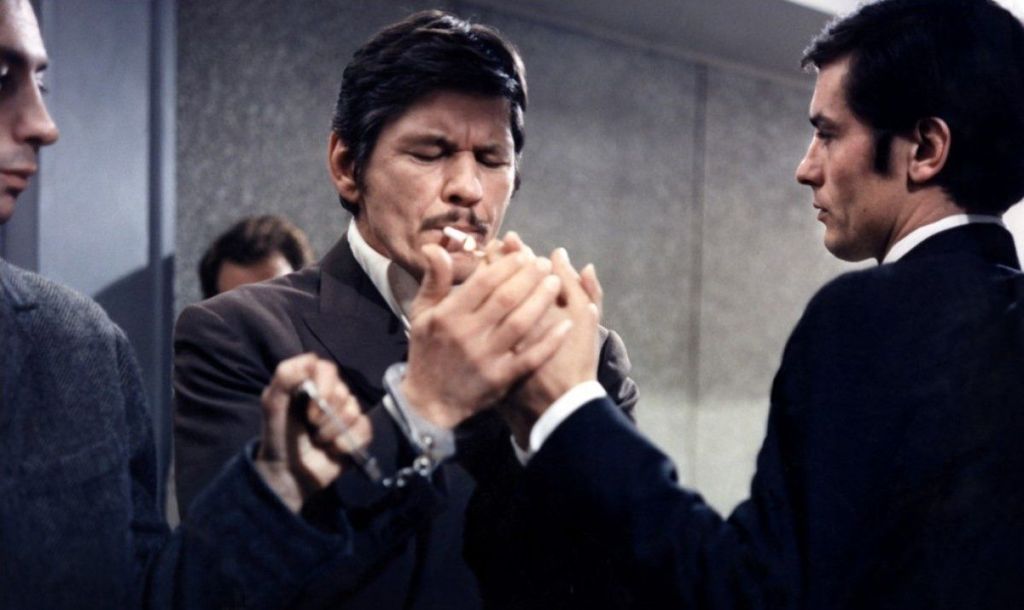
Farewell, Friend (1968) – Charles Bronson & Alain Delon
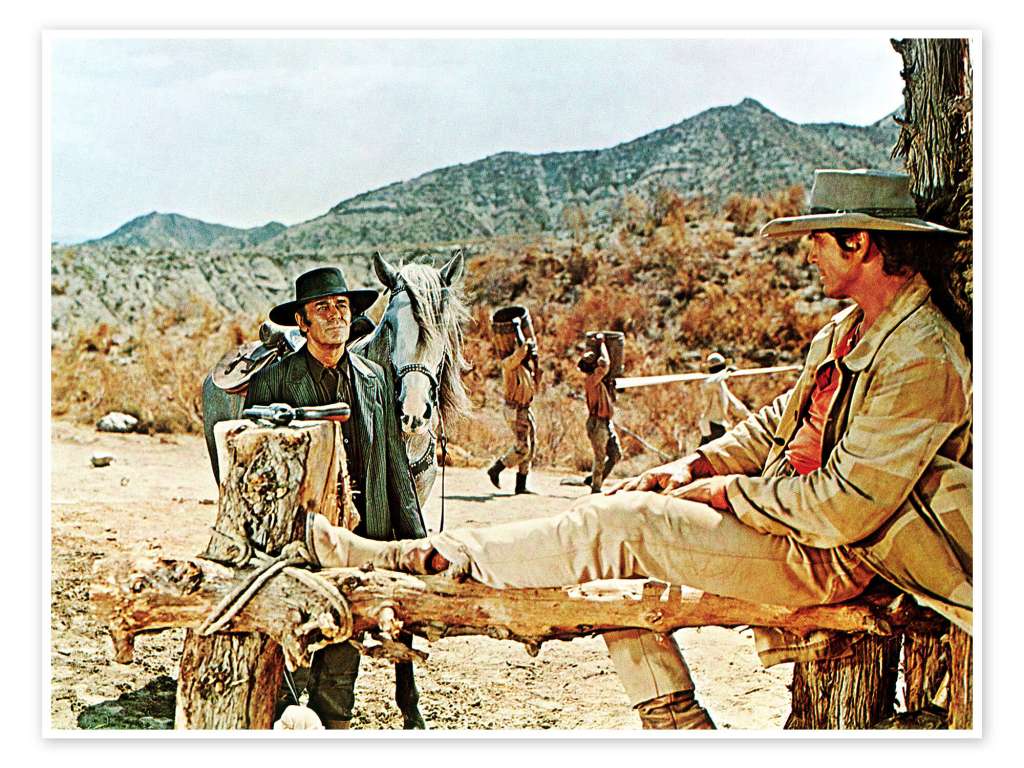
Once Upon a Time in the West (1968) – Charles Bronson & Henry Fonda
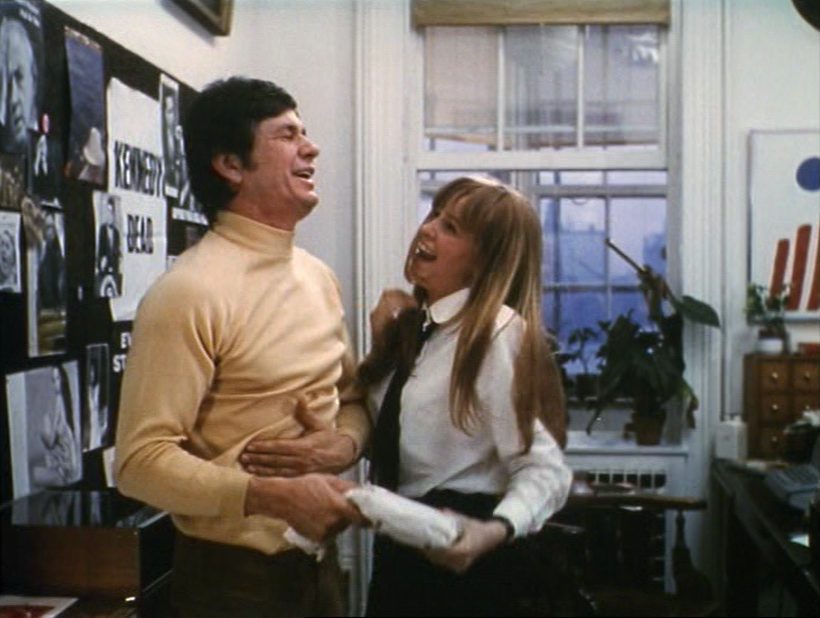
Lola (1970) – Charles Bronson & Susan George
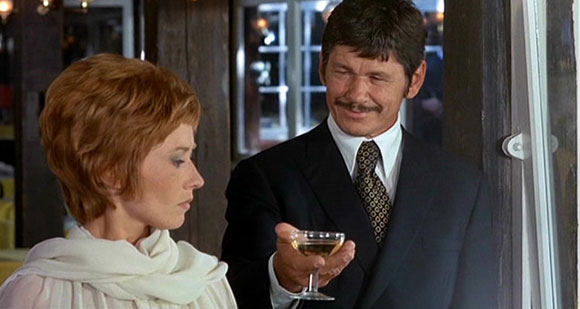
Rider on the Rain (1970) – Charles Bronson & Marlene Jobert
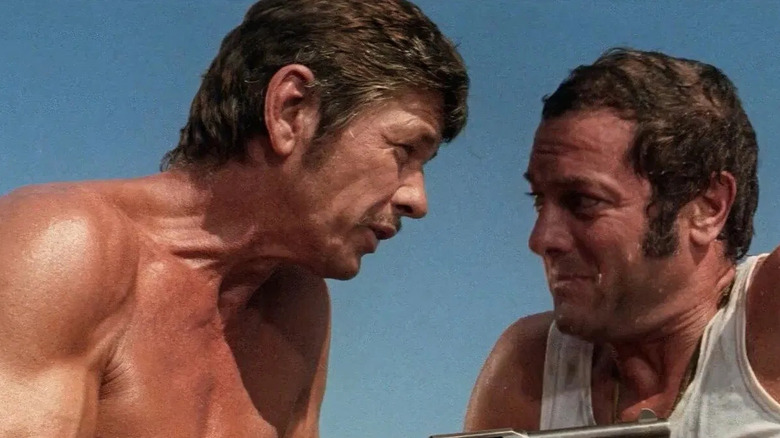
You Can’t Win ‘Em All (1970) – Charles Bronson & Tony Curtis
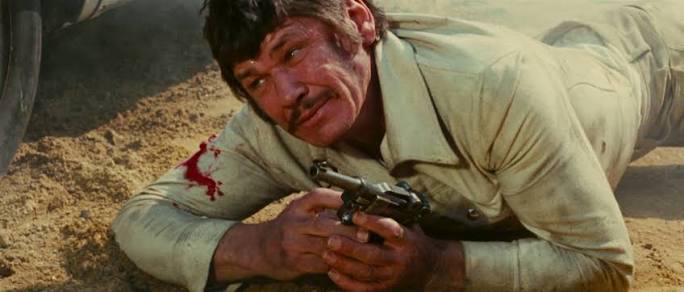
Violent City (1970) – Charles Bronson
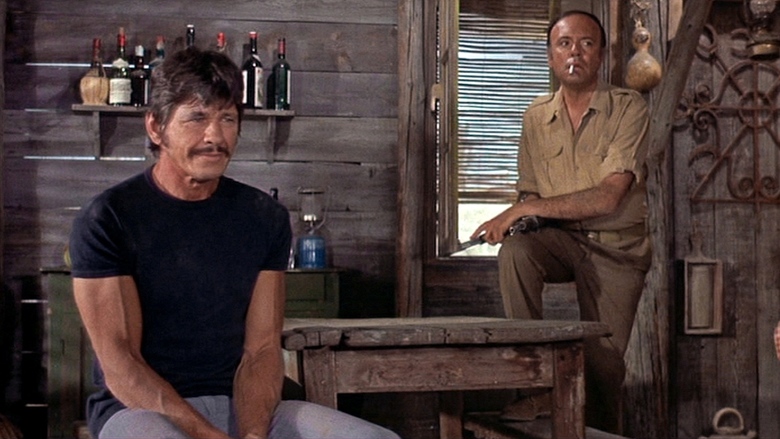
Cold Sweat (1970) – Charles Bronson & Jean Topart
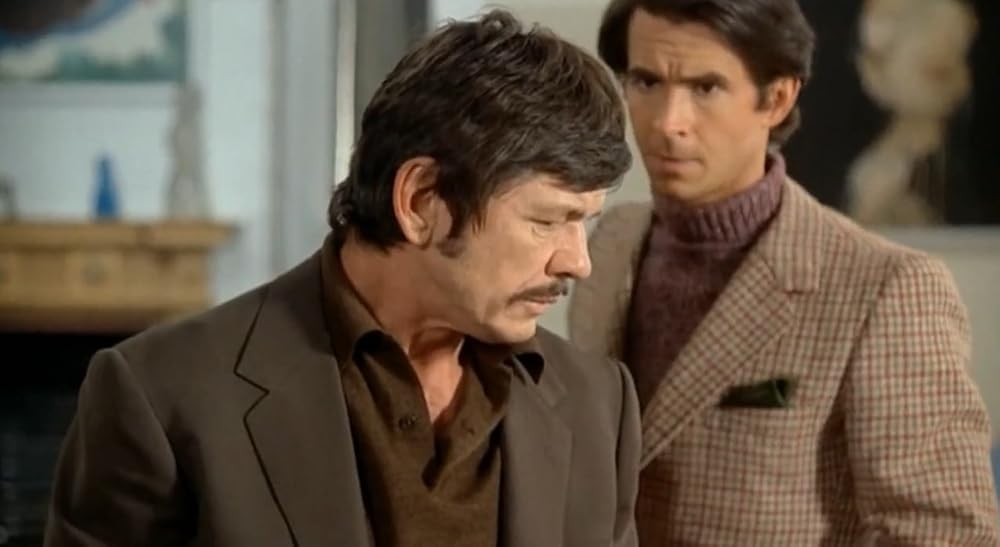
Someone Behind the Door (1971) – Charles Bronson & Anthony Perkins
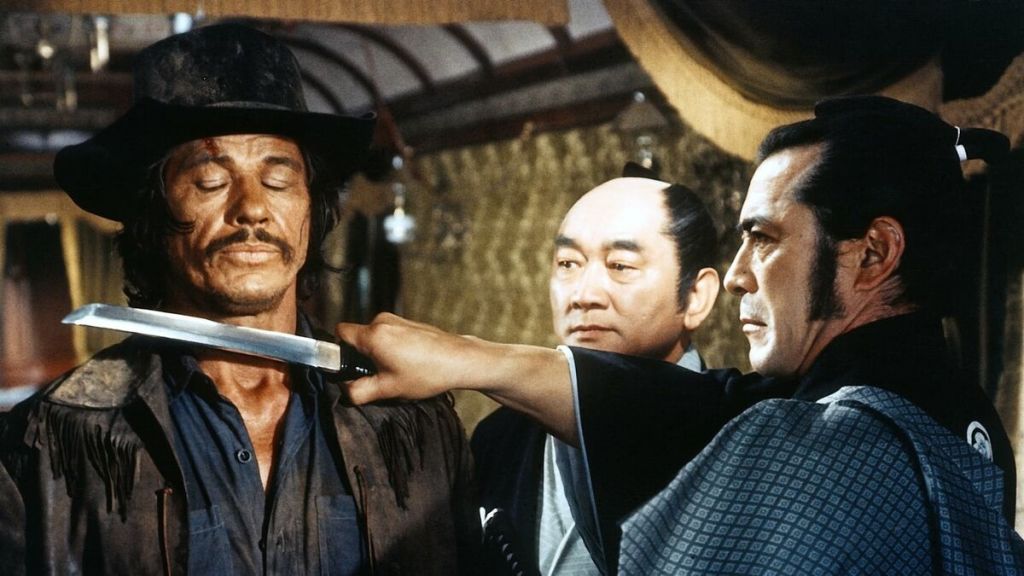
Red Sun (1971) – Charles Bronson, Tetsu Nakamura & Toshiro Mifune

Brad’s “Scene of the Day” features Charles Bronson in ASSASSINATION (1987) – Happy Birthday, Charlie!


There aren’t many things that could kill Charles Bronson in his movies, but ASSASSINATION came up with a possibility that I’ll admit that I never considered before! It was fun discussing this scene with Jan Gan Boyd when she guested on the This Week in Charles Bronson podcast.

Happy Birthday, Katharine Isabelle!


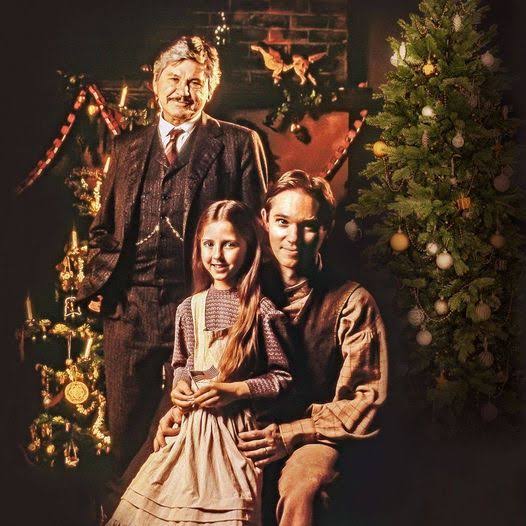
Katharine, the world may love you best for GINGER SNAPS, but I’ll always appreciate you for your excellent performance as a kid in the Charles Bronson Christmas movie, YES VIRGINIA, THERE IS A SANTA CLAUS! We watch you and cry every December!

Happy Birthday!!