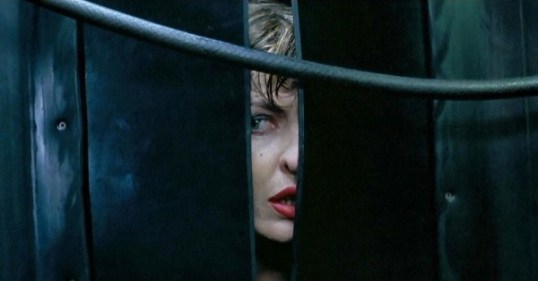
Film Review: Voices From Beyond (dir by Lucio Fulci)


Wealthy businessman Giorgio Minardi (Duilio Del Prete) dies of a massive internal hemorrhage. His last words are “Why?” Even though he dies surrounded by his family, none of them seem to be particularly upset about his passing. Every one of them — from his much younger wife to his stepmother to his son — is more concerned with who is going to get Giorgio’s money than the fact that someone murdered him by grinding up glass and putting it into his food. The only person who truly seems to be upset by Giorgio’s passing is his daughter, Rosie (Karina Huff). Even though Giorgio is dead and soon buried, his spirit remains and soon, he is showing up in Rosie’s dreams and imploring her to help him discover who murdered him.

Released in 1991, Voices From Beyond is one of the films that Lucio Fulci made for television towards the end of his career. By this point, Fulci was not doing well, personally or professionally. After the box office failure of films like Manhattan Baby and Murder Rock, Fulci found himself struggling to raise the money to produce the type of films that he wanted to make. Also, his critical reputation never recovered from the controversy surrounding the violence in The New York Ripper. There’s an undeniable bitterness at the heart of Voices From Beyond. Though the film features several close-ups of Giorgio’s decaying corpse and a few surreal dream sequences, the true horror comes from the way that the family reacts to Giorgio’s sudden death. No one cares that he died. No one cares that he was murdered. They just want what’s left of his estate. Giorgio, trapped in spirit form, discovers just how unloved he was. Watching the film, one gets the feeling that Fulci saw a lot of himself in Giorgio. The family becomes a stand-in for everyone who deserted Fulci during the final years of his life.

I’ve seen Voices From Beyond advertised with a rather tacky pull quote — “The last good movie Fulci made!” While the quote is accurate in that the film is better than most of Fulci’s later films (even if it can’t match the delirious heights of Zombi 2, the Beyond Trilogy, or even The New York Ripper), to call it the last good film that Fulci made is to do the director a great disservice. Even Fulci’s lesser films were uniquely his own and, as a result, they were all good Fulci films regardless of whether or not they were good on any other level. To his credit, Fulci never really sold out. He did the best with what he had. Even this made-for-TV movie manages to open with a threesome and a rather gory knifing. The film features Fulci’s characteristic touches. The camera tracks through the darkness with style. Where it suffers is with a plot that makes the identity of the killer far too obvious and also with a less-than-inspired cast. Del Prete, unfortunately, doesn’t really have the charisma necessary to make us want to stick with Giorgio even after he’s died.

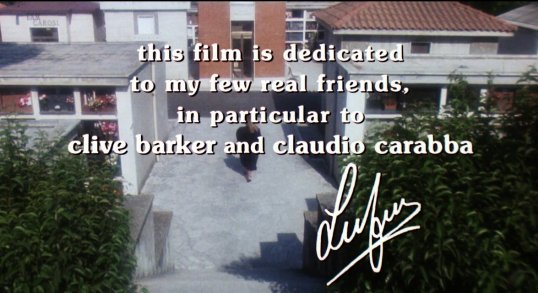
In the end, Voices From Beyond is interesting as a personal statement. It’s Fulci’s way of letting audiences know what he thought of those who had deserted him. The film ends with a dedication that is pure Fulci in both its spite and its vulnerability. Rest in peace to the maestro.
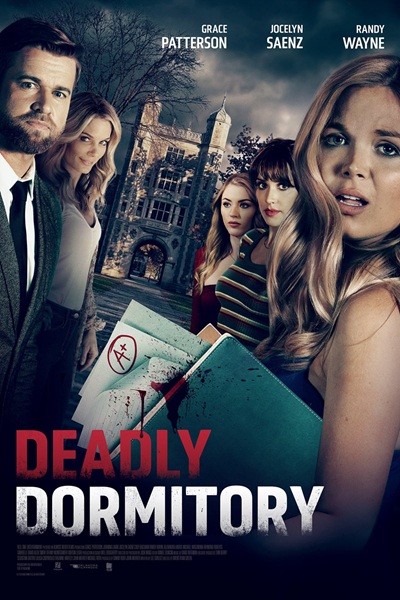
Lifetime For October: Deadly Dorm (dir by Brent Ryan Green)


This is one of those Lifetime films that has several different titles. The poster says Deadly Dormitory. Letterboxd claims that the title is Deadly Dorm. If you want to watch this film on Prime, you’ll have to look up College Professor Obsession. Me, I’m going to go with Deadly Dorm because that’s the easiest to say and the quickest title to type.

First aired in 2021, Deadly Dorm tells the story of Jenny Willis (Grace Patterson), a high school track star who is recovering from a knee injury. She’s finally well enough to accept a partial scholarship to an exclusive college. She tells her parents that she’s willing to go to a state school, but her parents insist that they will be able to pay for college. The whole opening of the movie reminded me of that old commercial they would show where recent high school graduates would record themselves saying, “I am going to college,” as if that was some sort of rare thing. I remember one guy who said, “It’s oh-fish-ee-al,” and I was just like, “Maybe don’t say it like that once you’re on campus.”

Anyway, Jenny enrolls in the college and moves into the dorm. Everyone she meets acts shocked when they hear which dorm room she’ll be moving into. It turns out that the room was previously occupied by a girl who died under mysterious circumstances. She was on the roof of the dorm, and she either fell, was pushed, or jumped. Jenny freaks out when she realizes that she’s going to be sleeping in the dead girl’s bed. Seriously, Jenny, just buy some new sheets and calm down.

Jenny is scandalized when her psychology professor (Randy Wayne) tells her that, if she wants to get better grades, she should try dressing a little better and showing off her legs and cleavage when she comes to class. Jenny is upset, and she has every right to be, even though I do agree that Jenny’s wardrobe is a bit on the frumpy side. Jenny’s roommate and new best friend, Beth (Johanna Liauw), says that the professor is a jerk but he also has tenure, so maybe it would be a good idea for Jenny to just give him what he wants.

Jenny starts to investigate on her own, and she soon comes to believe that the dead girl was also harassed by the professor. What if the professor killed the girl who used to live in Jenny’s dorm room? What if the professor has killed several people on campus? Does tenure cover that? It probably does at a private institution like this one. Jenny really should have gone to a state school.

On the one hand, I appreciated that this film had a lot of twists and turns in the plot. It embraced the melodrama, and I support that. I have to admit, though, that Jenny and her overprotective mother (Jocelyn Saenz) both kind of got on my nerves. Jenny was such a generic character that I actually felt sorry for her roommates. One character ends up seriously injured as a result of helping out Jenny, and it was hard not to notice that Jenny didn’t really seem to feel much guilt about that. When it came to college friendships, my firm rule was that I didn’t want to be dragged into anyone else’s drama, and Jenny doesn’t seem like she would have respected that.

The best scene in the film was when Jenny tried to stand up to her professor in the middle of class and the professor responded by announcing that she had borderline personality disorder and all of the other students just nodded in agreement. That felt like the most realistic scene in the film, as it captured how people will believe anything as long as it’s said by someone in authority.

Happy Birthday to Elizabeth Shue, my first movie star crush!


The lovely actress Elizabeth Shue was born on October 6th, 1963. She is very special to me because back in 1984, an 11-year-old Brad Crain wanted to be Daniel LaRusso, aka the Karate Kid. He knew karate, beat the bullies in the All-Valley tournament, and had an awesome friend and teacher like Mr. Miyagi. But even more important than all of that, his girlfriend was the beautiful Ali Mills, played by Elizabeth Shue. I was smitten with her, and I can honestly say she was the very first movie character I had a crush on!

In honor of her birthday, and also recognizing that we’re in the midst of Horrorthon here at TSL, I thought I’d share this clip of her in the horror flick LINK, a movie that came out a couple of years after THE KARATE KID. It’s about Jane Chase (Shue), a zoology student who’s invited to a remote seaside mansion to assist primatology professor Steven Phillip (Terence Stamp) with his experiments involving chimpanzees. Soon, dangerous events begin to occur, all involving the intelligent 45-year-old chimp, Link. I’ve never actually seen this one before, but I do remember seeing the VHS box at my local rental shops back in the day. In the spirit of the season, I may just have to finally give it a watch!

“They Finally Found Us”, AI Short Film Review, By Case Wright


Ethan, the creator, never makes title cards and I find that… just ughhhhh, but the films are kinda … okay. I am reviewing this short because it was his most watched and he deserves to be judged by his best work; so, here we go!

This is NOT good, but people liked it; in fact, 500,000 people liked it. I want them to know that I am VERY disappointed in them and they will just have to live with that!

The short is voice over with AI Cthulhus that have taken over the Earth because we sent out messages into space to find us. Really, that is the whole film.

We don’t deserve nice things!

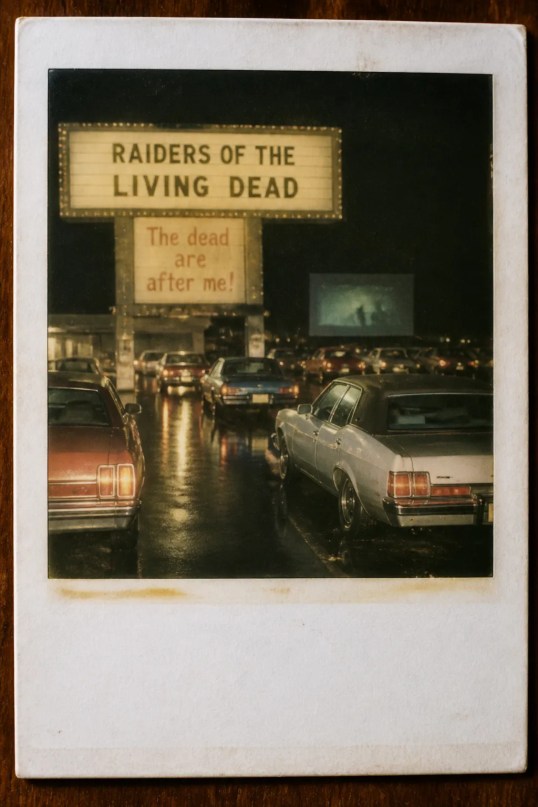
Horror on the Lens: Raiders of the Living Dead (dir by Samuel M. Sherman and Brett Piper)


Hi there and welcome to October!  This is our favorite time of the year here at the Shattered Lens because October is horror month.  For the past three years, we have celebrated every October by reviewing and showing some of our favorite horror movies, shows, books, and music.  That’s a tradition that I’m looking forward to helping to continue this year.

Today, we’ve got the 1986 zombie/sci-fi/action epic, Raiders of the Living Dead!

It’s the story of a creepy boy, a laser gun, a reporter, and a bunch of zombies.  There’s a mad scientist involved, too.  There always is.  The movie opens with a truck being hijacked and then the action shifts to a power plant and, honestly, I have no idea what any of it means.  If nothing else, it’s a film that you watch and you can’t help but admire the fact that it somehow got made and went on to find a small but kind of appreciative cult audience.  It’s just a very strange film and one that simply most be watched in October.

Enjoy!

Horror Song of the Day: The Dead Are After Me by George Edward Lott


The dead!  Are after me!

The 1986 film, Raiders of the Living Dead, features what may be the greatest song ever written about zombies.  For your listening pleasure, here is George Edward Lott’s The Dead Are After Me!

Horror Scenes That I Love: Dr. Loomis Inspects The Classroom In Halloween 2


Today’s scene that I love comes from the 1981 sequel, Halloween II.

In this creepy scene, Dr. Loomis (Donald Pleasence) and the police take a look at a classroom that Michael Myers has turned into his own personal art studio.  On the front board, written in blood, is SAMHAIN.  Loomis’s inspection is interrupted by the arrival of Nurse Chambers, who has been sent to get Loomis out of Haddonfield.

(People need to remember what David Gordon Green and his stupid reboot took away from us.  Shame on you, David Gordon Green!)

As far as I’m concerned, Laurie and Michael will always be siblings and Dr. Loomis will always be the fractured heart of the series.

4 Shots From 4 Horror Films: October 6th


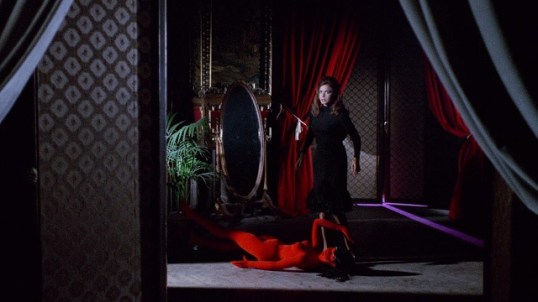
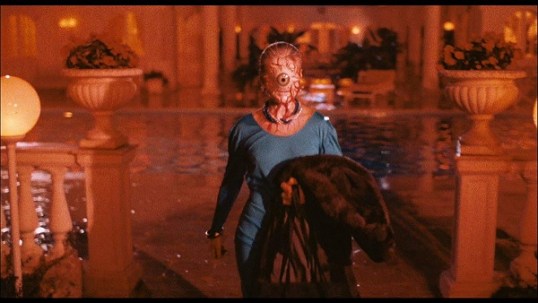
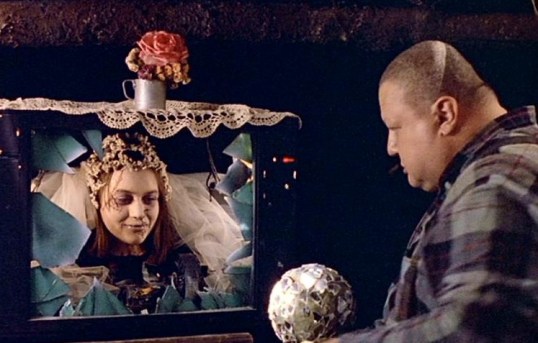
4 Or More Shots From 4 Or More Films is just what it says it is, 4 shots from 4 of our favorite films. As opposed to the reviews and recaps that we usually post, 4 Shots From 4 Films lets the visuals do the talking!

4 Shots From 4 Horror Films

Blood and Black Lace (1964, dir by Mario Bava, DP: Ubaldo Terzano)

Delirium (1987, dir by Lamberto Bava, DP: Gianlorenzo Battaglia)

Dellamorte Dellamore (1994, dir by Michele Soavi, DP: Mauro Marchetti)

Sleepless (2001, dir by Dario Argento, DP: Ronnie Taylor)


October Positivity: Beauty and the Atheist (dir by Donald James Parker)


In 2026’s Beauty and the Atheist, Beau Davidson plays Trey Crawford.  Trey is one of the country’s most popular atheist podcasters.  He spends his entire show making fun of creationists and the makers of Christian movies.  When he discovers that Douglas Connors (Donald James Parker), the star of Gramps Goes to College, is living nearby, Trey decides to invite him on the podcast for a debate.

Now, already, this is just a smidgen more interesting than the usual Douglas James Parker film.  Parker is essentially playing himself but he’s calling himself Douglas Connors.  This film seems to acknowledge that Gramps Goes To College has a certain Room-like reputation.  Could this be a Donald James Parker film that actually has a sense of humor about itself?

Douglas reluctantly goes on Trey’s podcast, expecting to get ambushed by a slick podcaster who hides his own bitterness and personal failings behind a bunch of scientific terms.  And that’s exactly what happens.  Douglas is earnest and polite.  Trey is snarky and angry.  Even Douglas admits that he lost the debate.

Meanwhile, Trey has fallen for Jeweli (Tara Massey), a woman who he keeps spotting in his local coffeehouse.  (It wouldn’t be a Donald James Parker film without a coffeehouse.)  What Trey doesn’t know is that Jeweli is the daughter of Douglas Connors!  And she’s a believer.  Soon, the Atheist has fallen for the beautiful Christian which …. actually, I knew quite a few couples where one partner is religious and the other is not.  It’s not really that unusual of a thing.

Beauty and the Atheist is a smidgen better than the usual Donald James Parker film, largely because Beau Davidson and Tara Massey are better performers than usually appear in Parker’s films.  As well, the scenes set in Davidson’s podcast studio actually require Parker to make some lighting and design choices as opposed to just turning on the camera.  Interestingly enough, despite the film’s premise, Beauty and the Atheist is not quite as aggressive as some of Parker’s other films.  There’s one rather lengthy scenes in which Douglas explains all of the tricks that Trey supposedly used to make him lose the debate but otherwise, this film is far less angry than something like Operation Unite or, for that matter, Gramps Goes To College.

That said, it’s still a Donald James Parker film. This is yet another film where the atheist is an atheist because of family trauma.  Now, to be honest, I’ve met any number of atheists where that stereotype is indeed true.  But it still feels a bit too easy of a  narrative excuse.  On a technical level, the sound recording is often abysmal.  While Davidson and Massey are adequate in their roles, the rest of the cast delivers their lines flatly.  As for the dialogue, it’s sometimes a blessing that it’s hard to hear what the characters are saying.  Most of it falls flat and the attempts at humor are painful to watch.  When Jeweli’s sister comes across some evidence online that she thinks will put Trey in his place, she literally shouts, “Eureka!”  It’s hard to listen to and hard to watch.


October Hacks: Buried Alive (dir by Gerard Kikoine)


1990’s Buried Alive may be the worst Edgar Allan Poe adaptation ever filmed.

The film takes place at the Ravenscroft Institute, a former mental asylum founded by the fearsome Jacob Julian (John Carradine). Jacob’s son, Gary (Robert Vaughn), took over the Institute after his father’s death, treated his patients with kindness and compassion, and preached about the need for “freedom.” Now, Gary has transformed Ravenscroft into an all-girls school for juvenile delinquents. The students worship him because he tells them that nothing is their fault and that they deserve to live the life they want. His newest teacher, Janet (Karen Lorre), is a fan as well. In fact, she soon finds herself falling in love with Gary.

However, from the minute Janet shows up at Ravenscroft, she starts having strange visions. She sees thousands of ants crawling over her feet. She hears strange sounds in the walls. At one point, an arm reaches out of a toilet and tries to grab her. She thinks she sees a distinguished Shakespearean character actor sealed behind a wall. Is she losing her mind, or has she stumbled across something more sinister?

Now, when I say that Buried Alive is one of the worst Edgar Allan Poe adaptations I’ve ever seen, understand that it is not the fault of the cast. There are some truly talented people in this film. A young Nia Long plays a student named Fingers. Ginger Lynn Allen has fun playing a bully named Debbie. Robert Vaughn is appropriately intense as Gary, and John Carradine is… well, he’s John Carradine. This was one of Carradine’s final films, and he actually died before it was released. Obviously, Carradine doesn’t do much, but, as was often the case, his intimidating screen presence meant that he didn’t have to do much to make an impression. He just had to exist. Donald Pleasence plays Dr. Schaeffer, a German-accented member of the staff who wears round glasses and an ill-fitting toupee and who pops up occasionally to tell Janet not to wander around at night. Pleasence was obviously not in the best of health when he played Schaeffer, but, much like Carradine, his eccentric presence gives the film some much-needed atmosphere, and there is a fairly effective twist involving his character. Finally, there’s an absolutely adorable black cat that randomly appears throughout the film. It’s the film’s way of acknowledging Edgar Allan Poe, I imagine.

No, the failure of Buried Alive is not due to the cast. It’s really not even due to the script, which borrows the idea of someone being buried alive and not much else from the Poe story. Instead, the fault almost entirely rests with the film’s direction. The story unfolds with little momentum, some scenes meander while others are over far too quickly, and the director seems to think that filming anyone in an extreme close-up will automatically make them creepy. There are a few gross sequences involving a bunch of ants and the film has a few slasher moments, like the silencing of one annoying victim via a garden tool to the forehead , but otherwise there’s little horror and next to no suspense. I actually found myself getting angry over how poorly directed this film was.

The cast deserved better.