A Blast From The Past: The Night America Trembled (dir by Tom Donovan)


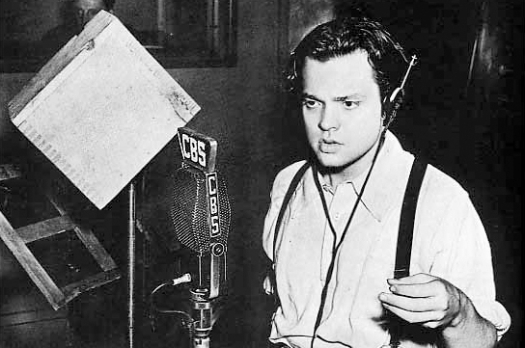
Filmed in 1957 for a television program called Westinghouse Studio One, The Night America Trembled is a dramatization of the night in 1938 when Orson Welles’s adaptation of H.G. Wells’s The War of the Worlds reportedly caused a panic amongst listeners.

For legal reasons, Orson Welles is not portrayed nor is his name mentioned.  Instead, the focus is mostly on the people listening to the broadcast and getting the wrong idea.  That may sound like a comedy but The Night America Trembled takes itself fairly seriously, complete with Edward R. Murrow narrating and taking drags off of a cigarette.

Clocking in at a brisk 60 minutes, The Night America Trembled is an interesting recreation of that October 30th.  Among the people panicking are a large collection of future stars and character actors.  Ed Asner, James Coburn, John Astin, Warren Oates, and Warren Beatty all make early appearances.

It’s an interesting historical document and you can watch it below!

Retro Television Reviews: Haunts of the Very Rich (dir by Paul Wendkos)


Welcome to Retro Television Reviews, a feature where we review some of our favorite and least favorite shows of the past!  On Sundays, I will be reviewing the made-for-television movies that used to be a primetime mainstay.  Today’s film is 1972’s Haunt of the Very Rich!  It  can be viewed on YouTube!

The 1972 made-for-TV movie Haunts of the Very Rich opens with a lengthy shot of Lyle (Tony Bill) and Laurie (Donna Mills) sharing a very long kiss.  Obviously, they’re very happy and why shouldn’t they be?  They’re young.  They’re beautiful.  They’re in love.  They’re newly married.  And …. they’re on an airplane!

It’s a private plane, one that’s heading towards a resort called The Portals of Eden.  There’s only a few other people on the plane.  David Woodrough (Lloyd Bridges) is a businessman who is looking forward to spend some time away from his wife, especially if it means a chance to get to know one of the other passengers, Ellen Blunt (Cloris Leachman).  Annette Larner (Anne Francis) is also traveling alone and is hoping she might finally be able to get some sleep without having to take a handful of pills beforehand.  Rev. Fellows (Robert Reed) appears to have lost his faith.  And then there’s Al Hunsicker (Ed Asner).  Hunsicker’s a little bit confused about how he ended up on the airplane.  As far as he knows, he’s supposed to be on his way to a business meeting in Dallas.  Portals of Eden?  Al’s never heard of the place!  Of course, nobody on the plane really seems to be sure where they’re going or how they even got on the plane in the first place.  Strangely, Al appears to be the only one who finds any of this to be strange.

When the plane lands, they discover that the Portals of Eden is a large hotel sitting at the edge of a tropical wilderness.  Their host, the always polite Mr. Seacrist (Moses Gunn), welcomes them but avoids answering anyone’s questions.  Seacrist tells them to enjoy their stay.

For the first day, that’s exactly what everyone does.  They relax.  They indulge in a little pampering.  David gets to know Ellen.  Al is still worried about getting to his business meeting but he is assured that he can always fly out to Dallas the following day.

The night, a violent storm hits.  The next day, everyone wakes up to discover that the resort is nearly deserted.  There’s no electricity.  There’s no way to call out.  There’s not much food.  Seacrist tells them not to worry.  He assures them that help is on the way.  As the guests wait to be rescued, they finally start to wonder just how exactly the ended up at the resort in the first place.  They realize that they’ve almost all had a recent brush with death.  David swears to Ellen that he’ll file for divorce as soon as they get back home but what if they don’t have a home to which to return?  Occasionally, the guests hear a plane flying overhead.  At one point, they even see one land.  But every time, just when it seems like they’re on the verge of finally being rescued, the plane vanishes.

And things just get stranger from there.

If Jean-Paul Sartre had ended up in the United States, writing for The Bold and the Beautiful, the end result would probably look a lot like Haunts of the Very Rich.  Considering that this is a made-for-TV movie from the early 70s, Haunts of the Very Rich is a surprisingly effective and atmospheric little horror film.  The story itself won’t exactly win any points for originality.  You’ll guess the secret of Portals of Eden long before any of the characters in the film.  But still, it’s a well-directed and nicely acted film, one that’s topped off with a suitably surreal (if somewhat abrupt) finale.

Haunts of the Very Rich can currently be found on YouTube and I recommend it for anyone who likes their melodrama served with a side of existential dread.

Retro Television Reviews: The Last Child (dir by John Llewellyn Moxey)


Welcome to Retro Television Reviews, a feature where we review some of our favorite and least favorite shows of the past!  On Sundays, I will be reviewing the made-for-television movies that used to be a primetime mainstay.  Today’s film is 1971’s The Last Child!  It  can be viewed on YouTube!

Welcome to the “near future.”

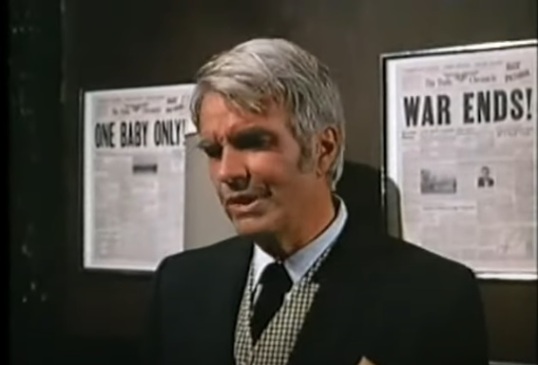
Panicked by hysterical claims about overpopulation and environmental catastrophe, Americans have sacrificed the majority of their civil liberties.  Smiling policeman stand on every corner and in every public hallway.  Of course, once their authority is challenged, those smiles quickly disappear.  Crude posters have been put up everywhere, demanding that everyone watch their consumption of natural resources.  The social engineers and the eugenicists are in charge.  Anyone over the age of 65 is ineligible for medical care and encouraged to consider euthanasia.  Couples are allowed to have only one child and the government requires that anyone who gets pregnant a second time have an abortion.  Anyone who questions the policy is told that they have no choice but to follow the law.  It’s their civic duty.  The media, meanwhile, runs headlines declaring that the one child policy has led to world peace.
Alan and Karen Miller (played by Michael Cole and Janet Margolin) have already had their one child.  That their child died shortly after birth doesn’t matter in the eyes of Barstow (Ed Asner), the Himmleresque head of the Population Control Police.  Every couple is allowed one child and that’s it.  When Karen gets pregnant a second time, she is determined to have the baby.  She and Alan know that their only hope is to cross the border into Canada.  Helping them is a retired U.S. Senator (Van Heflin, in his final performance) who is opposed to the government’s policies.  Caught in the middle of Karen’s brother, Howard (Harry Guardino).  Howard works for the Population Control Police and he knows just how far Barstow is willing to go to keep Karen from having her baby.

The Last Child opens with a title card informing us that the film takes place in the “not-too-distant future.”  Along with all of the propaganda posters, that’s the only real sign that this film is meant to be taking place in the future.  There’s no “futuristic” technology.  Everyone dresses in the latest 1971 fashions.  Everyone drives the latest 1971 automobiles.  Though the decision may have been motivated by the film’s low-budget, the lack of the typical sci-fi trappings serves the film well.  The Last Child does not take place in a sleekly designed future and it doesn’t takes place in an apocalyptic wasteland.  Instead, it takes place in a world that is just as shabby as you would expect a world controlled and decorated by a government bureaucracy to be.  It’s a gray dystopia, populated by people who have given up their individuality.  It’s a world that’s visually boring by design and that makes it all the more disturbing.

The Last Child is an effective and well-acted film.  It probably feels more plausible today than it did when it aired back in 1971.  In many ways, with its portrait of unfeeling government officials and bland authoritarianism, it’s the perfect film for the age of COVID.  Indeed, the government’s policy of refusing to provide life-saving care for people over the age of 65 is reminiscent of what many pundits advocated for at the height of the COVID pandemic.  As for the film’s one child policy, that too is a concept that has become recently popular with many American academics.  Among many members of the so-called “elites,” there’s a definite need to try to control people and that very real need is what makes The Last Child so disturbingly plausible.  In The Last Child, sanctuary is found in Canada.  Today, of course, Canada is at the forefront of the euthanasia trend.  Of course, in 1971, the Prime Minister of Canada was Pierre Trudeau and not Justin.

Pierre Trudeau’s personal motto was “Reason before passion” and that’s certainly the philosophy that fuels the dystopian society at the center of The Last Child.  It’s a film that holds up today as both a thriller and a prophecy,

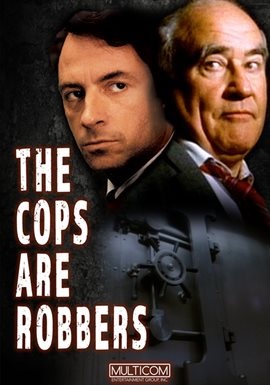
The Cops Are Robbers (1990, directed by Paul Wendkos)


When Kirkland (George Kennedy) appoints veteran cop Jake Quinn (Ed Asner) to command a division of the Massachusetts Metropolitan Police, one of Quinn’s main duties is to root out corruption.  Everyone knows that Captain Jerry Clemente (Ray Sharkey) is crooked but no one’s been able to prove anything.  This has led to Clemente getting so cocky that he tries to pull off the biggest bank robbery of all time.  Working with two other corrupt cops (played by Steve Railsback and James Keach) and some ex-cons who owe him a favor, Clemente masterminds the theft of $25,000,000 worth of jewelry.

Unfortunately, stealing that much brings in not only the FBI but it also makes Quinn even more determined to expose Clemente and all of his crooked associates.  As well, the Mafia wants their part of the action and the members of Celemente’s gang aren’t as smart as their leader.  Soon the walls are closing in.  Will Clemente get away with his crime or will he end up getting arrested and eventually writing a book about the theft that will eventually be turned into a television movie?

Though the title seems more appropriate for a comedy, The Cops Are Robbers is a drama based on a true story.  It actually could have used some comedy because the movie itself is pretty dry and straight forward.  Ed Asner and George Kennedy give their usual competent performances, cast as the type of characters that they could have played in their sleep.  Unfortunately, Ray Sharkey is nowhere near as effective as the man they’re trying to put behind bars.  When he first started out, Sharkey made a name for himself by giving convincing performances as characters who were tough and streetwise but also sometimes neurotic.  He received Emmy and Golden Globe nominations before he became better known for his trips to rehab than his acting ability.  I think that. as an actor, Sharkey’s downfall was that he saw himself compared to Al Pacino so many times that he started to buy it and he eventyally started to attack every role with the same method-style intensity.  Sometimes, like when he played Sonny Steelgrave during the first season of Wiseguy, it worked.  Most of the time, though, it just led to him overacting and bellowing all of his lines.  That’s the case with The Cops Are Robbers.  Sharkey is so loud and perpetually angry that it’s hard to believe that he’s managed to get away with his crimes for as long as he has.

For those of us who don’t live in Massachusetts, the most interesting thing about watching The Cops Are Robbers is trying to keep track of who works for what agency.  When it was mentioned that Clemente works for the Metropolitan Police, I immediately assumed that meant he was a Boston police officer.  Only later did I learn, via a review on the imdb, that the Metropolitan Police were actually a state agency.  That Clemente was a state official and not just a city cop does make his crimes slightly more interesting, though not enough to really liven up The Cops Are Robbers.

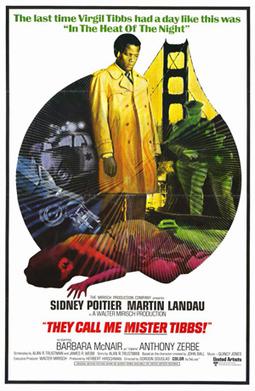
18 Days of Paranoia #13: They Call Me Mister Tibbs! (dir by Gordon Douglas)


The 1970 police procedural, They Call Me Mister Tibbs!, opens with a murder in San Francisco.

A prostitute has been found dead in a sleazy apartment building and, according to witnesses, she was visited, shortly before her death, by the Reverend Logan Sharpe (Martin Landau).  Rev. Sharpe is a prominent civic leader, an outspoken liberal who is a friend of the civil rights movement.  Sharpe is currently at the forefront of a campaign to pass a city referendum that will add a “mini city hall” to every neighborhood and will help to fight against the gentrification of San Francisco.  If Sharpe’s guilty, it will mean the death of the referendum.

Despite the fact that there’s a ton of evidence piling up against him and he kind of comes across as being a little bit creepy (he is, after all, played by Martin Landau), Rev. Sharpe insists that he’s innocent.  Yes, he’s been visiting prostitutes but he’s not a client.  No, of course not!  Instead, Sharpe explains that he’s simply counseling them and praying for their souls.  In fact, as far as Sharpe is concerned, this whole thing is just an attempt by the establishment to discredit his efforts to help the poor and underprivileged.

Heading up the investigation is a friend and supporter of Sharpe’s, Detective Virgil Tibbs (Sidney Poitier).  That may seem like a good thing for Sharpe, except for the fact that Tibbs is an honest cop and he’s not the type to let friendship stand in the way of doing a thorough investigation.  Tibbs admits that he supports Sharpe’s campaign and he wants the reverend to be innocent.  But Tibbs is all about justice.  Whether it’s teaching his son an important lesson about smoking or tracking down a potential serial killer, Virgil Tibbs is always going to do the right thing.

There are other suspects, all of whom are played by suitably sinister character actors.  Anthony Zerbe plays a criminal who lived near the prostitute.  Ed Asner plays her landlord, who may have also been her pimp.  Is Sharpe being set up by the powers that be or is Tibbs going to have to arrest a man whom he admires?

They Call Me Mister Tibbs! was the second film in which Sidney Poitier played Virgil Tibbs.  The first time he played the role was in 1967, when he co-starred with Rod Steiger in the Oscar-winning In The Heat of the Night.  In that film, Poitier was a Philadelphia cop in the deep south who had to work with a redneck sheriff.  In They Call Me Mister Tibbs!, Virgil is now working in San Francisco and he has to work the case on his own.

They Call Me Mister Tibbs! is a far more conventional film than In The Heat of the Night.  Whereas In The Heat of the Night had a wonderful sense of place and atmosphere, They Call Me Mister Tibbs! could just as easily have taken place in Los Angeles, Phoenix, or even Philadelphia.  With the exception of some slight profanity, They Call Me Mister Tibbs! feels more like a pilot for a TV show than an actual feature film.  Perhaps the biggest problem with the film is that there’s no real surprises to be found within the film.  You’ll guess who the murderer is within the first 10 minutes of the film and you’ll probably even guess how the movie will eventually end.

On the plus side, just as he did in In The Heat of the Night, Sidney Poitier brings a lot of natural authority to the role of Virgil Tibbs.  He’s actually allowed to show a sense of humor in this film, which is something that the character (understandably) couldn’t do while he was surrounded by bigots and rednecks during his previous adventure.  Virgil gets a few family scenes, where we watch him interact with his wife and his children.  The scenes feel out of place but, at the same time, Poitier plays them well.

With Sharpe attempting to get his referendum passed and the possibility that riots could break out if Sharpe is indeed guilty of murder, there’s a slight political subtext to They Call Me Mister Tibbs!  Sharpe’s argument that he was being set up by the establishment undoubtedly carried a lot of weight in 1970.  Still, this is ultimately a shallow (if adequately entertaining) film that, for the most part, is only made memorable by Poitier’s commanding performance.

Other Entries In The 18 Days Of Paranoia:

  1. The Flight That Disappeared
  2. The Humanity Bureau
  3. The Private Files of J. Edgar Hoover
  4. The Falcon and the Snowman
  5. New World Order
  6. Scandal Sheet
  7. Cuban Rebel Girls
  8. The French Connection II
  9. Blunt: The Fourth Man 
  10. The Quiller Memorandum
  11. Betrayed
  12. Best Seller

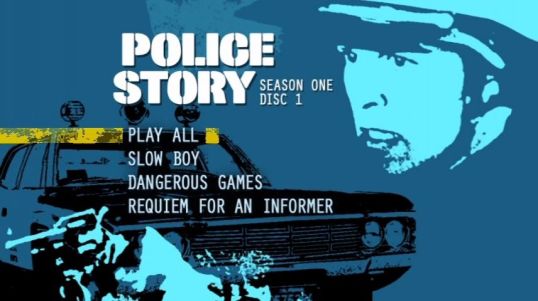
The First Police Story: Slow Boy (1973, directed by William A. Graham)


Long before The Wire, Homicide, Chicago PD, NYPD Blue, or even Hill Street Blues, there was Police Story.

Co-created by cop-turned-writer Joseph Wambaugh, Police Story aired on NBC from 1973 to 1978.  It was an anthology series, with each episode following a different member of the LAPD as they deal with crime and social issues in Los Angeles.  For its time, it was ground-breaking in its realistic approach to the life and work of the police.  Interestingly, the show wasn’t always blindly pro-cop.  Often the cops featured were deeply flawed and the war on crime was frequently portrayed to be unwinnable.  Over the course of its run, Police Story was a regular Emmy nominee and won the award for Best Drama Series in 1976.

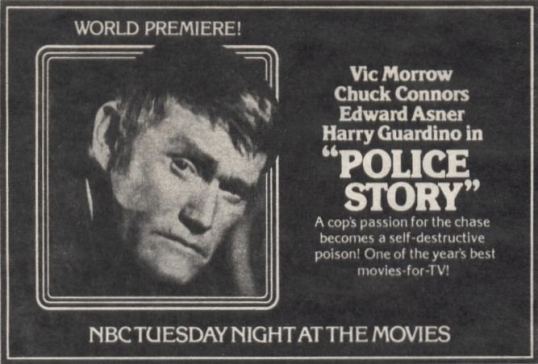
Police Story started, in 1973, with a two-hour TV movie.  At the time it aired, the pilot was called Stakeout but it has since aired in syndication under the title Slow Boy.  Vic Morrow stars as Sgt. Joe LaFrieda, a plainclothes detective who can’t keep his marriage together but who can take criminals off the street.  LaFrieda is the second-in-command of a special squad of detectives who specialize in watching and taking down high-profile criminals.  Their methods frequently come close to entrapment but they usually work.  Their current target is Slow Boy (Chuck Conners), the son of a mafia chieftain, who enjoys robbing stores.  When LaFrieda’s first attempt to put Slow Boy in jail is thwarted by a liberal judge and departmental bureaucracy, he and the squad come up with a second, less-than-legal plan to take Slow Boy down.

Considering the involvement of Joseph Wambaugh, it’s no surprise that plot is secondary to exploring the day-to-day lives of the blue-collar cops trying to take Slow Boy down.  The heart of the movie is in the scenes of the cops shooting the breeze and trying to keep each other amused during length shakeouts.  Their humor is often grim and the fascinating dialogue is cynical, dark, and, even by today’s standards, surprisingly raw.  One of the detectives (played by Harry Guardino, who specialized in loud-mouth city cops) is an unapologetic racist.  Though he gets a comeuppance of sorts, the way the film and the rest of his squad handle his racism will undoubtedly make modern audiences uncomfortable, even if it is authentic to the era in which Slow Boy was made.

The underrated Vic Morrow gives one of his best performances as the tough but sympathetic LaFrieda, who is bad at everything but his job.  He is ably supported by a host of familiar character actors.  Ed Asner plays LaFrieda’s reactionary lieutenant while Sandy Baron is great in the role of an informant.  Diane Baker was also perfectly cast as LaFrieda’s potential girlfriend.  (She first meets the detective while Slow Boy is holding a gun to her head.)  Finally, Chuck Conner is as intimidating as always as the sadistic Slow Boy.

Slow Boy is a tough and uncompromising police procedural and it provided a great start for Police Story.  Reruns of Police Story currently air on H&I on Sunday morning.

Horror on the Lens: Haunts of the Very Rich (dir by Paul Wendkos)


Today’s horror on the lens is a 1972 made-for-TV movie, Haunts of the Very Rich!

What happens when a bunch of rich people find themselves on an airplane with no memory of how they got there?  Well, first off, they land at a luxury resort!  But what happens when the resort suddenly turns out to be deserted and the guests discover that there’s no apparent way out!?

You can probably already guess the film’s “surprise” ending but Haunts of the Very Rich is still an entertaining little film.  You can check out my more in-depth review here!

Enjoy!

An October Film Review: The Night America Trembled (dir by Tom Donovan)


Today is the 79th anniversary of Orson Welles’s infamous War of the Worlds broadcast.

In 1938, Orson Welles and the Mercury Theater of the Air performed a radio adaptation of H.G. Welles’s War of the World.  Presented as a live news program, it was one of the first mockumentaries.  It also caused a panic.  How big the panic was is open for debate.  Some say only a few people took it seriously.  Other sources say that it was a nationwide crisis.  But, regardless, Welles made history on that night.  Not only did he illustrate the power of the media but he also scared the Hell out of a lot of people.  All in all, a pretty good night…

Filmed in 1957 for a television program called Westinghouse Studio One, The Night America Trembled is a dramatization of that night.  For legal reasons, Orson Welles is not portrayed nor is his name mentioned.  Instead, the focus is mostly on the people listening to the broadcast and getting the wrong idea.  That may sound like a comedy but The Night America Trembled takes itself fairly seriously.  Even pompous old Edward R. Murrow shows up to narrate the film, in between taking drags off a cigarette.  (I enjoyed the show but, whenever Murrow showed up, I was reminded of a grumpy old teacher complaining that none of his students cared about the Spanish-American War.)

Clocking in at a brisk 60 minutes, The Night America Trembled is an interesting recreation of that October 30th.  Among the people panicking: a group of people in a bar who, before hearing the broadcast, were debating whether or not Hitler was as crazy as people said he was, a babysitter who goes absolutely crazy with fear, and a group of poker-playing college students.  If, like me, you’re a frequent viewer of TCM, you may recognize some of the faces in the large cast: Ed Asner, James Coburn, John Astin, Warren Oates, and Warren Beatty all make early appearances.

As I said, it’s an interesting little historical document and you can watch it below!

Enjoy!

Lisa Cleans Out Her DVR: Change of Habit (dir by William A. Graham)


(Lisa is currently in the process of cleaning out her DVR!  How long is it going to take?  Some would say forever but, here at the Shattered Lens, we’re hoping that she might have it all done by August.  Anyway, she recorded the 1969 film Change of Habit off of Starz on March 20th!)
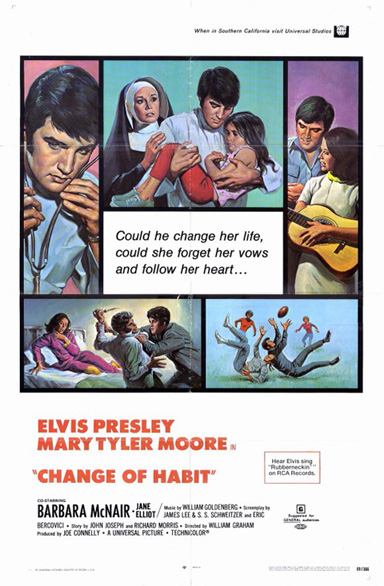
It’s Elvis vs. God for the heart of Mary Tyler Moore!

(Okay, so that may be a little bit glib on my part but, seriously, that pretty much sums up Change of Habit.)

Change of Habit opens with three nuns walking through New York City.  There’s the forgettable nun, Sister Barbara (Jane Elliott).  There’s the black, streetwise nun, Sister Irene (Barbara McNair).  And then there’s the idealistic and wholesome nun, Sister Michelle (Mary Tyler Moore).  Because they’re nuns, even notoriously rude New Yorkers are nice to them.  They walk across a busy intersection and all of the cars stop for them.  A cop sees them jaywalking and just smiles and nods at them.  In case you were ever wondering why someone would become a nun, it’s because nuns always have the right-of-way and they don’t have to obey arbitrary laws.  It’s a good life.

The sisters are shopping and, as the opening credits roll, the three of them duck into a dressing room and change into contemporary civilian clothing.  Obsessively, the camera keeps zooming in on everyone’s bare legs.  You can literally hear the film’s producers telling all the boys in the audience, “This may be a G-rated Elvis film but that’s not going to stop us from implying nun nudity!”

It’s Sister Michelle’s idea that the nuns should wear contemporary clothing, the better to relate to the Godless youth of the 1960s.  Unfortunately, now that they’re dressed like everyone else, they have to actually obey traffic laws.  When they attempt to cross the street for a second time, cars honk at them and the cop yells at them for jaywalking.

Michelle, Irene, and Barbara get jobs working at a free clinic.  The clinic is run by John Carpenter (Elvis Presley).  Carpenter is looking for aspiring actresses to appear in a movie about a babysitter being stalked by a masked murderer on Halloween and … oh sorry.  Wrong John Carpenter.  This John Carpenter is a no-nonsense doctor who will stop at nothing to bring peace and good health to the most poverty-stricken neighborhoods in New York!

That’s right.  It’s an Elvis film with a social conscience!

And that probably sounds like a joke but Change of Habit‘s heart is in the right place.  It’s intentions are good.  At least a few of the people involved in the film were probably trying to make the world a better place.  There’s a subplot involving an autistic child that, when you consider this film was made in 1969, is handled with unusual sensitivity.  Of course, that doesn’t mean that the rest of Change of Habit doesn’t feel totally and completely out-of-touch.  The entire film feels so dated that I imagine it probably even felt dated when it was initially released.  This is one of those films where the local black militants give Sister Irene a hard time about being a sell-out, just to eventually admit, during a block party, that maybe white folks aren’t so bad after all.  By the end of the movie, they’re even joking with the cops.  All that was needed was for Elvis to sing a song or two.  To be honest, there are times when Change of Habit feels like the 1969 version of Kendall Jenner’s Pepsi commercial.

Of course, the majority of the film deals with Elvis falling in love with Mary Tyler Moore.  He doesn’t know that she’s a nun and, as she falls in love with him, she’s forced to make a difficult choice.  Does she follow God or does she follow Elvis?  Actually, the film ends before she officially makes that choice but there’s little doubt as to what she’s going to eventually do.  In his final non-concert film appearance, Elvis is totally miscast as a serious-minded doctor and, it must be said, he looked miserable throughout the entire film.  You get the feeling he’d rather be doing anything than starring in Change of Habit.  (Maybe he was already thinking about how much he wanted a special FBI badge.)  Mary Tyler Moore is a bit more believable as a nun.  Fortunately, both Moore and Elvis were likable performers and their likability makes Change of Habit, as ludicrous as it often is, far more watchable than it has any right to be.

In the end, Elvis may not have saved society but he did get to sing a gospel song or two.
A Movie A Day #21: A Case of Libel (1983, directed by Eric Till)


a-case-for-libelIn the 1950s, at the height of the McCarthy era, no one is more feared than Boyd Bendix (Daniel J. Travanti), an acerbic, right-wing gossip columnist.  Anyone who crosses Bendix the wrong way runs the risk of being accused of everything from sexual deviancy to communism.  Bendix’s latest victim is prominent journalist named Dennis Corcoran (Gordon Pinset).  Unlike everyone else who has been bullied by Bendix, Corcoran refuses to quietly submit.  Working with a gruff but brilliant attorney, Robert Sloane (Ed Asner), Corcoran takes Bendix to court.

A Case of Libel was made for Showtime and it is very much the type of movie that was made for teachers to show in classrooms full of aspiring Clarence Darrows.  Adapted from a Broadway play, A Case of Libel is also based on the true story of a successful lawsuit that was brought against columnist Westbrook Pegler in 1955.  A Case of Libel is basically a filmed play but is memorable for the performances of Ed Asner and especially Daniel J. Travanti.

A Case of Libel is a movie that I used to rent, on VHS, from my local video store when I was just starting to get interested in politics.  Because it was a cheap production on a cheap tape, the picture always looked terrible but I still enjoyed it.  Despite what the picture above claims, it’s never gotten an official DVD release and it probably never will be since there’s not a huge demand for old Ed Asner/Daniel J. Travanti courtroom dramas.  If it ever does come out on DVD, I’ll buy it.