In The Line of Duty: The FBI Murders is the one that started it all. This was the first installment and it set the general format of all the In The Line of Duty films to follow. It was based on a true story. The movie was evenly split between the criminals and the members of the law enforcement trying to catch them. Here, the criminals were two bank robbers played by David Soul and, in an effective turn against type, Michael Gross. (When this film was released, Gross was best known as the wimpy father on Family Ties. Today, he’s better known as the survivalist from the Tremors films. He went on to play cops in two subsequent In The Line of Duty films.) The FBI agents pursuing them were played by Ronny Cox, Bruce Greenwood, and several other recognizable TV actors.
The FBI Murders was not only the first In The Line of Duty film but it was also the best. All of the subsequent installments, both good and bad, pale in comparison. Though the story is familiar and the foreshadowing is sometimes obvious (“Try not to get shot,” one FBI agent’s wife tells him), The FBI Murders still holds up today because of the strong cast and Dick Lowry’s direction of the final shootout between the cops and the criminals. No matter how many times David Soul gets shot, he keeps getting up and firing more rounds. Making this part of the film all the more effective is that it’s based on fact. During the actual incident, the real-life criminals played by Soul and Gross continued firing and killing even though they had been shot a tremendous number of times. Remarkably, it was discovered that neither had been on any type of pain-killing drug at the time. Instead, they were determined to just keep shooting until the end. Though the two men were outnumbered by the FBI, the agents were not prepared to go up against the military-grade weapons that the men were carrying with them.
The actors who play the FBI agents are all effective, especially Ronny Cox as the veteran who has seen it all. As with the other In The Line of Duty films, a lot of time is spend showing the comradery between the agents and how, even when they’re not at work, they’re all still together. In other In The Line of Duty films, the comradery could sometimes feel forced but, in The FBI Murders, it feels natural and scenes like Bruce Greenwood’s character finally getting a nickname and one of the older agents deciding to go on a stakeout just for old times sake carry a lot more emotional weight than you might expect. It makes the final shootout all the more powerful.
Eleven more In The Line of Duty films would follow but none of them would top The FBI Murders.
Though the Academy of Motion Picture Arts and Sciences claim that the Oscars honor the best of the year, we all know that there are always worthy films and performances that end up getting overlooked. Sometimes, it’s because the competition too fierce. Sometimes, it’s because the film itself was too controversial. Often, it’s just a case of a film’s quality not being fully recognized until years after its initial released. This series of reviews takes a look at the films and performances that should have been nominated but were, for whatever reason, overlooked. These are the Unnominated.
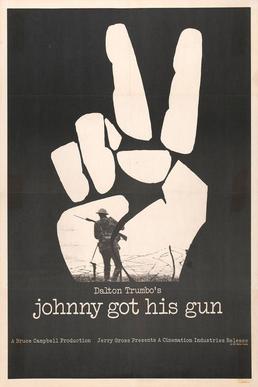
The 1971 anti-war film, Johnny Got His Gun, tells the story of Joe Bonham (played by Timothy Bottoms). When America enters World War I, Joe enlists in the Army. He leaves behind his small-town life. He leaves behind his patriotic father (Jason Robards) and his loving girlfriend (Kathy Fields). As he leaves, everyone tells him that he is doing the right thing to protect democracy. Joe’s a hero!
Joe expects war to be a glorious affair, one that will make a true man out of him. Instead, he’s hit by an artillery shell while huddled in a muddy trench. Though he survives the explosion, he loses his arms and his legs. He loses his face. He’s taken to a field hospital, where the doctors say that, though he’s alive, he’s incapable of feeling or thinking. He’s left alone in a room and is occasionally checked on by a sympathetic nurse (Diane Varsi).
The doctors are wrong. Joe can think. Even if he can’t see where he is now, he can still remember the life that he once had and the events that led him to the hospital. The film switches back and forth, from the black-and-white imagery of the hospital to the vivid color of Joe’s memories and fantasies. In his mind, Joe remembers his father, who encouraged him to go to war and perhaps was not the all-knowing figure that Joe originally assumed him to be. (The film makes good use of Jason Robards’s natural gravitas. Like Joe, the viewer initially assumes that Robards is correct about everything.) Joe also imagines several conversations with Jesus (a stoned-looking Donald Sutherland), who turns out to be surprisingly mellow and not always particularly helpful. Jesus suggest that Joe may just be naturally unlucky and he also suggests that Joe perhaps keep his distance from him because, sometimes, bad luck can rub off. Joe, meanwhile, wonders if he could be used as a traveling exhibit to portray the futility of war. When Joe finally realizes that a nurse has been checking on him, he tries to figure out a way to send a message to both her and the military that is keeping him alive in his captive state. S.O.S. …. help me….
Johnny Got His Gun is based on a novel by Dalton Trumbo. The novel was first published in 1939, at a time when the debate over whether the the U.S. should get involved in another war in Europe was running high. At the time, Trumbo was a Stalinist who opposed getting involved because Germany and Russia had signed a non-aggression pact. After the Germans invaded Russia in 1941, Trumbo and his publishers suspended reprinting of the book until the war was over with. Needless to say, this was all brought up in the 50s, when Trumbo was one of the more prominent writers to be blacklisted during the Red Scare. On the one hand, Dalton Trumbo does sound like he was more than a bit of a useful idiot for the Stalinists. On the other hand, if you’re going to suspend the printing of your anti-war polemic, it should definitely be because you want to help defeat the Nazis. In the end, what really matters is that Johnny Got His Gun is an undeniably well-written and effective book, one that works because it eschews the vapid sloganeering that one finds in so many works of left-wing literature and instead focuses on the emotions and thoughts of one human being.
The book was later rediscovered by the anti-war protestors of the 60s, which led to Dalton Trumbo directing a film adaptation. The film is a bit uneven. Dalton Trumbo was 65 years old when he directed the film and there are a few moments, especially in the scenes with Sutherland as Jesus, where he seems like he’s trying a bit too hard to duplicate the younger directors who were a part of the anti-war moment. However, the scenes in the military hospital are undeniably moving. The hospital scenes are shot in a noirish black-and-white and they effectively capture the stark horror of Joe’s situation. Left alone in his dark and shadowy room, Joe becomes the perfect symbol for all the war-related horrors that people choose to ignore. He becomes the embodiment of what war does to those who are scarred, both physically and mentally, by it. The scenes where Diane Varsi realizes that Joe is aware of what’s happened to him and that he can still feel are powerful and emotional. In fact, they work so well that it’s hard not to wish that the film could have done away with the fantasies and the flashbacks, despite the fact that Timothy Bottoms gives an appealing performance as the young and idealistic Joe.
Johnny Got His Gun didn’t receive any Oscar nominations. Should it have? The 1971 Best Picture line-up was a strong one, with the exception of Nicholas and Alexandra. Johnny Got His Gun was definitely superior to Nicholas and Alexandra. However, Dirty Harry is definitely superior to Johnny Got His Gun. (For that matter, Two-Lane Blacktop also came out in 1971 as well.) But, even if Johnny Got His Gun didn’t deserve to be one of the five Best Picture nominees, it did deserve some consideration for its cinematography and Diane Varsi’s performance. If the flashbacks and the fantasies were handled a bit more effectively, I would suggest that Jason Robards and Timothy Bottoms were worthy of consideration as well.
In conclusion, I should note that 1971 was a good year for Timothy Bottoms. Not only did he star in this film but he was also the star of The Last Picture Show.
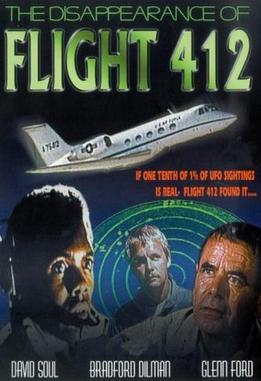
Because of recent electrical surges aboard its aircrafts, the commander of the Whitney Air Force Base 458th Radar Test Group sends a four-man crew up in Flight 412 to try to figure out what’s happening. Colonel Pete Moore (Glenn Ford) and Major Mike Dunning (Bradford DIllman) assume that it will just be a routine flight. Instead, they find themselves at the center of a government cover-up when Captain Bishop (David Soul) and the other members of the crew spot what appears to be a UFO. When two jets are sent out to intercept the object, the jets vanish.
Suddenly, Flight 412 is ordered to land at a seemingly deserted military base in the desert. When they do, the airplane is impounded and the crew is forced to undergo an 18-hour debriefing led by government agents. The agents demand that the crew members sign a statement saying that they didn’t see anything strange in the air before the jets vanished. Until all four of the men sign the release, the crew of Flight 412 are officially considered to be missing and will not be released until they agree to deny what they saw.
Meanwhile, Col. Moore tries to learn what happened to his men but the government, led by Col. Trottman (Guy Stockwell), is not eager to tell him.
This movie was made-for-television, at a time when people claiming to have been abducted by aliens was still a relatively new phenomenon. It was also made during the Watergate hearing and in the wake of the release of the Pentagon Papers, so the film’s sinister government conspiracy probably felt relevant to viewers in a way that it wouldn’t have just a few years earlier. I appreciated that the movie took a semi-documentary approach to the story but that it tried to be serious and even-handed. The film shows how witnesses can be fooled or coerced into saying that they saw the opposite of what they actually did see. Unfortunately, The Disappearance of Fight 412 is ultimately done in by its own cheapness. The overreliance on familiar stock footage doesn’t help the film’s credibility and there’s too many familiar faces in the cast for the audience to forget that they’re just watching a TV movie. The Disappearance of Flight 412 doesn’t really succeed but it is still interesting as an early attempt to make a serious film about the possibility of alien abduction and the government covering up the existence of UFOs.. Three years after this film first aired, Steven Spielberg would introduce these ideas to an even bigger audience with Close Encounters of The Third Kind.
Scott Bruin (Jeff Lester) is a high fashion photographer who is haunted by nightmares in which he strangles a naked woman in the swimming pool. His nymphomaniac girlfriend, Lena (Shannon Tweed!), is surprisingly understanding when she wakes up to discover Scott strangling her but Scott is worried that he might be losing his mind. His psychiatrist (David Soul) is not much help. When Scott has a violent vision in the middle of photo shoot, he freaks out. “Hey, are you on drugs?” one of the models asks.
Then Scott meets Kimberly (Adrienne Sachs) and she looks exactly like the woman from his dreams. When she invites him to back to her house, the house looks exactly like the house from his nightmares. Is Scott going crazy or is he seeing the future? And how is Kimberly’s ex, a cold businessman named Ken Strom (Marc Singer), involved?
Does anyone remember this movie? In the 90s, this used to be on HBO and Cinemax all of the time. It’s a typical sex-fueled, nudity-filled direct-to-video thriller but Nico Mastorakis, a Greek director who has obviously learned a lot from Brian DePalma, gives the movie an enjoyably slick sheen. Neither Jeff Lester nor Adrienne Sachs gives a good performance and the plot feels like it was made up on the spot but fans of Shannon Tweed in her Skinemax heyday might enjoy it.
In the Cold of the Night also features Tippi Hedren, playing Kimberly’s mother. She only appears in one scene and freaks out when she sees some birds. The scene ends with Adrienne Sachs looking directly at the camera and saying, “Mother simply hates birds!”
This particular scene was my third favorite from Tobe Hooper’s Salem’s Lot.
There’s much to love about this scene. It’s a very claustrophobic sequence with our protagonist Ben Mears (played by David soul) left in the morgue by his friend Bill Norton for just a few minutes. The scene itself gradually builds in tension as Ben realizes that at any second the body on the morgue table could get up. The word vampire rarely gets uttered during the first third of the series, but Ben suspects the worst and he knows that he’s ill-prepared to deal with his fears if they bear fruit.
There’s a definite tv network quality to the way the scene is shot, but Hooper milks the creeping dread and terror with each passing second as Ben creates a makeshift crucifix and begins to chant random Bible passages as a way to bless his home-made icon. When his fears have been confirmed there’s not a sense of relief that he’s not crazy, but one of sheer terror.
This third joins part one and part two of my favorite scenes from Salem’s Lot and when witnessed as a set should give an idea just how terrifying and underrated this mini-series adaptation of the classic Stephen King vampire novel really is.
Those were some of the most terrifying words I’ve ever heard growing up. It’s all because of one scene from the tv mini-series which adapted Stephen King’s vampire novel, Salem’s Lot. It was a scene in the novel that terrified me as a young boy reading King for the first time.
I’ve always been gifted (or I sometimes say cursed) with having a very overactive imagination. This is why horror has always been such a fascinating genre for me. Even where the horror is all up in one’s face with it’s gore and messy aftermath my mind’s eye would make things worst or just constantly play it on repeat in my head days after the film has ended. It’s even worst when the horror comes across less through gore and more through atmosphere and built-up dread moving towards a jump-scare or something more insidious.
This particular scene is my second favorite from the Salem’s Lot mini-series. The first one I had posted a couple years back which just barely lags behind this one for third. What made this scene so effective despite it’s tv-style production was Tobe Hooper’s direction. Despite working with the censorship inherent in broadcast tv, Hooper was able to create a palpable sense of dread as the old English teacher Matt Burke senses a presence up in one of his house’s rooms. It was the same room where one of his former students had passed away in his sleep.
As the audience we already have an idea who or what is in that second floor room. Matt Burke has an idea as well, but his morbid curiosity wins out as he decides to investigate. Yet, despite such a lack in judgement he does come armed with a crucifix in hand. The way the scene builds and builds as Burke climbs the stairs and hesitating before opening the door to the room was almost too much to bear.
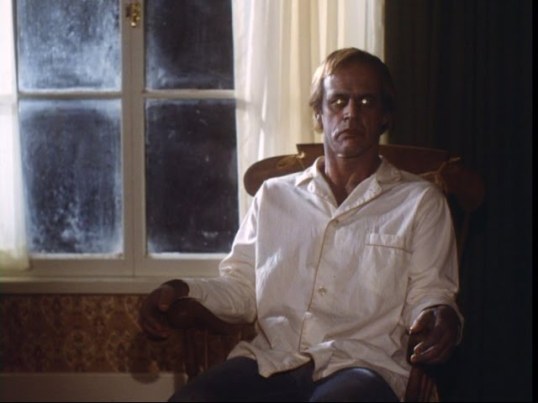
The reveal of his former student, Mike Ryerson, back in the room sitting in the rocking chair as one of the undead only increases the horror of the scene. His snake-like mannerisms was a new take on the vampire behavior. It’s not the usual silk and lace bloodsucker we grew up watching. This was a vampire that behaved like a predator beguiling it’s next prey. From the way Ryerson (played by Geoffrey Lewis) hissed his words and undulated his body as he stood to face his former teacher was disturbing at the very least.
Just writing about it and seeing the scene for the umpteenth time still gives me the shakes.
Today, we continue our look at the Dirty Harry film franchise by taking a look at the second film in the series, 1973’s Magnum Force.
Despite the fact that Dirty Harry famously ended with Harry Callahan throwing away his badge in disgust, Magnum Force reveals that Callahan (played again by Clint Eastwood) is still a member of the San Francisco Police Department. He’s got a new partner (Felton Perry, a likable actor in a thankless role) but he’s still butting heads with his superiors at the department. He’s also still got a way with the one-liners. When Lt. Briggs (Hal Holbrook) brags that he never once had to draw his gun while he was in uniform, Callahan replies, “A man’s got to know his limitations.”
While Callahan is busying himself with doing things like gunning down robbers and preventing an attempt to hijack a plane, a group of motorcycle cops are gunning down the town’s criminals. They begin by killing a mobster who has just beaten a murder charge on a technicality but soon, they’re gunning down anyone who has ever so much as been suspected of committing a crime. Alone among the detectives investigating the murders, Callahan believes that the killers are cops and, even worse, he suspects that his old friend Charlie McCoy (played by Mitchell Ryan) might be a member of the group…
Though it suffers when compared to Dirty Harry, Magnum Force is still an exciting and effective action film that is clearly a product of the same period of time that gave us such classics of paranoid cinema as The Parallax View and Three Days of the Condor. Whereas Dirty Harry took an almost documentary approach to capturing life and death in San Francisco, Magnum Force is a film that is full of dark shadows and expressionistic angles.
In Dirty Harry, the Scorpio Killer was both an obvious outsider and an obvious force of destruction. The film’s dramatic tension came from the fact that he was so clearly guilty and yet nothing could be done to stop him. The villains in Magnum Force are the exact opposite of Scorpio. As chillingly played by David Soul, Robert Urich, Tim Matheson, and Kip Niven, the killer cops are distinguished not by their otherness but by their total lack of individuality.
In the film’s best scene, they confront Harry in a parking garage and basically tell him that he’s either with them or against him. Sitting on their motorcycles, wearing their leather jackets, and with their grim faces hidden behind their aviator sunglasses, these cops are the ultimate representation of faceless fascism. After listening to their excuses, Harry asks if they consider themselves to be heroes.
“All of our heroes are dead,” one of them replies, delivering the film’s best line.
Obviously, Magnum Force was made to be an answer to those critics who claimed that Dirty Harry was a fascist film and it is a bit jarring, at first, to see Harry “defending” the system. (“I hate the goddamn system but until something better comes along…”) When Harry tells the killer cops, “I’m afraid you’ve misjudged me,” it’s not hard to see that this is the same message that Eastwood meant to give his critics.
However, what makes the killer cops in Magnum Force such interesting villains is that they are, ultimately, tools of the system that they’re attempting to destroy. By killing off criminals as opposed to arresting them and putting them on trial, the killer cops are minimizing the risk of the flaws inherent in the system being exposed. Hence, by defending the system, Harry is helping to expose and destroy it.
When I told Jeff that I was planning on watching and reviewing all of the Dirty Harry films, he suggested that I watch them in reverse-order. His logic was that, since the films tended to get worse as the series progressed, watching them backwards would allow me to end my project on a happy note as opposed to a note of bitter disappointment. I took his advice and I’m glad I did. While I disagree with him about whether or not The Dead Pool is a better film than Sudden Impact, I do have to agree that the first two Dirty Harry films are dramatically better (and quite different in tone) from the ones that subsequently followed.
Tomorrow, we’ll look at the third film in the series, 1976’s The Enforcer.
Stephen King’s novels and short stories were mined relentlessly during the late 70’s and through the 80’s and the early 90’s. For the most part the film and tv adaptations of his work were adequate and passable. Some were downright awful and made one wonder if King was just trying to cash as many of his work for licensing paychecks or if he really thought the studios who purchased the rights would actually do a good job adapting them. One such studio which seemed to have done a very good job adapting one of King’s greatest works, Salem’s Lot, was Warner Brothers who adapted the classic vampire novel to become a mini-series for CBS.
I never saw the mini-series when it first aired in 1979, but I did see it a few years later when it re-aired on TV and then many more times on VHS and then on DVD. Tobe Hooper directed the hell out of this mini-series and turned what was a very complex modern retelling of Bram Stoker’s Dracula into a 3-hour mini-series that was both gothic and downright terrifying despite the restraints of TV.
While the mini-series does seem dated now it still retains that creepiness, foreboding atmosphere and scares which made Hooper’s Salem’s Lot one of the better King adaptations. The scene which will always stick with me and still gives me the chills whenever I watch it is when Danny Glick’s younger brother visits him in the hospital. This scene is just downright scary whether watching it as a 9 year-old or one in their 30’s.
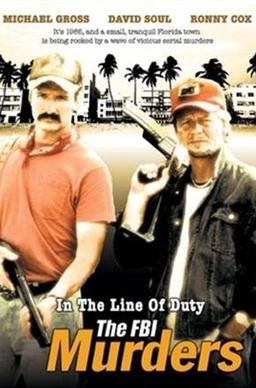 Last night, after I wrote up my review of the last In The Line of Duty movie, I checked and discovered that the first In The Line of Duty movie is now available on YouTube.
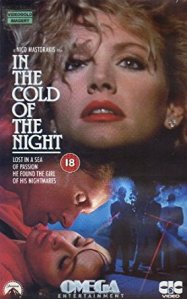 Scott Bruin (Jeff Lester) is a high fashion photographer who is haunted by nightmares in which he strangles a naked woman in the swimming pool. His nymphomaniac girlfriend, Lena (Shannon Tweed!), is surprisingly understanding when she wakes up to discover Scott strangling her but Scott is worried that he might be losing his mind. His psychiatrist (David Soul) is not much help. When Scott has a violent vision in the middle of photo shoot, he freaks out. “Hey, are you on drugs?” one of the models asks.