The final scene of Twin Peaks: The Return has haunted me ever since I first watched it 2017. I’m still not sure what the ending meant or where Cooper and Laura were but somehow, as enigmatic as it all was, it felt like the only proper way to end the saga of Twin Peaks.
And really, this is a scene that only Lynch could have made work. Another director would have tried too hard to tell the audience what to think or how to react. Of course, many directors probably wouldn’t have had the guts to end things on such on open-ended note. But Lynch not only had the courage to stick to his vision but he also had the faith to trust his audience to figure it out for themselves. Courage and faith are two of the main reasons why David Lynch was one of the greatest directors of his time.
4 Or More Shots From 4 Or More Films is just what it says it is, 4 shots from 4 of our favorite films. As opposed to the reviews and recaps that we usually post, 4 Shots From 4 Films lets the visuals do the talking!
Today, on what would have been his birthday, we take the time to pay tribute to one of our favorite directors. Needless to say, when it comes to David Lynch, there’s an embarrassment of riches.
Here are….
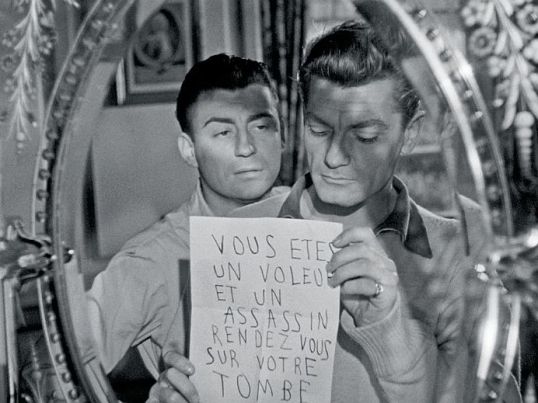
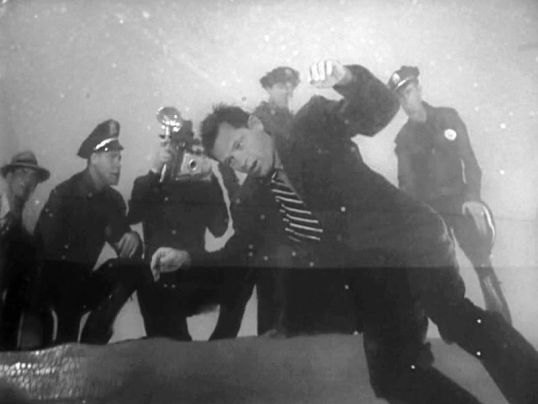
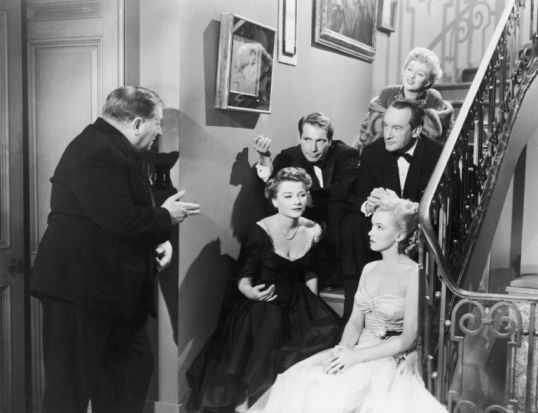
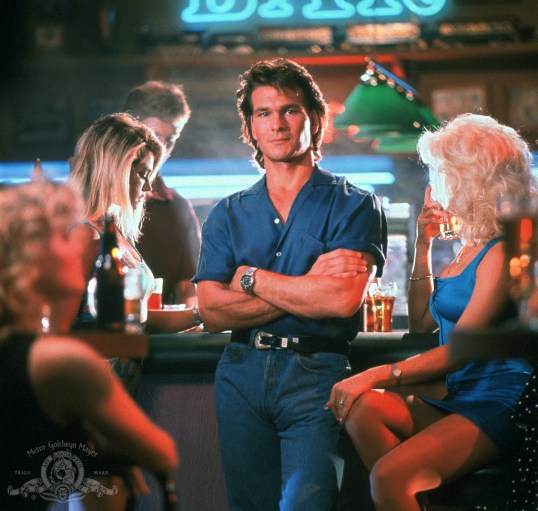
20 Shots From David Lynch
Eraserhead (1977, directed by David Lynch, DP: Frederick Elmes and Herbert Cardwell)
The Elephant Man (1980, dir by David Lynch, DP: Freddie Francis)
Dune (1984, dir by David Lynch, DP: Freddie Francis)
Blue Velvet (1986, dir by David Lynch, DP: Frederick Elmes)
Twin Peaks: The Pilot (1990, dir by David Lynch, DP: Ron Garcia)
Twin Peaks 1.3 “Zen or the Skill To Catch a Killer” (1990, dir by David Lynch, DP: Frank Byers)
Wild At Heart (1990, dir by David Lynch, DP: Frederick Elmes)
Twin Peaks 2.7 “Lonely Souls” (1990, dir by David Lynch, DP: Frank Byers)
Twin Peaks 2.22 (1991, dir by David Lynch, DP: Frank Byers)
Twin Peaks: Fire Walk With Me (1992, dir by David Lynch, DP: Ron Garcia)
On The Air 1.1 “The Lester Guy Show” (dir by David Lynch, DP: Ron Garcia)
Lost Highway (1997, dir by David Lynch, DP: Peter Deming)
The Straight Story (1999, dir by David Lynch, DP: Freddie Francis)
Rabbits (2002, dir by David Lynch, DP: David Lynch)
Mulholland Drive (2000, dir by David Lynch, DP: Peter Deming)
Twin Peaks: The Return Part 3 (dir by David Lynch, DP: Peter Deming)
Inland Empire (2006, dir by David Lynch, DP: David Lynch)
Twin Peaks: The Return Part 8 (2017, dir by David Lynch, DP: Peter Dening)
Twin Peaks: The Return Part 18 (2017, dir by David Lynch)
What Did Jack Do? (2017, dir by David Lynch, DP: Scott Ressler)
First released in 1982, this epic recreation of one key battles of the Korean War was an expensive film with a cast of well-known actors. Jacqueline Bisset plays a wealthy army wife who tries to protect five South Korean children who have found themselves in the middle of the battle. Ben Gazzara plays her husband, a major who is having an affair with the daughter of Toshiro Mifune. David Janssen and real-life film critic Rex Reed wander through the film as journalist. (Janssen growls like a man dealing with a serious hangover while Reed struggles to not look straight at the camera.) Richard Roundtree plays a tough sergeant. The great Italian actor Gabriele Ferzetti plays a Turkish officer. And, finally, the role of legendary American general Douglas MacArthur — of “I will return” fame — is played by the very British Sir Laurence Olivier. Olivier was apparently told that, in real life, MacArthur often sounded like the comedic actor W.C. Fields and Olivier often seems to be imitating Fields’s pinched style of speaking. Olivier also wears almost as much makeup here as he did in his production of Othello. MacArthur is portrayed as being almost a mystic warrior, a man who relies as much on his faith as his strategic genius to repel the communists. (In victory, he recites The Lord’s Prayer.) The film was directed by Terence Young, who previously brought James Bond to cinematic life.
Inchon is notorious for being a flop with both critics and audiences. The film had a budget of $46,000,000 and reportedly made $5,000,000 at the box office before it was withdrawn. The entirety of the budget was put up by the Unification Church, which is an organization that many people consider to be a cult. (I like neither communists nor cultists so this film left me with no one to root for.) The film proved to be such a flop at the box office that it has never been released on home video. It did, however, air on television a few times and, in recent years, the television cut has been posted to YouTube. That’s how I saw Inchon.
I watched Inchon because I’ve frequently seen it referred to as being one of the worst films ever made. Watching the film, I have to say that I think the “worst film” label is a bit extreme. For the most part, it’s just an extremely uneven and often rather boring film, one that mixed scenes of surprisingly brutal combat with dialogue-heavy scenes that just seem to drag on forever. It’s a film that belongs as much in the disaster genre as the war genre as the film is full of rather shallowly-written characters who all have their own individual dramas to deal with. Will Jacqueline Bisset save the children? Who will sacrifice their lives to defeat the communists? Will Ben Gazzara, who often seems to be the sole member of the cast who is at least tying to give a credible performance, choose his wife or his mistress? The film ultimately feels like a compressed miniseries. Everyone has a story but hardly anyone makes an impression.
That said, Laurence Olivier’s performance as Douglas MacArthur …. agck! Seriously, it’s hard to know where to even begin when it comes to talking about just how miscast Olivier is as the quintessential all-American general. It’s been said that it takes a truly great actor to give a truly bad performance and Olivier certainly proves that to be true in this film. Obviously frail and trying to sound like W.C. Fields, Olivier’s MacArthur is a general who would inspire zero confidence. The film doesn’t help by portraying MacArthur as being an almost holy figure, one who is often framed to look like almost an angel descending from Heaven to lead the battle against America’s enemies. The film is full of scenes of people discussing MacArthur’s genius just to be followed by a scene of Olivier looking old, tired, and rather grumpy. There were a few times when I thought I could see Olivier’s hair dye running down the side of his face. It may have been my imagination or just the graininess of the upload on YouTube but, given the quality of the film, I can’t really dismiss the possibility that it happened and no one felt like doing a second take.
As I said, Inchon can be found on YouTube. It’s not the worst film ever made but that doesn’t mean it’s a good one.
When Twin Peaks: The Return initially aired, Agent Tamara Preston was the character to whom I instantly related, for all sorts of reasons. One of those reasons, of course, is that Agent Preston is the one who got to do all the research and write the book on life in Twin Peaks. Another reason is because Agent Preston was both a competent professional and a self-amused femme fatale. And finally, Agent Preston’s relationship with Gordon Cole reminded me of some of my most valued relationships. Agent Preston was just one of the many pieces to the puzzle that was Twin Peaks: The Return but she was the one who I felt was standing in for me.
This wonderfully enigmatic music video would turn out to be one of David Lynch’s final short films. Both the video and the song were made in collaboration with Crystabell, the Texan whose collaboration with Lynch began in 1999 and who, of course, played Agent Preston.
Welcome to Late Night Retro Television Reviews, a feature where we review some of our favorite and least favorite shows of the past! On Sunday, I will be reviewing the Canadian series, Degrassi High, which aired on CBC and PBS from 1989 to 1991! The series can be streamed on YouTube!
This week, it’s time for another party!
Episode 1.8 “Little White Lies”
(Dir by John Bertram, originally aired on December 19th, 1989)
There’s yet another party being held and Diana (Chrisa Erodotu) desperately wants to attend!
Who?
Diana has been on the show for a while but this is the first episode to feature her at the center of a story. She’s a friend of Kathleen’s and she wears glasses and …. well, that’s pretty much all we’ve learned about her in the past. In this episode, it’s revealed that she’s Greek, her parents are dead, and she lives with her overprotective brother (Nick Stamiris). Her brother doesn’t want Diana to go to a party. In fact, when he catches her smoking, he throws a fit and he ground her. He may seem a bit harsh but I had some sympathy for the character. He’s barely an adult himself but he has to keep an eye on and take care of Diana. I think he’s being too overprotective but I get where his mind is at.
Diana, however, decides to sneak out of the house and go the party on her own. She has a crush on Yick and he might be there! When she arrives, she has a drink and sits on the couch while holding a bottle of alcohol. How could this go wrong …. oh wait, who just walked into the party and spotted Diana sitting there with the alcohol? It’s her brother! Diana gets dragged home and has a big fight with her brother.
Poor Diana! That said, this is something that happened to a lot of Degrassi students over the course of the series, most of whom I felt I knew a lot better than Diana. Diana’s just kind of been a nonentity up until this episode so it’s hard for me to get worked up, one way or another, over her situation. It doesn’t help that Diana continually compares herself and her friends to The Outsiders and yes, I do mean the book about the juvenile delinquents in Oklahoma. Degrassi High deserves some credit for giving the less-cool students just as much attention as Joey, Caitlin, and the main stars but the whole Outsiders is just a bridge too far for me.
Speaking of Joey, he, Snake, and Wheels decide to go a strip club! It doesn’t work out, even with the use of fake IDs. First off, when they arrive at the club, they discover that two of the fake IDs have Joey’s name on them. Joey is sure the bouncer won’t notice. Then, they discover that they’ll only have enough money to pay the cover charge if they pool all their money together. Unfortunately, since they’ll also have to order drinks inside the club, they still only have enough money for two of them to go in. Snake and Wheels head in to the club, deserting their friend Joey. A prostitute approaches Joey and asks if he would like to have a good time but the clueless Joey says that he has to get home. Meanwhile, Snake and Wheels pay $8 for two Cokes and are then kicked out when they say they can’t afford anything else. Who would have guessed life in Canada could be so difficult!
This episode felt a bit too familiar for its own good. Diana’s story is one that we’ve seen dozens of times on Degrassi. And Snake, Joey, and Wheels are always doing something stupid and getting kicked out of places. This episode wasn’t bad but it wasn’t particularly memorable either.
In 2020’s Nomadland, Frances McDormand stars as Fern.
Fern had a job working in an U.S. Gypsum plant in Nevada but, after years of steady employment, she’s laid off. Recently widowed and struggling to pay the bills, Fern sells almost everything that she owns and moves into a van. She travels across the country, taking work where she can find it and hanging out at other camps with self-styled “nomads.” She meets Bob Wells, the real-life guru of the van-dwelling, nomad lifestyle. She forms cautious friendships with other people who have decided to spend their lives in their vans, traveling from one location to another. Some of them are people who have fallen on hard times. Some of them are just people who don’t want to be tied down. One thing that becomes clear about Fern is that, while she’s a kind and caring soul, she’s also not one to allow people to get too close to her. She values her independence.
The film becomes a portrait of people who have been largely forgotten by conventional society but who have created a society of their own. (Fern may occasionally work at an Amazon warehouse but one gets the feeling that she would never order anything from there herself.) The film centers on Frances McDormand’s performance as Fern but most of the people that she meets are played by actual nomads. Director Chloe Zhao directs in documentary fashion, emphasizing the natural beauty of America and the lined but strong faces of people who are determined to live life their own way.
Nomadland can seem like a curious best picture winner. It’s almost plotless and, at time, the film itself can seem a bit heavy-handed in its portrayal of the nomad lifestyle. (I value my independence but I doubt that I could handle living in a van. And, even if I could handle it, I wouldn’t want to.) Even though it’s only been a few years since Nomadland won its Oscar, it sometimes seems as if it’s become one of the forgotten Best Picture winners. Some of that is because Nomadland won during the COVID pandemic, at a time when the release a lot of the films that were expected to be big Oscar contenders (like West Side Story and Top Gun: Maverick) were moved back so they could be released in theaters. While Nomadland did get a limited theatrical release, most people who watched it did so on Hulu. The 2020 Best Picture nominees were films that probably would not have been nominated in a different year and Nomadland, with its cinema verité style, is far more lowkey than the typical dramatic Oscar winner. Fairly or not, the film’s reputation has also suffered due to the failure of director Chloe Zhao’s The Eternals.Nomadland is perhaps now best known as being a part of a cautionary tale about what happens when a director makes an acclaimed film and then gets hired to do a Marvel movie.
(You have to feel bad for Chloe Zhao, who was the second woman to win the Oscar for Best Director but who was given the award as a part of perhaps the worst ceremony in the history of the Oscars. So determined were the producers to end on the triumphant note of Chadwick Boseman receiving a posthumous Oscar that both Zhao and Nomadland‘s victories were treated as distractions. And then, of course, Boseman didn’t even win the Oscar. It was an awkward night all around.)
That said, I can understand why Nomadland was embraced when it was released. It came out at a time when people were not only scared of getting COVID but also having to deal with the government’s heavy-handed approach to dealing with the pandemic. Living off the grid and away from society was something that looked very attractive to a lot of people back then. Future film students may be confused as to why Nomadland was so honored but it was definitely a film of its time. People forget (or willfully choose to ignore) how crazy things felt during the pandemic. When Fran told the world to leave her alone, she spoke for many.
The time is the Great Depression and you are a lawyer who has had a terrible run of luck. You’ve lost your money, your home, and your wife. Sent to prison for a pretty crime, you befriend the legendary outlaw John Dillinger. When you are both released on the same day, it’s time to get back to doing what Dillinger does best, robbing banks.
American Outlaws: The Dillinger Game is a choose-your-own-adventure style game, in which you are a member of Dillinger’s gang and an associate of outlaws like Baby Face Nelson, Red Hamilton, and Homer van Meter. The choices start out simple. Do you accompany Dillinger on his latest robbery? Do you head to Indiana with Dillinger or do you instead decide to join Baby Face Nelson’s gang? The choices start to get more difficult. Do you run when the cops show up? Do you fight with the cops? When a member of the gang orders you to shoot someone, do you do it? The game keeps a running tally of the number of gunfights you’ve taken part in, the number of people you’ve injured, the number that you’ve killed, the number of banks you’ve robbed, and the amount of money you’ve made. Depending on the decisions you make, it’s totally possible to make it all the way through this game and retire without having killed or even injured someone. It’s also possible to be such a viscous outlaw that even Baby Face Nelson wouldn’t mess with you. The longer your play, the more money you can potentially make but the more money you make, the more likely it is that you’ll commit a crime that will make it impossible for you to safely retire. You could end up the last member of the Dillinger Gang. You could also just as easily end up getting taken down by the FBI.
It helps to know the history of the Dillinger gang. That saved my life at least once. In fact, it’s really not difficult to survive the game. The sensible decisions are there and easy to make. But why be sensible when you’re hanging out with John Dillinger and there’s more and more money to be made?
This is a good game because every choice really does effect what happens to your bank robber. There are no throw-away choices and who your outlaw turns out to be really does depend on the decisions that you make. Because there are so many different outcomes, this is a fast-paced game can be played again and again.
Say what you will about Lyndon B. Johnson, he was one of the few presidents to understand that the Hulk was not the menace that the media made him out to be. In 1967, he even issued full amnesty to the Hulk in recognition for the number of times that Hulk had saved the planet. Gil Kane captured the moment in Tales To Astonish #88.
Guilty of only being feared and misunderstood! That was something that LBJ could probably relate to in 1967. Unfortunately, after a fight with the masked criminal known as the Boomerang, Hulk was once again viewed as being a menace and General Ross threw the amnesty order away. I guess that’s what they mean when they talk about the Deep State.
LBJ wasn’t popular with young readers and he didn’t make many appearances in the world of comics. It’s a pleasant surprise that, one of the few times that he did appear, it was to do the right thing and offer some temporary hope to the Incredible Hulk.