Lisa Reviews An Oscar Nominee: The Diary of Anne Frank (dir by George Stevens)


From 1942 to 1944, a teenage girl named Anne Frank lived in hiding.

She and her family lived in what was sometimes called The Secret Annex, three stories of concealed rooms that were hidden behind a bookcase in an Amsterdam factory.  At first, it was just Anne, her older sister Margot, and their parents.  Eventually, they were joined by another family and eventually a dentist, with whom Anne did not get along.  Life was not easy in the concealed space and tempers often flared.  As the months passed, Anne had a romance-of-sorts with Peter, the teenage son of the other family, but she wondered if she truly felt anything for him or if it was just because they were stuck together.  Anne looked forward to someday returning to school and seeing all of her old friends, again.  However, she knew that she could not leave the Annex until the Nazis had finally been forced out of the Netherlands.  She and the other occupants had to remain in hiding and they had to remain perfectly quiet eight hours a day because they were Jewish.  If they were discovered, they would be sent to the camps.  So, they waited and Anne kept a diary.

Tragically, the Nazis did eventually discover the Secret Annex.  Of the 8 occupants, only Anne Frank’s father, Otto, would survive the war.  The rest died in various concentration camps.  Anne Frank’s mother starved to death in Auschwitz.  Her older sister, Margot, was 19 when she fell from her bunk and, because she was in such a weakened state, was killed by the shock.  Anne Frank, it is believed, died a few days after Margot.  She died at the Bergen-Belsen Concentration Camp, one of the 17,000 prisoners to succumb to Typhus.  Before she died, Anne Frank spoke with two former schoolmates who were also being held at Bergen-Belsen.  She told them that she had believed her entire family was dead and that she no longer had any desire to go on living.

However, Otto Frank did survive and, at the end of the war, he returned to the Secret Annex.  That’s where he discovered Anne’s diary.  After editing it (a process that Anne, who aspired to be a journalist, had already started doing shortly before she was arrested), Otto arranged for the publication of the diary.  The Diary of A Young Girl (or, as it was titled in some countries, The Diary of Anne Frank) was a bestseller and has remained one ever since it was first published.  Along with being recognized as being one of the most important books ever written, it’s also been adapted for both stage and screen.

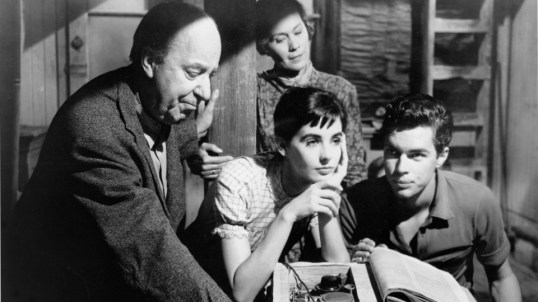
The first such screen adaptation was in 1959.  It was directed by George Stevens and it starred 20 year-old Millie Perkins as Anne.  (Perkins bore a great resemblance to Audrey Hepburn, who was reportedly Otto Frank’s preferred choice for the role.  Hepburn turned him down, saying she would have been honored to have played the role but believed that she was too old to believable as a 14 year-old.)  Joseph Schildkraut played Otto while Diane Baker played Margot and Gusti Huber played Edith Frank.  The Van Daans were played by Shelley Winters and Lou Jacobi while Richard Beymer played their son (and Anne’s tentative boyfriend), Peter.  Ed Wynn, who was best known as a comedian, played the role of Albert Dussell, the dentist to whom Anne took a dislike.  (The surviving family of Fritz Pfeffer — who was renamed Dussell in Anne’s diary — objected to the way he was portrayed in both the book and the film.)

As a film, it has its flaws.  George Stevens specialized in big productions but that was perhaps not the proper approach to take to an intimate film about a teenage girl coming-of-age under the most difficult circumstances imaginable.  Because this was a 20th Century Fox production from the 50s, The Diary of Anne Frank was filmed in Cinemascope, which made the annex itself look bigger than it should.  Scenes that should feel claustrophobic often merely come across as being cluttered.

But, in the end, the story is so powerful and so important that it doesn’t matter.  Though the Annex was recreated on a Hollywood sound stage, the exteriors were actually filmed in Amsterdam.  When we see the outside of the factory where the Frank family lived, we are seeing the actual factory.  When we see repeated shots of the uniformed Nazi police patrolling the streets at night, we know that we’re seeing the actual view that Anne Frank undoubtedly saw many a night from the Annex.  And because we know the story, we begin the film knowing how it’s going to end and that adds an even greater weight to each and every scene.  It’s impossible not to relate to Anne’s hopes for the future and it’s just as impossible to not mourn that Anne never lived to see that future.

Stevens originally planned for the film to end with a scene of Anne at Bergen-Belsen.  To their discredit, 20th Century Fox removed the scene after preview audiences complained that it was too upsetting.  People should be upset while watching (or, for that matter, reading) The Diary of Anne Frank.  Even today, there are people who still seem to struggle with acknowledging the enormous evil that was perpetrated by the Nazis and their allies.  As a result, it’s not uncommon to find people who, when they don’t outright deny that it happened, try to minimize the Holocaust.  It’s a disgusting thing.  There was recently a viral video, which was released by NowThis that featured a student at George Washington University saying, “What’s going to happen if there’s another Holocaust? Well, we’re seeing what’s happening. We’re seeing people die at the border for lack of medical care. That’s how Anne Frank died. She didn’t die in a concentration camp, she died from typhus.”  NowThis later said that the student meant to say that Anne Frank “didn’t die from a concentration camp, she died from typhus,” and you really have to wonder just how fucking stupid someone has to be to think that 1) that’s somehow an improvement on what was originally said and 2) that typhus and the concentration camp were not essentially the same thing.  Even if one accepts that the student misspoke, it would seem that her main complaint was the the concentration camp didn’t have proper medical care, as opposed to the fact that it was specifically created to imprison and kill Jewish people.  It’s an astounding combination of ignorance and antisemitism.  NowThis later edited her comments out of the video, which again seems to miss the point of why people were upset in the first place.  Instead of just saying, “Hey, this idiot is a Holocaust denier and, regardless of whether she hates Trump as much as we do, we want nothing to do with her,” NowThis instead said, “Well, if that comment offends you, we’ll take it out and you won’t have to hear it.”  To me, that’s why The Diary of Anne Frank is still important and why it should still be read and watched and studied.  There are too many ignorant people and craven, weak-willed organizations out there for us to turn our backs on teaching history.

The Diary Anne Frank was nominated for best picture of the year.  While Shelley Winters won the Oscar for Best Supporting Actress, the Best Picture Oscar went to Ben-Hur.  Interestingly enough, Ben-Hur’s director, William Wyler, was originally interested in directing The Diary Anne Frank before George Stevens was brought on board.
Lisa’s Marie’s Top 26 Films of 2019


And now, without further ado, I conclude my look back at 2019 with my 26 favorite films of the years.  Why 26?  Because Lisa doesn’t do odd numbers!

(Want to see my previous picks?  Click here for 2018, 2017, 2016, 2015, 2014, 2013, 2012, 2011, and 2010!)

1. The Souvenir
2. Once Upon A Time In Hollywood
3. Uncut Gems
4. Luce
5. The Irishman
6. Parasite
7. The Lighthouse
8. Crawl
9. Dragged Across Concrete
10. Doletmite Is My Name
11. Avengers: Endgame
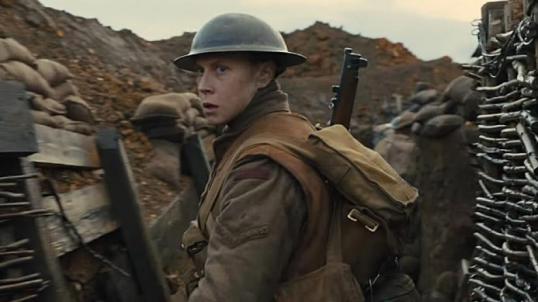
12. 1917
13. Joker
14. The Two Popes
15. The Aeronauts
16. Hustlers
17. The Report
18. Brittany Runs A Marathon
19. Rocketman
20. The Last Black Man in San Francisco
21. Apollo 11
22. I Lost My Body
23. The Farewell
24. Us
25. Midsommar
26. Spider-Man: Far From Home

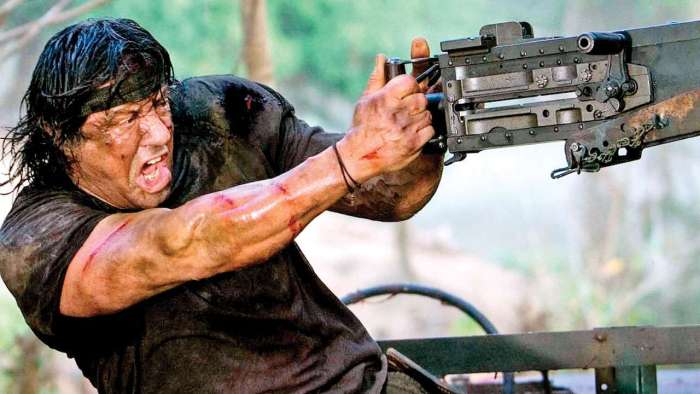
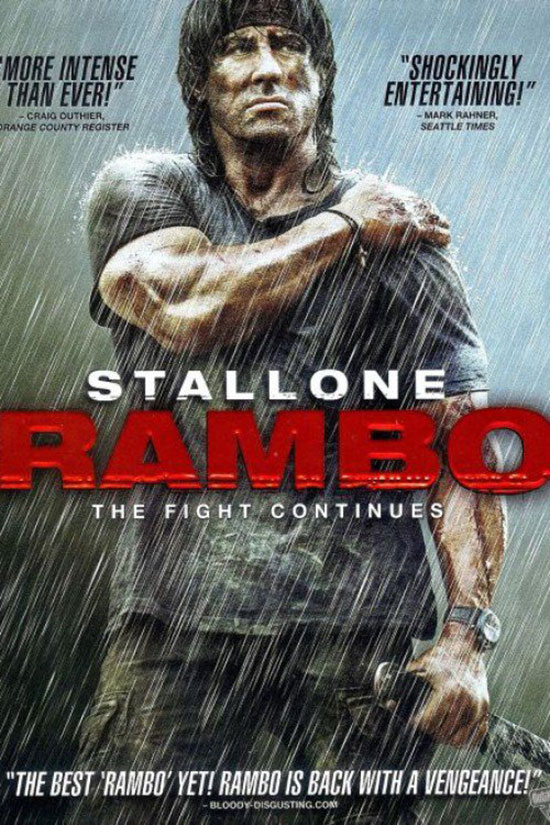
Rambo (2008, directed by Sylvester Stallone)


When a group of Christian missionaries needs someone to guide them into Burma so that they can provide medical supply to the oppressed Karen people, they approach John Rambo (Sylvester Stallone).  The missionaries think that Rambo is just an American living in Thailand who makes a meager living as a snake catcher and a boat guide.  Because we’ve seen the previous Rambo films, we know that John Rambo is actually a Vietnam vet who, after destroying the town of Hope, Washington, was recruited by the government to rescue POWs in Vietnam and fight the Russians in Afghanistan.

At first, Rambo tells the missionaries that it’s foolish for them to go anywhere near Burma and that he wants nothing to do with them.  It’s only when Sarah Miller (Julie Benz) asks him personally that Rambo agrees to ferry the missionaries up the Salween River.  Rambo isn’t doing it for the missionaries.  He’s doing it to protect Sarah.

Unfortunately, on the way to the village, Rambo is forced to kill a group of pirates and he is rejected by the pacifist missionaries and, after he drops them off at the village, they order him to leave.  However, after the village is attacked and Sarah is taken prisoner by the Burmese military, Rambo returns.  This time, he’s with a group of younger mercenaries who, like the missionaries before them, don’t know what Rambo is capable of doing.  Rambo soon proves that he might not be as young as used to be but he’s still just as deadly.

During the final 11 minutes of this movie, Rambo kills over a hundred people but fortunately, they’re all bad.  It’s excessively violent and gory and it’s also totally awesome.  When you go to see a Rambo movie, you’re not expecting to see Shakespeare.  You’re expecting to see Rambo blow away the bad guys and, on that front, this film definitely delivers.  Even more than the previous films in the series, Rambo is up front about what happens when someone gets shot by a machine gun or blown up by a bomb.  It’s not pretty picture.  The violence is so gruesome that Rambo could almost pass for an antiwar film if the people that Rambo blows up weren’t all portrayed as being almost cartoonishly evil.

Rambo is also upfront about what that type of violence would do to a man’s psyche.  This film features one of Stallone’s best performances.  Eschewing the comic book heroism of the 2nd and 3rd films in the franchise, Rambo reminds us that, when first introduced in First Blood, John Rambo was portrayed as being a seriously damaged and bitter man, someone who hated what the war had done to him and who felt that he no longer had a home in the normal world.  Stallone was 62 when he starred in Rambo and he surrendered enough of his vanity to actually allow himself to look and sometimes act his age.  In this film, Rambo may start out as bitter but he finally accepts that his pain doesn’t have to define his life.  “Live for nothing or die for something,” Rambo says, a line that has subsequently been picked up by the real life Karen National Liberation Army in Burma.

Of the four sequels to the original First Blood, Rambo is the best.  It has the biggest action sequences, the best Stallone performance, and it alerted people to very real atrocities being carried out against the Karen people.  Coming out shortly after Rocky Balboa, Rambo was one of the films that reminded audiences that Sylvester Stallone still had it.  Rambo was a box office success and, 11 years after its release, it was followed by Last Blood.  I’ll be reviewing that one tomorrow.

4 Shots From 4 Paul Newman Films: Cat On A Hot Tin Roof, Cool Hand Luke, The Verdict, The Hudsucker Proxy


4 Shots From 4 Films is just what it says it is, 4 shots from 4 of our favorite films. As opposed to the reviews and recaps that we usually post, 4 Shots From 4 Films lets the visuals do the talking!

95 years ago today, Paul Newman was born in Shaker Heights, Ohio.  He would go on, of course, to become one of America’s greatest film stars, an acclaimed actor who was active from the mid-part of the 20th century to the beginning of our current century.  He made his film debut in 1954 with The Silver Chalice (and subsequently paid for an ad in which he apologized for his performance in the film, which I think was a bit unnecessary as he wasn’t really that bad in the film) and he made his final onscreen appearance in 2005 in Empire Falls.  (He did, however, subsequently provide the voice of Doc Hudson in Cars, along with narrating a few documentaries.)  Time and again, he proved himself to be one of the best actors around.  According to most report, he was also one of the nicest.  When he died in 2008, the world mourned.

In honor of his cinematic legacy, here are….

4 Shots From 4 Paul Newman Films

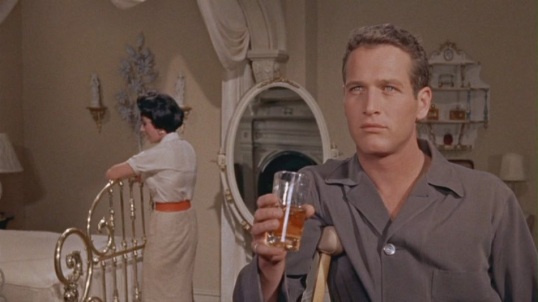
Cat On A Hot Tin Roof (1958, dir by Richard Brooks)

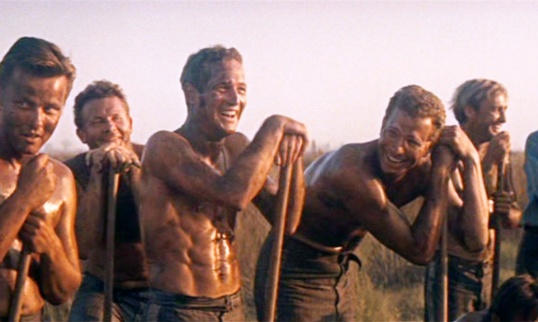
Cool Hand Luke (1967, dir by Stuart Rosenberg)

The Verdict (1981, dir by Sidney Lumet)

The Hudsucker Proxy (1994, dir by the Coen Brothers)

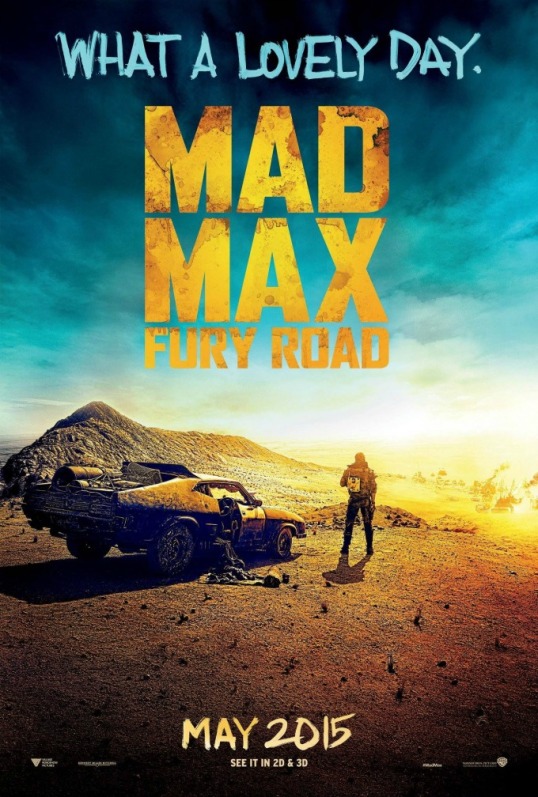
Scene That I Love For Australia Day: The Chase Begins in Mad Max: Fury Road


Time zones really suck!

I’m in America right now and the date here is currently January 26th.  Now, I look at that date and I think to myself, “Hey, it’s Australia Day!  I’ve got friends in Australia and, according to our site stats, this site has got quite a few readers over there as well!  I definitely need to wish everyone a good holiday!”

Except, of course, I’m a day behind Australia.  In Australia, it’s currently January 27th.  Australia Day was yesterday.

So, what can I say?  I’m a day late in wishing everyone a happy Australia Day and the time zones are too blame.  I’ve never understood why we need time zones anyways.  Don’t even get me started on the International Date Line, which I think was only invented to leave people like me feeling confused.

Oh well.  Happy belated Australia Day!

Today’s scene of the day is from the second-most financially successful Australian film of all time, 2015’s Mad Max: Fury Road.  I don’t know if it’s possible to really describe just how exciting it was to see this film for the first time.  At a time when action films were typically unambitious and uninspired, Mad Max: Fury Road grabbed the world and said, “Wake up, dammit!”

Of course, the film itself is about more than just action.  It’s about empowerment and freedom and the environment and redemption.  It’s a film that seems to be taking place in another world.  That is, until you see all the cars and the spray paint and then you’re like, “Oh wait a minute.  This just humanity in the future.”  Mad Max: Fury Road was nominated for Best Picture and really, it should have won.  Does anyone remember which film beat it?  (The correct answer is Spotlight.)

In this scene below …. well, the chase begins!  And it’s an amazing scene, largely because there is no CGI.  There is no shaky cam designed to make things look more exciting than it actually was.  Those are actual cars, speeding through an actual desert and that’s an actual person playing a guitar that shoots out fire.  And you know what?  Give some credits to the drummers too.

This scene was, of course, directed by George Miller.  Check it all out below:

After Last Night, 1917 is your new Oscar front runner!


There were a lot of very important awards given out last night and suddenly, the Oscar race has become much, much clearer.  Yes, Parasite is a big contender and it’s certainly a big deal that it won at SAG.  It’ll probably win quite a few Oscars.  But, as of right now, the front runner for best picture is clearly 1917.

Not only has 1917 won the PGA award but, last night, Sam Mendes won the DGA.  1917 is coming on strong and it’s late release date is definitely working in its favor.  It came out just in time to wow the Oscar voters but also late enough that there wasn’t time for any sort of backlash to develop against it.  If I had to guess now, I’d say that 1917 is going to win Best Picture and we can at least take comfort in the fact that it’s better than the last Sam Mendes film that won.

Anyway, instead of doing like 30 different posts for each group that met last night, here’s a quick rundown:

The DGA (Director’s Guild of America) — Sam Mendes won Best Director for 1917.  Honey Boy’s Alma Har’el won for Best First Time Director.  The documentary award went to Steven Bogner and Julia Reichert for American Factory.

Annie Awards (Animation) — Klaus won Best Feature.  I Lost My Body won best indie feature.

ASC (American Society of Cinematographers) — Roger Deakins for 1917

USC Scripter Awards (Adapted Screenplay) — Greta Gerwig for Little Women

CAS (Cinema Audio Society) — Best Feature went to Ford v. Ferrari.  Best Animated Feature went to Toy Story 4.  Best Documentary Feature was won by Making Waves: The Art of Cinematic Sound.

So, for all you people making your Oscar bets — well, who knows?  Listen, the Oscars are unpredictable.  GREEN BOOK WON LAST YEAR, PEOPLE!  So, anything’s possible.  One thing to remember is that Best Picture is determined by a preferential voting system so it’s a close race between two films, it could easily be everyone’s second choice that wins.  And that could mean an upset victory for something like Ford v Ferrari or even Little Women.

But, as for right now, 1917 is the front runner.

Lisa Marie Picks The Best of The 2019 Lifetime Films


Today, I continue my look back at 2019 with the best of Lifetime!

(For my previous best of Lifetime picks, click on the links: 2014, 2015, 2016, 2017, and 2018!)

Best Picture: Escaping the NXIVM Cult

Best Director: Lisa Robinson, Escaping the NXIVM Cult

Best Actor: Eric Roberts, Stalked By My Doctor: A Sleepwalker’s Nightmare

Best Actress: Maira Walsh, Identity Theft Of A Cheerleader

Best Supporting Actor: Peter Facinelli, Escaping the NXIVM Cult

Best Supporting Actress: Sarah Dugdale, Death of a Cheerleader

Best Screenplay: Amish Abduction

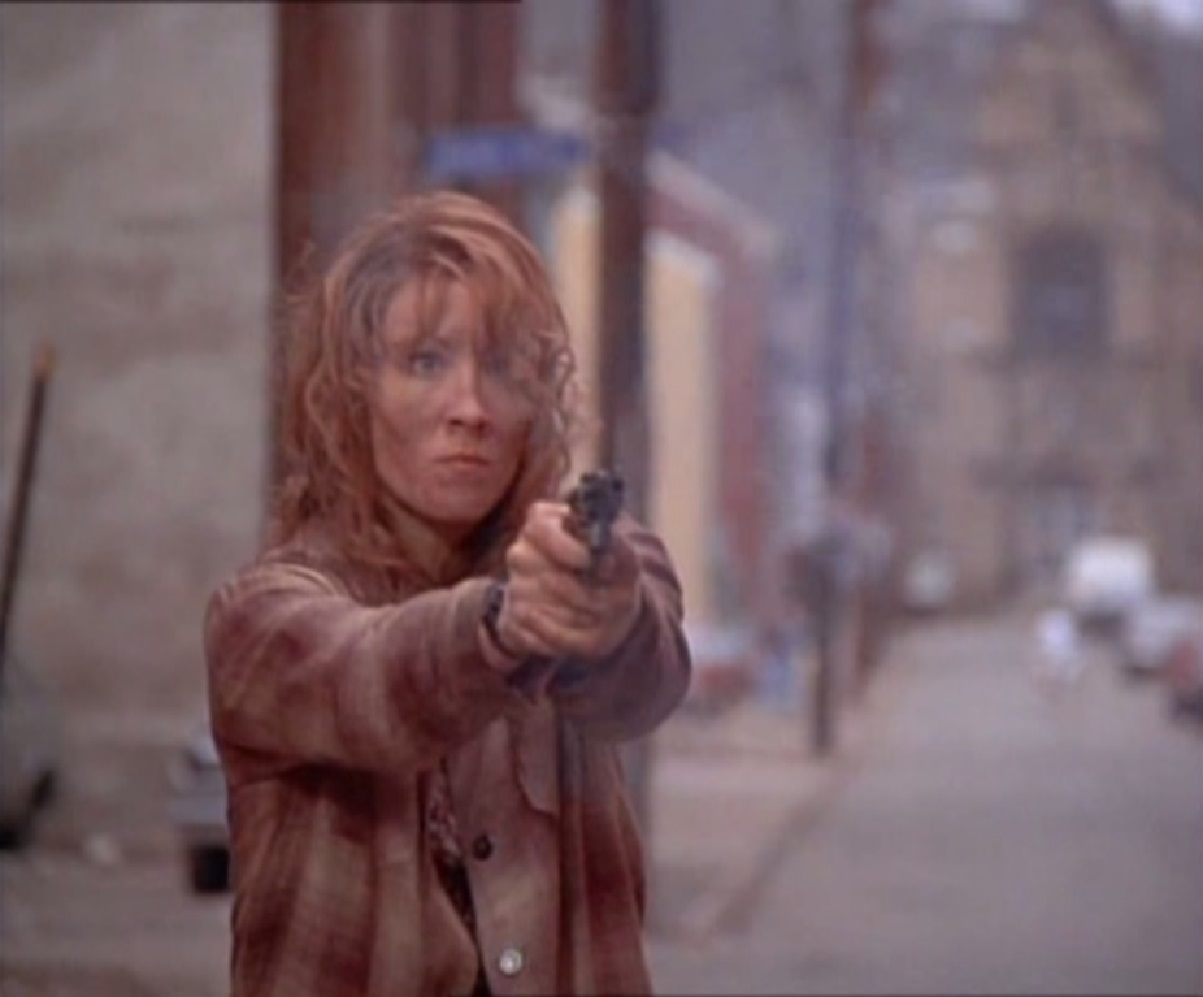
Backstreet Justice (1994, directed by Chris McIntyre)


“These straight-to-video, schlocky films I was getting were giving me an ulcer, basically because I was the only one on the set that cared about anything… Between that and my biological clock, I decided to give it all away.”

— Linda Kozlowksi, on why she retired from acting

When Linda Kozlowski talked about the “shlocky films” that soured her on acting, Backstreet Justice was probably high on the list.  Kozlowski may have found fame co-starring with her then-husband Paul Hogan in the Crocodile Dundee films but, in Backstreet Justice, there’s neither an Australian nor a sense of humor to be found.

Kozlowski plays Keri Finnegan, a tough and streetwise private investigator in Philadelphia.  Her late father was a policeman who was accused of corruption while her mentor (Hector Elizondo) is the district attorney.  Most of the cops hate Keri, especially Captain Giarusso (Paul Sorvino).  The one exception is her lover, Nick Donovan (John Shea).

The residents of Philadelphia’s worst neighborhood have hired Keri to protect them.  For the past two years, a murderer has lurked among them.  With the police showing no interest in solving the crimes, the neighborhood turns to Keri.  Keri’s investigation leads her to believe that the murders are being carried out be corrupt cops but Keri isn’t prepared for just how far up the corruption goes.

For a straight-to-video film, Backstreet Justice has a surprisingly good cast, with Paul Sorvino, Hector Elizondo, John Shea, Tammy Grimes, and Viveca Lindfors all appearing in supporting roles.  Linda Kozlowski holds her own opposite her better-known co-stars and is believable in the film’s many action scenes.  The movie has a good sense of urban squalor and captures the desperation of people living in a dying neighborhood.  The main problem with the film is that the central mystery is never that interesting and the solution is one that most people will see coming from miles away.  For all the violence and scenes of people chasing each other, Backstreet Justice is still a boring movie.

With the exception of one surprisingly explicit sex scene, Backstreet Justice could easily pass for a made-for-TV film or a pilot for a Keri Finnegan television series.  Instead, it was just another straight-to-video thriller and another reason for the talented Linda Kozlowski to leave acting behind.  Her final film appearance was in 2001’s Crocodile Dundee in Los Angeles.

New Movie Posters for you to see (With trailers included!)


I know, I know, I have been away from posting my normal movie previews and reviews for a while, that is my fault!

But I’ll be back to posting my normal movie previews/reviews soon!

Until then here are some things you can look forward to me previewing and reviewing:

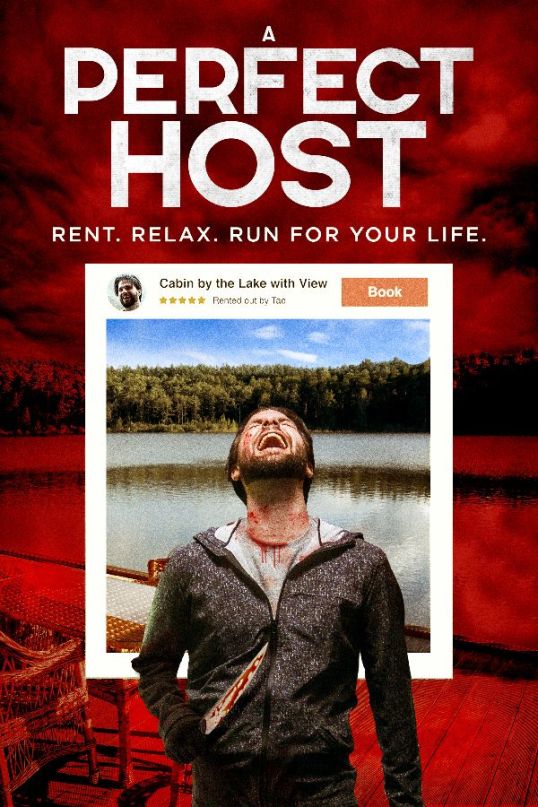
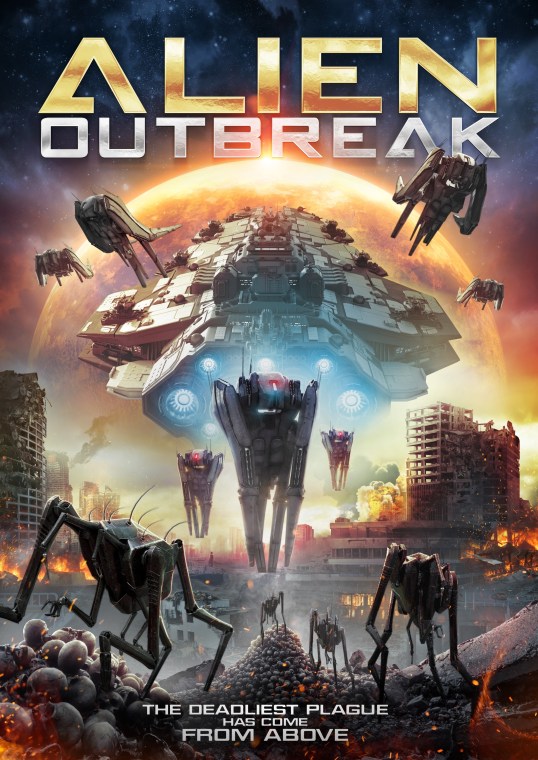
A Perfect Host

2020 movie posters

Alien OutBreak

Alien outbreak

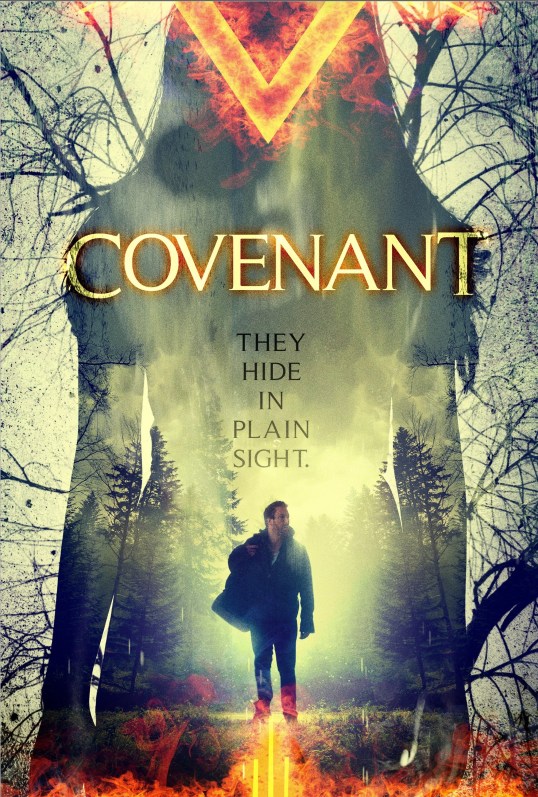
Covenant

Covenant


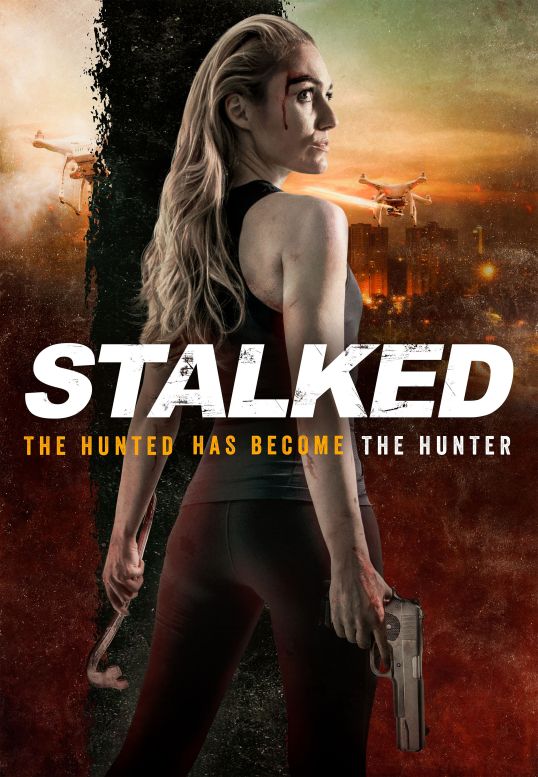
And last, but not least, You might have been…

Stalked

Hope you all enjoyed my tour through my movie screeners I get to watch this month!

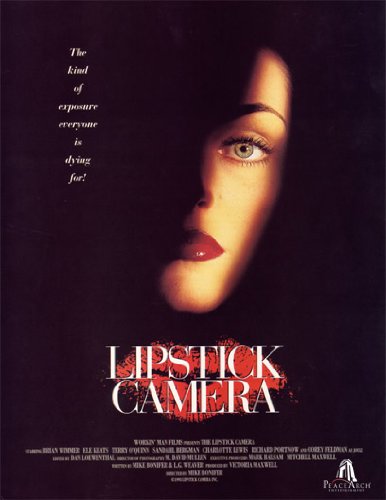
Cinemax Friday: Lipstick Camera (1994, directed by Mike Bonifer)


Omy Clark (Ele Keats) is an aspiring journalist who wants to work with the world famous videographer, Flynn Dailey (Brian Wimmer).  When she shows up at Flynn’s studio and marvels at how much power the filmed image can wield, Flynn blows her off.  While Flynn is busy ignoring Omy, Lily Miller (Sandahl Bergman) drops by and tries to hire Flynn to film her and her husband, Raymond (Terry O’Quinn), making love.  When Flynn heads out to the Miller residence, Omy tags along as an uninvited guest.  She happens to have a tiny camera that she stole from her best friend, Joule (Corey Feldman, sporting a beard and a beret).  Omy plants the camera in Lily’s bedroom.  Later, when Flynn, Omy, and Joule all return to the Miller house to retrieve the tiny camera, they discover that Lily has been murdered and that Raymond is a communist war criminal who fled East Germany following the collapse of the Berlin Wall.

Lipstick Camera has an intriguing premise and, even in 1994, it was trying to say something about media manipulation and what is today referred to as being “fake news.”  You could say that it was a film that was ahead of its time.  You could also say that it’s a complete mess or that it’s an erotic thriller that is neither erotic nor thrilling and you would be just as correct.  The main problem with the film is that almost every plot development is set in motion by Omy being either extremely self-absorbed or extremely stupid.  When she’s not manipulating Joule (who is not too secretly in love with her), she’s stalking Flynn and carelessly losing an expensive camera that didn’t even belong to her in the first place.  And she, of course, is meant to be our hero!

In the 90s, former teen idol Corey Feldman was one of the mainstays of late night Cinemax.  Even during his Cinemax years, Feldman would occasionally give a good performance.  Lipstick Camera was not one of those occasions.  In Lipstick Camera, Feldman wears a beard and a beret and spends a lot of time in a room that’s full of computer monitors and TV screens and that’s the extent of his characterization.  He does get a dramatic death scene, in which Joule appears to be determined to stave off the grim reaper by giving a monologue of Shakespearean proportions but otherwise, this is Corey Feldman at his worst.  Faring slightly better is Terry O’Quinn, who, at least, gets to deliver his lines in a light German accent.

With its focus on the media and communist war criminals, Lipstick Camera is an example of a direct-to-video film that tried to be about something more than just sex and murder.  (Though, this being a DTV film, there is one brief sex scene that takes place in front of a TV that’s showing a video of a fireplace.)  Unfortunately, nobody involved seems to know what that something was supposed to be.