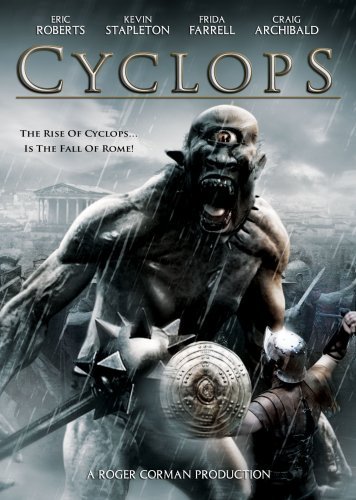
The Eric Roberts Collection: Cyclops (dir by Declan O’Brien)


Behold the glory that was Rome!

In 2008’s Cyclops, Ancient Rome is a bad CGI village that is being menaced by an even worse CGI cyclops.  (The height of the Cyclops literally changes from scene to scene.)  After the Cyclops is captures, it’s forced to fight in the gladiatorial games of the decadent Emperor Tiberius (Eric Roberts).  Marcus (Kevin Stapleton), a centurion-turned-gladiator, eventually launches his own revolution against the Empire.  When you’re fighting against the 15 members of the fearsome Roman army, it helps to a have a monster from Greek mythology on your side.  Long live the Roman Republic!

This is an extremely silly movie but it’s hard not to admire the chutzpah it takes to try to recreate the glory of Rome on a tiny budget.  It’s not just that the city of Rome looks like a medieval village.  It’s also that there appears to only be about fifty citizens of Rome and most of them look like they wandered over from Monty Python and the Holy Grail.  The film doesn’t work but kudos to the filmmakers for trying in the first place.  Not surprisingly, this was a Roger Corman production.

Eric Roberts as a Roman emperor is something that simply needs to be seen to believed.  Eric has the haircut and the sinful smile and he gives the thumbs up symbol with the proper theatrical flourish.  In the film, Tiberius turns on Marcus after the latter demands that he be given a land grant along with his promotion and I’m on Tiberius’s side as far as that goes.  Marcus should have just accepted the promotion without making demands.  Tiberius had every right to be miffed and no one plays miffed quite as well as Eric Roberts.  Tiberius goes on to plan the state dinner that will celebrate the capture of the Cyclops.  Tiberius and his friends will have half-a-boar.  Marcus will be given “eggs and greens.”  Oh, Tiberius!

Previous Eric Roberts Films That We Have Reviewed:

  1. Paul’s Case (1980)
  2. Star 80 (1983)
  3. Runaway Train (1985)
  4. To Heal A Nation (1988)
  5. Best of the Best (1989)
  6. Blood Red (1989)
  7. The Ambulance (1990)
  8. The Lost Capone (1990)
  9. Best of the Best II (1993)
  10. Love, Cheat, & Steal (1993)
  11. Voyage (1993)
  12. Love Is A Gun (1994)
  13. Sensation (1994)
  14. Dark Angel (1996)
  15. Doctor Who (1996)
  16. Most Wanted (1997)
  17. The Alternate (2000)
  18. Mercy Streets (2000)
  19. Tripfall (2000)
  20. Raptor (2001)
  21. Rough Air: Danger on Flight 534 (2001)
  22. Strange Frequency (2001)
  23. Wolves of Wall Street (2002)
  24. Border Blues (2004)
  25. Mr. Brightside (2004)
  26. Six: The Mark Unleased (2004)
  27. We Belong Together (2005)
  28. Hey You (2006)
  29. Depth Charge (2008)
  30. Amazing Racer (2009)
  31. The Chaos Experiment (2009)
  32. In The Blink of an Eye (2009)
  33. Bed & Breakfast (2010)
  34. Enemies Among Us (2010)
  35. The Expendables (2010) 
  36. Groupie (2010)
  37. Sharktopus (2010)
  38. Beyond The Trophy (2012)
  39. The Dead Want Women (2012)
  40. Deadline (2012)
  41. The Mark (2012)
  42. Miss Atomic Bomb (2012)
  43. The Night Never Sleeps (2012)
  44. Assault on Wall Street (2013)
  45. Bonnie And Clyde: Justified (2013)
  46. Lovelace (2013)
  47. The Mark: Redemption (2013)
  48. The Perfect Summer (2013)
  49. Revelation Road: The Beginning of the End (2013)
  50. Revelation Road 2: The Sea of Glass and Fire (2013)
  51. Self-Storage (2013)
  52. Sink Hole (2013)
  53. A Talking Cat!?! (2013)
  54. This Is Our Time (2013)
  55. Bigfoot vs DB Cooper (2014)
  56. Doc Holliday’s Revenge (2014)
  57. Eternity: The Movie (2014)
  58. Inherent Vice (2014)
  59. Road to the Open (2014)
  60. Rumors of War (2014)
  61. So This Is Christmas (2014)
  62. Amityville Death House (2015)
  63. Deadly Sanctuary (2015)
  64. A Fatal Obsession (2015)
  65. Las Vegas Story (2015)
  66. Sorority Slaughterhouse (2015)
  67. Stalked By My Doctor (2015)
  68. Enemy Within (2016)
  69. Hunting Season (2016)
  70. Joker’s Poltergeist (2016)
  71. Prayer Never Fails (2016)
  72. Stalked By My Doctor: The Return (2016)
  73. The Wrong Roommate (2016)
  74. Dark Image (2017)
  75. The Demonic Dead (2017)
  76. Black Wake (2018)
  77. Frank and Ava (2018)
  78. Stalked By My Doctor: Patient’s Revenge (2018)
  79. The Wrong Teacher (2018)
  80. Clinton Island (2019)
  81. Monster Island (2019)
  82. The Reliant (2019)
  83. The Savant (2019)
  84. Seven Deadly Sins (2019)
  85. Stalked By My Doctor: A Sleepwalker’s Nightmare (2019)
  86. The Wrong Mommy (2019)
  87. Exodus of a Prodigal Son (2020)
  88. Free Lunch Express (2020)
  89. Hard Luck Love Song (2020)
  90. Her Deadly Groom (2020)
  91. Top Gunner (2020)
  92. Deadly Nightshade (2021)
  93. The Elevator (2021)
  94. Just What The Doctor Ordered (2021)
  95. Killer Advice (2021)
  96. Megaboa (2021)
  97. Night Night (2021)
  98. The Poltergeist Diaries (2021)
  99. The Rebels of PT-218 (2021)
  100. Red Prophecies (2021)
  101. A Town Called Parable (2021)
  102. The Wrong Mr. Right (2021)
  103. Bleach (2022)
  104. Dawn (2022)
  105. My Dinner With Eric (2022)
  106. 69 Parts (2022)
  107. The Rideshare Killer (2022)
  108. The Wrong High School Sweetheart (2022)
  109. The Company We Keep (2023)
  110. D.C. Down (2023)
  111. If I Can’t Have You (2023)
  112. Megalodon: The Frenzy (2023)
  113. Aftermath (2024)
  114. Bad Substitute (2024)
  115. Devil’s Knight (2024)
  116. Insane Like Me? (2024)
  117. Space Sharks (2024)
  118. The Wrong Life Coach (2024)
  119. Broken Church (2025)
  120. Shakey Grounds (2025)
  121. When It Rains In L.A. (2025)


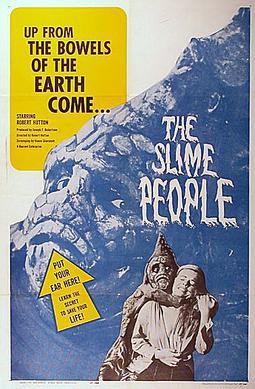
The Slime People (1963, directed by Robert Hutton)


Pilot Tom Gregory (Robert Hutton) lands his private plane in Los Angeles and is shocked to discover that the city is surrounded by a thick fog and that it appears to be nearly deserted.  A chance meeting with a professor named Galbraith (Robert Burton) and his two daughters (Susan Hart and Judee Morton) leads the group to a television station where they watch a news report about how Los Angeles has been surrounded by a “hardened fog.”  No one can escape the fog and no one can escape the Slime People, reptilian humanoids who have ascended from their underground lair and declared war on the surface world.  There appears to only be, at most, six Slime People but I guess that’s all you need to conquer Los Angeles.

The Slime People is a Z-grade horror film that features a lot of stock footage, monsters that would not be out of place in a Jon Pertwee-era Doctor Who serial, and an out-of-control fog machine.  The fog machine is actually the star of the show.  There’s so much fog in this movie that it’s often impossible to see the actors or the Slime People.  It’s a shame because, considering that the production ran out of money after 9 days and the majority of the actors were never paid, the Slime People costumes are not that bad.

Along with the fog and the costumes, the other memorable thing about The Slime People is that none of the survivors seem to be particularly upset about any of the horror that they’ve just experienced.  One young soldier (William Boyce) takes the time to ask one of the professor’s daughters if she’ll be available to date once the crisis ends.  It’s a tribute to the American youth of the 1960s that not even an attack from underground dwellers could stop date night.


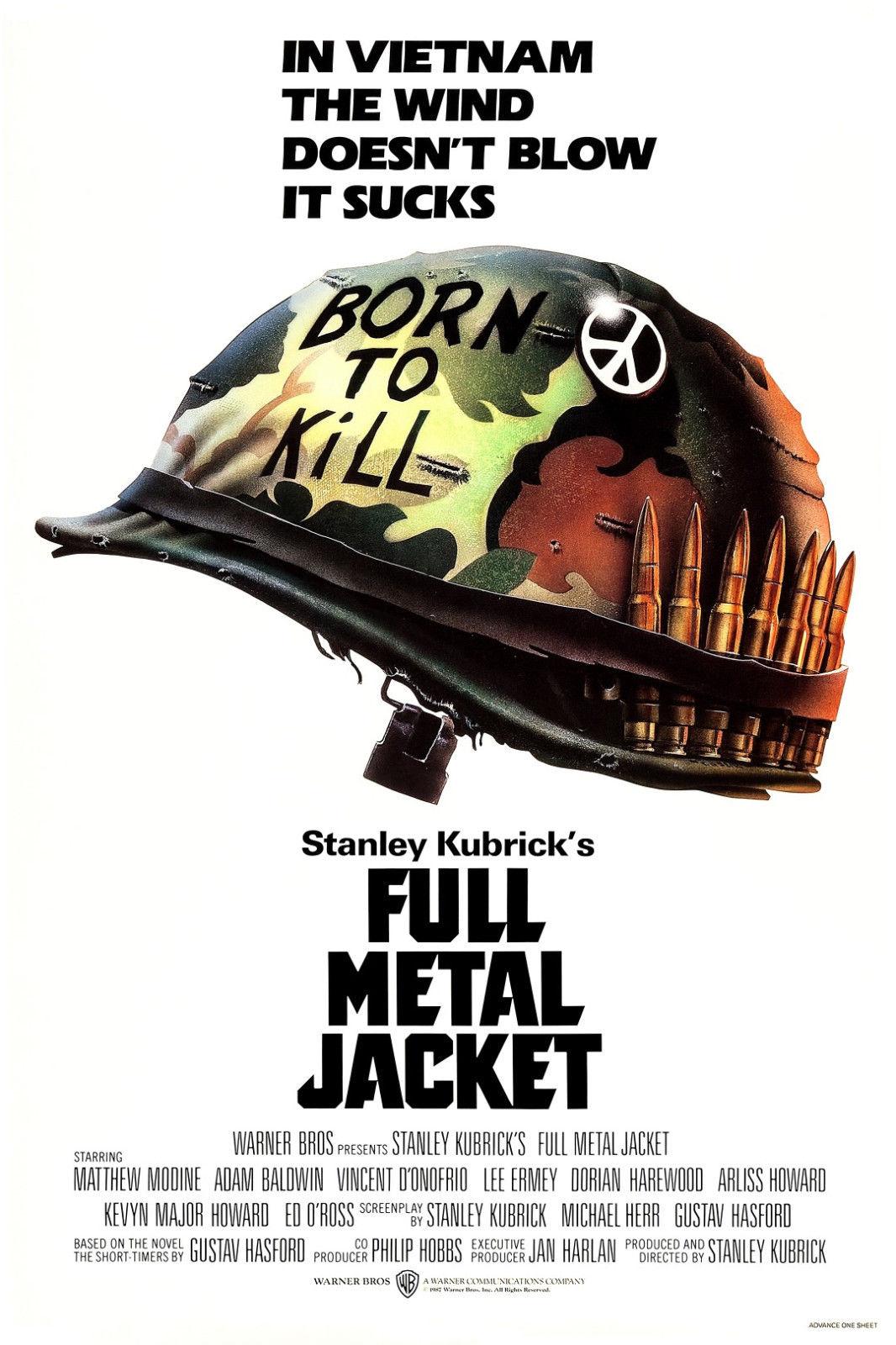
Review: Full Metal Jacket (dir. by Stanley Kubrick)


“You write ‘Born to Kill’ on your helmet and you wear a peace button. What’s that supposed to be, some kind of sick joke?” — Colonel

Full Metal Jacket is the kind of war movie that sticks in your craw like old metal shavings. It’s 1987, Stanley Kubrick’s last film released in his lifetime, and it plays less like a traditional Vietnam War saga and more like a taunt packed into two very different acts. One half is a barracks horror show about how the military turns boys into killers; the other is a grubby, almost casual descent into the chaos of combat. Together, they make a movie that feels intentionally disjointed so it can drill down on the same idea from two angles: war doesn’t just brutalize your body, it reshapes your mind into something barely human.

The film follows Private J.T. “Joker” Davis, played by Matthew Modine in one of those quietly watchful performances that’s easy to underestimate. Joker starts as a kind of archetypal smart‑mouth recruit, the guy who thinks he’s above the hysteria until he realizes he isn’t. Around him swirls a platoon of young Marines going through basic training at Parris Island under the merciless Gunnery Sergeant Hartman, played with shark‑like relish by R. Lee Ermey, who was actually a real‑life Marine drill instructor. Hartman’s whole job is to obliterate softness and replace it with drilled‑in aggression, and Kubrick lingers on every insult, every barked command, until the abuse stops feeling like a setup for a war movie and starts feeling like the main event.

The first half of Full Metal Jacket is basically a single, sustained initiation ritual. The camera stays tight, almost claustrophobic, trapping you in the barracks with the recruits, so you feel the same sensory overload they do. The lighting is harsh, the colors washed out, and the camera often locks in on Hartman’s face mid‑rant, making you uncomfortably intimate with his cruelty. This isn’t training so much as a manufactured psychological war waged on the platoon’s collective brain. The recruits are constantly degraded, mocked, and forced into grotesque rituals of humiliation, and the film never lets you forget that this is the system’s idea of “making Marines.” Kubrick doesn’t fake the perverse appeal of this process either; there’s a weird, ugly thrill in how effective it is, in how the boys start enjoying the brutality once they’re inside it.

The standout character in this section is Leonard “Gomer Pyle” Lawrence, played by Vincent D’Onofrio in a performance that’s almost physically uncomfortable to watch. D’Onofrio’s Pyle is this thick‑set, awkward kid who can’t keep up, and the movie doesn’t soften his edges to make him likable. He’s genuinely bad at the routine, slow, clumsy, but he’s also clearly just trying to survive. The film lets you watch, in a very matter‑of‑fact way, how the system turns his inadequacy into a target. The other recruits are instructed to punish him, and soon everyone starts in. The film doesn’t moralize about it; it just shows that this kind of group cruelty is baked into the structure. The infamous scene where the platoon holds Leonard down with piled‑on bed sheets while whacking him with a bar of soap wrapped in a towel is less about a single act of violence than about what it means to normalize dehumanization before you ever see combat.

What’s so unsettling about Full Metal Jacket is that it never pretends Hartman is some rogue sadist. He’s not an outlier; he’s the product of the system, and he’s also the system’s avatar. In that sense, the first half of the film functions like a kind of industrial horror. The Marines are being processed like defective parts on a factory line, streamed through a machine designed to break them and then rebuild them as compliant killers. The film toys with the idea that the military doesn’t want robots so much as creatures that hunger for violence on command. The line about “we don’t want robots, we want men” is repeated with a kind of grim irony because what the film actually shows is the production of something in between: not quite human, not quite machine, but something that can pull a trigger without hesitating.

Jumping from Parris Island to the streets of Huế during the Tet Offensive, the second half of Full Metal Jacket feels like a different movie in tone but the same one in thesis. Joker, now a combat correspondent with a Stars and Stripes hat and a “Born to Kill” slogan on his helmet, is literally split down the middle between observer and participant. He carries a camera and a rifle; he’s supposed to report, but he also has to fight. The film doesn’t resolve that tension the way a more sentimental war movie would. Instead, it lets Joker drift in that gray zone where war is equal parts absurdity and atrocity. The Vietnamese civilians are largely faceless, and the war itself is shown as a series of loosely connected vignettes—raids, ambushes, random firefights—rather than a grand narrative of heroism or tragedy.

Kubrick’s Vietnam is less a country and more a ruined theater set. The cityscapes are wide, desolate, and oddly beautiful in their destruction, as if the war has turned everything into a series of bleak tableaux. The camera doesn’t linger on gore for shock value; it lingers to make the war feel like a permanent, almost aesthetic state of ruin. Individual soldiers pop in and out: Animal Mother, the violently unhinged Marine played by Adam Baldwin; Cowboy, the earnest, almost naive replacement; and the rest of the squad, who oscillate between fear, boredom, and bursts of casual cruelty. None of them are given the kind of tragic backstories that usually make you emotionally invested in a war film. Instead, they’re presented as fragments of a larger machine, each one another cog in the same indifferent system.

The film’s most famous structural trick is its way of keeping politics at arm’s length while still radiating a deeply skeptical view of the war. It doesn’t really bother telling you who’s right or wrong, or why the Marines are there. It just shows what they become and what they do. The movie doesn’t ask you to sympathize with the Marines in the way some war films do; it asks you to recognize the mirror. The famous ending, where the Marines march through flaming ruins to the tune of Mickey Mouse, is pure Kubrick dark surrealism. The cheerful cartoon theme clashes violently with the apocalyptic imagery, and the soldiers chant along with a kind of manic innocence that feels like the last vestige of humanity being cannibalized by the war itself. It’s hard to tell whether the moment is tragic, absurd, or both, and that’s the point.

Full Metal Jacket is also a film about storytelling and the way narratives are weaponized. Joker, as a reporter, is supposed to package the war for a distant audience. He’s there to turn chaos into digestible stories, but the movie quietly undermines that idea by showing how unreliable those narratives are. The soldiers’ own stories are laced with jokes, bravado, misogyny, and casual racism, and the film doesn’t clean them up. It lets you sit with the ugliness, even when it’s delivered with a laugh. The film doesn’t romanticize the Marines’ camaraderie or soften their cruelty; it just lets you watch them behave like ordinary guys who happen to be doing something extraordinary and monstrous.

The cinematography in Full Metal Jacket is cold and precise, which is exactly what the material needs. The camera behaves like a reluctant witness, framing the Marines in symmetrical, almost clinical compositions that make their brutality look routine rather than spectacular. The score is minimal, and the film often relies on diegetic sound—machine‑gun fire, jeep engines, distant explosions, Hartman’s voice echoing off concrete walls—to ground you in the sensory overload of military life. Even the few moments of levity feel like concessions to show business more than true relief. The soldiers’ jokes are rarely funny in a wholesome way; they’re the kind of gallows humor that keeps you from noticing how broken you’ve become.

What ultimately makes Full Metal Jacket endure is that it refuses to offer catharsis. By the time the film ends, nothing has been “resolved” in the way Hollywood usually expects. Joker survives, but the war doesn’t; it just keeps going, and the Marines keep marching, chanting, and killing. The film doesn’t build toward a big speech about the futility of war or a tear‑jerker about fallen comrades. It just suggests, quietly and persistently, that the process outlined in the boot‑camp half is drafted, again, in the streets of Vietnam. You go in as a boy, you’re molded into something sharper and meaner, and then you’re sent out into a world that rewards that sharpness. The movie doesn’t need to say this out loud; it just shows it happening in scene after scene.

In that sense, Full Metal Jacket is one of the most honest anti‑war films precisely because it doesn’t pretend to be a plea for peace. It’s a portrait of a machine that feeds on itself, and of the people who get caught in its gears. It’s funny, disturbing, infuriating, and occasionally mesmerizing, sometimes all at once. It’s not a movie that wants to hold your hand or make you feel better about the human race. It wants you to stare at the gleam on that full metal jacket bullet and wonder what it took to make someone pull the trigger. That’s the real power of Full Metal Jacket: it doesn’t try to redeem the war, the soldiers, or the audience. It just makes sure you can’t look away.

Scene That I Love: 2001’s Stargate Sequence


Today would have been the 84th birthday of special effects maestro, Douglas Trumbull.

Today’s scene that I love come from 1968’s 2001: A Space Odyssey.  The famous stargate sequence was designed by Trumbull and it remains one of the most influential science fiction moments of all time.  In one of their greatest oversights, the Academy neglected to include Trumbull when they nominated the film for its special effects.  As a result, the Oscar only went to Stanley Kubrick.  Trumbull was not happy about that and, sadly, Kubrick and Trumbull did not speak to each other for years afterwards.

Despite not being included in the nomination, Douglas Trumbull’s work has stood the test of time.

4 Shots From 4 Films: Special America At Cannes Edition


4 (or more) Shots From 4 (or more) Films is just what it says it is, 4 (or more) shots from 4 (or more) of our favorite films. As opposed to the reviews and recaps that we usually post, 4 (or more) Shots From 4 (or more) Films lets the visuals do the talking.

With the official Cannes line-up due to be announced tomorrow, it only seems right to highlight a few American films that have previously won the Palme d’Or.  It’s time for….

4 Shots From 4 Films That Won At Cannes

Wild At Heart (1990, dir by David Lynch, DP: Frederick Elmes)

Barton Fink (1991, dir by the Coen Brothers, DP: Roger Deakins)

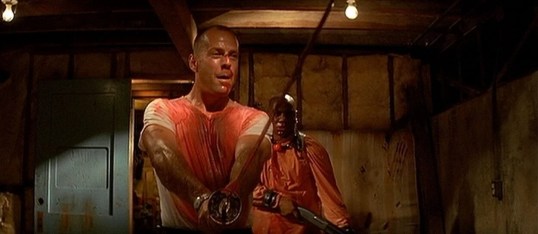
Pulp Fiction (1994, dir by Quentin Tarantino, DP: Andrzej Sekuła)

Tree of Life (2011, dir by Terrence Malick, DP: Emmanuel Lubezki)

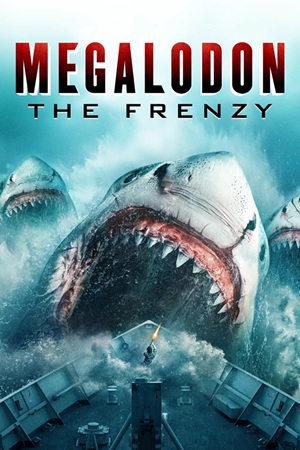
The Eric Roberts Collection: Megalodon: The Frenzy (dir by Brendan Petrizzo)


In 2023’s Megalodon: The Frenzy, the giant shark that keeps coming back …. well, it comes back again!  Actually, there’s more than one giant shark this time.  The ocean is not safe, not for tourists, not for beach partiers, not for scientists, not even for the Marines!

Fortunately, Lt. Commander Sharp (Eric Roberts) is in command of a battleship and he’s constantly encouraging his Marines to be prepared to sacrifice everything to stop the giant sharks.  While scientist Rylie Clark (Caroline Williams) attempts to figure out how to stop the sharks, Sharp barks out order to his crew.  His crew replies with “Oorah!”  I would have to check the official records to know for sure but there’s a distinct chance that this movie set the record for the most use of “oorah” over an 82 minute run time.

The true stars of the film are the giant sharks, of course.  That said, it’s nice to see Eric Roberts playing a good guy for once.  Of course, Eric does seem a little advanced in years to still be on active duty.  The mandatory retirement age for a flag officer is usually 64 but retirement can be deferred until 68 by Presidential order.  Eric Roberts was around 67 years old when he filmed this so I guess it pays to have a friend in Washington.  Well, no matter.  Eric gave his orders with authority and rallied his men and probably had the longest hair that you’re ever likely to see on an officer.

As for the sharks, they’re really big and they jump out of the water and eat people.  This is an Asylum film and the Asylum has always understood what people want when it comes to giant sharks.  Don’t take this film seriously and you’ll be fine.

Previous Eric Roberts Films That We Have Reviewed:

  1. Paul’s Case (1980)
  2. Star 80 (1983)
  3. Runaway Train (1985)
  4. To Heal A Nation (1988)
  5. Best of the Best (1989)
  6. Blood Red (1989)
  7. The Ambulance (1990)
  8. The Lost Capone (1990)
  9. Best of the Best II (1993)
  10. Love, Cheat, & Steal (1993)
  11. Voyage (1993)
  12. Love Is A Gun (1994)
  13. Sensation (1994)
  14. Dark Angel (1996)
  15. Doctor Who (1996)
  16. Most Wanted (1997)
  17. The Alternate (2000)
  18. Mercy Streets (2000)
  19. Tripfall (2000)
  20. Raptor (2001)
  21. Rough Air: Danger on Flight 534 (2001)
  22. Strange Frequency (2001)
  23. Wolves of Wall Street (2002)
  24. Border Blues (2004)
  25. Mr. Brightside (2004)
  26. Six: The Mark Unleased (2004)
  27. We Belong Together (2005)
  28. Hey You (2006)
  29. Depth Charge (2008)
  30. Amazing Racer (2009)
  31. The Chaos Experiment (2009)
  32. In The Blink of an Eye (2009)
  33. Bed & Breakfast (2010)
  34. Enemies Among Us (2010)
  35. The Expendables (2010) 
  36. Groupie (2010)
  37. Sharktopus (2010)
  38. Beyond The Trophy (2012)
  39. The Dead Want Women (2012)
  40. Deadline (2012)
  41. The Mark (2012)
  42. Miss Atomic Bomb (2012)
  43. The Night Never Sleeps (2012)
  44. Assault on Wall Street (2013)
  45. Bonnie And Clyde: Justified (2013)
  46. Lovelace (2013)
  47. The Mark: Redemption (2013)
  48. The Perfect Summer (2013)
  49. Revelation Road: The Beginning of the End (2013)
  50. Revelation Road 2: The Sea of Glass and Fire (2013)
  51. Self-Storage (2013)
  52. Sink Hole (2013)
  53. A Talking Cat!?! (2013)
  54. This Is Our Time (2013)
  55. Bigfoot vs DB Cooper (2014)
  56. Doc Holliday’s Revenge (2014)
  57. Eternity: The Movie (2014)
  58. Inherent Vice (2014)
  59. Road to the Open (2014)
  60. Rumors of War (2014)
  61. So This Is Christmas (2014)
  62. Amityville Death House (2015)
  63. Deadly Sanctuary (2015)
  64. A Fatal Obsession (2015)
  65. Las Vegas Story (2015)
  66. Sorority Slaughterhouse (2015)
  67. Stalked By My Doctor (2015)
  68. Enemy Within (2016)
  69. Hunting Season (2016)
  70. Joker’s Poltergeist (2016)
  71. Prayer Never Fails (2016)
  72. Stalked By My Doctor: The Return (2016)
  73. The Wrong Roommate (2016)
  74. Dark Image (2017)
  75. The Demonic Dead (2017)
  76. Black Wake (2018)
  77. Frank and Ava (2018)
  78. Stalked By My Doctor: Patient’s Revenge (2018)
  79. The Wrong Teacher (2018)
  80. Clinton Island (2019)
  81. Monster Island (2019)
  82. The Reliant (2019)
  83. The Savant (2019)
  84. Seven Deadly Sins (2019)
  85. Stalked By My Doctor: A Sleepwalker’s Nightmare (2019)
  86. The Wrong Mommy (2019)
  87. Exodus of a Prodigal Son (2020)
  88. Free Lunch Express (2020)
  89. Hard Luck Love Song (2020)
  90. Her Deadly Groom (2020)
  91. Top Gunner (2020)
  92. Deadly Nightshade (2021)
  93. The Elevator (2021)
  94. Just What The Doctor Ordered (2021)
  95. Killer Advice (2021)
  96. Megaboa (2021)
  97. Night Night (2021)
  98. The Poltergeist Diaries (2021)
  99. The Rebels of PT-218 (2021)
  100. Red Prophecies (2021)
  101. A Town Called Parable (2021)
  102. The Wrong Mr. Right (2021)
  103. Bleach (2022)
  104. Dawn (2022)
  105. My Dinner With Eric (2022)
  106. 69 Parts (2022)
  107. The Rideshare Killer (2022)
  108. The Wrong High School Sweetheart (2022)
  109. The Company We Keep (2023)
  110. D.C. Down (2023)
  111. If I Can’t Have You (2023)
  112. Aftermath (2024)
  113. Bad Substitute (2024)
  114. Devil’s Knight (2024)
  115. Insane Like Me? (2024)
  116. Space Sharks (2024)
  117. The Wrong Life Coach (2024)
  118. Broken Church (2025)
  119. Shakey Grounds (2025)
  120. When It Rains In L.A. (2025)

The Rainmaker (1997, directed by Francis Ford Coppola)


Rudy Baylor (Matt Damon) is an idealistic young law school graduate who discovers that having a degree and passing the bar doesn’t automatically make you a success.  He gets a job working a bar that just happens to be owned by an ambulance chasing attorney named Bruiser Stone (Mickey Rourke).  Bruiser takes Rudy on as an associate and assigns his associate, Deck Shifflet (Danny DeVito), to teach Rudy how to find cases.  When Bruiser flees the country to escape an FBI investigation, Rudy and Deck start their own law firm.  Rudy soon finds himself with the case of his young career, representing a family in a law suit against Great Benefit Insurance.  Rudy also falls for Kelly (Claire Danes), a young woman who is being abused by her husband (Andrew Shue).

It can be hard to believe today but, in the 90s, every John Grisham novel was adapted for the screen.  Most of the adaptations weren’t very good but audiences ate them up.  In many ways, The Rainmaker is the ultimate John Grisham adaptation because it contains every single trope that John Grisham made popular with his legal thrillers.  This time, Matt Damon is the charismatic attorney.  Roy Scheider is the soulless corporate CEO who needs to be brought down.  Jon Voight is the intimidating opposing counsel.  Danny DeVito is the eccentric comic relief and Mickey Rourke is the dues ex machina who returns to the movie to give Rudy a piece of information at the exact right moment.   The appeal of Grisham is that he made readers (and eventually moviegoers) feel like insiders while presenting them with stories that were essentially very simple good vs evil morality tales.  The insurance company is so cartoonishly evil that there’s no doubt Rudy is going to defeat them.  There’s also no doubt that Rudy is going to find a better calling than ambulance chasing because the only thing that people hate more than insurance companies is lawyers.

The Rainmaker is never as complex as it pretends to be but it’s an entertaining legal movie.  It was also director Francis Ford Coppola’s last big hit.  It’s really more of a Grisham film than a Coppola film but Coppola’s influence is still felt in the almost uniformly excellent cast.  (Ignore Andrew Shue if you can.  Melrose Place was very popular in the 90s.)  Damon, Danes, Rourke, Voight, Dean Stockwell, Danny Glover, Teresa Wright, Virginia Madsen, and Mary Kay Place all give memorable performances.  Roy Scheider is loathsome as the sweater-wearing CEO.  Best of all is Danny DeVito, who gets all of the best lines.

The Rainmaker was the best of the 1990s Grisham adaptations.  While it’s not quite a masterpiece, it’s still emotionally very satisfying.

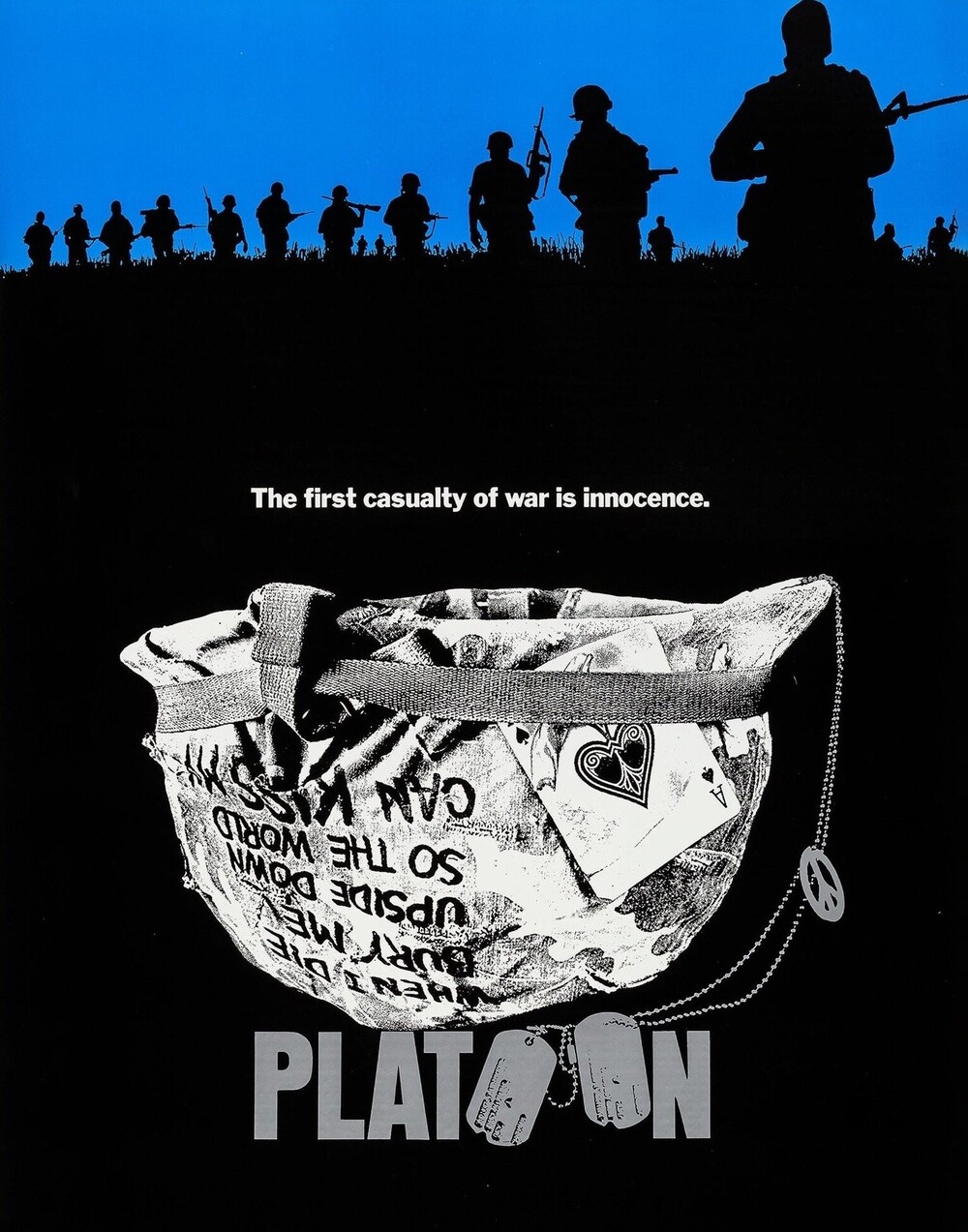
Review: Platoon (dir. by Oliver Stone)


“We been kicking other peoples asses for so long, I figured it’s time we got ours kicked.” — Sgt. Elias

Platoon is one of those war movies that still feels raw, mean, and strangely alive decades later. It is not just a Vietnam movie about combat; it is a movie about confusion, fear, moral collapse, and what happens when young people are dropped into a nightmare with no real sense of why they are there.

What makes Platoon hit so hard is that it never feels polished in a comforting way. Oliver Stone keeps the film close to the mud, sweat, and panic of the battlefield, but he also spends plenty of time on the uglier stuff that happens between firefights: the resentment, the paranoia, the bullying, and the way men start forming little kingdoms inside a war zone. That is where the movie gets its power. The bullets matter, but so do the silences and side glances, because those moments show how war breaks people down before it even kills them.

Charlie Sheen’s Chris Taylor is a smart choice for the center of the film because he starts out as a kind of blank witness. He is young, idealistic in a vague way, and clearly not prepared for what he has walked into. That makes him easy to identify with, but it also makes him useful as a lens for everything around him. We learn the rules of this miserable little ecosystem as he does. Through Chris, the audience is pulled into the same sense of helpless observation that seems to define the whole experience of the platoon.

Stone’s screenplay makes that connection even stronger because he wrote it himself, drawing on his own experience as a young man who volunteered to go to Vietnam instead of being drafted. That detail gives Chris Taylor’s story a personal charge, since Chris feels less like a fictional stand-in and more like Stone working through his own memory and guilt. It adds another layer to the film’s emotional weight, because the perspective feels lived-in rather than invented for dramatic effect.

The film’s real muscle comes from the conflict between Sergeant Elias and Sergeant Barnes, played with complete commitment by Willem Dafoe and Tom Berenger. Elias feels like the last thread of conscience in a collapsing world. Barnes, by contrast, is the kind of man war can easily turn into a weapon: hard, cold, frightening, and convinced that brutality is just realism with the sentiment stripped out. Their conflict gives the movie a mythic quality without draining away its grit. It is not subtle in the usual sense, but it does not need to be. Stone wants these figures to feel bigger than life because that is how they register to a terrified kid in the jungle.

One of the best things about Platoon is how it balances chaos with purpose. A lot of war films either try to turn combat into spectacle or turn it into a lecture. Platoon mostly avoids both traps. The action is ugly, disorienting, and often difficult to follow in exactly the right way. You do not watch these battles and admire the choreography as much as you feel the confusion of everyone inside them. The filmmaking keeps you from getting too comfortable, which is exactly the point. War here is not heroic; it is exhausting, degrading, and terrifying.

That sense of exhaustion matters because the movie understands that war is not made up of only the big moments people remember. It is made up of waiting, heat, boredom, fear, and the slow erosion of judgment. Platoon is at its best when it lingers on that middle ground. The soldiers are not always in immediate danger, but they are always under pressure. That constant tension is what makes the movie feel so oppressive. Even when nothing explodes, it still feels like something bad is about to happen.

Stone also deserves credit for making a Vietnam movie that feels personal without becoming self-congratulatory. You can feel that this comes from experience, but the film never becomes some smug “I was there” statement. Instead, it channels memory into mood, character, and atmosphere. That gives the movie a lived-in authenticity that a lot of war films chase but never quite reach. It feels like a film made by someone trying to tell the truth about a memory that never stopped hurting.

There is also something brutally effective about the way Platoon presents morality as unstable rather than cleanly divided. The movie does not really pretend that everyone is either noble or evil. Instead, it shows how stress, fear, resentment, and power can shove people toward terrible choices. That is a big reason the film still works. It understands that war does not just expose character; it distorts it. Men do things they would never do anywhere else, and the movie keeps asking what is left of a person after that kind of damage.

Still, Platoon is not perfect, and part of its reputation comes from how forcefully it makes its points. Some viewers may find it a little heavy-handed at times, especially in the way it frames innocence, corruption, and betrayal. It is not exactly a subtle film, and it does occasionally aim for emotional impact with both fists. But honestly, that intensity is part of its identity. The movie is not trying to be cool or detached. It wants to wound you a little, and for this material, that approach makes sense.

The performances help keep the film from tipping over into empty grandstanding. Dafoe brings a wounded humanity to Elias that makes him feel like more than just a symbol. Berenger gives Barnes a dangerous stillness that is often more frightening than outright aggression. Sheen, meanwhile, does the important work of holding the center without overpowering the film. He is not the flashiest presence, but he does not need to be. His job is to absorb the madness, and that gives the audience a place to stand inside it.

What lingers most after Platoon is not any single battle scene, but the feeling that the whole movie is about a collapse of trust. Trust in leaders, trust in comrades, trust in the idea that there is some larger meaning to all this suffering. The film strips those things away layer by layer until all that is left is survival and the hope that maybe, somehow, the nightmare will end. That is a bleak place to sit for two hours, but it is also why the film remains so effective. It does not romanticize the experience. It forces you to sit with its mess.

The movie also has a strong visual identity. The jungle is not just background; it feels like an active pressure on every scene. The humidity, the darkness, the mud, and the smoke all help create a world that seems hostile even when nobody is shooting. That physical texture is a huge part of the movie’s success. You can almost feel the environment draining the people inside it. It is less like watching a battle than like watching human beings slowly get swallowed by a swamp of fear and violence.

If there is a reason Platoon still gets talked about so often, it is because it captures a very specific kind of war movie truth: the enemy is not only out there. Sometimes the real damage comes from within the unit, within the chain of command, within the soldier’s own mind. That is a grim idea, but Platoon never feels empty or cynical for saying it. It feels honest. And honesty, in a movie like this, goes a long way.

In the end, Platoon is powerful because it refuses to let war look clean, noble, or emotionally tidy. It is messy, relentless, and often hard to watch, but that is exactly why it matters. It is one of the defining Vietnam films for a reason, and even with its blunt edges, it earns that status through sheer force of feeling, strong performances, and a bleak sense of truth that never really lets up.

Scene That I Love: Vito Corleone and Johnny Fontane in The Godfather


In honor of Francis Ford Coppola’s birthday, today’s scene that I love comes from The Godfather.

In this scene, a self-pitying Johnny Fontane (Al Martino) discusses his career problems with Marlon Brando’s Vito Corleone.  Johnny is losing his voice.  Johnny is up for a role in a big movie but he worries that the producer will never allow him to appear in the film.  Johnny says he doesn’t know what to do and he sheds a tear….

….and that’s not a smart thing to do when you’re talking to Don Corleone.

This scene contains some of the best moments of The Godfather.  Al Martino was a professional singer with little acting experience.  (While Johnny Fontane was a major character in Mario Puzo’s book, he only appeared in two scenes in the film version.  Coppola later said that he thought the Johnny Fontane chapters were so poorly written that he would have turned down the film if he had to include too much of the character.)  In order to get an effective performance out of Martino, Brando did not warn him that he would actually be slapping him.  During one take, Brando got so aggressive that he knocked off Martino’s toupee and caused Robert Duvall to start laughing.  It was all worth it, though.  Martino was thoroughly convincing as Johnny Fontane and Marlon Brando won (but did not accept) his second Oscar for Best Actor.  Coppola did not win Best Director for The Godfather (1972 was a competitive year) but he made up for it 1974 when he was honored for The Godfather Part II.