Today would have been Max von Sydow’s 97th birthday. In today’s scene that I love, von Sydow plays a disarmingly polite assassin.
From 1975’s Three Days of the Condor:
Today would have been Max von Sydow’s 97th birthday. In today’s scene that I love, von Sydow plays a disarmingly polite assassin.
From 1975’s Three Days of the Condor:
4 Or More Shots From 4 Or More Films is just what it says it is, 4 shots from 4 of our favorite films. As opposed to the reviews and recaps that we usually post, 4 Shots From 4 Films lets the visuals do the talking!
Today, the Shattered Lens wishes a happy early birthday to German director Uli Edel, who will be turning 79 tomorrow! It’s time for….
4 Shots from 4 Uli Edel Films

Christiane F. (1981, dir b Uli Edel, DP: Justus Pankau and Jürgen Jürges)
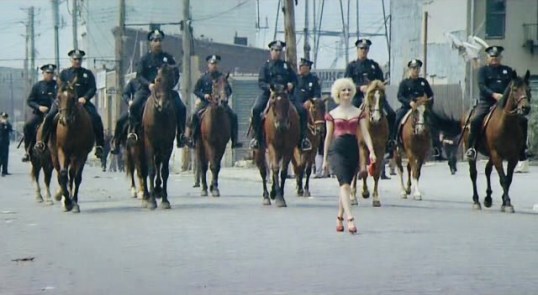
Last Exit to Brooklyn (1989, dir by Uli Edel, DP: Stefan Czapsky)

Body of Evidence (1993, dir by Uli Edel, DP: Douglas Milsome)

The Baader Meinhof Complex (2008, dir by Uli Edel, DP: Rainer Klausmann)
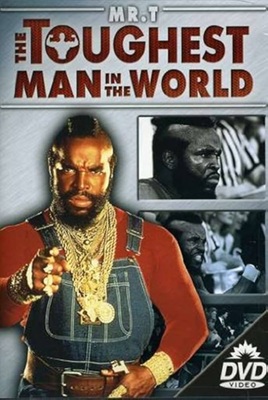 Bruise Brubaker (Mr. T) spends his nights as a bouncer at a club owned by his best friend (Dennis Dugan) and his days running a center for at-risk youth. Bruise is a former Marine drill sergeant who is now determined to make Chicago a better place. He’s so cool that his name is Bruise and he even has his own theme song, which plays whenever he patrols the streets and alleys of Chicago. But when it looks like the youth center is going to get closed down unless it can quickly raise some money, Bruise faces the challenge of a lifetime when he enters a competition to prove that he’s the toughest man in the world!
Is Mr. T the toughest man in the world? I pity the fool who even has to ask.
This made-for-TV movie is exactly what you think it is. Mr. T barks out his dialogue with his signature growl but he still seems utterly sincere when he orders the kids to say in school and stop trying to mug old men in the alleys. At first, it seems like Bruise should be able to easily win the Toughest Man competition but it turns out to be tougher than he thought. There’s an extended sequences in which Bruise tries to learn how to box and it turns out that he’s no Clubber Lang. There’s also an extended subplot about some broadly-played mobsters who are hoping that can drug Bruise so he’ll lose the contest.
Probably the funniest thing about the movie is the idea that everyone in Chicago would stop what they were doing so that they could gather around the television and watch the Toughest Man contest. The second funniest thing is Dennis Farina showing up in a small role and reminding us that it takes all types of actors to make a movie.
Mr. T was never a good actor but he was a great personality and that personality is on full display here. The Toughest Man In The World will make you nostalgic for a more innocent time.

“Jakey, Jakey, big mistakey,” the bad guy says at one point during 2015’s Story of Eva and if that doesn’t tell you everything you need to know about this film, I don’t know what to tell you.
Eva (Nicole Rio) is the mother of teenage Amber (Chelsea London Lloyd). After Amber is murdered by a serial killer who also works as a human trafficker, Eva decides to get revenge. First, however, she has to train herself to not only inflict pain but to also handle it. She finds Amber’s stash and starts smoking it. She wears a ball gag. She whips herself. She learns how to handle pain. She uses Amber’s college fund to buy a membership at the gym and takes boxing lessons. And she builds her own little dungeon. Whenever Eva captures a criminal, she turns into Evil Eva and is even played by a different actress, Shawn Craig. Eva is one of those vigilantes who can’t punish an evil-doer without delivering an endless monologue. The script is talky in the way that scripts written by first-timers determined to prove their cleverness often are.
“No child should ever suffer!” Eva — in “good” form — announces before then adding, “What kind of God would allow that?” Thunder rumbles in the background and it’s not for the first or the only time in the movie as Eva views herself as having become a vengeful God. I have to admit that I appreciated the fact that the film was so shamelessly overwrought and overdone. Everything about the the move is over-the-top and yet, oddly, it’s still rather dull. Some of it is that fact that we live in a post-Hostel world. Torture chambers just don’t carry the same jolt that they once did.
Eric Roberts plays a detective who is investigating all of the murders. He is named Detective Wood. His partner (Rico Ross) is named Detective Grind and the fact that there was no one named Detective Bump seems like a missed opportunity. Roberts appears in a handful of scenes and brings some welcome wit to the role.
Previous Eric Roberts Films That We Have Reviewed:
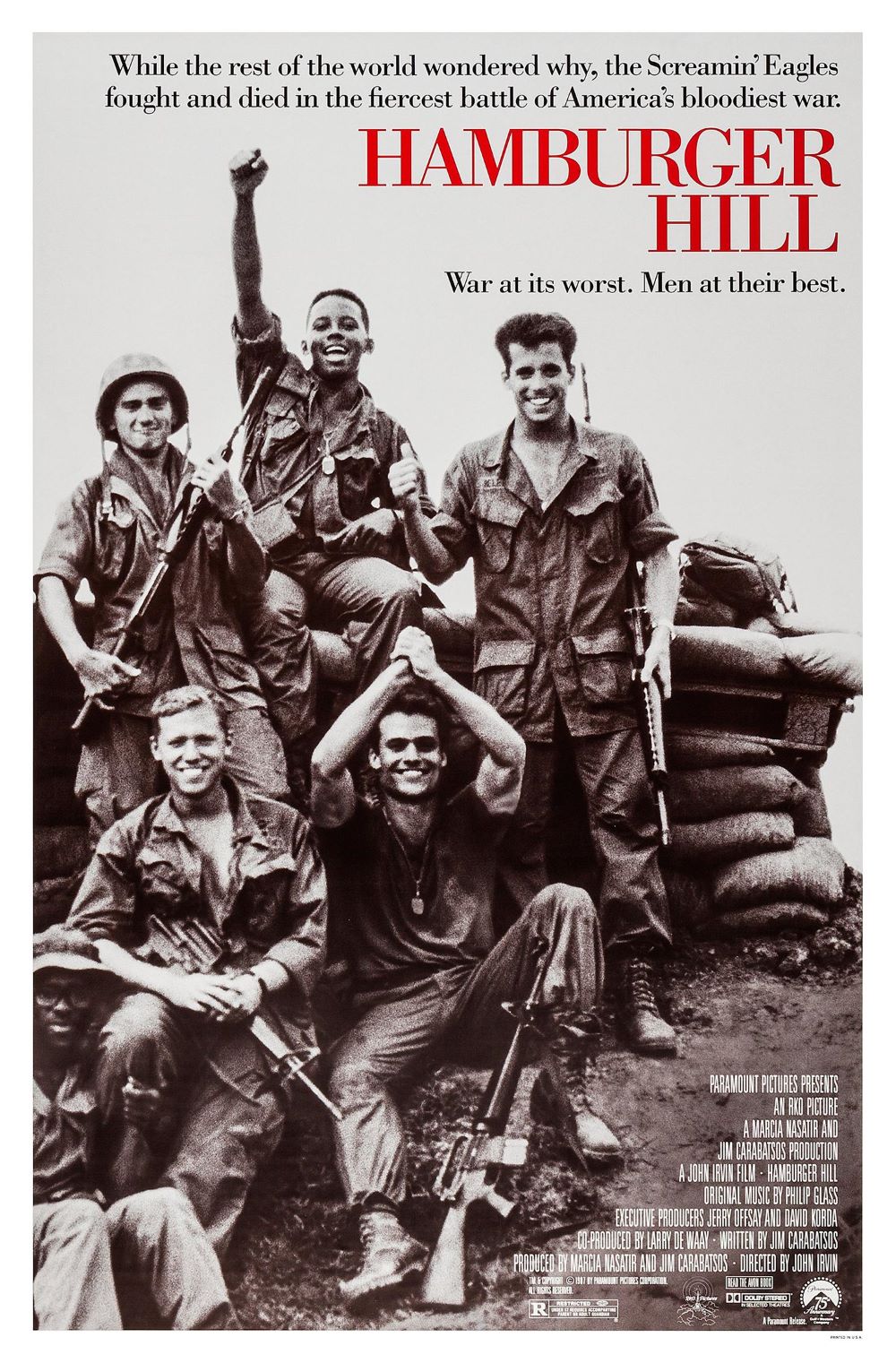
“If you want to walk out of this fucking place, you will listen to people who know!” — Spc. Abraham “Doc” Johnson
Hamburger Hill is one of those Vietnam War movies that doesn’t really bother decorating the war with grand metaphors or tortured soul‑searching; it just puts you on the hill with the grunts and makes you feel every miserable inch of the climb. Released in 1987 and directed by John Irvin, the film is a fictionalized but tightly focused take on the real week‑long “Battle of Hamburger Hill” in the A Sầu Valley, a piece of rugged terrain in central Vietnam that saw some of the bloodiest fighting between U.S. and North Vietnamese Army (NVA) forces in May 1969. The movie dramatizes the 101st Airborne’s 3rd Battalion, 187th Infantry Regiment as they’re ordered to assault a heavily fortified hill over and over again, and it leans hard into the idea that the battle is less about grand strategy and more about raw endurance and attrition.
One of the first things that strikes you about Hamburger Hill is how deliberately it avoids big stars and splashy heroics. The ensemble is made up mostly of young, relatively unknown actors, which ironically makes the cast feel more authentic. You’re not watching a famous movie star playing a grunt; you’re watching a squad of guys who could actually be kids your age sent halfway across the world to die in the mud. The central figure is second‑lieutenant Al Frantz, played by a young Dylan McDermott, who’s stepping up from a desk job into direct combat command. He’s not some infallible war‑hero archetype; he’s earnest, nervous, and visibly out of depth, which makes his slow hardening under fire feel earned rather than heroic. Watching him wrestle with guilt, responsibility, and the absurdity of the orders he’s obeying gives the film a quiet moral backbone without sliding into preachy territory.
The movie is structured around roughly ten days of repeated assaults on “Hamburger Hill,” a soggy, razor‑sharp ridge in the A Sầu Valley that the NVA had turned into a killing zone. Each push uphill is more brutal than the last, and the film doesn’t soften the violence. When someone gets hit, they don’t go down in a graceful slow‑motion shot; they drop suddenly, sometimes mid‑sentence, in a spray of gore that feels uncomfortably real. The script doesn’t fetishize the blood and mud, but it refuses to look away from it either, which makes the whole thing feel like a visceral anti‑glory tract. By the time audiences get to the tenth assault, trudging through torrents of rain and mud while bullets stitch the air around them, the sequence has the effect of a slow, grinding nightmare. It’s less about who’s “winning” and more about the fact that everyone involved is being slowly chewed up by the same machine.
What really keeps Hamburger Hill from feeling like a simple, grim slaughter‑fest is its attention to the characters in the squad. The film invests time in a handful of men—White, Black, and Latino—whose camaraderie, tensions, and private doubts slowly emerge between patrols and firefights. There’s Doc Johnson, the company medic played by Courtney B. Vance, who holds himself together with a veneer of calm professionalism while quietly absorbing the emotional toll of patching up one friend after another. Doc becomes a kind of moral anchor, someone who sees the humanity in every soldier while still recognizing the war’s dehumanizing logic. His presence also lets the film quietly deal with racial friction and class differences without turning them into tidy, feel‑good sermons. The way the soldiers talk over each other, argue about politics back home, and joke about their own fear turns squad life into a cramped, sweaty microcosm of America itself.
The political backdrop of the late‑Vietnam era is always in the background, too. The men occasionally hear distorted chunks of anti‑war protests and news coverage over the radio, and you can see how that information chips away at their sense of purpose. Some of the older soldiers, like the gruff Sgt. Worcester played by Steve Weber, have already lost whatever idealism they might have had and just want to get through the next day. Newer guys, meanwhile, are still wrestling with why they’re there at all, and whether the hill they’re dying for means anything to anyone back in the States. The film doesn’t answer those questions directly; it just lets you feel the uncertainty. That ambivalence is part of what makes Hamburger Hill feel historically grounded. It’s less interested in telling you who was right or wrong in the Vietnam War and more interested in showing what it actually felt like to be a small‑arms infantryman in late‑1969, during one of the bloodiest stretches of fighting in the A Sầu Valley.
Visually, the movie leans into a muddy, washed‑out palette that makes the Philippines‑standing‑in‑for‑Vietnam locations feel appropriately oppressive. The hill itself—the real‑life “Hamburger Hill” in the A Sầu Valley—is a constant, looming presence: slick with rain, choked with barbed wire, and studded with foxholes and bunkers. The camera often stays at ground level, jostling with the soldiers as they crawl, scramble, and stumble upward, which makes the terrain feel like an active enemy. The sound design is similarly unglamorous—gunfire isn’t especially stylized, explosions are chaotic rather than cool, and the constant hiss of rain and distant artillery keeps the film in a state of low‑grade dread. Even the score, a Philip Glass–style arrangement of repetitive, slightly unnerving motifs, adds to the feeling of being trapped in a loop of violence you can’t escape. Everything in the film is built to make the combat feel routine, exhausting, and numbing, rather than spectacular.
Another thing Hamburger Hill handles surprisingly well is the way it dovetails the physical horror of the battle with the men’s private lives back home. In quieter moments between attacks, the soldiers talk about girlfriends, family, and their plans for “after the war,” even though, for some of them, those plans are clearly not going to happen. The film doesn’t milk this stuff for melodrama; instead, it floats just beneath the surface, turning every casual conversation into a quiet pre‑eulogy. When someone makes a joke about getting back to Chicago or New York or wherever they’re from, the line feels both genuine and heartbreaking, because you know the movie might quietly erase that future a few scenes later. That low‑key sense of fragility makes the emotional impact of each death feel more personal, because the film has already taken the time to show you who these guys are when they’re not being shot at.
Narratively, the film doesn’t try to convince you that taking the hill is some great strategic triumph. If anything, it’s openly skeptical about the rationale behind the whole operation. The soldiers keep getting told to “take it, hold it, then fall back,” and the repetition of that order drives home the sense that the hill is more of a symbolic goal than a tactical necessity. The film doesn’t stage a big, dramatic monologue about this; it just lets the repetition of the mission, the rising body count, and the unanswered questions hang in the air. That choice aligns Hamburger Hill more with a film like Apocalypse Now or Full Metal Jacket in spirit, even though its tone is far more straightforward and less stylized. It’s less interested in mythmaking and more interested in capturing the eerie timelessness of infantrymen being sent to die for reasons they don’t fully understand, during one of the fiercest set‑pieces of the Vietnam War.
In terms of its legacy, Hamburger Hill often gets overshadowed by Oliver Stone’s Platoon, which came out a year earlier and snagged the Oscars’ attention. But in a lot of ways, Irvin’s film is a grittier, more unsentimental companion piece. It doesn’t try to map the Vietnam War onto a single moral allegory, and it doesn’t give you a hero to latch onto and cheer for. Instead, it gives you a squad of men, flaws and all, and asks you to watch them go through hell while trying to keep their foothold on each other. That ensemble‑driven approach, combined with the unrelenting realism of the battle sequences, is what makes Hamburger Hill feel like less of a “movie” and more like a grim, ground‑level documentary rooted in the real‑world horror of the Battle of Hamburger Hill.
By the end, the film doesn’t offer a clean sense of resolution. The soldiers do eventually take the hill, but the victory is so hollow and so costly that it hardly feels like a win at all. The last few scenes linger on survivors looking shell‑shocked and exhausted, many of them quietly wondering what the point of it was. The movie doesn’t spell that out in a clumsy voice‑over; it trusts you to feel the absurdity and the weight of what they’ve been through. That refusal to wrap things up with a neat moral bow is one of Hamburger Hill’s strengths. It understands that sometimes the most honest thing a war film can do is show you the damage and then leave you with the questions.
In the crowded field of Vietnam War movies, Hamburger Hill stands out because it strips away the spectacle and just focuses on the brutal, day‑to‑day reality of trying to take a piece of ground that probably shouldn’t matter as much as it does. It’s not a flashy, revolutionary film, but it’s a stubbornly honest one, anchored in the real‑world carnage of the week‑long Battle of Hamburger Hill in the A Sầu Valley. It’s a movie that would rather make you feel the mud squeeze between your toes, hear the too‑close sound of automatic fire, and watch the faces of guys who’ve run out of explanations for why they’re still climbing. If you’re looking for a Vietnam film that doesn’t sugarcoat the war or overdress it in symbolism, Hamburger Hill is the kind of movie that sticks with you precisely because it doesn’t try to be anything more than what it is: a raw, claustrophobic portrait of a squad walking into a meat grinder, one rain‑soaked step at a time.
The lineup for this year’s Cannes film festival was announced earlier today. There’s only one American film in the official competition. We’re all rooting for you, Ira Sachs!
Here’s the line-up:
Opening film:
LA VÉNUS ÉLECTRIQUE
Pierre SALVADORI
(Out of Competition)
Competition:
AMARGA NAVIDAD Pedro ALMODÓVAR
PARALLEL TALES Asghar FARHADI
A WOMAN’S LIFE Charline BOURGEOIS-TACQUET
LA BOLA NEGRA Javier CALVO & Javier AMBROSSI
COWARD Lukas DHONT
DAS GETRÄUMTE ABENTEUER Valeska GRISEBACH
ALL OF SUDDEN HAMAGUCHI Ryusuke
THE UNKNOWN Arthur HARARI
ANOTHER DAY Jeanne HERRY
SHEEP IN THE BOX KORE-EDA Hirokazu
HOPE NA Hong-jin
NAGI NOTES FUKADA Koji
GENTLE MONSTER Marie KREUTZER
NOTRE SALUT Emmanuel MARRE
FJORD Cristian MUNGIU
THE BIRTHDAY PARTY Léa MYSIUS
MOULIN László NEMES
FATHERLAND Pawel PAWLIKOWSKI
THE MAN I LOVE Ira SACHS
EL SER QUERIDO (THE BELOVED) Rodrigo SOROGOYEN
MINOTAUR Andrey ZVYAGINTSEV
Un Certain Regard
TEENAGE SEX AND DEATH AT CAMP MIASMA Jane SCHOENBRUN
Opening Film
ELEPHANTS IN THE FOG Abinash
BIKRAM SHAH 1st film
IRON BOY Louis CLICHY
BEN’IMANA Marie-Clémentine DUSABEJAMBO
1st film
CONGO BOY Rafiki FARIALA
CLUB KID Jordan FIRSTMAN
1st film
UĻA Viesturs KAIRIŠS
LA MÁS DULCE (STRAWBERRIES) Laïla MARRAKCHI
EL DESHIELO (THE MELTDOWN) Manuela MARTELLI
SIEMPRE SOY TU ANIMAL MATERNO (FOREVER YOUR MATERNAL ANIMAL) Valentina MAUREL
YESTERDAY THE EYE DIDN’T SLEEP Rakan MAYASI
I’LL BE GONE IN JUNE Katharina RIVILIS
1st film
WORDS OF LOVE Rudi ROSENBERG
EVERYTIME Sandra WOLLNER
ALL THE LOVERS IN THE NIGHT SODE Yukiko
Out of Competition
LA BATAILLE DE GAULLE : L’ÂGE DE FER Antonin BAUDRY
KARMA Guillaume CANET
DIAMOND Andy GARCIA
L’ABANDON Vincent GARENQ
L’OBJET DU DÉLIT Agnès JAOUI
HER PRIVATE HELL Nicolas WINDING REFN
Midnight Screenings
FULL PHIL Quentin DUPIEUX
SANGUINE Marion LE CORROLLER
1st film
ROMA ELASTICA Bertrand MANDICO
JIM QUEEN Marco NGUYEN & Nicolas ATHANÉ
1st film
GUN-CHE (COLONY) YEON Sang-ho
Cannes Première
LA TROISIÈME NUIT Daniel AUTEUIL
THE MATCH Juan CABRAL & Santiago FRANCO
KOKUROJO (THE SAMURAI AND THE PRISONER) KUROSAWA Kiyoshi
HEIMSUCHUNG (VISITATION) Volker SCHLÖNDORFF
PROPELLER ONE-WAY NIGHT COACH John TRAVOLTA
Special Screenings
REHEARSALS FOR A REVOLUTION Pegah AHANGARANI
1st film
LES MATINS MERVEILLEUX Avril BESSON
1st film
L’AFFAIRE MARIE-CLAIRE Lauriane ESCAFFRE & Yvo MULLER
AVEDON Ron HOWARD
LES SURVIVANTS DU CHE Christophe Dimitri RÉVEILLE
1st film
JOHN LENNON : THE LAST INTERVIEW Steven SODERBERGH
CANTONA David TRYHORN & Ben NICHOLAS
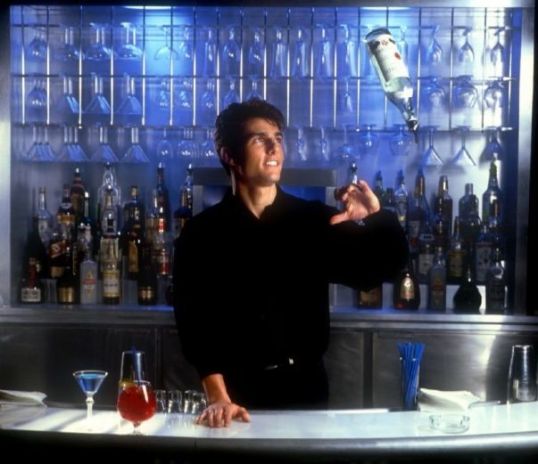 Hi, everyone! Tonight, on Mastodon, I will be hosting the #TubiThursday watch party! Join us for Cocktail (1988)!
You can find the movie on Tubi and you can join us on Mastodon at 9 pm central time! (That’s 10 pm for you folks on the East Coast.) We will be using #TubiThursday hashtag! See you then!
Today, the Shattered Lens wishes a happy birthday to Dennis Quaid!
This scene that I love comes from 1983’s The Right Stuff and features Quaid as astronaut Gordon Cooper. In this scene, the famous grin is flashed when Cooper is asked to name the best pilot that he ever saw. However, Cooper surprises everyone by turning thoughtful.
4 (or more) Shots From 4 (or more) Films is just what it says it is, 4 (or more) shots from 4 (or more) of our favorite films. As opposed to the reviews and recaps that we usually post, 4 (or more) Shots From 4 (or more) Films lets the visuals do the talking.
Today, on Jean-Paul Belmondo’s birthday, we pay tribute to French cinema! It’s time for….
4 Shots From 4 French Film
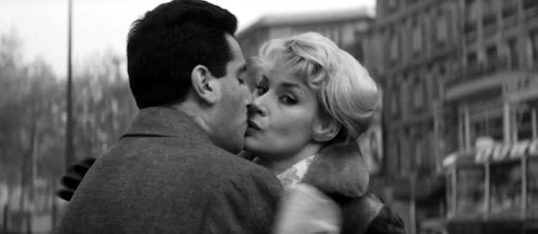
The 400 Blows (1959, dir by François Truffaut, DP: Henri Decae)
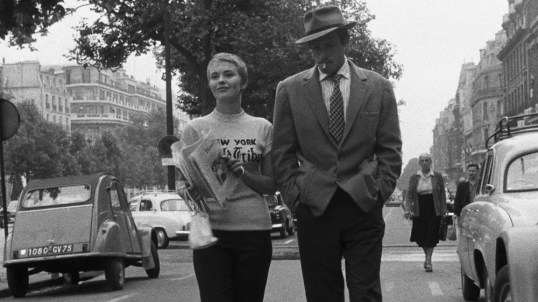
Breathless (1960, dir by Jean-Luc Godard, DP: Raoul Coutard)

The Iron Rose (1973, dir by Jean Rollin)

The Girl With A Bracelet (2020, dir by Stéphane Demoustier, DP: Sylvain Verdet)
 Through the Shattered Lens