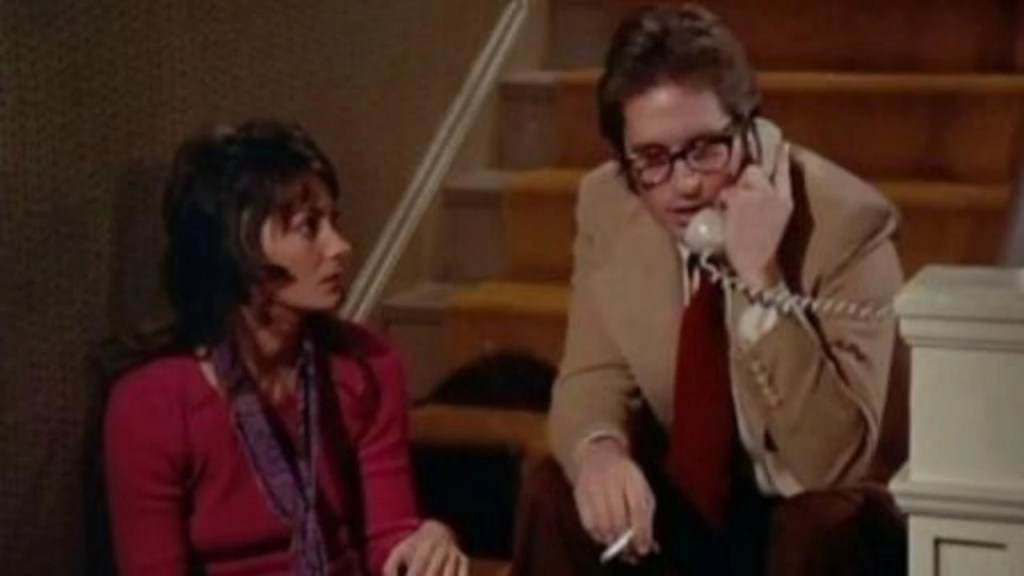
Today, I was browsing the “scary movie” titles on Amazon Prime when I came across SHATTERED SILENCE, with Michael Douglas featured prominently on the cover. Being a big fan of Douglas, I decided to investigate a little further. I went to my Internet Movie Database app on my phone, input “Shattered Silence,” and it pulled up the 1972 TV movie WHEN MICHAEL CALLS. The premise actually sounded interesting and creepy, and the running time was less than 90 minutes, so I thought I’d check it out.
Based on a 1967 book of the same name from author John Farris, the simple story focuses on Helen Connelly (Elizabeth Ashley), a woman who begins receiving telephone calls from her nephew, Michael. There’s just one problem… Michael died fifteen years ago! Even worse, Michael seems to know that bad things will happen to the people that Helen loves. When her loved ones start dying in horrific accidents, Helen reaches out to her surviving nephew, and Michael’s brother, Craig (Michael Douglas). Craig’s a therapist who tries to help her understand what’s really going on. What starts out seeming like a cruel prank turns into something much worse!
During the opening credits of WHEN MICHAEL CALLS, I was surprised to see that its screenplay was by James Bridges. Bridges was born in Paris, Arkansas, and he’d go on to write and direct movies like THE PAPER CHASE (1973), THE CHINA SYNDROME (1979), which also starred Michael Douglas, and URBAN COWBOY (1980). One of the reasons I really love Bridges is the fact that he wrote and directed the 1977 film SEPTEMBER 30, 1955, which was filmed in the Arkansas towns of Conway and Toad Suck, the very community I was raised in. Here, he crafts a creepy little story that makes good use of something as ordinary as a telephone to create a sense of dread. It’s a simple concept, but it’s darn effective.
The cast of this TV movie is very good, especially Elizabeth Ashley, who does most of the heavy lifting. Ben Gazzara (ANATOMY OF A MURDER, ROAD HOUSE) is also good as her estranged husband, but looking back now, the main attraction is “guest star” Michael Douglas as her therapist nephew who helps her deal with these crazy phone calls. It was a lot of fun seeing him this early in his career, even before THE STREETS OF SAN FRANCISCO. Knowing the heights his stardom would eventually reach, the novelty of this appearance is all the more interesting.
At the end of the day, I enjoyed spending an hour and a half of my life with WHEN MICHAEL CALLS. It delivers a creepy little story, and I enjoyed seeing it through to its ending. I’m almost ashamed that I didn’t figure it out a little bit quicker, but I guess that’s all part of the fun. I won’t pretend it’s a masterpiece, but it is an effective television thriller, and I recommend it.
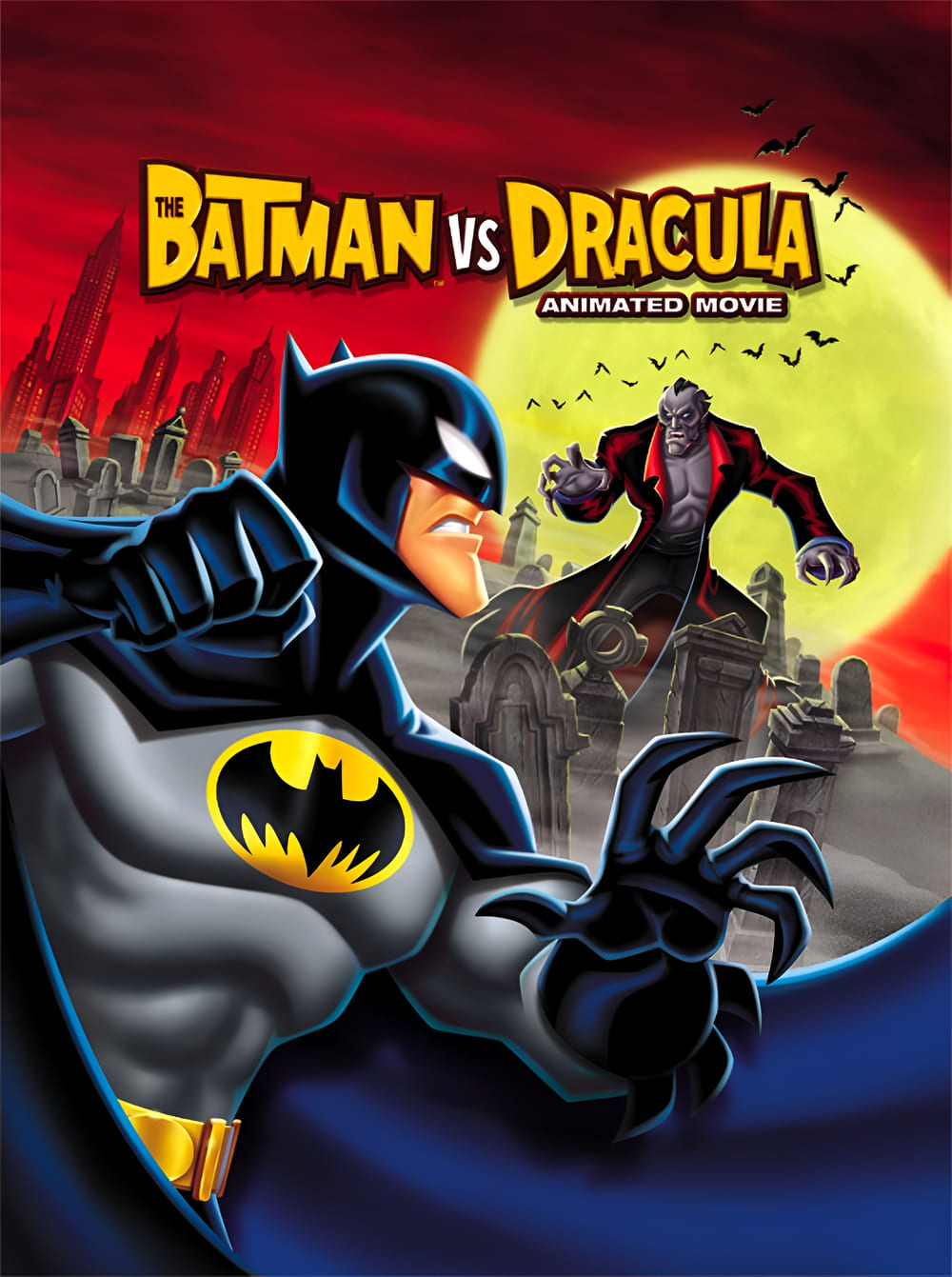
Few Batman stories sound as wonderfully absurd as The Batman vs. Dracula, a 2005 direct-to-video animated film that pits the Dark Knight against literature’s most famous vampire in a Gotham overrun by the undead. Spun off from The Batman television series, the movie could have been a disposable Halloween cash-in, but it turns out to be a stylish, energetic, and genuinely atmospheric monster movie. It draws inspiration from DC’s Elseworlds graphic novel Batman & Dracula: Red Rain, and while it is not as dark or graphic as that comic, it understands why Batman and Dracula make such a natural pairing.
The film immediately separates itself from the more famous Batman: The Animated Series. This is not Kevin Conroy’s Batman, Mark Hamill’s Joker, or the sleek, noir-influenced world associated with Bruce Timm and Paul Dini. Instead, it uses the visual language of The Batman, the 2004 series that presented a younger, more athletic, and more stylized version of the Dark Knight. Rino Romano voices Bruce Wayne and Batman, while the character designs are longer, sharper, and more angular than the classic animated-series versions. The animation has a strong early-2000s action-cartoon identity, with exaggerated movement, dramatic camera angles, bold colors, and a constant emphasis on kinetic action.
That art style can be divisive, especially for viewers who prefer the timeless look of the Timm-era shows. Yet The Batman vs. Dracula may be one of the best possible uses of it. The story is not trying to be grounded or realistic; it is a comic-book monster movie. Gotham becomes a place of foggy graveyards, moonlit rooftops, blood-red lighting, underground tunnels, and shadowy streets. The film embraces vampire-movie imagery with enthusiasm, and its action scenes have enough movement and visual flair to make Dracula feel like a legitimate threat rather than just another costumed villain.
The plot begins with Joker and Penguin escaping Arkham Asylum. Joker immediately returns to causing chaos, while Penguin heads to a cemetery in search of buried treasure. In classic comic-book fashion, Penguin accidentally awakens Dracula, who has been imprisoned for centuries. Once free, the Count begins feeding on Gotham’s citizens and transforming them into vampires. He also hopes to resurrect his lost bride, giving the story a more personal and gothic motivation than a simple plan for conquest. Batman must investigate the disappearances, protect Vicki Vale, and find a way to stop an enemy whose powers push him far beyond the limits of ordinary crime-fighting.
The influence of Batman & Dracula: Red Rain is one of the film’s most interesting aspects. That 1991 Elseworlds graphic novel, written by Doug Moench and illustrated by Kelley Jones, imagined an alternate Gotham threatened by Dracula and his vampire followers. The animated movie does not directly adapt the comic, but it borrows its central idea: Batman confronting a supernatural outbreak that cannot be solved with fists, gadgets, and a few well-timed detective deductions. The film softens the comic’s darker horror elements for a younger audience, but the connection gives the premise more comic-book credibility than a random crossover might otherwise have.
Dracula is the movie’s greatest asset. Peter Stormare gives him a cold, aristocratic voice that makes him feel ancient, arrogant, and genuinely menacing. He does not behave like a generic monster; he acts like a ruler who sees humanity as prey. The film wisely gives him several moments where he overpowers Batman, which keeps the conflict from feeling too easy. Batman cannot simply throw batarangs and win. Dracula’s speed, strength, hypnotic abilities, and growing vampire army force Bruce Wayne to research, adapt, and prepare.
That detective element gives the film more structure than expected. Batman spends much of the runtime investigating strange attacks and disappearances, gradually uncovering the source of the vampire outbreak. Because he spends so much of the story on the defensive, the eventual solution feels earned. The movie lets Batman be vulnerable and clever rather than turning him into an invincible action hero. It is a simple approach, but it works well for a film that runs only about 83 minutes.
The supporting cast adds plenty of personality. Penguin accidentally releasing Dracula is a fun setup, and Tom Kenny gives the character a greedy, nervous energy that fits this version of Oswald Cobblepot. Joker receives the more memorable arc, however. Voiced by Kevin Michael Richardson, he eventually becomes a vampire, and the result is appropriately creepy. Vampire Joker is one of the movie’s best visual ideas, transforming a familiar Batman villain into something closer to pure horror. The design and voice work make him unsettling without pushing the film too far beyond its family-friendly boundaries.
Vicki Vale, voiced by Tara Strong, has a larger role than many viewers might expect. She serves partly as a love interest and partly as someone Batman must protect, but she is not entirely passive. The romance between Bruce and Vicki is fairly conventional, but it gives the story a small emotional anchor amid all the vampire chaos. Alastair Duncan’s Alfred provides the usual steady support, helping Bruce stay focused while Gotham descends into supernatural panic. The film keeps its cast and plot focused, which helps it avoid the padding that sometimes affects direct-to-video superhero movies.
The biggest weakness remains the visual style. The Batman was always a more divisive interpretation of the character, and its angular designs will not appeal to everyone. Compared with Batman: The Animated Series, this film can look less refined and less iconic. Some faces appear stiff, the proportions can seem strange, and the overall aesthetic is very much a product of its era. Still, the movie benefits from fully committing to its own look rather than trying to imitate the classic animated series. It feels like a one-off horror experiment, not a lesser attempt to recreate a beloved version of Batman.
At around 83 minutes, The Batman vs. Dracula moves quickly and never overstays its welcome. It has action, humor, mystery, horror imagery, and enough atmosphere to feel like a genuine seasonal movie rather than a random superhero crossover. It may not reach the artistic heights of the best DC animated films, but it does something those films rarely attempted: it places Batman in a full-blooded monster movie and lets him face one of horror’s most enduring icons.
For Batman fans, vampire-movie fans, or anyone seeking an easy Halloween watch, The Batman vs. Dracula is an easy recommendation. It is not essential Batman viewing, but it is far more stylish and entertaining than its title suggests. By borrowing the spirit of Batman & Dracula: Red Rain and pairing it with the distinctive look of The Batman, the film becomes a pulpy, gothic, early-2000s adventure that embraces its absurd premise and makes it work.
When I watched this short, not only was I entertained, I was uplifted. The short reminded me of the positivity films Lisa reviews.
The short opens with a large husband, beautiful wife, and the husband finding a positive pregnancy test on his counter. I was waiting for the traditional revenge or betrayal story, but I got something totally different.
The wife says that the pregnancy test is her sister’s, but that he said that he was ok with not having kids. He feels disappointed that he won’t ever be dad and goes to his “car” to run errands. The husband goes to his electric car (ughhhh) and sees a “The Ring” like ghost in his rear camera. The man and the ghost take on a father/daughter relationship and it is … really sweet. If you’re looking for a reason to have kids, this hits that spot.
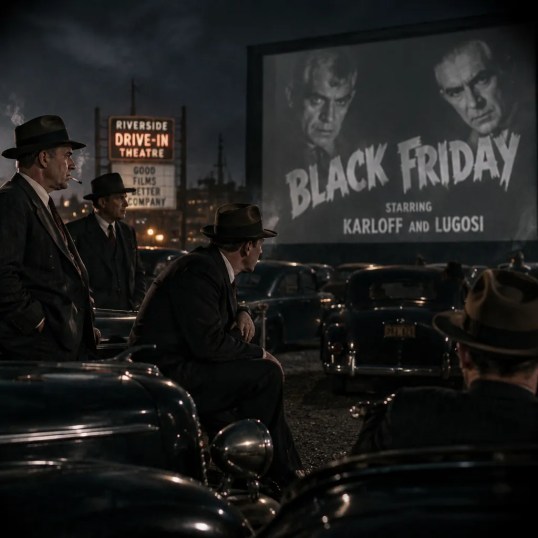
In today’s film, Boris Karloff plays a brain surgeon who makes the mistake of trying to save a friend’s life by performing an experimental procedure that involves combining bits of a gangster’s brain with the brain of an otherwise meek English professor. Bela Lugosi plays a rival mobster.
First released in 1940, Black Friday is an entertaining combination of sci-fi horror and gangster action. Originally, Lugosi was going to play the mad scientist and Karloff was going to play the mobster but Karloff, who felt he had been typecast as a villain, reportedly requested to be given the more sympathetic role. This noir-tinged fright flick was the last of the movies that Karloff and Lugosi would make together,
Today would have been the 82nd birthday of the great German actor, Udo Kier.
Today’s scene that I love features Kier in the only version of Suspiriathat matters, the original one directed by Dario Argento. In this scene, Kier discusses witchcraft with Jessica Harper.
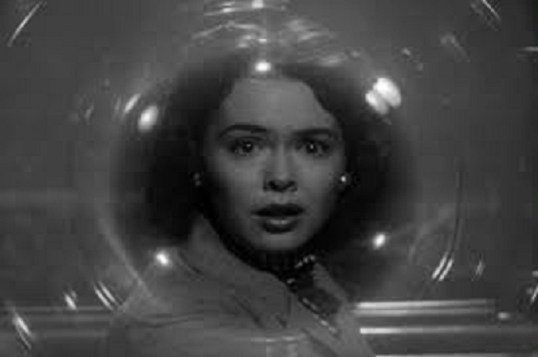
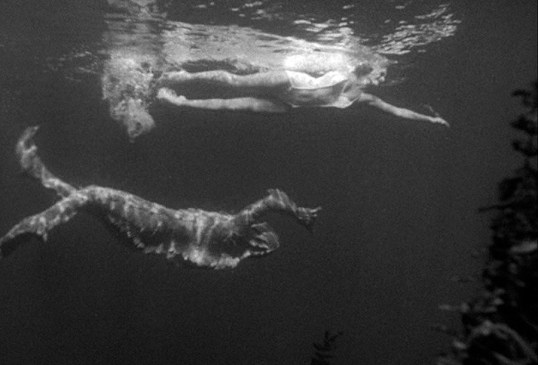
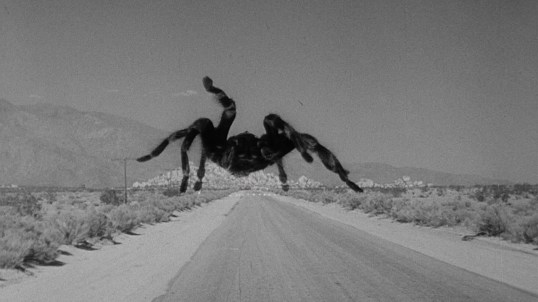
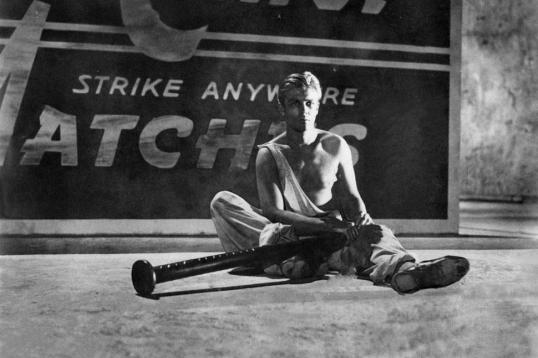
4 Shots From 4 Films is just what it says it is, 4 shots from 4 of our favorite films. As opposed to the reviews and recaps that we usually post, 4 Shots From 4 Films lets the visuals do the talking!
110 years ago today, future director Jack Arnold was born in Connecticut. Arnold started his film career making documentaries and he ended it directing episode of The Brady Bunch and The Love Boat. In between all of that, he directed some of the best-remembered “creature” films of the 1950s. Anytime you see a movie featuring giant monsters, you’re seeing a film that owes a debt to the work of Jack Arnold. Arnold also directed the classic Creature of the Black Lagoon.
Today, in honor of Jack Arnold, TSL is proud to present….
4 Shots From 4 Jack Arnold Films
It Came From Outer Space (1953, dir by Jack Arnold, DP: Clifford Stine)
Creature From The Black Lagoon (1954, dir by Jack Arnold, DP: William E. Snyder)
Tarantula (1955, dir by Jack Arnold, DP: George Robinson)
The Incredible Shrinking Man (1957, dir by Jack Arnold, DP: Ellis W. Carter)
2015’s One More Round tells the story of Jack “The Jackhammer” Taylor (played by Tommy Lee Thomas).
Once upon a time, Jack Taylor was a big-time boxer, a contender to be worldwide champ. But eventually, he burned out on boxing. On the night of the “big fight,” he failed to show up. Now, he works at a furniture store. He spends most of his time sleeping and having dreams of the life he once had. When he makes a big sale, his boss tries to steal Jack’s commission. That’s not a good thing because Jack really needs that commission. His wife is getting frustrated with Jack’s inability to get his life together. His scheming mother-in-law all sorts of lies about him. Jack’s in trouble!
Finally, Jack does the one thing that he swore he would never do again. He returns to boxing. He steps into the gym that is owned by his uncle (Kevin Sorbo) and asks for another chance. He trains with Franco Turelli (Franco Columbu). He prepares for the fight against the fearsome B.A. Fontana (T.C. Stallings), a fighter who is so aggressive that he even takes a swing at a referee at one point. Throughout it all, Jack prays and feels that God is leading him back into the ring.
Along with Kevin Sorbo, there are some familiar faces in One More Round. Jeremy London appears as Brock Thornhill (now there’s a villainous name!), a man who courts Jack’s wife during their separation. Donald James Parker of Gramps Goes To College fame appears as one of Jack’s co-workers. It’s actually interesting to see Parker here because this is one of the few Donald James Parker performances in which he’s not playing a character who comes across as being super-aggressive and bitter. Instead, he just comes across as being a nice old man who reads the Bible and offers up spiritual advice. Parker’s character here comes across as who Parker was trying to play in Gramps Goes To College before that film became about Gramps telling off all the pointy-headed, liberal intellectuals who make up the academic world. This film features the nice version of Gramps!
That said, the majority of this movie is taken up with boxing. I actually like most boxing films. There’s something thrilling about watching two men punch each other until one of them collapses. I mean, it’s the type of thing to which I should probably object on humanitarian grounds but I can’t help myself. Boxing is (usually) exciting. The best boxing films present the fight as being modern-day gladiatorial combat. Unfortunately, the boxing scenes in One More Round aren’t particularly impressive. The low-budget is obvious as the film cuts from scenes inside the ring to shots of people in the audience, all pretending to be watching a boxing match. Neither one of the actors playing the boxers is particularly believable as a professional fighter.
In the end, I always have my doubts about any film that suggests that God picks sides when it comes to sports. I’d like to think that God would be like me and just hope that both teams have fun.
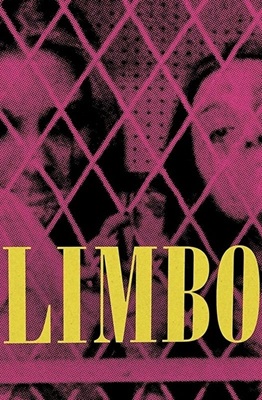
In 1999’s Limbo, Katherine (Jessica Krause) is a young woman who lives in a city, perhaps in an abandoned warehouse. At night, she goes to the bar, where the regulars eye her with a mix of suspicion and lust. Sometimes, she takes someone home with her. Every night, she appears back at the bar and almost the same dialogue is repeated by those who see her. She takes someone home. She kills them… or does she? The waitress (Tina Krause, who also directed) appears at Katherine’s home. Voices are heard. Sped-up images are randomly spliced through the film. The camera tracks down empty hallways and through desolate alleys. Sometimes, the images are so dark that you can’t even make out what’s happening onscreen. Voices are heard, but it’s not always easy to tell who is speaking or why. The imagery becomes increasingly bizarre. Are we seeing the inside of Katherine’s head, or are we seeing something else? The viewer will have to decide that for themselves…
Actually, for all of the bizarre imagery and strange dialogue, it’s not that hard to figure out what’s happening with Katherine. The film itself is called Limbo, and the film’s final twist isn’t really a surprise. But I also think it’s fairly obvious that this is a film that’s more about visuals and style than anything else. The story is less about what happens and more about how it’s all visualized. The film plays out in a frenetic, dream-like fashion, with the dream sometimes crossing the line and becoming a nightmare. The film’s visual style captures the feeling of being overwhelmed by sensation and giving yourself over to the chaos of everyday life. The film doesn’t always make sense because it takes place in a world that doesn’t particularly make sense. I’ve read a few online reviews that have compared this film’s imagery with the work of David Lynch. I wouldn’t go that far. Lynch may have been a surrealist, but regardless of how odd his films got, there was always a feeling that he was in control and that each image reflected something he wanted to say. Limbo, on the other hand, always feels like it’s one scene away from spinning away from both the cast and the director. Occasionally, that’s kind of exciting.
In many ways, Limbo represents everything I like about SOV filmmaking. It’s a passion project, one made free from the constraints of having to please the biggest possible audience. The stark images capture the grunginess of life on the outskirts of society, and the imperfect sound design fits in perfectly with the bizarre visuals. It’s a film that keeps you off-balance. When Jessica walks along city streets, more than a few passersby stop to stare straight at the camera. It gives the entire production a raw authenticity. Director Tina Krause was herself a veteran of many SOV horror films. For her directorial debut, she took the SOV format to its logical, self-indulgent extreme. The resulting film is occasionally compelling, occasionally annoying, sometimes shallow, and sometimes insightful. It’s a chaotic mess, but it’s also the type of statement that could never be made by a mainstream studio. It’s Limbo.
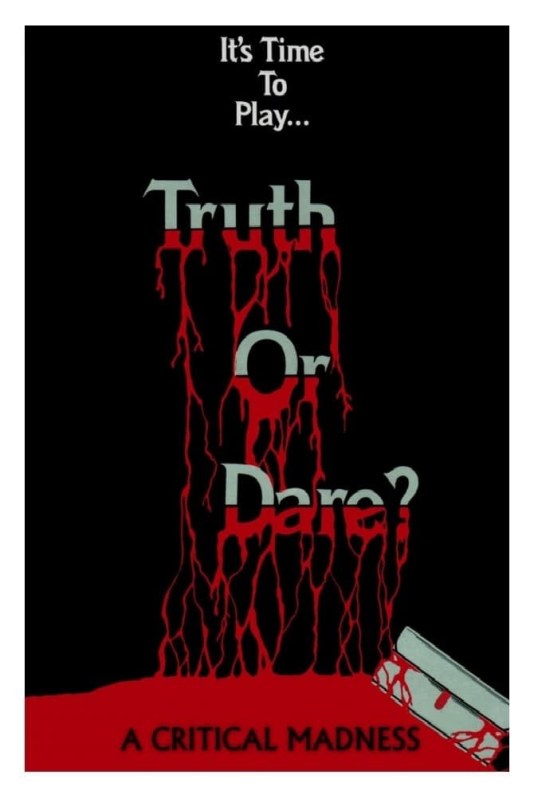
The 1986 direct-to-video epic Truth or Dare tells the story of Mike Strauber (John Brace). One day, Mike came home from work and discovered his wife (Mary Fanaro) having sex with his best friend, Jerry (Bruce Gold). Needless to say, Mike is not happy about this development. Mike wanders aimlessly around town, thinking about his past with Sharon and also remembering a childhood game of Truth or Dare. (In the flashbacks, young Mike is played by AJ McLean, who would grow up to be a Backstreet Boy.) Mike considers suicide but, instead, he picks up a hitchhiker and then spends a while mutilating himself at her request.
This pretty much sets up the pattern that dominates the rest of the film. Mike mutilates himself and gets sent to a mental hospital. Mike gets released from the mental hospital and immediately does something that gets him sent back. Mike has hallucinations that lead to him mutilating more and more of himself. He cuts off his face and is soon walking around with a copper mask. Mike gets released due to overcrowding and budget cuts. Mike gets sent back to the asylum. Mike goes on a rampage. Eyes are poked out of their sockets, people are run over by Mike’s car, and—in the film’s most infamous scene—Mike drives around while holding a bloody chainsaw right out the driver’s side window. Surprisingly, people are more than willing to stand still and wait for Mike to reach them. This is definitely a case where maybe they shouldn’t have been so polite.
This is one of those independent horror films that wins points on the basis of pure audacity. One gets the feeling that writer/director Tim Ritter was eager to see just how far he could push things and things do indeed get pushed very far. At the same time, the film is so amateurish in its execution that it’s impossible to really get offended by it. Despite some decent self-mutilation effects, you never get the feeling that the movie is trying to trick you into thinking that you’re watching anything that could be considered realistic. It’s an elaborate and, at times, rather juvenile joke. It’s about as pure a film as you can get, one that was made with absolutely no consideration given to what most would consider to be in good taste. Films like this could never be made by a studio but they could be made by someone who had access to a video camera. That was the whole appeal of indie horror filmmaking.
That said, I should note that Tim Ritter has said that he was actually replaced a day into filming by producer Yale Wilson. So, how much of the film’s vision is due to Ritter and how much of it is due to Wilson is anyone’s guess. Tim Ritter was seventeen when he wrote and sold the script and 18 when the film went into production. He’s still making films to this day. The unique aesthetic of Tim Ritter lives on!
In 1983’s Amityville 3-D, Tony Roberts plays John Baxter, a journalist who is a professional skeptic. He made his fame by exposing con artists who pretend to have had supernatural experiences. He doesn’t buy that the famous house in Amityville is haunted. In fact, he’s so confident that there are no such things as evil spirits that he buys the house and moves in with his teenage daughter, Susan (Lori Loughlin). Soon, Susan and her best friend Lisa (Meg Ryan)—HEY! THAT’S MY NAME!—are fooling around with a Ouija board and people close to John are dying.
Now, I wish I could tell you that this Amityville film featured either Lori Loughlin or Meg Ryan getting possessed by the Amityville demon, because that probably would have made for a cool movie and it would also give me a chance to make some jokes about why Loughlin was later cursed to appear on Full House. (No, I would not have made any jokes about the college acceptance scandal because, as far as I’m concerned, Loughlin did nothing wrong.) Playing a teenager possessed by a demon would have also been quite a way for Meg Ryan to make her film debut. Unfortunately, neither one of them gets possessed. Instead, the evil in the Amityville house all has to do with a haunted well in the basement. A lot of people do die in this film. The deaths, though, tend to be a bit random. None of them are as disturbing as the deaths from the second film. That’s probably a good thing, as Amityville II is one of the few horror films that I really have a hard time watching.
When Amityville III went into production, Orion Pictures was being sued by George and Kathy Lutz, the two people who lied about the house being possessed in the first place. The Lutzes claimed they owned the term “Amityville.” Eventually, a court ruled that you can’t own the name of a town, especially one that you fled because the Devil was after you. Still, because of the lawsuit, Amityville III was specifically written to avoid mentioning anything specific that happened in the previous films. I guess the studio did this so that the film could be sold as just another haunted house film if the court ruled in favor of the Lutzes. As a result, Amityville III feels rather generic. There’s really only one scene that works, in which the ghost of a character who has just died makes a sudden appearance and smiles sadly before going on their way. Otherwise, things are pretty dull. Not even the presence of Robert Joy can liven things up.
Realizing that they would need a gimmick to get audiences to sit through another Amityville film, Orion decided to shoot this film in 3-D! Just imagine that Amityville Realty sign swinging back and forth and nearly taking off someone’s head in the audience. Scary! This movie came out around the same time as Friday the 13th 3-D and Jaws 3-D. Wow! I hope everyone kept those cardboard glasses that they used back in the day. It’s good to have a souvenir.
The third Amityville film was panned by critics and, while it made money, it didn’t make that much money. Still, the Amityville franchise continued. There are now probably over a hundred Amityville films out there and, God help me, I’m going to watch every one of them.