I am currently in the process of catching up on all of the news that I missed out on during last week’s unplanned vacation from posting. Indeed, one of the biggest events last week was the release of this trailer for The Hunger Games: Catching Fire. The Hunger Games was one of the best films of 2012 and Jennifer Lawrence provided a role model for girls who, otherwise, might be tempted to mistake Bella Swan for a strong woman.
Is it any wonder that Catching Fire is one of the most anticipated films of 2013?
Catching Fire, starring Jennifer Lawrence and directed by Francis Lawrence, is scheduled to be released on November 22nd.
“Museum Hours” is an absolutely beautiful and hypnotic film; one that depicts the idea of life as art, and vice versa, while examining how we have become disconnected from this notion and from one another; and how it is through the smaller more intimate details in both life and art that this connection is re-established.
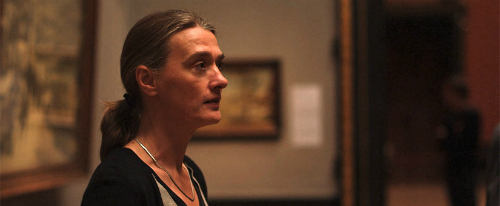
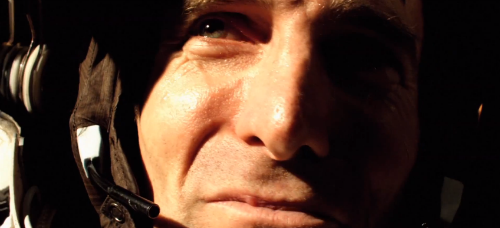
This is explored through a week or so of the life of Johann, a guard at the Kunsthistorisches Art Museum, who enjoys his quiet life amongst the artwork. He spends most of his day pondering the meaning of the paintings around him, as well as ruminating over the visitors who are either transfixed by the images or as he points out “seem to be competing over who can be the most bored”.
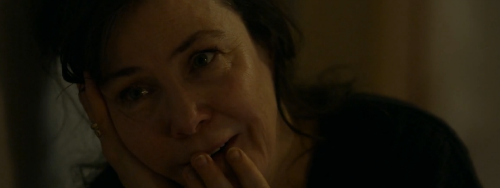
Early in the film Johann befriends a Canadian woman named Anne. She is visiting Vienna to care for her comatose cousin who she hasn’t seen in years. The burden of being in a country she has never been before and tasked with the care of an unconscious cousin she barely knows weighs heavily on her. She appears lost, an outsider disconnected from the people and culture around her.
Luckily for her Johann agrees to play tour guide and the two spend most of their free time together as Johann brings her around the city. It is in exploring Vienna with Johann, and seeing not the tourist attractions but the small shops, pubs and flea markets that she begins to feel connected again not just with the cities culture but also with her cousin. The joy of her time with Johann awakening memories long lost.
For Johann there is a similar revival. All these old places he once visited in his past seem new again. Not simply because he hasn’t been to them in years but because they have changed in such subtle ways that the experience feels new again. For both of them, it is the small things, the details we usually overlook, that reestablish a connections with family, country and friends.
This is reflected in the works of Pieter Bruegel whose art is the center piece of the film. He was a Dutch artist who made richly detailed paintings in which, as Johann explains, someone might find something new hidden within the frames with each viewing. You could easily say the same thing of “Museum Hours”. For director Jem Cohen, the film is his canvas and the streets, museums and pubs of Vienna his subjects. He plays observer, like a visitor in a museum, finding and capturing the intimacy of a city and its people. Inspired by art and human nature, he paints a richly detailed picture of the world we live, seeing details one might usually miss.
The importance of all this is expressed in one of the best scenes from any film this year as we watch an art scholar lead a group of tourists around the museum’s Bruegel exhibit. Here she points out that although many of his paintings depicted important religious tales, the focal point of the imagery is not the central religious figure but a bystander or object that gives the piece a meaning more important than that central figure. It is a powerful moment. At first glance we might all think we are seeing the same things creating a false sense of inter-connectivity. But ultimately it is how the smaller details affect us that truly matter. It is through this that the connections between life and art are reestablished, in ways that the bigger more seemingly important aspects of life can’t. A great artist can capture this. Cohen has done so here, by making the familiar feel new.
“Europa Report”, which is available to rent on VOD, is a sci-fi gem that has me conflicted. On one hand, it does what many similar films have not – it delivers a unique story, rooted in actual science, that examines the sacrifices some are willing to make in the name of exploration and discovery…but on the other hand, it is a film weighed down by a format that begins to overshadow the human element and the themes mentioned above.
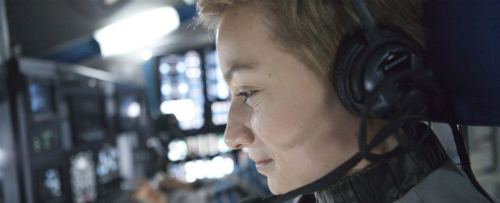
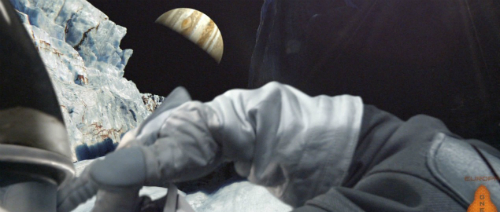
The film follows a crew of astronauts on their two year journey to Europa, an ice covered moon around Jupiter that scientist believe contains an ocean of water right below the surface; and as one scientist in the film points out, where there is water there is also usually life. The possible discovery of that life is the crew’s mission. They are to explore the ocean below the moon’s surface in hopes of finally discovering that we are not alone.
To tell the story the film is played out like a documentary. It consists mostly of archived video footage of the ship’s crew, as well as interviews with the earth based mission control members who organized the operation. It is this format that on one hand is a brilliant way of documenting the crew’s journey, but on the other really hampers the themes and suspense of the film.
Through these recordings, we get to see the crew bonding and encountering tragedy on their journey to and on Europa. It turns out to be a really wonderful human tale of a group of people who without any hesitation or pretensions are willing to give anything and everything in order to make a discovery that could change the way we view ourselves, life and the universe. This portion of the film is a wonderful thing to behold, especially when their treacherous journey has some truly thrilling moments, including one gut wrenching scene played beautifully by Sharlto Coley. This is made all the better by the fact that unlike other similar sci-fi films (“Sunshine”), it doesn’t cop-out in the end and actually contains a third act that is tonally in tune with everything that comes before it.
Sadly, this documentary style also means that the story is broken up by interviews with scientist and mission control members on earth explaining the crew’s goal. The issue here being that everything these individuals say in their interviews is simply exposition that is already clearly expressed through either the words or action of the mission’s crew in the recordings. So although the video footage and central story and themes are pretty clear cut, the addition of the interviews makes it feel like the filmmakers are trying to beat you over the head with them. It just ends up feeling unnecessary and breaks up the tension which is really disappointing.
Luckily, for me at least, this didn’t ruin my viewing experience. In the end the film still works, with a core story and themes that are still expressed and earned that lead to a brilliant ending; where the result of their mission is made clear and as ridiculous as it initially may seem, everything really comes into perspective and it ends up having an emotional punch and staying power one wouldn’t expect. Because of this I highly recommend this ambitious little gem of a film. If you can look past the interviews, and focus on the central story as I did, then you are in for a real treat.
Let’s start with a life lesson here that’s completely contradictory right on its face and therefore of absolutely no value whatsoever — sometimes the simplest ideas are great, and sometimes they’re really, really dumb.It all depends on the inherent intelligence level of the person who has them.
First case in point : a retrograde, racist, trigger-happy, self-appointed “neighborhood watch captain” decides it would be a good idea to follow around a kid in his gated suburban subdivision who’s minding his own business and eating Skittles. The cops tell him to back the fuck off and stay in his car, but our low-grade Charles Bronson-wannabe thinks he knows better : he pursues the young man on foot, removes his gun from its holster, loads some rounds in the chamber, unlatches the safety, and proceeds to generally and obviously tail him for three or four blocks. When the target of his harassment finally decides enough is enough and jumps him, a fight ensues. We’ll never definitely know who threw the first punch, but when “Mr. Tough Guy” was on the ground getting his nose bloodied by the kid’s fist, he decided he’d had enough and shot his “assailant” in the heart.
Dumb idea. I don’t care if a jury gave him a free pass for murdering the victim of his stalking or not, it’s still just not smart. Bargain-basement Bronson was reckless with his firearm, needlessly killed a kid who was, let’s face it, provoked into a confrontation, and now he has this bright, promising youngster’s blood on his conscience (assuming he has one, which is debatable) and has to sleep with one eye open for the rest of his life. Clearly, nothing good came from this guy’s very simple, and very stupid, idea.
Case in point number two : Wouldn’t it be seriously fucking cool if the Transformers fought Godzilla?
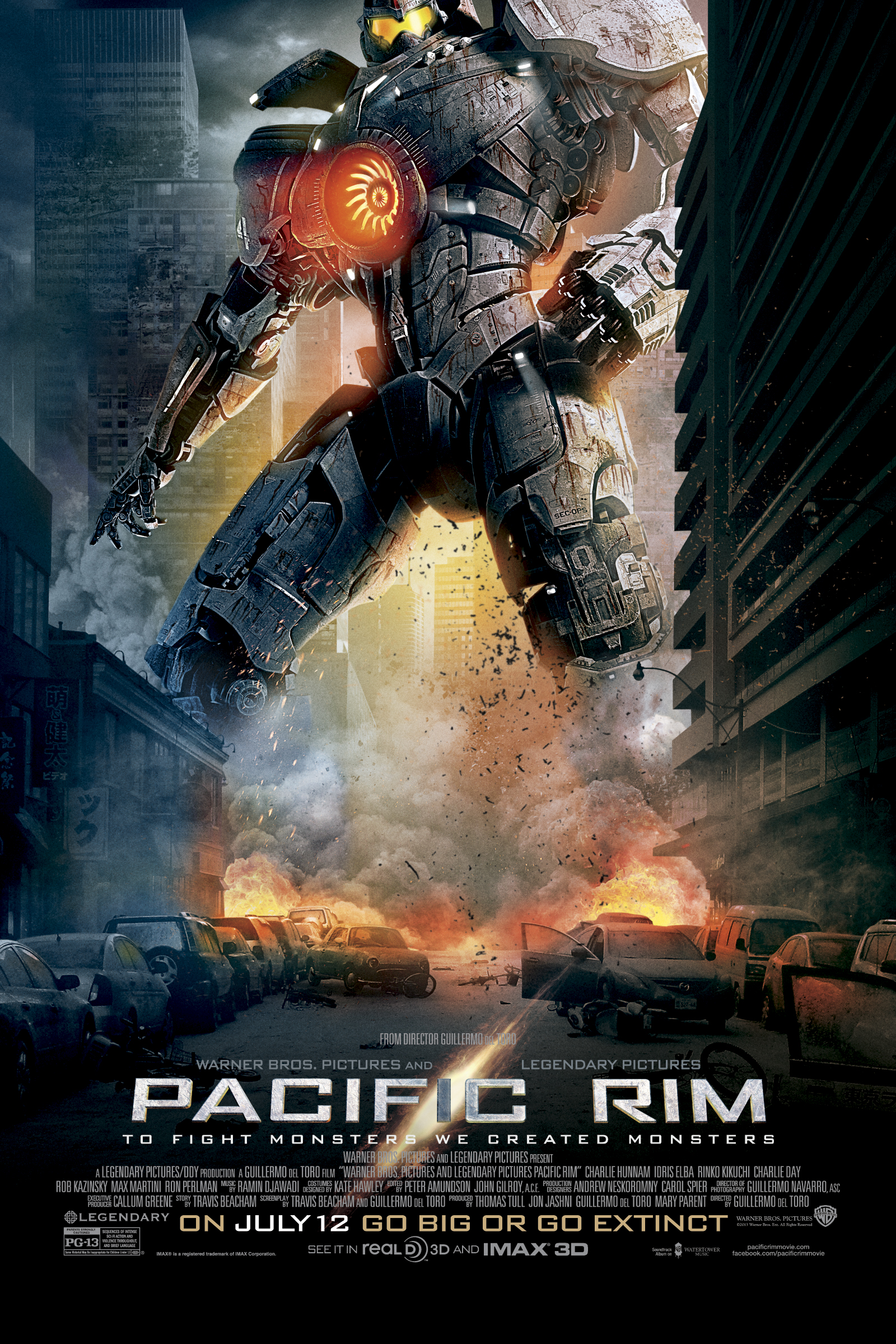
The answer to this question is as resounding as it is obvious : hell yes (as long as Michael Bay doesn’t direct it)! Thankfully, Guillermo del Toro is the guy who had this idea, and the result is Pacific Rim, easily the funnest thing to hit the silver screen this summer (even if I did just say the same thing about The Lone Ranger — this tops it, and by a wide margin).
Now, you can take exception to my admittedly over-simplified root description of this film all you want — hey, man, this is about a lot more than that : it’s about giant mentally-linked-to-human-host robots called Jaegers who battle inter-dimensional monsters from beneath the ocean floor known as Kaiju, there’s a nice little low-key love story that develops between out hero, Raleigh Beckett (Charlie Hunnam) and his co-pilot, Mako Mori (Rinko Kikuchi), it’s got Idris Elba as a stoic-but-compassionate military commander, and hey, Ron Perlman’s on board playing a mad scientist/black marketeer with the kind of relish that only he can bring to a role.
All these things are true, of course, but at the end of the day this is still a 12-year-old sci-fi geek’s wet dream realized on an enormous Hollywood budget. And that’s the best thing about it (besides maybe the awesome post-credits dedication to Ray Harryahusen and Ishiro Honda). This is del Toro letting loose his inner child for all of us to see, and that’s a pretty insipiring thing indeed, my friends.
Are there plot holes aplenty here? Sure, bigger than the monsters themselves (most notable among them being that if they know one of these nuclear Jaegers can seal up the dimenstional breach for good by blowing it to kingdom come, why did’t they try it years ago?), but never you mind that. Just sit back and allow yourself to be as thoroughly and completely wowed as is humanly possible by a movie. And when you feel a smile forming at the corners of your lips as the week goes on, don’t fight it — you really did have that much fun at the movies. It’s totally okay to feel like a giddy little kid again for awhile.
The Iceman, a gangster biopic that stars the amazing Michael Shannon, came and went earlier this year. It got respectful, if not rave, reviews but it certainly didn’t get the attention that it deserved. That’s a shame because The Iceman is one of the best films of 2013.
Directed by Ariel Vromen, The Iceman tells the true story of Richard Kuklinski (Shannon), a Mafia contract killer who claimed to have killed anywhere from 100 to 250 people over the course of his three decade long career. At the same time that Kuklinski was murdering the equivalent of the population of a small rural community, he was also living a double life as a suburban family man. When he was finally arrested in 1986, neither his wife nor his daughters had any idea that he was a killer. After being sentence to spend the rest of his life in prison, Kuklinski gave countless interviews (and was the subject of a creepy documentary that still shows up on HBO occasionally) until he finally died, under mysterious circumstances, in 2006.
When Kuklinski is first seen in the Iceman, it’s the 50s and he’s flirting with Deborah (Winona Ryder). When another man speaks to Deborah, Kuklinski reacts by casually following the man outside and killing him. Kuklisnki goes on to marry Deborah before he eventually meets crime boss Roy DeMeo (Ray Liotta) and is recruited to kill for a living. It’s a good arrangement for Kuklinski because it turns out that killing is the only thing he’s good at and his marriage to Deborah allows him to tell himself that he’s just a blue collar family man doing his job.
As opposed to other cinematic sociopaths, Kuklinski is no glib charmer. Instead, as the film repeatedly demonstrates, he is a remorseless killer who feels neither shame nor joy as a result of his actions. Much like the character played by Michael Rooker in Henry: Portrait of a Serial Killer, Kuklinski is not defined by what hides behind his blank expression but by the fact that there’s nothing to hide because nothing’s there.
Even Kuklinski’s love for his family is, in one particularly harrowing sequence, revealed to be hollow and false. As becomes apparent, the only thing that keeps Kuklinski from taking out his homicidal impulses on his family is the fact that there’s a never-ending supply of Mafia lowlifes who need to be executed. Kuklinski and his associates exist in a moral vacuum and friendship and family life are ultimately a disguise as opposed to a reality.
If this makes The Iceman sound like a rather dark film, that’s because it is. And yet, the film is never less than watchable. It helps that Ariel Vromen gets excellent performances from his entire cast. Both Winona Ryder and Ray Liotta are perfectly cast. Robert Davi shows up as a mobster and James Franco has a very effective cameo as one of Kuklinski’s victims. Stephen Dorff plays Kuklinski’s brother, who is serving a life sentence because, unlike his brother, he never figured out a way to turn his dark impulses into a business. Best of all, Chris Evans plays an especially sleazy hitman who drives an ice cream truck in his spare time. When Evans first shows up, he seems almost like a comical character but, as the film progresses, Evans’ performance becomes more and more sinister until eventually, he’s calmly talking about killing his own children. For those of us who have been conditioned to associate Chris Evans with the clean-cut Capt. America, it’s a revelation of a performance.
However, the film is truly dominated by Michael Shannon. It’s not easy to make an empty character compelling but Shannon does so. Shannon is such a charismatic performer that you want to like him when he first appears on screen. As The Iceman plays out, you keep finding yourself hoping that Kuklinski will reveal some shred of human decency. You find yourself studying Shannon’s rigid stance and cold eyes and hoping to find some evidence of compassion. The genius of Shannon’s performance is that he makes Richard Kuklinski a fascinating character even as he slowly reveals just how hollow he actually is.
Is Michael Shannon the best American actor working today? That was a question that filmgoers were forced to ask after seeing Shannon’s performance in 2011’s Take Shelter. It’s a question that they should ask again after seeing his performance in The Iceman. Without Shannon’s performance, The Iceman would be just another gangster film. However, thanks to Shannon, it’s one of the best films of the year so far.
As I’ve stated in the past, I have a weakness for creepy old educational films. 1954’s The Show-Off is one of the creepiest.
The Show-Off begins with a creepy schoolgirl, who appears to have wandered right out of the pages of a Stephen King novel, staring straight at the camera and asking us for our help. It seems that a young sociopath named Jim has been giving the junior class a bad name. We watch as Jim disrupts a class preparing for a history class. In horror, we witness him disrupting rehearsals for the school play. By the end of the film, Jim is intentionally tripping his fellow students and, worst of all, hanging an unauthorized banner that reads, “Yay! Juniors!”
As the creepy girl asks us, “what would you do about the Show-off? What would you do?”
Judging from stark grayness of the school and the bizarrely blank faces of most of the students, I imagine Jim was probably sent to Room 23 and forced to watch a Dharma Initiative video. (Ah, Lost. How I miss you…)
Like a lot of educational films from the 1950s, this one was directed by Herk Harvey. Harvey would later go on to direct the classic horror film, Carnival of Lost Souls. The Show-Off shares its odd, dream-like atmosphere with Carnival of Lost Souls. I’m not sure if that’s intentional on Harvey’s part or if it’s just the fact that 50s were apparently a very creepy time.
Without further ado, here is Herk Harvey’s The Show-Off.
Today is the one-week anniversary of a historic social media event: the #SyFyDaysaster.
For the past year, I’ve been a proud member of a group of film lovers known as the Snarkalecs. Every Saturday, we would meet up via twitter and we would watch whatever film happened to be playing on the SyFy network. Every week, we would look forward to the chance to live tweet films with titles like Jersey Shore Shark Attack, Chupacabra Vs. The Alamo, Two-Headed Shark Attack, and Piranaconda. Often times, we would be joined by actors like Gerald Webb and directors like Griff Furst. One of my best memories remains the time that Greg Grunberg replied to one of my tweets while we were watching End of the World.
Incidentally, every time that the Snarkalecs would start to live tweet a movie on Saturday, that movie would soon start trending. As a result, other twitter users would have an incentive to change the station over to SyFy and see what everyone was talking about. By showing original movies on Saturday night, SyFy kept the Snarkalecs entertained and we, as a result, then helped SyFy get better ratings.
What could be more American than that?
However, a few months ago, the SyFy network announced that they would no longer be showing original movies on Saturday night. Instead, the movies moved to Thursday and Saturday night became about showcasing a rather forgettable show called Sinbad.
Unfortunately, Thursday is not a convenient night for many of the Snarkalecs. Some Snarkalecs have to be at work on Friday morning. Other Snarkalecs have family obligations during the week. As for me, Thursday doesn’t work because that’s when CBS airs the weekly eviction episode of Big Brother.
As a result, the Snarkalecs have found other things and other networks to watch on Saturday night and Sinbad hasn’t trended once.
Two Thursdays ago, the snarkalecs decided to make a point. As a group, we DVRed the SyFy original film, Independence Daysaster, off of the SyFy network. We then watched and live tweeted the film on Saturday night.
Within fifteen minutes, just as a result of a handful of Snarkalecs live tweeting the film, #SyfyDaysaster was the number one trending topic in the world. And it stayed at number one for the next two hours. And when the tweets started to show up from people wanting to know just why exactly #SyFyDaysaster was trending, we let them know that it was trending because it was a film that the SyFy Network could have been showing instead of broadcasting the latest episode of Sinbad.
As a result of our act of social media protest, for two hours, #SyFyDaysaster was an even more popular subject than Amanda Bynes calling Drake ugly.
As for Sinbad, it trended not once.
The fact of the matter is that people don’t love the SyFy Network because of shows like Sinbad. Instead, we love the SyFy network because SyFy gives us a chance to watch movies like Super Shark and Tasmanian Devils. By showing those movies, the SyFy network has given me a chance to meet and get to know people who I may not have ever met otherwise. SyFy Saturday movie nights introduced me to the snarkalecs and, for that, I will always be thankful.
Let me put it like this — if you tell me you watch Sinbad, I’ll smile politely. Ff you tell me that you love Jersey Shore Shark Attack, I’ll be your friend forever and I’ll probably end up making out with you depending on how much I’ve had to drink beforehand.
In short, I’m proud of us! I only hope that the SyFy network noticed and that they’ll reconsider their decision to make Saturday night all about Sinbad.
As for Independence Daysaster, it was actually something of a lesser SyFy film. A bunch of aliens invade Earth on the 4th of July. The President (played by Tom Everett Scott) teams up with a bunch of hackers to defeat them. It was all pretty predictable and, under any other circumstances, rather forgettable. Still, I will never forget the #SyFyDaysaster and I look forward to engaging in future acts of civil disobedience until, hopefully, the movies return to where they belong, back on Saturday night.
Here’s just a few of the tweets from #SyFyDaysaster:
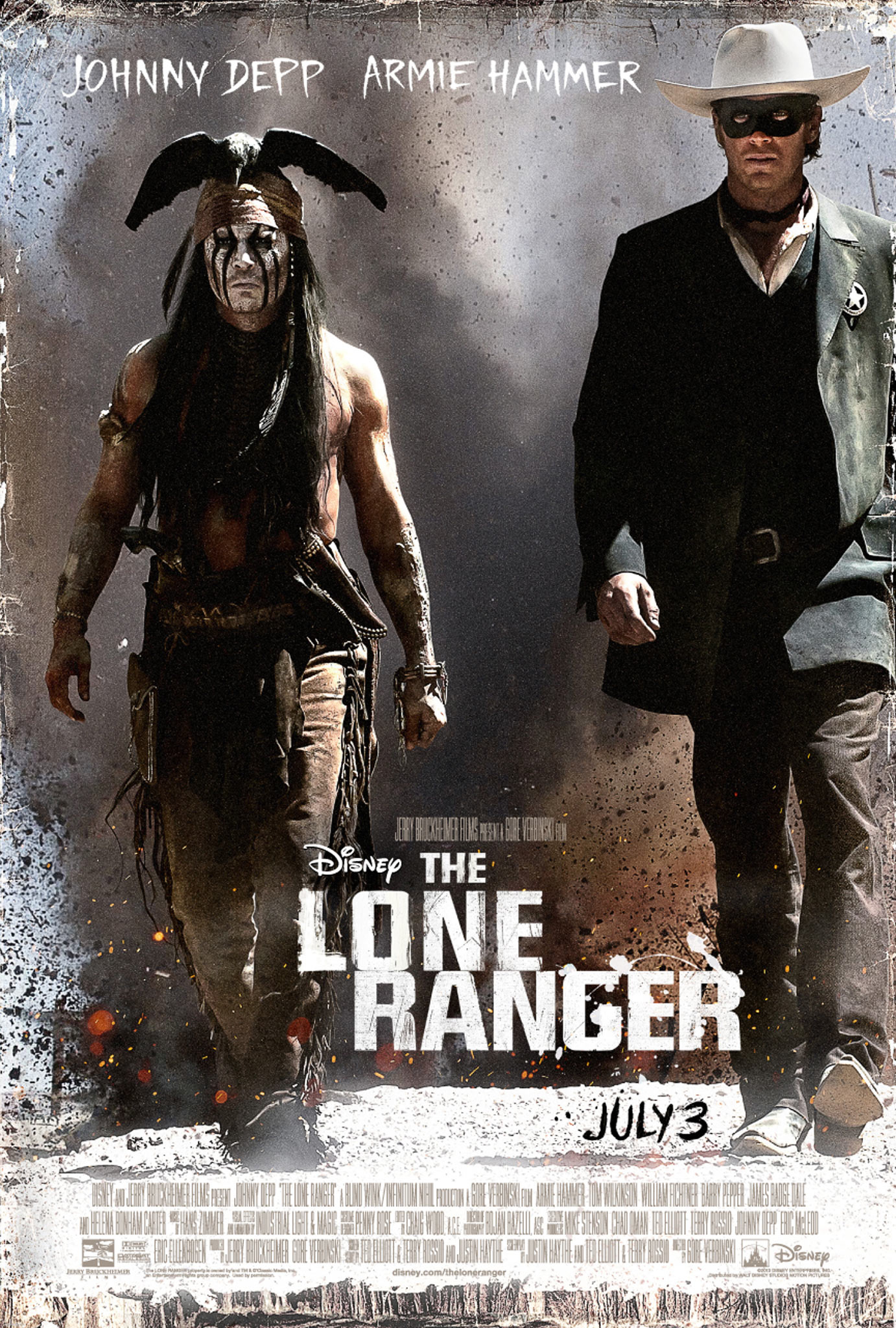
Disney snaps up the cinematic rights to the most famous Western hero of them all — one that hasn’t been “rebooted” since 1981’s disastrous Legend Of The Lone Ranger — and turns it over, naturally enough, to Jerry Bruckheimer, who “gets the band back together,” so to speak, by hiring Gore Verbinski to direct and Johnny Depp to star as Tonto. Pirates Of The Caribbean Goes West, anyone?
It goes without saying that budget wouldn’t be a concern here — special effects, production values, sets and costumes — all would be state-of-the-state-of-the-art. Turn it loose on the public over the extended July 4th holiday weekend, sit back, and collect all that cold, hard cash. What could possibly go wrong? This was fool-proof.
Except for the fact that, well, it hasn’t been. The Lone Ranger has landed at the box office with a thud — not as big a thud as it did back in ’81, but a thud nonetheless. The critics seem to despise it, and while audiences have been considerably kinder in their appraisal of the film, they haven’t been large enough for Disney to come anywhere close to recouping their considerable investment in this rapidly-unfurling boondoggle.
All of which is kind of a shame because, as with last year’s panned (but considerably more successful at the box office) Men In Black 3, I honestly can’t figure out where all the hate is coming from. Simply put, The Lone Ranger is a damn fun movie, full of exactly the kind of kick-ass, jaw-dropping CGI, solid “out for justice” storytelling, tight, pacy plotting, and charismatic acting that makes for a sure-fire crowd-pleaser. Even if the crowds aren’t proving to be all that big.
Not exactly a “revisionist” take on the legend of John Reid (confidently played by Armie Hammer), a Texas Ranger who, when his life is turned tragically upside-down, dons a mask and adopts a new persona. this flick nevertheless provides a different spin on things by telling the tale from the point of view of an older, wiser, and maybe even somewhat broken-down Tonto (Johnny Depp in, quite honestly, one of the finest performances of his career), who earlier in life threw his lot in with Reid to bring to justice the source of all our hero’s troubles, renegade quasi-militia leader Butch Cavendish (William Fichtner, who makes for a terrific bad guy) and ,more generally, to put a stop to all the various shenanigans this good-for-nothing had a hand in.
If this sounds like your idea of a simple-minded, non-stop thrill ride full of all the excitement, adventure, humor, and yes, even human drama that you want in summertime popcorn fare, rest assured — it is. Good supporting turns from the likes of Helena Bonham Carter, Tom Wilkinson, and Ruth Wilson don’t hurt matters any, either.
Yeah, there are some gaping plot holes large enough for an entire herd of cattle to stampede through, but has that stopped folks from liking, say, World War Z or Man Of Steel, both of which are at least as guilty of counting on you to put your suspension of disbelief completely on hold for a couple of hours? If you can do it for them, surely you can do it for this, right?
Look, I won’t kid you — some small, petty, vengeful little corner of my dark and twisted soul is always happy to see a mega-budget Disney project end up costing the studio untold millions in losses. They’re bastards and they deserve it. But truth be told, if you join the legions of people who have already evidently decided to take a pass on The Lone Ranger, you’re not hurting the evil empire much — they’ve already got Monsters University to more than compensate for any bite this takes from their corporate balance sheet. The only thing you’re really doing by skipping it, then, is robbing yourself of a good time.
It’s summer! Get out there and have some fun — by sitting on your ass in a cool, air-conditioned mega-plex and catching what’s most likely the best action-adventure film of the year so far.
Okay, I get it — fans of Max Brooks’ best-selling “zombie apocalypse” novel World War Z are pissed off about director Marc (Monster’s Ball, Quantum Of Solace) Forster’s big-budget, big-screen “adaptation” of it because the finished product bears essentially no recognizable similarity to its printed-page predecessor. Heck, some are even going so far as to say that they actually like the film, they just feel that it should be called something else.
On the other hand, it seems that more or less everyone who hasn’t read the book loves the movie.
Much as I’d enjoy picking a side in this, the latest great “genre geek debate,” I honestly can’t, simply because I don’t really fit into either of the “warring” camps, seeing as how I neither read the novel nor loved the film with the kind of awestruck wonder its most fervent partisans seem to be brimming over with.
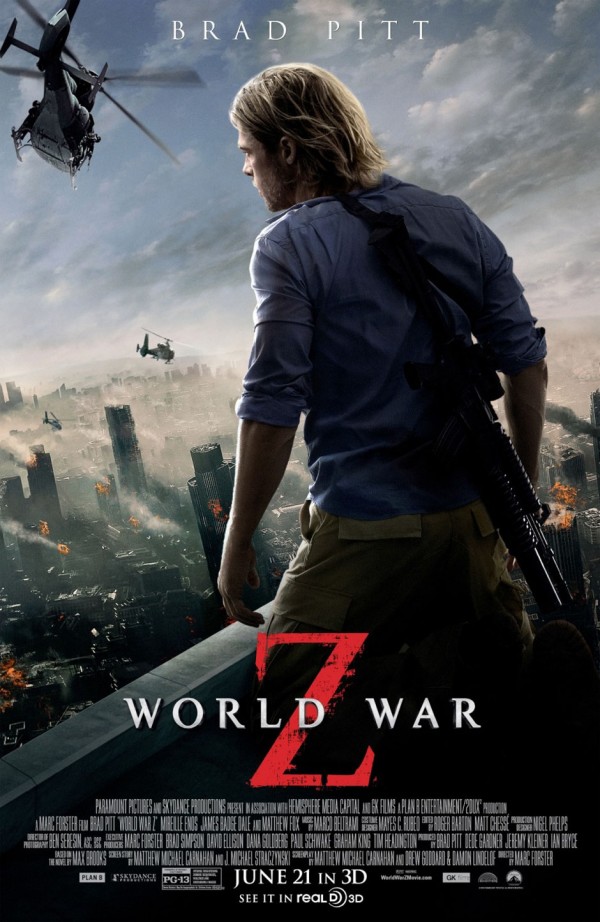
Oh, sure, it was pleasantly entertaining enough — United Nations bad-ass-for-hire Gerry Lane (Brad Pitt — who, let’s face it, is probably contractually obligated to always play somebody at least a little bit cooler than the Average Joe) races against the clock, and around the globe, to keep his wife, Karin (Mireille Enos of TV’s The Killing) and their kids safe from a massive viral plague that essentially mashes together elements of the scenarios George Romero laid out in both The Crazies and his seminal “Living Dead” flicks, only with a much larger budget that enables the filmmakers to give us a more international perspective on the goings-on. Governments are strained to breaking point and/or collapse entirely, WHO and the world’s various military forces struggle to get a handle on things, no area is left unaffected, no one is safe —you get the picture.
The script went through four sets of hands — Babylon 5 creator and frequent comics scribe J. Michael Straczynski gave way to former Lost head honcho and occasional comics scribe Damon Lindelof who in turn gave way to Drew Goddard who in turn gave way to Matthew Michael Carnahan — and, as you can imagine, is something of a mess as a result. Fortunately, it never slows down long enough for you to fully realize that fact, and instead keeps you on the edge of your seat with its PG-13-level action and semi-violence (notice I don’t say anything about gore — sorry, die-hard zombie-holics) from the time it clocks in to the time it knocks off and heads for the bar around the corner.
The end result is something of a hustle — it’ll slowly dawn on you as you make your way home from the theater that what you just saw really wasn’t anything too special, but what the hell — you were too busy having fun to notice.
And that was probably the whole point, really. I don’t think Forster and his literal army of screenwriters set out to reinvent the wheel here or overturn the sacred “Romero Rules” permanently. They were just the guys brought in to make something of a damn popular book that Paramount bid a fortune to obtain the rights to and if, at the end of the day, all that survived of World War Z as most folks knew it was the title, well — that’s pretty much all they were paying for, anyway. Beyond that the only edicts from the studio “suits” were probably to land a huge star, load up on the CGI, and deliver a product that the average summertime movie-goer would find to be a reasonable enough investment of ten bucks and (roughly) two hours.
Judging it on that scorecard, you’d have to say they can all pat themselves on the back, say “mission accomplished,” and go home. Those hoping for a movie that would revolutionize the genre on celluloid the same way the book did in print are bound to be left feeling a bit disappointed, as is anyone who bothers to actually think about what they’re seeing while they’re seeing it, but for anyone and everyone else, hey — it’s a decent enough little thrill ride. Grab some popcorn, sit back, and please don’t struggle against your inner 12-year-old.
Now, as to the other raging debate splitting the internet about whether or not this is actually a horror movie or just a “thriller” with some genre trappings —
Forget it. I’m sooooo not going there. One nerd-controversy per review is my limit.
Maybe it’s unfair to saddle director Louis (Transporter) Leterrier’s new-ish “caper” drama Now You See Me with the “blockbuster” label, since it obviously doesn’t have the budget (or hype machine surrounding it) of an Iron Man 3 or a Man Of Steel, but its surprisingly healthy take at the box office in recent weeks has it hedging into “blockbuster” territory in terms of its gross ticket receipts, it’s got a “blockbuster”-caliber cast, and it definitely falls into the category of lightweight, fun, summer entertainment, so — let’s just roll with it.
And let’s not take that “lightweight, fun, summer entertainment” statement as a jab, either, please, because Now You See Me is a solid little piece of film-making that anyone associated with it can (and should) be damn proud of. It’s just not particularly “deep” in any thematic sense.
But so what? It’s been awhile since Hollywood served us up a good “caper”-style thriller — the last genuinely superb one that comes to mind is Roger Donaldson’s criminally-underappreciated The Bank Job, and that’s getting to be a good few years ago now — and even though this is a film that doesn’t aim for the same level of “ooh”s and “aah”s of the latest Marvel or DC celluloid comic-book adaptation, it’s got more genuine heroics than most of them, and is every bit as finely-calculated a crowd-pleaser as anything they’ve sent down the pipeline in recent years, as well.
The all-star cast definitely helps to elevate a script that at times belabors its points with admittedly necessary but occasionally clumsy “info-dump” scenes and features a smattering of dialogue that can best be described as “clunky,” and while none of the actors involved are exactly stretching their abilities into new and unexplored territory, there’s something to be said for knowing what the folks you hire are best at doing and then getting out of the way and letting them do it.
To that end, Jesse Eisenberg tackles his role as fast-talking, arrogant illusionist J. Daniel Atlas with aplomb; Woody Harrelson delivers a solid, workman-like piece of acting as mentalist Merritt McKinney; Isla Fisher gives us a nice turn as former-magician’s-assistant-turned-headliner Henley Reeves; Dave Franco projects cool confidence as safe-cracker/lock-picker/con artist extraordinaire Jack Wilder; Mark Ruffalo gives another “believable everyman” performance as Special Agent Dylan Rhodes, the man tasked with somehow getting some charges to stick on our intrepid foursome, who have come together and billed themselves as “The Four Horsemen,” after they apparently rob a bank in front of a Las Vegas show audience (or do they?); Michael Caine gives it his usual grade-A “go” as the group’s multi-millionaire benefactor/promoter/future victim; Morgan Freeman essentially plays himself in his guise as Through The Wormhole host, albeit with quantum physics being replaced with magic trick “debunking” as his gig; Melanie Laurent cuts a satisfying European-woman-of-mystery figure as Alma Dray, Ruffalo’s reluctant Interpol partner/potential love interest — heck, there are even notable minor performances here from Michael Kelly and Common as two of the cops who are down a few rungs on the investigative totem pole.
It’s not like the film doesn’t have any sort of statement to make about the general state of the world, either — to the contrary, “The Four Horsemen” take great pride in ripping off those who have ripped off society, and represent the kind of folk heroes the world could surely use in the wake of the mortgage crisis and the atrocious Wall Street bailout it gave birth to. Think of them as modern-day Robin Hoods with a flair for the dramatic and plenty of flat-out amazing tricks up their sleeves.
Still, the art of deception being the constant theme here, don’t be shocked if the reasons for our protagonists’ “crimes” turn out to be a lot more personal than they first appear to be (hey, I did say this movie wasn’t particularly “deep,” remember? Not even when it looks like it might be.) . I think I’ll just leave it at that, which might even be saying a little too much already.
Leterrier, as we’ve come to expect, keeps things moving at a fairly expert clip, throws in some nifty little visual tricks along the way, and most definitely delivers the goods in the film’s more action-heavy scenes, and while he handles the script’s quasi-trippy/metaphysical conclusion quite nicely in my view, I think a lot of folks will still find it a bridge too far, and frankly, for a movie that’s all about sleight of hand, you’ll still most likely see the “surprise character revelation” at the end coming from a mile off.
But ya know what? This is such an expertly-crafted piece of populist entertainment that I don’t think you’ll mind its admittedly-glaring weaknesses, simply because you’ll be too busy smiling from ear to ear. And that, perhaps, is its greatest trick of all.
There will surely be better films than Now You See Me released in 2013. Heck, there already have been. But I doubt there will be any that are more fun.