What Lisa Watched Last Night #109: Sugar Daddies (dir by Doug Campbell)


On Saturday night, I watched the latest Lifetime film, Sugar Daddies!

Sugar Daddies

Why Was I Watching It?

Because it was on Lifetime and it didn’t have a thing to do with football.

What Was It About?

College is expensive and law school even more so.  Can you blame Kara (Taylor Gildersleeve) for agreeing to become the mistress of the wealthy and considerably older Grant (Peter Strauss)?  Grant pays Kara $5,000 dollars a month, gives her a new car, and flies her around in a private jet.  All Kara has to do is be available whenever he demands her presence.

Except, of course, this is a Lifetime movie and nothing is ever that simple…

What Worked?

To be honest, Sugar Daddies is just a fun film.  Yes, it is dealing with a serious subject and, ultimately, it does come down on the side of being poor but honest.  But, before that, you get to look at all the nice clothes and all the well-decorated mansions and you get to enjoy all of the decadence that comes from being a rich man’s mistress.  Sugar Daddies may be a cautionary tale but it definitely knows how to enjoy itself.

This movie was directed by Doug Campbell, who has previously directed such Lifetime classics as Death Clique, The Cheating Pact, and Betrayed at 17.  As a director, Doug Campbell obviously knows how to make the perfect Lifetime film and how to strike just the right balance of melodrama and social commentary.  He knows exactly how far he can push things without going over-the-top and that skill is on full display in Sugar Daddies.

Plus, the film is really well cast.  Taylor Gildersleeve is a sympathetic and relatable as Kara.  Peter Strauss seems to be having a lot of fun playing his sleazy role.  Timothy Brennan is perfectly intimidating in the role of Peter, Grant’s bodyguard who is willing to do anything to protect his boss.  Ashley McCarthy and Samantha Robinson are also well-cast as Kara’s friends.

What Did Not Work?

Are you kidding?  This was Lifetime at its finest!  It all worked.

“Oh my God!  Just like me!” Moments

I know this where you’re probably expecting me to talk about how I used to have an old, rich boyfriend who helped to pay my way through college but instead, I’d rather point out that Kara and I both own the exact same white dress with black trim!  I was beyond excited when I saw that and plus, it really made me root for Kara because she was someone who I could go shopping with.

Lessons Learned

Private jets are the bomb and we could all use an extra $5,000 dollars a month but sometimes, it’s better to just stick with that demeaning waitressing job.

And, if you do get an old, rich boyfriend, don’t let him talk you into playing the choking game.

Because that never ends well!

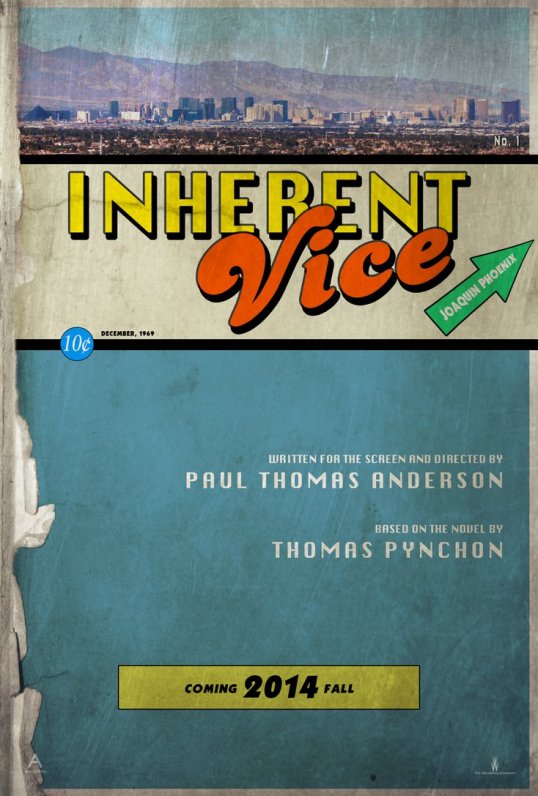
Film Review: Inherent Vice (dir by Paul Thomas Anderson)


Inherent-Vice-poster

One of the best things about Paul Thomas Anderson’s latest film, Inherent Vice, is that Doc Sportello, the private detective played by Joaquin Phoenix, is a real stoner.  He’s not one of those weekend smokers, who gets high on Saturday, brags about it on Sunday, and then spends the rest of the week interning at Vox.  For the entire 2 hour and 20 minute running time of Inherent Vice, Doc is stoned.  From the minute we first meet him to the end of the film, there is never one moment where Doc is not stoned.  Most stoner comedies feature a scene where the main character shocks everyone by turning down a hit because he’s dealing with something so important that he has to “keep his mind straight.”

Not so with Doc!

And, in Doc’s case, it definitely helps him out.  Inherent Vice tells a story that is so full of paranoia, conspiracy, and random connections that only a true stoner could follow it.  Much like Doc, the film often seems to be moving in a haze but occasionally, out of nowhere, it will come up with a scene or a line of dialogue or a detail that is so sharp and precise that it will force you to reconsider everything that you had previously assumed.

To be honest, if you are one of the people who watched Inherent Vice this weekend and could actually follow the film’s plot, then you’ve got a leg up on me.  (That said, I’ve still got pretty good legs so it all evens out.)  But, that’s not necessarily a complaint.  As befits a film based on a novel by Thomas Pynchon and directed by one of the most idiosyncratic filmmakers around, the twists and turns of Inherent Vice are deliberately meant to be obscure and confusing.  Characters appear and then vanish.  Clues are discovered and then forgotten.  Connections are hinted at but then never confirmed.  Inherent Vice ultimately serves a tribute to stoner’s paranoia and, as a result, the plot’s incoherence leads to a certain contact high.

The film takes place in California in the 1970s.  Doc is both a hippie and a private detective. His current girlfriend (Reese Witherspoon) works for the district attorney’s office and doesn’t seem to like him much.  His ex-girlfriend, Shasta (Katherine Waterston), reenters his life and asks him to help protect her new boyfriend, real estate developer Mickey Wolfman (Eric Roberts).  Mickey has disappeared.  Shasta disappears.  As Doc investigates, he wanders through a psychedelic Los Angeles and deals with an ever growing collection of eccentrics.

For instance, there’s Hope Harlingen (Jena Malone), a former heroin addict who now runs a group that aims to promote “responsible drug use” among children.  She believes that her husband, Coy (Owen Wilson), is dead but actually Coy is a government informant who keeps popping up in the strangest places.

There’s Rudy Blatnoyd (Martin Short), a decadent dentist who may or may not be responsible for all of the heroin entering California.

There’s Sauncho Smilax (Benicio Del Toro), Doc’s lawyer who specializes in maritime law.

There are Nazi bikers, new age doctors, a formerly blacklisted actor turned right-wing spokesman, a black revolutionary whose best friend was a member of the Aryan brotherhood, three FBI agents who keep picking their noses, the decadent rich, and, of course, the endlessly clean-cut and bullying officers of the LAPD.

And then there’s Detective “Big Foot” Bjornsen (Josh Brolin), a celebrity cop and occasional television extra who seems to admire Doc, except for when he’s trying to frame Doc for everything from murder to drug smuggling.  Bjornsen is probably the most interesting character in the entire film and Brolin plays the character perfectly.  His scenes with Phoenix crackle with a comedic energy that bring the film to life.

As for the movie itself, it’s not for everyone.  A lot of very smart people are going to dislike it, much as many of them did with The Master.  In some ways, Inherent Vice truly is an endurance test.  Speaking as someone who enjoyed the film, even I occasionally found myself saying, “Okay, does everyone have to have a silly name?”  Inherent Vice is a long, rambling, and occasionally frustrating film but, for me, it still worked because of the strong cast and Anderson’s attention to detail.

Unbroken is a film that seems to take place in an entirely different world from Inherent Vice but these two films do have one big thing in common.  Both of them have been victims of the expectation game.  Many of the same people who thought Unbroken would be a surefire Oscar nominee also assumed, sight unseen, that Inherent Vice would be right there with it.  Much as how Unbroken has suffered for merely being good as opposed to great, Inherent Vice is also suffering for failing to live up to the expectations that were thrust upon it.  Inherent Vice is not an awards movie.  Instead, it’s a fascinatingly idiosyncratic film that was made by a director who has never shown much concern with playing up to the audience.  While Unbroken is enough of a crowd pleaser to still have a shot at some Oscar glory, Inherent Vice is the type of film that will probably never get nominated.  (I do have some hope that Brolin will get a supporting actor nomination but, even there, it appears likely that Brolin’s spot will be given to The Judge‘s Robert Duvall.)

Well, no matter!  Flaws and all, Inherent Vice will be a film that people will still be debating and watching years from now.

Icarus Files No. 1: Cloud Atlas (dir. by The Wachowskis and Tom Tykwer)


CloudAtlas

“My life amounts to no more than one drop in a limitless ocean. Yet, what is any ocean, but a multitude of drops?” — David Mitchell

Let me tell you about Icarus. He took flight with wings of feather and wax. Warned not to fly too low so as not to have the sea’s dampness clog his wings or to climb too high to have the sun melt the wax. Icarus heeded not the latter and tried to fly as close to the sun. Just as his father had warned him the wax in his wings melted as he flew too close to the sun and soon fell back to earth and into the sea.

A tale from Greek mythology that taught has taught us about ambition reaching so high that it’s bound to fail. One such ambitious failure of recent times has been the epic science fiction film Cloud Atlas directed by The Wachowskis and Tom Tykwer.

The film was adapted from the novel of the same name by author David Mitchell which looked to take six stories set in 19th-century South Pacific and right up to a distant, post-apocalyptic future. Each story’s characters and actions would connect with each other through the six different time and space. The film attempts to do what Mitchell’s novel did through several hundred dense and detailed pages.

CLOUD ATLAS

Just like Icarus The Wachowski and Tom Tykwer’s attempt to connect the lives and actions of all six stories amounts for what admirers and detractors can only agree on as an admirable and ambitious failure.

The film boasts a large ensemble cast led by Tom Hanks, Halle Berry, Jim Broadbent, Hugh Grant and Hugo Weaving. More than one of the actors in the cast would perform characters in each and every six interconnecting stories in the film which added a sense of rhythmic continuity to the whole affair, but also made for some very awkward and uncomfortable scenes of what could only amount to as “yellowface”. This was most evident in the story set in 22nd-century Neo Seoul, South Korea where actors such as James D’Arcy, Jim Sturgess, Keith David and Hugo Weaving have been heavily made-up to look Asian.

Cloud Atlas was and is a sprawling film that attempts to explore the theme that everything and everyone is connected through time and space. It’s how the action of one could ripple through time to have a profound effect on others which in turn would create more ripples going forward through time. The film both succeeds and fails in portraying this theme.

cloud_atlas_hd_movie_trailer_stills_cinemavine_144.png.scaled1000

It’s the film’s narrative style to tell the six stories not in a linear fashion from 19th-century to the post-apocalyptic future, but instead allow all six tales to weave in and out of each other. At times this weaving style and how it would seamlessly go from one time location to another without missing a beat made for some very powerful and emotional moments. But then it would also make these transitions in such a clunky manner that it brings one out of the very magical tale the three directors were attempting to weave and tell.

Yet, even through some of it’s many faults and failings the film does succeed in some way due to the performances of the ensemble cast. Even despite the awkwardness of the “yellowface” of the Neo Seoul sequence the actors in the scenes perform their roles such admirable fashion. One would think that someone like Tom Hanks who has become such a recognizable presence in every film he appears in wouldn’t be able to blend into each tale being shown and told, but he does so in Cloud Atlas and so does everyone else.

It helps that the film was held up from a very hard landing after reaching so high with an exquisite and beautiful symphonic score composed by Tom Tykwer, Reinhold Heil and Johnny Klimek. It’s a score that manages to accentuate the film’s exploration of emotions and actions rippling through time without ever becoming too maudlin and pandering to the audiences emotions.

o0800045112460141324

Cloud Atlas was hyped as the next epic science fiction film from The Wachowskis and Tom Tykwer leading up to it’s release. This hype was further built-up with thundering standing ovation during it’s screening at the 37th Toronto International Film Festival. But once the film finally was released and more critics and the general public were able to see it for themselves the reaction have been divisive. This was a film that brooked no middle-ground. One either loved it flaws and all or hated it despite what it did succeed in accomplishing amongst the failures.

Just like Icarus, Cloud Atlas and it’s three directors had high ambitions for the film. It was a goal that not many filmmakers seem to want to put themselves out on the limb for nowadays because of how monumental the failure can be if their ambitions are just too high. It’s been the reputation of The Wachowskis since they burst into the scene with their Matrix trilogy. Their eclectic and, somewhat esoteric, storytelling style have made all their films an exercise in high-risk, high reward affairs that makes no apologies whether they succeed or fail. Each of their films have a unique vision that they want to share with the world and they make no compromises in how this vision is achieved.

One could call Cloud Atlas an ambitious failure. It could also be pop, New Age psychobabble wrapped up in so-called high-art. Yet, what the two siblings and Tom Tykwer were able to achieve with the film has been nothing less by brave and daring. If more filmmakers were willing to allow their inner Icarus to fly then complaints of Hollywood and the film industry not having anymore fresh new ideas would fade.

The Things You Find On Netflix: The Scorpion King 4: Quest For Power (dir by Mike Elliott)


Believe it or not, The Scorpion King 4: Quest For Power is a historical footnote.  It is the first 2015 release to be available for viewing on Netflix streaming!  That’s because The Scorpion King 4 was a straight-to-video release and Universal Pictures doesn’t seem to have much faith in the film’s commercial prospects.  In fact, if not for my love of historical footnotes, I probably would never have even watched the film.

But I did watch it, mostly because I didn’t like the idea of The Woman In Black 2 being the only 2015 films that I had seen up to that point.

And you know what?

The Scorpion King 4 is cheap, silly, and often times impossible to follow.  But, when taken on its own terms, it’s also a lot of fun.  At the very least, it’s more entertaining than The Woman In Black 2.

Scorpion-King-4

As for what the film is about … well, that’s a good question.  To be honest, I’ve never seen any of the previous Scorpion King films.  I know from Wikipedia that the character was spun-off from Brendan Fraser’s old Mummy film and, while I’ve seen bits and pieces of it on cable over the years, I’ve never actually sat through that entire movie.  However, I do know that the Mummy was Egyptian and apparently, so was the Scorpion King.

So, you would assume that Scorpion King 4 would take place in ancient Egypt.  And indeed, the opening scene is set in the desert and involves the Scorpion King, also known as Mathayus (Victor Webster), and his partner Drazen (Will Kemp) storming a fortress that feels vaguely Egyptian.  After a lengthy battle, Mathayus and Drazen steal an urn that is covered with hieroglyphics.  However, Drazen double crosses Mathayus and takes the urn for himself.

Okay, I thought, we’re obviously in Egypt.

Except, of course, in the very next scene, Mathayus meets with his employer, King Zakour (Rutger Hauer).  King Zakour explains that Drazen is the son of a rival king (played by Michael Biehn, who makes little effort to hide his Southern accent).  Zakour also explains that the urn hides mystical secrets that, if deciphered, could allow Drazen to conquer the world.  Zakour sends Mathays to the rival kingdom, ordering him to deliver a peace treaty.

And, while Zakour delivers all of this exposition, it’s hard not to notice that he appears to live in an ancient Roman villa and he has a rather cheap-looking crown perched on his head.

Okay, I thought, the film has moved to the Roman Empire but at least I know we’re still in ancient times…

Except then Mathayus rides his camel into the rival kingdom and it turns out to look a like the set from a community theater production of Spamalot.  As soon as Mathayus arrives, he is captured by Drazen’s men and ends up in a jail cell next to Valina (Ellen Holman), a revolutionary who is wearing a green, prison bikini top.  After Mathays is framed for the king’s death, he and Valina escape from the prison and run into the wilderness, where Valina changes into a battle-worthy bikini top.

They reach the house of Valina’s father (Barry Bostwick) and it turns out to be a Dutch windmill!  So, within the first 30 minutes of the film, we’ve gone from ancient Egypt to the Roman Empire to a medieval village in England to Renaissance Netherlands.  Eventually, our characters will end up in another village, one that happens to feature a temple that looks a lot like a left over set from Hercules in the Haunted World…

What’s surprising is that the film’s refusal to settle on a definite setting or time period is actually oddly charming.  As soon as that windmill showed up and a feather-covered Barry Bostwick flew across screen (Bostwick is an inventor who has filled the windmill with blueprints for cars and airplanes), I knew that this was a film that was at peace with being a mess.  And you had to respect the film’s no apologies attitude towards being incoherent.

Trying to keep up with the plot is exhausting so I suggest that, if you should find yourself watching The Scorpion King 4, you ignore the plot.  The best thing about The Scorpion King 4 is that it doesn’t take itself all that seriously.  All of the dialogue is either intentionally melodramatic or anachronistically humorous and all of the actors seem to be having fun going over the top.  Some of the fight scenes are exciting, some of the scenery is pretty, and some parts of the film are better than others.

In the end, The Scorpion King 4 is pretty forgettable.  But it’s still better than The Woman In Black 2.

Scorpion King, The Lost Throne

A Few Very Late Thoughts On Wes Anderson’s The Grand Budapest Hotel


grand-budapest-hotel

It took me a while to come around to appreciating The Grand Budapest Hotel.

When I first saw Wes Anderson’s latest film, way back in March, I have to admit that I was somehow both impressed and disappointed.  The film’s virtues were obvious.  Ralph Fiennes gave a brilliant lead performance as Gustave, the courtly and womanizing concierge of the Grand Budapest Hotel.  As played by Fiennes, Gustave came to represent a certain type of old world elegance that, I’m assuming, died out long before I was born.  As is typical of Anderson’s film, The Grand Budapest Hotel was visual delight.  Even when the film’s convoluted storyline occasionally grew self-indulgent, The Grand Budapest Hotel was always interesting and fun to watch.

At the same time, I had some issues with The Grand Budapest Hotel.

One of the major ones — and I will admit right now that this will seem minor to some of you — is that halfway through the film, a cat is killed.  The evil Dimitri Desgoffe von Taxis (Adrien Brody) is attempting to intimidate a nervous lawyer, Kovacs (Jeff Goldblum).  Kovacs’s owns a cat and, at one point, Dimitri’s henchman, Jopling (Willem DaFoe), tosses the cat out of a window.  Kovacs runs to window and sees his dead cat splattered on the sidewalk below…

And this is when the audience in the theater laughed and I got very angry.

To me, there was nothing funny about killing that man’s cat.  But the more I’ve thought about it, the more that I’ve come to realize that my reaction had more to do with the audience than the film.  The film was not saying that the cat’s death was funny.  The film was saying that Dimitri and Jopling were evil and dangerous, as their actions throughout the film would demonstrate.  It was the audience that decided, since Grand Budapest Hotel is full of funny moments and has the off-center style that one has come to expect from Wes Anderson, that meant every scene in the film was meant to be played strictly for laughs.  The fact of the matter is that a typical Wes Anderson film will always attract a certain type of hipster douchebag.  They were the ones who loudly laughed, mostly because they had spent the entire movie laughing loudly in order to make sure that everyone around them understood that they were in on the joke.

But that’s not the fault of the film.  Despite what you may have heard and what the Golden Globes would have you believe, The Grand Budapest Hotel is not a comedy.  For all the deliberately funny and quirky moments, The Grand Budapest Hotel is actually a very serious film.  For all of the slapstick and for all of Ralph Fiennes’s snarky line readings, The Grand Budapest Hotel ultimately ends on a note of deep melancholy.

When I first saw The Grand Budapest Hotel, it seemed like it was almost too quirky for its own good.  And, to be honest, I could still have done without some of Anderson’s more self-indulgent touches.  The sequence at the end, where Gustave, who has been framed for murder, gets help from a series of his fellow hotel concierges started out funny but, as everyone from Bill Murray to Owen Wilson put in an appearance, it started to feel less like the story of Gustave and more like the story of all of Wes Anderson’s famous friends.

However, the more I’ve thought about it (and The Grand Budapest Hotel is a film that I’ve thought about a lot over the past year), the more I’ve realized that the quirkiness is only a problem if you made the mistake of thinking that the film is meant to be taken literally.

The more I thought about it, the more obvious it became that the most important scenes in The Grand Budapest Hotel were to be found at the beginning and the end of the film.

The film opens with a teenage girl sitting in front of the grave of a great author.  She opens a book and starts to read.

As soon as the girl starts to read, we flashback 29 years to 1985 where the author (Tom Wilkinson) sits behind his office desk and starts to talk about the time that he visited the Grand Budapest Hotel.  

We flashback again to 1969, where we see how the author (now played by Jude Law) met the owner of the Grand Budapest Hotel, a man named Zero (played by F. Murray Abraham).  Over dinner, Zero tells the author the story of how he first came to the Grand Budapest and how he eventually came to own the hotel.

And again, we go back in time, this time to 1932.  We see how the young Zero (Tony Revolori) first met and came to be the protegé of Gustave (Ralph Fiennes).  We see how Gustave taught Zero how to be the perfect concierge.  Eventually, Gustave would be framed for murdering a guest, Zero would meet and fall in love with Agatha (Saoirse Ronan), and then Zubrowska (the fictional Eastern European country in which this all takes place) would be taken over by fascists who would eventually claim the hotel as their own.

After the story of Gustave, Zero, and Agatha has been told, we suddenly flash forward to the author talking to Zero and then to the old author telling the story to his grandson and then finally back to the teenage reader sitting in the cemetery.

In other words, the Grand Budapest Hotel may be the story of Zero but we’re experiencing it through the memories of the author as visualized by the reader.  Gustave, Zero, and the entire Grand Budapest Hotel are not just parts of a story.  Instead, they become symbols of an old way of life that, though it may have been lost, still exists in the memories of old travelers like the author and the imaginations of young readers like the girl in the cemetery.

As I said at the start of this, I was vaguely disappointed with The Grand Budapest Hotel when I first saw it but, perhaps more than any other movie that I saw last year, this has been a film that I haven’t been able to get out of my mind.  Having recently rewatched the film on HBO, I can also attest that both The Grand Budapest Hotel and Ralph Fiennes’s performance not only hold up on a second viewing but improve as well.

I still stand by some of my original criticisms of The Grand Budapest Hotel.  I still wish that cat had not been thrown out the window, even though I now understand that Anderson’s main intent was to show the evil of Dimitri and Jopling.  And I still find some of the cameos to be jarring, precisely because they take us out of the world of the film.

But you know what?

Despite those flaws, The Grand Budapest Hotel is still a unique and intriguing film.  When I sat down tonight and made out my list of my top 26 films of 2014, I was not surprised that Grand Budapest Hotel made the list.  But I was a little bit surprised at how high I ended up ranking it.

But then I thought about it and it all made sense.
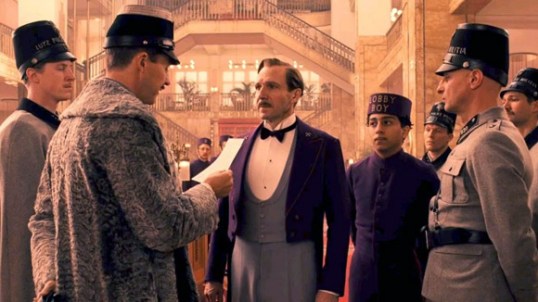
The-Grand-Budapest-Hotel-580


Film Review: The Woman In Black: The Angel of Death (dir by Tom Harper)


The-Woman-in-Black-poster-excerpt

Welcome to January!

This is the time of year the studios release the films that they don’t have much faith in, hoping to make a little money while all of the critics and more discriminating audiences are distracted by the Oscar race.  Typically, films are released in January that the studios are specifically hoping will be forgotten by June.

Case in point: the horror sequel The Woman In Black 2: The Angel of Death.

Now, as you all know, I love horror movies.  It’s rare that I can’t find something to enjoy about a horror movie, whether it’s the atmosphere or the suspense or just the chance to do some old-fashioned screamed.  Some of my favorite horror films have been the ones that — much like The Woman In Black 2 — were snarkily dismissed by most mainstream critics.  And, needless to say, I’m a natural born contrarian.  The lower a film’s score on Rotten Tomatoes, the more likely it is that I will find a reason to defend it.

Taking all of that into consideration, it’s hard for me to think of any film, horror or not, that has left me feeling as indifferent as The Woman In Black 2.  I would not say that I was terribly impressed by the film but, at the same time, I didn’t hate it either.  Instead, I felt it was an amazingly average film and I was just incredibly indifferent to the whole thing.

The Woman In Black 2: Angel of Death picks up 30 years after the end of the first Woman In Black.  It’s World War II and German bombs are falling on London.  A group of school children are evacuated to the countryside under the care and watch of two teachers, Eve (Phoebe Fox) and Jean (Helen McCrory).  Naturally enough, they end up taking refuge in the abandoned Eel March House.  The Woman in Black is still haunting the house and she’s determined to claim all of the children as her own.

While Jean refuses to accept that anything paranormal is happening at the house, Eve quickly comes to realize that they are not alone and that the Woman in Black seems to be particularly determined to claim young Edward (Oaklee Pendergast).  Working with Harry (Jeremy Irvine), a pilot who is deathly afraid of water, Eve tries to save the children…

The Woman in Black 2 goes through all the motions.  Floorboards creek.  Doors open and slam shut on their own.  The Woman in Black often appears standing in the background and occasionally jumps into the frame from out of nowhere while screaming.  The film is darkly lit and there’s a lot of atmospheric shots of the fog covered moors.

But, ultimately, the film never really establishes an identity of its own.  Instead, it feels like a collection of outtakes from every other haunted house film that has been released lately.  While I wasn’t a huge fan of the first Woman in Black, I did think that it benefited from having a sympathetic lead character but the cast here seems oddly detached from the story that they’re supposed to be telling.  You never believe in their characters and, as a result, you never really buy into any of the menace surrounding them.

And, the end result, is indifference.

the-woman-in-black-2

Film Review: Wild (dir by Jean-Marc Vallee)


reese-witherspoon-wild-slice

Wild opens with Cheryl Strayed (played by Reese Witherspoon) standing on the edge of a cliff.  She has been hiking for days and, because her hiking boots are too small, she’s limping and in a great  deal of pain.  She takes off a boot and a sock and stares at her bloody big toe.  With trembling fingers, she removes what is left of her big toenail.  And then, she throws her boot over the edge of the cliff while screaming, “FUCK YOU!”

And, from that moment, Wild had me.

For the next two hours, I sat there and I was absolutely enthralled as Cheryl, an aspiring writer and a recovering drug addict who was still struggling to come to terms with the death of her mother (played, in heart-breaking flashbacks, by Laura Dern), hiked her way from the Mexican border up to the Canadian border.  I watched as she learned how to survive in the wilderness, how she cautiously learned to trust some of her fellow hikers, and as she dealt with sexist rangers and creepy hunters.

And there were a lot of reasons why Wild held me so enthralled.  There was Reese Witherspoon’s performance, for one thing.  Reese is on screen during every minute of Wild and, for a lot of that time, she’s alone with her thoughts and her emotions.  She gives an amazingly focused performance, one that should regain her some of the respect that she sacrificed by appearing in movies like This Means War and publicly asking, “Do you know who I am?”  Both the film and Reese’s performance resist the temptation to idealize Cheryl.  Instead, both the film and the performance feel real and because Cheryl comes across as a real person (flaws and all), it makes her journey and her achievement all the more powerful.

I couldn’t help but relate to Cheryl.  Like her, I’m an aspiring writer.  Like her, I’m still learning how to deal with the loss of my mom.  Like her, I have trust issues.  Like her, I am sometimes too stubborn for my own good.  Like her, I like to leave quotes in guest books.  Like her, I always pack a few paperbacks before I go on a trip and I like to write in my journal.  Like Cheryl, I’m a survivor and I’m proud of it.

Unlike Cheryl, however, I’ve never gone hiking and I doubt if I ever will.  As much as I loved Wild (and it’s definitely one of my favorite films of 2014), it didn’t leave me with any great desire to go on a hike.  That’s largely because of that first scene.  When Cheryl threw away her boots and screamed, I thought to myself, “That would so be me.”  Of course, the difference is that Cheryl did that after hiking for a month.  I would probably end up doing that after the 2nd day.  And then I’d turn around, go back home, and spend the weekend watching Netflix.

But here’s the thing: Wild is not really about hiking.  Wild is about the journey.  What’s important is not that Cheryl hiked but that Cheryl accomplished what she set out to do.  No matter how difficult it got, no matter how many people told her she should give up, Cheryl walked from Mexico to Canada.  By the end of the film, I felt like, if Cheryl could do that even with boots that were too small, than there was nothing that I could not do.

As a result, Wild is not only one of the best films of 2014.

It’s the most empowering as well.


Film Review: Palo Alto (dir by Gia Coppola)


Palo Alto came out in May of last year and it never quite got as much attention as it deserved.  A lot of that is because the film is based on a collection of short stories by James Franco and a lot of critics apparently decided ahead of time that Palo Alto was some sort of vanity project.

Of course, nothing could be further from the truth.  Palo Alto is actually one of the better films of 2014, a minor masterpiece of ennui that also serves as a promising directorial debut for Gia Coppola.  (Of course, Gia’s aunt Sofia made her directorial debut with an ennui-centric literary adaptation of her own, The Virgin Suicides.)

Palo Alto follows several teenagers over the course of one school year.  (It’s no coincidence that, at one point, Fast Times At Ridgemont High shows up on a TV screen.)  The film itself is deceptively plotless, with its occasionally drifting narrative mirroring the lives of protagonists who literally have no direction.  April (Emma Roberts), who is too intelligent to really fit in with either her shallow friends or her flakey family, plays soccer and has a crush on both Teddy (Jack Kilmer) and her coach, Mr. B (James Franco, playing an unapologetically sleazy character).  Teddy is a talented artist who, after a drunk driving accident, finds himself on probation and sentenced to do community service.  Making it difficult for Teddy to stay out of trouble is his best friend, Fred (Nat Wolff), who hides his sociopathic nature behind a constant stream of jokes.  And then there’s Emily (Zoe Levin), who hides her insecurities behind a wall of blow jobs and demeaning sexual encounters.

As for the adults of Palo Alto, they’re for the most part a collection of grim but ineffective authority figures and parents who don’t want to grow up.  Mr. B hides his predatory nature behind a kind smile and a paternal nature.  April’s stepfather (Val Kilmer) is permanently stoned.  Teddy’s mother is unconcerned with her son’s drinking.  Meanwhile, Fred’s father (Chris Messina) offers weed to and hits on his son’s friends.

And it may all sound a bit familiar.  Every year, it seems like there is a countless number of indie films about directionless teenagers and irresponsible parents.  But Palo Alto is distinguished by Gia Coppola’s confident and frequently surreal direction.  Coppola has a good eye for detail and, as a result of the gorgeous cinematography of Autumn Durald, the film is always interesting to watch regardless of how familiar the story may seem.  The entire cast does a good job as well, with Emma Roberts and Nat Wolff as clear stand-outs.

And, I have to admit, that on a personal level, there was a lot of Palo Alto to which I related.  Whether it was the awkward conversations between April and Teddy or the sad look on Emily’s face as she stared at her reflection, there were so many small moments that just felt true.  As I watched Palo Alto, it was impossible for me not to think about my own time in high school.  I knew quite a few Teddys.  I even knew a few Freds.  And sometimes, I was April and then other times, I could have been any of the other characters who wander throughout Palo Alto.

Don’t listen to the haters.  Palo Alto is more than worth your time.

A Quick Review: The Hobbit: The Battle of the Five Armies (dir by Peter Jackson)


TheHobbit5Armies

It seems kind of weird to do a quick review for a 144 minutes film that not only serves as the end of one epic trilogy but also as a prequel for yet another epic trilogy.

Well, so be it.  I hate to admit it but I really don’t have that much to say about The Hobbit: The Battle of the Five Armies beyond the fact that I saw it on the day after Christmas, I enjoyed it, and I thought Aidan Turner was really hot.  It’s not a perfect film but then again, The Hobbit has never been a perfect trilogy.  As opposed to the Lord of the Ring films, The Hobbit told a story that could have easily been told in two films.  As a result, whenever you watch one of The Hobbit films, you’re aware of all of the filler that was included just to justify doing three films.

But so what?  The Hobbit films are fun.  Despite the cynical economic reasons behind turning The Hobbit into a trilogy, director Peter Jackson’s love for the material always came through.  In the title role, Martin Freeman was always likable.  Ian McKellan and Christopher Lee made for properly enigmatic wizards.  Though apparently his inclusion caused some controversy among purists, it was nice to Orlando Bloom as Legolas.  I also liked Evangeline Lilly’s elf character, even if everyone else seemed to dislike her and her love story with Aidan Turner.  And then there was Benedict Cumberbatch providing a perfectly evil and self-satisfied voice for Smaug.

I have to admit that, with the exception of Aidan Turner, I was never a big fan of the dwarves.  They were all so surly and bad-tempered and it didn’t take me too long to get tired of Richard Armitage showing up as Thorin and acting like a jerk.  However, in the final part of the trilogy, Armitage’s surly performance started to make sense.  As Thorin grew more and more paranoid, I saw that The Hobbit was actually using both the character and Armitage’s performance to make a much larger point.  Power corrupts and most conflicts are ultimately all about money and property.  It was a good message.

When the Battle of the Five Armies started, I was shocked to discover how little I remembered about the previous two Hobbit films.  It took me a while to get caught up on who everyone was and why they were all fighting over that mountain.  As opposed to the LoTR films, it’s not always easy to get emotionally invested in The Hobbit films.  But, Jackson is a good director and he’s a good storyteller and, even though it took me a while to get caught up, I was still often enthralled with what I was watching on screen.  The images were so stunning and the battle scenes were so spectacularly done that I could handle being occasionally confused.

Battle of the Five Armies is a fitting end for the Hobbit trilogy.  It’s not a perfect film but it is exciting and fun and that’s really all that matters.  At the end of it, the audience in the theater applauded, not just for the film but in recognition of everything that Peter Jackson has given us over the past 14 years.

It was a good way to spend the day after Christmas.

Film Review: Unbroken (dir by Angelina Jolie)


Ultimately, Unbroken is a victim of expectations.

From the start of last year, Oscar watchers and other film critics were united in fully expecting Unbroken to be a great film.  No sooner had 12 Years A Slave won best picture then we were all predicting that Unbroken would be named the best film of 2014 and that Angelina Jolie would be the 2nd woman to win an Oscar for best director.

And can you blame us?

Unbroken seemed to have everything that you would expect to add up to Oscar glory.  Not only was it directed by a celebrity (and, ever since Argo, everyone has been under the impression that all performers can also direct) but it starred an exciting and up-and-coming actor.  It was not only a war film but it was a war film that took place during the only war that everyone agrees was a good one, World War II.  It was based on a true story and what a story!  Louis Zamperini was an Olympic medalist whose athletic career was put on hold when he joined the U.S. Air Force.  After a plane crash, he and two other survivors spent 47 days floating in a lifeboat.  They were finally captured by the Japanese and Louis spent the rest of the war as POW.  During that time, he survived terrible torture.  When the war finally ended, Louis set aside his anger and publicly forgave those who had nearly killed him.  When he was 80 years old, he returned to Japan and carried the Olympic torch.  It’s an incredibly touching story and it should have made for a great movie.

And, ultimately, that’s Unbroken‘s downfall.  It has all the ingredients for being a great movie but instead, it’s only a good one.

That’s certainly not the fault of Jack O’Connell, who plays Louis and gives a strong and sympathetic performance.  Actually, the entire film is well-acted, with everyone fully inhabiting his role.  Perhaps the film’s best performance comes from Miyavi, who plays “The Bird,” the sadistic head of both of the POW camps where Louis is held prisoner.  The dynamic between The Bird and Louis is an interesting one, with the film emphasizing that The Bird is in many ways jealous of Louis’s previous fame and Miyavi plays the character as if he were a high school bully who has suddenly been left in charge of the classroom.

That the cast does well should not be a surprise.  Actors-turned-directors can usually get good performances but often times, they seem to struggle with shaping a narrative and this is where Unbroken struggles.  It’s not that Unbroken doesn’t tell a worthy story.  It’s just that it tells it in such a conventional and predictable way.  The entire film is full of scenes that seem like they were lifted out of other, more memorable movies.  The scenes with Louis growing up and competing in the Olympics feel like they could have come from any “inspiring” sports biopic.  (It doesn’t help that Louis’s brother and coach has been given dialogue that sounds like it should be surrounded by air quotes.)  When Louis is joking around with the guys in the plane, it feels like a hundred other war films.  When Louis is floating in the ocean, it’s hard not to compare the film’s static and draggy approach to what Ang Lee was able to do with Life of Pi or J.C. Chandor with All Is Lost.  Miyavi brings a feeling of real menace and danger to the POW scenes but it’s not enough.  Jolie’s direction is competent but there’s not a single moment that feels spontaneous or truly cinematic.

In fact, I sat through Unbroken totally dry-eyed, which is somewhat amazing considering how easily I cry at the movies.  However, towards the end of the film, there was a clip of the real-life, 80 year-old Louis running down the streets of Tokyo with the Olympic Torch and, at that moment, his story became real for me.  And that’s when the tears came.

I really wish Unbroken had been better because Louis Zamperini seems like someone who deserved to have a great film made about him.  Angelina Jolie’s heart was in the right place but, ultimately, it’s just not enough to make Unbroken the film that it deserves to be.