What Lisa Watched Last Night #108: Damaged (dir by Rick Bota)


Last night, I watched the first Lifetime movie of 2015 — Damaged!

Chris Klein in Damaged

Chris Klein in Damaged

Why Was I Watching It?

You guys know me and how much I love Lifetime movies!  Damaged was the first Lifetime movie of 2015 so it’s less a question of why was I watching it and more a question of how could I not watch it.

What Was It About?

Damaged is yet another Canadian thriller that has found a home on Lifetime.  Sam Luck (Chris Klien) is the big, affable, and quite frankly dumb teacher who has a nice house in the suburbs with a dog and a wife (Tasya Teles).  He also is co-owner of a diner because … well, why not?  (I got the feeling that the filmmakers just happened to have a diner set available.)

Anyway, Sam’s luck changes when the new teenage neighbor moves in.  Her name is Taran (Merritt Patterson) and, along with frequently flirting with Sam (who also happens to be one of her teachers), she also constantly has flashbacks where she’s either watching her mother have sex with an unseen boyfriend or standing in a cemetery while it rains.

As Sam grows closer to Taran, strange things start to happen.  His car is stolen but fortunately, Taran offers to allow him to drive her never-seen father’s car.  His dog disappears.  He’s informed that a student has accused him of sexual harassment.  His partner in the diner accuses him of embezzling money.  With all this happening, who else can Sam turn to for comfort other than his wife the teenage neighbor girl next door?

What Worked?

Damaged was an example of my favorite type of Lifetime movie: A complacent couple in the suburbs has their life destroyed by a malevolent outside force.  There’s something always fun about watching these smug suburbanites discovering just how easily their domestic bliss can be destroyed.

Merritt Patterson did a pretty good job in the role of Taran.  At the very least, she seemed to be having more fun than anyone else in the cast.

Finally, Damaged deserves some credit for not shying away from giving us a properly dark ending.  If this was an old grindhouse film, Damaged would be advertised as being a movie that “goes all the way.”

What Did Not Work?

So, here’s the thing.  If you, as a filmmaker, want us to sympathize with your lead character or, at the very least, hope that he doesn’t end up getting totally destroyed, it might help to not make the character a total moron.  As I watched the film, it was hard for me not to think about all the things that Sam could have done that would have prevented him from getting into this situation.

Here’s just a few examples:

1) When you’re a teacher and one of your students offers to give you her daddy’s car, don’t accept the car.  Why?  Because you’re a teacher and she’s a student in your class!  Yes, I understand that it was a really nice car but again: Student.  Teacher.

2) When you’re a teacher and you’re feeling depressed because someone has suggested that you’ve been sexually harassing your teenage students, don’t pour your heart out to the teenage girl who lives next door.

3) When you’re a teacher and one of your students offers you an expensive watch, don’t accept it!

4) When you’re a teacher and one of your students says she wants to go out and have fun with you, don’t go!

Seriously, it seems like most of Sam’s problems could have been avoided if he had bothered to read the Rules For Teacher/Student Interaction booklet that I’m sure he was given when he was first hired.  As such, it was hard to have much sympathy for Sam.  (Or his wife for that matter because, as badly as things turned out for her, she is the one who married the idiot in the first place.)

However, just to make clear: part of the fun of a movie like this is shaking your head at the stupid things some of the characters do.  And overall, Sam’s stupidity just made the film more fun.  So, I guess it’s debatable whether this is something that did not work.  (Though it certainly didn’t work that well for Sam, personally…)

“Oh my God!  Just like me!” Moments

At first, when I thought Taran just had an obsessive crush on Sam, I related to her because it reminded me of when I was in high school and I had a crush on Mark, who was engaged to our speech and debate coach.  One weekend, Mark accompanied us all on a road trip to a speech tournament in San Antonio.  One night, at the motel, I slipped on this pink Victoria’s Secret nightie that I had specifically bought for the trip and then I sneaked out of my room and pulled down on the fire alarm so that I could specifically meet Mark when he came running out of his room in his boxers and I could pretend to be all panicky (and in need of comforting) about the fire.  Ah, memories.

But anyway, as the movie progressed, I realized that I actually had less in common with Taran.  For instance, I’ve never tried to kill anyone.

Lessons Learned

The main lesson I learned was one that I already know.  If the police ever catch you doing something wrong, be sure to cry.  I already knew that crying was a good way to get out of speeding tickets but, according to the final scene of Damaged, it can get you out of a lot worse as well.

As for any teachers who may have been watching, I think the main lesson would be to read your code of conduct.
Film Review: Venus in Fur (dir by Roman Polanski)


One of the best films to be released in American theaters last year was also one that never really got as much recognition as it deserved.

Roman Polanski’s Venus In Fur (which, itself, is based on a play by David Ives that was loosely adapted from a novel written by Leopold von Sacher-Masoch, whose name and book would inspire the term masochism) features only two characters.  Thomas (Mathieu Almaric) is a neurotic playwright and director whose latest production is based on Sacher-Masoch’s book, Venus in Furs.  Vanda (Emmanuelle Seigner) is an actress who shows up late to audition for a lead role.

At first, Thomas is annoyed with and condescending towards the actress.  After all, she shows up late for the audition and gives a rather long and convoluted explanation as to why.  (It involves a dog wanting to fuck her.)  Despite the fact that she’s auditioning for a play set in the 19th century and featuring repressed members of the upper class, she shows up for the audition wearing leather and a dog collar.  (“I’m usually really demure and shit…” she assures him.)  At first, Thomas refuses to allow her to audition and says that there’s nobody in the theater for her to read with. Vanda suggests that he read with her.  Reluctantly, Thomas agrees…

And suddenly, Vanda goes from begging for his permission to taking control of the situation.  It turns out that she’s brought a period costume with her.  Before going up to the stage, she skillfully sets the stage lights to create the perfect effect.  (A stunned Thomas admits that he’s not even sure how the lighting board works.)  And when they’re on stage together, Vanda stuns Thomas by suddenly transforming herself into the character that he wrote.

The audition itself quickly becomes a not-quite friendly game between the two.  (This is a film that anyone — even little community theater actresses like me — who has ever auditioned for a role should be able to relate to.)  Vanda frequently interrupts the audition to question what Thomas has written and Thomas finds himself growing more and more disoriented as he’s frequently pulled out of the world he created and into reality.

Whenever challenged by Vanda, Thomas argues that the play has no deeper meaning.  It’s simply an adaptation of a work of literature.  However, as the audition continues, it becomes apparent that there’s more to the play and to the two people on stage than was originally apparent…

Venus in Fur is a fascinating film.  In its way, it’s also a playful one.  (You have to love the scene where a lingerie-clad Vanda suddenly takes on the role of therapist and perfectly psychoanalyzes Thomas’s fiancee.  Never has the invoking the name of Jacques Derrida led to so much laughter.)  Intelligently filmed by Polanski and wonderfully acted by both Amalric and Seigner, the power struggle between Thomas and Vanda makes for compelling viewing.

And hey, it’s currently on Netflix so you can watch it anytime you want.  Of course, it is subtitled but so what?  If you don’t know how to read, how did you make it through this review?

Seriously, find 93 minutes to spare and watch Venus In Fur.

2014 In Review: Lisa’s Picks For The 16 Worst Films Of 2014


actor-nicolas-cage-discusses-his-2014-movie-left-behind

Continuing our look back at the previous year, today I present you with my choices for the 16 worst films of 2014!

I have to admit that 2014 was a strange year for me.  While I saw a lot of films that I didn’t think were very good, none of them quite inspired the amount of loathing that I felt while watching previous TSL worst film “winners” like Love and Other Drugs and Man of Steel.  Looking at the 16 films below, I’m struck by how many of them were simply films that failed to live up to my expectations.  (The Judge and Endless Love are obvious examples.)  Some of the other entries are films that we all knew ahead of time would never be good but they made the list because they represent everything that annoys me about mainstream film making. (Case in point: Transformers: Let’s Deafen The Audience or whatever the Hell that thing was called.)

Of course, some of the films listed below are on the list because they just plain sucked.  In fact, one made-for-Lifetime movie was so mind-numbingly awful that it made the list despite having never actually been released in theaters!  That’s pretty bad!

(Be sure to click on the links in this sentence if you want to see what I considered to be the worst of 2010, 2011, 2012, and 2013!)

Without further ado, here’s the list!

16) Captivated: The Trials of Pamela Smart 
15) Ride Along
14) The Judge 
13) Into the Storm
12) Endless Love
11) Nuse 3D
10) Barefoot
9) The Best Of Me
8) I, Frankenstein
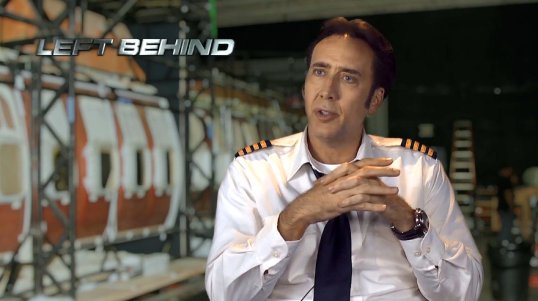
7) Left Behind
6) Paranormal Activity — The Marked Ones
5) The Legend of Hercules
4) Transformers: The Age of Extinction
3) A Million Ways To Die In The West 
2) The Unauthorized Saved By The Bell Story

And finally, without further ado, here is the worst film of 2014!

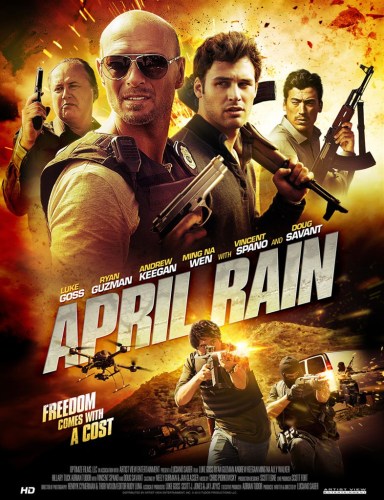
1)  April Rain

Birdemic 2 April Rain

Agree?  Disagree?  Let me know in the comments!

Tomorrow, I’ll be presenting my 10 favorite songs of 2014!

Others Entries In TSL’s Look Back At 2014:

  1. Things I Dug In 2014 Off The Top Of My Head
  2. 2014 In Review: The Best of SyFy and Lifetime

Film Review: Big Hero 6 (dir by Don Hall and Chris Williams)


For the longest time, I thought that there would never be an animated film that would make me cry as much as I cried at the end of Toy Story 3.

And then I saw The LEGO Movie and I thought that I would never cry as much as I did when Will Ferrell acknowledged that he hadn’t been a very good father and that his son should be allowed to have fun while playing in the basement.

And then, way back in November, I saw Big Hero 6 and there was big, goofy-looking, kind-hearted Baymax asking, “Are you satisfied with my service?” and I sobbed and sobbed.

Baymax, of course, is a big, balloon-like robot that was specifically designed to provide medical care to the citizens of San Fransokyo.  After his original creator, Tadashi Hamada, is killed in a mysterious explosion at the local university, Baymax becomes the property of Tadashi’s younger brother, Hiro.  Hiro, naturally enough, designs some armor for Baymax and programs him to fight so that he can get revenge for his brother’s death…

And you know what?

The exact plot doesn’t really matter.  What matters is that Baymax is probably one of the most memorable and kind-hearted non-human characters to ever appear in an animated film.  Significantly, Baymax resists Hiro’s attempt to turn him into a killing machine, making Big Hero 6 into one of those rare films that ultimately celebrates peace over war.

It’s also an incredibly sweet film, one that earned every tear that I shed.

And, as a result, I was very satisfied.

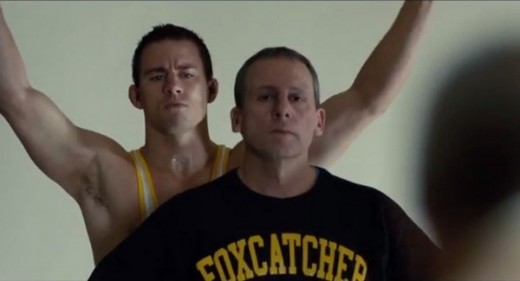
Film Review: Foxcatcher (dir by Bennett Miller)


What a long and strange trip it has been for Foxcatcher.

Originally, Bennett Miller’s latest film was scheduled to be released at the end of 2013 and it was expected to be a major player in the 2013 Oscar race.  And then it was suddenly announced that Sony Pictures would, instead, wait an extra year to release the film.  Usually, this is a sign of a film that’s not expected to live up to expectations.  (Case in point: The Monuments Men.) But, in this case, it was seen as being the exact opposite.  Sony had such faith in the Oscar prospects of Foxcatcher that they were willing to hold off a year so it wouldn’t get lost in all of the attention that was being given to American Hustle, Gravity, 12 Years A Slave, and Wolf of Wall Street.

And, in many ways, it was a smart move.  Overnight, Foxcatcher went from being that weird movie with Steve Carell to being one of the most anticipated film of 2014.

Then, during the summer, Foxcatcher premiered at Cannes and was one of the hits of the festival.  With the notable exception of the A.V. Club’s A.A. Dowd, the reviewers at Cannes were rapturous in their praise of Foxcatcher.  And, though it failed to win the Palme d’Or, it did win best director for Bennett Miller and it cemented it’s status as the Oscar front-runner.

And then, something started to happen.

There was backlash against Foxcatcher.  As more and more critics saw the film, we started to hear more and more speculation that the film would fail to live up to all of the hype.  Critics generally praised the performers but many complained that the film was too cold and detached for its own good.  At first, it was easy to say that this was partially the result of unrealistically high expectations.  But, as more and more reviews came in, it became almost fashionable to speculate that Foxcatcher would be left out of the Oscar race.

Of course, most of us who were doing the speculating were doing so without actually having seen the film for ourselves.  After all, film critics and festival goers aren’t the ones who actually vote on what films will be nominated for and win Oscars.  One need only look at the nominations for Extremely Loud and Incredibly Close to realize that.

Well, Foxcatcher has finally been released and we’ve all finally gotten a chance to see it.  I saw it last week, while I was in Fort Worth for the Christmas holidays.  And my reaction…

Well, there’s a reason why it’s taken me nearly a week to write this review.

Ultimately, Foxcatcher is a good film.  In fact, on a purely technical level, it’s probably one of the best films of the year.  If it is nominated for best picture, the nomination will not necessarily be undeserved.  Bennett Miller comes up with some hauntingly chilly images.  Steve Carell, Channing Tatum, and Mark Ruffalo all give excellent performances.  It’s a film that stays with you, a powerful depiction of a true crime.

But it’s still not an easy film to enjoy.

Those critics who complained that Miller’s approach was too cold and detached have a point.  You watch the film with a sense of dread, knowing what’s going to eventually happen.  (Though I didn’t know anything about the murder of Dave Schultz before the film, I had read the reviews and I knew that eventually Mark Ruffalo’s kind-hearted family man would end up being gunned down in front of his family.)  But Miller always keeps the characters and the story at a distance.  You watch the characters and you struggle to understand them but, by the end of the film, you’re no closer to understanding why John E. du Pont (the eccentric millionaire turned murdered, played by Steve Carell) murdered Dave Schultz than you were at the beginning.

Instead, Miller is more interested as looking at John du Pont as being an example of American exceptionalism gone crazy.  Throughout the film, characters frequently comment on the fact that the du Ponts are one of the oldest and richest families in America.  (Not coincidentally, we’re also told that they initially made their fortune by producing and selling gunpowder.)  Du Pont is an outspoken and proud American.  Along with training wrestlers on the grounds of his estate (the Foxcatcher of the title), he also frequently invites the police to use the grounds for target practice.  Though Miller couldn’t have realized it when the film was originally shot in 2013, the scenes of the obviously unstable du Pont hanging out with the cops take on an extra resonance in this time of Eric Garner and Tamir Rice.

John du Pont frequently talks about how his plan to open a world-class wrestling training facility is, at heart, a patriotic act.  The world wrestling championship, du Pont believes, belongs in America and he’s going to make sure that it gets there.  In order to achieve this goal, he hires Olympic gold medalist Mark Schultz (Channing Tatum) to be his wrestling coach.  Mark, who has always lived in the shadow of his older brother Dave (Mark Ruffalo), jumps at the chance to establish his own identity.  At first, du Pont is like the father that Mark has never had.  They even become friends.  (Du Pont, at one point, talks about discovering that all of his childhood friends had been paid to be his friend.)  Mark shows du Pont some wrestling moves.  Du Pont introduces Mark to cocaine.

But, ultimately, it becomes apparent that du Pont’s friendship with Mark was really just a ruse to get Mark to convince his older brother to come work for du Pont.  When Dave finally does join Mark at Foxcatcher, it causes Mark to turn self-destructive and du Pont to eventually turn into a murderer.

And, as I said, it’s a powerful film.  Channing Tatum gives the performance of his career and Steve Carell is frighteningly believable as John du Pont.  (One minor complaint: Carell is being promoted for best actor, even though his performance was clearly a supporting one.)  Mark Ruffalo, as well, does great work as Dave and somehow manages to make innate human decency compelling.

But the film itself is so cold and detached that, ultimately, this is a film that you end up respecting more than you end up enjoying.

Foxcatcher


2014 in Review: The Best of Lifetime and SyFy


sharknado-2-poster

Hello there and welcome to January!

This is the time of year that the Shattered Lens usually takes one final look back at the best and worst of the previous year’s offerings in cinema, television, literature, and music!  Last year, I kicked things off by taking a look at the best that the SyFy network had to offer.

Unfortunately, SyFy didn’t produce as many original films in 2014 as they did in 2013.

However, my beloved Lifetime network remained a consistent showcase for some of the best and worst melodrama that one could hope for.

With that in mind, here are my nominees for the best films and performances that were featured on either the SyFy or the Lifetime network last year!  As always, winners are listed in bold.

LB_BLOODHANDS_081220#83509A.jpg

Best Film

Battle of the Damned

Flowers in the Attic

Grumpy Cat’s Worst Christmas Ever

*Lizzie Borden Took An Axe*

Sharknado 2

Starving in Suburbia

Best Actress

Kate Beckinsale in The Trials of Cate McCall

Maria Bello in Big Driver

Annie Heise in The Good Mistress

Tara Reid in Sharknado 2

*Christina Ricci in Lizzie Borden Took An Axe*

Kierna Shipka in Flowers in the Attic

Best Supporting Actress

Kendra Anderson in The Good Mistress

*Ellen Burstyn in Flowers in the Attic*

Clea DuVall in Lizzie Borden Took An Axe

Heather Graham in Petals on the Wind

Tina Ivlev in Death Clique

Izabella Miko in Starving in Suburbia

Best Actor

Trevor Donavon in Bermuda Tentacles

Mason Dye in Flowers in the Attic

Michael Keaton in Blindsided

Dolph Lundgren in Battle of the Damned

Patrick Muldoon in Finders Keepers

*Ian Ziering in Sharknado 2*

Best Supporting Actor

James Cromwell in The Trials of Cate McCall

David Field in Battle of the Damned

*Griff Furst in Status Unknown*

Judd Hirsch in Sharknado 2

Mark McGrath in Sharknado 2

John Savage in Bermuda Tentacles

Best Director

Doug Campbell for Death Clique

Deborah Chow for Flowers in the Attic

Anthony C. Ferrante for Sharknado 2

*Nick Gomez for Lizzie Borden Got An Axe*

Christopher Hutton for Battle of the Damned

Tara Miele for Starving in Suburbia

Best Screenplay

Kayla Alpert for Flowers in the Attic

Tim Hill and Jeff Morris for Grumpy Cat’s Worst Christmas Ever

Stephen Kay for Lizzie Borden Took An Axe

Thunder Levin for Sharknado 2

*Tara Miele for Starving in Suburbia*

Griff Furst and Marcy Holland for Status Unknown

Flowers in the Attic

Tomorrow, I’ll continue my look back at 2014 by revealing my picks for the 16 worst films of 2014!

Previous Entries in Our Look Back At 2014:

Things That I Dug In 2014 Off The Top Of My Head


Film Review: Devil’s Knot (dir by Atom Egoyan)


After having spent close to a year hearing only negative things about it, I finally watched Atom Egoyan’s Devil’s Knot last night.  On the basis of what a lot of critics had said about the film, I have to admit that I was mostly watching it to see if I needed to include it on my upcoming list of the 16 worst films of 2014.

But you know what?

Devil’s Knot really isn’t a bad film.  It’s just an extremely unnecessary one.

Devil’s Knot opens with a title card that reads, “Based on a true story.”  Honestly, the title card could have just as easily read, “Based on a true story and if you doubt it, there’s four other movies you can watch.”  The trial, conviction, and subsequent imprisonment of the West Memphis Three is perhaps the most famous miscarriage of justice in recent history precisely because so many documentaries have been made about it.  Paradise Lost and Paradise Lost Part Three are two of the most disturbing true crime documentaries ever made.

(As for Paradise Last Part Two, it displays a stunning lack of self-awareness as it attempts to prove the guilt of John Mark Byers by using many of the same techniques that were used to convict the West Memphis Three.  The less said about it, the better.)

The story is so well-known that I almost feel like retelling it would be like taking the time to inform you that George Washington was our first president.  But here goes — in 1993, 3 eight year-old boys were murdered in the small town of West Memphis, Arkansas.  Three teenagers were arrested for the crime and, on the flimsiest of evidence, were convicted.  As is seen in the documentaries, their conviction had more to do with community hysteria and paranoia than anything else.  The supposed leader of the West Memphis Three, Damien Echols, was accused of being a Satanist.  Why?  Mostly because he wore black clothing.

Eventually — and largely as a result of the documentaries made about the case — the West Memphis Three would be freed from prison.  (However, their convictions would still legally stand, meaning that their exoneration would be limited to the court of public opinion.)  Devil’s Knot, however, doesn’t deal with any of that, beyond a lengthy scroll of “this is what happened after the movie” information that rolls up the screen after the final scene.  Instead, Devil’s Knot deals with the first trial of the West Memphis Three and the small town atmosphere of fear and hysteria that led to them being convicted in the first place.

And — though the film is surprisingly conventional when you consider the reputation of director Atom Egoyan — it’s all fairly well-done.  As a former resident of and frequent visitor to Arkansas, I was happy to see that Egoyan didn’t indulge in as many stereotypes as I feared he would.  (One need only watch the self-important Northern activists in Paradise Lost Two to see the attitude that I feared Egoyan would bring to the project.)  Reese Witherspoon is perfectly cast as the mother of one of the murdered boys.  Kevin Durand is properly intimidating at John Mark Byers.  Even Colin Firth manages to make for a convincing Arkansan.

But, ultimately, Devil’s Knot just feels so unnecessary.  It doesn’t bring anything new to the story and there’s ultimately nothing here that you couldn’t have learned from the original Paradise Lost.

Probably the best thing that I can say about Devil’s Knot is that it’s better than Paradise Lost Part Two.

Guilty Pleasure No. 24: Walk of Shame (dir by Steven Brill)


I was recently looking over what some of my fellow movie bloggers consider to be the worst films of 2014 and imagine my surprise when I saw that almost all of them had found room to list a little comedy called Walk of Shame.

Now, don’t get me wrong.  I’m not going to argue that Walk of Shame was a great movie or anything like that.  Essentially, it was a dumb comedy that was full of plot holes.  For the most part, it was a film that was specifically designed to appeal to neurotic white people from the suburbs.  Then again, I am a neurotic white girl from the suburbs so maybe that’s why, despite all of the critical disdain and moralistic posturing that was directed towards Walk of Shame, I actually liked it.

In Walk of Shame, Elizabeth Banks plays Meghan, a local TV new correspondent who is being considered for a job with the national network.  However, soon after being informed of this, Meghan returns to her apartment and discovers that her boyfriend has left her.  Then she gets a call informing her that the network is leaning towards another candidate.  Depressed, Meghan puts on a skin-tight yellow dress, goes out to a club with her best friend (Gillian Jacobs), ends up drinking way too much (much like me, Meghan doesn’t have much of a tolerance when it comes to alcohol), and finally ends up meeting an aspiring writer named Gordon (Jason Marsden) and going back to his apartment with him.

The scenes where Meghan and Gordon drunkenly fool around before eventually having sex are actually surprisingly fun. Marsden and Banks have a really playful chemistry throughout this entire film.  You like both of their characters and it’s fun to see them together.  In fact, Jason Marsden, who I had previously assumed was a bad actor on the basis of his work in The Butler and Straw Dogs, gives a truly charming performance in his film, turning Gordon into both the ideal one night stand and the ideal boyfriend.

The next morning, Meghan gets a call informing her that the network has decided against the other candidate and they want to interview her for the job.  She’s told that she only has a few hours to get down to the station.  After sneaking out of Gordon’s apartment, Meghan discovers that not only has her car been towed but her purse and all of her money was also in the backseat.  (Not to mention the fact that she left her phone back in Gordon’s apartment…)  So now, still wearing that yellow dress, Meghan has to try to make her way across Los Angeles, get back her car, and get to her interview in time.

And, of course, this means that Meghan has to deal with drug dealers, simple-minded policemen, and snooty bus drivers.  Admittedly, there’s not a single problem that Meghan couldn’t have solved through the use of common sense but sometimes you have to be willing to cut a film a little slack.

Walk of Shame has a lot of flaws but I still enjoyed it, mostly because I’ve been there.  I may not have been there to the extreme that Meghan finds herself being there but I’ve still been there.  Elizabeth Banks is one of my favorite actresses and her chemistry with Jason Marsden generates enough good will to help the film get over a few rough patches.

And, for that reason, Walk of Shame is my favorite guilty pleasure of 2014.

Previous Guilty Pleasures

  1. Half-Baked
  2. Save The Last Dance
  3. Every Rose Has Its Thorns
  4. The Jeremy Kyle Show
  5. Invasion USA
  6. The Golden Child
  7. Final Destination 2
  8. Paparazzi
  9. The Principal
  10. The Substitute
  11. Terror In The Family
  12. Pandorum
  13. Lambada
  14. Fear
  15. Cocktail
  16. Keep Off The Grass
  17. Girls, Girls, Girls
  18. Class
  19. Tart
  20. King Kong vs. Godzilla
  21. Hawk the Slayer
  22. Battle Beyond the Stars
  23. Meridian

And Yet 6 More Reviews Of 6 More Films Lisa Saw in 2014: Art and Craft, The Book of Life, The Box Trolls, The Quiet Ones, and Vampire Academy


Art and Craft (dir by Sam Cullman and Jennifer Grausman)

Art and Craft is a fascinating documentary about a fascinating human being.  As quickly becomes obvious, Mark A. Landis suffers from any number of mental illnesses.  However, he’s also one of the most successful art forgers in history.  While his own artwork is undistinguished, Landis is capable of perfectly imitating the work of other artists.  For 30 years, Landis would forge the work of other artists and then donate the forged paintings to museums across America.  (Since Landis never made any money off of his scam, he never technically broke any laws.)  The documentary follows Landis as he prepares for a show of his work and it features revealing interviews with both him and the people he fooled.  Ultimately, this is a film that — much like Exit Through The Gift Shop — forces us to consider just what exactly makes something a work of art.  Is it the name of the artist or is it the work itself?

The Book of Life (dir by Jorge Gutierrez)

The animated film The Book of Life was released in October and, for whatever reason, it never seemed to become quite the hit that a lot of us were expecting it to be.  However, even if I don’t think it came anywhere close to reaching the heights of producer Guillermo Del Toro’s best films, I still rather liked it.

The film tells the tale of Manolo (voiced by Diego Luna) who is tricked, by Xibalba (voiced by Ron Pearlman), the ruler of the Land of the Forgotten, into believing that the love of his life, Maria (Zoe Saldana), has died.  Eager to see her again, Manolo allows himself to be bitten by a snake, which kills him.  Now trapped in the spirit world, Manolo has to find a way to return to life and be reunited with Maria.

The Book of Life is a gorgeously animated film that pays wonderful tribute to the culture and mythology of Mexico.  And it’s great for los niños!

The Boxtrolls (dir by Graham Annabelle and Anthony Stacchi)

The Book of Life was not the only animated film to not quite get the respect that it deserved in 2014.  The Boxtrolls was another perfectly charming film and, considering its dual message of tolerance and not giving into paranoia, one that more people should have seen.

Taking place in a town that’s full of stupid people who are obsessed with cheese, The Boxtrolls is a memorably dark little film from the same studio that gave us Paranorman.  The citizens of the town live in fear of the Boxtrolls, a group of creatures who live underneath the city.  Little do they understand that the Boxtrolls are actually peaceful and the only reason that they come out at night is to scavenge through trash.  The citizens of the town hire the evil Snatcher to take care of the Boxtrolls and, because of their paranoia and fear, they are soon literally slaves to the whims of Snatcher.

(Insert your own NSA surveillance analogy here.)

The Boxtrolls is a memorably subversive little film, one that makes the argument that even the ugliest of animated monsters still deserve a chance to find happiness.

Dolphin Tale 2 (dir by Charles Martin Smith)

So, as some of you may remember, I absolutely loved the first Dolphin Tale.  The sequel is not quite as good as the first film but you know what?  I saw it with my niece and she absolutely loved it and I loved watching it with her and yes, the film totally made me cry.  So, as far as I’m concerned, the film succeeded.  Winter the Dolphin appears as himself and he’s joined by Hope the Dolphin.  And both Winter and Hope give Oscar-worthy performances.

The Quiet Ones (dir by John Pogue)

Want to hear something sad?  The Quiet Ones, which is probably one of the most forgettable films to be released last year, was produced by Hammer Studios.  That’s right — the legendary British studio that produced such immortal films as Horror of Dracula — also produced The Quiet Ones, a film that could have just as easily been made by …. well, by anyone.

Borrowing multiple pages from The Conjuring, The Quiet Ones takes place in the 70s, is “based on a true story,” and features a creepy doll!  Jared Harris plays a psychiatrist who wants to prove that ghosts do not exist and that poltergeist activity is the result of telekinesis.  In order to prove his theory, he and his forgettable students isolate an orphan named Jane (Olivia Cooke) and go out of their way to upset her, hoping that she’ll lash out at them with her telekinetic abilities.  Apparently, nobody in this movie has ever watched a movie before or else they would have understood why this was a bad idea.

Anyway, The Quiet Ones feels like about a hundred other recent horror films, right down to having Sam Claflin play a student with a camera who records the entire experience.  Jared Harris is well-cast and Olivia Cooke proves that she deserves a better film but otherwise, The Quiet Ones is forgettable.

Vampire Academy (dir by Mark Waters)

Speaking of being forgettable…

Actually, Vampire Academy is not as bad as a lot of critics said.  It was one of the many YA adaptations that were released in 2014.  It deals with a bunch of teenage vampires who are attending St. Vladimer’s Academy.  When the film tries to be Twilight, it’s boring.  When the film tries to Mean Girls, it’s a lot more tolerable.  Best of all, one of the main characters is named Lissa and I like any film that features a Lisa.

But, otherwise, Vampire Academy was pretty forgettable.

6 Other Films That I Saw in 2014: The Best Offer, Borgman, Illiterate, In Secret, Scorpion in Love, and Tercera Llamada


The Best Offer (dir by Guiseppe Tornatore)

Virgil (Geoffrey Rush, giving a very Geoffrey Rush type of performance) is the owner of a prestigious auction house.  He’s hired by the mysterious Claire (Sylvia Hoeks) to auction off all of her dead parent’s possessions.  Virgil finds himself growing obsessed with Claire and, with the help of his assistant Robert (Jim Sturgess), finally manages to strike up a tentative relationship with her.  However, it quickly turns out that there’s more to Claire and Robert than Virgil originally assumed.

The Best Offer is a disappointing film.  It’s not terrible but it moves far too slowly for its own good and most of the cast seems to be going through the motions.  The one exception is Donald Sutherland, who is a lot of fun as a sleazy con artist.  Sutherland managed to partially redeem Fierce People, another bad film that I recently reviewed, and he comes close to doing the same for The Best Offer.

Borgman (dir by Alex van Warmerdam)

Borgman is a disturbing and dark film from the Netherlands that was released over here in U.S. by Drafthouse Films.  This summer, Jeff and I saw it at our local Alamo Drafthouse with the usual group of self-styled cinema experts. Nobody quite knew what they were about to see and, after the film ended, an uneasy air descended over the theater as we all wondered what we had just watched.

Jan Bijvoet plays Camiel Borgman, a homeless man who is first seen living in the woods, hidden away in an underground cavern.  When he’s chased out of the woods by a priest and two men, Borgman eventually finds himself at the home of the arrogant and wealthy Richard (Jeroen Perceval).  Richard refuses Borgman’s request to enter the home for a bath and then physically attacks him.  When Borgman returns to the house the next day, Richard’s wife, Marina (Hadewych Minis), allows him to stay in the garage.  Though Borgman originally says he’s only going to stay a day, he is soon living in the garage.  Everyone — Marina, her children, and the nanny — is aware that Borgman is now a part of their household.  Everyone, except for Richard who remains blissfully unaware.  Soon, Marina is having violent nightmares while Borgman crouches over her and more and more of Borgman’s followers are showing up at the house…

Borgman is a horrific fable with a dark sense of humor.  (As frightening as Borgman is, it’s impossible not to be amused by just how clueless Richard turned out to be.)  In the best tradition of Michael Haneke, it all leads to an inevitable and unsettling conclusion.

Illiterate (dir by Moisés Sepúlveda)

Now this is a special film.

In this Chilean film, Ximena (Paulina Garcia) is an angry and sarcastic woman who is secretly ashamed to be illiterate.  When Jackeline (Valentina Muhr) volunteers to teach Ximena how to read, she has to deal with both Ximena’s stubborn nature and her own anger over the years that she’s lost, imprisoned by her inability to understand the written word.  And while this may sound like the basis of a typical Lifetime movie, the story takes on a special significance if you know something about the history of Chile and you understand that Ximena is a part of the generation that was previously held prisoner by a military dictatorship.  Ximena’s attempt to learn how to read mirror the attempt of a country to learn how to be free.

Garcia and Muhr both give excellent performances.  The film is a bit stagey but ultimately, it’s very touching.

In Secret (dir by Charlie Stratton)

How do you not enjoy a film like In Secret?  Taking place in 19th century Paris, In Secret tells the story of Therese (Elizabeth Olsen), who is forced by her haughty aunt (Jessica Lange) to marry her sickly cousin Camille (Tom Felton).  However, Therese does not love Camille and, bored with life in general, she ends up having an affair with Camille’s friend, the libertine Laurent (Oscar Isaac).  Soon, Camille has been murdered, Theresa and Laurent are married, and how can you not love all of this melodrama?

In Secret is over-the-top but enjoyable, like a Lifetime movie with explicit sex and costumes to die for.  It’s just a lot of fun.

Scorpion In Love (dir by Santiago Zannou)

In this Spanish film, Julian (Alex Gonzalez) is a young Neo Nazi who attempts to achieve redemption through boxing but who fears that his violent past will catch up with him.  It’s not, by any means, a bad film.  It’s just an extremely predictable one.  Javier Bardem shows up playing a Nazi leader and he’s just as dangerously charismatic as you might expect but, otherwise, the film doesn’t offer much insight into what exactly would lead someone like Julian to become a Nazi in the first place.

Tercera Llamada (dir by Francisco Franco Alba)

This comedy from Mexico tells the story of an attempt by a theater company to put on a production of Albert Camus’s Caligula.  The film is full of the usual types — the dedicated director, the craven producer, the innocent ingenue, and the difficult diva.  It’s predictable but likable.  If you’ve ever been involved in a community theater production that you just knew was going to probably be a disaster, you’ll find a lot to appreciate in Tercera Llamada.