I ask because I’m debating how much information I should share in this review. Room came out a few months ago and I’ve been late in reviewing it because watching the film was such an emotionally overwhelmingly experience that I wasn’t sure where to begin. Now, all of this time has passed and I’m in a hurry to review this film because it’s obviously going to be nominated for some Oscars on Thursday morning and I’m wondering how much I can reveal without spoiling the movie.
It’s always tempting to say “Spoilers be damned!” but I’m not going to do that this time. Room is a great film and it’s one that deserves to be discovered with a fresh mind. I imagine that many people who missed the film the first time will see it once Brie Larson has been nominated for Best Actress. Out of respect for those people, I am going to hold off from going into too much detail about the film’s plot.
Of course, this means that, if you haven’t seen the film, you’re going to have to have a little bit of faith in me. You’re going to have to trust me. When I tell you that this is an amazing film that will take you by surprise, you’re just going to believe me. Because if I ruin those surprises … well, then they won’t be surprises anymore, will they?
When I first heard all the Oscar talk swirling around Room, my initial instinct was to make a joke about Tommy Wiseau finally getting the credit he deserves. But then I saw Room and, within a few minutes of the film, I was in tears. It’s hard for me to think of any other film this year that made me cry as much as Room.
Room is narrated by Jack (Jacob Tremblay), a 5 year-old boy whose hair is so long that he is frequently mistaken for being a girl. Jack lives in a filthy room with Ma (Brie Larson). The tiny room has only a toilet, a sink, a bed, a small kitchen area, and a cheap television. There’s also the small closet where Jack sleeps and a skylight in the ceiling. As quickly becomes apparent from his narration, Jack has never been outside of the room. All he knows about the outside world comes from TV and the stories told to him by Ma.
Occasionally, a nervous man named Old Nick (Sean Bridgers) enters the room. Whenever Old Nick shows up, Ma orders Jack to hide in the closet. However, even in the closet, Jack listens to Ma and Nick talking in the room. Ma talks about how Nick kidnapped her when she was 17. Nick talks about how he has recently lost his job and may not be able to continue to take care of his two prisoners. Fearful for her life, Ma humors the self-pitying Nick. Nick, meanwhile, plays the victim and complains about how difficult it is to keep her and Jack prisoner. It quickly becomes apparent that Jack is Nick’s child.
Now that Jack is five, Ma knows that he’s old enough that she can tell him about her plan to escape from Nick. However, escaping means exposing Jack to a world that he’s never experienced and that Ma fears she no longer remembers.
Meanwhile, Ma’s parents wonder what has happened to their missing daughter. (It’s from her parents that we learn that, much like a character played by fellow Oscar contender Jennifer Lawrence, Ma’s name is Joy.) Ma’s mother, Nancy (Joan Allen), is now divorced from Joy’s emotionally repressed father (William H. Macy). Nancy is now married to the kind and appealingly disheveled Leo (Tom McCamus). However, still hoping that her daughter will someday return, Nancy hasn’t even touched Joy’s old bedroom.
Finally, the opportunity comes for Ma and Jack to escape and…
…and that’s all I can tell you without spoiling the film. Room is an emotionally exhausting film, one that will make you cry but which will also leave feeling strangely hopeful for the future. Brie Larson gives a courageously vulnerable and emotionally raw performance as Joy while Jacob Tremblay is perfectly cast as Jack. Since Larson and Tremblay are both getting a lot of attention as possible Oscar nominees, I want to take a few minute to single out one member of the cast who, so far, has been overshadowed. Tom McCamus doesn’t have a lot of screen time but he makes the most of every second he gets, turning Leo into the ideal father figure.
Room made me cry and cry and I can’t wait to see it again.
Before I continue to catch up with reviewing the films of 2015 by taking a look at The Revenant, I want to ask a question and I request that you give this some serious thought. Is Jeff Wells just a troll or is he seriously a moron? Or maybe he’s both, that’s another possibility. For those of you who stay out of the darker parts of the internet, Jeff Wells is a film blogger who thinks that, because he voted for Obama, he’s earned the right to regularly use his column to disparage women. (Wells is the one who publicly complained that the lead of Diary of a Teenage Girl wasn’t, in his eyes, fuckable enough to be a compelling 15 year-old protagonist.) Jeff Wells tweeted the following about The Revenant:
"The Revenant" is an unflinchingly brutal, you-are-there, raw-element immersion like something you've never seen. Forget women seeing this.
And Jeff Wells hasn’t been alone in claiming that only men can truly appreciate The Revenant. On Overland, Alexandra Heller-Nicholas has an excellent post about this line of male critical thought. Now, speaking for myself, I liked The Revenant a lot more than Heller-Nicholas apparently did. But, at the same time, she hits the nail on the head when it comes to this idea that The Revenant is a film so intense and so full of agony that only men could possibly enjoy it. Much like her, I felt as if “critics” like Jeff Wells and Rolling Stone‘s Peter Travers were personally challenging me, as a woman, to actually sit through The Revenant without running from the theater in disgust or hiding my eyes in terror.
And, quite frankly, that’s bullshit. Yes, The Revenant is intense and yes, I did have a bit of a hard time watching that bear maul Leonardo DiCaprio but, at the same time, how would Jeff Wells or Peter Travers handle being mauled by a bear? For that matter, how would either one of them handle being in a high-speed chase or being shot at? Would either one of them be able to outrun an explosion or do any of the other stuff that regularly happens in films that supposedly only appeal to men?
(For that matter, how would Jeff Wells or Peter Travers handle monthly menstrual cramps or giving birth or anything else that women have to deal with in the real world? I imagine they’d probably end up begging the bear to finish them off.)
And really, the whole point of The Revenant is that most human beings (regardless of gender) would not have survived being mauled by a bear or being buried alive or spending months exposed to the harsh wilderness or having pieces of their body start to decay. These are all things that happen to hunter Hugh Glass (Leonardo DiCaprio) over the course of The Revenant and the film suggests that the only reason he survives is because he’s driven by a desire for revenge. When Glass’s fellow hunter, the gruff Fitzgerald (Tom Hardy), decided to abandon Glass, he also murdered Glass’s son, Hawk. Still immobilized by his wounds, Glass could only watch as Hawk was brutally killed.
(Interestingly enough, Fitzgerald is like Glass in that he has also survived a terrible injury. Fitzgerald regularly wears a skullcap to hide the fact that he was scalped in the past. In many ways, Fitzgerald is almost a shadow of Glass. Glass has his son to remind him of what it means to be human but Fitzgerald has no one. And after Hawk is murdered, neither does Glass.)
Though the film focused on Glass’s struggle to survive until he could again track down the men who abandoned him, I have to admit that my main concern was with the character of Jim Bridger (Will Poulter). Bridger, after all, agreed to stay behind with Glass and Fitzgerald and to make sure that Glass received a proper burial after succumbing to his wounds. Bridger was not present when Fitzgeralnd killed Hawk and buried Glass alive and expressed remorse after being falsely told that Glass was dead. Still, The Revenant is a revenge flick and, as I watched, I found myself wondering if Glass would forgive Bridger or if he would take vengeance even on someone who was merely misguided. (If you’ve ever seen a 70s revenge flick, you know that even sincere remorse is usually not enough to avoid being punished.) Since the film continually asks whether or not Glass can survive without sacrificing his humanity, how he handles Bridger is one of the most important scenes in the film.
The Revenant opens with an absolutely terrifying sequence in which a group of hunters is slaughtered by a Native American tribe and it maintains that intensity through the entire film. DiCaprio, Hardy, and Poulter all give excellent performances and special mention should also be made of Domhnall Gleeson, who plays the upright but ineffectual leader of the hunting party and for whom 2015 was a helluva year. (Along with appearing in The Revenant, Gleeson also appeared in Brooklyn, Ex Machina, and Star Wars: The Force Awakens. ) It’s not always an easy film to watch (though, for me, the close-up of a wound oozing puss was a lot more unsettling than that bear mauling Glass) and there’s a few scenes where director Alejandro Inarritu gives in to his more pretentious tendencies but, for the most part, The Revenant is never less than watchable.
The Revenant is currently an Oscar front-runner. Last night, it beat the highly hyped Spotlight at the Golden Globes. Personally, as good as the film is, I think there are a lot of films that deserve a best picture nomination more than The Revenant. It’s been a great year for film, after all. That said, I do think The Revenant is definitely an improvement on Inarritu’s previous Oscar winner, Birdman.
The Revenant is an intense and harrowing film that can be seen and appreciated (or, for that matter, disliked) by anyone. Don’t let anyone tell you differently!
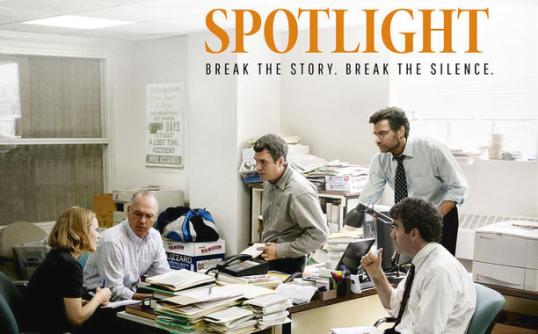
Earlier today, I finally got to see Spotlight, the film that is currently the front-runner to win the Oscar for best picture. Spotlight tells the story of how the Spotlight team, a group of journalists working for the Boston Globe, investigated the shameful history of sexual abuse of children by Catholic priests in the Archdiocese of Boston. Starting with charges against one priest, the Spotlight team eventually uncovered sexual abuse by at least 70 priests and also revealed that the revered Cardinal Law was involved in covering up the crimes.
Having now seen Spotlight, I can say it’s a good film. It’s well-made. It’s well-acted. The script contains some memorable lines. I’ve talked to a few friends of mine who have actually worked as journalists and they have all assured me that Spotlight gets the details of their profession correct and that it’s pretty much an authentic look at what it’s like to be a reporter at a major newspaper. There’s a lot of good things that can be said about Spotlight.
And yet, I’m not particularly enthusiastic about it. I think my main issue with the film is that it’s just such an old-fashioned and rather conventional film. It’s a throw back of sorts, an earnest exploration of a real-life outrage. (Even the fact that the heroes are journalists makes the film feel as if it was made a decade or two in the past.) On the one hand, you have to respect that director Tom McCarthy had the guts to tell his story in the least flashy way possible. But, occasionally, his by-the-book approach is not as compelling as you want or need it to be. Spotlight is a good film but it’s not a particularly challenging film and it’s the films that challenge us that truly stay with us after the final credits conclude.
Yes, it’s a good film but some are declaring that Spotlight is the best film of the year and I’m afraid that I just don’t see it. There are a lot of 2015 films that will probably still be fondly remembered 5 years from now: Ex Machina, Mad Max: Fury Road, Inside Out,Sicario, and others. When compared to those films, Spotlight feels more like an admirable made-for-TV movie. It feels more like something that should sweep the Emmys than the Oscars.
That said, Spotlight does feature some excellent performances. In fact, the entire cast does such a good job that it’s difficult to really single anyone out. They come together as a nearly perfect ensemble. (That said, I’m a bit torn on whether Mark Ruffalo came across as being passionate or merely mannered.) Michael Keaton, especially, does a good job, embodying everyone’s ideal image of a journalist with integrity.
Spotlight‘s a good film but my favorite Tom McCarthy movie remains Win Win.
It’s a little bit disheartening, to be honest, to see the lack of attention that has been given to Clouds of Sils Maria. Kristen Stewart has picked up a lot of awards for her supporting performance and she might even get an Oscar nomination on Thursday but otherwise, the film has been ignored and that’s a shame. Last year, it was one of the best films to be released here in the States.
Of course, it’s difficult to talk about Clouds of Sils Maria without also talking about Maps To The Stars. After all, both films premiered at the 2014 Cannes Film Festival and both of them deal with an aging actress struggling to remain relevant in an industry that prizes youth above all else. The main difference between the two is that Clouds of Sils Maria is a great movie while Maps To The Stars is a pretentious mess. And yet, when initially released, Maps To The Stars was the more critically acclaimed of the two films.
Why was that?
I imagine it has something to do with the fact that Clouds of Sils Maria demands a certain amount of intelligence on the part of the audience. Whereas there’s neither a subtle moment nor an unexpected detail to be found in Maps To The Stars, Clouds of Sils Maria rewards repeat viewing. Clouds of Sils Maria invites the audience to ponder its mysteries and it does so without spelling anything out. Clouds of Sils Maria is all about nuance and, as such, it’s not exactly the ideal film for critics who make their living off of clickbait.
As for what the film is about, it tells the story of Maria Enders (Juliette Binoche), a world-famous stage and screen actress. 20 years ago, Maria became a star when she appeared in both the theatrical and the film versions of Maloja Snake. Maria played the role of Sigrid, a callous young woman who seduces a middle-aged, bourgeois woman named Helena. When Sigrid eventually abandons Helena, the older woman is driven to suicide. Though she is now closer in age to Helena, Maria continues to think of herself as being Sigrid.
When the writer of Maloja Snake dies, Maria is offered a chance to appear in a new stage production. However, this time, she will be playing Helena and a young American actress named J0-Ann Ellis (Chloe Grace Moretz) will play Sigrid. (Jo-Ann is better known for her scandalous private life than her acting. Moretz appears to have a lot of fun playing the Lindsay Lohanesque Jo-Ann.) At first, Maria does not want to play Helena. She dismisses the role as being boring and says that she cannot see herself playing such a “normal” character. (As well, Maria is haunted by the memory of the death of the actress who originally played Helena opposite Mara’s Sigrid.) Even after Maria is finally convinced to take on the role, she continues to insist that she’s not right for it. As quickly becomes apparent, it’s not so much the role that upsets Maria but what the role represents. By playing Helena, Maria will be admitting that she is no longer the invulnerable Sigrid.
In order to rehearse, Maria retreats to a remote cabin in the Alps. Accompanying her is Valentine (Kristen Stewart), her assistant. At first, it seems that Val and Maria have an almost sisterly relationship but it quickly becomes obvious that the out-of-touch Maria is largely dependent on Val for any information about the outside world. (Maria has to be constantly reminded that she can google any information she needs.) Despite needing her, Maria occasionally talks down to Val (especially after learning that Val thinks Jo-Ann is a good actress and that Val likes a sci-fi film that Jo-Ann has appeared in) and Val occasionally seems to be annoyed with Maria’s neediness.
In the Alps, Maria continues to try to learn Helena’s role and, as the weeks pass, her line readings go from awkward to natural. Reading opposite her, in the role of Sigrid, is Val and, often times, it’s difficult to distinguish between the play and reality. How much of Val and Maria’s relationship is real and how much of it is just a rehearsal?
Clouds of Sils Maria is a visually stunning film, one of that is fully mystery and beautiful images. Even more importantly, it’s a film that features three strong roles for three talented actresses, all of whom do some of their best work. Clouds of Sils Maria did not get the attention that it deserved when it was first released but it’s never too late to discover a good movie.
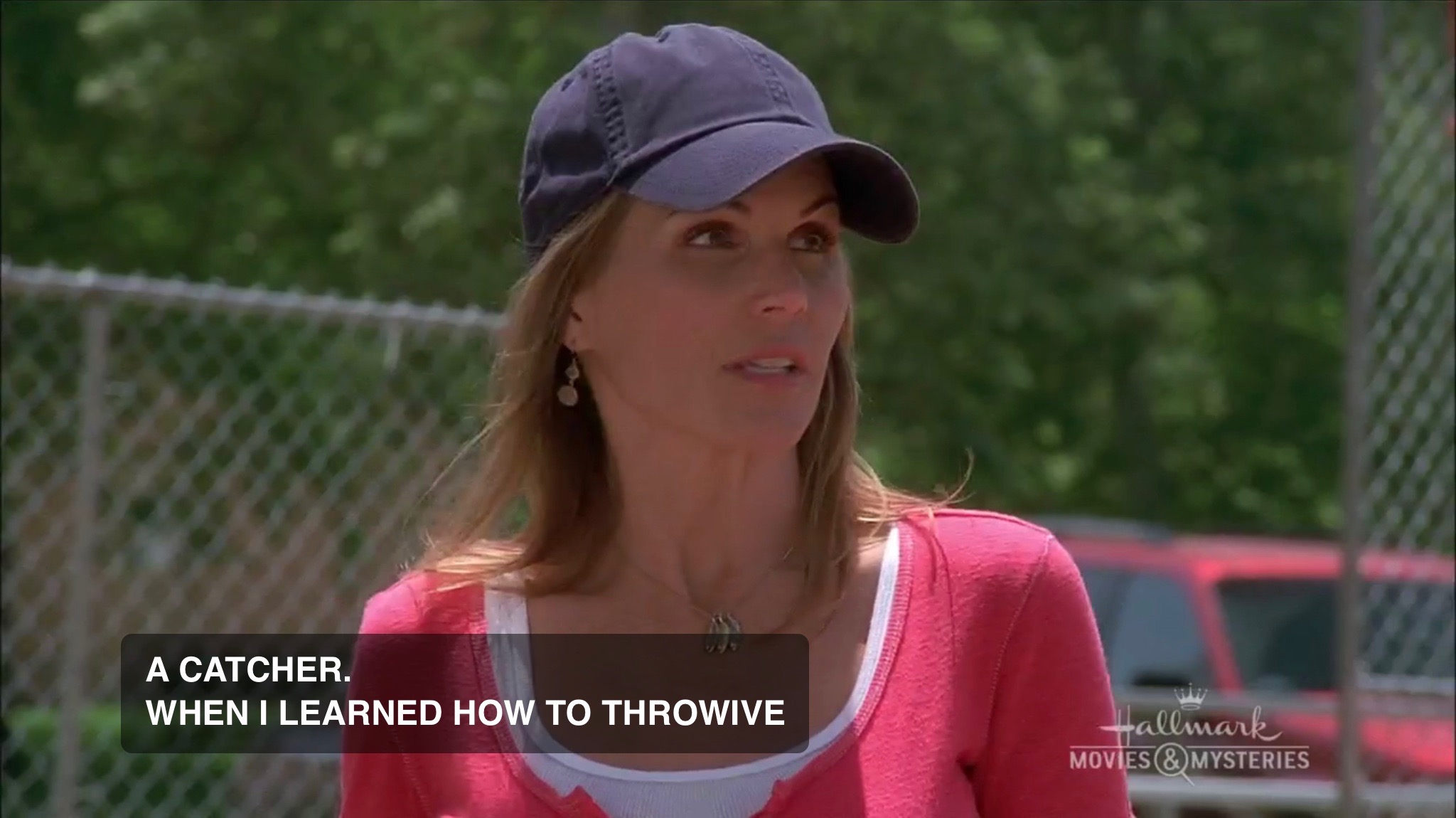
I hate Hallmark movies like this one. I say that because it really gives me nothing to talk about. The kid not wanting his room painted pink? Nothing really there. The throwing like a girl line? Nothing there either cause they tie that to the mother and the fact that she just isn’t very good at baseball having not really played it. Well, there is the stupid cutaways to her job that are there just to tell us that she isn’t supporting herself on sunshine and air. While they are stupid, at least they are there. The only legitimate issue I have is with the ending. Oh, well. Let’s take a quick walk through this thing. It’s not like the Hallmark gods are going to strike me down for writing a short review. And by Hallmark gods, I mean Michelle who I am surprised hasn’t been leaving me comments on every post asking where my review of A Christmas Detour is.
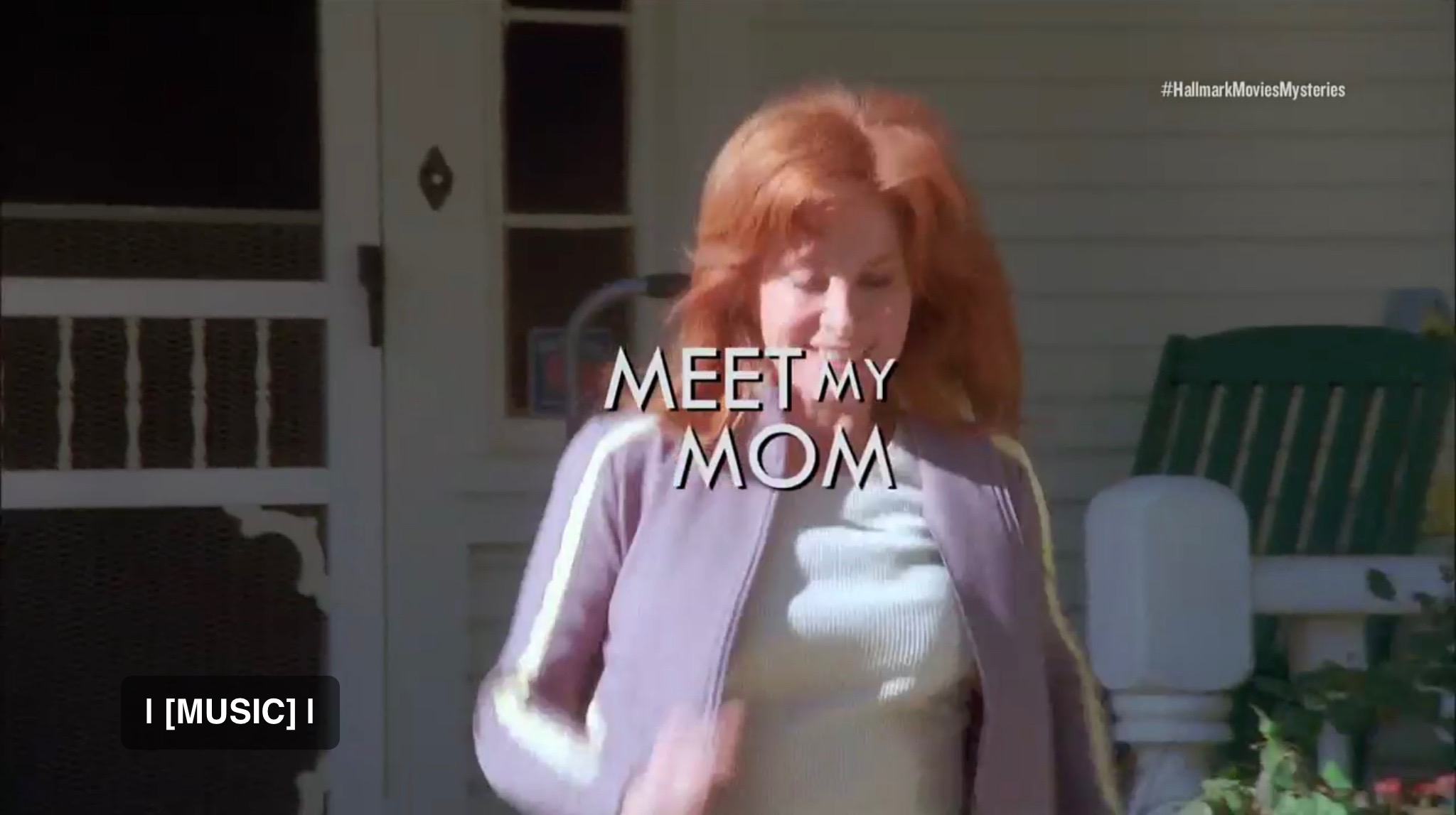
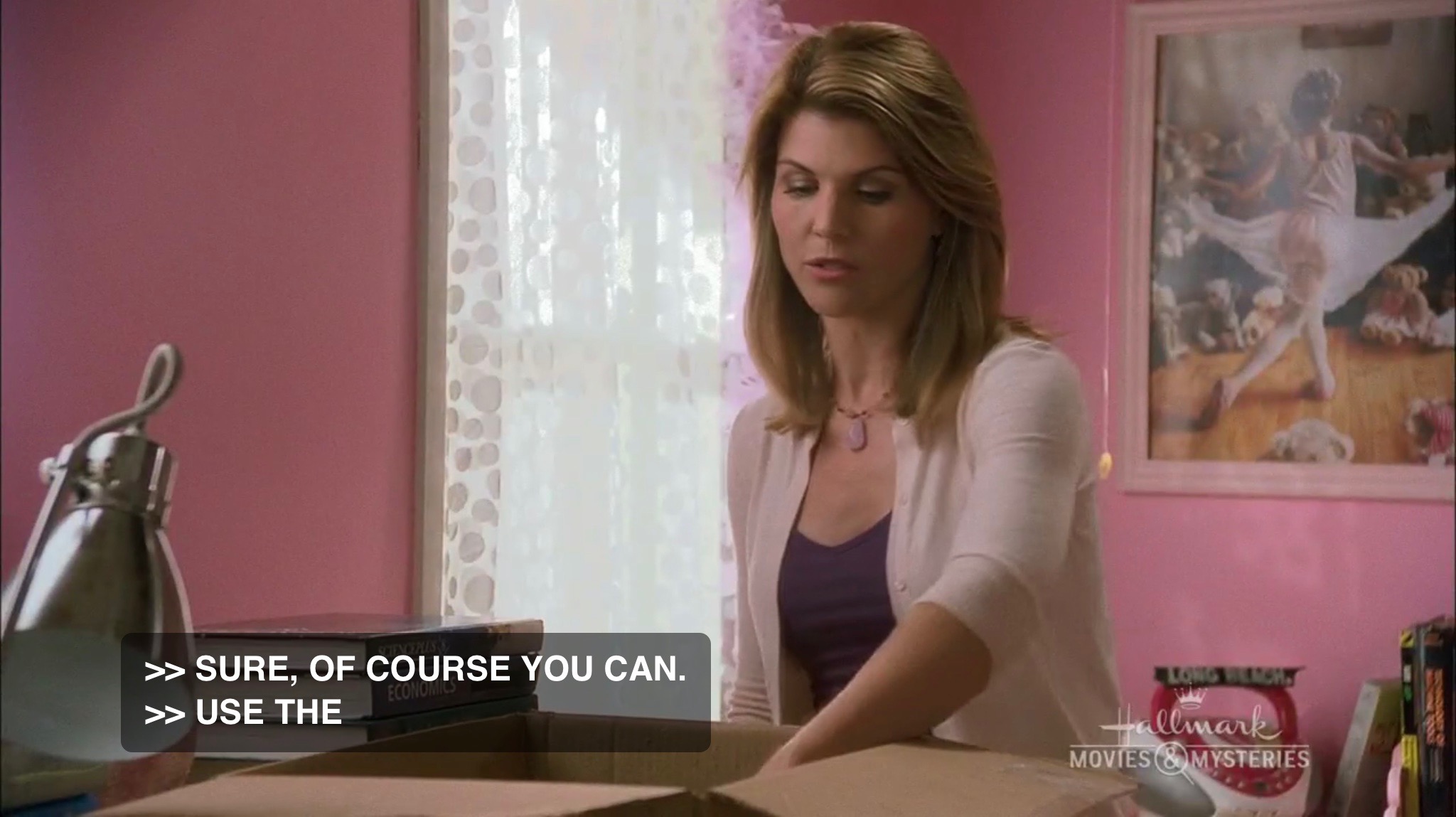
The title card showed Stefanie Powers who plays the grandmother in this movie. That’s Lori Loughlin of course who is looking in a box to prepare for her role in the Garage Sale Mystery movies. Actually, her and her son have just moved from Iowa to California because dad basically just left and lives in Florida now. He will hardly be mentioned and spoiler alert, will not show up near the end of the film to provide a last minute speed bump. And take a look at this!
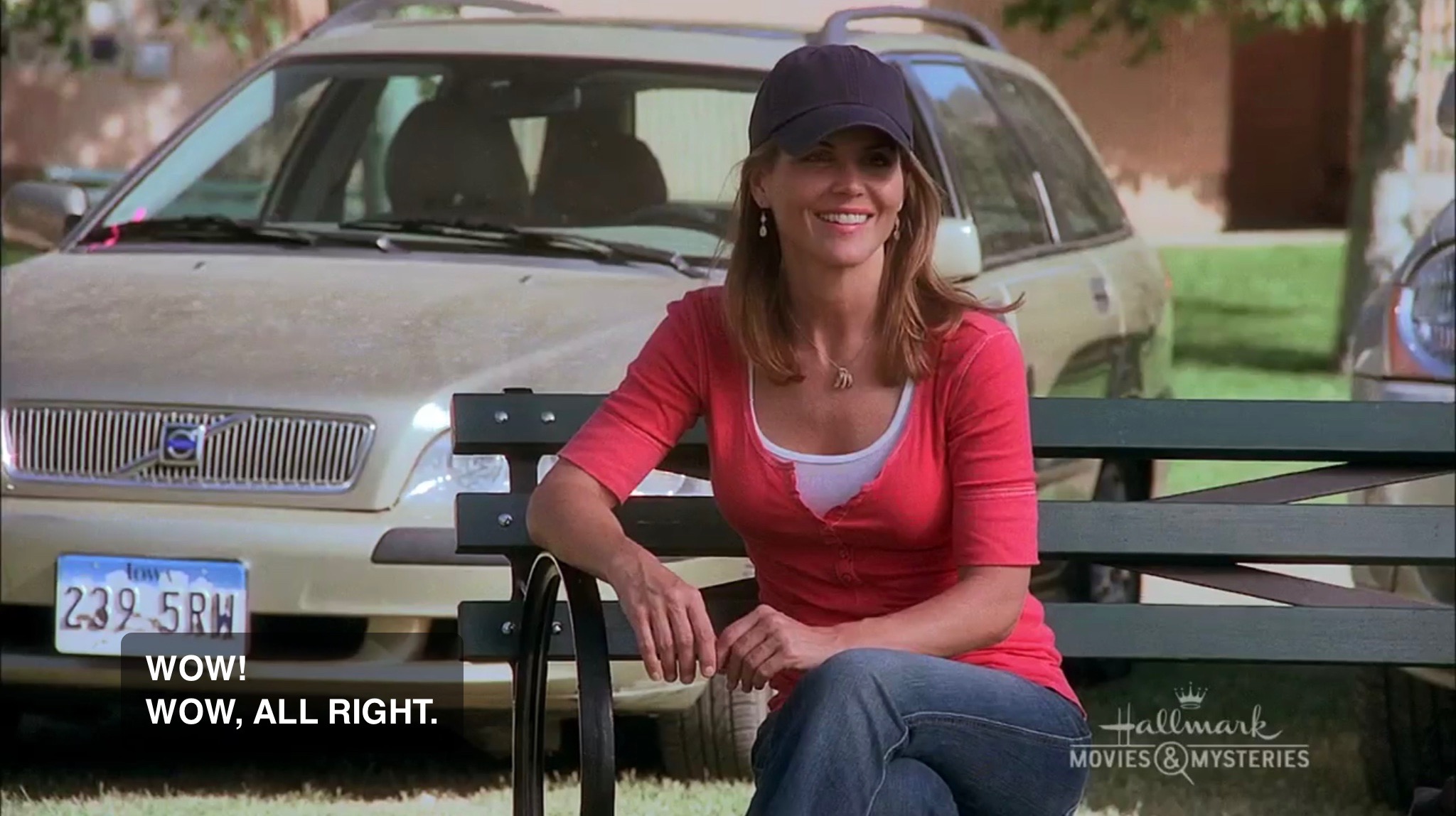
They actually bothered to have Loughlin’s car have an Iowa license plate! The rest of the cars have California license plates as they should, but hers doesn’t because she just moved there from Iowa.
Shortly after they arrive, we are introduced to the love interest.
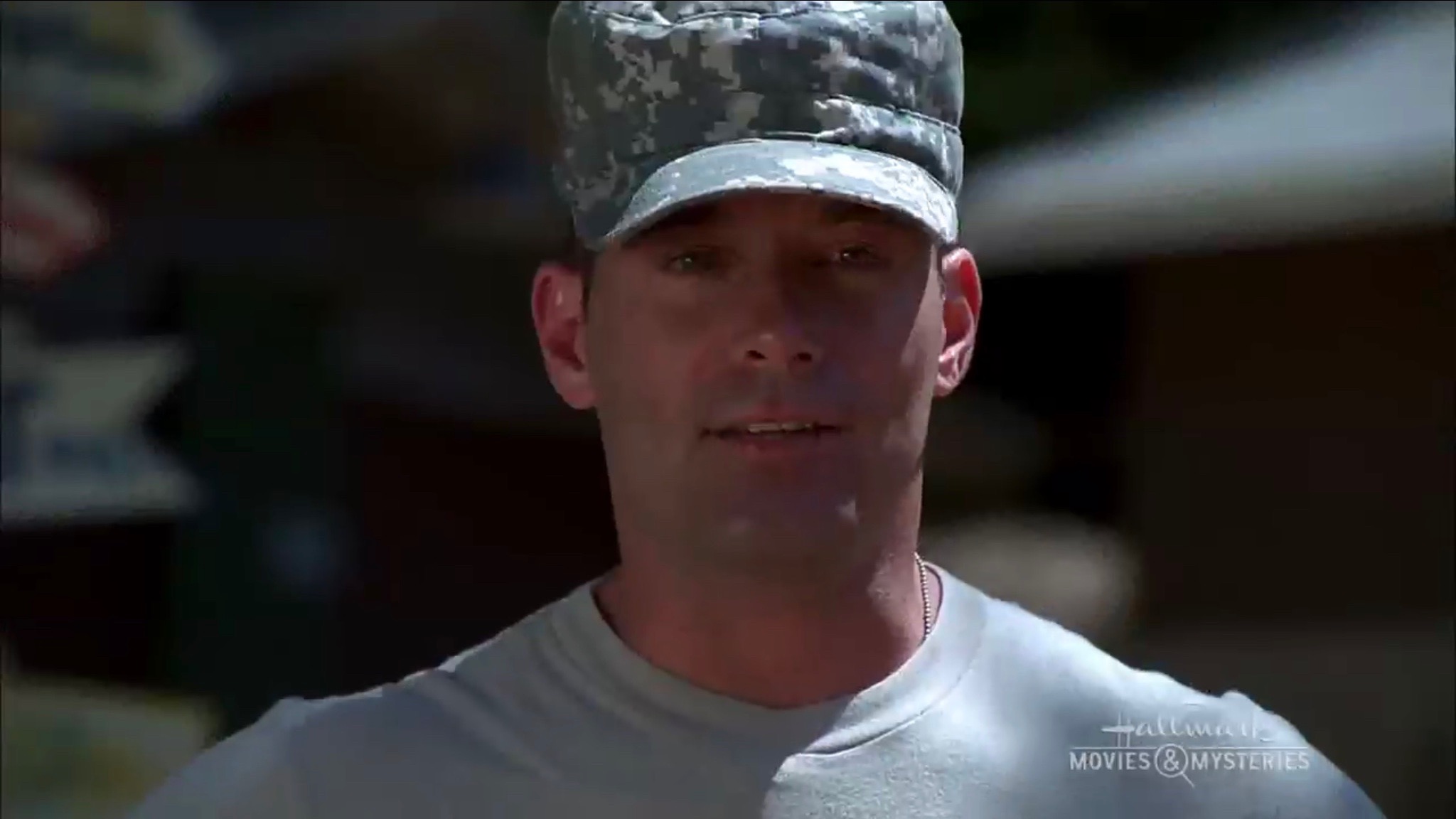
That’s Sgt. Vince (Johnny Messner). He starts the film off being stationed in Bosnia. He is a loner and once had a woman in his life, but she just couldn’t handle being married to a soldier. He’s not angry about it or anything stupid like that. He understands. That’s one of the really nice things about this film. They really cut out most, if not all of the bullshit that you usually expect in a Hallmark movie.
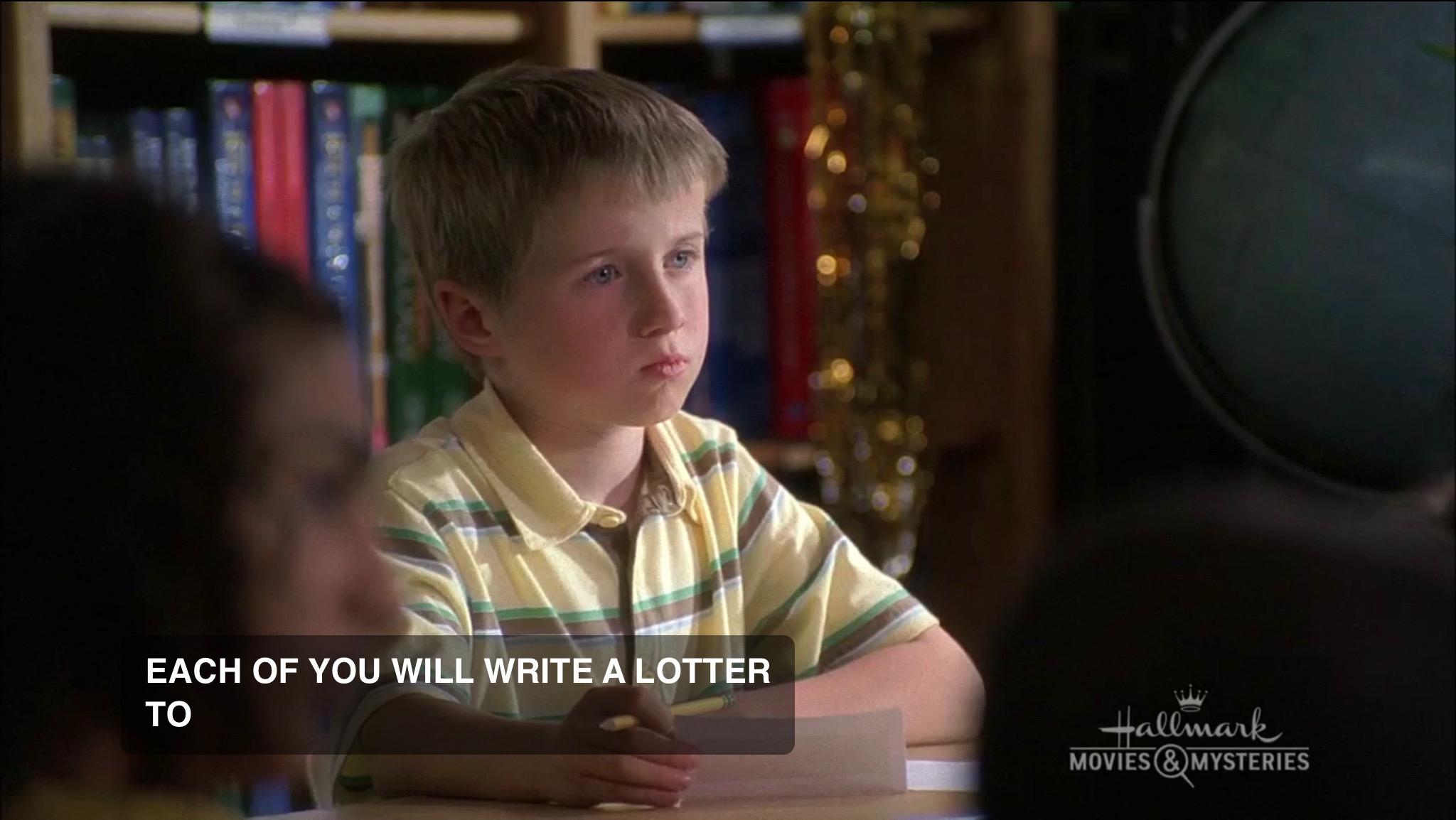
This is Loughlin’s son Jared (Charles Henry Wyson) looking like he wonders what a “Lotter” is. I’m sure the deaf and people who are hard of hearing who watched this were wondering what was being said a lot of the time. The deal is that his teacher wants the class to write letters to soldiers in Bosnia. Of course the kid is given the responsibility of writing to Sgt. Vince. Then of course Sgt. Vince comes home in short order and is stationed at a base very close to Loughlin and Jared. Then of course he shows up at their door.
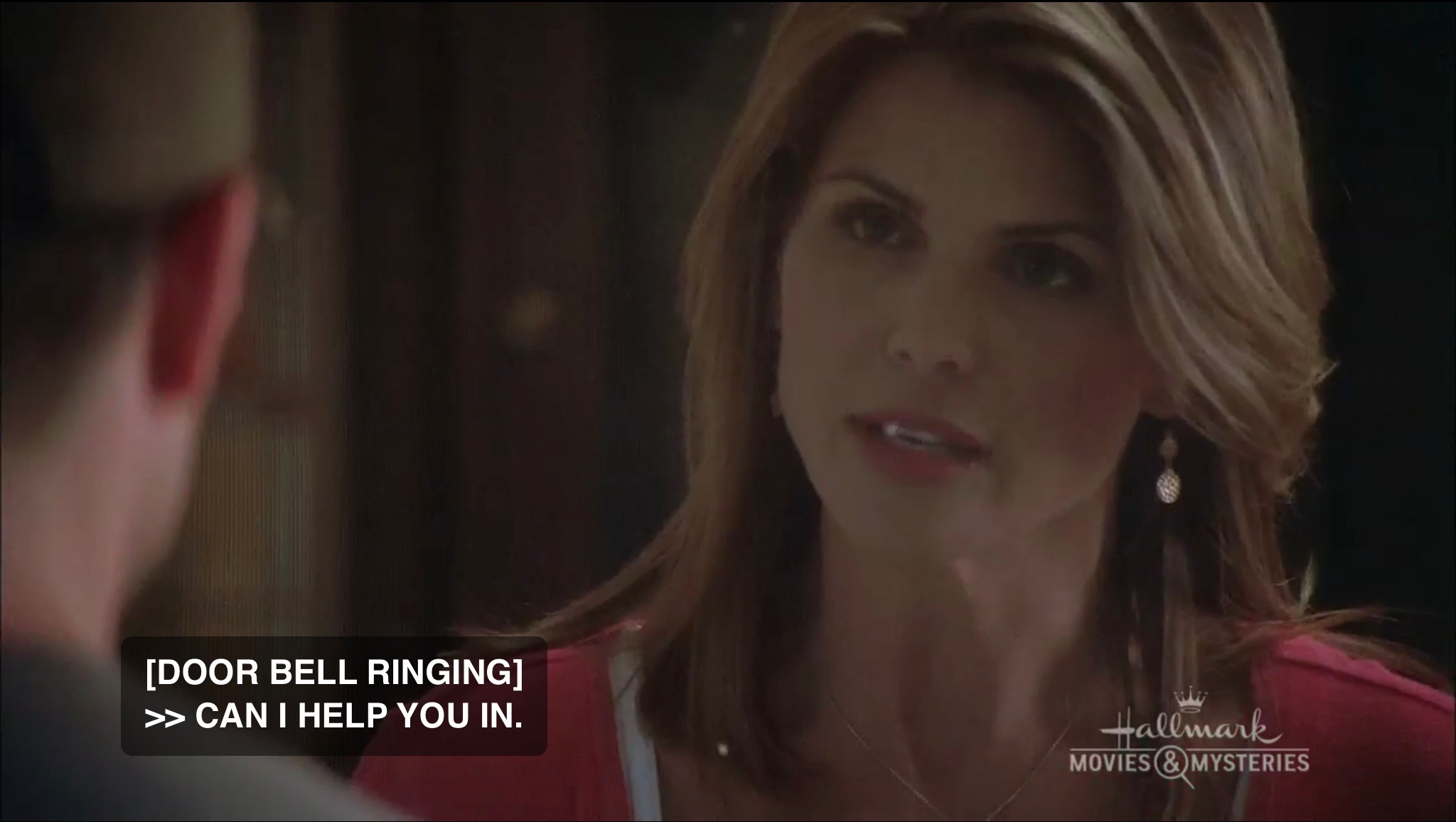
It’s okay though because while Loughlin has the screen door closed she looks like this.
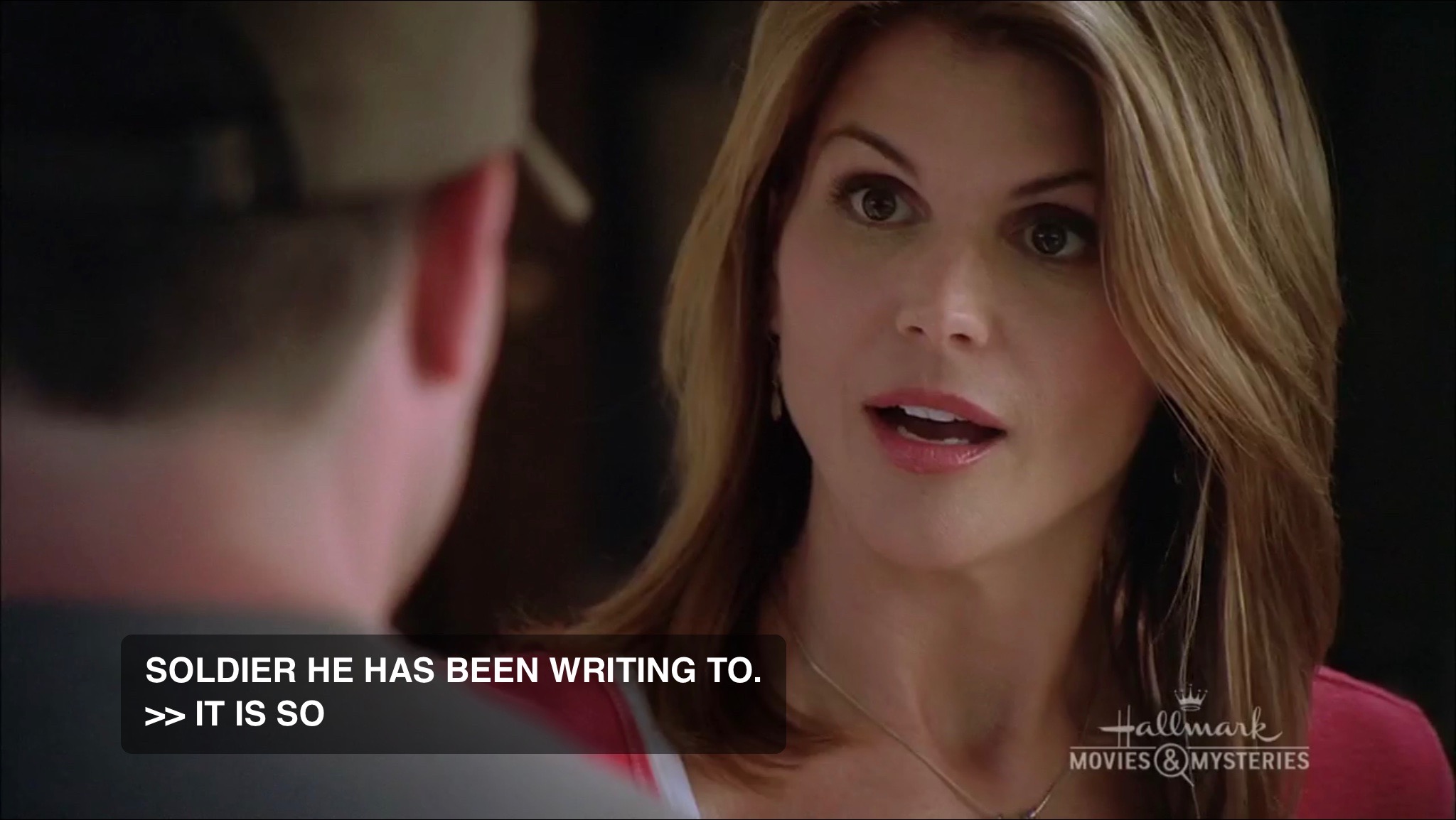
But as soon as she opens the screen door she looks like this.
I guess I did have some snark and jokes in me. That’ll happen after you sit through the first hour of Mockingjay, Part I, then come back to write the rest of your review. However, I’m very sorry, but I couldn’t find the clip from My Cousin Vinny (1992) on YouTube. So you’ll have to settle for me saying she only had the screen obscuring her vision of him and no dirty window, trees, with all those leaves on them, and seven bushes. I’m really sorry. YouTube failed me.
Anyways, in no time he’s helping the kid to learn to play baseball. Although, I seriously wonder what someone who can’t hear thought of this shot.
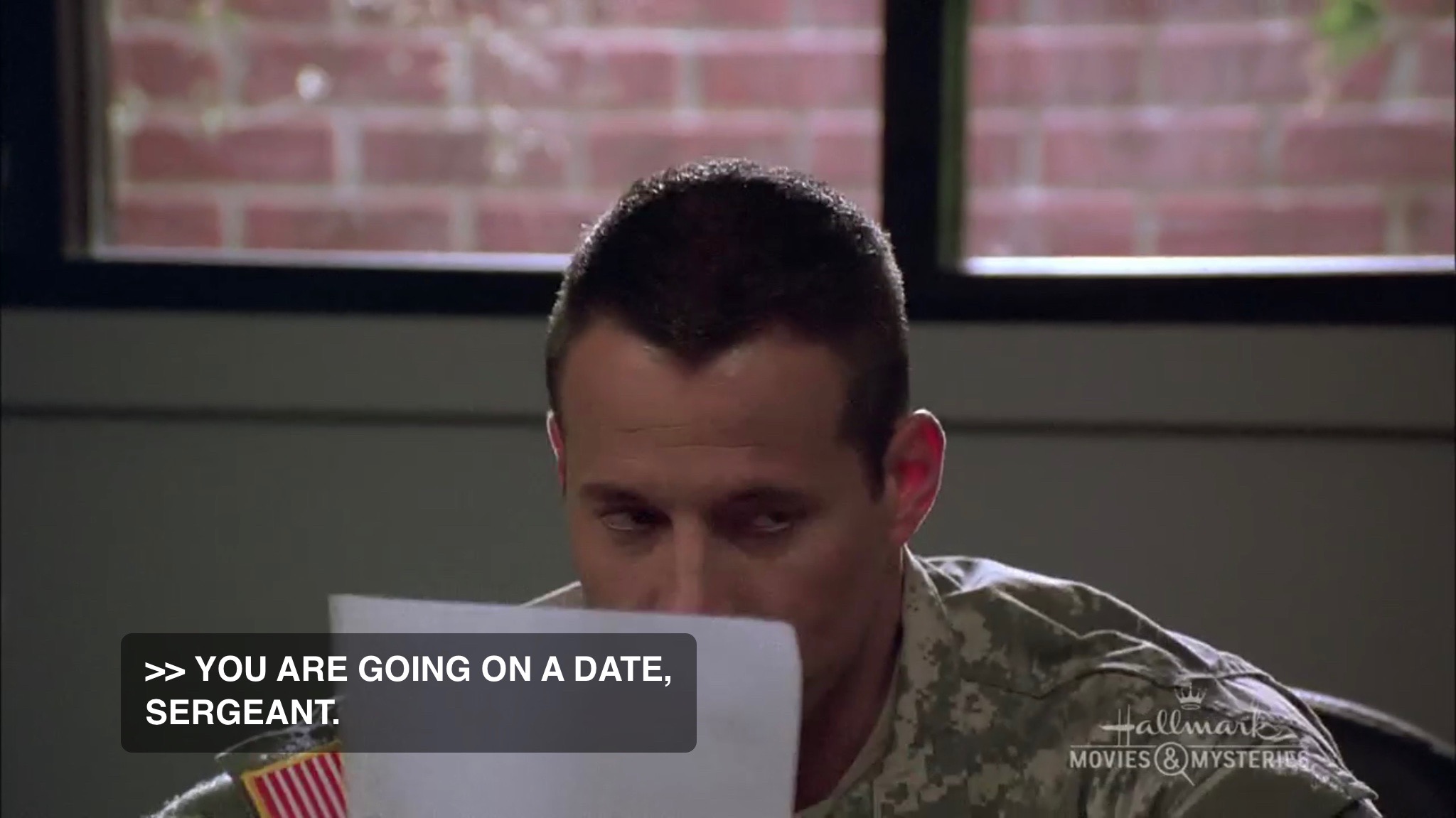
Back on the base, Vince’s friends couldn’t be happier for him. In fact, he has such a reputation that as soon as they find out he is supposed to be at the kid’s baseball game, hiding behind a piece of paper doesn’t protect him.
Oh, then the biological dad calls. Do you care? Cause the movie certainly didn’t. And thank you for not caring movie. I am so sick of Hallmark movies that suddenly bring back old flames just to create friction we know is ultimately meaningless. This movie really doesn’t bother with that nonsense.
At this point, the son kind of steps out of the picture. He does it willingly to make sure his mom and Vince spend some quality time together. He still tags along like when they go camping in the Ecuadorian jungle from The Wish List
No joke. That movie had one of it’s characters being driven in a jeep through bushes that were clearly in a Los Angeles area park and called it the Ecuadorian jungle. Looking back at my old review for that movie, I have no idea why I didn’t mention that.
Well, this is as good a time as any. While I know Lori Loughlin was 46 here, I still think she looks better than the 20 something actresses they usually get on Hallmark. Vince certainly likes what he sees.
I’d say this is when the film gets serious. He is going to ship out again. He really likes Loughlin and the kid. Also, Loughlin doesn’t like just working in drafting. She wants to be an architect. She even applies to go back to college to become an architect. They at first agree to separate, but quickly realize that’s just not going to work for them at this point. Now I am going to tell you the ending here because it’s where I have my real issue with the film.
He ships out. He’s still with Loughlin and the kid, but he leaves to go where he’s told to go by the army. I really did like that in Love in Paradise Luke Perry didn’t just up and quit acting. I also liked that the couple in Lead With Your Heart came to a real adult compromise. However here, his dialogue leads me to believe that he would really prefer quitting the army and being a stay at home dad. He talks about how baseball was a real passion for him, but it fell through. He talks about how architecture is a real passion for her. And it was clear as day to me that he would gladly spend his days taking care of Jared. Maybe he has a required enlistment time, but if they brought it up they certainly didn’t drive it home. They were shooting for making the film about a solider without a family pick up a family so he’s not really alone overseas. Heck, the original title for this movie was A Soldier’s Love Story, which clearly foreshadows this ending. It just wasn’t satisfying for me and didn’t jive with the material that winds down the film.
Now, all that said, this is definitely one of the better Hallmark movies out there. All of the four main characters have real parts which isn’t usual. Usually the kid would be non-existent or one dimensional. Also, Stefanie Powers would have been useless. Here she isn’t in a whole lot of the film, but when she is, she’s there for a reason. It’s not like Falling In Love With The Girl Next Door where I felt like they completely wasted Bruce Boxleitner and Shelley Long. I didn’t even bring up Vince’s friend on the base who is also good and serves the same purpose as Powers, but for Vince. There’s not really any forced Hallmark cliche stuff. It’s standard stuff, but isn’t “Oh, come on!” type stuff. Etc, etc, etc. Long story short, I still recommend this one despite my issue with the ending.
Since I have it and all. Here’s Loughlin judging me for reviewing this before her new Garage Sale Mystery movie.
It may be hard to remember this now but, at the beginning of 2015, a lot of film bloggers were very excited about an upcoming film from Pixar Studios. “This,” they said, “is the film that will remind people why they love Pixar in the first place! In fact, this might be the first animated film to get a best picture nomination since Toy Story 3!” Of course, there was another movie from Pixar that was due to come out in 2015 but everyone agreed that movie sounded too weird and silly to be a legitimate contender. One of the movies would be a huge success and the other would probably be forgotten in a year or two.
And, at the time, everyone was sure that The Good Dinosaur would be the triumph while Inside Out would be the also-ran.
Instead, the exact opposite happened. Inside Out turned out to be one of the most innovative and charming animated films ever. Meanwhile, The Good Dinosaur — despite being a financial and critical success — has struggled to escape from Inside Out‘s shadow.
But you know what? Taken on its own terms, The Good Dinosaur is a likable and entertaining movie. No, it’s not as good as Inside Out but then again, the same can be said for a lot of good movie that were released in 2015. Inside Out, of course, is a movie for adults that can still be enjoyed by kids. The Good Dinosaur is definitely a movie for kids but it’s still visually striking enough that adults can get something out of it as well.
Plotwise, The Good Dinosaur imagines a world in which that meteorite did not strike the Earth and dinosaurs and humans developed next to each other. A teenage dinosaur — eager to prove that he’s worthy despite being clumsy and easily scared — gets separated from his family and tries to get back to them. Along the way, he deals with villainous pterodactyls and befriends a human child that he names Spot. Sadly, the film brings about as much depth to the idea of talking dinosaurs as Pixar previously brought to the idea of talking cars but still, it’s an enjoyable and undeniably effective film. Unlike Inside Out, it may not be great but it’s definitely good enough.
The Peanuts Movie (dir by Steve Martino)
My sister Erin and I saw The Peanuts Movie when it first opened last November. As we left the theater, we both agreed that the movie was genuinely sweet and cute but that the ending just didn’t feel right. Ultimately, we agreed that the ending was just too happy.
I don’t claim to be the world’s biggest expert on the life of Charlie Brown but I do know that he’s been around for nearly 70 years and, in that time, I don’t think he’s ever really had a traditionally happy ending. From what I’ve seen of his holiday specials, it seems that Charlie is usually fated to end up sitting by himself while snow falls all around him. And really, that always seemed to be the main appeal of Charlie Brown as a character. Even though nothing ever goes his way, he never stops trying. Even though he may sometimes get discouraged, he never gives up. The Peanuts Movie actually rewards Charlie Brown for his patience and that didn’t quite feel right.
But you know what? Maybe, after 70 years, Charlie Brown has finally earned the right to have at least one unambiguously positive ending. The Peanuts Movie was a financial success so I imagine there will be a sequel. If, during that sequel, Charlie wins a game or kicks that football or gets a kite to fly or actually wears a flattering outfit, it’ll be a problem. But for now, it’s acceptable and perhaps even appropriate that he finally got to feel good about something at the end of The Peanuts Movie.
As for the rest of the film, it’s a cute homage to the original Peanuts specials. Despite that happy ending, it remains true to the spirit of its source material and it’s obvious that the filmmakers had a lot of affection for Charlie, Linus, Snoopy, and all the rest.
It’s funny, but according to IMDb this movie isn’t going to premiere until January 24th of this year. That must be huge news for Cinemax who had this in their app, which is where I watched it.
That title made me think I was in store for something like Bikini Avengers (2015), which funny enough has some of the same actors in it. Also, that title card does in no way tell you the kind of film you about to watch. Here’s a song that I think does a fine job of telling you what kind of movie this is. That being Alice Cooper’s Elected.
Yep, it’s a parody of pop culture and politics. And it’s actually pretty good.
I knew I was in for something decent when the movie opened with several shots like the one above. It meant someone was going to bother to add a little style and therefore probably actually have a story.
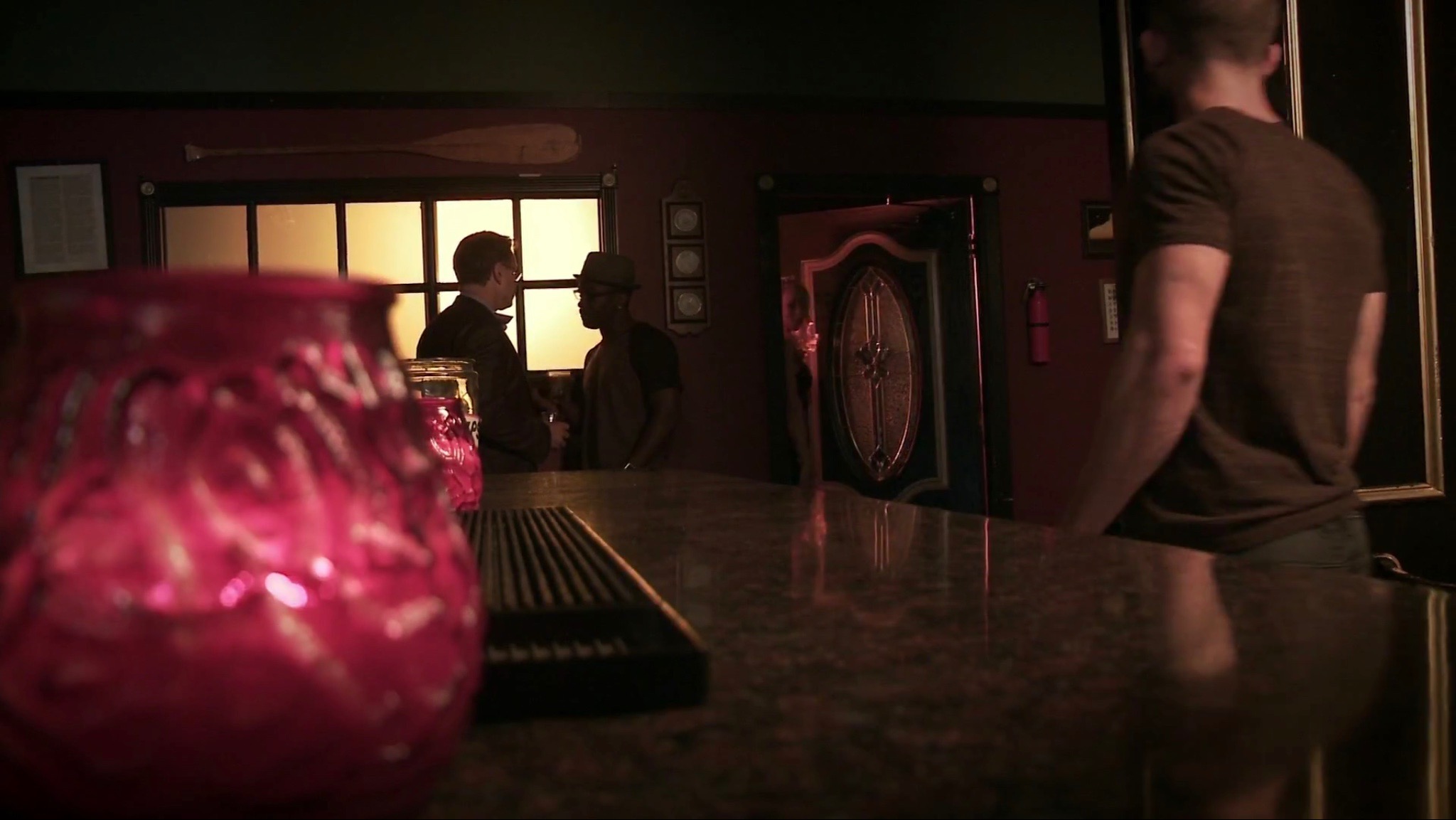
It begins when a woman named Augustine (Katie Morgan) walks into a bar and proceeds to try and seduce a politician named Bill (Eric Masterson). She’s certainly pretty. She’s definitely caught his eye. However, something just isn’t right. When he asks her if he can buy her a drink, she says:
After he tells her he needs to be careful being a politician and all she says:
She says it must have been a program glitch. Don’t know about you, but that’s all the proof I need. She’s hot. Augustine and Bill leave and go to have sex. They seem to be having a good time till…
Then her eyes light up and…
That’s when we cut to a lab where we see a guy in a tie and a guy in a lab coat looking at a monitor showing what the obvious robot…bikini model robot, as she is called, sees. No time for that though because we need to meet our leading lady!
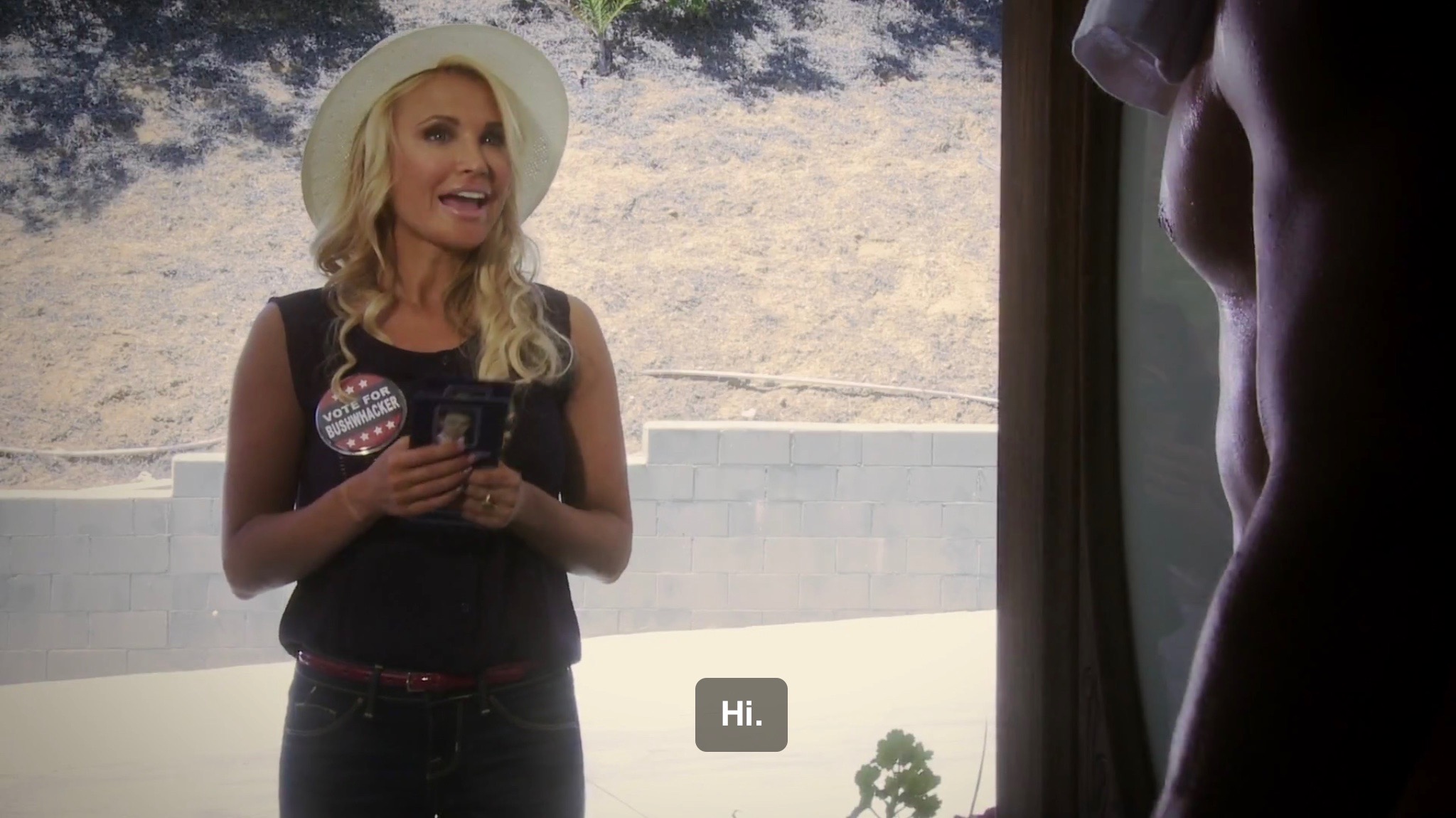
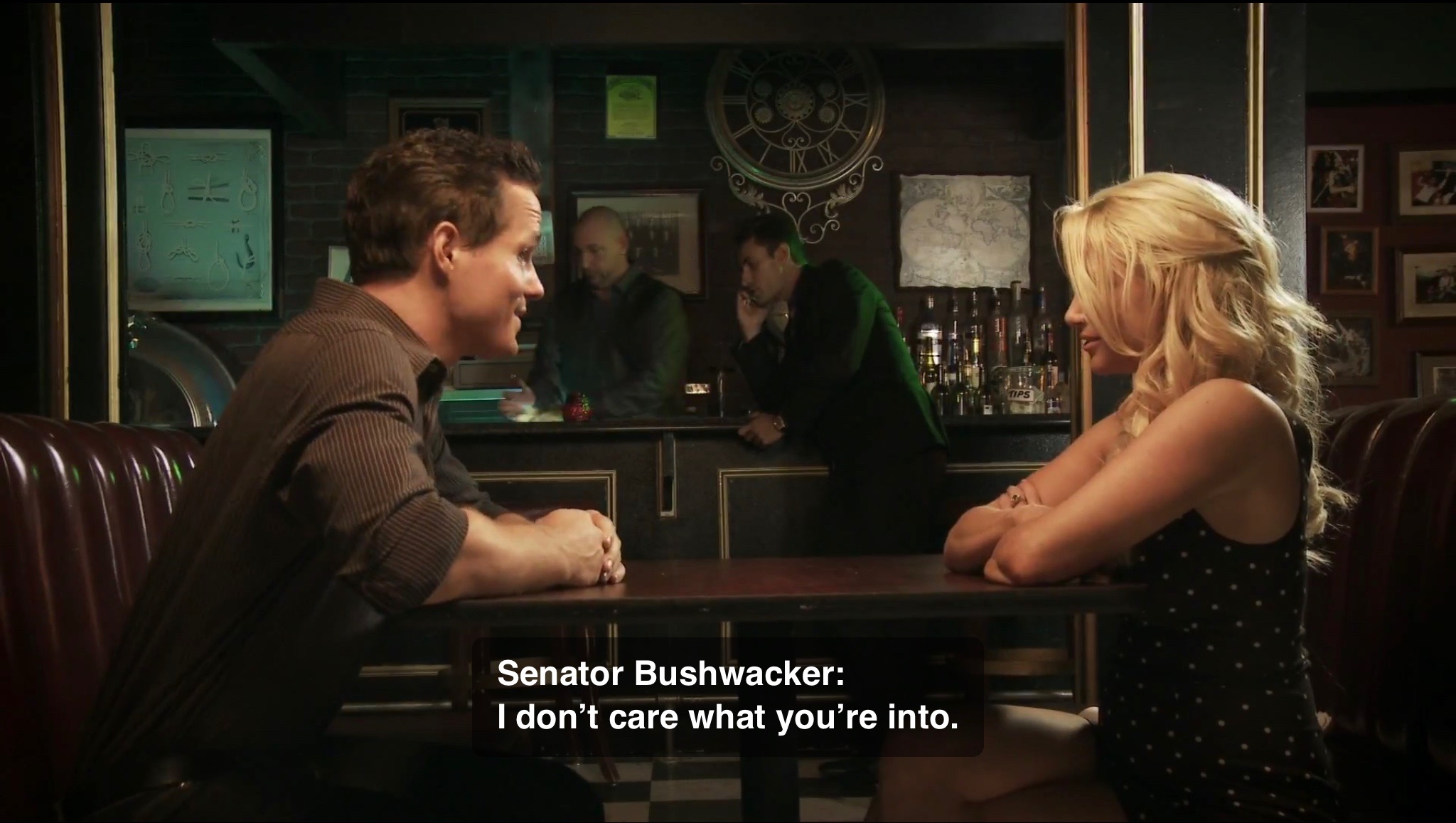
Don’t you love that I felt I needed to crop the title card to keep us from getting in trouble, but his breasts are perfectly G-Rated? Anyways, that’s Megan (Jacqui Holland). She’s canvassing the area to make sure people know to vote for Senator G.W. Bushwacker (Andy Espinoza Long) in his gubernatorial bid. Seeing as he’s got time to kill waiting for the cable guy, he agrees to hear her out. Clearly we need to hear about his positions. Policy positions as she corrects him.
She says that “unlike the other candidates in this race, Senator Bushwacker refuses to go negative.” That’s a load off my mind. I mean as she goes on to say “he could point out that Mayor Jefferson beats his wife, and he’s embezzled millions from the state treasury. And Sterling, well, he got his law degree from a Crackerjack box. And he has a hard drive filled with child pornography, not to mention his involvement in the kidnapping of the Lindbergh baby — but he won’t.”
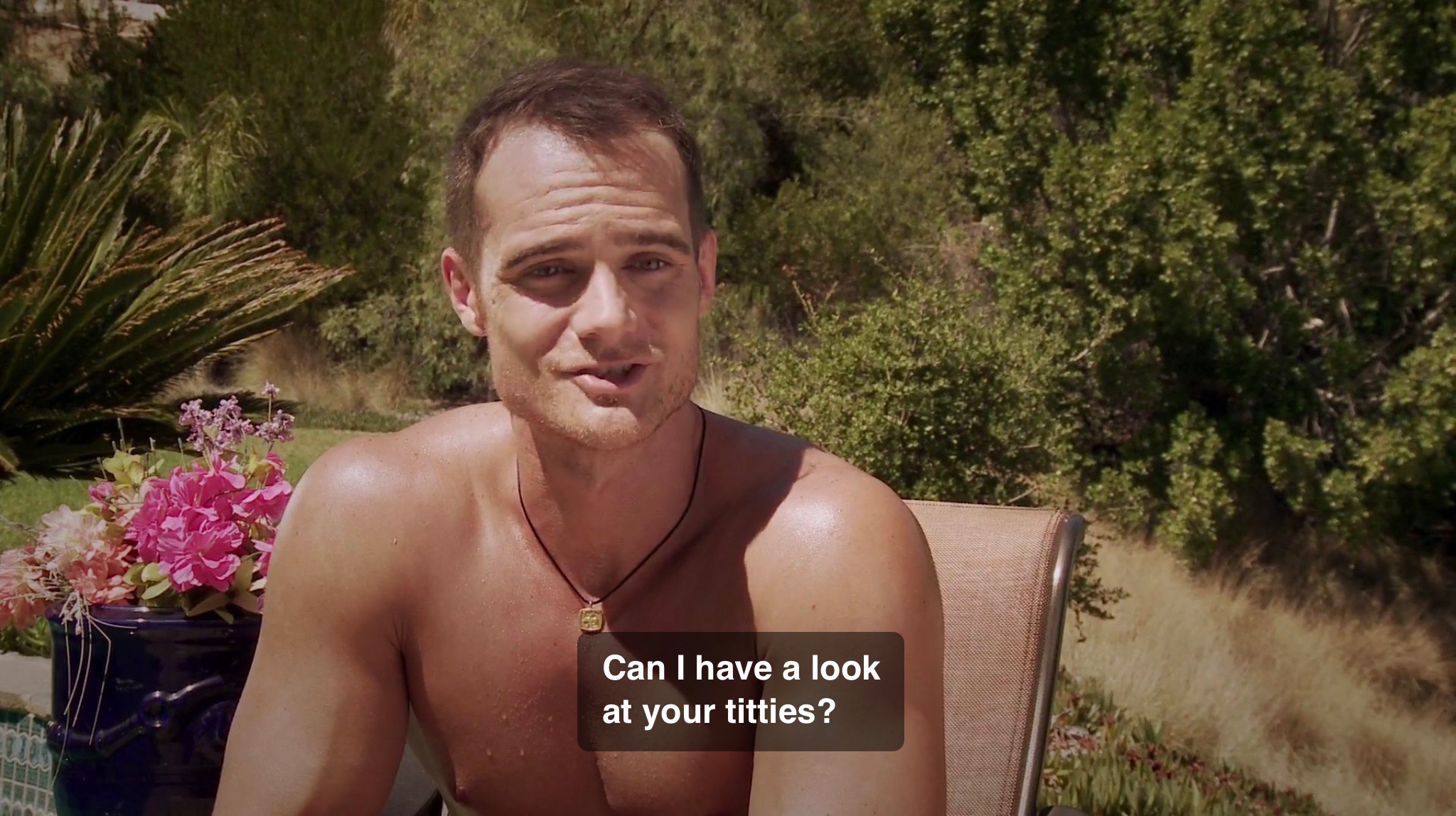
Phew! Good thing Bushwacker doesn’t throw around wild claims. This guy though, he’s skeptical and asks why he should believe what she says. Isn’t it obvious? Those things are in the “talking points” they gave her to take around while knocking on people’s doors. He concedes that those things may be in the talking points, but what’s in it for him. The wheels start turning in her head and she suggests higher wages. Boy this guy is a tough sell though cause he’s “still on the fence.” How about “lower taxes”, she says. “Warmer”, he replies. Then she has a moment of revelation: “How about the government keeping its stinking hands off your Medicare?” Course he’s a young guy so Medicare isn’t really an important issue for him. At this point she says “the choice is clear. It’s either the wife-beating embezzler, the pedophile kidnapper who passes himself off as a lawyer, or Senator G.W. Bushwacker, a true American patriot.” Oh, and then she remembers: “Did I mention you can keep your guns?”
I feel for this guy. I mean lower taxes sounds good. I don’t really have to worry about Medicare at this point, but it’s nice to know he’ll stand up for the elderly. Bushwacker is running a no negative campaign. Plus, he does’t beat his wife, embezzle money, isn’t a pedophile kidnapper, doesn’t pass himself off as a doctor…I mean a lawyer, and he’s a true American patriot. Clearly there is one more thing I know I would certainly need to ask before giving Bushwacker my vote.
I wish I could show you the look actress Jacqui Holland gets on her face as she reluctantly pulls up her top. It’s great! By the way, it’s her film. She steals the show. No sex scene happens though because we have more important things to attend to. We cut to the lab and find out that Bushwacker is working with a doctor to create bikini model robots to embarrass Bushwacker’s opponents. He wants robots so they can’t turn on him later like real women could. Makes sense.
Now we cut to Megan at home with her boyfriend. Megan is kind of broken up. She said, “I could barely even look at myself.” He tries to comfort her, but he clearly just doesn’t understand. She was talking about her most recent Facebook post of course! I mean it only got six likes. What the hell! Maybe some people just didn’t see the dress right.
I can’t say I expected that to come back around again. Regardless, he finds it weird that it’s that which has her broken up and not her taking her top off. Men! “Country first, babe. It was my patriotic duty.” A damn fine American. Oh, and they have sex.
Meanwhile, back in the lab they have made a new bikini model robot and they send her off to go after that lawyer. She says that she is being sexually discriminated against at her job. By that she doesn’t mean that anyone there won’t have sex with her. They’re not that discriminating. They just don’t want her wearing sexy clothes. She works at a retirement center after all. But the lawyer is not easily convinced. He needs to see exactly what happened. Apparently, some guy had a heart attack after she bent over. So she bends her breasts towards his face. He’s a good lawyer though. He says, “He’ll leave no stone unturned.” That means we need to make sure she didn’t bend over in the other direction.
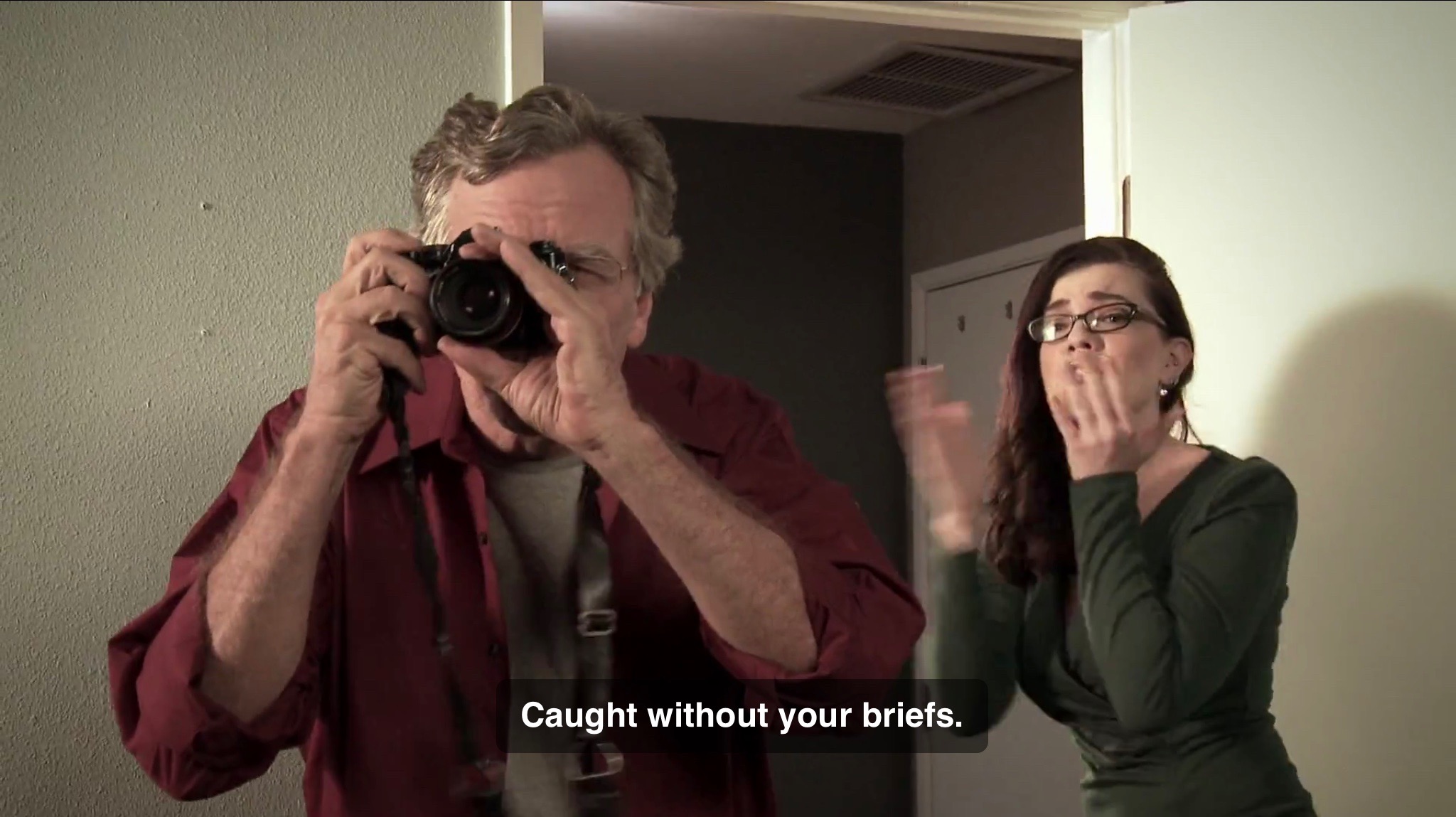
Poor actor Ryan Driller, if he’s not murdered like in Carnal Wishes, then they just shove a butt in his face. Of course they have sex till the photographer shows up.
Over at the campaign headquarters Megan gets to meet G.W. Bushwacker himself. And by that, I mean he tells her to take her clothes off and they have sex. And by they have sex, I mean it’s all in his head. But we do get another great Jacqui Holland facial expression!
Bushwacker invites her and the boyfriend out for drinks. Back in lab, the good scientist (Ted Newsom) makes sure his two bikini models are fully functional. I mean he makes them have sex with each other. At first they are hesitant because they are both girls, but they soon get into it just fine. During this we see a board that tells us bikini stands for Binary Instillation Kinetic Integration Naissant Intelligence. In other words, bullshit. Also, the scientist completely goes away during this scene just in case we weren’t sure that this scene is meant to both be for voyeurs of girl on girl and for people who swap themselves out for one of the girls. Now one of the dumbest things I have ever seen a movie do happens.
Let me explain what’s going on in that shot. The couple at the table are in the foreground, in focus, and are moving their mouths as if they are talking, but no sound whatsoever comes out of their mouths. All the sounds are coming from the guy in the background talking on his cellphone and to the bartender. And this goes on for awhile too. It took me some time to realize what was happening here. It’s not till he walks over to the table that the sound makes sense again. Wow!
One drink leads to another, then another, and Megan decides to ask Bushwacker about gay marriage. They drink to it with “bottoms up”. She says the talking points still say that Mayor Jefferson beats his wife, although he apparently has stopped, but now it also has the new information that he killed a guy. She also calls him on his bullshit about saying other politicians flip flop, but that when he does it he says he has simply “evolved”. According to Bushwacker: “He calls it like he sees it. Until he sees it differently.” Now the boyfriend gets up to take a bathroom break (clearly he’s not presidential material). In there he is ambushed by the two bikini models. Bushwacker then takes her to that bathroom.
That’s brilliant! Clearly somebody should have tried that during one of the debates. On the upside, at least we know Bushwacker will not be passing bathroom laws anytime soon seeing as he clearly doesn’t have a problem with men and women using the same public bathroom.
The next day the boyfriend has some explaining to do! Unfortunately for him, she’s seen the 1974 gay porn called Drive.
We cut back to the lab to find out the lawyer thing barely got a blurb in the paper before cutting back to Megan so we can get this line.
Actually, the movie Bad Johnson (2014) taught me that you just pee out your butthole when that happens. Also, 22 Jump Street (2014) taught us that they will just carve out a vagina for you. There’s plenty of ways to deal with peeing without a penis. Luckily for him, she does let him keep it. That’s when the robots show up before cutting to the lab.
Bushwacker doesn’t believe that his opponents will fall for the bikini models again. The scientist responds with, “Hmm, fool me once, shame on me, fool me twice, can’t get fooled again.” Bushwacker responds with, “I couldn’t have said it better myself.” This is the greatest part of the movie for me. Remember when G.W. Bush ran for president the first time? Remember one of his campaign songs? It was Won’t Get Fooled Again by The Who.
I remember very clearly because as soon as the news story talking about it ended, and it went back to the anchors, they immediately brought up that it was odd he was using it considering the song ends with the line: “Meet the new boss. Same as the old boss.”
Now Megan and the bikini models show up at the lab and lead Bushwacker to believe they are on his side. They even have an orgy with him. But then…
However, it doesn’t mean the scientist is off the hook. He did kind of make all this nastiness possible. His response is that “we all have our little peccadilloes.” Or as he puts it succinctly, he gets his kicks from “schadenfreude”. Cue sirens and Megan says: “I think I hear your ride now.”
This is the kind of late night cable movie I love. If you are looking for one of these movies to check out, then just like Carnal Wishes, I recommend this one. Heck, I think I recommend this one even more. At least of the ones in the Cinemax app.
The Stanford Prison Experiment (dir by Kyle Patrick Alvarez)
The Stanford Prison Experiment tells a true story. It’s important to point that out because this is one of those films that, if you didn’t know it was based on a true story, you would probably be inclined to dismiss as being totally improbable.
In 1971, Professor Philip Zimbardo (played in the movie by Billy Crudup) conducted a psychological experiment at Stanford University. A fake prison was built in the basement of a campus building, complete with cells and even a room to be used for solitary confinement. 15 students volunteered to take part in the experiment. For $15.00 a day, some of the students were randomly assigned to be prisoners while others got to be guards. The experiment was supposed to last for two weeks but Zimbardo ended it after 6 days. Why? Because the students had started to the take the experiment very seriously, with the guards growing increasingly sadistic towards their “prisoners.” Afterwards, many of the prisoner students claimed to have been traumatized while the guard students felt they were just playing a game.
(As one of the guards says in the film, “Am I still going to get paid?”)
The Stanford Prison Experiment tells the story of that controversial experiment and it is, at times, quite a harrowing experience. Interestingly, when the film begins, the focus is on the prisoners. I immediately noticed that Ezra Miller was one of the prisoners and, being familiar with his work in Perks of Being A Wallflower and We Need To Talk About Kevin, I naturally assumed that the majority of the film would revolve around him. After all, among the actors playing the prisoners, Ezra Miller was the “biggest name.” And, when the film began, it did seem to be centered around Miller’s likable and rebellious presence.
But then something happened. Miller faded into the background. In fact, all of the “prisoners” faded into the background and the actors became almost indistinguishable from each other. Instead, the film started to focus on one of the guards. Outside of the prison, Christopher Archer (Michael Angarano) is a laid back and rather amiable California college student. But, once he shows up for the night shift, Archer starts to talk about all of the prison films that he’s seen. He starts to speak in a Southern accent. He says stuff like, “What we have here is a failure to communicate.” And soon, Archer is making the rules inside the prison.
In much the same way that Christopher Archer takes over the experiment, actor Michael Angarano takes over the film. While Zimbardo and his colleagues watch Archer’s actions with a mix of fascination and fear, the film’s audience becomes enthralled with Angarano’s intense performance. Wisely, neither Angarano nor the film allow Archer to turn into a cardboard villain. He’s not a bad guy. Instead, he’s playing a role. He’s been told to act like a guard and that’s what he’s going to do, regardless of whatever else may happen. The most fascinating part of the film becomes the contrast between Archer the likable student and Archer the fascist authority figure.
It’s frustrating that more people didn’t see The Stanford Prison Experiment when it was released in 2015. Considering the blind trust in authority that is currently so popular in certain parts of the American culture, The Stanford Prison Experiment is a film that a lot of people really do need to see and learn from.
The Tribe (dir by Myroslav Slaboshpytskiy)
Anyone who says that they truly understand everything that happens in the disturbing Ukrainian film The Tribe is lying. Taking place at a school for the deaf and exclusively cast with deaf actors, The Tribe is a film where everyone communicates in Ukrainian Sign Language and there are no subtitles. However, the actors are often filmed with their back to the camera and occasionally, their hands are out of frame so, even if you do know Ukrainian Sign Language, there’s still going to be scenes where you have no idea what anyone is saying.
And it’s appropriate really. The Tribe is a film about alienation and, by refusing to give us either an interpreter or subtitles, it forces the audience to feel the same alienation that the film’s characters have to deal with on a daily basis. It quickly becomes obvious that these permanent outsiders have created their own society and the least of their concerns is whether the rest of the world understands it.
What can be learned about the film’s story largely comes from the body language of the actors and the audience’s own knowledge of gangster movies, which is what The Tribe basically is. A new student at a boarding school for the deaf is recruited into a gang that deals drugs and pimps out two female students as prostitutes at a truck stop. When the new student falls in love with one of the girls, it leads to some truly brutal acts of violence, all of which are somehow made more disturbing by the fact that they take place in total silence.
(The talkative criminals of most gangster films allow audiences to focus on something other than the violence. When people talk about the opening of a film like Pulp Fiction, they talk about John Travolta and Samuel L. Jackson talking about Amsterdam. They don’t focus on the guys getting gunned down in their apartment. In The Tribe, there are no quips or one-liners before people are hurt and we are forced to pay more attention to the consequences of brutality.)
The Tribe is made up of only 34 shots. The wide-angle lens forces us to consider these alienated characters against the barren Ukrainian landscape and the camera constantly moves with the characters, tracking them as closely as fate. Intense and dream-lie, The Tribe is a hauntingly enigmatic film. It’s not an easy film but it is a rewarding one.
It’s funny (or perhaps not) when you think about it. I’ve always taken my right to vote (and, in theory at least, have some say over how I’m governed) for granted. Even before I turned 18 and officially registered, I never had any doubt that, some day, I would be able to vote for President and every other elected office. (And, even before that, I voted in student council and mock presidential elections.) Voting is something that I so take for granted that, even when I cast my first official vote in the 2004 Presidential election, it didn’t really mean much to me. Given the choice between Bush and Kerry, I wrote in the name of Charles Jay, the candidate of the Personal Choice Party. I knew nothing about Mr. Jay but I had come across his name online and I liked the idea of personal choice and I thought it would make for a funny story to tell all of my friends who were actually taking the election seriously. (Even back then, I enjoyed annoying people who actually cared.) Essentially, I threw my vote away and I did it without a second thought.
Of course, what I didn’t understand at that time was that the right to vote was something that many brave women had fought for, gone to prison for, and even died for. If I had lived before 1920, I would not have had the right to vote and I certainly would not have had the opportunity to so casually toss my vote away. Women in the U.S. did not win the right to vote until 1920. But before everyone starts in with the usual “America is so backwards!” crap, consider this. In Britain, women did not win the right to vote until 1928. Women could not vote in France until 1944 and Switzerland waited until 1984! Last year, women in Saudi Arabia voted for the first time.
The struggle of British women to gain equal rights under the law is the subject of the film Suffragette. Maud Watts (played by Carey Mulligan, my generation’s Audrey Hepburn) is a laundress living in London in 1912. She spends her day working for little money and for a male boss who, for years, has sexually harassed and abused the women working under him. Unlike a lot of the women who work at the laundry, Maud has a stable home life. She is a devoted mother and her husband, Sonny (Ben Whishaw), is supportive.
Or, at least, he seems to be at first. Things chance once Maud gets involved in the suffragette movement. It’s not just that her lecherous boss laughs at her for wanting to be treated equally, That, we expect. No, what is truly infuriating is to watch how quickly Sonny goes from being a loving husband to a monster, the type who forbids Maud from seeing her own son and then callously puts the boy up for adoption. Confronted by his wife’s demand to be treated as his equal, Sonny reveals himself to be no better than the casual misogynists that Maud must deal with, on a daily basis, at work. Raised on a diet of films where men come to their senses and justice (and love) somehow prevails, I kept expecting Sonny to see the error of his ways or for Maud to at least be reunited with her son. Needless to say, none of that happened. This is a film that never lets us forget the sacrifice involved in fighting for equal rights.
Instead, having lost everything that previously defined her life, Maud throws herself into the battle for women’s rights. And, as Suffragette makes clear, that meant a lot more than just winning the right to vote.
It’s an inspiring story and both Carey Mulligan and Helena Bonham-Carter (who plays another suffragette) give powerful performances. At the same time — and this is something that many critics need to understand and acknowledge — you can love a film for what it has to say while, at the same time, acknowledging that it doesn’t totally work as a piece of cinema. Suffragette is not a perfect film and reviewing it, I found myself torn between praising the film’s message and criticizing director Sarah Gavron’s frequently uninspired cinematic technique. (From a strictly cinematic point of view, Suffragette will play better on television than on a big movie screen.)
Perhaps for me, the film’s great weakness was casting Meryl Streep in the role of real-life activist Emmeline Pankhurst. Ms. Pankhurst was the leader of the Suffragette movement and is an inspiring historical figure. Unfortunately, as soon as Meryl shows up for her four-minute cameo, it becomes impossible to see her as being anyone other than Meryl Streep, a wealthy white woman who — unlike the real-life Ms. Pankhurst — will never be sent to prison for demanding the right to vote. When Meryl shows up as Ms. Pankhurst, it takes the viewer out of the historical reality of the film. You’re no longer watching a group of brave women risking their lives and demanding to be treated equally under the law. Instead, you’re just watching a Meryl Streep cameo.
Throughout the film, Maud stays in a succession of safe houses and decrepit offices. She always has a picture of Ms. Pankhurst near her and occasionally, she looks to it for strength and guidance. However, since the picture of Ms. Pankhurst is really just a picture of Meryl Streep, it again serves to take the viewer out of the film. Perhaps if Meryl Streep had more screen time, she would be able to get us to think of her as being Ms. Pankhurst but since she’s only onscreen for four minutes, she instead just serves to distract from the film’s message.
(Personally, I would have cast either Emma Thompson and Kristin Scott Thomas in the role of Ms. Pankhurst, two great actresses who would could have portrayed her charisma without being quite as distracting as Meryl Streep.)
As I said earlier, Suffragette is not a perfect film but it does teach an important lesson that needs to be learned, especially by those of us who occasionally take our rights for granted. It’s a film that reminds us that years ago, brave women fought for everything that we have now and it’s a film that encourages us to keep fighting. It’s not a perfect film but it’s a film that deserves to be seen.
There’s always a little bit of risk involved in making a list of the 16 worst films of the year. People take movies very seriously and, often times, the crappiest of films will have very passionate (and very ignorant) defenders. I was reminded of this in November when I wrote my review of The Leisure Class and I discovered that there actually are a few misguided dumbfug toadsuckers who actually enjoyed that movie.
But you know what? Even with that risk, I always enjoy making out my worst-of-the-year list. Let’s be honest: stupid people tend to like stupid movies. And it’s important to point out that stupidity. Only by pointing it out can we hope to defeat it. I’m sure that some people will disagree with some of my picks. After all, people initially disagreed with me when I announced that Man of Steel was the worst film of 2013. However, just 2 years later, most people now realize that I was right. There were also people who insisted, in 2011, that Another Earthwas a great movie. Again, they now realize that they were wrong and I was right.
So, with all that in mind, here are my picks for the 16 worst films of 2015! For the most part, 2015 was a pretty good year for cinema. However, there were still a number of terrible films released and here’s 16 of them.