Insomnia File #52: The Next Karate Kid (dir by Christopher Cain)


What’s an Insomnia File? You know how some times you just can’t get any sleep and, at about three in the morning, you’ll find yourself watching whatever you can find on cable or Netflix? This feature is all about those insomnia-inspired discoveries!

If, over the next few weeks, you find yourself having trouble getting to sleep, you might be tempted to log onto Netflix and watch the fourth season of Cobra Kai.  That’s certainly what I’m planning to do over the course of the next few days.  However, before you watch Cobra Kai, you should make sure that you’ve seen all of the earlier Karate Kid films because you never know who might show up on the show.  I mean, if Thomas Ian Griffith is coming back, anyone could be coming back!  And that includes Julie Pierce, the young karate student at the center of 1994’s The Next Karate Kid.

Julie (played by Hillary Swank) is a troubled teenager.  She lives in Boston with her grandmother.  She attends a high school that is run by a weirdly fascistic self-defense instructor named Colonel Dugan (Michael Ironside), who teaches all of the jocks to be tough, ruthless, and to show no mercy.  When Julie’s grandmother leaves to for Los Angeles so that she can relax, Julie’s new caretaker is an old family friend who turns out to be Mr. Miyagi (Pat Morita).

At first, Julie wants nothing to do with Miyagi.  She’s still angry about the death of her parents in a car crash.  All she wants to do is take care of a falcon that lives on the roof of the school.  She does like a boy named Eric McGowen (Chris Conrad) but Eric is also friends with the members of Colonel Dugan’s paramilitary gang, the so-called Alpha Elite.  She needs someone who can understand her and her anger and, at first, Miyagi doesn’t seem like he’s capable of doing and of that.  But then Miyagi discovers that Julie has a natural talent for jumping on top of cars and this leads to….

Well, you know what it leads to.  It’s The Next Karate Kid!  Ralph Macchio was 33 years old when this film was first released and was a bit too old to still be playing a kid so the film’s producers tried to reboot the franchise by giving Miyagi a new student.  The Next Karate Kid pretty much hits all of the story beats from the first film, though it does change things up by not featuring a karate tournament.  Instead, it all leads to a post-prom fight between Miyagi and Dugan.  This film is your only chance to see Pat Morita face off against Michael Ironside and that’s got to be worth something.

The Next Karate Kid does not have a particularly good reputation and, watching the film, I understood why.  There’s very little of the spontaneity or the wit that made the first film memorable.  That said, I did appreciate Michael Ironside’s villainous turn.  If Hillary Swank doesn’t necessarily give the type of performance that would make you think, “Future two-time Oscar winner!,” she still does a good job of portraying the anger that’s at the heart of the character.  If nothing else, The Next Karate Kid deserves some credit for taking Julie’s anger seriously as opposed to just writing it off as being a “teen girl thing.”  The Next Karate Kid wasn’t as bad as I expected but it was still hard not shake the feeling that it was largely unnecessary.

That’s said, I still look forward to Julie’s eventual visit to Cobra Kai.

Previous Insomnia Files:

  1. Story of Mankind
  2. Stag
  3. Love Is A Gun
  4. Nina Takes A Lover
  5. Black Ice
  6. Frogs For Snakes
  7. Fair Game
  8. From The Hip
  9. Born Killers
  10. Eye For An Eye
  11. Summer Catch
  12. Beyond the Law
  13. Spring Broke
  14. Promise
  15. George Wallace
  16. Kill The Messenger
  17. The Suburbans
  18. Only The Strong
  19. Great Expectations
  20. Casual Sex?
  21. Truth
  22. Insomina
  23. Death Do Us Part
  24. A Star is Born
  25. The Winning Season
  26. Rabbit Run
  27. Remember My Name
  28. The Arrangement
  29. Day of the Animals
  30. Still of The Night
  31. Arsenal
  32. Smooth Talk
  33. The Comedian
  34. The Minus Man
  35. Donnie Brasco
  36. Punchline
  37. Evita
  38. Six: The Mark Unleashed
  39. Disclosure
  40. The Spanish Prisoner
  41. Elektra
  42. Revenge
  43. Legend
  44. Cat Run
  45. The Pyramid
  46. Enter the Ninja
  47. Downhill
  48. Malice
  49. Mystery Date
  50. Zola
  51. Ira & Abby

Norwood (1970, directed by Jack Haley, Jr.)


Norwood Pratt (played by country singer Glenn Campbell) is a just a good old boy who has just returned home from serving in the Marines over in Vietnam.  After saying goodbye to his Marine buddy, Joe William Reese (played by quarterback Joe Namath), Norwood heads to his hometown of Ralph, Texas.  Norwood discovers this his sister (Leigh French) has married an idiot named Bill (Dom DeLuise!)

Norwood gets a job working at the local garage but he’s got his guitar and he’s got his dreams.  All he wants to do is play his music on the Louisiana Hayride radio program.  But with no money and no connections, how is he going to make it there?  When a shady businessman (Pat Hingles) offers to pay him fifty bucks to drive a car and prostitute (Carol Lynley) to New York City, Norwood agrees.  When Norwood discovers the car is stolen, he abandons both the vehicle and the girl but he still heads up to New York City.

Norwood has plenty of adventures and he meets plenty of people, like a hippie (Tisha Stirling) who invites him to open mike night at a coffee house in the Village.  Later, she invites him to join her in a bathtub by asking him if his guitar plays underwater.  “No, ma’m,” Norwood says, “but I do.”  He also meets a pregnant teenager (Kim Darby, Campbell’s co-star from True Grit) and a little person (Billy Curtis) who is traveling with a super intelligent chicken.

There have been a lot of very good films made about the struggle of military veterans to transition back to civilian life after their tour of duty comes to an end.  Unfortunately, Norwood is not one of those films.  Both Norwood and Joe have just returned from Vietnam but neither one of them seems to carry any lingering effects from their time overseas.  Neither of them shares any war stories or any thoughts on war in general.  (Someone does point out that Norwood has a scar.  Norwood says it’s a war wound that he got when he accidentally fell off a water truck.)  There’s no hint that the war itself was not going well for the United States in 1970 or that it wasn’t a popular war and that returning veterans often felt as if they had been rejected by the same country that asked (or forced) them to serve.  Even when Norwood meets the hippies in the Village, there’s no mention of protests.  Instead, Norwood presents 1970 as a time with no real conflicts, which is the perfect era for someone as forgettable as Norwood Pratt to become a star.

Norwood has the same basic and episodic structure as an Elvis movie, except that Elvis could actually act when he wanted to.  No one can deny Glenn Campbell’s talent as a singer but as an actor, he had very little screen presence.  In True Grit and this movie, the best that he could come up with was an amiable dullness.  In True Grit, it didn’t matter because John Wayne was in the movie.  But in Norwood, Campbell had to carry the story and his acting limitations were much more obvious.  Campbell even managed to get outacted by Joe Namath, who, as far as pro football player-turned-actors were concerned, was no Alex Karras.  Wisely, Campbell didn’t further pursue a career as an actor and instead concentrated on singing.  When Campbell died in 2017, he was praised for both his musical legacy and his honesty and courage while facing Alzheimer’s.  He may not have made it as an actor but he still touched a lot of lives.

I Watched Epiphany (2019, dir. by Koula Sossiadis Kazista and Katina Sossiadis)


Luka (Caitlin Carmichael) is a teenage girl who lives in Florida with her Uncle Peter (George Georgiou) and her father, Theo (Alex Dimitriades).  Theo has only recently reentered Luka’s life and Luka was raised by Peter and his wife, who has recently died of breast cancer.  Peter and Theo both make a living diving for sea sponges but business is slow, Theo is drinking too much and still having nightmares about the things that he saw when he was growing up, and Peter is hooked on painkillers.  Both Peter and Theo came to America from Cyprus but neither tells Luka much about her family’s past or why there is still so much bad blood between the two brothers.

After Luka is caught stealing for a church collection plate, she’s sentenced to do community service.  Working at a retirement community, she meets an old Greek man (Burt Young) who also doesn’t like to talk about his past.  Even though he’s grumpy and everyone else is scared of him, Luka bonds with him and discovers that they have something in common.  Meanwhile, Theo tries to come to terms with the past with the help of his new girlfriend, Cari (Scottie Thompson).

The plot of Epiphany meanders from one incident to another and, at first, I wondered if it was all going to lead anywhere.  But eventually it does, especially as Luka learns more about her Cypriot heritage and the tragedy that neither her father nor her uncle can recover from.  Some of it, like the identity of the old man, was a little predictable but, overall, I enjoyed Epiphany.  Caitlyn Carmichael is great as Luka and it was impossible for me not to relate to her and her coming-of-age story.  It’s a sweet movie with a good message about redemption and forgiveness.  I liked it.

International Film Review: Purple Noon (dir by Rene Clement)


Early on in the 1960 French film, Purple Noon, there’s a scene in which a young American con artist named Tom Ripley (Alain Delon) looks at his reflection in a mirror, leans forward, and kisses it.

What are we to make of this scene?  The easiest assumption would be to say that Ripley is a narcissist and certainly, there is some truth to that.  Delon was 25 when he appeared in Purple Noon and the famously handsome actor was probably never better-looking than he was at that time.  As well, Delon was an actor who brought, at the very least, a hint of narcissism to every role that he played.  That was a part of his appeal.  He looked like an angel but he moved like the devil and, when the camera focused on his face, it was easy to see that there were less than pure thoughts brewing underneath the beautiful surface.

However, in Purple Noon, there’s more to that mirror kiss than just Tom Ripley (or, for that matter, Alain Delon) admiring his own reflection.  Instead, Tom has dressed up in the clothes of Philippe Greenleaf (Maurice Ronet) and, when he speaks to his reflection, he speaks in an imitation of Philippe’s voice.  He addresses his words not to his reflection but to Philippe’s girlfriend, Marge Duval (Marie Lefort).  When he kisses the mirror, is he kissing himself, Marg, Philippe, or himself as Philippe?  Perhaps every answer is correct.

Tom Ripley is a young man who doesn’t appear to have much going on inside of him but who has definitely learned how to fake it enough to get by.  He went to school with Philippe, a wealthy and casually cruel heir to a fortune. Because Philippe is currently living a rather decadent life in Europe, Tom has been hired by Philippe’s father to bring his son back to San Francisco.  Tom, who were told grew up without money and who Philippe’s father used to dislike because he felt that Tom’s manners were too “common,” is happy to finally be a part of Philippe’s world and, when we first see them together, it appears as if Philippe is happy to have Tom as a part of his life as well.  We watch as they give money to a blind man and then buy his cane.  Though Philippe is the one who proceeds to walk around with the cane while pretending to be blind, it’s hard not to notice that Tom is the one who suggested the idea to him.  For Philippe, deception is a game whereas, for Tom, it’s a way of life.

As the opening scene of the film suggests, things are not always how they seem.  It quickly becomes apparent that Philippe’s charm and money hides a cruel and sadistic streak and, when he grows bored with Tom’s sycophantic ways and Tom’s constant requests for money, Philippe decides to send him away.  Unfortunately, for Philippe, Tom is not ready to leave and he’s certainly not ready to abandon Marge, though it’s left to the viewer to decide if Tom is truly attracted to Marge or if he’s just attracted to the fact that she’s a part of Philippe’s world.  Because Tom has no identity, it is disarmingly easy for him to slip into a new one, whether it means becoming a friend, a criminal, a loyal employee, or even Philippe himself.  During one eventful afternoon, Tom and Philippe’s relationship comes to a violent conclusion while the two of them are on a yacht that’s floating in almost indescribably beautiful sea of water.

If this all sounds a bit familiar, it may be because, while Purple Noon may have been the first adaptation of Patricia Highsmith’s classic novel The Talented Mr. Ripley, it was not the last.  In 1999, Matt Damon starred in The Talented Mr. Ripley, another adaptation of Highsmith’s classic thriller.  Directed by Anthony Minghella, The Talented Mr. Ripley is a bit more faithful to its source material than Purple Noon and yet I have to say that, even with all of the liberties that it takes to Highsmith’s original story, I actually prefer Purple Noon.  They’re both good films but Purple Noon is the one that sticks in the viewer’s mind.

While Matt Damon may be the better actor of the two, Alain Delon was the better Mr. Ripley.  Delon’s natural lack of expressiveness may have often made him seem stiff and remote as a performer but it is ideal for a character like Tom Ripley, one who only exists on the surface.  Whereas Damon’s Ripley is obviously unstable from the minute he makes his first appearance, Delon’s Ripley has perfected a sort of likable blandess.  The viewer can believe that Philippe and Marge would want to spend time with Delon’s Ripley while also understanding why Philippe would quickly grow bored with him and his superficial ways.  Damon’s Ripley realizes that his crimes have determined his future whereas Delon lives day-to-day as an existential con artist, improvising his way from one crime to another.  Whereas the second adaptation was a big and glamorous production, Purple Noon takes a far grittier approach.  Director Rene Clement emphasizes the shadows and the ominous atmosphere that dominates Ripley’s world.

Purple Noon does slightly alter Patricia Highsmith’s original ending, something that Highsmith was reportedly not at all happy about.  Highsmith reportedly felt that Alain Delon masterfully captured Ripley’s character while complaining that the film’s ending was a concession to “public morality.”  (Interestingly, when Wim Wenders made his own film about Tom Ripley, The American Friend, Highsmith had the opposite reaction, appreciating that the film retained her downbeat ending while complaining that Dennis Hopper’s performance as Ripley was not true to the character she had created.)  One can understand and even agree with Highsmith’s objections while also appreciating that the Purple Noon‘s ending does actually work quite well for the story that’s been told.  For all of his cleverness, not even Tom Ripley can escape the randomness of fate.

Film Review: All The King’s Men (dir by Steven Zaillian)


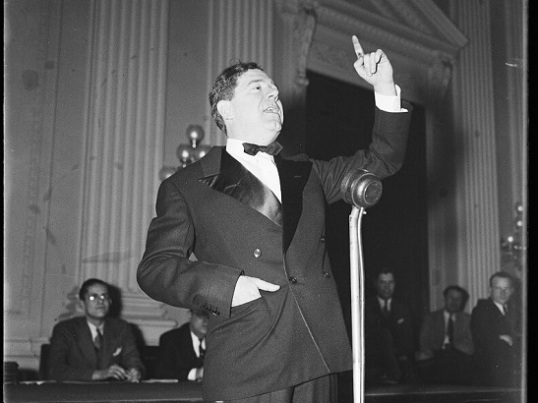
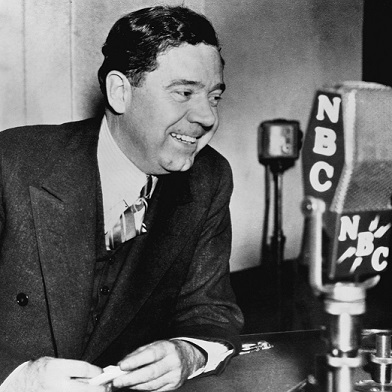
On September 10th, 1935, a Senator named Huey Long was shot and killed at the Louisiana State Capitol in Baton Rogue.

While it’s generally agreed that Carl Weiss, the son-in-law of a political opponent, approached Long, there’s still some debate as to whether or not Weiss was the one who shot Long. Did Weiss fire one shot at Long or was Long himself accidentally shot by his many bodyguards, all of whom opened fire on Weiss? (Weiss died at the scene, having been wounded at least 60 times.) There’s even some who argue that Weiss didn’t even have a gun on him when he approached Long and that Long’s bodyguards misinterpreted Weiss’s intentions. Or, as some more conspiracy-minded historians have suggested, perhaps Long’s bodyguards were themselves paid off by one of Long’s many enemies. With Huey Long, anything was possible.

Huey Long has been described as being an American dictator, a man who ran for office as a populist and who, as governor and then senator, ruled Louisiana with an iron fist. His slogan was “Every man a king,” and he promoted a platform that mixed Socialism with redneck resentment. (In modern terms, he mixed the vapid but crowd-pleasing rhetroic of AOC with the bombastic but calculated personal style of Donald Trump.) He often played the flamboyant buffoon but he also knew how to reward his friends and punish his enemies. At the time of his death, he was planning to run for President against FDR. It’s said that, in typical Long fashion, he planned to run as a third party candidate and draw away enough votes from Roosevelt to allow Republican Alf Landon to win. Then, in 1940, Long would run for the Democratic nomination and send President Landon back to Kansas.
Huey-Long-radio-3000-3x2gty-5c2934d246e0fb00012da4a1

Whether his plan was feasible or not, they came to an end with his death. However, his legacy continued as members of the Long family dominated Louisiana politics for decades to come. Huey’s brother, Earl, served as governor of Louisiana for several contentious terms. Huey’s son, Russell, spent nearly 40 years in the Senate and, as chairman of the Finance Committee, was one of the most powerful men in the country. As late at 2020, Huey’s third cousin was serving in the Louisiana Senate. In the past few years, both Donald Trump and Bernie Sanders have been compared to Huey Long. Of course, if Huey were alive today, he’d probably be very popular online. Political Twitter has never met an authoritarian that it couldn’t make excuses for.

Among those who were fascinated by the life and death of Huey Long was a Southern poet and novelist named Robert Penn Warren. Warren used Long as the basis for Willie Stark, the man at the center of the novel All The King’s Men. In the novel, Stark is a classic and tragic American archetype, the man of the people who loses his way after coming to power. Stark starts the book as an idealist who wants to make life better for the poor but who, as he works his way up the political ladder, loses sight of why he first entered politics in the first place. He goes from fighting for the people to fighting only for himself. The book was controversial but popular and won the 1947 Pulitzer Prize. In later interviews, Warren often said that All The King’s Men was never meant to be a book about politics but instead a book about two men, Willie Stark and reporter Jack Burden, losing their way during the tumult of the Great Depression.  Regardless of Warren’s intentions, most readers and critics have focused on the book as a cynical look at American politics and the authoritarian impulse.

All-the-Kings-Men-1949

Considering the book’s popularity, it’s not surprising that All The King’s Men was turned into a movie just three years after it was published.  Directed by Robert Rossen and starring a perfectly cast Broderick Crawford as Willie Stark, the film won the Oscar for Best Picture of 1949.  Just as with the book, the film was considered to be controversial.  Many claimed that the film’s cynical portrayal of American politics was the equivalent of supporting communism, despite the fact that both the novel and the original film present Stark as being the epitome of the hypocritical Marxist dictator.  Indeed, if any character would have inspired audiences in 1949 to distrust socialism, it would have been a faux populist like Willie Stark.  Still, John Wayne was so offended by the book and the script that he very publicly turned down the role of Willie Stark.  That was all the better for Broderick Crawford, who won an Oscar playing the role.  When seen today, the original All The King’s Men holds up surprisingly well, as does Crawford’s lead performance.  Filmed in harsh black-and-white and featuring a cast of cynical, tough-talking characters, it’s a political noir.

Those who found the 1949 version of All The King’s Men to be dangerously subversive obviously had no idea what was in store for them and the country over the next couple of decades.  There’s a reason why the best-known book about the downfall of Richard Nixon was called All The President’s Men.  By the start of the current century, with all of the political corruption that was happening in the real world, the flaws and crimes of Willie Stark seemed almost quaint by comparison.  In 2006, with George W. Bush serving his second term, America embroiled in two unpopular wars, and the economy looking shaky, it was decided that it was time for a new version of the story of Willie Stark.

This version was directed by Steven Zaillian, the screenwriter whose credits included Schindler’s List, Gangs of New York, Hannibal, and American Gangster.  The role of Willie Stark was played by Sean Penn, who was both an Academy Award winner and an outspoken critic of George Bush.  (And, make no mistake about it, the new version of Willie Stark would be as much based on Bush as he was on Huey Long.)  Jude Law played Jack Burden, the reporter who narrated the story of Stark’s rise and fall.  Kate Winslet, Anthony Hopkins, James Gandolfini, Patricia Clarkson, Mark Ruffalo, Jackie Earle Haley, and Kathy Baker all had supporting roles.  This was a cast full of Oscar nominees and, indeed, the film’s trailer had that portentous, “the movie is very important and award-worthy” feeling to it that studios go with whenever they’re trying to convince audiences that they have an obligation to see a film, regardless of how boring or annoying it may look.  Entertainment Weekly predicted that All The King’s Men would be an Academy Award contender. For nearly two months, one could not see a movie at the Dallas Angelika without also seeing thee trailer for All The King’s Men.  It was a movie that was due to arrive at any minute and it was coming with an awful lot of hype.

And then, the strangest thing happened.  The film itself kind of disappeared.  It arrived and then it promptly got lost.  The reviews were overwhelmingly negative.  Audiences did not turn out to see the film.  It was a box office bomb, one that pretty much ended Steven Zaillian’s career as a director.  The film played for a week in Dallas and then left the city’s movie screens.  Even if I had been planning on seeing the film when it was originally released, I wouldn’t have had the opportunity.  The Gods of cinema, politics, and Southern accents were conspiring to protect me from suffering through a bad movie and I guess I should be thankful.  There’s nothing that makes me cringe more than hearing a bad Southern accent in a movie and the trailer for All The King’s Men was full of them.

Way back in November of last year, I noticed that the 2006 version of All The King’s Men was available on Encore On Demand.  At the time, I had politics on my mind.  The Virginia and New Jersey gubernatorial elections had bee held earlier that week.  Biden’s huge infrastructure bill had passed the House on the very same night that I came across the film.  Hell, I figured, could watching Sean Penn as Willie Stark be any worse than watching Joe Biden try to give a speech from the Oval Office?  So, I decided to give the movie a chance and I quickly discovered that watching Sean Penn’s Willie Stark was a lot worse.

In All The King’s Men, Sean Penn gives the type of bad performance that can only be given by a good actor.  Penn yells and grimaces and barks out order like the villain in a badly dubbed Bollywood movie.  When he watches a dancer, he doesn’t just look at her.  Instead, he stares with all the intensity of a cartoon wolf who has just spotted Little Red Riding Hood.  There’s nothing subtle about Penn’s performance, least of all his overbaked accent.  The only thing wilder than Penn’s accent is his hair, which often seems to be standing up straight as if he’s just removed his fingers from an electrical socket.  It’s a performance that is heavy on technique but empty on substance.  In both the book and the original film, Willie Stark is flamboyant in public but cool and calculating in private.  In the remake, Penn yells and sweats and jumps around and comes across as being so desperate that it’s hard to buy into the idea that anyone would believe a word that he said.  Broderick Crawford’s Willie Stark was believable because Crawford, with his bulky build and his plain-spoken manner, came across as being a real human being.  One could imagine voters looking at Crawford and believing that he was just like them.  Sean Penn, on the other hand, comes across like a rich man’s version of a poor man.  Penn is too obviously condescending to be an effective populist.  Voters will forgive a lot but they’ll never forgive a politician who openly talks down to them.

As for the rest of the cast, they’re a very talented group but not one of them is convincingly cast.  In fact, many of them give career-worst performances.  Anthony Hopkins does his usual eccentric routine but it doesn’t add up too much because the audience never sees him as being anything other than Anthony Hopkins using a rather spotty Southern accent.  When Hopkins’s character dies, it’s not a tragedy because the character himself never feels real.  Instead, you’re juts happy that Hopkins collected a paycheck.  Kate Winslet seems to be bored with the role of Stark’s mistress.  Mark Ruffalo is dazed in the role of Winslet’s brother.  As Jack Burden, Jude Law seems as lost as anyone, which wouldn’t be problem if not for the fact that Jack is the one narrating the film.  When your narrator is lost, you’re in trouble.

There’s really only two members of the cast who escape the film unscathed.  Jackie Earle Haley is properly intimidating as Stark’s devoted bodyguard.  Haley doesn’t get many lines but one look at his disturbed eyes tells you all you need to know about how far he’ll go to protect his boss.  On the other hand, James Gandolfini gets several lines and he does such a good job of delivering them and he plays the role of a corrupt political boss with such a perfect combination of good humor and cold pragmatism that you have to wonder just how much All The King’s Men would have been improved if Gandolfini had played Willie Stark instead of Sean Penn.

Steve Zaillian’s direction involves a lot of soft-focused flashbacks and several visual references to the Nuremberg rallies.  Just as with Penn’s performance, there’s nothing subtle about Zaillian’s direction, despite the fact that the story itself is so melodramatic that it calls for the opposite of a heavy-handed approach.  One wonders what exactly Zaillian was trying to say with his version of All The King’s Men, which presents Willie Stark as being a monster but still as the audacity to end with a clip of him giving a rousing campaign speech.  Again, the problem is that we never buy into the idea that Willie Stark was ever sincere in his desire to help the common man.  Everything about both Penn’s performance and Zaillian’s direction serves to suggest that, from the start, Stark viewed them as just being a means to an end.  Ending the film with a flashback of Willie giving a campaign speech is about as moving as a friend from high school contacting you on Facebook and then trying to get you to take part in a pyramid scheme.  There’s no sincerity to be found in any of it.

In the end, it’s a film of overheated performances and meticulously shot scenes that all add up to very little.  There are a few moments where Sean Penn’s body language and his vocal inflections suggest that he’s trying to channel George W. Bush but there’s nothing particularly shocking or subversive about that.  In 2006, every movie and TV show had to find a way to take a swipe at Bush and Penn’s never been particularly reticent when it comes to broadcasting his politics.  Though All The King’s Men was executive produced by political consultant James Carville, there’s very few moment in the film that feel authentic.  It’s like a high school senior’s view of politics.

All The King’s Men came and went quickly.  Fortunately, everyone was able to move on.  Steven Zaillian has not directed another film but remains an in-demand scriptwriter.  Sean Penn, Anthony Hopkins, and Kate Winslet all won Oscars after appearing in this film (though, it should be noted, none of them won for this film).  Mark Ruffalo and Jude Law went on to join the Marvel Universe.  Jackie Earle Haley continues to be a much-respected character actor.  Tragically, James Gandolfini is no longer with us but his performance as Tony Soprano will never be forgotten.  The second version of All The King’s Men wasted a lot of talent but, fortunately, talent always finds a way to survive.

A Blast From The Past: Better Use Of Leisure Time


Well, it’s a new year.

That means that it’s time to start thinking about what you want to make of yourself this year.  What are you going to do?  What are you going to accomplish?  How are you going to make yourself proud of who you’ve become?

There’s a lot of movies coming out.  Maybe you’ll go to them.  Or maybe you’ll be the person who spends all of their time on twitter, tweeting about how scared you are of going back to the theaters.  Both options come with their risks and their rewards.

There’s a celebrity edition of Big Brother airing in February.  Maybe you’ll watch it.  Maybe you’ll blog about it, because you like getting paid more than your dislike the show.  Or maybe you’ll spend all of your time on twitter, talking about how much you hate reality TV.

2022 is an election year.  Maybe you’ll run for office.  Maybe you’ll volunteer to work for a campaign.  Maybe you’ll spend all of your time on twitter, tweeting about how people need to vote for your candidate.  Maybe you’ll come up with the hashtag that changes the course of the election!  Maybe you’ll hang out in the paring lot of Whataburger, waiting for Beto to toll by.

Or maybe….

Eh.

You’re not going to do anything.

Let’s be honest, most of us are very lazy and we have absolutely no idea how lucky we are compared to people who lived just a few decades ago.  We take a lot of things for granted and we waste a lot of time doing nothing, precisely because we can do just about anything that we want.

(Of course, in my case, I’m have ADHD.  I spend a lot of time doing things but usually, I end up trying to do them all at once.  Reading a book and watching a TV at the same time is not difficult but when you also try to vacuum the living room while doing those other two things, it starts to get a little bit more difficult.  Still, my super power is ADHD and I’m thankful.)

Well, fear not!  A short film from Coronet Films has traveled all the way from 1950 to encourage you to make better use of your leisure time!  Why …. that’s even the name of the film!  Better Use of Your Leisure Time follows a good-for-nothing, spoiled teenager named Ken as he learns why spending all of your time moping is perhaps the worst thing that you can do.  With the help of a judgmental narrator and the ability to see alternative universes, Ken learns an important lesson.  There’s no hope with mope!  Ken discovers that some people actually have hobbies and spend their free time creating and learning and being a decent citizen.  It’s an important lesson and hopefully, it’s one that Ken will remember the next time that someone tells him that moping is no big deal.

Anyway, as far as Coronet Educational Films go, this one isn’t bad.  Ken is a bit of a loser but that’s to be expected of these type of films.  It’s very much a product of its era and, if nothing else, it stands as evidence that people wasted time even before the internet existed.  TAKE THAT, LUDDITES!

Watch, enjoy, and learn.  LEARN, GOSH DARN IT!

Lisa Reviews An Oscar Nominee: The Irishman (dir by Martin Scorsese)


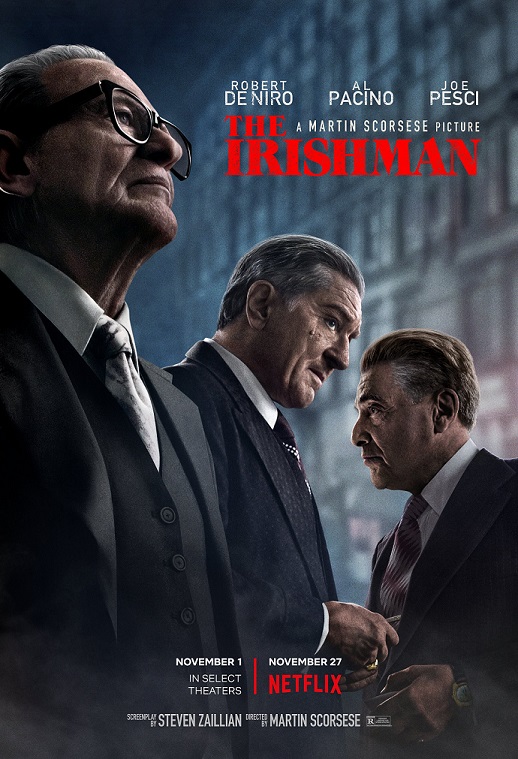
Released by Netflix in 2019 and clocking in at close to 4 hours, the Martin Scorsese-directed Best Picture nominee, The Irishman, is a film about many different things.

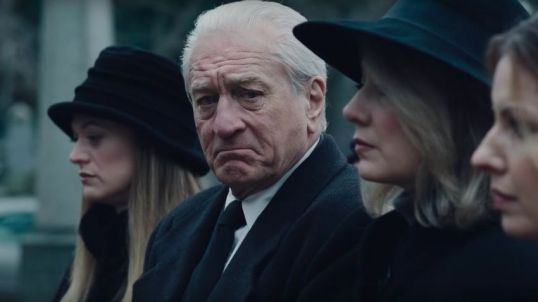
At its simplest, it’s a film about a very old man named Frank Shearan (played by Robert De Niro).  Frank is an Irish-American from Philadelphia.  Frank is a veteran of World War II and a former truck driver who was briefly a fairly important figure in the Teamsters union.  He did a few years in prison.  At the start of the film, though, he’s just another elderly man living in a retirement community.  All of his friends are dead.  His wife passed away years ago.  His children never comes to visit.  In fact, the only people interested in talking to Frank are the FBI but Frank doesn’t have much to say to them.  That’s not to say that Frank isn’t talkative.  For the first time in his life, he wants to talk to people but there’s no one left to talk to.  The only people who listen are those who are required to do so.  A nurse politely nods along as as he tells her about his old friend Jimmy Hoffa.  (She’s never heard of him.)  A priest listens to the story of Frank’s life and offers him absolution.  At times, Frank looks straight at Scorsese’s camera and appears to be talking straight to the audience.  Frank has a lot of interesting stories but who knows how truthful he’s being or if his memory can be trusted.

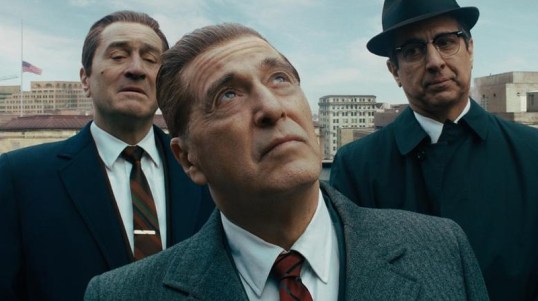
The Irishman, though, is not just the story of Frank.  It is also a secret history of America during the latter half of the 20th Century.  Frank may look old and harmless in that nursing home but, to hear him tell it, he was once acquainted with some of the most powerful men in America.  He went from executing Italian POWs during World War II to executing hits for the Mafia in post-war America.  Along the way, he became close to crime bosses like Skinny Razor (Bobby Cannavale), Angelo Bruno (Harvey Keitel) and Russell Bufalino (Joe Pesci), men who may not have been household names but who still wielded a lot of power.  These are men who, Frank flatly states, fixed the presidential election of 1960 and who later quite possibly killed the man they had elected president.  Frank also became a close associate of Jimmy Hoffa (Al Pacino), the labor leader who was reputed to have mob connections and who disappeared in 1975.

The Irishman is also a tribute to the modern gangster film, featuring role for nearly every living actor associated with the genre.  De Niro, Pacino, Pesci, Keitel, Bobby Cannavale, Domenick Lombardozzi, Gary Basaraba, they’ve all played their share of gangsters in films and television show that were both good and bad.  Having them all appear in one film together serves to remind the viewer of just how much of America’s popular entertainment has revolved around stories of organized crime.  Even as the old school Mafia has declined as a real-world power, it’s become a permanent part of pop culture.  Everyone loves a gangster, except for the people who actually have to deal with them on a daily basis.

Not surprisingly, considering the stars and the director, it’s a film full of smart, detailed performances.  When the film was originally released, Pacino and Pesci got the lion’s share of the praise and they certainly deserved it.  Pacino gets the best lines and brings some unexpected wit to his performance as Jimmy Hoffa.  Pesci, meanwhile, finally gets to play a gangster who is not psychotic and shows that he can be just as compelling when he’s not raising his voice as when he is.  Still, some of my favorite performances came from actors who one wouldn’t necessarily associate with a Scorsese gangster film.  I liked the nervous humor that Ray Romano brought to the role of a corrupt union lawyer.  I liked the seething resentment that Stephen Graham brought to the role of Jimmy Hoffa’s main rival in the union.  (The scene where Graham and Pacino argue over who is more owed an apology for all of their past disagreements is both funny and, due to the people involved, somewhat frightening.)  Jesse Plemons is poignantly dumb in his brief role as Hoffa’s stepson.  Louis Cancelmi doesn’t get a lot of screen time but he steals every scene in which he appears as a paranoid hitman.  (Cancelmi plays a character named Sally Bugs, proving that not everyone in the Mafia gets a cool nickname.)

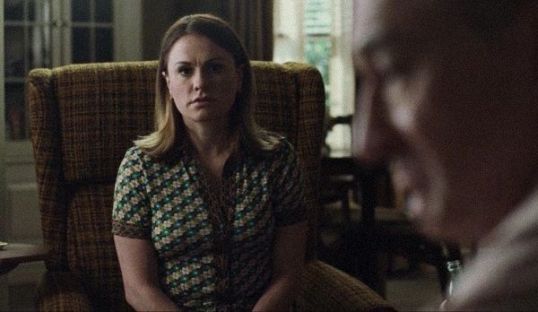
And then there’s Anna Paquin, who provides the film with its moral center.  When the film was first released, many Twitter critics complained that Paquin, who played Frank’s daughter Peggy, only a had a handful of lines.  It was one of the stupidest controversies of 2019, which is saying something when you consider how much time Film Twitter devotes to generating stupid controversies.  Peggy doesn’t say much because she’s decided that she doesn’t want to be a part of her father’s life.  From the moment that she first sees Frank beating up a store owner, Peggy knows that her father and his associates are violent men.  She not only fears them but she resents the damage that Frank does to not only her family but to the families as other as well.  The only one of her father’s associates who she likes is Jimmy Hoffa, because Hoffa cares about helping others.  When Hoffa disappears, Peggy makes a decision to disappear from Frank’s life and Paquin’s withering stare says more than any lengthy monologue could.  Peggy doesn’t say much because she knows that her words would be wasted on a man who she knows is a liar.  The scene where she silently walks away from her now elderly father tells us everything we need to know about the emotional consequences of the life that Frank has chosen to live.  Regardless of how many lines she did or didn’t have, Paquin gave one of the best performances of 2019.

Famously (or, depending on which critics you read, infamously), de-aging technology was used so that De Niro, Pacino, Pesci, and Keitel could play both the younger and the older version of their characters.  At first, it can be a bit jarring.  The de-aging works fine with Pesci and Keitel, both of whom are already supposed to be middle-aged when they first meet Frank.  (Admittedly, Keitel only has a few minutes of screen time.)  With De Niro and Pacino, it’s a bit less successful.  Even when they’re playing younger versions of themselves, De Niro and Pacino still move and stand like old men.  Fortunately, in the case of Pacino, his natural movie star charisma wins out over his obvious age.  In the end, we believe that he’s Hoffa because we want to believe that all of our important historical figures were as interesting and entertaining as Al Pacino is in The Irishman.

And yet, ultimately, even the awkward de-aging works to the film’s advantage because it reminds us that we’re not necessarily seeing what happened.  Instead, we’re seeing what Frank says happened.  We’re seeing his memories, or at least what he claims to remember.  It makes sense that, when Frank thinks about himself as a young truck driver in 1956, he would picture himself not as he was but instead as just a slightly less weathered version of who he would eventually become.  Throughout the film, there are hints that Frank’s memory should not be trusted.  Some of his stories are incredibly detailed while others — like when he transports weapons for the failed invasion of the Bay of Pigs — are a bit more vaguely presented.  Is Frank lying or is he misremembering or are we just expecting too much detail from a man who is now essentially waiting to die?  The film leaves that up for us to determine.

The Irishman is Scorsese at his most reflective.  Compared to Goodfellas and Casino, The Irishman is certainly one of Scorsese’s less “flashy” films.  But, on repeat viewings, it becomes cleat that The Irishman is the perfect conclusion to the gangster trilogy that began with Goodfellas and continued with Casino.  All three of these films deal with someone who rises up the ranks in the mob while remaining, as a result of their ethnicity, an outsider.  (Henry Hill and Frank Shearan are both Irish.  Ace Rothstein was Jewish.)  All three of them are briefly on top of the world and all three of them are left wondering how they’re going to continue their lives after their days at the top are over.  In Goodfellas, Henry Hill makes no secret of his disgust at having to live in the bland anonymity of the suburbs.  In Casino, Ace Rothstein ends the film with a mournful acceptance the fact that he will never return to his beloved Vegas.  (“And that’s that.”)  In The Irishman, Frank finally realizes that he has comes to the end of it all, alone and with nothing but death in his future.  All three of them made their decisions and, in the end, all three of them are left to deal with the consequences.  The trilogy goes from Henry’s anger to Ace’s depression to Frank’s acceptance.

It may seem strange to describe a film like The Irishman as being underrated, seeing as how it was nominated for 10 Oscars and got a Criterion release in record time.  And yet, when the film first came out, there was a vague sense of disappointment to found in even some of the positive reviews.  It was a Scorsese film that was so eagerly awaited and arrived with so much hype that there was no way it could live up to some of the expectations that had been set for it.  (And, of course, there’s also a whole set of people who were predestined to dislike the film precisely because it was a Scorsese film and it was so anticipated.)  It’s a long film and, while Netflix should be praised for allowing Scorsese the freedom to make his epic, it’s also not a film that should be viewed in bits and pieces on a tiny screen.  The Irishman is a film that should be watched in one sitting and it’s definitely a film that most viewers should watch more than once.  It takes more than one viewing to truly grasp the the world that Scorsese has recreated.

The Irishman was nominated for Best Picture.  It lost to a worthy competitor, Parasite.  Still, regardless of who took him the Oscars, The Irishman is a film that will live forever.

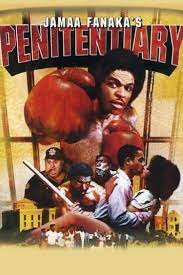
The TSL’s Grindhouse: Penitentiary (dir by Jamaa Fanaka)


In the 1979 prison/blaxploitation film Penitentiary, everyone gets a nickname.

For instance, the main character, played by Leon Isaac Kennedy, may be named Martel Gordone but everyone calls him “Too Sweet,” because he’s addicted to Mr. Goodbar candy bars.  Just because Gordone has been sent to prison for a murder that he didn’t actually commit, that’s not going to stop him from going out of his way to eat all the candy that he can.  Fortunately, all that candy has not effected his ability to throw a punch or win a fight because this prison is obsessed with boxing.

Too Sweet’s first cellmate is known as Half-Dead (Badja Dola).  Half-Dead got his name because he’s already dead on the inside.  At least, that’s what I assume the nickname means.  It could also mean that, if you find yourself sharing a cell with him, you’re already as good as dead.  Half-Dead is violent and sadistic and when he feels that Too Sweet isn’t showing him enough respect, Half-Dead attacks.  After an extremely long and grueling fight (one that is made all the more intense by the fact that it’s taking place in a cramped cell), Too Sweet succeeded in kicking Half-Dead’s ass.

Seldom Seen (Floyd Chetman) is Too Sweet’s second cellmate.  Seldom Seen is …. well, he’s seldom seen.  He has spent 50 of his 65 years in prison.  Seldom avoids all of the prison drama and instead, he spends his time in his cell, reading books while sitting in front of a poster of Malcolm X.  Seldom Seen, it turns out, used to be a boxer and, when Too Sweet decides to enter the prison boxing tournament, Seldom Seen not only serves as his trainer but also as his mentor.

Jesse “The Bull” Amos (Donovan Womack) is also entering the boxing tournament.  Jesse is know as the Bull because he’s big, he’s tough, and he never stops coming after his opponents.  He becomes angry when Too Sweet encourage the Bull’s cellmate, “Genie” (Thommy Pollard), to stand up for himself and to not let any man treat him as being “property.”  The Bull wants revenge.

Of course, there’s more to the prison boxing tournament than just getting revenge.  Win a fight and the warden will allow you an entire week of conjugal visits.  Win the tournament and you’ll get early parole and …. wait, a minute, what?  I’m all for emptying the prisons and giving people second chances but I’m pretty sure that’s not how parole works.  Oh well, it’s a movie, right?

Penitentiary was directed by Jamaa Fanaka, who also directed the very first film that I ever reviewed for this site, Welcome Home Brother Charles.  Like Brother Charles, Penitentiary is a film that is obsessed with the idea of being a prisoner of not just the legal system but also of society as a whole.  Too Sweet doesn’t just learn how to box.  He also learns, from Seldom Seen, that the key to being the “freest man in the world” is to learn how to control your desires and to exercise the self-discipline necessary to make something of yourself.  Penitentiary never quite reaches the lunatic heights of Welcome Home Brother Charles, of course.  Penitentiary is a far more straight-forward film.  Welcome Home Brother Charles featured the title character using his penis to strangle his enemies.  In Penitentiary, Too Sweet is content to just beat them up in the boxing ring.

Penitentiary gets off to a strong start.  Leon Isaac Kennedy gives a likable performance as Too Sweet and the initial fight between Too Sweet and Half-Dead is handled well.  Surprisingly enough, it’s during the boxing scenes that the film starts to run out of energy.  The boxing matches go on forever and Fanaka gets bogged down with repetitive scenes of prisoners ducking into a prison restroom to get it on while the guards are distracted by the fight.  The film’s narrative momentum stalls out long before the inevitable match between Too Sweet and the Bull.  For all the build-up, the final fight turns out to be oddly anti-climatic.

Penitentiary has some strong moments but it doesn’t really come together as a whole. Still, it did well-enough at the box office that Fanaka would go on to direct two increasingly surreal sequels.

The Life and Times of Judge Roy Bean (1972, directed by John Huston)


During the lawless day of the old west, a drifter named Roy Bean (Paul Newman) wanders into the desolate town of Vinegaroon, Texas.  When he enters the local saloon, he meets the vagrants who run the town.  They beat him, they rob him, and they tie him to the back of his horse and leave him to die.

Bean, however, does not die.  Instead, he’s nursed back to health by a beautiful young woman named Maria Elena (Victoria Principal).  Carrying a gun, Bean reenters the saloon and promptly kills nearly everyone who previously attacked him.  (“I’m not done killing you yet!” Bean yells at one fleeing woman.)  Bean sits down in front of the saloon and waits for justice.  Instead, he’s visited by a lecherous traveling preacher (Anthony Perkins), who buries the dead and gives Bean absolution.  Bean declares that he is now the “law of the West Pecos.”  As the preacher leaves, he looks at the audience and says that he never visited Bean again and later died of dysentery in Mexico.  He hasn’t seen Bean since dying so the preacher is sure that, wherever Bean went, it wasn’t Heaven.

Judge Roy Bean dispenses rough and hard justice from his saloon and renames the town Langtry, after the actress Lillie Langtry.  Bean has never met Langtry or even seen her perform but he writes to her regularly and pictures of her decorate the walls of his saloon.  Bean hires outlaws to serve as his town marshals and sentences prostitutes to remain in town and marry the citizens.  Lawbreakers are left hanging outside of the saloon.  Bean enters into a common law marriage with Maria and, for a while, they even own a bear, who drinks beer and helps Bean maintain order in the court.  Bean may be crazy but his methods clean up the town and Langtry starts to grow.  As Langtry becomes more civilized and an attorney named Arthur Gass (Roddy McDowall) grows more powerful, it starts to become apparent that there may no longer be a place for a man like Judge Roy Bean.

The real-life Judge Roy Bean did hold court in a saloon and he did name the town after Lilly Langtry.  It’s debatable whether or not he was really a hanging judge.  Because he didn’t have a jail, the maximum punishment that he could hand out was a fine and usually that fine was the same amount of however much money the accused had on him at the time of his arrest.  Because of his eccentricities and his reputation for being the “only law west of the Pecos,” Roy Bean became a legendary figure.  The Life and Times of Judge Roy Bean acknowledges from the start that it’s not a historically accurate, with a title card that reads, “Maybe this isn’t the way it was… it’s the way it should have been.”

Based on a script by John Milius and directed by Hollywood veteran John Huston, The Life and Times of Judge Roy Bean is one of the strangest westerns to ever be released by a major studio.  Featuring multiple narrators who occasionally speak directly to the camera, The Life and Times of Judge Roy Bean is an episodic mix of low comedy, graphic violence, and syrupy romance.  (The film’s sole Oscar nomination was for the song that played over scenes of Bean and Maria going on a romantic picnic with their pet bear.)  Familiar faces show up in small roles.  Along with Perkins and McDowall, Tab Hunter, Ned Beatty, Jacqueline Bissett, Ava Gardner, and Anthony Zerbe all play supporting roles.  Even a heavily made-up Stacy Keach makes an appearance as an albino outlaw named Bad Bob.

Jacqueline Bisset in The Life and Times of Judge Roy Bean

Milius has gone on the record as calling The Life and Times of Judge Roy Bean a “Beverly Hills western” and he has a point.  He envisioned the script as starring Warren Oates as a less likable and much more morally ambiguous version of Judge Roy Bean and he was not happy that his original ending was replaced by a more showy pyrotechnic spectacle.  Milius envisioned the film as a low-budget spaghetti western but Huston instead made a Hollywood epic, complete with celebrity cameos and a theme song from Maurice Jarre and Marilyn Bergman.  Milius said that his experience with The Life and Times of Judge Roy Bean is what led to him deciding to direct his own films.

Again, Milius has a point but John Huston’s version of The Life and Times of Judge Roy Bean has its strengths as well.  Though he may not be the madman that Milius originally envisioned, Paul Newman gives a good, grizzled performance as Roy Bean and the role served as a precursor for the type of aging but determined characters that Newman would specialize in during the final phase of his career.  Due to its episodic structure, the film is uneven but it works more often than it doesn’t.  The chaotic early scenes reflect a time when the west was actually wild while the later scenes are more cohesive, as society moves into Langtry and threatens to make formerly indispensable men like Roy Ban obsolete.  Even the cameo performances fit in well with the film’s overall scheme, with Anthony Perkins standing out as the odd preacher.  Finally, the young Victoria Principal is perfectly cast as the only woman that Roy Bean loved as much as Lily Langtry.

Though it’s impossible not to wonder what Warren Oates would have done with the title role, The Life and Times of Judge Roy Bean is a good end-of-the-west western.

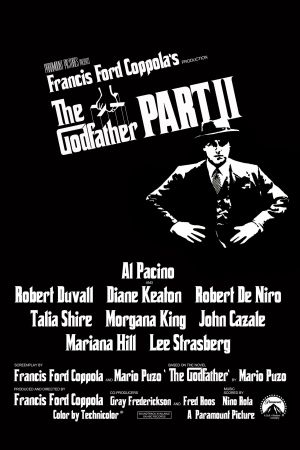
What Could Have Been: The Godfather, Part II


Years ago, I wrote a post called What Could Have Been: The Godfather, in which I discussed all of the actors and the directors who were considered for The Godfather. 

It remains one of the most widely viewed posts that we’ve ever had on this site.  I guess that shouldn’t be a surprise.  People love The Godfather and they love playing What If?  Would The Godfather still have been a classic if it had been directed by Otto Preminger with George C. Scott, Michael Parks, Burt Reynolds, and Robert Vaughn in the lead roles?  Hmmm …. probably not.  But, in theory, it could have happened.  All of them were considered at one point or another.

However, in the end, it was Francis Ford Coppola who directed The Godfather and it was Marlon Brando, Al Pacino, James Cann, and Robert Duvall who brought the Corleone family to life.  The Godfather, as everyone knows, was a huge hit and it went on to win the Oscar for Best Picture of the year.  As the film ended with the future of the Corleone family still up in the air, there was obviously room for a sequel.

When Paramount Pictures first approached Coppola about writing and directing a sequel, he turned them down.  He said he was done with The Godfather and didn’t see any way that he could improve on the story.  It’s debatable whether or not Coppola truly felt like this or if he was just holding out for more money.  It is known that Coppola did suggest to Paramount a possible director for Part II and that director’s name was Martin Scorsese.

What would Martin Scorsese’s The Godfather Part II have looked like?  It’s an intriguing thought.  At the time, Scorsese was best-known for Mean Streets and it’s probable that Scorsese’s film would have been a bit messier and grittier than Coppola’s version.  If Coppola made films about the upper echelons of the Mafia, Scorsese’s interest would probably have been with the soldiers carrying out Michael’s orders.  While Scorsese has certainly proven that he can handle a huge productions today, he was considerably younger and much more inexperienced in the early 70s.  To be honest, it’s easy to imagine Scorsese’s Godfather Part II being critically and commercially rejected because it would have been so different from Coppola’s.  A failure of that magnitude would have set back Scorsese’s career and perhaps even led to him returning to Roger Corman’s production company.  As such, it’s for probably for the best that Coppola did eventually agree to shoot the sequel, on the condition that Coppola be given creative control and Paramount exec Robert Evans not be allowed on the set.  While Coppola was busy with Godfather Part II, Scorsese was proving his versatility with Alice Doesn’t Live Her Anymore.

After Coppola was signed to direct, the next best question was whether or not Marlon Brando would return to play the role of Vito Corleone.  The film’s flashback structure would ensure that Vito would remain an important character, despite his death in the first film.  Coppola reportedly considered offering Brando the chance to play the younger version of Vito but he changed his mind after he saw Robert De Niro in Scorsese’s Mean Streets.  Still, it was felt that Brando might be willing to show up in a cameo during the film’s final flashback, in which Michael tells his family that he’s enlisted in the army.  Frustrated by Brando’s refusal to commit to doing the cameo, Coppola told him to show up on the day of shooting if he wanted to do the film.  When Brando didn’t show, the Don’s lines were instead rewritten and given to Tom Hagen.  It’s hard not to feel that this worked to the film’s advantage.  A last-minute appearance by Brando would have thrown off the film’s delicate balance and probably would have devalued De Niro’s own performance as the younger version of the character.

Brando wasn’t the only member of the original cast who was hesitant about returning.  Al Pacino held out for more money, which makes sense since he was literally the only cast member who could not, in some way, be replaced.  Richard Castellano, who played Clemenza in the first film, however learned that he that hard way that he was not quite as indispensable as Al Pacino.  In Part II, Clemenza was originally meant to have a large role in both the flashbacks and the present-day scenes.  However, when Castellano demanded more money and the right to rewrite his own lines, the older Clemenza was written out the film and replaced by the character of Frankie Petangeli (played by Michael V. Gazzo).

It’s impossible to find fault with Gazzo’s performance but it’s still hard not to regret that Castellano didn’t return.  Imagine how even more poignant the film’s final moments would have been if it had been the previously loyal Clemenza who nearly betrayed Michael as opposed to Frankie?  Indeed, even after the part was rewritten, many of Frankie’s lines deliberately harken back to things that Clemenza said and did during the first film.  Because Clemenza is a very prominent character during the film’s flashbacks, his absence in the “modern” scenes is all the more obvious.

When the role of Young Clemenza was cast, it was still believed that Richard Castellano would be appearing in that film.  One of the main reasons that Bruno Kirby was selected for the role of Young Clemenza was because Kirby had previously played Castellano’s son in a television show.  Also considered for the role was Joe Pesci, who was working as a singer and a comedian at the time.  (His partner in his comedy act was Frank Vincnet.)  If Pesci had been cast, he would not only have made his film debut in The Godfather Part II but the film also would have been his first pairing with Robert De Niro.  (Interestingly enough, Frank Sivero — who played Pesci and De Niro’s henchman, Frankie Carbone, in Goodfellas, also had a small role in Godfather Part II, playing Vito’s friend, Genco.)

As for the film’s other new major character, there were several interesting names mentioned for the role of gangster Hyman Roth.  Director Sam Fuller read for the role and Coppola also considered Elia Kazan.  Perhaps the most intriguing name mentioned as a possible Roth was that of James Cagney.  (Cagney, however, made it clear that he was content to remain retired.)  In the end, the role was offered to Al Pacino’s former acting teacher, Lee Strasberg.  Like Gazzo, Strasberg made his film debut in The Godfather Part II and, like Gazzo, he received his only Oscar nomination as a result.

The legendary character actor Timothy Carey (who was courted to play Luca Brasi in the first film) met with Coppola to discuss playing Don Fanucci, the gangster who is assassinated by Vito.  A favorite of Stanley Kubrick’s, Carey reportedly lost the role when he pulled out a gun in the middle of the meeting.

Originally, the film was supposed to end in the mid-60s, with a now teenage Anthony Corleone telling Michael that he wanted nothing to do with him because he knew that Michael had Fredo murdered.  (That famous scene of Michael bowing his head was originally supposed to be in response to Anthony walking out on him as opposed to the sound of Fredo being shot.)  Cast in the role of teenage Anthony was actor Robby Benson so perhaps it’s for the best that the scene was ultimately not included in the film.

Some of the smaller roles in Part II were played by actors who were considered for larger roles in the first film.  The young Tessio was played by John Aprea, who was also considered for the role of Michael.  Peter Donat, who played the lead Senate counsel in Part II, was considered for the role of Tom Hagen.  The rather tall Carmine Caridi, who played Camine Rosato in Part II, was originally cast as Sonny until it was discovered that he towered over everyone else in the cast.  And, of course, Robert De Niro famously read for the role of Sonny and was cast in the small role of Paule Gatto before he left The Godfather to replace Al Pacino in The Gang Who Couldn’t Shoot Straight.  (Of course, the whole reason that Pacino left The Gang Who Couldn’t Shoot Straight was so he could play the role of Michael in The Godfather.  In the end, it all worked out for the best.)

Finally, former teen idol Troy Donahue played Connie Corleone’s second husband, Merle Johnson.  Merle Johnson was Troy Donahue’s real name.

Personally, I think The Godfather Part II is one of the few films that can be described as perfect. Still, it’s always fun to play what if.