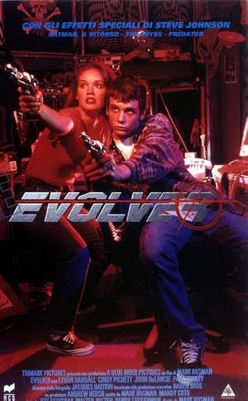
Evolver (1995, directed by Mark Rosman)


The year is 1995, and all the cool kids are going to the arcade and playing a virtual reality laser-tag game. Kyle Baxter (Ethan Embry) is one of the best laser-tag players in the country and is on the verge of winning a nationwide contest when he gets taken out by another player, a girl named Jamie (Cassidy Rae, who every teenage male in the ’90s had a crush on at some point). Kyle’s friend, Zach (Chace Quinn), uses his hacking skills to make it appear as if Kyle won anyway. Kyle’s prize is an Evolver, a robot that will allow Kyle and his friends to play the laser-tag game in real life. The only problem is that Evolver takes the idea of winning very seriously. Each time Evolver is defeated, it “evolves.” It learns from its mistakes. It uses new weapons. It refuses to stop until it can say, “Kill confirmed.”

Evolver is a mix of Child’s Play and The Terminator. Evolver eventually evolves to the point where it can say cheesy one-liners before killing someone. When someone tells it that the game is over, Evolver replies, “The game is not over.” The main problem with the film is that Evolver is such a bulky and awkward robot that it’s hard to believe it could actually defeat anyone. The people who are killed by Evolver usually fall victim because they’re too dumb to step aside when Evolver approaches them. The best thing about Evolver is that it does accurately represent how most people played video games in the ’90s. The first day, you would be really excited and you couldn’t wait to play every chance you got. By the third day, you were bored and ready to get back to doing whatever it was you were doing to begin with. Not all games were as exciting as Lee Carvallo’s Putting Challenge.

If the voice of Evolver sounds familiar, that’s because it was supplied by none other than William H. Macy. A year later, Macy would star in Fargo, and he would presumably never have to voice another angry robot again.
Music Video of the Day: In My Darkest Hour by Megadeth (1988, directed by Penelope Spheeris)


This is one of Megadeth’s signature songs.

Even though this music video only features the band being interviewed and performing on stage, it was initially banned by MTV because it was felt that lyrics were promoting suicide.  Actually, Dave Mustaine wrote the song after learning of the death of Metallica bassist Cliff Burton.  Mustaine was hurt that no one from the band called him personally to let him know, despite the fact that Mustaine had been one of the original members of Metallica.  Mustaine has often spoken very candidly about how getting fired from Metallica inspired him to start Megadeth but it also left him feeling isolated and insecure.

This video was directed by Penelope Spheeris and features footage from her documentary,  The Decline of Wester Civilization Part II: The Metal Years.

Enjoy!

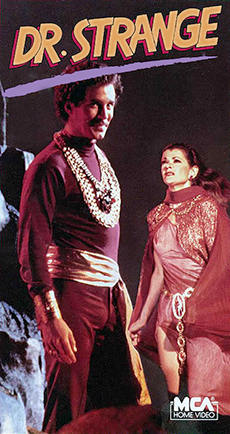
Dr. Strange (1978, directed by Philip DeGuere)


Dr. Stephen Strange (Peter Hooten) is a compassionate psychiatrist at a big-city hospital. He’s a man of science who lost his parents when he was eighteen and who has no idea that some of the items he inherited from his father have the ability to cast magic spells. Strange is treating a young woman named Clea Lake (Anne-Marie Martin). Clea has been having strange nightmares because she has been possessed by the sorceress Morgan Le Fay (Jessica Walter). Morgan Le Fay hopes to use Clea to kill Earth’s Sorcerer Supreme (John Mills) before he can appoint Dr. Strange as his successor.

Before there was Benedict Cumberbatch, there was Peter Hooten. A journeyman actor with a long list of TV credits, Hooten was cast to play Strange in this TV movie, which was obviously meant to serve as a pilot for a television series. Unfortunately, beyond having a mustache, this Dr. Strange doesn’t have much in common with his comic book counterpart. He’s not a former surgeon who injured his hands and is now looking for redemption for his former arrogance. Instead, he’s a mild-mannered psychiatrist who takes a “golly gee” approach to discovering that he has the power to travel between dimensions and cast spells.

CBS aired Doctor Strange opposite Roots, which was such a cultural landmark and a ratings phenomenon that a movie about a not widely known comic book hero didn’t stand much of a chance against it. It’s actually not that bad of a film. Jessica Walter is a sexy Morgan Le Fay, and Clyde Kusatsu is perfectly cast as Wong, who is more of a potential mentor here than he was in the later adaptations of Doctor Strange. The scenes where Strange travels from dimension to dimension are done well enough to suggest that, if the movie had led to a series, it could have captured the feel of the comic book. The only real problem is that Peter Hooten is a little bit bland in the title role. Hooten’s Strange would not have been a dynamic hero or an enigmatic figure. He would have just been a typical television lead.

Dr. Strange did not lead to a series, which means viewers were cheated out of a potential Nicholas Hammond/Bill Bixby/Reb Brown/Peter Hooten crossover event. After the failure of the film, it would be 38 years before Stephen Strange again showed up on screens across the world.

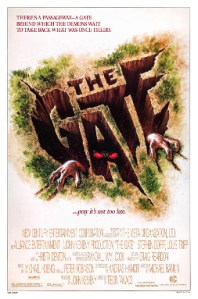
The Gate (1987, directed by Tibor Takacs)


The parents of 12-year-old Glenn (Stephen Dorff) have gone on a trip for the weekend. While Glenn’s 15-year-old sister, Al (Christa Denton), throws a party, Glenn and his best friend Terry (Louis Tripp) break open a geode and read the incantation they find inside. That turns out to be a mistake, because a big tree has recently been removed from Glenn’s backyard and left behind a hole that is also a portal to Hell.

If you were a kid whose family had a subscription to HBO in the late ’80s or the early ’90s, The Gate was inescapable. It sometimes seemed as if it aired every day, once in the morning and once late at night. I remember also seeing it frequently on TBS. It was the perfect movie for a network like TBS. It was a horror movie, but with a sense of awe and wonder. Glenn may have been scared of the hole in the backyard, but he and Terry were still excited about having discovered something that only they knew about. I had a crush on Christa Denton, and Louis Tripp’s Terry reminded me of my best friend, the one who was still into heavy metal and punk while everyone else in the neighborhood was listening to rap.

Today, it’s a lot easier for me to see how derivative The Gate was of films like Gremlins, Poltergeist, and Ghoulies, but it still inspires a feeling of nostalgia whenever I see it. The stop-motion monsters that come out of the gate are still effective, as is the scene with the eye. (If you’ve seen the movie, you definitely know what I’m talking about.) The Gate is a horror film with a sentimental heart. You can open the portal to Hell and still manage to make everything all right if you have enough love for your friends and family. The only thing you can’t escape is your parents coming home at the end of the weekend.


Music Video of the Day: Devil Inside by INXS (1988, directed by Joel Schumacher)


Even if you did not already know it, you could probably guess who directed this video.  Everything from the back lighting to the color filters to the fog machine to the leather jackets and the gang of shirtless body builders identifies this video as being the work of Joel Schumacher.

This video, which was filmed in Balboa, California, was made during Schumacher’s Lost Boys/Flatliners phase.  His infamous Batman films were still several years away.  INXS guitarist Kirk Pengilly has gone on record as disliking this video because he felt that, unlike the other videos that INXS was doing at the time, it was “too American.”  He was probably right.  The video’s mix of strippers, bikers, yuppies, and rent boys feels more appropriate for a film adaptation of a Bret Easton Ellis short story than an INXS song.  Even if it isn’t an ideal INXS video, Devil Inside is still probably one of the better entries in Joel Schumacher’s filmography.  If I have to choose, I will always pick this video over watching Batman and Robin.

With the video’s help, Devil Inside was one of INXS’s most popular songs in America, reaching the number two spot on the Billboard Hot 100.  By comparison, it peaked at #6 in the band’s native Australia and only reached #47 in the UK.

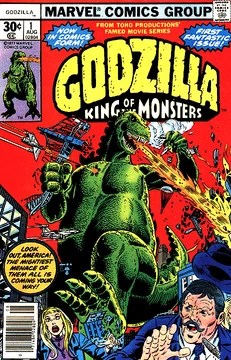
Great Moments In Comic Book History #46: Godzilla Joins The Marvel Universe


In 1977, Godzilla joined the Marvel Universe.

At the time, Toho was no longer making Godzilla films but they remained popular on American television.  Marvel’s Stan Lee, no longer constrained by the comics code’s restriction on monster and horror comics, approached Toho about licensing the character.  Lee bought the rights for Godzilla but not for any of the other monsters from the Godzilla films.  Mothra, Rodan, and all the others were just out luck.  Toho took the money and didn’t pay much attention to anything else that Lee and Marvel did with the character.

Unlike Marvel’s famous adaptation of Star Wars, Godzilla was dropped straight into the Marvel universe.  When he attacked San Francisco, the Champions saved what they could of their city.  When he roamed through New York, the Avengers and the Fantastic Four teamed up to fight him.  Godzilla’s most frequent nemesis was SHIELD.  Dum Dum Dugan found himself in charge of the anti-Godzilla effort.

It all started with the first issue of Godzilla, King of the Monsters.  Written by Doug Moensch and featuring the art of Herb Trimpe, the first issue was published in August of 1977 and featured Godzilla being awakened by nuclear tests in Alaska.  Soon, he was heading towards Washington State.  SHIELD saved Seattle.  I wonder if Nick Fury ever regretted that.

Godzilla was officially a part of the Marvel universe for two years.  After the series was canceled after twenty-four issues, Marvel lost the rights to the character.  However, Red Ronin, who was originally introduced as an opponent of Godzilla, continues to appear in other Marvel titles.  Godzilla is still there, even if no one is allowed to talk about him anymore.

Previous Great Moments In Comic Book History:

  1. Winchester Before Winchester: Swamp Thing Vol. 2 #45 “Ghost Dance” 
  2. The Avengers Appear on David Letterman
  3. Crisis on Campus
  4. “Even in Death”
  5. The Debut of Man-Wolf in Amazing Spider-Man
  6. Spider-Man Meets The Monster Maker
  7. Conan The Barbarian Visits Times Square
  8. Dracula Joins The Marvel Universe
  9. The Death of Dr. Druid
  10. To All A Good Night
  11. Zombie!
  12. The First Appearance of Ghost Rider
  13. The First Appearance of Werewolf By Night
  14. Captain America Punches Hitler
  15. Spider-Man No More!
  16. Alex Ross Captures Galactus
  17. Spider-Man And The Dallas Cowboys Battle The Circus of Crime
  18. Goliath Towers Over New York
  19. NFL SuperPro is Here!
  20. Kickers Inc. Comes To The World Outside Your Window
  21. Captain America For President
  22. Alex Ross Captures Spider-Man
  23. J. Jonah Jameson Is Elected Mayor of New York City
  24. Captain America Quits
  25. Spider-Man Meets The Fantastic Four
  26. Spider-Man Teams Up With Batman For The Last Time
  27. The Skrulls Are Here
  28. Iron Man Meets Thanos and Drax The Destroyer
  29. A Vampire Stalks The Night
  30. Swamp Thing Makes His First Cover Appearance
  31. Tomb of Dracula #43
  32. The Hulk Makes His Debut
  33. Iron Man #182
  34. Tawky Tawny Makes His First Appearance
  35. Tomb of Dracula #49
  36. Marvel Publishes Star Wars #1
  37. MAD Magazine Plays Both Sides
  38. The Cover of Green Lantern/Green Arrow #85
  39. LBJ Stands Up For The Hulk
  40. Chamber of Chills #2
  41. Tomb of Dracula #41
  42. Tomb of Dracula #27
  43. X-Men Meet Frankenstein’s Monster
  44. The Amazing Spider-Man #33
  45. The Red Skull Tempts Spider-Man To Sell Out America

Man-Thing (2005, directed by Brett Leonard)


Kyle Williams (Matthew Le Nevez), the newly appointed sheriff of a Louisiana parish, wants to know why so many people have disappeared in the swamp. Oilman Frederick Schist (Jack Thompson) puts the blame on activist Rene LaRoque (Steve Bastoni), who lives in the swamp and has been vandalizing Schist’s oil rigs. Indigenous shaman Horn (Rawiri Paratene) suggests that the culprit is actually a legendary spirit that lives in and protects the swamp and is angry because Schist cheated the local Seminole chief out of his land.

Loosely based on one of Marvel’s most endearingly weird characters, Man-Thing had a modest budget, decent special effects, and an insanely detailed swamp. It also had a lot more gore and nudity than the usual comic-book adaptation. What it didn’t have was a decent script or a cast that could do much with what they were given. (The great Australian actor Jack Thompson is ludicrous in the role of Frederick Schist.) Considering how simple the plot is, Man-Thing has a lot of head-scratching moments. If the Man-Thing has been summoned to protect the swamp from the oil companies and the rednecks, why does it also kill a Native shaman? In the comic books, at least, the Man-Thing had once been a man before he was transformed into a swamp monster. In this one, there’s no real origin for the creature. This movie could just as easily have been called Plant-Thing.

Man-Thing was actually one of the most interesting characters introduced when Marvel started publishing horror comics in the 1970s. Formerly a biochemist named Ted Sallis, Man-Thing lived in the Everglades and could detect emotions. His touch could burn, but only if the person being touched was afraid of him. With no memory of his former life as a human, Man-Thing was the guardian of the Nexus of All Realities. When Man-Thing got his own series, writer Steve Gerber gave him an eccentric and colorful supporting cast, including Howard the Duck and teenage sorceress Jennifer Kale. The comic-book Man-Thing provided a lot of good material for a potential film, so it’s too bad that this version turned him into just another swamp monster.

Man-Thing was originally meant to be a theatrical release but was dumped onto the Sci Fi Channel instead. (It did get a brief theatrical release in a few international markets, including Spain, where it bombed.) In the later Marvel Cinematic Universe, the character played a supporting role in 2022’s Werewolf by Night, so who knows? Maybe he’ll get the film he deserves someday.

Hobgoblins (1988, directed by Rick Sloane)


Decades ago, a bunch of small, furry aliens crash-landed on a studio lot. The little aliens may be cute and they may love to laugh, but they’re also evil. They’ll make fantasies come true and then use those fantasies to kill their victims. The lot’s caretaker, Mr. McCreedy (Jeffrey Culver), has dedicated his life to making sure the hobgoblins remain locked away in a vault. After the hobgoblins kill a security guard who fantasized about being a rock star, Mr. McCreedy has to hire a replacement. Teenage Kevin (Tom Bartlett) takes the job because he’s trying to prove to his girlfriend, Amy (Paige Sullivan), that he can be responsible. Kevin accidentally frees the hobgoblins. Now he and his stupid friends have to stop them before they start granting fatal fantasies.
I don’t know that I really believe in the idea that a movie can be “so bad that it’s good,” but Hobgoblins comes close. It’s not a good movie by any stretch of the imagination, but it also features scenes you will never forget. Early on, there’s an extended scene where Kevin and his friend Nick (Billy Frank) have a fight with a rake and a garden hoe. The scene goes on forever, it doesn’t add much to the plot, and then it ends with Amy, who is supposed to be a sympathetic character, getting mad at Kevin for losing. Later, when Kevin tells his friends that their lives depend on not fantasizing about anything, everyone reacts by talking about their favorite fantasies, and weirdo Kyle (Steven Boggs) immediately calls his favorite phone-sex hotline. When the hobgoblins are tracked down to a bar called Club Scum, it turns out that the prudish Amy has always fantasized about being a stripper who apparently doesn’t take off her clothes while performing. After Nick survives being in the middle of an explosion, he and his girlfriend, Daphne (Kelley Palmer), duck into a van that immediately starts rocking while everyone else just casually stands next to it.

The acting is amateurish and the plot is incoherent. Even after they’re set free from the vault, the hobgoblins don’t seem that interested in doing anything other than stalking the same small group of people. The hobgoblin puppets are actually not bad, and I like how they pop up in the background and start laughing whenever someone is having a fantasy. Hobgoblins has a reputation for being one of the worst films ever made, and that reputation is probably deserved, but I dare anyone to look away once the movie starts.

There aren’t many movies that can claim to start with a rock-and-roll fantasy and end with a rockin’ van and a joke about phone sex. Hobgoblins is one of the few.

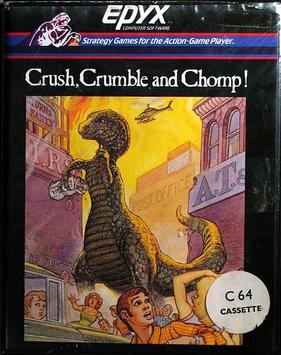
Horror Game Review: Crush, Crumble, and Chomp! (1981, Epyx)


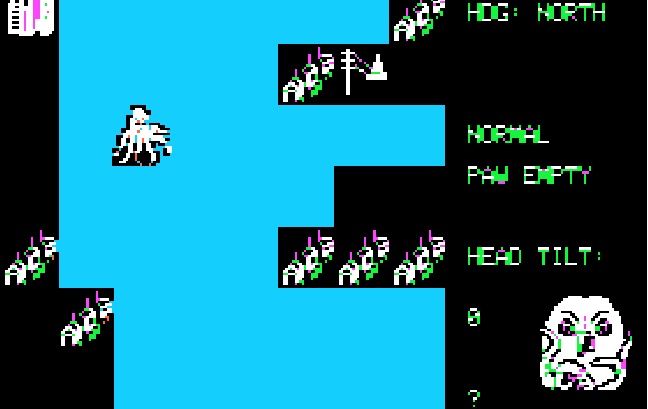
Crush, Crumble, and Chomp! is a terrifically addictive old-school PC game where you get to play the role of a giant monster and destroy the city of your choice. (Actually, your choices are pretty much limited to New York, San Francisco, and Tokyo.) You can play as a famous movie monster like Godzilla or you can create a monster of your own. As Serpentor the Giant Snake, I terrorized New York. As Swampy the Sea Monster, I terrorized San Francisco. As Tony Roboto, I terrorized Tokyo with mechanical precision.

Now, to be clear, when I say that this is an old-school PC game, I mean it’s very old school. Don’t bother trying to point-and-click. This game is totally keyboard-driven and, since it’s 45 years old, it’s not like there’s a manual lying around with all the commands in a neat list. I had to play the game a few times and push a lot of random buttons to learn just how to make my monster move from one part of the map to the other. But it was all worth it. Once you do learn that M is for move and L is for changing direction and that pushing G allows you to grab people and eat them, the game becomes very easy to learn.

If you create your own monster, you’ll be given a set of points and some powers to buy. Don’t make the mistake of buying every expensive power that you see because you’re also going to need to use whatever points you have left over to set how quickly your monster heals and how tough its hide is. Of the powers, I suggest purchasing the supersonic scream and the power to zap helicopters. The supersonic scream can destroy enemies even if they’re not in the square adjacent to you. As for the helicopters, they appear to be your greatest foe. They’re difficult to grab. Better just to zap them.

Once you get used to it and feel confident with the keyboard (and I do suggest keeping a list of what happens when you push each button), Crush, Crumble, and Chomp! is a monstrous good time. It can be played at the Internet Archive.

Wonder Woman (1974, directed by Vincent McEveety)


A set of code books revealing the identities of all of America’s secret agents has been stolen. Because the agents are all in deep cover, the government has no way to contact them and warn them that their identities have been compromised. Government agent Steve Trevor (Kaz Garas) has received a ransom demand. Rather than just pay, he assigns the case to his best operative, Diana Prince (Cathy Lee Crosby). Most people think that Diana is Steve’s secretary, but actually she’s an Amazon from Paradise Island who has been sent to America to show the world the value of women. Diana heads to Paris to investigate the mysterious Abner Smith (Ricardo Montalban) and his main operative, George (Andrew Prine).

Before Gal Gadot and Lynda Carter, there was Cathy Lee Crosby. The former tennis player turned actress was the first to play Wonder Woman in a made-for-television movie that was a pilot for a possible series. Cathy Lee Crosby’s Wonder Woman did not wear the famous costume, she did not carry a golden lariat, and she never flew in an invisible plane. Her only superpower was that she was athletic. She was also blonde. In fact, if not for the title of the movie, you wouldn’t know she was Wonder Woman at all. She’s a female James Bond. When the movie aired, it got respectable ratings, but it wasn’t the hit that some expected. Later, another made-for-TV movie was produced with Lynda Carter in the role. That movie stayed true to the comic-book version of the character and led to the fondly remembered television series.

As for this first version of Wonder Woman, it’s an acceptable spy thriller if you can ignore that it’s being sold as a Wonder Woman show. Cathy Lee Crosby had just the right mix of spunky but serious attitude to play a spy in a cheap 1970s production. I liked Ricardo Montalban and Andrew Prine as the villains, though I thought it was funny that they kept trying to hide Montalban’s face. As soon as I heard his voice, I knew it was him. Diana also faces off against Ahnjayla (Anitra Ford), an Amazon gone bad. The funniest scene in the movie is when Diana is approached on a city street by an Amazon messenger who tells her that Ahnjayla has left Paradise Island. None of the people walking nearby seem to think it’s strange that a woman in a blue toga has suddenly appeared.

Cathy Lee Crosby did her best, but Lynda Carter is still the definitive Wonder Woman.