Review: Justified (by Graham Yost)


“You do a good job of hiding it. And I suppose most folks don’t see it. But honestly? You’re the angriest man I have ever known.” — Winona Hawkins (describing Raylan Givens)

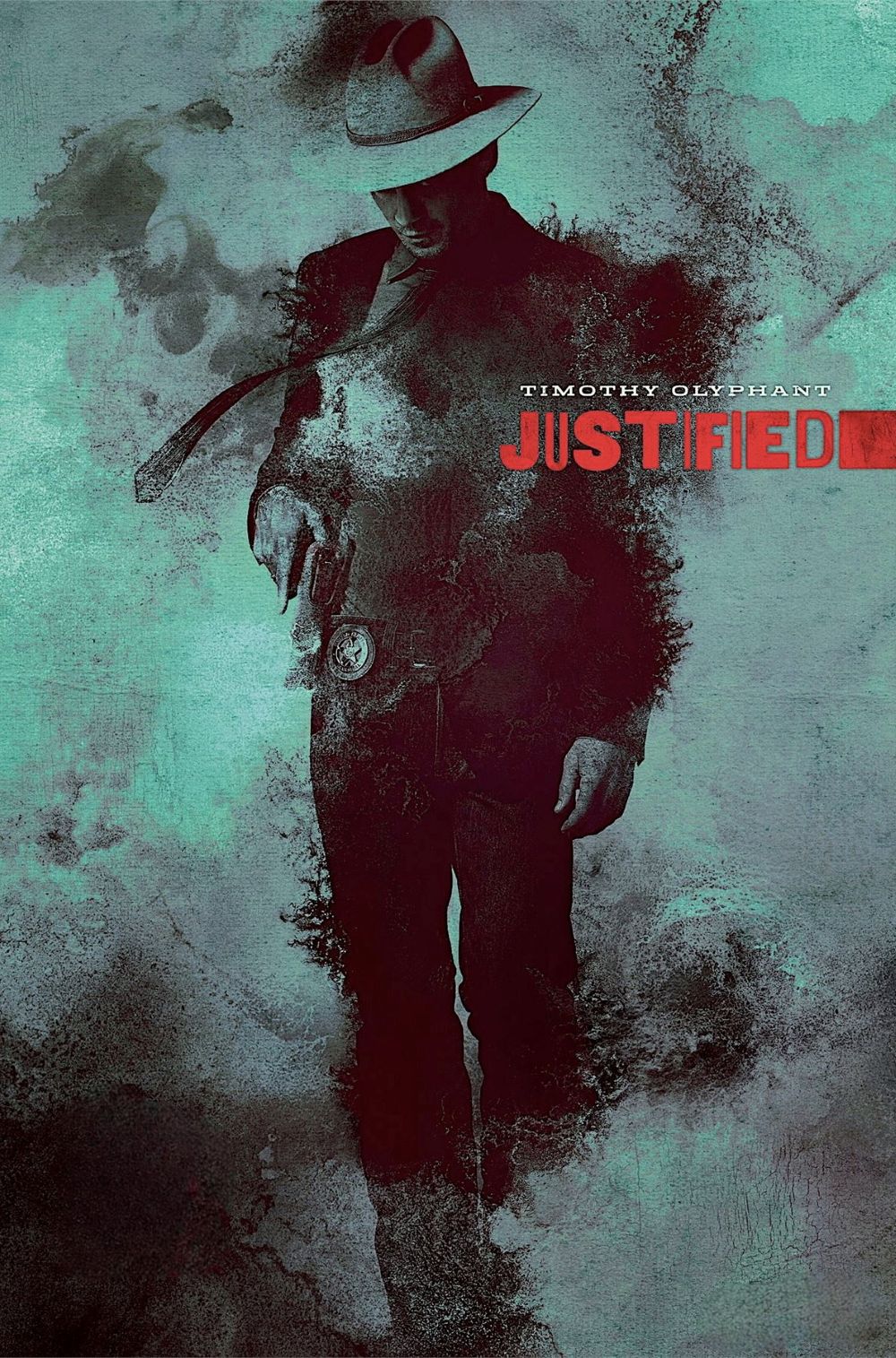
Justified is one of those rare TV shows that feels like a perfectly aged whiskey—smooth, rich, and with a kick that lingers long after you’ve finished a glass. Adapted from Elmore Leonard’s stories featuring the sharp-shooting, quick-witted U.S. Marshal Raylan Givens, the FX series is a masterclass in character-driven storytelling, sharp dialogue, and the kind of moral ambiguity that makes you question who you’re really rooting for. At the heart of it all is Timothy Olyphant as Raylan, a man who carries the weight of his past like a well-worn leather jacket, and Walton Goggins as Boyd Crowder, the charismatic, Bible-quoting criminal who might just be the most compelling villain—or antihero—you’ve ever seen on screen.

What makes Justified stand out in a sea of crime dramas is its refusal to take itself too seriously, even when the stakes are life-or-death. The show thrives on its dialogue, which crackles with the kind of wit and rhythm you’d expect from Leonard’s work. Raylan’s dry, understated humor is a constant delight, whether he’s trading barbs with a suspect, outsmarting a room full of criminals, or just trying to keep his cool in the face of his own family’s dysfunction. Olyphant delivers every line with a mix of charm and menace, making Raylan feel like a man who’s seen it all but hasn’t lost his sense of humor—or his moral compass, however bent it might be. There’s a scene early in the series where Raylan gives a criminal 24 hours to leave town, and the way Olyphant sells the quiet intensity of that moment is a testament to his ability to command the screen without raising his voice. He’s the kind of hero who doesn’t need to shout to be heard.

But as good as Olyphant is, Justified might just belong to Walton Goggins as Boyd Crowder. Boyd is the kind of character who could’ve been a cartoonish villain in lesser hands, but Goggins turns him into something far more fascinating. A former coal miner turned criminal mastermind, Boyd is equal parts philosopher, showman, and cold-blooded killer. He quotes the Bible one minute and pulls a trigger the next, all while delivering monologues that somehow make his twisted logic sound almost reasonable. Goggins’ performance is electric, and his chemistry with Olyphant is the kind of alchemy that elevates the entire series. Their dynamic is a dance—sometimes a waltz, sometimes a knife fight—where neither man is entirely sure who’s leading. Boyd isn’t just a thorn in Raylan’s side; he’s a dark reflection of him, a man who also grew up in the same rough-and-tumble world of Harlan County, Kentucky, but chose a different path. Their rivalry is the backbone of the show, and every scene they share is a masterclass in tension and subtext.

Then there’s Ava Crowder, Boyd’s sister-in-law and a force of nature in her own right, portrayed with fierce intelligence by Joelle Carter. Ava’s relationship with Boyd is a rollercoaster of love, hate, and everything in between. Their dynamic is just as compelling as the one between Raylan and Boyd, filled with a volatile mix of loyalty, betrayal, and an undeniable connection that neither can fully shake. Ava’s journey from a woman trying to escape her family’s criminal past to a power player in her own right is one of the show’s most compelling arcs. She’s tough, resourceful, and just as morally complex as the men around her, and her interactions with Boyd crackle with the same energy and tension as his showdowns with Raylan. Whether they’re working together, scheming against each other, or caught in some messy in-between, their relationship adds another layer of depth to the show’s already rich tapestry of characters.

The supporting cast is just as strong, filled with characters who feel like they’ve been lifted straight out of a Leonard novel. There’s Art Mullen, Raylan’s boss and the closest thing he has to a father figure, played with gruff warmth by Nick Searcy. And let’s not forget the various criminals, informants, and eccentric locals who populate Harlan County, each one memorable in their own right. Whether it’s the hilariously unhinged Dickie Bennett or the stoic, loyal Limehouse, the show’s roster of side characters ensures that every episode is packed with personality.

What’s so refreshing about Justified is that it never feels the need to over-explain itself. The dialogue is sharp and efficient, often delivering character development and plot twists in the same breath. The show trusts its audience to keep up, and it rewards that trust with some of the most satisfying writing on television. The banter isn’t just clever—it’s purposeful, revealing layers of the characters and their relationships without ever feeling like exposition. And the action? It’s as tight and precise as Raylan’s aim. The shootouts are sudden and brutal, but they’re never gratuitous. Every pull of the trigger feels earned, and the tension leading up to those moments is often as gripping as the violence itself.

The setting of Harlan County is almost a character in itself. The show paints a vivid picture of a place where the law is more of a suggestion than a rule, and where family loyalty often trumps justice. The rugged, coal-dusted landscape mirrors the moral grayness of the stories being told. This isn’t a world of clear-cut heroes and villains; it’s a world where everyone has their own code, and where the line between right and wrong is as blurry as the smoke from a freshly fired revolver. Raylan himself is a product of this environment, and his struggle to reconcile his past with his present is one of the show’s most compelling threads. He’s a man who left Harlan to become a marshal, but Harlan—and its ghosts—never really left him.

One of the show’s greatest strengths is its ability to balance humor and darkness. Even in its grimmest moments, Justified never loses its sense of fun. The writers have a knack for undercutting tension with a well-placed joke or a bit of absurdity, and the result is a show that’s as entertaining as it is thought-provoking. Whether it’s Raylan’s deadpan reactions to the chaos around him or Boyd’s theatrical antics, there’s always a moment to lighten the mood, even when the stakes are at their highest. This balance keeps the show from ever feeling too heavy, and it makes the darker moments hit even harder when they do arrive.

If there’s one thing Justified doesn’t get enough credit for, it’s its consistency. Over six seasons, the show rarely misfires. The writing remains sharp, the performances stay top-notch, and the stories continue to surprise. Even when it dips into more serialized storytelling in its later seasons, it never loses sight of what makes it special: the characters and their relationships. And when the series finally reaches its conclusion, it does so in a way that feels both satisfying and true to everything that came before. There are no easy answers in Justified, no neat bows tied around its themes. Instead, it leaves you with the sense that life—and justice—is messy, complicated, and often unfair.

At its core, Justified is a show about men and women shaped by their pasts, trying to carve out a future in a world that doesn’t always make it easy. Raylan Givens is a hero, but he’s not a saint. Boyd Crowder is a villain, but he’s not without his own twisted sense of honor. Ava Crowder is a survivor, navigating a world where loyalty is a currency and trust is a luxury. The beauty of the show is that it lets these characters exist in all their complexity, never forcing them into boxes they don’t fit into. And with dialogue that snaps like a twig underfoot and performances that bring every word to life, it’s a series that’s as rewarding to revisit as it is to experience for the first time. If you’re a fan of stories where the characters are as rich as the plot, and where every line of dialogue feels like it’s been polished to a shine, then Justified is the kind of show you’ll want to savor. It’s a modern classic, plain and simple.
Horror (?) Review: Left Behind (dir by Vic Armstrong)


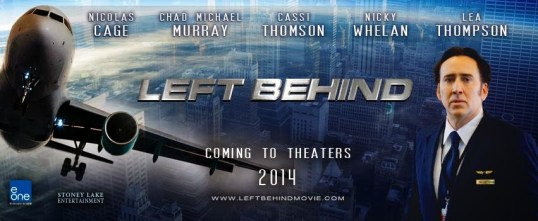
Left-Behind-banner

I have always felt that film critics and bloggers should be open and honest about their biases.  Most critics, of course, claim that their reviews are solely based on the merits of what they’ve seen and that they leave their personal political or religious beliefs out of it.  That, needless to say, is complete bullshit and I’ve never quite understood why some people are so terrified over the prospect of being revealed to be just as biased as everyone else in the world.  The fact of the matter is that critics are supposed to be opinionated and readers have a right to know exactly where those opinions are coming from.

With that in mind, allow me to let you know my mindset before I attempt to review Left Behind.

First off, you should know that I come from a Catholic family.  On my Dad’s side, I’m Irish.  On my mom’s side, I’m Italian and Spanish.  Put those three together and basically, you’ve got a big and fiercely Catholic heritage to deal with.  Therefore, I have to admit that I really don’t know a whole lot about the whole Evangelical Protestant background from which Left Behind apparently sprung.  (In fact, the only thing that I really knew about the Left Behind books is that, apparently, most of the book’s Catholics get left behind.)  So, who knows?  Maybe some of the issues that I had were just a case of me not being a member of the film’s target audience.

Secondly, you should know that I love being a contrarian.  I love any excuse to express an opinion that goes against the majority because, quite frankly, I think that there’s way too much groupthink going on when it comes to film reviewing.  Far too often, it seems that critics have already decided which films that they’re going to love and which films that they’re going to hate.  I knew that the critics were going to hate Left Behind so I was really hoping that the film would somehow be good.  That way, I could write a review defending it and, best of all, I could annoy a lot of people.  After all, the only thing worse than organized religion would be organized hipster douchebags.

(I’m looking in your direction, A.V. Club commenters….)

On the other hand, another part of me hoped that the movie would be really, really bad.  It’s been a while since I’ve seen a truly bad film and, in another few months, it’s going to be time for me to make out my list of the 16 worst films of 2014.  And since I can only list films that I’ve actually seen, I need to step up my game and see more bad movies.  I mean, A Million Ways To Die In The West and Transformers 4 are a good start but they can’t make up the entire list…

Fourth, I was really hoping that Nicolas Cage would somehow be responsible for redeeming Left Behind.  I hoped that he would either give a brilliant performance or he would give a performance so weird that the film itself would become oddly watchable.  A lot of this is because Cage was so good in Joe that it kind of breaks my heart to see him throwing away whatever critical respect he may have regained by appearing in Left Behind

And finally, I’m on vacation!  Why is that important?  Because it meant that, when Jeff and I went to Left Behind, we saw it in a theater that we’ll never have to visit again.  As such, we didn’t have to worry about running into anyone we knew.  Yay! (The theater, incidentally, was nearly empty.  Jeff and I were the youngest people there…)

So, with all that in mind, Left Behind was really, really bad.

Nic

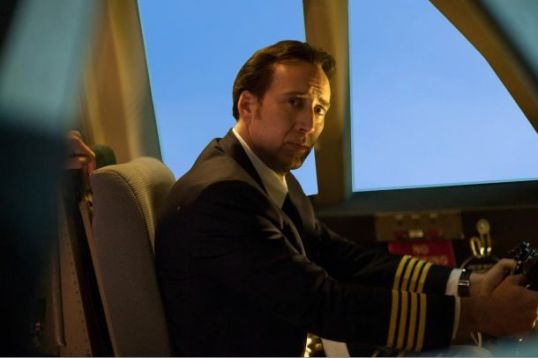
Nicolas Cage plays Rayford Steele and let’s just start with a bit of praise.  Rayford Steele is a great name!  Anyway, Rayford Steele is a pilot who, one day, is flying an airplane and thinking about cheating on his wife (Lea Thompson), who just happens to be an Evangelical Christian!  (How religious is Mrs. Rayford Steele?  So religious that she apparently carries her bible with her everywhere.)  Rayford has picked the flight attendant that he’s going to cheat with.  He’s even got brand new U2 tickets that he’s going to use for enticement because, apparently, Left Behind takes place in the 20th Century.

And then suddenly — his copilot vanishes!  Several passengers on the plane vanish!  Children all over the world vanish!  It’s the Rapture, a point that becomes clear as soon as Rayford takes a look at a vanished flight attendant’s date book and sees “BIBLE STUDY” written in all caps.

Even worse, apparently every flight controller in the world was a Christian because there’s nobody on the ground to help Rayford land his plane.  Uh-oh!

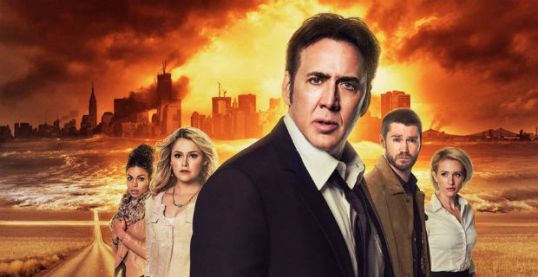
Also on the plane (and unraptured) is a reporter named Buck Williams (Chad Michael Murray) and, let’s just be honest — Buck Williams is not as good a name as Rayford Steele.  Shortly before boarding the plane, Buck met Rayford’s daughter, Chloe, (Cassi Thomson) and they bonded over their mutual atheism.

(Chloe might as well have been wearing a Neil deGrasse Tyson t-shirt.)

Of course, post-rapture, Chloe spends most of the day desperately searching for her mother and her younger brother.  Riots are breaking out down on the ground.  Airplanes are falling from the sky.  Will Chloe survive?

(Ha, Chloe!  Where’s your Neil deGrasse Tyson now!?)

One thing that I did find interesting is just how quickly society collapsed after the Rapture.  It’s almost as if everyone in the world decided, “Now that the children are gone, let’s burn this place down!”

To be honest, it all felt a bit like a SyFy original film.  SyFy films are almost always divided in half, with 50% of the film dealing with someone in either a plane or a boat while the other half of the film deals with that person’s son or daughter trying to lead a group of idiots to safety and hopefully avoid the monster.  It’s tempting to think of what a SyFy version of Left Behind would look like.  It would probably be a lot more fun than this one…

Anyway, the problem with Left Behind is that it’s just so boring.  The film takes forever to get going and then, once everyone vanishes, the film tries to generate some suspense as to what happened but we already know it was the Rapture so why drag it out?  The dialogue is flat, the performers do just enough to get by, and it’s obvious that the majority of the film’s budget was spent on Nicolas Cage.  This, of course, is what I expected but I was hoping that Nicolas Cage would at least go crazy.  Well, he doesn’t.  In fact, he’s remarkable restrained and this film, if nothing else, proves that Cage can deliver even the worst dialogue with conviction and a straight face.

cage-left-behind-610x407

But we don’t want a restrained Cage in a film like Left Behind!  We not only wanted him to go crazy, we needed him to go crazy!  And he didn’t and, as a result, the film is even more disappointing than it would be otherwise.

Now, you may have noticed that I referred to Left Behind as being a “horror (?)” film in the title of this review.  My argument there is that the film is obviously meant to scare nonbelievers.  Indeed, this film was actually advertised with a pull quote from Satan.  (“Please don’t take nonbelievers to this film.” — Satan.)  Unfortunately, I think that Left Behind missed an opportunity.  If the filmmakers had strictly focused on the horrific implications of being left behind — as opposed to trying to be both a sermon and a disaster movie, it probably would have been a lot more effective.  Seriously, The Exorcist is probably the most effective religious film ever made.

Now, I do have to take issue with some of Left Behind‘s critics.  Quite a few critics have made it a point to say, “Even if you agree with the film’s worldview, you’ll be annoyed by the bad acting and the bad directing…”  Uhmmm …. no.  Sorry, it doesn’t work like that.  Usually, people will enjoy any film that supports their beliefs, regardless of how terrible it is.  That goes for all people regardless of religion or ideology.  We all enjoy having our beliefs confirmed.

But, yeah — Left Behind is pretty bad.  Is it the worst film of the year?

Well, the year’s not over yet.

left-behind-nicolas-cage