Shattered Politics #56: The American President (dir by Rob Reiner)


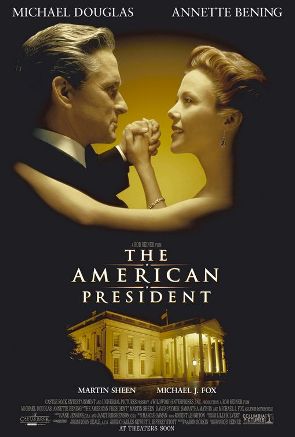
The_American_President_(movie_poster)

Way back in October, around the same time that I first decided that I would do a series of reviews of political films and that I would call it Lisa Gets Preachy (subsequently changed to Shattered Politics), I noticed that the 1995 film The American President was scheduled to be shown on TVLand.

“Hey,” I said, “I’ve definitely got to watch and review that!”

So, I set the DVR and I recorded The American President.

And then, I just left it there.

You have to understand that it’s rare that I ever leave anything unwatched on my DVR.  Usually, within an hour of recording a program, I’ll be watching it.  I have even been known to go so far as to make out very long lists of everything that I have on the DVR, just so I can make check them off after I’ve watched.  As a general rule, I am way too obsessive compulsive to just leave anything sitting around.

But, for whatever reason, I could never work up any enthusiasm for the prospect of actually watching The American President.  I knew that, eventually, I would have to watch it so that I could review it.  Unlike those folks criticizing American Sniper on the basis of the film’s trailer, I never criticize or praise a film unless I’ve actually watched it.  But  I just couldn’t get excited about The American President.

Can you guess why?  I’ll give you a hint.  It’s two words.  The first starts with A.  The second starts with S.

If you guessed Aaron Sorkin, then you are correct!  Yes, I do know that Sorkin has a lot of admirers.  And, even more importantly, I know that it’s dangerous to cross some of those admirers.  (I can still remember Ryan Adams and Sasha Stone insanely blocking anyone who dared to criticize the underwritten female characters in Sorkin’s script for The Social Network.)

But what can I say?  As a writer, Aaron Sorkin bothers me.  And since Sorkin is such an overpraised and powerful voice, he’s that rare scriptwriter who can actually claim auteur status.  The Social Network, for instance, was not a David Fincher film.  It was an Aaron Sorkin film, through and through.

And, after having to deal with three seasons of the Newroom and countless Aaron Sorkin-penned op-eds about why nobody should be allowed to criticize Aaron Sorkin, I’ve reached the point where dealing with all of Aaron Sorkin’s signature quirks is a bit like listening to the drill while strapped into a dentist’s chair.  I am weary of pompous and egotistical male heroes who answer every question with a sermon.  I am tired to endless scenes of male bonding.  I have had enough with the quippy, quickly-delivered dialogue, all recited as characters walk down an endless hallways.  I have no more sympathy for Sorkin’s nostalgic idealism or his condescending, rich, white dude version of liberalism.

Most of all, I’m sick of people making excuses for an acclaimed, award-winning, highly-paid screenwriter who is apparently incapable of writing strong female characters.  I’m tired of pretending that it doesn’t matter that Aaron Sorkin is apparently incapable of viewing female characters as being anything other than potential love interests or silly distractions who need to be told to go stand in a corner while the menfolk solve all the problems of the world.

Fortunately, as a result of The Newsroom, quite a few critics are finally starting to admit what they always knew to be the truth.  Aaron Sorkin is not the messiah.  Instead, he’s a somewhat talented writer who doesn’t understand (or, in my opinion, particularly like) women.  At his best, he’s occasionally entertaining.  At his worst, he’s pompous, didactic, and preachy.

And, of course, Aaron Sorkin is the man who wrote The American President.

So, The American President just sat there until a few days ago when I sighed to myself and said, “Okay, let’s watch this thing.”  As I watched it, I promised myself that I would try to see past the fact that it was an Aaron Sorkin-penned film and just try to judge the film on its merits.

But here’s the thing.  It’s nearly impossible to separate one’s opinion of Sorkin from The American President.  If you didn’t know that Sorkin had written The American President, you’d guess it after hearing the first few lines of dialogue.  The film, itself, was directed by Rob Reiner but it’s not as if Reiner is the most interesting of directors.  (What’s odd is that Reiner’s first films — This Is Spinal Tap, The Princess Bride, Stand By Me — are all so quirky and interesting and are still so watchable decades after first being released that you have to wonder how Reiner eventually became the man who directed The Bucket List.)  In short, The American President is totally an Aaron Sorkin film.

President Andrew Shepherd (Michael Douglas) is a liberal Democrat who, as he prepares to run for a second term, has a 63% approval rating.  However, when Shepherd decides to push through a gun control bill, he finds that approval rating threatened.  And then, when he listens to environmental lobbyist Sydney Wade (Annette Bening) and tries to push through legislation to reduce carbon emissions, his approval rating is again threatened.  And then, to top it all off, he starts dating Sydney.  It turns out that Sydney has protested American policy in the past.  And, since this is an Aaron Sorkin film, everyone outside of the Northeast is scandalized that President Shepherd is having premarital sex in the White House.

And, to top it all off, there’s an evil Republican named Bob Rumson (Richard Dreyfuss) who wants to be President and is willing to use the President’s relationship with Sydney to further his own evil Republican ambitions.

But, ultimately, it’s not just those evil Republicans who make it difficult for Sydney and the President to have a relationship.  It’s also the fact that the President agrees to a watered down crime bill and that he does not hold up his end of the bargain when it comes to reducing carbon emissions.

“You’ve lost my vote!” Sydney tells him.

But — fear not!  There’s still time for President Shepherd to give a speech that will be so good and so brilliant that it will, within a matter of minutes, totally change every aspect of American culture and save the day.  How do we know it’s a great speech?  Because it was written by Aaron Sorkin!

Actually, I’m being too hard on the film and I’ll be the first admit that it’s because I’m personally not a huge fan of Aaron Sorkin’s.  But, to be honest, The American President is Aaron Sorkin-lite.  This film was written before the West Wing, before the Social Network, before that Studio Whatever show, and before The Newsroom.  In short, it was written before he became THE Aaron Sorkin and, as such, it’s actually a lot less preachy than some of his other work.  It’s true that, much like The Newsroom, The American President is definitely Sorkin’s fantasy of how things should work but at least you don’t have to deal with Jeff Daniels throwing stuff or Emily Mortimer not knowing how to properly forward an email.

Instead, it’s a film that will probably be enjoyed by those who share its politics.  (And, make no mistake, The American President is more interested in politics than it is in the love story between Andrew and Sydney.)  Michael Douglas does well in the role of the President.  Meanwhile, Annette Bening is so likable and natural as Sydney that it almost make up for the fact that she’s yet another Sorkin woman whose existence is largely defined by looking up to her man while inspiring him to do the right thing and forgiving him when he doesn’t.  Personally, I would have been happy if the film had ended with Sydney telling the President, “Thanks for finally doing the right thing but I have a life of my own to lead.”

But that wouldn’t be the Sorkin way.
Shattered Politics #55: The Remains of the Day (dir by James Ivory)


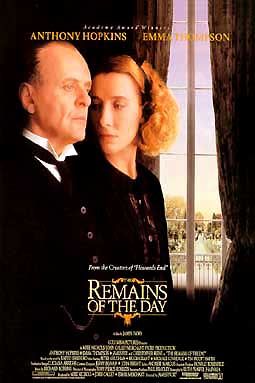
Remains_of_the_day

The 1993 Best Picture nominee The Remains of the Day is a love story.  Actually, it’s a series of love stories.  Every character in the film is in love with something or someone.  It’s just that, with one exception, they’re all so extremely British that it’s sometimes hard to tell.

The one exception is an American congressman named Trent Lewis (Christopher Reeve).  As the film opens in the 1950s, he’s just purchased Darlington Hall, which is one of those country manors that hold so much history and romance for those of us who regularly watch Downton Abbey.  Lewis is excited to have a British manor of his very own.  It even comes with its very own butler, a Mr. Stevens (Anthony Hopkins).

As we see in flashback, Stevens previously worked at Darlington Hall when it was owned by Lord Darlington (James Fox).  In the 1930s, Lord Darlington may have loved Britain but he was also dangerously naive about the rise of Nazi Germany.  Actually, to say that he was naive might be letting Lord Darlington off too easily.  When we first meet Lord Darlington, he seems like a well-meaning but hopelessly out-of-touch aristocrat.  He has so little understanding of the real world that he even asks Stevens to have the sex talk with his godson (played, somewhat inevitably, by Hugh Grant), who happens to be close to 30 years old at the time and, one would presume, far beyond the age when the talk is really necessary. When we first see Lord Darlington, who is hosting a conference on how to best deal with the rise of the Nazis, arguing that Britain should ignore the rise of Hitler, it’s easy to assume that he’s just as clueless about Germany as he is about his godson.  But then, eventually, Lord Darlington orders Stevens to fire two Jewish maids and you’re forced to reconsider everything that you previously believed about him.

And then there’s Ms. Kenton (Emma Thompson), who worked as a housekeeper for Lord Darlington.  She loves the repressed Mr. Stevens but continually finds herself frustrated by Stevens’s professional detachment.  Unlike Stevens, Ms. Kenton doesn’t hold back on her opinions but, when she finally has a chance to stand up for her beliefs and defy the status quo at Darlington Hall, she backs down.

And then there’s Mr. Stevens.  Mr. Stevens may be one of the most emotionally repressed characters in the history of the movies but the entire film revolves around trying to figure out what or who Stevens loves.  It’s a little too easy to assume that he’s in love with Ms. Kenton, even though that will be the natural instinct of most viewers.  While he obviously feels affection towards her, he can never bring himself to truly express it.  (That said, getting a letter from her appears to be the only thing that can actually inspire him to leave the safety of Darlington Hall and venture into the outside world.)  While it seems, at times, that he might love Lord Darlington, Stevens himself prefers to say that he respected Lord Darlington and, after the war, Stevens seems to have no trouble staying on at Darlington Hall even after its bought by Congressman Lewis.  Much like the ghosts in The Shining, Stevens has always been the butler and always will be.

Ultimately, Mr. Stevens loves his job.  He loves being a butler. He’s a man so dedicated to his job that he even continues to work even while his father is dying in the next room.   He loves making sure that everything’s perfect at Darlington Hall and he never bothers with worrying about how imperfect the world outside Darlington Hall may be.    In that way, Stevens is a stand-in for all of the European leaders who willfully chose to ignore what was happening in Germany in the days leading up to World War II.  And, much like those European leaders, he finds himself forced to work for an American in the aftermath.

As a film, The Remains of the Day can be frustrating but in a good way.  Mr. Stevens is such a repressed and detached character that, much like Ms. Kenton, we’re always tempted to give up on him.  Fortunately, Anthony Hopkins is one of those actors who can suggest so much with just a pause in his dialogue or a quick glance to the side.  You look at his sad eyes and suddenly, you know everything that Mr. Stevens cannot bring himself to say.  Emma Thompson has a somewhat easier role because Ms. Kenton at least gets to say what she’s thinking but she still bring a lot of depth to the role and has a lot of chemistry with Hopkins.  And finally, you’ve got James Fox who is so comically befuddled that it’s all the more shocking to consider all of the pain that he — intentionally or not — is partially responsible for.

The Remains of the Day is a great film for all of us Downton Abbey-loving history nerds.

http://www.youtube.com/watch?v=0nlyIvHY1Xw

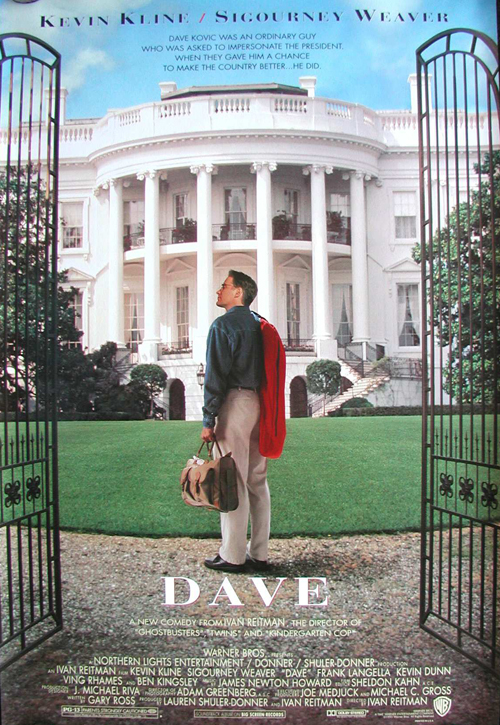
Shattered Politics #54: Dave (dir by Ivan Reitman)


Dave Poster

Way back in 1919, the terrible U.S. President and tyrannical dictator Woodrow Wilson* suffered a stroke that left him semi-paralyzed and unable to perform his duties.  By all standards, Wilson should have been removed from office, if just temporarily.  However, in those pre-Internet days, it was a lot easier to hide the truth about Wilson’s physical and mental condition.  While Wilson spent his days locked away in his bedroom, his wife Edith would forge his signature on bills.  Whenever anyone asked for the President’s opinion, Edith would give her opinion and then assure everyone that it was actually the President’s.

(And really, as long as you were promoting eugenics and white supremacy, it probably was not difficult to imitate Wilson’s opinions.)

Of course, back then, people were used to the idea of never seeing their President in public.  Hence, it was very easy for Wilson to remain sequestered in the White House.  If a similar situation happened today, it’s doubtful that anyone could successfully keep the public from finding out.  When we don’t see the President every day, we wonder why.  How, in this day and age, could a Presidential incapacitation be covered up?

The 1993 film Dave offers up one possible solution.

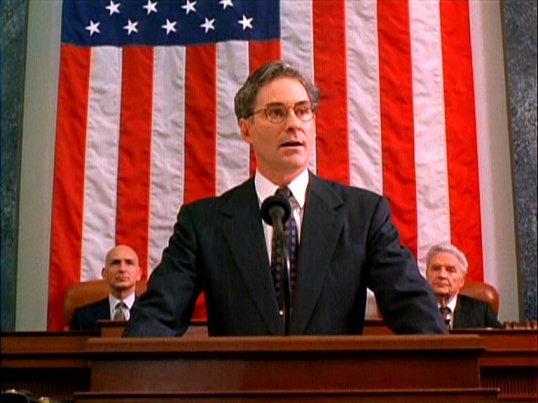
Dave is the story of two men who happen to look exactly like Kevin Kline.  One of them is named Bill Mitchell and he’s the arrogant and corrupt President of the United States.  The other is named Dave Kovic.  He’s a nice guy who runs a temp agency and who has a nice side job going as a professional Bill Mitchell imitator.

So, when Bill has a stroke while having sex with a white house staffer (Laura Linney), it only makes sense to recruit Dave Kovic to pretend to the President.  White House Chief of Staff Bob Alexander (played by Frank Langella, so you know he’s evil) tells Dave that Vice President Nance (Ben Kingsley) is insane and corrupt.  Dave agrees to imitate the President.  Of course, Alexander’s main plan is to convince Nance to resign and then get Dave to appoint him as Vice President.  Once Alexander is Vice President, it will be announced that Mitchell has had another stroke and then Alexander will move into the Oval Office.

However, what Alexander did not take into account was just how much Dave would enjoy being President.  From the moment that he joyfully shouts, “God Bless, America!,” Dave’s enthusiasm starts to win the public over.  Suddenly, people are realizing that President Mitchell isn’t such a bad President after all.  Even more importantly, Dave wins over the first lady (Sigourney Weaver) who, previously, had little use for her philandering husband.  When Alexander claims that there’s no money in the budget to continue funding a program for the homeless, Dave calls in his best friend, an accountant named Murray (Charles Grodin), and has him rewrite the budget…

And you know what?

Dave is one of those films that tempts me to be all cynical and snarky but, ultimately, the film itself is so likable and earnest that I can even accept the idea that one accountant could balance the budget through common sense alone.  I’ll even accept the idea that Dave could come up with a program that would guarantee everyone employment without, at the same time, bankrupting the country.  Kevin Kline is so enthusiastic in the lead role and the film itself is so good-natured that it almost feels wrong to criticize it for being totally implausible.

Sometimes, you just have to appreciate a film for being likable.

Dave—–

* For those of you keeping count, that’s the third time in two weeks that I’ve referred to Woodrow Wilson as being  a dictator.  Before anyone points out that some historians rank Wilson as being in the top ten of President, allow me to say that I don’t care.  I DO WHAT I WANT!

Shattered Politics #53: The Godfather Part III (dir by Francis Ford Coppola)


GodfatherIII2

Well, it’s come to this.

First released in 1990, The Godfather Part III was nominated for best picture (it lost to Goodfellas Dances With Wolves) but it’s got a terrible reputation.  Over the past two weeks, whenever I’ve mentioned that I was planning on reviewing The Godfather and The Godfather Part II for this series of reviews, everyone who I talked to mentioned that they loved the first two Godfather films and that they hated the third one.  Quite a few, in fact, suggested that I shouldn’t even bother reviewing the third one.  In their eyes, The Godfather Part III was like that one cousin who you know exists but, because he got caught cashing your grandma’s social security check, you never send a Christmas card.

But you know what?

It was never even an option for me to skip reviewing The Godfather, Part III.  First off, I’m a completist.  It’s long been my goal to review every single best picture nominee and, regardless of how much some people may dislike it, that’s exactly what The Godfather Part III is.

Plus, I love the Godfather movies.  I’m a fourth Italian (and, much like the Corleones, my Italian side comes from Southern Italy) and I was raised Catholic.  Let’s face it — The Godfather movies were made for me.  Even Part III.

So, with all that in mind, I recently sat down and rewatched The Godfather Part III.  And I’m not saying that it was an easy film to watch.  It’s a flawed film and those flaws are made even more obvious when you compare it to the previous two Godfathers.  It’s hard to follow up on perfection.  And I have to admit that, even though I had seen Part III before, I was still expecting it to be better than it actually was.  I had forgotten just how many slow spots there were.  I had forgotten how confusing the plot could get.  I had forgotten….

Okay, I’m really starting to sound negative here and I don’t want to sound negative.  Because I like The Godfather, Part III.  I think it’s a good but uneven film.  Some of my favorite films are good but uneven…

But this is a Godfather film that we’re talking about here!

The Godfather Part III opens in 1979, 20+ years since the end of the second film.  Tom Hagen has died off-screen (booo!) and Michael (Al Pacino) is nearly 60 and looking forward to retirement.  He’s handed the Corleone criminal empire over to the flamboyant Joey Zasa (Joe Mantegna).  Michael has finally become a legitimate businessman but he’s lost everyone that he loved.  Kay (Diane Keaton) has divorced him.  His son, Anthony (Franco D’Ambrosio), knows that Michael was responsible for killing Uncle Fredo and wants nothing to do with the family business.  Instead, Anthony wants to be an opera singer.  Meanwhile, his daughter Mary (Sofia Coppola) is headstrong and rebellious.  (Or, at least, she’s supposed to be.  That’s what the audience is told, anyway.  None of that really comes across on the screen.)

Now, the first two Godfather films featured their share of melodrama but neither one of them comes close to matching all of the schemes, betrayals, and plots that play out over the course of Godfather, Part III.  Let’s see if I can keep all of this straight:

As the film opens, Michael is receiving an award from the Vatican.  Kay, who is now married to a judge, shows up with Mary and Anthony.  Michael is obviously happy to see her.  Kay glares at him and says, “That ceremony was disgusting!”  (Damn, I thought, Kay’s suddenly being kind of a bitch.  Fortunately, later on in the movie, Kay’s dialogue was both better written and delivered.)

Then, Vincent (Andy Garcia) shows up!  Vincent is one of those handsome, sexy gangsters whose every action is followed by an exclamation point!  Vincent is Sonny’s illegitimate son!  He wears a cool leather jacket!  He openly flirts with his cousin Mary!  He has sex with Bridget Fonda!  He kills Joey Zasa’s thugs!  He convinces Michael to mentor him!

And, as soon as Vincent enters the film, suddenly every scene starts to end with an exclamation point!

And then, Michael goes to Sicily!  He gets swindled by the corrupt Archbishop Gilday (Donal Donnelly)!  He gets targeted by a corrupt Italian politician!  He confesses his sins to Cardinal Lamberto (Raf Vallone)!  Lamberto later becomes Pope!

Meanwhile, Don Altobello (Eli Wallach) is conspiring to kill Michael!  Because that’s what elderly Mafia dons do!  And then Kay, Anthony, and Mary all come to Sicily!  Anthony is going to be making his opera debut!  And soon Vincent is sleeping with Mary, even though they’re first cousins!

And even more people want Michael dead and I’m not really sure why!  Everyone goes to the opera!  We sit through the entire opera!  Meanwhile, enemies of the Corleones are killed!  And some Corleones are killed!  And it all ends tragically!

Okay, I’m starting to get snarky here and it’s probably getting a little bit hard to believe that I actually do like The Godfather, Part III.  And, as much as I hate to do it, there are a few more flaws that I do need to point out.  Sofia Coppola is one of my favorite directors and she has really pretty hair and we both have similar noses but …. well, let’s just say that it’s probably a good thing that Sofia pursued a career as a director and not as an actress.  Reportedly, Sofia was a last minute pick for the role, cast after Winona Ryder suddenly dropped out of the production.  It’s not so much that her performance is terrible as much as it’s not up to the level of the rest of the cast.  Watching this Godfather, you’re acutely aware of how much of what you’re seeing on screen was determined by Sofia’s inexperience as an actress.

And then there’s that opera.  Now, I know that I’m supposed to love opera because I’m a girl and I’m a fourth Italian.  And I do love big emotions and big drama and all the rest.  But oh my God, the opera at the end of the movie went on and on.  There’s only so much entertainment you can get out of watching actors watch other actors.

But, at the same time, for every flaw, there’s a part of the film that does work.  First off, the film itself is gorgeous to look at, with a lot of wonderfully baroque sets and scenes taking place against the beautiful Italian landscape.  Al Pacino brings a very real gravity to the role of Michael and it’s fun to watch him trying to win back Diane Keaton.  (In those brief scenes, The Godfather Part III almost becomes a romantic comedy.)  Talia Shire is obviously having a lot of fun playing Connie as being a Lady MacBeth-type of character.  (In fact, they needed to give Connie a film of her own where she could poison anyone who get on her nerves.)  And Andy Garcia does a great job as Vincent.  You watch him and you never have any doubt that he could be Sonny’s son.

The Godfather Part III may not live up to the first two Godfather films but what film could?

Shattered Politics #52: Blaze (dir by Ron Shelton)


Blaze_imp

Oh those crazy Southern politicians!

As I’ve mentioned in a few other reviews, filmmakers have always loved to make movies about the crazy demagogues that we have historically tended to elect down here in the South.  Sometimes, those movies are serious and thought-provoking, like All The King’s Men.  And sometimes, like in Hold That Co-Ed, a film will attempt to play up the inherent humor in rabble rousing.  And then you’ve got films like Ada and Hurry Sundown, which are so melodramatic that those of us down South just have to shake our heads in amazement that people up North actually believe this stuff.

The 1989 film Blaze (which is currently making the rounds on cable) is a part of this cinematic tradition of films about flamboyant Southern politicians.  It’s part comedy and part melodrama and, perhaps not surprisingly, it takes place in 1950s Louisiana.

(Why isn’t that surprising? Listen, my family used to live in Louisiana.  I still visit Louisiana on a fairly regularly basis.  Louisiana is crazy.  That’s one reason why I love it.)

Blaze is based on the true story of Gov. Earl K. Long (played here by Paul Newman).  The younger brother of former Governor Huey P. Long (who himself served as the basis for the character of Willie Stark in All The King’s Men), Earl served as governor for three non-consecutive terms.  He was a flamboyant populist, in the style of his older brother, the type who campaigned as one of the “common” people and who was either extremely corrupt or extremely progressive, depending on which historian you happen to be reading.

In Blaze, Earl is nearing the end of his third term.  Because the state’s constitution does not allow a governor to succeed himself, Earl is currently campaigning for lieutenant governor, with the plan being that one of Earl’s allies will be elected governor and will then resign so that Earl can succeed him.  While this is traditionally the sort of thing that voters in Louisiana would love, Earl is struggling because some voters are angry over his support for the civil rights movement.

Earl is also struggling because he’s just met Blaze Starr (Lolita Davidovich), a much younger stripper from West Virginia.  For Earl, it’s love at first sight and soon, Blaze feels the same way.  Soon, she and Earl are going across the state together.  However, after Earl’s opponents arrange for him to be sent to a mental asylum, Blaze is forced to consider that she might be too big of a political liability to remain with the man she loves.

If that all sounds incredibly romanticized — well, it is.  After I watched Blaze, I did a little bit research on Earl and Blaze.  To say the film is fictionalized would be an understatement.  (Though, interestingly enough, Earl actually was sent to a mental asylum while serving as governor.)  But is that really a surprise?  Would audiences rather watch a movie about a corrupt, old racist who regularly cheated on his wife or would they rather watch a romanticized love story with hissable villains and moments of crowd-pleasing comedy?

As for the film itself, it’s okay.  It moves a bit too slowly for its own good and it’s never quite as enthralling as you might hope it would be, but both Paul Newman and Lolita Davidovich are well-cast and have a likable chemistry.  I related to the film’s version of Blaze Starr, mostly because we’re both redheads with big boobs who have a natural distrust of authority figures.  If you’re into Southern politics and you’re not obsessed with historical accuracy, you might enjoy Blaze.

http://www.youtube.com/watch?v=dyK-cD5ffPo


Shattered Politics #51: Three For The Road (dir by B.W.L. Norton)


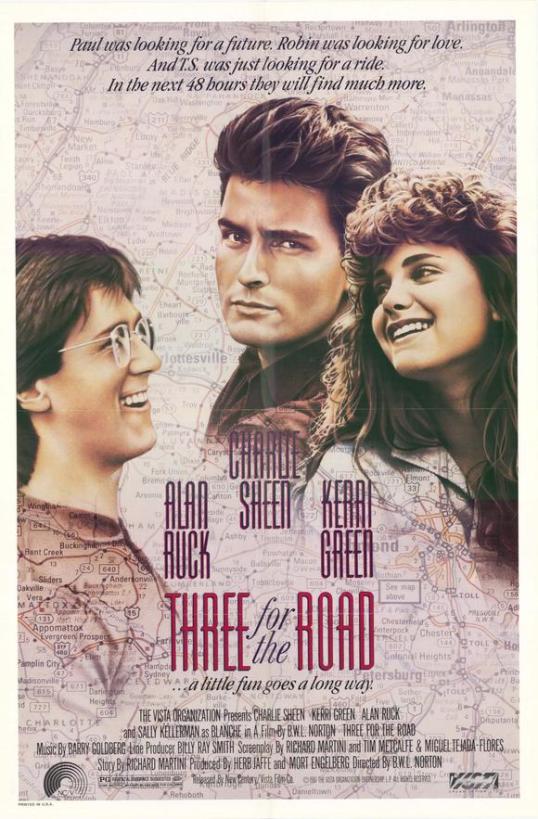
three-for-the-road-movie-poster-1987-1020243960It’s a little bit strange to go from watching and reviewing a film like Once Upon A Time In America to watching and reviewing a film like 1987’s Three For The Road.  But that’s one reason that I like doing things like Shattered Politics.  It’s always interesting to see how many different films can all be linked together by common elements.  In the case of Shattered Politics, those shared elements are politics and politicians.

Three For The Road is an 80s comedy.  In fact, it’s one of the most stereotypically 80s films ever made.  Senator Kitteride (Raymond J. Barry) may very well be the next President of the United States but first he has to do something about his rebellious teenage daughter (Kerri Green).  He has arranged for her to be shipped down to a reform school down South.

But who can he trust to drive her down there?  How about the newest member of his staff, Paul Tracy?  Paul looks up to Sen. Kitteridge and has political ambitions himself.  He’s such a responsible guy that, while all of his roommates are busy getting drunk and having sex, Paul locks himself away in his bedroom and studies.  So, naturally, who is cast as this straight-laced, ultra-responsible, uptight guy?  Why Charlie Sheen, of course!

Now, Paul has a roommate who comes along on the road trip with him and Robin.  T.S. is an aspiring writer.  (His actual name is Tommy but he demands to be known as T.S., in honor of T.S. Eliot.)  T.S. is an intellectual.  T.S. is a serial womanizer who is hit on by nearly every woman he meets.  (T.S. always asks them to name their favorite author as a test.)  So, of course, T.S. is played Alan Ruck, who is better known for playing Cameron in Ferris Bueller’s Day Off.

Now, to be honest, I’m being a bit snarky here and that’s not really fair to either Sheen or Ruck.  Yes, they’re both miscast but that doesn’t mean that they don’t give good performances.  They both do as well as they can with the material that they’ve been given.  It’s just that the material itself… well, I’ll get to that in a minute.

Three For The Road is not a bad film as much as it’s just an extremely forgettable one.  From the minute it opens with the predictable shots of D.C. landmarks to Paul and Robin falling in love to the eventual revelation that Sen. Kitteridge isn’t the great man that Paul thinks that he is, it all just feels extremely generic.  The film probably works best as a time capsule, a portrait of when it was made.

If you go to Three For The Road‘s imdb page, you can find a comment that was left by film director Richard Martini.  Martini wrote the original script for what would eventually develop into Three For The Road.  I say “develop” because, as Martini explains it, his script was apparently changed and rewritten on a daily basis.  While that’s certainly not a surprising thing to hear, it does sound like Martini’s original version would have made for a more interesting film.

In Martini’s original script, Sen. Kitteridge’s motivation for sending Robin to the institution was that Robin was embarrassing him with her own left-wing political activism.  That would have certainly brought a much needed edge to the film’s politics because, in the film that was eventually made, there’s really no point to Kitteridge being a senator.  He could just as easily have been a wealthy businessman or maybe a college president.  But apparently, once filming started, it appears that the filmmakers went for the least edgy approach possible.

(Martini also commented that, as a result of the actual film being so different from his original script, that he hates to read reviews of the film.  And, needless to say, I don’t blame him.  If Richard Martini is reading this review, please accept my apologies for any bad memories this review may have brought up.)

Three For The Road has never been released on DVD or Blu-ray but you can watch it on YouTube.

http://www.youtube.com/watch?v=N0rqfX6UETo


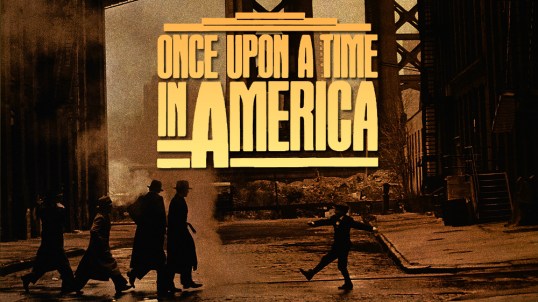
Shattered Politics #50: Once Upon A Time In America (dir by Sergio Leone)


once-upon-a-time-in-america-5207d6cf9d3ac

Before I start this review of Sergio Leone’s 1984 gangster epic, Once Upon A Time In America, I want to issue two warnings.

First off, this review is going to have spoilers.  I’ve thought long and hard about it.  Usually, I try to avoid giving out spoilers but, in this case, there’s no way I can write about this movie without giving away a few very important plot points.  So, for those of you who don’t want to deal with spoilers, I’ll just say now that Once Upon A Time In America is a great film and it’s one that anyone who is serious about film must see.

Secondly, I’m not going to be able to do justice to this film.  There’s too much to praise and too much going on in the film for one simple blog post to tell you everything that you need to know.  Once Upon A Time In America is the type of film that books should be written about, not just mere blog posts.  Any words that I type are not going to be able to match the experience of watching this film.

For instance, I can tell you that, much as he did with his classic Spaghetti westerns, Sergio Leone uses the conventions of a familiar genre to tell an epic story about what it means to be poor and to be rich in America.  But you’ll never truly understand just how good a job Leone does until you actually see the film, with its haunting images of the poverty-stricken Jewish ghetto in 1920s New York and it’s surreal climax outside the mansion of a very rich and very corrupt man.

I can tell you that Ennio Morricone’s score is one of his best but you won’t truly know that until you hear it while gazing at Robert De Niro’s blissfully stoned face while the final credits roll up the screen.

I can tell you that the film’s cast is amazing but you probably already guessed that when you saw that it featured Robert De Niro, James Woods, Treat Williams, Danny Aiello, Joe Pesci, Burt Young, Tuesday Weld, Elizabeth McGovern, and Jennifer Connelly.  But, again, it’s only after you’ve seen the film that you truly understand just how perfectly cast it actually is.  Given the politics of Hollywood and the fact that he’s unapologetically critical of Barack Obama, it’s entirely possible that James Woods might never appear in another major motion picture.  A film like Once Upon A Time in America makes you realize what a loss that truly is.

So, if you haven’t seen it yet, I encourage you to see it.  Order it off of Amazon.  Do the one day shipping thing.  Pay the extra money, the film is worth it.

Much like The Godfather, Part II (and Cloud Atlas, for that matter), Once Upon A Time In America tells several different stories at once, jumping back and forth from the past to the present and onto to the future.

The film’s “past” is 1920.  Noodles (Scott Tiler) is a street kid who lives in New York’s ghetto.  He makes a living by doing small jobs for a local gangster and occasionally mugging a drunk.  He’s also the head of his own gang, made up of Patsy (Brian Bloom), Cockeye (Adrian Curry), and Dominic (Noah Moazezi).  Despite his rough edges, Noodles has a crush on Deborah (Jennifer Connelly), a refined girl who practices ballet in the back of her family’s store.  When Nooldes meets Max (Rusty Jacobs), the two of them become quick friends.  However, their criminal activities are noticed by the demonic Bugsy (James Russo), who demands any money that they make.

The film’s “present” is 1932.  Noodles (Robert De Niro) has spent twelve years in prison and, when he’s released, he discovers that some things have changed but some have remained the same.  Max (James Woods), Cockeye (William Forsythe), and Patsy (James Hayden) are still criminals but they’ve prospered as bootleggers.  Occasionally, they do jobs for a local gangster named Frankie (Joe Pesci) and sometimes, they just rob banks on their own.  During one such robbery, they meet a sado-masochistic woman named Carol (Tuesday Weld), who quickly becomes Max’s girlfriend.

As for Noodles, he continues to love Deborah (Elizabeth McGovern). But, when he discovers that she’s leaving New York to pursue a career as an actress, he reveals his true nature and rapes her.  It’s a devastating scene — both because all rape scenes are (or, at the very least, should be) devastating but also because it forces us to ask why we expected Noodles to somehow be better than the men who surround him.  After spending nearly two hours telling ourselves that Noodles is somehow better than his friends and his activities, the movie shows us that he’s even worse.  And, when we look back, we see that there was no reason for us to believe that Noodles was a good man.  It’s just what we, as an audience, wanted to believe.  After all, we all love the idea of the romanticized gangster, the dangerous man with a good heart who has been forced into a life of crime by his circumstances and who can be saved by love.  In that scene, Once Upon A Time In America asks us why audiences continue to romanticize men like Noodles and Max.

As for the gang, they’re hired to serve as unofficial bodyguards for labor leader Jimmy O’Donnell (Treat Williams) and, in their way, help to found the modern American labor movement.  (“I shed some blood for the cause,” Patsy says while showing off a huge bandage on his neck.) When fascistic police chief Aiello (Danny Aiello) needs to be taken down a notch, they kidnap his newborn son and hold him for ransom.  (While pulling off this crime, they also manages to switch around all the babies and, as a result, poor babies go home with rich families and vice versa, neatly highlighting both the power of class and the randomness of fate.)  However, the good times can’t last forever and, when prohibition is repealed, the increasingly unstable Max has to find a new way to make some money.

Finally, the film’s third storyline (the “future” storyline) takes place in 1967.  Noodles has spent decades living under a false identity in Buffalo.  When he gets a letter addressed to his real name, Noodles realizes that someone knows who he is.  He returns to a much changed New York.  Carol now lives in a retirement home.  Deborah is an acclaimed Broadway actress.  Jimmy O’Donnell is the most powerful union boss in America.  Fat Moe’s Speakeasy is now Fat Moe’s Restaurant.

Once Noodles is back in town, he receives a briefcase full of money and a note that tells him that it’s an advanced payment for his next job.  He also receives an invitation to a party that’s being held at the home of Christopher Bailey, the U.S. Secretary of Commerce.

Who is Secretary Bailey?  He’s a shadowy and powerful figure and he’s also a man who is at the center of a political scandal that has turned violent.  And, when Noodles eventually arrives at the party, he also discovers that Secretary Bailey is none other than his old friend Max.

How did a very Jewish gangster named Max transform himself into being the very WASPy U.S. Secretary of Commerce?  That’s a story that the film declines to answer and it’s all the better for it.  What doesn’t matter is how Max became Bailey.  All that matters is that he did.  And now, he has one final favor to ask Noodles.

(There’s a very popular theory that all of the 1967 scenes are actually meant to be a hallucination on Noodles’s part.  And the 1967 scenes are surreal enough that they very well could be.  Though you do have to wonder how Noodles in 1932 could hallucinate the Beatles song that is heard when he returns to New York in 1967.)

Once Upon A Time In America is an amazing film, an epic look at crime, business, and politics in America.  It’s a film that left me with tears in my eyes and questions in my mind.  The greatness of the film can not necessarily be put into words.  Instead, it’s a film that everyone needs to see.

onceuponatimeinamerica1


Shattered Politics #49: The Dead Zone (dir by David Cronenberg)


The_Dead_Zone

So, it seems like every time that I write a review of any film based on a novel by Stephen King, I always have to start out by explaining that I think, while King’s success is undeniable, the fact that he’s overrated is also undeniable.  It’s a comment that I always make and then I have to deal with people going, “But, Lisa, everyone loves Stephen King!  He’s the most commercially successful author ever!  He’s a modern-day Charles Dickens!”

Bleh.

Make no mistake, I think that Stephen King is a talented writer.  However, I don’t think that he’s the greatest writer that has ever lived and that’s where I often come into conflict with King’s fans.  (Stephen King fans tend to be like religious fanatics when it comes to defending their belief.)  Having read both King’s earlier work and his more recent books, it’s hard for me not to feel that Stephen King has been growing steadily complacent.  There’s a certain self-importance to his prose and his plotting that, for me, is the literary equivalent of nails on chalk board.  If anyone is guilty of believing the most fawning praise of his biggest fans, it would appears to be Stephen King who, to judge from his twitter feed, appears to also believe that he’s our most important cultural critic as well.

(To be honest, I’d probably have more tolerance for King’s attempts at cultural and political criticism if he wasn’t so  predictable about it all.  Stephen King may write best sellers but that doesn’t mean he has anything interesting or unique to say about current events.)

Anyway, since I don’t feel like having to deal with all of that shit all over again, I’m not going to start this review by saying that I think Stephen King is overrated.  In fact … whoops.

Okay, so much for that plan.

Even I have to admit that The Dead Zone is one of Stephen King’s better books.  First off, it’s less than a 1,000 pages long.  Secondly, the hero isn’t a writer who spends all of his time whining about the political preferences of his neighbors.  Third, it deals with all of the “big” issues of faith, destiny, and morality but it does so in a far less heavy-handed manner than most of King’s books.

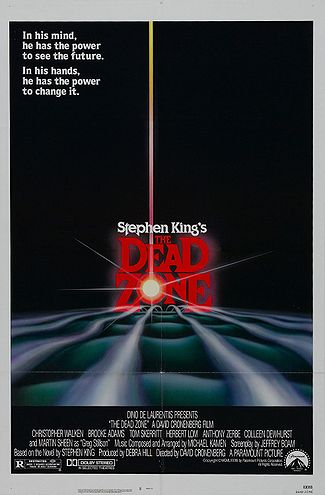
The Dead Zone is also the basis for one of the better films to be adapted from a Stephen King novel.  Directed by David Cronenberg and starring Christopher Walken, the film’s plot closely follows the novel.  Johnny Smith (Christopher Walken) is a high school teacher who, after a horrific car crash, spends five years in a coma.  When he finally wakes up, he discovers that his girlfriend, Sarah (Brooke Adams), has married another man.  His mother has become a religious fanatic.  And, perhaps most importantly, whenever Johnny touches anyone, there’s a good chance that he’ll see either the person’s past or a possible future.

Needless to say, Johnny struggles with how to deal with his new powers.  After he helps to catch a local serial killer, Johnny goes into seclusion.  However, when he discovers that Sarah is now volunteering for ambitious politician Greg Stillson (Martin Sheen), Johnny goes to a Stillson rally, shakes the man’s hand, and has a vision.  Johnny discovers that, if Stillson is elected to the senate, he’ll eventually become President and then he’ll destroy the world.

Much like The Shining, The Dead Zone benefits from being directed by a filmmaker who was both confident and strong enough to bring his own individual style to the material.  (Usually, when a King adaptation fails, it’s because it followed the source material too closely, as if the film’s producers were scared of upsetting any of King’s constant readers.)  Though the film’s plot may closely follow the novel, the movie itself is still definitely more of a product of David Cronenberg than Stephen King.  Whereas King’s novel devoted a good deal of time to Johnny and Sarah’s relationship, it’s treated as almost an afterthought in Cronenberg’s film.  Whereas King’s novel presented Johnny Smith as being an everyman sort of character, Cronenberg’s film gives us a Johnny who, from the start of the film, is a bit of an outsider even before he starts to see the future.  Whereas King put the reader straight into Johnny’s head, Cronenberg approach is a bit more detached and clinical.  Cronenberg’s Johnny is a bit more of an enigma than King’s version.

Fortunately, Cronenberg was fortunate enough to be able to cast Christopher Walken in the role of Johnny Smith.  King’s preference for the role was Bill Murray.  As odd as it may sound, you can actually imagine Bill Murray in the role when you read King’s book.  But, for Cronenberg’s more detached vision, Walken was the perfect choice.  People tend to spend so much time focusing on Christopher Walken’s quirky screen presence that there’s a tendency to forget that he’s actually a very talented actor as well.  He’s very likable and sympathetic as Johnny and brings a humanity and a sense of humor to the role, which provides a good balance to Cronenberg’s sense of detachment.

The Dead Zone is a good book and it was later turned into an occasionally good (and, just as often, not-so-good) television series.  However, the film is still the best.

http://www.youtube.com/watch?v=lmC5oPc7L3M

Shattered Politics #48: The Kidnapping of the President (dir by George Mendeluk)


Kidnapping_of_the_president

Agency was not the only Canadian film to be made about American politics in 1980.  There was also The Kidnapping of the President, a low-budget political thriller that, because it has since slipped into the public domain, can currently be found in a few dozen DVD box sets.  In fact, you may very well own a copy of The Kidnapping of the President without even realizing it!

Don’t worry if you do.  The Kidnapping of the President is a fairly harmless little film.

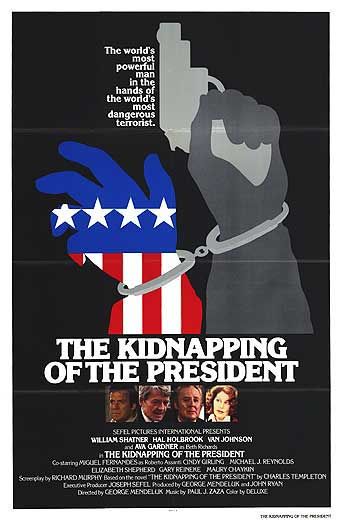
U.S. President Adam Scott (Hal Holbrook) is visiting Toronto when he gets handcuffed to a South American revolutionary named Roberto Assanti (Miguel Fernandes).  Assanti locks President Scott in an armored car that is wired with explosives and then demands a hundred million in diamonds and two planes.  (Though the film never explicitly states it, I imagine that Assanti was primarily motivated by jealousy over the fact that Che is on a million t-shirts while Assanti remains fairly unknown.)  It’s up to secret service agent Jerry O’Connor (William Shatner) to negotiate with Assanti and rescue the President!  Meanwhile, the ethically compromised Vice President (Van Johnson) is left as acting President in Washington and struggles to keep things calm while his ambitious wife (Ava Gardner) plots for a brighter future.

Overall, the Kidnapping of the President is okay for what it is.  It’s neither exceptionally good nor memorably bad.  It just sort of is.  Hal Holbrook is always well-cast as a President and William Shatner gives a typical Shatner performance, which is either a good or a bad thing depending on how you feel about William Shatner.  And, for that matter, Miguel Fernandes is a properly unlikable villain though he never really seems to have the charisma necessary to make him believable as the dynamic leader that he’s supposed to be.

Probably the most interesting thing about The Kidnapping of the President is that it doesn’t try to pass Montreal off for being a location in the United States.  Instead, the film was not only filmed in but is actually set in Toronto as well.  When Jerry attempts to deal with the local authorities, that means that he ends up talking to a bunch of very polite men in red uniforms.

But what’s strange about this is that the people of Toronto are so excited about the arrival of the President.  You half expect to hear one extra say, “I never thought I’d live long enough to see the day that a leader that I can’t vote for and who has next to nothing to do with my everyday life would come to visit Toronto.”

Don’t get me wrong.  If you follow me on twitter, then you know that I am unashamed to declare my love for all things Canadian.  And obviously, as neighbors, Canada and the United States do have a close relationship.  But would people in Toronto really be that excited to see the President?

If so, I think we really owe the people of Canada an apology for not knowing more about their government.  At the very least, we should definitely invite Stephen Harper over for lunch.

http://www.youtube.com/watch?v=tqyWEPkdxn4

Shattered Politics #47: Agency (dir by George Kaczender)


Agency

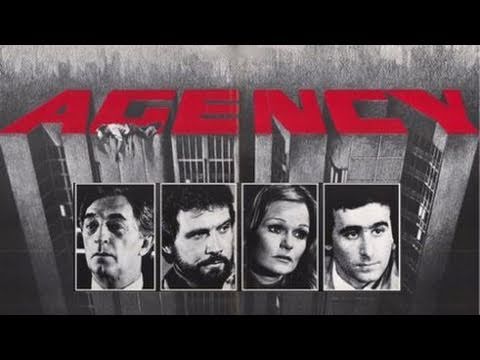
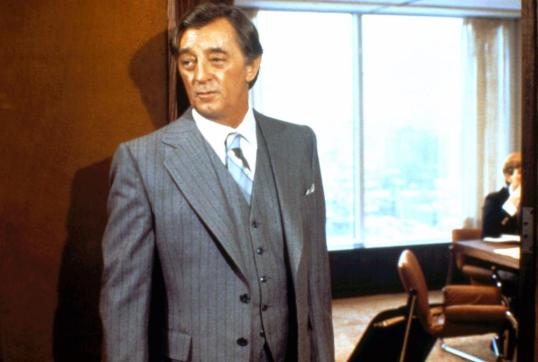
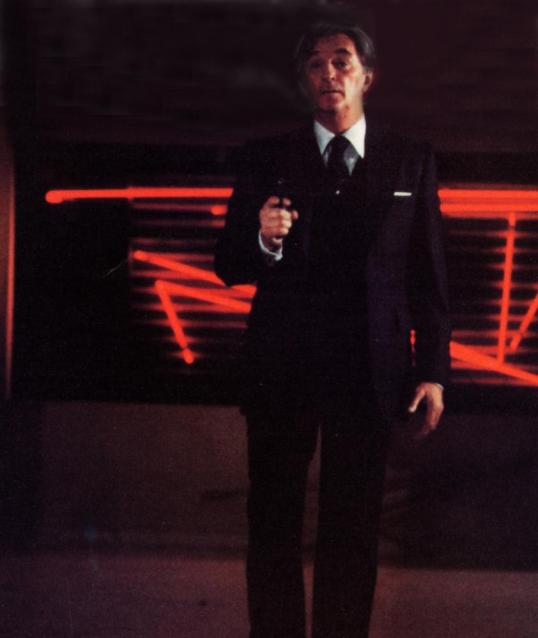
“Who are the other two lugs on this poster? And who’s the dame? Baby, I just don’t give a damn…” Robert Mitchum in Agency.

Like a lot of writers who occasionally have issues when it comes to balancing ambition with time management, I’ve discovered that it helps if I listen to music while I write.  For instance, while writing the majority of the reviews for Shattered Politics, I’ve been listening to Big Data’s Dangerous.

And that choice of music has actually turned out to be extremely appropriate.  No, not just because it’s dangerous to write about politics.  But also because the official music video for Dangerous deals with advertising and, more specifically, how sex and violence are used to sell everything from shoes to politicians.

Now, I don’t know about you but, whenever I see that video, I feel like I’m ready to put on a sports bra, running shorts, and of course my Big Data running shoes so that I can take control and headbutt my way through life!  A good commercial can do that.  (And don’t even get me started on what I’m going to do to the next person I see eating a hot dog…)

Interestingly enough, the 47th film that I’m reviewing for Shattered Politics also deals with the power of advertising.  First released in 1980, Agency stars Robert Mitchum as Ted Quinn, the mysterious new owner of a major ad company.  Out of all of the old school movie stars, Robert Mitchum is one of my favorites because he was not only a great actor but he was also a very honest one.  If he didn’t give a damn about a role, he wasn’t going to try to fool the audience otherwise.  Instead, he was going to deliver his lines and kind of smirk with his eyes, his way of subliminally asking the audience, “Are you actually watching this shit?”  And while this may have led to Mitchum giving several performances that were unworthy of his talent, it also means that if you see Robert Mitchum actually invested in a role than that means the film must be something really special.

Unfortunately, Agency is not one of those “something really special” films.  And Mitchum’s bored performance reflects that fact.

"Just try to make me care." Robert Mitchum in Agency.

“Just try to make me care.” Robert Mitchum in Agency.

Anyway, under Ted Quinn’s leadership, the ad agency is doing commercials for all the usual clients.  The movie starts with one of those commercials — a leather-themed, disco-scored short film extolling the virtues of No Sweat deodorant.  And then there’s also the big chocolate energy drink commercial.  However, copywriter Sam Goldstein (Saul Rubinek) suspects that Ted might have sinister motives.  After a right-wing  candidate comes out of nowhere to win a seat in the U.S. Senate, Sam suspects that the deodorant commercial may have contained subliminal messages…

That’s right!  It’s exactly like that episode of Saved By The Bell where Zack Morris brainwashed Mr. Belding by giving him that subliminally-spiked tape of the Beach Boys.

Well, before you can say “Zack Morris is a blonde Tom Cruise,” Sam has been murdered and it’s up to Sam’s best friend, Philip Morgan (Lee Majors), to reveal the truth about Ted’s sinister agenda…

Like many U.S.-set thrillers from the 1980s, Agency was actually a Canadian film.  Montreal stands in for an unnamed American city where it frequently snows and the supporting cast is full of actors with noticeable Canadian accents.  Mind you, that’s not a complaint.  I love Canada, I love Canadians, and I especially love Canuxploitation films.

That said, Agency is probably one of the least interesting Canadian thrillers that I’ve ever sat through.  (I should add, of course, that I saw Agency on a very low-quality DVD that was released by Miracle Pictures.  And I really do have to say that this was absolutely one of the worst transfers that I’ve ever seen.  It appears that the DVD was copied from an old VHS tape.)  It’s not so much that it’s a terrible film as much as it’s just not a very interesting one.  With the exception of Rubinek, the actors go through the motions with little enthusiasm and the story plods along.  Maybe back in 1980, the whole idea of subliminal advertising seemed exciting and relevant.  But seen today, it just all seems incredibly silly.

So, in the end, Agency did not make me want to headbutt my way through life.

Sorry.

(I still love you, Canada!)

(And you too, Robert Mitchum!)

"Baby, I just don't give a damn."  Robert Mitchum in Agency.

“Baby, I just don’t give a damn.” Robert Mitchum in Agency.