Today’s music video of the day comes from Italy!
All the more reason to enjoy!
Today’s music video of the day comes from Italy!
All the more reason to enjoy!

The 1998 film, The Gathering, is about people who keep having visions.
Michael Carey (Daniel Kruse), for instance, is a successful advertising executive who suddenly sees a portal forming high in the sky and people turning into globes of light as they are transported upward.
His wife is at the playground, talking to her best friend about what a drag her husband has become ever since he got on the whole religious kick when suddenly, she has a vision in which all of the children have vanished.
Michael’s mother-in-law gets the worst of it. She’s a professor at the local college and she’s introduced explaining to a student that the only way to pass her class is to be an atheist. (The student needs to call a lawyer, to be honest.) Suddenly, the professor is having all sorts of visions, that majority of which involve her betraying people to a shadowy government organization. She betrays her best friend and colleague. She betrays her own daughter. She betrays everyone.
While his wife and his mother-in-law shrug off the visions and claim that there must be a normal explanation for why they’re all visualizing a similar future, Michael turns into an evangelist and starts telling everyone about what he’s seeing. He is especially upset when he discovers that one of his clients is going to be at the forefront of encouraging everyone to get a microchip inserted under their skin. (We already know from the professor’s visions that people who don’t have the chip will be hunted down and killed in the streets.) People start to feel a bit uncomfortable around Michael. He loses his job and his family but still, when the portal appears in the sky, he’s among those who vanish. His wife and his mother-in-law are not lucky, which sounds like the start of a really sexist joke. (“Those seven years between the rapture and the second coming were the first peace and quiet I got during my entire marriage!”)
Clocking in at 57 minutes, The Gathering was produced and released at a time when the Left Behind books were climbing the best seller charts. It pretty much follows the same formula as those books, with the emphasis less on being a Christian and more on imagining the misery that awaits everyone who isn’t. In this film, if you’re not a believer, you’re going to be stuck in a world where all of the color has been desaturated and everyone has to wear really ugly, communist-style clothes. It’s a world where the government monitors everyone’s actions and where questioning those in charge can lead to you being either executed or sent to reeducation camp. When viewed today, the film feels more like a political tract than a religious one, with the smug but bland and process-obsessed villains serving as a perfect representation of what almost everyone hates about dealing with the bureaucratic state.
Not surprisingly, the film’s budget is low. There are a few effective shots. I liked the way that the clouds would “speed up” whenever anyone was starting to have a vision but then the extremely cheap-looking portal appeared in the sky and ruined the illusion. The film is quickly paced and its portrayal of life under a dictatorship feels believable. At the same time, a lot of the acting is amateurish and the film itself seems to be more about scaring people than making a case for its beliefs. It really does seem like the intended audience for this film were people who just wanted to imagine their atheist neighbors having to dress like Trotsky. But, hey, at least it’s less than an hour long.
Welcome to Retro Television Reviews, a feature where we review some of our favorite and least favorite shows of the past! On Thursdays, I will be reviewing City Guys, which ran on NBC from 1997 to 2001. The entire show is currently streaming on Tubi!

If I can turn it in tomorrow, it’ll be alright….
Episode 3.11 “Marriage Go Round”
(Dir by Frank Bonner, originally aired on October 23rd, 1999)
It’s marriage class! The class — which, of course, includes Jamal, Chris, L-Train, Al, Dawn, and Cassidy — is divided into couples. Ms. Nobel assigns the couples and, for a few weeks, they pretend to be married and deal with any complications that come up. Ms. Nobel also decides what the complications are going to be. Why does Ms. Nobel get all this power?
Anyway, Jamal gets mad because Chris is “married” to Jamal’s previously never seen or acknowledged girlfriend. (Apparently, Jamal broke up with the white girl who had the racist father.) Jamal spends the entire show worrying that he’s going to lose his girlfriend and then he does lose his girlfriend but who cares? We’ve never seen this person before. Meanwhile, L-Train is assigned to marry a girl who thinks that she’s too good for him, Al is assigned to marry Dawn, and Jamal is assigned to marry Cassidy. Considering that Chris is supposedly in love with Cassidy, wouldn’t it have made more sense for him to be jealous of Jamal than for Jamal to be jealous of Chris?
As you may have noticed, this episode was recycled from an old episode of Saved By The Bell. It wasn’t that good of an idea when Saved By The Bell did it. It’s even dumber when it gets the City Guys treatment.
Episode 3.12 “Movin’ On Up”
(Dir by Frank Bonner, originally aired on October 30th, 1999)
Rock TV (that’s this show’s version of MTV) is holding auditions for the cast of the latest season of Reality House (a.k.a. The Real World). Chris, Jamal, L-Train, Al, Dawn, and Cassidy show up late for the auditions and then get into a loud argument about who is to blame. The producer is so impressed by their argument that he hires them on the spot! As he puts it, they’ve got “in-your-face, New York attitude!”
The Gang becomes reality stars!
They move into a loft but apparently, there’s not enough conflict and Chris and Jamal overhear the show’s producer talking about cancelling the season. Chris and Jamal decide to manufacture conflict to keep the season going. Isn’t that what the show’s producers are supposed to be doing?
Seriously, as a committed reality TV fan, this episode offended me. Why would you ever cast a reality show with an uneven number of men and women? Why would you pick people who already know each other? Why would you not toss someone in specifically to start conflict? Where’s the naïve newcomer from the Midwest? Where’s the frustrated artist with terrible personal hygiene? Where’s the girl who won’t shut up about being a virgin? Where’s the frat boy with a drinking problem? I mean, no wonder no one is watching this show!
While the gang appears on reality TV, Ms. Nobel deals with a terrible new assistant named Marcy. It was pretty dumb. Even dumber is that Ms. Nobel somehow got involved in telling Chris and Jamal how to behave on the reality show. Why does Ms. Nobel get involved in everything? Is running a high school really that easy of a job that she can just spend all of her time hanging out at the diner and the reality show loft?
The episode ended with the TV show still going and everyone still living in the Loft so I guess this reality show angle is going to be the new thing. I guess we’ll find out for sure next week!
Who are you thinking about?
By the way, I recently heard that some people can’t stand it when people in relationships refer to each other as “babe.” Personally, I think it’s cute. It’s also a good way to remind someone that they are loved despite the fact that you might be asking them to take down their favorite work of art until after your aunt visits. “Take that down,” sounds mean but “Hey, babe, how about we take this down for a few hours?” sounds sweet and fun! Not only are you using a term of affection but you’re also assuring them that it will only be for a few hours and hey, maybe you’ll do something special to celebrate its return to the wall, right?
Anyway, I like this video. It’s very celebratory. It captures the feeling of being young, having too many resources, and just letting the day take to wherever it’s going to lead. It’s all about freedom and enjoying the life that you have while you have it. In today’s world, so many people seem to feel that they have an obligation to be miserable all the time. Seriously, though, you’ve got your entire life to be miserable. Today, just enjoy yourself. The world won’t end.
Enjoy!
Lyrics:
If I told you, that this couldn’t get better baby
And your heartbeat, it lets me know you feel the same.
I can hold you, keep you safe until you fall asleep.
Never worried, cause I can give you what you need.
Now everything I do, is all for loving you.
Its not something that we’re used to.
No other way to say, I need you every day.
And now I’m gonna change my ways.
And it’s a part of you, I never wanna lose.
I’ll do anything you want me to.
Like any other day, I know I’ll find a way-aa-aay.
And if ever I’m alone you’ll say.
I’ll be thinking about you.
I’ll be thinking about you.
I’ll be thinking about you.
I’ll be thinking about you.
I’ll be thinking about you.
I’ll be thinking about you.
I’ll be thinking about you.
I’ll be thinking about you.
In a moment, I know that everything could change.
And I know that, my life would never be the same.
You’re the only one that’s making sense to me.
When I close my eyes, you’re the one, I see.
There’s no other way I could ever be … Without you babe.
Now everything I do, is all for loving you.
Its not something that we’re used to.
No other way to say, I need you everyday.
And now I’m gonna change my ways.
And it’s a part of you, I never wanna lose.
I’ll do anything you want me to.
Like any other day, I know I’ll find a way-aa-aay.
And if ever I’m alone you’ll say.
I’ll be thinking about you.
I’ll be thinking about you.
I’ll be thinking about you.
I’ll be thinking about you.
I’ll be thinking about you.
I’ll be thinking about you.
I’ll be thinking about you.
I’ll be thinking about you.
Despite the fact that I’ve regularly been watching and reviewing Hang Time, I have to admit that I really don’t know much about basketball. In fact, I’d have to say that every time that I watch a movie or a television show about basketball, I learn something new.
For instance, when I watched Space Jam 2, I discovered that basketball is the only thing holding the multiverse together.
When I watched Hoosiers, I discovered that basketball is also the only thing holding Indiana together.
From watching the basketball episode of Saved By The Bell, I discovered that Zack Morris was apparently the best basketball player in California, despite having never been seen playing or even talking about the game in the past. I always thought you had to be extremely tall to play basketball but I guess I was wrong.
From watching Hang Time, I’ve discovered that you only need one good player to repeatedly win the state championship.
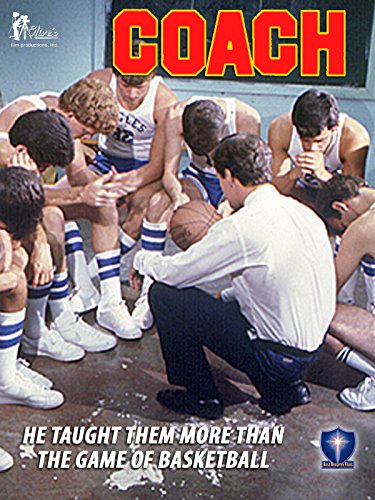
And from 1983’s Coach, I discovered that high school basketball coaches can quit whenever they want to. Apparently, they can just voluntarily leave the court and refuse to coach the team and it’s not a violation of a contract or anything else that you might expect it to be. Of course, the team in Coach is so bad that they’ve only won two games in three years! The players are all seniors and they’re all about to graduate without knowing the thrill of winning the state championship. Every coach that they’ve had has walked off the court. Not even the principal of their school cares whether or not they win. In fact, he seems to prefer that they keep losing, though it’s never explained why.
Their newest coach is Philip (played by Colin Earls) and he is determined to turn them into a good team. It’s not just that he thinks it would be good for the players to actually win a game or two before becoming adults. It’s also that the team represents the only Christian school in the league and he feels that they owe it to God to actually try to win a game or two. It doesn’t help that the other teams are making fun of them for being from a Christian school. What type of Christian school doesn’t have a good basketball team!?
Uhmmm …. maybe the type of school that puts more importance on academics than athletics? I mean, that always seems like a possibility.
Anyway, he gets the team into shape by encouraging them to read the Bible and to play for the team instead of playing for their own personal glory. The best member of the team feels guilty for putting his own personal glory above the team so Philip takes him to a lecture that’s delivered by a guy who is so tall and so awkward that I can only assume that he was a real-life basketball player. Does the team start winning? Well, it would be a pretty depressing move if they didn’t.
Coach is an extremely low-budget film and the majority cast appears to have been amateurs. It’s only 78 minutes long and none of the players is really allowed to develop much of an individual personality. One player is really good. One player has a temper that he has to control. That’s about all we learn about them. The team gets some help from a nerdy guy who uses a big bulky computer to scout the other teams. For me, the computer stuff was the highlight of this film, just because everyone in Coach is so amazed by the fact that a computer has a practical use. This film was made in 1983 and it shows!
I also found it amusing that, during the game, the computer and the guy was always hidden away in what appeared to be a boiler room. I guess this was to keep the other teams from figuring out that computers could be used to store and analyze information. I felt kind of bad for the guy who operated the computer, though. While the rest of the team was playing and getting all the credit, he was essentially locked away in a secret room.
Coach is undoubtedly sincere but, aside from all the excitement over the big bulky computer, it’s a bit forgettable. In the end, the team will always remember their friends at Hang Time and I guess that’s the important thing.
Welcome to Retro Television Reviews, a feature where we review some of our favorite and least favorite shows of the past! On Wednesdays, I will be reviewing the original Love Boat, which aired on ABC from 1977 to 1986! The series can be streamed on Paramount Plus!
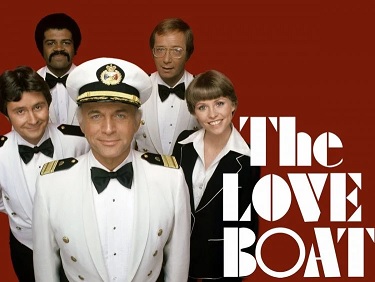
Beware the Inspector! Read on and find out more about this week’s cruise of the Pacific Princess….
Episode 1.19 “A Very Special Girl / Until the Last Goodbye / The Inspector”
(Dir by Roger Duchovny, originally aired on February 11th, 1978)
Captain Stubing starts the cruise by giving the crew some potentially frightening news. The company has sent an inspector to take the cruise and observe how everyone is doing their job. The catch is that the inspector is disguised as a passenger and the crew now has to figure out who it could be!
Marvin Waterman (Jim Backus) seems like a good suspect. He’s stuffy. He always wears a suit. He carries around a notepad. He’s always asking questions about the ship. It must be Marvin! Nope, sorry. It turns out that Marvin is just a children’s book author and he’s doing research.
Could it be eccentric Mrs. Corwin (played by Gavin MacLeod’s wife, Patti MacLeod)? She acts like she’s spacey and not always sure where she is but maybe that’s just a cover! She does make a lot of calls back to the mainland! Nope, it’s not Mrs. Corwin. It turns out that she’s just an eccentric widow who likes to call her daughter and let her know what’s going on in her life. Fortunately, Mrs. Corwin meets and inspires Marvin and they fall in love. Unfortunately, that doesn’t bring the crew any closer to finding the inspector.
Surprise! The inspector wasn’t actually on the ship. He arrived late and wasn’t able to board. However, his father (Jack Bernardi) did get on board and he spend the entire cruise wandering about and asking people questions in Russian. As far as I could tell, none of the crew made much of an effort to help the confused old man out so I’m guessing they’re all out of a job now. I wonder what next week’s episode will be like….
While the crew was looking for the inspector, Mike Andrews (Bob Seagren) was looking for Melanie Taylor (Laurette Sprang). Mike arranged for his goofy sidekick, Doug (Sal Viscuso), to spend all of his time with Melanie’s best friend, Jane (Debralee Scott). Fortunately, Doug and Jane fell in love. Meanwhile, Mike abandoned Melanie as soon as the cruise ended. Booooooo!
Finally, the crew was fascinated by an older man (Paul Burke) who was traveling with a younger woman (Susan Blanchard). For the majority of the episode, everyone assumed the man and the woman were lovers. But then the man collapsed and it turned out that he was the woman’s father and he also terminally ill. This cruise was their long goodbye. This was a sweet story, even if it was kind of icky that everyone assumed that the father was carrying on an affair with his daughter. But, really, that mistaken assumption is the fault of the crew. I’m surprised they didn’t mistake the older man for being the Inspector.
Anyway, this was a fairly typical episode of The Love Boat. It got the job done with a minimum of complications and, if nothing else, it looked like a fun vacation. The Love Boat always works best as wish-fulfillment. It’s the type of show you watch and think, “What would I do if I was on that cruise?” I enjoyed this episode. The whole thing with the inspector was silly but the other two stories were well-handled. I hope things worked out for Doug and Jane!

The 1986 short film, Consider It All Joy, features one of my favorite scene transitions.
Newly married Claire (Bonnie Hawley) and David (Gary Costello) kiss while sitting in front of the fireplace. One jump cut later and Claire is smiling and pregnant and David has a look on his face that says, “My boys can swim!” That’s about as close as any faith-based film will ever get to acknowledging that two people, even two married people, have not only had sex but that they actually enjoyed having sex and that they probably had sex more than once. Of course, it helps that Hawley and Costello had a lot of chemistry and they just seemed like they belonged together as a couple. They’re totally believable as one of those married couples who rarely fight and yet don’t annoy their friends with their happiness.
The other thing that Consider It All Joy has is a lot of wood paneling. I wouldn’t say that every room in this film has wood paneling but enough of them do that, as I watched, I found myself saying, “That’s a lot of wood paneling.” But that makes sense. This is a low-budget, indie film that was shot in the 80s. It was designed for a very specific audience and there’s nothing particularly slick or overly stylized about it. Watching the film, the viewer gets the feeling that the majority of it was filmed in someone’s house, as opposed to on a set. The actors probably wore their own clothes. In many ways, the film itself feels like a time capsule. Until time machines are invented, watching a film like this might be the closest that one could get to witnessing the 80s firsthand.
As for the film itself, it tells the story of Claire dealing with the sudden death of David. The majority of the film is told in flashback so we watch all of the scenes of them meeting, courting, marrying, and starting a family with a sense of dread. As happy as they are, we know that it’s not going to last. When David is laid off from his job, he refuses to get upset and instead tells his boss that he knows everything will work out because he has faith and that God will provide. Everyone at the office is apparently really impressed with David’s good attitude. Of course, they’re not impressed enough to keep him around and to continue to pay his salary. Personally, I think they’re getting off easy but then again, everything that I know about downsizing and corporate America comes from the second season of The Office.
David does eventually find a new job and it turns out to be a far better one than he previously had! However, no sooner has David left for work than the police show up at the door and tell Claire that he’s been killed in an auto accident. At first, Claire is angry but then she remembers David’s faith and she decides to consider it all joy. The film ends with her witnessing to one of David’s friends, with the suggestion being that Claire might not be single for long!
As I’ve said before, I have a weakness for low-budget indie films, especially ones that pretty much epitomize the era in which it was made. This is pretty earnest film and I doubt that it will change the minds of anyone who doesn’t already agree with its message but Bonnie Hawley and Gary Costello are a believable couple and the film couldn’t be more 80s if it tried.
Welcome to Retro Television Reviews, a feature where we review some of our favorite and least favorite shows of the past! On Tuesdays, I will be reviewing the original Fantasy Island, which ran on ABC from 1977 to 1986. The entire show is currently streaming on Tubi!

This week …. Tattoo gets a trumpet!
Episode 2.3 “The Beachcomber/The Last Whodunit”
(Dir by George McCowan, originally aired on September 30th, 1978)
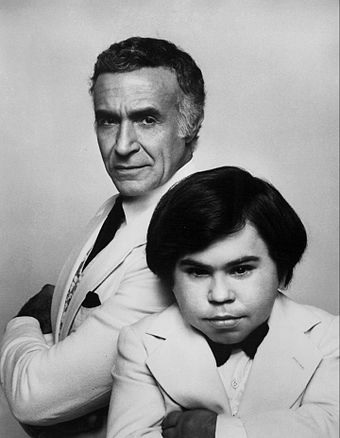
Tattoo is learning how to play the trumpet and Mr. Roarke can barely hide his anger. That is this week’s Tattoo/Roarke storyline and it rasies a lot of questions about Roarke and Tattoo’s relationship. Is Roarke upset because Tattoo is a bad trumpet player or does he just dislike Tattoo in general? Does Tattoo really care about learning how to play the trumpet or is he just looking for an excuse to annoy Mr. Roarke? I think all of those possibilities may be true at the same time. If the previous two episodes hinted that Roarke and Tattoo no longer hated each other, this episode seems to confirm that they’re still the frenemies that they’ve always been. I sympathize with Roarke but it’s hard not to appreciate Tattoo’s determination to be an agent of chaos.
As for the fantasies, Charles Preston (John Astin) is a successful businessman who wants to throw it all ways so that he can spend the rest of his life as a beach bum. Roarke sets Preston up in a cabin on one of the shabbiest beaches on Fantasy Island. Seriously, the layout of Fantasy Island is just weird. A third of the island is a luxury resort. A third of the island is a magical jungle. And a third of the island is apparently just a collection of poverty-stricken fishing villages. Do the people who live on the island know that they could be having a fantasy if they only had the money? Let’s hope none of them ever pick up a copy of Marx or Piketty.
Anyway, Preston soon discovers that the life of a beach bum is not as easy as he thought it would be. For one thing, the chief of the island’s indigenous population demands that Preston marry his daughter. (The joke is that his daughter is overweight and …. well, it’s all pretty cringey by 2022 standards.) Meanwhile, a bounty hunter slaps some handcuffs on Preston and threatens to take him back to his family unless Preston pays him $70,000. “All of you beachcombers have a stash!” the bounty hunter hisses. Fortunately, Preston’s wife shows up and announces that she’s fine with him being a beach bum, as long as he’s a responsible beach bum who helps to pay the bills. And that’s the end of that. What an underwhelming fantasy.
Luckily, the episode’s other fantasy is a bit more entertaining. Mabel Jarvis (Celeste Holm) loves mystery stories and she wants to spend a weekend as her favorite fictional detective. Of course, Mabel soon finds herself investigating the real-life murder of Mabel’s favorite writer. Mr. Roarke explains that the writer was a friend of his and that he hoped Mabel could solve the case. That seems like a lot of responsibility to put on someone who is just looking for a vacation but, fortunately, Mabel proves to be up to the job. Anyway, this was a fun little fantasy and, as an avid reader of mysteries, it was one to which I could relate. Celeste Holm seemed to be having a lot of fun as Mabel and, even more importantly, her cat played a key role in solving the mystery.
This was not a bad episode. The beach stuff was forgettable but the episode was saved Celeste Holm and Tattoo’s trumpet.

An hour or so into Emily the Criminal, there’s a scene in which Emily (Aubrey Plaza) goes to what she thinks is a job interview with a prestigious ad agency. For the second time in the film, Emily is forced to tell a potential employer that she has a felony conviction. In this case, it doesn’t seem to matter. Alice (Gina Gershon), the head of the agency, explains that she is looking for an intern to work in the design department.
Emily asks if Alice is asking her to take an unpaid internship.
Alice replies that everyone starts as an intern and that, if they do a great job, they might get a paid position in five to six months.
Emily asks how Alice can expect anyone to work regular hours without getting paid.
Alice replies that Emily will paid in experience. “When I began in this industry,” Alice says, “I have no intention of just being a secretary….”
“But secretaries get paid!” Emily snaps.
Alice replies with an obviously well-rehearsed anecdote about how, when she started, there were no women in the executive office. When Emily cuts her off again, Alice drops the Pelosiesque facade and accuses Emily of being spoiled. When Emily tells her off before storming out of the office, you’ll want to cheer. It doesn’t matter how you may feel about some of Emily’s earlier life decisions or Emily as a person. When Emily calls out Alice for expecting people to work for free, you will totally be on Emily’s side.
You’ll also understand why Emily would chose to be, as the title makes clear, a criminal.
When we first meet Emily, she is a part of the gig economy, delivering food for a catering company. There was a time when she dreamed of becoming a professional artist and living in South America. Now, she’s just trying to figure out how to pay the huge amount of student loan debt that she owes, despite the fact that she never graduated from college. When she learns of an opportunity to make $200 in one hour, she takes it. As Youcef (Theo Rossi) explains it, all she has to do is use a fake credit card to buy a flat-screen TV so that Youcef and his associates can then sell it. (In a nice bit of irony, it later turns out that Youcef is basically an unpaid intern for his cousin.) After her first job is a success, Youcef starts to trust Emily with making bigger and riskier purchases. Soon, Emily is making her own fake credit cards and running her own scams. She’s still an independent contractor but now she’s making a lot more money.
Emily the Criminal takes a matter-of-fact approach to Emily’s activities. There’s none of the condemnation that one might expect as the result of having seen other movies and, regardless of how dangerous things get for her, there’s never a moment where Emily herself reconsiders whether or not she wants to be a criminal. The film doesn’t necessarily celebrate criminality but it does ask why Emily should care about the rules of society that obviously doesn’t care about her. If Emily remains law-abiding, she’ll be stuck in a demeaning job and she’ll never pay off her debts, which means that she’ll just become a criminal by default. (And, let’s be honest, we all know that all the talk about canceling student debt is just something that gets trotted out during an election year. We’ll hear it again in 2024 and again, nothing will happen.) As a criminal, the only risk is that Emily could be arrested or attacked by another criminal but, as the film makes clear from the start, Emily already has a criminal record so what’s one more charge? As for being attacked, Emily continually proves herself to be tougher and far more ruthless than the other criminals around her. Alice might brag about how she’s found success in an industry dominated by men but Emily actually does it.
Emily the Criminal is a relentlessly-paced journey through the shadows of the gig economy, a world where the only law is that everyone is looking out for themselves. Aubrey Plaza gives a career best performance as Emily, playing her as someone who not only turns out to have a natural talent for being a criminal but who occasionally shocks herself with how ruthless she can be. Emily may be a criminal but its hard to judge her. It’s just a job.
As I sit here typing this, at 9 a.m. on Monday, Jeremy Renner is currently in the hospital. Most reports state that he is in critical but stable condition as the result of an accident involving a snow plow. That’s pretty much all the details that anyone has right now. Hopefully, by the time this pots goes live, his condition will have improved. My thoughts are with him and his family.

