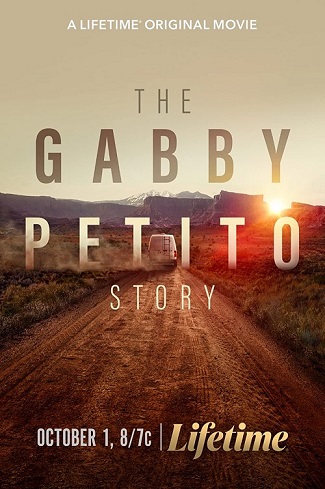
Lifetime Film Review: The Gabby Petito Story (dir by Thora Birch)


Last night, when I watched The Gabby Petito Story on Lifetime, my inital reaction was to think that it was a bit gauche just how quickly Lifetime had turned the story of Petito’s murder into a movie.

“Wow, I thought, this only happened a few months ago and they’ve already turned it into a movie?”

However, I then took a look at Gabby’s Wikipedia page and I discovered that it has actually been over a year since Gabby Petito disappeared while driving across the country with her fiancée Brian Laundrie.  It has been over a year since her family frantically asked that anyone with information come forward.  It has been over a year since the release of the footage of the police talking to a distraught Gabby Petito while Brian laughed about the situation on the other side of their van.  It has been over a year since Brian himself vanished.  It has been over a year since Gabby’s remains were found and the coroner confirmed that she had indeed been choked to death.  And it’s been over a year since Laundrie’s skeletal remains were found, along with a note in which he confessed to killing Gabby.

It’s been over a year but it seems like it was just yesterday.  That’s how invested many of us became in the search for Gabby Petito and that’s how fresh our anger over what happened remains.  Why did Gabby Petito’s disappearance capture the public imagination in a way that so many other disappearances haven’t?  Some claim that it’s because Gabby was young, pretty, and white and that might be the case with some people.  But, for many of us, the reason why Gabby’s disappearance captured our imagination is because every woman has known at least one man like Brian Laundrie, the self-declared nice guy who is actually controlling, manipulative, and mentally (and often physically) abusive.  We watched the footage of Gabby telling the police that Brian’s anger was all her fault because “I just get so OCD” and we realized that the same thing could have just as easily happened to us.  Brian hit Gabby because she asked him to not track dirt and mud into the van in which they were going to spend the next few months living.  And, when the police showed up to ask what was going on, she blamed herself.  No one was there to save Gabby and we all felt that if we had found ourselves in the same situation that there would not have been anyone there to save us either.

The Gabby Petito Story stars Skyler Samuels as Gabby and Evan Hall as Brian Laundrie.  It follows them from the moment that their relationship began and we watch as Brian goes from being endearingly awkward to being an out-of-control monster, one who hides behind his anxiety disorder and his nerdy persona.  It’s not always easy to watch, as the film does a good job of showing how an abusive relationship develops and also how it will inevitably end.  It’s difficult to be comfortable with any show that uses a true life tragedy to generate ratings (and knowing that Lifetime was probably started planning the film even while Gabby was still missing doesn’t help) but The Gabby Petito Story is well-acted by Samuels and Hall and it’s well-directed by Thora Birch, who also plays Gabby’s mother.  If nothing else, it shows why so many of us became obsessed with Gabby’s disappearance and why her tragic fate continues to haunt us a year later.

Horror on the Lens: The Giant Spider Invasion (by Bill Rebane)


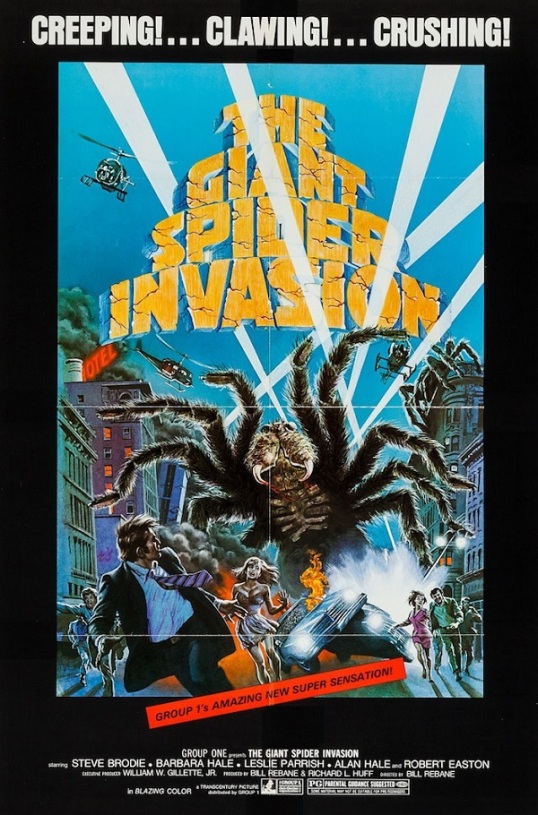
For today’s Horror on the Lens we have the 1975 classic, The Giant Spider Invasion!

Directed by Wisconsin’s own Bill Rebane, The Giant Spider Invasion works specifically because it delivers exactly what the title promises.  The title says that you’re going to see giant spiders invading the Earth and that’s exactly what happens!  And, as someone who cannot stand spiders, I can only say, “AGCK!”

This is a fun movie.  Sadly, I don’t think it would be as entertaining if it were made today.  The budget would be too high.  The actors wouldn’t be in on the joke.  The whole production would be more concerned with creating the perfect CGI spider than just having fun with the concept.  For a film like this to work, you need someone who is willing to work with a low budget and you need someone willing to fully embrace the the idea of spiders invading the farmlands of Wisconsin and wrecking havoc, regardless of how silly it might seem.  You need a director like Mr. Bill Rebane.

Enjoy!

October Positivity: Second Glance (dir by Rich Christiano)


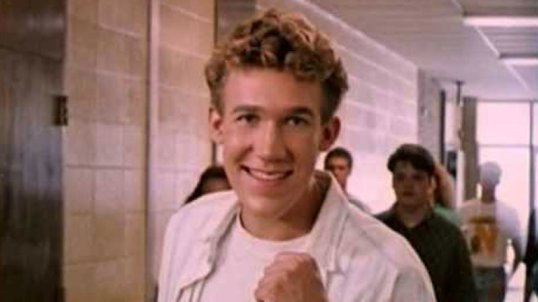
“Hey Scotty! Jesus, man!”

This 1992 film tells the story of Dan Burgess (played by David A. R. White, who, years later, would be the center of the God’s Not Dead franchise).  Dan is a high school student who fears that, because he spends all of his time going to church, he’s missing out on all the fun that he should be having.  Dan’s probably right.

Consider this:

The other kids are going to a big party.  Not Dan!

The other kids get to stay out as late as they want.  Not Dan!

The other kids don’t have to deal with two parents and a bratty sister.  Not Dan!

The other kids don’t have to keep their grades up.  Not Dan!

Dan can’t even get a girlfriend, because he’s just such a nice guy!  Of course, the girl from his youth group likes him but Dan wants to date Tamara (Denise Weatherly) and she only goes out with the type of guys who enjoy bullying Dan for being such a do-gooder.

One night, Dan prays that he wishes he had never become “a believer,” which would seem to defeat the purpose of not believing but anyway…. The next morning, Dan wakes up to discover that his bedroom is full of empty beer cans, the neighbors refuse to talk to him, and he now wears a backwards baseball cap.  As well, all of the high school bullies are now his best friends and he’s dating Tamara!  Plus, he’s been invited to Randy’s party!  Who is Randy?  Who cares?  It’s a party.

There’s also a weird guy named Muriel (Blaine Pickett) hanging out in Dan’s backyard.  Muriel explains that he is Dan’s guardian angel.  Everyone in Heaven was really upset by Dan’s prayer so they sent Muriel down to do a little bit of that It’s A Wonderful Life magic and show Dan what the world would be like if he wasn’t a believer.  Muriel also explains that only Dan can see and hear him.  That doesn’t stop Dan from arguing with Muriel and it also doesn’t stop people from seeing Dan apparently talking to himself.  But no one cares because Dan is now one of the popular kids.

In fact, Dan has everything that he ever wanted except …. well, his father seems to be missing.  And so is his little sister.  In fact, it turns out that he doesn’t even have a little sister because his parents got divorced when Dan was younger.  When Dan quite rightfully wonders how it could be his fault that his parents got a divorce, Muriel explains that it’s because non-believer Dan wasn’t praying for them when they were having trouble.  Ouch!  That’s harsh!  That’s also actually pretty messed up and a huge burden to put on the shoulders of those of us who grew up as children of divorce.  I know that when my parents got divorced, I kind of blamed myself and the message of this film is that apparently it was my fault.  Seriously, that’s a terrible message.  If you’re reading this and if your parents are divorced or are in the process of getting divorced, it’s not your fault!

Anyway, Dan learns an important lesson about faith and being impulsive in his prayers.  Soon, Dan is back to greeting his best friend by saying, “Hey, Scotty!  Jesus, man!”  Apparently, enough 90s kids were traumatized by this film that Dan’s greeting has become a minor meme.  That’s the power of film!

Insomnia File #56: Exterminators of the Year 3000 (dir by Giuliano Carmineo)


What’s an Insomnia File? You know how some times you just can’t get any sleep and, at about three in the morning, you’ll find yourself watching whatever you can find on cable or Netflix? This feature is all about those insomnia-inspired discoveries!

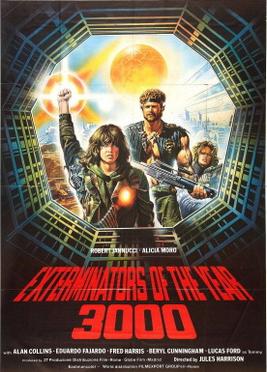
If you’re having trouble getting to sleep tonight, you might want to try going to over to YouTube and doing a search for a 1983 Italian film called Exterminators of the Year 3000.  It won’t cure your insomnia.  In fact, it’s such a peculiar film that it will probably keep you awake for the rest of the night.  However, you will be having fun.  Seriously, if you can’t sleep, you might as well have fun.

The film’s plot will be familiar to anyone who has seen The Road Warrior or Mad Max: Fury Road.  Due to a series of nuclear wars, society has collapsed.  The world is an arid wasteland.  Some survivors live in tiny communities.  Others drive motorcycles across the desert and prey on anyone that they can find.  Water is the most valuable commodity in this world.  The second most important thing to have is a good car.  Your car can be the difference between life and death.

Fortunately, Alien (Robert Iannucci) has a good car.  Unfortunately, Alien keeps losing it.  Alien is a wasteland drifter who spends half of the film looking for his car and the other half of the film helping a kid named Tommy (Luca Venantini) search for water for his community.  Tommy has a bionic arm.  When he’s captured by a group of evil bikers led by Crazy Bull (Fred Harris), his bionic arm gets ripped off.  In one of the strangest scenes that I’ve ever seen, Alien use duct tape to reattach the arm.  If that’s not odd enough, it also appears that he accidentally attached the arm upside down.

That’s just one of the many weird details that sets Exterminators of the Year 3000 apart from all of the other Italian Mad Max rip-offs.  There’s also the fact that Alien eventually and somewhat randomly runs into his ex-girlfriend, who looks like a model and, for some reason, is named Trash (Alicia Moro).  Alien and Trash agree to help Tommy but, the entire time, Alien keeps casually suggesting that maybe they should just abandon Tommy and take all the water for themselves.  This isn’t one of those things where Alien is just pretending to be a cynic, either.  The film leaves little doubt that Alien would have no problem just abandoning Tommy and taking the water for himself.  Even if Trash can convince Alien not to sell out the kid, they’re still going to have to fight a group of people who are all dressed like the Black Knight from Monty Python and the Holy Grail.  While Alien and Trash travel to get the water, Tommy gets a new arm that’s so strong that he can literally throw a piece of metal into someone’s forehead even while standing a few yards away.  Tommy also has a gerbil, which is not only cute but, in something of a rarity for an Italian exploitation film from the 80s, manages to survive the entire film.  (Seriously, I instinctively cringe whenever I see a cute animal in an Italian film from the 80s because I’ve seen enough of them to know what’s probably going to end up happening.)

Of course, Crazy Bull and his bikers continually show up and cause trouble.  Fred Harris gives such an enjoyably over-the-top performance that not even the usual bad dubbing can hurt it.  For whatever reason, Crazy Bull refers to his gang as the Mothergrabbers.  How can you not love a film that featured the main villain shouting, “Into battle, my merry band of Mothergrabbers!?”

Exterminators of the Year 3000 is a fun movie.  The action moves quickly.  There are lot of explosions.  The villains all snarl with panache.  There are plenty of slow motion shots of cars crashing.  And there’s enough odd moments to keep things interesting.  The film even ends with a sudden miracle.  How could anyone resist?  This is Italian exploitation as it most entertaining.

Previous Insomnia Files:

  1. Story of Mankind
  2. Stag
  3. Love Is A Gun
  4. Nina Takes A Lover
  5. Black Ice
  6. Frogs For Snakes
  7. Fair Game
  8. From The Hip
  9. Born Killers
  10. Eye For An Eye
  11. Summer Catch
  12. Beyond the Law
  13. Spring Broke
  14. Promise
  15. George Wallace
  16. Kill The Messenger
  17. The Suburbans
  18. Only The Strong
  19. Great Expectations
  20. Casual Sex?
  21. Truth
  22. Insomina
  23. Death Do Us Part
  24. A Star is Born
  25. The Winning Season
  26. Rabbit Run
  27. Remember My Name
  28. The Arrangement
  29. Day of the Animals
  30. Still of The Night
  31. Arsenal
  32. Smooth Talk
  33. The Comedian
  34. The Minus Man
  35. Donnie Brasco
  36. Punchline
  37. Evita
  38. Six: The Mark Unleashed
  39. Disclosure
  40. The Spanish Prisoner
  41. Elektra
  42. Revenge
  43. Legend
  44. Cat Run
  45. The Pyramid
  46. Enter the Ninja
  47. Downhill
  48. Malice
  49. Mystery Date
  50. Zola
  51. Ira & Abby
  52. The Next Karate Kid
  53. A Nightmare on Drug Street
  54. Jud
  55. FTA

Lisa Marie’s Week In Television: 9/25/22 — 10/1/22


Not only did I spend this week preparing for Horrorthon, I also ended up watching quite a bit of television.  Here’s some thoughts on what I watched.

Abbott Elementary (Wednesday Night, ABC)

This week, Janine tried to get Abbott a computer and Ava got to host a Shark Tank-style competition.  Ava is such a great character.  This episode may not have matched the premiere but it was still pretty funny and a good example of how Abbott Elementary is able to deal with the realities of public education without losing sight of the comedy.

The Amazing Race (Wednesday Night, CBS)

I wrote about the latest episode of The Amazing Race here!

Atlanta (Thursday Night, FX)

This week’s episode of Atlanta took a break from the surreal with a straight-forward but very funny episode about Earn and Al’s family.  Earn’s mother “kidnapped” Grandpa while Earn’s father made the mistake of buying a hat and allowing himself to get delayed in the mall.  While Aunt Jeanine called the police and demanded that her sister by criminally charged, Earn and Al looked for a way to escape the studio.  It was funny and enjoyably cringey.  Give Isiah Whitlock, Jr. an Emmy.

Bachelor in Paradise (Monday Night, ABC)

It’s a new season of Bachelor in Paradise!  All of the people who couldn’t find love on the main show get to hang out on the beach.  Bachelor in Paradise is actually more fun than The Bachelor because it’s honest about being a totally and completely shallow production.  Nobody is there for the right reasons and it’s great.

Apparently, Jesse Palmer is going to be the host for the entire season so I guess last season’s rotating host gimmick has been retired.  That’s probably for the best.  I actually like Jesse as the overall franchise host.  He doesn’t bring a lot of extra drama with him like Tayshia and Kaitlyn did and he seems to understand that his job isn’t exactly the same as being a brain surgeon.

That said …. where’s Meatball!?

Big Brother (Sunday Night, CBS)

Big Brother 24 finally came to a close on Sunday night.  Taylor Hale not only won the game but she also won America’s Favorite Player.  Considering the way that Taylor was bullied by the other houseguests at the start of the season, her victory was popular with the show’s fans.  Personally, I think both Monte and Turner played a better game but knowing that Taylor’s victory upset some of the worst people to ever appear on the show was still a satisfying feeling.  Knowing that Ameerah, Nicole, and Daniel were probably upset made the past few months worth it.

I wrote about this season over at the Big Brother Blog.

Bubblegum Crisis (NightFlight+)

80s cyberpunk!  Man vs machine!  The Sabre Knights vs a pack of robots known as the Boomers!  The main character, Priss, is also a rock star!  I had no idea what was going on when I watched this show early on Saturday morning but the animation was interesting to look at and Priss was undeniably cool.

CHiPs (Weekday Afternoons, Get TV)

I watched one episode of this old motorcycle cop show on Tuesday.  The cops kept the peace at an anti-nuke rally and Erik Estrada provided counseling to a child who was being abused by his parents.  I can’t say that I really paid that much attention.  I did like the bass-heavy theme song however.

Concentration (Weekday Afternoons, BUZZR)

This was an old gameshow from the 70s and the 80s.  I watched an episode on Friday while I was doing some work around the office.  The most interesting thing about it was that it was hosted by Alex Trebyk, who came across as being far more relaxed and casual about things than when he hosted Jeopardy.

Full House (Sunday Evening, MeTV)

Uncle Joey (you know, the one with the mullet) tried to teach Michelle how to ride a bike but he wasn’t very good at it and Michelle was humiliated when she fell off her bike at the park.  At first, Michelle blamed Joey but eventually she got over it.  What a brat.

This was followed by an episode in which poor DJ (who, really, deserves to nominated for sainthood for putting up with her family) has to take her two obnoxious sisters with her on a date.  Everyone learned an important lesson about sneaking into the movie and lying.  Don’t do either of them but, if you do sneak into the movie, don’t get caught.

Ghosts (Thursday Night, CBS)

The second season premiere of Ghosts was as charming as ever, with the ghosts spying on the B&B’s first guests and Jay discovering that, despite his near death experience, he still cannot see the ghosts.  I felt bad for Sam, as most of the stuff that the guests complained about when it came to her was the same stuff that people tend to complain about when it comes to me.  I cheered a little when she stood up to them.  The whole “Our yelp account was hacked!” ending was perfect.

Hell’s Kitchen (Thursday Night, FOX)

Hell’s Kitchen is back!  This season is going to be 40-something chefs vs 20-something chef.  To be honest, the gimmick doesn’t matter.  I’m just looking forward to Chef Ramsay yelling at people and losing his temper at the potentially lethal incompetence around him.  Who will be the first to try to send out raw chicken?  Sadly, the premiere episode did not feature a dinner service but, according to the previews, it’s coming up next week!

Law & Order (Thursday Night, NBC)

Last week’s Law & Order was pretty good.  This week, sadly, was one of those middling, lefty political episodes that the franchise often does in an attempt to remain in the good graces of those who would otherwise dismiss the whole thing as being copaganda.  It’s always funny to me how the Law & Order franchise is full of blue collar, Catholic cops who sound like they spend all of their time watching Joy Reid and Chris Hayes as soon as their shift is over.

On last night’s Law & Order, the victim was the daughter of the governor of Texas so, of course, we got this whole big thing about how the governor is always criticizing New York City as being crime-ridden.  “Why does the governor of Texas care about New York?” one of the detectives demanded and that’s when I started to tune this episode out.  One could just as legitimately ask why people in California and New York always feel the need to comment on what’s happening in Texas.  Law & Order always errs on the side of going overboard when it attempts to deal with politics.  This was especially true this week, as Law & Order waded into the abortion debate and came up with an ending that was both so heavy-handed and so predictable that I felt embarrassed for the show’s writers.

Law & Order: Organized Crime (Thursday Night, NBC)

With the start of a new season, Stabler got a new partner and a new crooked family to investigate.  From what I’ve seen, Organized Crime is the least interesting of the Law & Order shows and often feels more like it should be a part of NCIS franchise than Law & Order.  It was difficult for me to watch because Stabler really does seem like he’s going to give himself a heart attack if he doesn’t figure out a way to relax.

Law & Order: SVU (Thursday Night, NBC)

This week’s episode of SVU opened with an extremely disturbing scene in which a teenage girl was gang-raped on a subway while, just a few feet away, the rest of her family was hacked to death with machetes.  This scene reminded me of why I don’t regularly watch this show.  It’s undeniably well-acted and usually well-written, except for when it tries to be overly political.  But Good Lord, are the cases ever disturbing!

Mike (Hulu)

I wrote about Hulu’s disappointing Mike Tyson miniseries here.

Mike Judge’s Beavis and Butt-Head (Paramount Plus)

Inspired by a holy nacho chip, Beavis went on a spiritual journey and learned nothing.  This was a unique episode in that it told one story instead of the usual two.  It’s become obvious that Beavis, with his odd moments of clarity and his desire to actually be something more than just a sidekick, is a far more compelling character than Butt-Head.

Monarch (Tuesday Night, FOX)

This show gets sillier and sillier with each episode but it’s kind of worth it for the scenes of Trace Adkins glowering in the shadows while holding a gun.  I don’t really care much about which Roman daughter is crowned the next queen of country music but I definitely do what to know who Trace has been burying for the past three episodes.

Night Flight (NightFlight+)

From the 80s, it was a look at women in rock, from Janis Joplin and Grace Slick to Stevie Nicks.  I watched on Friday night.  The music was good.

Password (Weekday Afternoons, BUZZR)

I watched two episodes of this old game show on Tuesday.  Apparently, the aim was to try to guess a word and win money.  The episodes I saw were from the mid-70s and the most interesting thing about them was how cheap and run-down the show’s set looked.  One got the feeling that the whole studio probably reeked of cigarettes and spilled beer.

Saving Grace (Weekday Nights, Start TV)

On this show, which apparently ran for three seasons, Holly Hunter played an Oklahoma detective who, after she accidentally ran over a pedestrian after a night of drinking, was told by a fallen angel named Earl that she was going to go to Hell unless she changed her ways.  So, apparently, the rest of the show was about Grace solving crimes and talking to Earl.  How have I never heard of this show before?  It aired from 2007 to 2010 and Hunter was even nominated for two Emmy awards for playing Grace.

Anyway, the episode that I watched on Wednesday night featured Grace trying to solve a murder while another angel (F. Murray Abraham) tried to convince her to abandon Earl and work with him.  It was odd but Holly Hunter is always good and the show took place in Oklahoma so, as someone who spent some time in Oklahoma while she was growing up, I felt like I could relate to most of the characters.

Super Password (Weekday Afternoons, BUZZR)

I watched two episodes of this show on Tuesday.  It was just like Password, except the set looked cleaner.

Survivor (Wednesday Night, CBS)

I wrote about the latest episode of Survivor here!
Horror on TV: Ghost Story 1.1 “The Dead We Leave Behind” (dir by Paul Stanley)


During the month of October, we like to share classic episodes of horror-themed television.  That was easier to do when we first started doing our annual October horrorthon here at the Shattered Lens because every single episode of the original, black-and-white Twilight Zone was available on YouTube.  Sadly, that’s no longer the case.

However, there is some good news!  Twilight Zone may be gone but there are other horror shows on YouTube!  For instance, I’ve discovered that, in 1972, there was a horror anthology series that was originally called Ghost Story.  It was produced by William Castle and each episode featured a different guest star having to deal with the supernatural.

The show made its debut on September 15th, 1972.  In this episode, Sebastian Cabot (playing the role of the mysterious Winston Essex) introduces a story about the mortality and technology.  Jason Robards and Stella Stevens are a married couple who discover that their television cannot only predict the future but that also one of them is going to die!

Enjoy the first episode of Ghost Story!

The TSL’s Horror Grindhouse: Embrace of the Vampire (dir by Anne Goursaud)


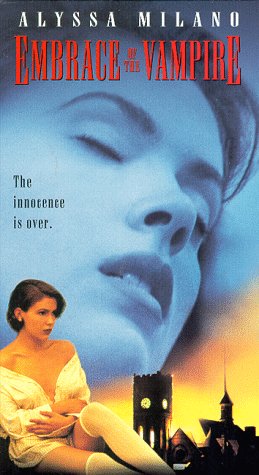
In this incredibly silly film from 1995, Martin Kemp plays The Vampire.  He doesn’t get a name but he does get a backstory.  Back when he was mortal, the Vampire pursued a secret and forbidden affair with a princess.  One day, after making love, the man who would became the Vampire was laying down next to a stream when he was approached by three naked women who proceeded to bite his neck and vampirize him.

Centuries later, the Vampire is sickly and approaching the end of his existence.  He only has three days to convince the reincarnation of his former lover to allow him to drink her blood so that he can continue to exist.  And apparently it won’t work unless she’s a virgin and unless she rejects all others and loves only him.  That sounds like a lot of rules to me and, to be honest, most of them seem to be kind of arbitrary.  Not only does The Vampire have to find the reincarnation of the Princess but he has to find her before she loses her virginity or otherwise, what?  She’ll cease to be the reincarnation?  Her love will somehow be devalued?  Her blood will no longer be worth drinking?  If this vampire has had to spend centuries only drinking blood from virgins who were in love with him, no wonder he looks so sickly.  I really think that maybe the other vampires were playing a practical joke when they explained the rules to him.  Hazing the new guy, it has consequences!

Anyway, the princess has been reincarnated as Charlotte (a young Alyssa Milano).  Fortunately, for the Vampire, Charlotte was raised in a convent and, even though she is now a college student, she’s still a virgin who blushes when she even hears the word sex.  Unfortunately, Charlotte has a boyfriend named Chris (Harrison Pruett) and she’s thinking about losing her virginity if she can convince herself that she loves Chris more than any other person that she will ever possibly meet.  So, the Vampire not only has to convince Charlotte to fall in love with him but he also has to make sure that she doesn’t have sex beforehand.  It’s going to be difficult because everyone on campus is determined to get Charlotte laid.  This has all the makings of Italian sex comedy but Embrace of the Vampire instead takes its plot very seriously.

The Vampire starts to appear in Charlotte’s dreams.  He gives her an ankh to replace the cross that Chris gave her.  Because the Ankh is a symbol of desire, just wearing it makes Charlotte more sexually aggressive and soon, she’s wearing short skirts, low-cut tops, and white stockings.  She’s also making out with Sarah (Charlotte Lewis), the photographer who lives in the dorm room next to hers.  (As played by Charlotte Lewis, Sarah is actually an interesting character and it’s a shame that the film pretty much just uses her for titillation.)  But since the Vampire’s whole thing is keeping Charlotte from losing her virginity, why would he give her something that would make her more open to sexual experiences?  Again, it’s hard not to think that the Vampire is just the victim of an elaborate practical joke.

As I said at the start of the review, Embrace of the Vampire is incredibly silly.  It’s also a film that seems to be a bit popular with viewers of a certain age.  I’m assuming that’s because of the frequent Alyssa Milano nudity and that one scene with Charlotte Lewis.  For the most part, Alyssa Milano gives a bland performance in Embrace of the Vampire.  It’s not so much that she’s bad as everything about her performance is on the surface.  One gets the feeling that there’s really not much going on with Charlotte’s inner life, both before and after she starts dreaming about The Vampire.  As The Vampire, Martin Kemp appears to be absolutely miserable.  He comes across as if he’d rather be anywhere than appearing in this movie.

That said, the film’s director got her start working with Francis Ford Coppola and she has a good eye for gothic scenery and atmosphere.  A scene where Charlotte imagines a frat party turning into a Hellish orgy is effectively done.  Jennifer Tilly has a small role as a vampire and she has said that Quentin Tarantino approached her at the Oscars to tell her that he enjoyed the movie.  It’s a silly movie (yes, third time I’ve used that specific term and that should tell you just how silly it is) but, for better or worse, it epitomizes an era.

Retro Television Review: California Dreams 1.9 “Mother and Child Reunion” and 1.10 “Romancing The Tube”


Welcome to Retro Television Reviews, a feature where we review some of our favorite and least favorite shows of the past!  On Saturdays, I will be reviewing California Dreams, which ran on NBC from 1992 to 1996.  The entire show is currently streaming on YouTube!

Last week, California Dreams dealt with both racism and misogyny.  It was two heavy episodes, featuring important lessons about the problems of the world.  Would the trend continue?  Let us find out!

Surf dudes with attitude, feeling mellow, let’s get on with it….

Episode 1.9 “Mother and Child Reunion”

(Directed by Don Barnhart, originally aired on November 7th, 1992)

It’s been over a month since the Dreams last had a gig.  Maybe they should break up!  Matt thinks that they just need to practice more.  (Of course, being a music camp kid, he would say that, wouldn’t he?)  Sly thinks that the band need to change its image and be less beach-y.  Considering what was going on in music in the early to mid-90s, Sly probably has a point.  Anyway, Sly goes out and buys a smoke machine so that the Dreams can use it to change their middlebrow image.  Maybe they just need a new lead singer.  WHERE’S JAKE!?

Now, the smoke machine and the edgy image stuff is actually kind of cute but the majority of the show revolves around Tiffani and her mom.  It turns out that Tiffani’s mom essentially abandoned her when Tiffani was only six.  For ten years, Tiffani’s mom worked as a dancer in New York.  Now, she’s back in California.  At first, everyone is shocked by the fact that Tiffani doesn’t seem to be angry at her mom but it turns out that Tiffani is angry and that anger finally comes out at Tiffani’s 16th birthday party when her mom suggests that Tiffany come live with her for a year.

By the standards of California Dreams’s first season, this wasn’t a bad episode.  Kelly Packard did a good job of portraying Tiffani’s anger.  Plus, this episode did have one good joke, in which Sly tried to rename the band The California Nightmares in an attempt to change their image.  They should have stuck with the new name.

Episode 1.10 “Romancing The Tube” 

(Directed by Don Barnhart, originally aired on November 14th, 1992)

This was a weird episode.  I’ve seen plenty of episodes of California Dreams but somehow, I never knew that Sly and Tiffani were a couple for an episode.  Apparently, Tiffany and Sly fell for each other while Tiffany was teaching Sly how to surf.  It all led to a “Surf Soul Swapping” ceremony, which was overseen by Peter Tork of the Monkees.  However, at the last minute, Tiffani realized that she was just using Sly as a rebound to help her get over her ex.  And Sly never really wanted to be in a committed relationship to begin with.  So, they broke up and I guess it all worked out in the end.

Meanwhile, Matt, Jenny, and Tony were supposed to paint a room in the Garrison House in return for Mrs. Garrison paying them $300 so they could get a new lighting system.  But then they got bored and abandoned the job.  Fortunately, the new lighting system turned out to be a bust so they tricked Mrs. Garrison into taking it off their hands.  No one learned a thing, which was probably about as realistic as California Dreams ever got.

Weird episode.

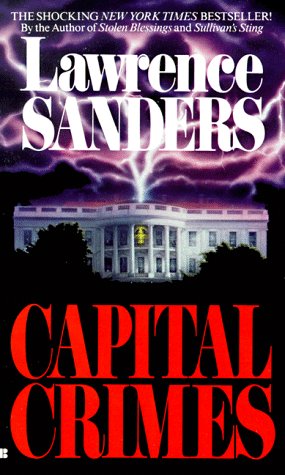
Novel Review: Capital Crimes by Lawrence Sanders


Tell me if the plot of the 1990 novel, Capital Crimes, sounds familiar.

The President of the United States is struggling.  The economy is bad.  The U.S. is long ground internationally.  The President’s approval ratings are plummeting.  The members of his own party are searching for a way to get rid of him.  However, the President himself is more concerned about the health of his son, a hemophiliac who seems destined to suffer an early death if he’s not somehow cured of his condition.

Everything looks hopeless until the President meets Brother Kristos.  Brother Kristos is a wild holy man from the backwoods, a sensualist who drinks vodka, believes that the best way to worship is to have an orgy, and who claims that he has a direct line to God and that he can heal the President’s son.  Kristos not only makes the claim but he backs it up by actually doing it.  The President and his wife soon become dependent on the mysterious Kristos.  Kristos goes from being an obscure cult leader to one of the most powerful men in the country but is he a servant of God or the Devil?  While Kristos sets about seducing all of the women in Washington, others try to investigate his background.  Is Kristos a charlatan or does he truly have magical powers?

If this sounds familiar, that’s probably because you’re familiar with Rasputin, the Russian monk who became a shadowy and much-feared influence on the family of Nicholas II, the final Tsar of Russia.  In fact, Capital Crimes so closely follows the story of Rasputin that you kind of have to wonder why no one in the book ever seems to pick up on the connection.  Russia exists as a rival to the United States in Capital Crimes and, as such, one assumes that Rasputin must have existed as well.  And yet no one in the book ever says, “Hey, remember when this happened before and it didn’t end well?  Maybe we shouldn’t invite the unwashed holy man to live in the White House?”

Capital Crimes is one of the books that I found in my aunt’s paperback collection.  I read it a few weeks ago and, beyond the fact that it was so obviously based on the story of Rasputin, there wasn’t anything particularly memorable about it.  The reader is continuously told that Brother Kristos is incredibly charismatic and that his piercing stare can hypnotize almost anyone but telling and showing are two different things and Kristos is such a ludicrous figure that it’s hard to take him seriously.  (Then again, I imagine many initially said the same thing about Rasputin.)  The book flirts with suggesting that Kristos actually does have supernatural powers but it neve really commits to the idea, which is a shame.  If you’re going to write a book about a Rasputin in the White House, you might as well go all out and fully embrace the supernatural aspect of the story.  Instead, the book gets bogged down in the political machinations of all the people who would like to replace the president.  It’s a bit dull.

The book is credited to Lawrence Sanders, who I know wrote quite a few best sellers and who is usually listed among the better thriller writers.  Capital Crimes feels extremely sloppy and derivative so I’m going to assume that it was written strictly for the money.  That’s not necessarily a criticism, of course.  Money’s a good thing!  But so is an interesting plot.

Book Review: Blood, Sweat & Chrome: The Wild and True Story of Mad Max: Fury Road by Kyle Buchanan


Wow, I thought as I read Kyle Buchanan’s oral history of the making of Mad Max: Fury Road, Charlize Theron and Tom Hardy really did not like each other.

I have to admit that I feel a little bit bad that my main reaction to Blood, Sweat, & Chrome centered around the most “gossipy” part of the book, the chapter in which everyone interviewed talked about how Theron and Hardy simply did not get along during filming.  That, of course, is also the part of the book that got the most media attention when it first came out.  Overall, it’s really a very small part of the overall story.  The books deals with much more than just Charlize and Tom.  It discusses how the stunts were achieved.  It documents just how much time George Miller spent planning Fury Road and also how the project was changed by Mel Gibson’s very public fall from grace.  There’s a very touching chapter that deals with Hugh Keays-Bryne, the Australian actor who played memorable villains in both the first and, to date, the last of the Mad Max films.  There’s a lot of good stuff in Blood, Sweat & Chrome but it’s the chapter about Hardy and Theron that will probably capture the attention of most readers.  They’re movie stars, after all.  We’re all fascinated by stars, especially when they don’t get along.

As for why Theron and Hardy didn’t get along, the people interviewed for the book all have their theories.  Some say that Hardy was not only feeling pressure over stepping into Mel Gibson’s shoes but that he was also miffed to realize that he was primarily going to be a supporting player in his own movie.  Others say that it was a conflict in working styles, with Theron going out of her way to always be professional and on time while Hardy was a bit more relaxed when he would show up on the set.  Nicholas Hoult (who comes across as being both a professional and a gentleman) says that being on set with them often felt like being in the back seat of a car while your parents are fighting up front.  Whatever the reason, Hardy and Theron did not enjoy either’s company while filming.  Shouting matches were followed by meetings with George Miller, who Theron observes was not necessarily always on her side when it came to her conflict with Tom Hardy.  And while actors arguing during filming is hardly a unique event, what stands out about Theron and Hardy is that they both appeared to continue to dislike each other even after filming ended.  Even with the success of the film, one gets the feeling that the two of them will never voluntarily star opposite each other again.  Or, at the very least, they’ll get a lot of money before agreeing to do so.

What’s interesting though is that Hardy and Theron’s dislike for each other was probably a major factor in Mad Max: Fury Road‘s success.  One reason why Fury Road stands out is because neither Furiosa nor Max end up having the type of relationship that you might otherwise expect.  Though they eventually work together, they never become a couple.  Neither surrenders to the other.  Furiosa never stops fighting and Max never stops wandering.  Even when they become allies, there’s still that tension there.  Neither one really trusts the other.  As was so often the case with the production of Mad Max: Fury Road, Theron and Hardy’s contentious relationship, something that should have led to disaster, actually served to make the film better.

Reading Buchanan’s book, one comes away with the impression that, for all the difficulties that were encountered during filming, Mad Max: Fury Road was almost a blessed production.  Everything that went wrong only served to make the final product better.  George Miller’s struggles to get the film into production gave him the time he needed to create a film that had a good deal more thematic depth than the average action sequel.  The harsh working conditions were the perfect backdrop for the film’s equally harsh world.  Mel Gibson’s troubles allowed Miller to rethink the character of Max and also gave Miller room to make Furiosa an equally important character.  That few people were expecting much from Mad Max: Fury Road allowed Miller to take the world by surprise.  Even the fact that many were surprised when Fury Road won Best Picture from the National Board of Review allowed the film to enter the Oscar season as an appealing underdog.  Of course, while Mad Max: Fury Road did win the most Oscars that year, it did not win Best Picture.  But I can promise you that, as you sit here reading this, more people are currently watching Mad Max: Fury Road than are watching Spotlight.

Mad Max: Fury Road is a great film and Blood, Sweat, & Chrome provides an in-depth look at how that happened.  It’s hard not to be inspired by George Miller and he refusal to give up on the project.  Much like Furiosa, Miller never stopped fighting.  Neither Furiosa nor Miller found what they were initially expecting at the end of their journey.  Instead, they discovered something better and, as a result, their stories will never be forgotten.