Happy PGA Championship Day!
Happy PGA Championship Day!
Joe Jonas, still hard at work.
I always enjoy music videos that take place at night.
Enjoy!
Welcome to Late Night Retro Television Reviews, a feature where we review some of our favorite and least favorite shows of the past! On Saturdays, I will be reviewing the Canadian sitcom, Check it Out, which ran in syndication from 1985 to 1988. The entire show is currently streaming on Tubi and Peacock!

This week, Howard is getting sued!
Episode 3.17 “Fatal Harrassment”
(Dir by Alan Erlich, originally aired on January 10th, 1988)
The newest cashier at Cobb’s, Kim Dillard (Lolita Davidovich, in a very early role), is suing Howard for sexual harassment!
Actually …. yeah, I could see that. Everything about Howard screams lawsuit, if not for sexual harassment than for something else. The same can be said of the behavior of just about everyone who works at Cobb’s. One thing I’ve noticed over the years that I’ve spent watching old sitcoms for the site is that, in the 80s and 90s, everyone just harassed everyone else and regularly made comments that would end friendships and lose jobs today.
Anyway, Howard swears that Kim was actually coming onto him and that he’s being set up. Yeah, whatever, Howard. No one buys that! Except, it’s true! It turns out that Kim has a history of taking jobs and then suing her boss for sexual harassment. Since most of her bosses settle to avoid the bad publicity that would come with a trial, Kim makes a lot of money without having to prove anything. Howard, however, threatens to go to court, which cause Kim to drop her suit. Howard keeps his job, disappointing Christian who was hoping to take over the store.
This episode wasn’t great but it wasn’t terrible. It was very middle-of-the-road, featuring a lot of obvious jokes that were saved by the cast’s third season chemistry. That said, it also painted Kim as too obvious a villain and it again left me wondering why Edna is still wasting her time with Howard. For three seasons now, Edna has been complaining about dating Howard. Strangely, Edna always says that she’s been dating Howard for “Seven years,” even though three years have passed since she first said that. Poor Edna!
Welcome to Retro Television Reviews, a feature where we review some of our favorite and least favorite shows of the past! On Saturdays, I will be reviewing The American Short Story, which ran semi-regularly on PBS in 1974 to 1981. The entire show can be purchased on Prime and found on YouTube and Tubi.
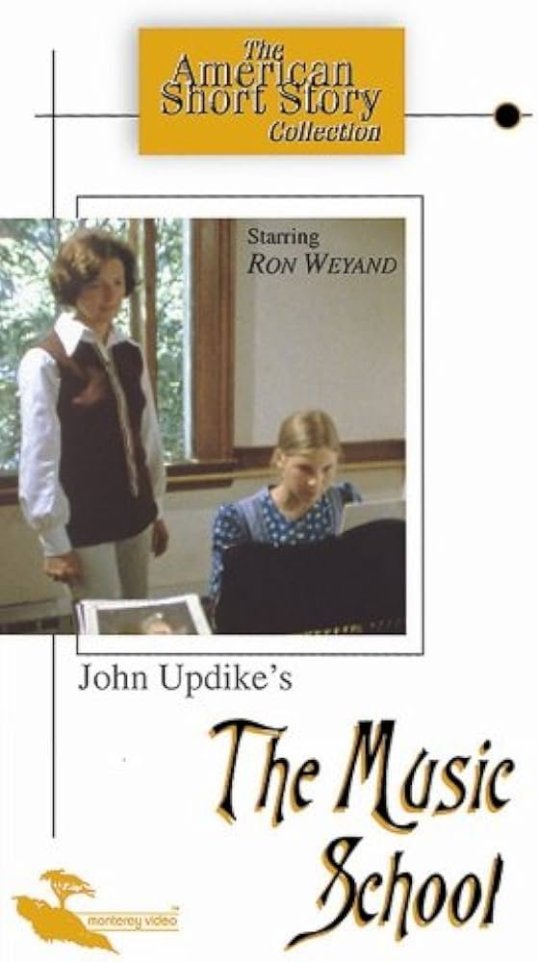
Today, we start a new series of reviews with an adaptation of a John Updike short story!
Episode 1.1 “The Music School”
(Dir by John Korty, originally aired on January 1st, 1974)
The first episode of The American Short Story is based on a story by John Updike. Alfred Schweigen (Ron Weyand) is a writer who sits at his typewriter and who occasionally looks out the window of his office. His wife playfully sprays the window with a garden hose and the writer thinks about how she’s in therapy because of his affairs. He remembers taking his daughter to her music school and thinks about the sounds of music floating through the building like ghostly memories. He thinks about a priest who, while talking to a bunch of “Protestants and non-believers,” explained that it was now permissible to chew the Eucharist wafer instead of waiting for it to dissolve. He thinks about a friend of his, a computer programmer, who was apparently assassinated by a random sniper while his family watched. In his mind, Alfred takes the random thoughts and occurrences and builds a story around them.
It’s an interesting episode, even if it doesn’t quite work. Tasked with bringing Updike’s words to visual life, this episode far too often falls back onto cliche and Ron Weyand often looks more annoyed that sincerely perplexed by life’s mysteries. (The writer’s narration is provided by Henry Fonda, whose middle-American voice doesn’t quite match Weyand’s petulant performance.) It’s a midlife crisis type of story, one in which the writer tries to deal with his own ennui and infidelities by turning them into fiction. Unfortunately, this is a case of what was compelling on the page falling flat when it’s adapted for film. I appreciated this episode’s ambition, even if it didn’t work in the end.
Next week, the American Short Story interprets a story by Ambrose Bierce!
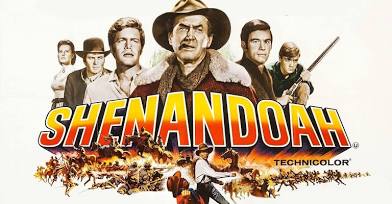
Jimmy Stewart plays Charlie Anderson, the patriarch of a large farming family in Virginia during the time of the Civil War. His family doesn’t own slaves, so he doesn’t figure it’s any of their business what all the fighting is about. He wants to keep working the land in hopes that the war will pass them by. Besides, he has six sons, a daughter, and a daughter in law that he wants to keep safe. He’s trying to keep the family together on his own as his beloved Martha had passed away sixteen years earlier giving birth to their youngest son, who we only know as Boy (Phillip Alford). Aside from the war that’s going on all around them, things seem pretty good for the Anderson’s. They all sit down for a big delicious meal every night. They attend Church every Sunday where they’re usually late and given the side-eye by Pastor Bjoerling (Denver Pyle). One of the sons, James Anderson (Patrick Wayne) and his wife Ann (Katharine Ross), have a precious newborn baby to take care of. The beautiful daughter Jennie (Rosemary Forsyth) is being courted by, and eventually marries, a lovestruck confederate officer named Sam (Doug McClure). Unfortunately the war won’t just go away, and when Boy is taken prisoner by Union soldiers, Charlie can’t stand idly by any longer. They head out to find him and bring him home.
In the guise of an entertaining semi-western, SHENANDOAH does a great job of illustrating how futile and randomly tragic war can be. The movie starts out lighthearted and fun as the family goes about its normal life, with Jimmy Stewart’s Charlie Anderson giving his homespun advice and rolling his cigars. This is a self-sufficient family that loves, respects and enjoys each other even if they don’t agree on everything. But the war keeps inching its way into their lives. First in the form of small group of confederate soldiers who come by to get some water and try to convince the boys to join up. None of the boys will join up, but they do help bury the soldiers when they’re ambushed and killed just down the road. Next a group of men come to the ranch to try to confiscate their horses for the Union army. Of course, Charlie Anderson isn’t going to let that happen and this turns into the type of brawl that seems to come right out of John Wayne western comedy like MCLINTOCK. Everybody joins in with the participants punching and being punched repeatedly, while Boy keeps getting knocked into the horse trough. This shouldn’t be a surprise because Director Andrew V. McLaglen directed MCLINTOCK and many other John Wayne films. Finally, Boy is taken prisoner because he is wearing a confederate cap that he found floating down the steam while he was out fishing one day. Once Charlie and most of his family head out to search for Boy, the movie begins a turn into tragedy. I won’t give the specifics away, but some members of the family will die, and not a single one of their deaths will be based on the actual fighting of a war. Rather, their deaths will be based on the chaos and depravity that surrounds the war. It’s tough to see, especially when they were all so happy just a little bit earlier. For me, the movie’s changes in tone make the tragedy more powerful and really drive home its message about the futility of war. But the Anderson family, like the United States of America after the Civil War, is made up of tough, resilient folks, and the movie ends on a hopeful note that definitely brought some extra moisture to my eyes.
Jimmy Stewart commands the screen in SHENANDOAH. You simply can’t take your eyes off of him, and his performance alone would make the movie worth watching. But with its powerful message, excellent cast, and solid direction, the movie is much more than just Stewart’s strong performance. I highly recommend it.
This is the song that gave it’s title to one of Dennis Hopper’s best films.
My my, hey hey
Rock and roll is here to stay
It’s better to burn out
Than to fade away
My my, hey hey.
Out of the blue
and into the black
They give you this,
but you pay for that
And once you’re gone,
you can never come back
When you’re out of the blue
and into the black.
The king is gone
but he’s not forgotten
This is the story
of a Johnny Rotten
It’s better to burn out
than it is to rust
The king is gone
but he’s not forgotten.
Hey hey, my my
Rock and roll can never die
There’s more to the picture
Than meets the eye.
Hey hey, my my.
Songwriters: Neil Young and Jeff Blackburn
It is Dennis Hopper’s birthday, afterall.
Enjoy!
Welcome to Late Night Retro Television Reviews, a feature where we review some of our favorite and least favorite shows of the past! On Fridays, I will be reviewing Friday the 13th: The Series, a show which ran in syndication from 1987 to 1990. The entire series can be found on YouTube!

This week, the show attempts a change of pace!
Episode 3.13 “Midnight Riders”
(Dir by Allan Eastman, originally aired on January 29th, 1990)
An odd episode, this one.
Jack, Micki, and Johnny head out to a small town so that Jack can look up into the night sky and see a once-in-a-lifetime convergence of the stars. However, possibly as a result of the convergence (it’s never really made clear), a bunch of dead motorcycle riders are resurrected and they rumble into town, seeking vengeance on everyone who took part in the death of their leader. If the bikers can kill every one of them, their leader will be resurrected. Finally, the ghost of Jack’s father (Dennis Thatcher) shows up and works with Jack to stop the bikers. It turns out that Jack and his father had a difficult relationship. Ryan had a difficult relationship with his father. Johnny was falsely accused of murdering his father. We’ve never met Micki’s father but he’s probably a jerk too.
The weird thing about this episode is that it didn’t feature a cursed antique. Instead, Jack and the crew went to a small town and supernatural stuff started happening shortly after they arrived. That’s okay, I guess. In theory, there’s nothing wrong with trying something new. But, at the same time, the cursed antiques were what set this show apart from all of the other supernaturally-themed television series out there. Personally, even when the antique’s curse makes no sense, I still enjoy seeing what the show comes up with.
This episode had a lot of atmosphere and a typically good performance from Chris Wiggins. The ghost bikers were never quite as intimidating as they should have been, despite all of the murders. If anything, they reminded me a bit too much of Sometime They Come Back. This episode was a change of pace and, as if often the case with things like this, it didn’t quite work. Here’s hoping next week will have a cursed antique!
Welcome to Retro Television Reviews, a feature where we review some of our favorite and least favorite shows of the past! On Fridays, I will be reviewing St. Elsewhere, a medical show which ran on NBC from 1982 to 1988. The show can be found on Hulu and, for purchase, on Prime!
This week, the first season comes to a close.
Episode 1.22 “Addiction”
(Dir by Mark Tinker, originally aired on May 3rd, 1983)
“To life,” Dr. Auschlander toasts towards the end of the finale of St. Elsewhere’s first season and the sentiment could not be more called for.
While Auschlander has spent the episode hanging out with a friend of his and getting into fights with disrespectful street punks, Dr. Morrison’s wife has been giving birth to their son. While someone breaks into the supply room and takes off with a huge supply of drugs, Dr. White is sobbing and telling his estranged wife that he knows he has to get help for his addictions. While one drug addict (Ralph Seymour) commits suicide by injecting an air bubble into his veins, Dr. Craig’s cocky son, Stephen (Scott Paulin), visits from medical school and turns out to be quite a weed-smoking, pill-popping drug user himself. Ehrlich, assigned to show Stephen around the hospital and teach him what it’s like being a resident, considers telling Dr. Craig that his son has a drug problem but apparently decides not to. Dr. Craig is very proud that his son is going to follow the family tradition of becoming a surgeon. Meanwhile, Dr. Fiscus cheats on Shirley Daniels with Kathy Martin. Fiscus, you idiot.
Life goes on at St. Eligius. That’s was the theme of the finale and it’s also been the theme of the first season. For all the bad things that happen, there are also good things. Some patients die. Some doctors are incompetent. But babies are born and doctors like Morrison and Ehrlich and Chandler haven’t given up and are still trying to make the world a better place. Dr. Auschlander may be terminally ill with cancer but he embraces life and we should all do the same.
It’s a good ending for an overall good first season. There were a few weak episodes. Dr. Samuels was a pretty annoying character and I’m a bit relieved to see that David Birney left the show after this season. Ed Flanders can be a bit overly somber as Dr. Westphall and Howie Mandel is still one of the least convincing doctors that I’ve ever seen. That said, Morrison, Ehrlich, Chandler, Nurse Daniels, and even Dr. White are interesting characters and I look forward to seeing what happens with them during season 2. The season’s stand-out was definitely William Daniels as the pompous yet still likable Dr. Craig. Other than the terrible storyline where he cheated on his wife (and I still claim that was a dream episode, like almost all of the stuff with Dr. Samuels), Dr. Craig was this season’s standout character.
Next week, we start season 2!
1979’s Meteor is about a big rock that is tumbling through space. Earth is directly in its path and, if it hits the planet, it could be an extinction-level event. Unfortunately, little bits of the rock keep breaking off and crashing into Earth, destroying cities and fleeing extras. Goodbye, Hong Kong. Goodbye, Switzerland, which is destroyed via stock footage lifted from Avalanche. Goodbye, New York, which blows up in such spectacular fashion that the scene was later re-used in The Day After.
It might seem like the planet is doomed. The meteor is unstoppable. Bruce Willis hasn’t become a star yet. But fear not! Some of the brightest faces of the 70s have been recruited to stop the meteor. Natalie Wood, in one of her final films, plays a translator and gets covered in muddy river water. Sean Connery wears a turtleneck and curses in that Scottish way of his. Karl Malden wears a hat and tells people to calm down while he calls the President. Brian Keith plays a Russian with all the grace and skill of a cat trying to rip open a bag of treats. Martin Landau is the military official who doesn’t think that the scientist know what they’re talking about. Henry Fonda is the president. That’s a lot of balding men for one movie and it’s hard not to notice that both Malden and Keith often seem to be wearing a hat whenever they share a scene with Connery. My personal theory is that the production, having spent all of their money on blowing up New York, couldn’t afford more than two toupees so everyone had to take turns wearing them. (The few scenes where Malden is hatless while in Connery’s presence are often oddly filmed, with either Connery on Malden standing with their back to the camera, almost as if the scenes were actually done with a stand-in.)
We’re supposed to breathe a sigh of relief when we see that Henry Fonda is playing the President but I’ve seen Fail Safe and I remember him allowing the Russian to nuke New York City. Interestingly enough, New York gets destroyed in this film too. Why didn’t President Fonda care about New York City? Of course, the scientists and the military folks are all located in a control center that’s located under the city. Malden mentions that they’re right next to the Hudson River. It doesn’t seem to occur to anyone that this is a bad idea but, then again, they also elected Henry Fonda president again.
My late friend and colleague Gary Loggins described Meteor as being a “crashing bore.” I have to admit that this is one of the few times that I have ever disagreed with Gary. Meteor is a tremendous amount of fun, as long as you’re watching it with a group of people and nobody takes it seriously. (The first time I saw it was at one in the morning while I was in college. Jeff and I watched it in the lounge of one of the dorms. We may be the only two people to have romantic memories of Meteor.) Meteor features a cast of champion scenery chewers. Karl Malden, Sean Connery, Martin Landau, Brian Keith, none of them were exactly subtle actors and giving them an excuse to argue about how to deal with a meteor allows for a lot of very enjoyable overacting. As well, the special effects are so cheap and obviously fake that it’s hard not to laugh out loud whenever the film cuts to that shot of the meteor rolling through space or the incredibly shiny American and Russian missiles slowly heading towards it.
Meteor’s a lot of fun, even if it is one of those movies where no one points out that our heroes inevitably seem to make every situation worse with their own stupidity. It’s very much at the tail-end of the 70s disaster boom. Watch it for the stars. Watch it for the rock. And watch it for the hairpieces.
Previous Guilty Pleasures

