Friends Forever. It’s a nice idea.
Friends Forever. It’s a nice idea.
It doesn’t get more 80s than this, even if this is actually from 1990.
Enjoy!
Today’s song of the day is a song from a Canadian band that apparently only recorded one song over the course of their 24-month existence. Still, it’s true. Everybody does want something.
Welcome to Retro Television Reviews, a feature where we review some of our favorite and least favorite shows of the past! On Sundays, I will be reviewing Homicide: Life On The Street, which aired from 1993 to 1999, on NBC! It can be viewed on Peacock.
This week …. is the Homicide Unit cursed?
Episode 3.19 “Colors”
(Dir by Peter Medak, originally aired on April 28h, 1995)
A Turkish teenager who is dressed and made up like a member of KISS is lying dead on a front porch. Jim Bayliss (David Morse) claims that the teenager was banging on his door and acting aggressive. He says that he grabbed his gun to protect his family and that he ordered the teenager to get off his porch before he shot him. The teen’s friend, who was standing a few feet away, says that the victim raised his hands before he was shot and that he was only at the house because he was trying to go to a party and got the wrong address.
Pembleton thinks that Jim shot the teenager even though he knew the teen was no longer a threat and because he was angered by the teen’s broken English. It’s true that Jim did once get into a fight in a bar with someone who was visibly Middle Eastern. Jim’s wife mentions that Jim gets annoyed with people who can’t speak English. Pembleton says that Jim is so prejudiced that he doesn’t even think twice about assuming the worse about anyone who isn’t white.
Complicating things is that Jim Bayliss is the cousin of Tim Bayliss.
Tim spends almost the entire episode trying to defend his cousin. He asks Giardello for permission to be in the Box during the interrogation, (Giardello refuses, rightly pointing out that Tim has a conflict of interest.) Later, while watching the interrogation, Tim gets so angry that he breaks a two-way mirror. Oddly, the one thing that Tim doesn’t do is tell his cousin to ask for a lawyer, which would have ended the interrogation before it could even get started. Eventually, Ed Danvers, who we haven’t seen much of this season, takes Jim before a Grand Jury and the Grand Jury declines to indict. Everyone in the courtroom applauds but Tim is left to wonder if Pembleton was correct about his cousin.
At one point, Bolander says that he fears that the Homicide Squad may be cursed and then he lists all of the things that have happened over the course of the third season — Crosetti committed suicide, three detectives were nearly killed in a shooting, Munch opened a bar, and now Bayliss and Pembleton are fighting. Bolander has a point. It’s a bit much, particularly when you compare it to the first two seasons. Homicide took a melodramatic turn during the third season. That doesn’t mean that the show hasn’t been good. The acting continues to be amazing. But it’s still quite a contrast to how the show started.
As for this episode, David Morse kept you guessing as Jim Bayliss. At first, Jim just seems like a harried home owner who wanted to protect his family. As the episode progresses, his anger becomes more and more pronounced until the viewer is left feeling that Jim was destined to eventually shoot someone. That said, this episode was occasionally a bit too much on the nose in its storytelling. It also left unaddressed something that should have been a bigger issue. Should Pembleton have been allowed to investigate the case or lead the interrogation, considering that Tim is his partner? Giardello was rightly concerned about Tim’s conflict of interest but he never addressed the fact that Pembleton potentially had one as well.
Next week, season 3 comes to an end.
Welcome to Late Night Retro Television Reviews, a feature where we review some of our favorite and least favorite shows of the past! On Saturdays, I will be reviewing Good Morning, Miss Bliss, which ran on the Disney Channel from 1988 to 1989 before then moving to NBC and being renamed Saved By The Bell. The entire show is currently streaming on Prime!
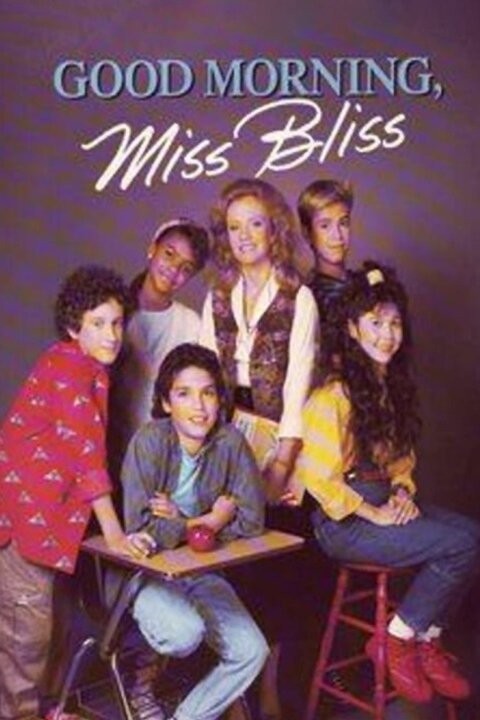
This week …. well, it’s all really stupid.
Episode 1.2 “Love Letters”
(Dir by Burt Brinkerhoff, originally aired on December 7th, 1988)
Miss Bliss thinks that Mr. Belding has sent her a love letter! Mr. Belding thinks Miss Bliss had sent him a love letter! Much awkwardness follows. Of course, the truth is that they both have a love letter that Zach wrote to Lisa (the character, not me) on behalf of Screech. Screech, meanwhile, writes Zach’s term paper on the War of 1812, which is probably the easiest war to write a paper on. I mean, if Zach can’t handle the War of 1812 on his own, he really is doomed.
This was a dumb episode, one that was later remade as an episode of Saved By The Bell during the infamous Tori season. The remake even went as far as to have Zach write a love note to Lisa for Screech and Mr. Belding and another teacher thinking that the note was written for them. Somehow, no one stopped and said, “Hey, hasn’t this happened before?” The remake was just as dumb as the original.
I will say this. Dustin Diamond is actually …. dare I say it? …. likable in this episode. Watching this episode, I could actually understand why Diamond was at the center of so many early episodes of Saved By The Bell because it appears that, before he started doing the squeaky, cartoonish voice thing and got totally typecast as the most annoying person on the planet, Dustin Diamond actually was a good child actor. There’s a sincere sweetness to his crush on Lisa in this episode. It’s quite a contrast to the deranged stalker that he would later become.
I should also note, for Saved By The Bell historians, this episode is the first to establish that Screech has a crush on Lisa and that Lisa, who is kind of mean in this episode, wishes that Screech would get lost. At the start of the episode, Lisa stuffs Screech in a locker. That seems a bit extreme to me. It’s always struck me as strange how the people on these shows were always getting stuffed into lockers. I went to a lot of different schools when I was growing up and I never once saw that happen to anyone. And yet, on Saved By The Bell and a host of other Peter Engel-produced sitcoms, it’s like a daily occurrence. I would think that it can’t be healthy to be stuffed in a locker. I can’t imagine the air quality is very good inside one of those metal caskets.
This episode also presents Screech and Zach as not being the childhood friends that Saved By The Bell later presented them as being. (Indeed, Screech mentions that no one will believe that he and Zach are actually friends.) Then again, this episode also takes place in Indiana instead of California so I guess it’s best not to worry too much about continuity.
On the How Condescending Is Miss Bliss scale, this episode score a solid 7 out of 10. She wasn’t anywhere near as a condescending as she would be in some of her later episodes but her comment when Mr. Belding asks her for the identity of the person who actually wrote the letter — “Why should I tell you? You just dumped me.” — pushes the score up to a 7.
Next week, Miss Bliss loses a lot of money when she stupidly allows the kids to invest it. What a terrible teacher. We’ll see what happens!

1st & Ten (Tubi)
American Manhunt: O.J. Simpson (Netflix)
Another year, another OJ documentary. I binged this 2025 docuseries on Monday. On the one hand, the story has been told and re-told so many times that it’s debatable whether any documentary will ever have anything new to add. (And now that O.J. Simpson is dead, no one’s pretending that he was framed or that he was ever looking for the “real killers” anymore.) On the other hand, the story itself such an important moment in American cultural history that there’s nothing wrong with examining it for a second or tenth time. I appreciated that the docuseries took the time to talk about who Nicole Brown and Ron Goldman were as people before they were murdered by OJ. (And make no mistake, that’s exactly what happened.)
The American Short Story (YouTube)
I reviewed this week’s episode here!
Big Brother 27 (24/7, CBS, Paramount Plus, Pluto TV)
I wrote about Big Brother here!
Black Sabbath: Up Close and Personal (Night Flight Plus)
On Saturday morning, Jeff and I joined our friend Pat in watching this 2007 documentary about Black Sabbath. Some of the members were interviewed for the documentary. Ozzy Osbourne was not (instead the documentary used archival interviews to get his thoughts) but, for the most part, everyone was very complimentary to him. Personally, I liked the steady and straight-forward beat of the band’s music.
CHiPs (Prime)
Degrassi High (Tubi)
I reviewed Degrassi High here!
Diff’Rent Strokes (Tubi)
I watched two episodes on Thursday. In one, Kimberly Drummond (Dana Plato) went to a ski lodge with her friends and was considering losing her virginity when suddenly — surprise! — her father (Conrad Bain) decided to join her. The second episode featured Willis (Todd Bridges) starting high school and being told that he had smoke weed to be cool. Willis actually did get high in this episode and it’s amazing just how stoned he managed to get in just a few seconds. Anyway, Mr. Drummond told Willis to stay off the grass. This episode was disturbing because one of the high school stoners was wearing jeans so tight that …. well, let’s just say that it showed off more of him than was perhaps typical for network television.
Fantasy Island (DVR)
I reviewed Fantasy Island here! Laurence is really letting me down as Mr. Roarke’s new servant.
Fred and Rosemary West: A British Horror Story (Netflix)
I watched this three-episode true crime docuseries on Sunday and Monday. Fred and Rosemary West were a seemingly ordinary couple who actually murdered an untold number of young women and buried them out back under their patio. Watching the docuseries, I was reminded a bit of the Paul Bernardo/Karla Homalka case, except in this case Fred tried to keep the police from discovering Rosemary’s role in the murders. Fred ended up committing suicide. Rosemary is still in prison. It was a disturbing case. Watching the docuseries, my heart broke for all of their victims.
Freddy’s Nightmares (Plex)
I reviewed Freddy’s Nightmares here!
From Rock Star To Killer (Netflix)
I watched this French docuseries, about the murder of actress of Marie Trintignant on Tuesday. It was a sobering film, one that explored how many people refusing to believe that Marie’s famous boyfriend could also be a viscous abuser. I minored in French in college so I watched the first episode without subtitles and I discovered that my French has gotten really rusty. The remaining episodes, I watched the dubbed versions and I have to say that the dubbing was so poorly executed that I have to wonder if it was done by AI.
Gone Girls: The Long Island Serial Killer (Netflix)
On Tuesday, I watched this 2025 docuseries, which dealt with the infamous (and still largely unsolved) Long Island serial killer case. To be honest, I’ve seen so many documentaries and dramatizations of this story that I kind of doubt there’s really anything new to learn about it. That said, I appreciated that the series devoted so much time to profiling the victims and showing us who they were before they became a part of a cold case. The victims of these crimes are so often overlooked or outright dismissed.
Good Morning, Miss Bliss (Prime)
My review of the second episode of Indiana Saved By The Bell will drop in about 90 minutes.
Gordon Ramsay’s Secret Service (Hulu)
On Saturday, I watched a two-part episode in which Gordon helped out three sisters who had taken over their late father’s restaurant. On the one hand, I’m the youngest of four sisters so I could relate to the family dynamics that I saw in this episode. On the other hand — yech! Mice and roaches in the food! I’m never eating out again.
Her Last Broadcast: The Abduction of Jodi Huisentruit (Hulu)
This true crime docuseries explored the disappearance of Iowa news anchor Jodi Huisentruit. Along with giving us the details of her life and disappearance, the series also presented us with four potential suspects. I’ve read some criticism online that the four suspects were all cleared of involvement by the police investigation or, in at least one case, was actually just a person of interest rather than a suspect. It’s a tragic story, nonetheless.
Highway to Heaven (Tubi)
This week’s episode …. agck! I reviewed it here.
Homicide: Life On The Street (Peacock)
It’s Always Sunny in Philadelphia (FX & Hulu)
The Lawyer returned! After being a little bit disappointed in the first two episodes of the new season, my faith was renewed by the third episode. Not only did the Lawyer return but we also got Dennis and Mac pretending to be EMTs, Dee screwing up yet another job, and Charlie turning into a demanding chef. That’s the Sunny that I love!
The second episode that I watched this week, in which the Gang dealt with the consequences of dumping baby oil in a local waterway, I also enjoyed. I always like it when Dennis tries to do his whole slick, corporate spokesman routine.
I’m still getting used to the Rob Mac name change.
The Love Boat (Paramount Plus)
This week was a Thanksgiving cruise! I can’t wait for the holidays! I reviewed the episode here!
Malibu CA (YouTube)
Oh, how I hate this show. Anyway, I wrote about the latest episode here.
Miami Vice (Prime)
This week’s episode was all about trying to retrieve stolen bull semen. I swear, the stuff I watch for this site! I reviewed it here.
New York Post Presents: Luigi Mangione: Martyr or Monster (Tubi)
I watched this documentary on Saturday because I was bored. It presented the facts of the case without digging too deeply. I remember that when Brian Thompson was shot, a lot of my friends were (and, in many cases still are) sympathetic to Luigi Mangione and they were always a little surprised that I wasn’t, especially after everything I went though when the insurance company evicted my Dad from his rebab facility. Myself, I don’t believe in killing and I’m not going to praise a cold-blooded murder just because the shooter wrote some dumbass manifesto. As for Luigi, if it wasn’t for his smile, most people wouldn’t care about him.
Night Flight (Night Flight Plus)
On Friday night, Jeff and I joined our friend Pat in watching an episode of this pop culture digest from the late 80s. The episode opened with a look at “Satan Rock,” (Hi, Ozzy, hi, Iron Maiden) and then it went on to feature the hottest music videos of 1988. As a history nerd and a student pop culture, I always enjoy watching artifacts like this.
Pacific Blue (Tubi)
Bleh. Bicycles. The bike cops were especially obnoxious this week. I reviewed Pacific Blue here!
St. Elsewhere (Hulu)
Depressing episode, this week. I reviewed St. Elsewhere here!
TMZ Investigates: What Happened to Justin Bieber (Tubi)
I was bored this afternoon so I watched this TMZ special. Justin appears to be going through some problems. The TMZ team considered that it could be drug-related. Personally, I think fame does strange things to people, especially with today’s bizarrely obsessive celeb-driven culture. Of course, having the TMZ folks following him around probably isn’t helping Justin’s mood.
TMZ Investigates: What Happened To Liam Payne (Tubi)
I watched this on Saturday. TMZ investigates the tragic death of Liam Payne and it’s exactly what you would expect from TMZ. There’s a lot of speculation, a lot of faux concern, and ultimately the whole thing leaves the viewer feeling a bit icky.
Trainwreck: The Astroworld Tragedy (Netflix)
I generally enjoy Netflix’s Trainwreck series. I watched this entry on Friday. It dealt with the death of nine people during a Travis Scott performance at Astroworld in 2021. This documentary didn’t dig too deeply into how it happened, beyond suggesting that the majority of the blame should be assigned to the show’s promoters. The desperate chant of “Stop the Show!” was haunting.
Trainwreck: The Cult of American Apparel (Netflix)
On Friday, I watched this documentary about the rise and fall of American Apparel. It was weird essentially seeing my high school years turned into a “back in the day” documentary. I guess this is what it feels like to realize you’re not getting younger.
Trainwreck: The Mayor of Mayhem (Netflix)
Rob Ford, a brash populist, is elected mayor of Toronto and makes a name for himself as a bigger-than-life reformer. Then, he gets caught on camera smoking crack and everything falls apart. This was my favorite of the Trainwreck documentaries that I watched, largely because Rob Ford was such a fascinating character. I’ve read some comments online from some people who think that this documentary went a little bit too easy on Ford. Maybe it did. I’m not Canadian so I don’t know. I just know it was an interesting story.
Trainwreck: P.I. Moms (Netflix)
The latest Trainwreck as is also perhaps the most pointless. A reality show falls apart before the first episode even premieres. The P.I. Moms, who would have been featured on the show, all argued that they deserved to be taken seriously and that they weren’t just acting for the camera but, at the same time, none of them came across as being particularly sincere so it was hard to have much sympathy for them. It was a documentary about a bad reality show that felt like a bad reality show.
True Crime Arizona: Finding Robert Fisher (Tubi)
In 2001, it’s believed that Robert Fisher, a Navy veteran and former firefighter, murdered his wife and his two children, set his house on fire, and then disappeared into the Arizona wilderness. Fisher has been a fugitive for 24 years and, while some speculate that he either committed suicide or died in the wilderness, people all over the country still regularly report spotting him. This special took a look at Fisher’s crime and offered a few theories of how he managed to disappear. The Fisher case has haunted me ever since I first learned about it and this special reminded me of why. Fisher seemed like the type of guy you would want for a neighbor because he was good with tools and he had a clean-cut look. Instead, he turned out to be a killer/ Personally, I think Fisher still out there. Much like John List (the real-life inspiration for Jerry Blake in The Stepfather films), he’s probably got a new family and a new identity. I have faith he’ll be captured eventually.
True Crime Arizona: The Missing (Tubi)
This episode looked at the cases of several indigenous women who had disappeared in Arizona and took a look at why their disappearances rarely seem to get the media attention that other true crime stories too. This was well-produced and thought-provoking.
True Crime Arizona: Notorious Killers (YouTube)
I was so impressed by the True Crime Arizona episodes that I saw on Tubi that I then looked for more on YouTube. This 23-minute episode took a look at some of Arizona’s most notorious killers. I think I missed my calling. I’d love to host True Crime Texas.
Welcome to Retro Television Reviews, a feature where we review some of our favorite and least favorite shows of the past! On Saturdays, I will be reviewing The American Short Story, which ran semi-regularly on PBS in 1974 to 1981. The entire show can be purchased on Prime and found on YouTube and Tubi.
This week, we have an adaptation of a Stephen Crane short story.
Episode 1.8 “The Blue Hotel”
(Dir by Jan Kadar, originally aired in 1977)
In the dying days of the Old West, a train pulls into a station in a small frontier town. Getting off the train, a Cowboy (John Bottoms), an Easterner (Geddeth Smith), and a Swede (David Warner) head to the town’s only hotel. A blizzard is coming and the three men are seeking shelter for the night. The owner of the hotel, Scully (Rex Everhart), is happy to provide it. As the men wait for dinner to be served, they play a card game with Scully’s son, Johnnie (James Keach).
At first, the game plays out without incident. The men are all friendly, with the exception of the Swede. The Swede remains quiet and seems distrustful. After a few hands of the game, the Swede accuses Johnnie of cheating. Over the next few hours, as the wind howls outside, the Swede rants and raves. Convinced that the wild west is truly full of outlaws and that it’s all exactly like the dime-store novels that he read before boarding the train, he cannot bring himself to accept that the men mean him no harm. It all leads to violence and tragedy.
This episode made excellent use of the shadowy Blue Hotel and the desolate wind blowing outside. Over the course of an hour, the hotel went from being a friendly shelter to an ominous location that seemed to pulse with paranoia. David Warner gave a strong performance as the unstable Swede and the final act of violence (which was changed slightly from the short story’s original conclusion) comes as a genuine shock as does the final twist in the tale. The Blue Hotel becomes a look at how people unknowingly shape their own destiny, for better or worse.
For today’s song of the day, we have the title tune to Stanley Kubrick’s The Shining. The Shining is a classic horror film and one that I look forward to revisiting on this site for our annual October Horrorthon.
For now, enjoy the greatest road trip music ever recorded.
Play it loud.
Enjoy!
Welcome to Late Night Retro Television Reviews, a feature where we review some of our favorite and least favorite shows of the past! On Fridays, I will be reviewing Freddy’s Nightmares, a horror anthology show which ran in syndication from 1988 to 1990. The entire series can be found on Plex!
Having finished up Friday the 13th, I’m not going to take a look at another syndicated horror show that aired around the same time. Freddy’s Nightmares was an anthology show hosted by Robert Englund, in character as Freddy Krueger. Each story would take place in Freddy’s hometown of Springwood, Ohio. Would the show be a dream or a nightmare? Let’s find out!
Episode 1.1 “No More Mr. Nice Guy”
(Dir by Tobe Hooper, originally aired on October 9th, 1988)
Freddy Krueger has become such a familiar and popular figure that I think it’s sometimes forgotten that, when he first appeared, he was truly a horrifying character. He was a child molester and a serial killer, one who escaped legal justice only because someone forgot to read him his rights when he was arrested. He was killed by the citizens of Springwood, Ohio, set on fire in the same boiler room where he killed his victims. Yes, he was brutally murdered and yes, the respectable people who murdered him covered up their crime. At the same time, what would you do if a monster like Freddy was loose in your town and stalking your children? “I’m burning in Hell,” Freddy says and that’s exactly what he deserved.
How did Freddy Krueger then become an oddly beloved pop cultural icon? Some of that was undoubtedly due to his one-liners, which tended to be a slightly better than the typical slasher film banter. If Freddy was pure evil in the first three Nightmare on Elm Street films, he became more a homicidal prankster as the series continued. I think another reason why Freddy became popular is because the actor who first played him, Robert Englund, himself always comes across as being such a nice guy. Unlike the personable but physically intimidating Kane Hodder, who looked like he could kill you even when he wasn’t playing Jason Voorhees, Englund always comes across as being slightly nerdy and very friendly. He’s the neighbor who you would trust to get your mail while you’re on vacation. If Englund hadn’t been cast as Freddy Krueger in 1984, he probably would have spent the 90s playing quirky programmers and hackers in tech thrillers. The thing with Robert Englund is that seems to have a good sense of humor, he’s at peace with his place in pop culture, and he always seem to be having fun. (In his autobiography, he even jokes about something that fans had been laughing about for years, the fact that the female lead in A Nightmare In Elm Street 2 looked almost exactly like Meryl Street.) Those are qualities that bled over into Freddy.
As a result, Freddy became popular enough to host his own horror anthology. The premiere episode of Freddy’s Nightmares open with Englund, in full Freddy makeup, telling us that we’re not about to see one of our nightmares. Instead, we’re going to see his nightmare. The episode gives us Freddy’s origin story, starting with Freddy getting off on a murder charge on a technicality and ending with Freddy getting bloody revenge of the police chief (played by Ian Patrick Williams) who set him on fire.
By almost any standard, it’s a disturbing story. We open with Freddy on trial and we hear details about an 8 year-old boy that he left in a dumpster. After the charges against Freddy are dismissed (damn those Carter judges!), Freddy happily gets into an ice cream truck and later, the police chief has a vision of the same truck coming straight at him. After getting set on fire, Freddy doesn’t waste any time coming back and using his razor-blade gloves to slash his way to vengeance. I think what’s particularly disturbing about this episode is that the police chief is not a bad guy. He arrested Freddy as Freddy was trying to attack his twin daughters. Throughout the episode, Freddy — in both life and death — makes it clear that he’s coming for the man’s daughters. And in the end, Freddy will probably get them because their father fell asleep in a dentist’s chair and got his mouth drilled by Dr. Krueger.
Agck! That’s disturbing stuff. Of course, it would be even more disturbing if the show’s special effects and gore were anywhere close to being a realistic as what was present in the movies. The show itself looks remarkably cheap. I would say it almost looks like a community theater production of A Nightmare on Elm Street. Director Tobe Hooper (of Texas Chainsaw Massacre fame) manages to wring a few jump scares out of the material and a scene where we see one of Freddy’s courtroom fantasies is genuinely horrifying but, for the most part, the budget is low enough that the viewer can safely say, “It’s only a TV show, it’s only a TV show….” In the end, it’s very much an 80s TV show, right down to the oddly gratuitous scene where the police chief suddenly imagines the dental hygienist in her underwear.
Where will Freddy’s Nightmares lead us? We’ll find out. I’m sure it will be bloody, wherever it is!
 Through the Shattered Lens