A Quickie With Lisa Marie: The Ox-Bow Incident (directed by William A. Wellman)


As part of my continuing mission of see every single movie ever nominated for best picture, I’ve been watching a lot of TCM this month.  Last week, I caught the 1943 best picture nominee, The Ox-Bow Incident.

Taking place in Nevada in the 1880s, The Ox-Bow Incident is a western that examines both the mob mentality and takes on the issue of lynching.  (It should be remembered that when the Ox-Bow Incident was first released, lynchings were still a regular occurrence.)  Henry Fonda and Henry Morgan play two prospectors who ride into town one day and discover that everyone is on edge because there are apparently cattle rustlers about.  When it’s reported that a rancher has been murdered, the townspeople form a posse and go searching for the rustlers.  Realizing that until the real rustlers are caught they’ll be considered prime suspects, Fonda and Morgan join the posse.  Led by Major Tetley (Frank Conroy), who falsely claims to be a Confederate veteran, the posse comes across a camp with three men.  Though it quickly becomes obvious that the three men are probably innocent, the posse immediately makes plans to lynch the men.  Fonda and Morgan find themselves forced to either side with the bloodthirsty posse or to stand up to the mob.

To be honest, I’ve never been a big fan of Westerns.  On a personal note, Some of that is because whenever anyone from up north finds out that I’m from Texas, they always ask me if I’ve ever ridden a horse.  (For the record, I do not own a horse, I do not ride horses, and I’m pretty sure I’m allergic to them.)  On another note, Westerns often strike me as being predictable.  All of the dark strangers and the old maid school teachers and the tight-lipped gunslingers spitting tobacco all over the place — it all just makes me want to go, “Bleh!” 

However, I was surprised to discover that I really enjoyed The Ox-Bow Incident.  While the film’s well-intentioned message was a bit heavy-handed, director William Wellman emphasizes the psychological aspects of the story and the movie itself was well-acted by a large cast who brought a surprising amount of depth to characters who, in lesser hands, could have easily just been stereotypes.  Henry Fonda and Henry Morgan were both excellent and sympathetic leads while Jane Darwell dominated the film as one of the more bloodthirsty members of the lynching party.  A very young and very suave Anthony Quinn also shows up as one of the accused men.  Five decades before either Quentin Tarantino or the Coen Brothers, Wellman and his cast use the standard tropes of the western genre to comment on some very real issues and the end result is a fast-paced film that succeeds in making a moral debate just as exciting as any gunfight or stampede.

Released in 1943, The Ox-Bow Incident was nominated for best picture but, ultimately, it lost to Casablanca.  It’s hard to complain about any film losing to Casablanca but taken on its own terms, the Ox-Bow Incident remains an entertaining and intelligent film and one that I’m thankful that TCM gave me a chance to discover.

Lisa Considers The Great Dictator (dir. by Charles Chaplin)


I recently discovered that Uverse has select films from the Criterion Collection available OnDemand.  Last night, I took advantage of this service and watched 1940’s The Great Dictator.  Along with being Charlie Chaplin’s first all-sound film, the Great Dictator was also a best picture nominee.  (It lost to Alfred Hitchcock’s Rebecca.)

The Great Dictator is a broad comedy that, ultimately, has a very serious message.  Made at a time when the second world war was looking more and more inevitable, The Great Dictator features Charlie Chaplin in two roles.  As the film opens at end of World War I, Chaplin plays a meek but well-meaning Jewish barber who has found himself serving in the army of Tomania.  Though the barber manages to survive the war, he also loses his memory and ends up spending the next 20 years in a mental hospital.  When his memory finally does return, the barber returns to his barber shop and quickly discovers that things have changed.  His shop has been boarded up and the word “JEW” has been painted over the windows.  Thugs wearing military uniforms now patrol the streets and continually threaten to send people to concentration camps.  Tomania is now ruled by a dictator named Adenoid Hynkel.

Hynkel, who happens to look just like the barber (and who is, of course, also played by Chaplin) is quickly established as being a crazy and rather simple-minded buffoon.  As played by Chaplin, Hynkel gives long speeches in a harsh gibberish language that is designed to sound German without actually being German (fortunately, Hynkel has a translator on hand to tell us, after he has just spent two minutes harshly ranting, “Hynkel just explained his position on the Jews.”) and he continually runs throughout his palace in an attempt to prove that he’s capable of doing a hundred more things than the average person.  In his private time, he does a child-like dance with a big inflatable globe, speculates on how glorious it will be to be the “brunette dictator of the Aryan people,” and tries to maintain a shaky alliance with his fellow dictator Benzino Napaloni (Jack Oakie).  Playing a character that was the polar opposite of his usual persona, Chaplin’s performance manages to be both comedic and disturbing.  You laugh at Hynkel’s buffoonish behavior but you never forget that he’s a very dangerous man.  (Admittedly, I say that with a hindsight that was not possessed by either Chaplin or the audiences of 1940.)

The film proceeds to follow these two characters in two separate storylines that finally come together at the end of the movie with (SPOILER) Chaplin giving a nearly 5-minute plea for world peace.  While Hynkel schemes to conquer the world one country at a time, the barber attempts to adjust to his new life while sweetly romancing the outspoken Hanna (Paulette Goddard),  While the film is probably best known for Chaplin’s performance as Hynkel, I found the barber and Hannah’s relationship to be sweetly poignant.  Their relationship gives this film a heart to go along with its biting satire.

For me (and admittedly, I’m a secret history nerd), it’s interesting to watch The Great Dictator today and try to imagine how audiences first reacted to it in 1940.  According to Wikipedia, the Great Dictator was Chaplin’s most financially succesful film and Chaplin was even invited to the White House to recite the film’s climatic speech for President Roosevelt. And, of course, The Great Dictator also scored Oscar nominations for best picture, actor (Chaplin), supporting actor (Jack Oakie), screenplay, and original score.  Chaplin also said, in his later years, that if he had known what was truly being done by Hitler and the Nazis, he would never have made a comedy like The Great Dictator.

I think that would have been a mistake on his part because if The Great Dictator proves anything, it proves that satire and humor is often the most powerful weapon against the forces of evil.  Though Chaplin makes no secret of the fact that Hynkel is meant to be Hitler and Oakie is meant to be playing Mussolini, they could also serve as stand-ins for just about any dictator who has seized power through exploiting prejudice and hatred.  The sight of Hynkel dancing with that globe is actually a far more effective anti-totalitarian statement than the heartfelt and undeniably sincere speech that ends the film.

Lisa Marie Bowman Does Michael Clayton (dir. by Tony Gilroy)


As part of my continuing mission to see and review every single film ever nominated for best picture, I recently rewatched the 2007 Best Picture nominee Michael Clayton. 

The title character (as played by George Clooney) is a sleazy attorney who “fixes” problems for one of the biggest law firms in New York.  When Arthur Edens (Tom Wilkinson), one of the firm’s partners and Michael’s mentor, has a nervous breakdown while at a deposition in Minnesota and ends up in jail, Michael is sent to retrieve him.  Michael soon discovers that Arthur’s mental collapse was due to a class action law suit involving an evil, faceless corporation.  Before he reveals any more details, Arthur flees and is subsequently murdered by two assassins.  With the police calling Arthur’s death a suicide, Michael soon finds himself being pursued by the same assassins.

Though I’ve owned the DVD for a couple of years, this was only the second time that I had ever actually sat down and watched this film.  (The first time was during its initial theatrical run.)  There have been many insomnia-filled nights when I’ve gone to my DVD collection, fully intending on grabbing Michael Clayton and allowing the images of an unshaven George Clooney to flicker in my dark bedroom.  However, every time, I always ended up suddenly remembering a film that I wanted to see more. 

That’s the thing with Michael Clayton.  Having seen the film a second time, I can say that it remains a well-made film and an entertaining film and I can also say that I noticed a whole lot of small details that I had either missed the first time or had subsequently forgotten about.  Like a lot of best picture nominees, Michael Clayton is a good film.  It’s just not a very memorable one.  Seriously, is anyone surprised when business executives and attorneys turn out to be the villains in these type of films?  And if you couldn’t guess that Tom Wilkinson was going to end up dead from the minute he turned up on-screen then you may need to surrender your filmgoer card.

That said, Michael Clayton remains a fun little film and I enjoyed watching it even if it was predictable.  In fact, I may have enjoyed it even more the second time around because I currently work for an attorney so I was able to spend the whole movie playing the “What would my boss do in this situation?” game.  (Hopefully, the first thing he would do would be to send his loyal and capable red-headed assistant on a nice, long, all-expense paid vacation Italy.)  Beyond that, Tony Gilroy’s direction is efficient and fast-paced, George Clooney gives one of his less-smug performances (It can be argued that Michael Clayton — along with Up In The Air and The Descendants — forms Clooney’s Mediocre White Man Trilogy) and Tilda Swinton deserved the Oscar she won for playing a villain who isn’t so much evil as just really insecure.   However, for me, the best performances in this film come from two unheralded actors by the name of Robert Prescott and Terry Serpico.  Playing the two assassins who pursue both Wilkinson and Clooney, Serpico and Prescott play their roles with a nonchalant sort of respectability that is both compelling and genuinely frightening.  During those brief moments when Serpico and Prescott are on-screen, Michael Clayton actually becomes the film that it is obviously trying so hard to be.

Film Review: The Woman In Black (dir. by James Watkins)


Taking place in turn-of-the-century England, The Woman In Black tells the story of Arthur Kipps (played by Daniel Radcliffe), a young lawyer who is still struggling to recover from the death of his wife four years previously.  Arthur is sent to an isolated village to settle the estate of a woman named Alice Drablow.  Despite several warnings from the superstitious townspeople, Arthur goes to Alice’s decrepit old mansion and he soon finds himself haunted by fleeting glimpses of a woman in black who seems to be in the house with him.  With each sighting of the woman in black, another child in the village commits suicide.

Despite a few genuinely disturbing scenes (mostly involving children committing suicide), The Woman In Black is, ultimately, a pretty typical PG-13 horror film.  There’s a few good, if predictable, jump scenes (most of which involve the title character popping up in the background) and there’s all the usual Insidious-style tracking shots through the creepy old house.  However, any time that it seems like the film is about to become truly disturbing or scary, it runs smack into that PG-13 rating and it has to pull back.  The end result is that the film is creepy yet oddly bland, like something you might find playing on Chiller around one in the morning.

Of course, The Woman in Black is getting a lot of attention because this is Daniel Radcliffe’s first film since the end of the Harry Potter franchise.  How does Radcliffe do in his first adult role?  Well, he’s okay.  In fact, I would say that he’s better than okay.  He’s perfectly adequate.  I think the main issue I had with Radcliffe’s performance is that he sometimes seems to be trying too hard to make sure that we understand that he’s not playing Harry Potter.  For that reason, he doesn’t shave and he spends almost the entire film with a grim expression on his face.  Radcliffe’s a good actor and I think he’ll have a long career but he’s just miscast here.  Arthur Kipps is a man who has given up on life and Radcliffe is simply too exuberant of a performer to play defeated.  Oddly enough, Ciaran Hinds (who co-stars in this film) would have made the perfect Arthur.

I did enjoy spotting the various references to other horror films that were littered throughout The Woman in Black.  While the film obviously owes its existence to the success of the Paranormal Activity films, both the film’s overall plot and isolated village setting reminded me of Mario Bava’s masterpiece, Kill, Baby, Bill.  Furthermore, the film’s somewhat effective ending reminded me of the end of Lucio Fulci’s The House By The Cemetery.  I’m not sure if any of those homages were intentional but they were still fun to spot.

As a final note, The Woman in Black is the latest PG-13 rated horror film to be advertised with annoying infrared footage of people watching the movie and screaming.   Personally, I think it might be time for a new cliché.

What Lisa Watched Last Night: Rocky (dir. by John G. Avildsen)


A few days ago, I set the DVR to record the 1976 Best Picture winner Rocky off of TCM.  Last night, I finally got a chance to sit down and actually watch it.

Why Was I Watching It?

I’ll be honest here and admit that I wasn’t watching it because I’ve ever had any great desire to see this movie or, for that matter, any other Sylvester Stallone film.  (Though, for the record, I thought the Expendables was vaguely entertaining.)  However, this being Oscar season, my mind right now is pretty much dominated by 1) a mental list of all 493 best picture nominees and 2) an obsessive need to see every single one of those films. 

And since we’re focusing on reviewing best picture nominees this month, I figured why not take this opportunity to watch Rocky.  After all, I thought, this is the film that managed to win best picture over Network, Taxi Driver, and All The President’s Men.  How bad can it be?

What’s It About?

So, there’s this guy named Rocky Balboa (Sylvester Stallone) and he’s got to be the nicest Mafia goon alive.  He spends his time collecting debts for the local loan shark (played by the Maniac himself, Joe Spinell) but he refuses to break anyone’s thumbs while doing so and even offers up helpful advice like, “Yo, you got to start thinking.”  Spinell’s all like, “Rocky, why aren’t you breaking anyone’s thumbs?” and Rocky says he doesn’t want to and Spinell’s all like, “That’s okay,” because oddly enough, Joe Spinell is the only guy in the Mafia who is nicer than Rocky.

Anyway. Rocky is also a boxer who fights “bums” (as his trainer Burgess Meredith is fond of bellowing) and who is sweetly courting Adrian (Talia Shire), a shy girl who works in the local pet store.  Adrian’s brother (played by Burt Young) is named Paul but since everyone in the film is Italian, he’s called “Paulie” instead.  (I can say this because I’m a fourth Italian and if your name is Paul, I’m going to call you “Paulie” whether you like it or not.) 

Anyway, there’s another boxer (played by Carl Weathers) and he’s named Apollo Creed.  Apollo is the champ because when you’ve got a name like Apollo Creed, you better be the best or else you’re just going to look silly.  For publicity reasons, Apollo gives the unknown Rocky the chance to fight him for the championship.  Apollo is expecting an easy fight but he hasn’t taken into consideration that Rocky is not only willing to run every morning but he’s willing to run up steps as well!

What Worked?

(WARNING: SPOILERS BELOW.)

The love story between Rocky and Adrian was kinda sweet, largely because Talia Shire and Sylvester Stallone both had a very genuine chemistry and Shire gave such a good performance that Stallone (who spends most of the film coming across like a parody of a method actor) gives a better performance when he’s sharing the screen with her.  I spent a lot of this movie rolling my eyes at just how shamelessly manipulative it was but I have to admit that the final scene — with Adrian going “I love you, Rocky,” and a bloody and kinda gross-looking Rocky replying with a heartfelt, “I love you!” — brought tears to my multi-colored eyes.

What Didn’t Work?

Rocky has got to be one of the most shamelessly manipulative films ever made.  Director John G. Avildsen (who won best director while Martin Scorsese wasn’t even nominated for Taxi Driver) pushed every obvious button and used every technique at his disposal to force the audience to root for Rocky.  Hence, we get the famous training montage set to soaring music and the subtle appeals to racism that are inherent in the portrayals of Apollo Creed and his entourage.  Admittedly, one reason that a lot of these scenes fell flat is because I’ve seen them duplicated in thousands of other sports films.  I know its possible that the reason I’ve seen them duplicated is because of Rocky’s success but still, it doesn’t make those scenes feel any less obvious and vaguely silly.

Do you know how sometimes you just watch a movie and you go, “There is absolutely nothing in this movie for me to relate to and I really should be watching the Real Housewives of Beverly Hills right now?”  Well, my reaction to Rocky wasn’t that extreme but it was pretty close.  I watched this film — which I’ve seen described as one of the most emotional films ever made — feeling oddly detached from everything I was seeing on-screen, my attention only being held by a clinical fascination concerning just how shamelessly manipulative this film was.  Try as I might, I simply could not get emotionally invested in what I was watching.  Some of that, undoubtedly, has to do with the fact that I’m not into sports films in general.  However, I think most of it comes down to the fact that I have a vagina and, quite frankly, the appeal of Sylvester Stallone is lost on me.

Speaking of the appeal of Sylvester Stallone…

“Oh my God!  Just like me!” Moments:

None.  It’s rare that I say that because I can usually find a way to relate any movie I see to my life but Rocky was just too alien to me.

Lessons Learned:

Best is a subjective term.

What Lisa Marie Watched Last Night: Sexting in Suburbia (dir. by John Stimpson)


Last night, as I was laying in bed and waiting for sleep to come, I turned on Lifetime and watched a movie called Sexting in Suburbia.

Why Was I Watching It?

Because it was on Lifetime and seriously — how can you not watch something called Sexting in Suburbia?  That’s like the greatest freaking title ever.

What Was It About?

So there’s this popular, out-going, bright futured high school student named Dina (Jenn Proske) and, on the same night that she’s crowned homecoming queen, she’s also sends her boyfriend a naked picture but she accidentally sends it to the wrong phone as well.  So, of course, the picture goes viral and soon, everyone at school sees it and they get all judgmental and soon, everywhere Dina goes, she’s seeing graffiti that reads, “Dina is a slut!”  Plus, Dina gets kicked off of the Girl’s Field Hockey Team because apparently, there’s some sort of morality clause that goes along with being on a high school athletic team or something like that.  Seriously, is that like a real thing?  Anyway, Dina loses her college scholarship as a result of being kicked off the team so she goes home and kills herself.  Now, it’s up to her mom (Liz Vassey) to find out who is responsible for that picture going viral and get some justice for Dina. 

Oh, and by the way, this all takes place in…suburbia!

What Worked?

The film had a good anti-bullying message to it and it definitely captured how everything in high school is such a drama.  It also made a good point about just how messed up society is when it comes to dealing with sex in general and how quick everyone is to judge girls as opposed to boys.  Whereas guys are applauded for “acting like men,” girls are expected to meet someone else’s standard of perfection and the minute we deviate from that standard in any way whatsoever, we’re condemned and called nasty names and expected to live the rest of our lives being punished for not living up to someone else’s ideal.

However, ultimately, what really worked as far as this film is concerned is the title.  Seriously, I love that title!  Sexting in Suburbia.  Say it a few times and you’ll see what I mean.  It’s just so melodramatic and Lifetime-worthy.

What Did Not Work?

This movie, like a lot of Lifetime Movies, had a strong bias in favor of brunettes and against redheads.  Seriously, if you spend a week watching nothing by the Lifetime Movie Network, you will discover that 9 times out of ten, the movie will feature a smart brunette, a naive/or spoiled blonde, and a sociopathic redhead.  Seriously.

Speaking as a redhead, I have to say that this has always bothered me.

“OH MY GOD!  JUST LIKE ME!” Moments 

Seriously, who among us can say that they haven’t accidentally sexted the wrong person?  It’s just a part of growing up.

Lessons Learned:

It’s not easy being red.

Film Review: Man on a Ledge (dir. Asger Leth)


The newly released film Man on a Ledge is about a man (played by Sam Worthington) who checks into a hotel room in New York City and then climbs out on a ledge and threatens to jump off unless a specific hostage negotiator is brought in to talk him off the ledge.  We quickly discover that Worthington isn’t just a depressed jumper.  Instead, he’s got a really lengthy and overly complicated back story.  It turns out that he’s a former detective who used to moonlight for a venture capitalist and then one day, he was accused of stealing a priceless diamond and destroying it.  This resulted in him getting sentenced to 25 years in prison but when his father is reported to have died, Worthington is released from jail for a day so he can attend the funeral.  So, Worthington escapes and then ends up out on a ledge as part of a massively complicated plan to prove his innocence.  His name, by the way, is Nick because people named Alvin are never the stars of action movies.

Meanwhile, the cop that Nick demands to speak with is a hardened, veteran hostage negotiator and she’s played by Elizabeth Banks.  Yes, you read that correctly.  Anyway, Nick asks for her because he knows that the last guy she tried to talk out of jumping apparently jumped off a bridge.  Since Banks failed her last time out, her efforts to talk Nick off the ledge are cautiously observed by another detective, this one played by Edward Burns.  Banks is totally and completely miscast here and she has next to no chemistry with Sam Worthington.  However, she does have really good chemistry with Edward Burns.  Seriously, they would make a really cute couple and I would buy any issue of Us Weekly that had them on the cover.

Meanwhile, the guy that Nick is accused of stealing from just happens to be in a building across the street where he’s conducting some sort of generically evil business deal.  He’s a painfully thin, almost sickly man and, whenever he was on screen, I found myself wondering how his head managed to stay balanced on his body.  At first, I thought maybe it was the Red Skull waiting for the sequel to Capt. America to start filming.  However, on closer inspection, he turned out to be respected character actor Ed Harris.  In this film, Harris plays a ruthless capitalist who would have gone bankrupt if not for the insurance money he got as a result of Nick supposedly destroying that diamond.  Anyway, Harris appears to be enjoying playing a bad guy and he’s so over-the-top in his evil that you don’t really mind that he’s another one of those “I-should-kill-you-now-but-first-we-talk” type of villains.

Meanwhile, there’s two other people who are taking advantage of all the chaos caused by the man on the ledge to break into Harris’s building.  They’re played by Jamie Bell (who looks a lot like Casey Affleck in this film) and telenova veteran Genesis Rodriguez.  As you watch Bell and Rodriguez sliding down heating ducts and scaling elevator shafts, you can’t help but marvel at just how overly complicated everyone is making things.  Still, Bell and Rodriguez have a lot of chemistry and they’re fun to watch.

Meanwhile, NYC television reporter (played by Kyra Sedgwick) is running around the streets of New York, asking random bystanders how they feel about the prospect of Nick jumping.  Apparently, she is an old enemy of Elizabeth Banks’ though that whole plot line is dropped as soon as its brought up.  Still, the audience in my theater chuckled when Sedgwick dramatically rolled her r’s while introducing herself as “Suzie Morales.”

Meanwhile, there’s a bearded guy watching Nick up on the roof and he suddenly decides to go all Occupy Wall Street on the movie’s ass and starts shouting, “Attica!  Attica!” before then blaming it all on the 1%.  Unfortunately, he doesn’t put on Guy Fawkes mask at any point during all of this.

Meanwhile, the entire city of New York is obsessed with the man on the ledge and, if nothing else, they all end up acting exactly the way that people who have never been to New York City (like me) assume that people in New York act.  By that, I mean all the extras are all like, “Yo, Paulie!  There’s some man on a ledge!  Stop breaking my balls!” 

Meanwhile, there’s one final twist to the film’s plot that I can’t share without spoiling the film.  So, I’ll just say that it involved someone working at the hotel and I figured out the twist about 3 minutes after this character first appeared.  This is one of those twists that if you can’t figure out on your own then you need to hang your head in shame.  Seriously.

This film packs a lot of plot into 90 minutes of screen time and, not surprisingly, the end result is a bit of a mess.  This is one of those films where every single character attempts to solve his or her problems in the most needlessly complicated and implausible way possible.  Still, almost despite myself, I enjoyed Man on a Ledge.  It’s just all so silly and stupid that it becomes oddly likable.  The film also has two nicely done chase scenes and some of the scenes where Nick attempts to manuever about on the ledge made me go, “Agck!”

Seriously, I don’t do heights.

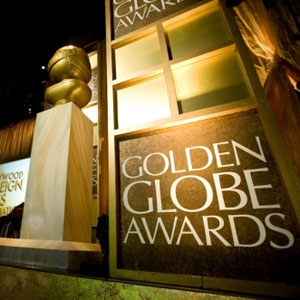
What Lisa Marie Watched Last Night: The 69th Annual Golden Globe Awards


Last night, I watched the 69th Annual Golden Globe Awards.  I also got on twitter and made a lot of snarky comments.  People seemed to enjoy it and for that reason, I say, “Yay!”
Why Was I Watching It?

Because I am an awards show junkie!  Seriously, those glue sniffers on Intervention don’t have anything on me when it comes to craving the excess, glamour, and foolishness of a big, silly Hollywood awards show!  Add to that, this is still a fairly wide open Oscar season and the Golden Globes are, as they always say on E!, a “precursor to the Oscars.”  Winning a Golden Globe usually guarantees at least an Oscar nomination.  Plus — Ricky Gervais was back to host and like a lot of people last night, I spent the minutes before the ceremony asking myself, “What ever will he say!?” in feverish anticipation.

What Was It About?

For the past 69 years, the members of the Hollywood Foreign Press Association have thrown a big banquet in January and given out a lot of awards to various TV and movie stars.  Nobody’s really sure who the members of the Hollywood Foreign Press Association are and, to be honest, the Golden Globes always have a slightly unsavory air to them.  There’s always more than a few nominations that mostly seem to be designed to get famous people to show up at the ceremony,  Last year, they nominated the Tourist, this year they nominated The Ides of March.  Anyway, the Golden Globes are distinguished by the Oscars by the fact that they serve alcohol during the show and, in the past, someone’s always ended up giving a drunken acceptance speech or launching into an incoherent political rant and, for the past few weeks, we’ve been told that with Ricky Gervais returning to host the 69th annual banquet, anything could happen and probably would!  Yay!

What Worked

Last night, I mentioned on twitter that if nothing interesting happened on the Globes or if Ricky somehow failed to deliver the expected amount of snark then I would devote this section of my review to talking about my boobs. 

With that in mind, what can I say except that they’re a little big and heavy and they pretty much ended my dreams of being a ballerina but I like my boobs, or as I call them Pride and Joy.  They go great with every outfit I own and I’m pretty sure that they’re also the reason why I’ve never had to pay a speeding ticket.  Plus, they allowed me to say stuff like, “I should be Ms. Golden Globes!” while I was watching the show last night…

Actually, I’m being a little bit unfair to the Golden Globes (the awards ceremony, not my boobs).  The tribute to Morgan Freeman was well-done and was probably the high point of the ceremony but then again, how can you go wrong with Morgan Freeman?  Seriously, when I’m on the verge of doing something silly (like using a review of the Golden Globes to show off my boobs) , I imagine Morgan Freeman saying, “Now, do you really think that’s a good idea?”

Fashion-wise, I saw a lot of red dresses last night and that made me happy because I look really good in red.

Among the winners, Christopher Plummer (Best Supporting Actor for Beginners), Jean Dujardin (Best Actor In A Comedy Motion Picture for The Artist), Martin Scorsese (Best Director for Hugo), and Claire Danes (Best Actress In A Dramatic TV Show for Homeland) all gave good and classy acceptance speeches that made me feel good to be alive.  And Uggie the dog was so adorable up there on stage when The Artist won Best Motion Picture Comedy.  Actually, speaking of The Artist, it was kinda nice to see so many French people accepting awards last night.  (Oh, stop it!  I love France!)

I enjoyed it when Madonna won for best song because she was so shocked that she forgot to speak in her fake accent. 

On an admittedly petty note, Rooney Mara did not win Best Actress for David Fincher’s The Girl With The Dragon Tattoo and that amused me greatly because I knew that all the little AwardsDaily Fincherites were torn about how to whine about Mara losing with coming across as if they were criticizing Meryl Streep for winning.

What Did Not Work

So, let’s start with the main problem.  Last night’s Golden Globes ceremony was so respectable and predictable and slow that it might as well have just been the Oscars.  Ricky Gervais started out the ceremony by telling us that he had signed an agreement to not make any offensive or outrageous statements and then he did just that.  What’s especially annoying is that Ricky didn’t seem to be neutering himself as an act of protest or anything of the sort.  Instead, he just came across like he was too smug and sure-of-himself to realize that he was bombing.  It was as if he just expected his reputation to convince us that he was being funny and outrageous without actually being funny and outrageous.  Last year, Ricky Gervais skewered Hollywood phonies.  This year, Ricky Gervais was a Hollywood phony.  I sat there waiting for him to say just one thing that could potentially end his career and he refused to do it.

But Ricky wasn’t alone.  Seriously, where were the drunk winners launching into incoherent politically themed rants.  I mean, it’s an election year for God’s sake.  People on twitter were using the occasion to make all sorts of silly and naive political statements but the actual celebrities — the people who we depend on to act like a bunch of dumbasses — just sat there in this sort of placid anxiety like they were waiting for someone to show up for an intervention.

BLEH!

The majority of the night’s acceptance speeches were neither good nor bad.  They were just boring.  Listen, Meryl Streep is a great actress and I have no problem with her being recognized and awarded for her talent but oh my God, I nearly fell asleep trying to listen to her.  Now, if Meryl (or any other winner) had gotten up on stage and started slurring her words or making dirty jokes or something like that, it would have made for great television.  (Though I do have to give Meryl some credit for being the only winner to get bleeped.) 

The Descendants won Best Motion Picture Drama but seriously, it’s hard for me to accept that this well-made but essentially unchallenging and rather forgettable film is now the Oscar front-runner.  Seriously.  Much as with every other award it has won, The Descendants felt like something of a compromise choice and, considering that Scorsese won best director, it’s hard to gauge just how much momentum the Descendants is going to get from this victory. 

Oh!  And another thing that sucked — how did George Clooney win a Golden Globe for essentially playing the same character he always plays while Michael Fassbender’s brilliant work in Shame was ignored?  What type of game is that?

“Oh my God!  Just like me!” Moments

To quote Joan Crawford, “I’ll show you a pair of Golden Globes!”

Lessons Learned

This is shaping up to be one of the worst Oscar seasons in recent history.  Seriously, if just one deserving film or performance wins in February, I will be amazed.

Lisa Marie’s 10 Favorite Songs of 2011


Continuing my series on the best of 2011, here are ten of my favorite songs from 2011.  Now, I’m not necessarily saying that these were the best songs of 2011.  Some of them aren’t.  But these are ten songs that, in the future, will define 2011 for me personally.  Again, these are my picks and my picks only.  So, if you think my taste in music sucks (and, admittedly, quite a few people do), direct your scorn at me and not at anyone else who writes for the Shattered Lens.

By the way, I was recently asked what my criteria for a good song was.  Honestly, the main thing I look for in a song is 1) can I dance to it and 2) can I get all into singing it while I’m stuck in traffic or in the shower? 

Anyway, at the risk of revealing just how much of a dork I truly am, here are ten of my favorite songs of 2011.

1) What The Water Gave Me (performed by Florence + The Machine)

Musically, 2011 was a good year for me because it’s the year that I first discovered Florence + The Machine.

2) Only In My Double Mind (performed by Centro-Matic)

This is a great song from one of the best bands to come out of North Texas.

3) Man or Muppet (performed by Jason Segal and Walter)

Featuring lyrics from the brilliant Bret McKenzie.  This song makes me cry every time.

4) Immigrant Song (performed by Karen O, Trent Reznor, and Atticus Ross)

Say what you will about David Fincher’s rehash of The Girl With The Dragon Tattoo, it had a good soundtrack.  This cover of Immigrant Song made the film’s first trailer bearable.  Unfortunately, it wasn’t really featured in subsequent trailers, being replaced by Daniel Craig going, “I want YOU to HELP ME catch a KILLER of WOMEN.”

5) Friday (performed by Rebecca Black)

Yeah, yeah, I know.  It’s a terrible song and you know what?  That’s why I can’t help but love it.  Listen, there are thousands of terrible song released every year but there are none quite as a terrible as Friday.  The genius of Friday is that it took everything that we associate with terrible music — nonsensical lyrics, insane autotune, a socially irresponsible message, creepy rappers who show up out of nowhere and for no good reason — and then just smashed it all together into the YouTube video that refused to die.  Add to that, a few months ago, me and my BFF Evelyn got like totally drunk and then wandered around the streets of Dallas singing this song at the top of our lungs and I swear, every guy who passed by yelled words of encouragement at us. 

(And, by the way, if you’re going to hate someone, hate on Fred Phelps.  Leave Rebecca Black alone.  Life’s too short.)

6) Hold it Against Me (performed by Britney Spears)

Yeah, yeah, I know.  Everyone loves to hate on Britney blah blah blah.  This song is fun to sing in the shower and you can dance to it.  And, quite frankly, that’s all I need.

7) Beard (performed by Burning Hotels)

This is from another North Texas band.

8) Fucking Perfect (performed by Pink)

An anthem.  (Yes, I know this song came out in 2010 but it was important to me in 2011 so I’m listing it here now.  So there.)

9) Love Is The Drug (performed by Oscar Isaac and Carla Gugino)

From the Sucker Punch soundtrack comes this sneakily subversive cover.

10) No Light, No Light (performed by Florence + The Machine)

Finally, what better way to end this list than with some more of Florence + The Machine.

Finally, I want to close this list with a song that came out long before 2011 but it’s an important song to me and it was sung by someone who we lost far too early this year.

Coming tomorrow: ten of the best things I saw on television in 2011.

What Lisa Marie Watched Last Night: The Help (dir. by Tate Taylor)


I actually watched several things last night, including the season premieres of The Bachelor and Intervention.  However, neither one of those is an Oscar contender.  The Help is, so I decided I better take the time to watch the film via OnDemand.

Why Was I Watching It?

I wasn’t planning on seeing this movie when it first originally opened in theaters because, just based on the trailer, it looked like it would be your typical, terribly self-congratulatory mainstream films.  I’ve seen far too many films that promote the same old stereotypes in the name of progress and tolerance, as if good intentions can make up for bad filmmaking.  But, so many of my girlfriends came to me raving about how much they loved this film and then my Aunt Kate just about disinherited me when I told her I hadn’t seen the movie (or read the book that it’s based on) and eventually I realized that I had to see the film.  Add to that, chances are that this film is going to be an Oscar contender.

What Was It About

In segregated Mississippi, aspiring writer Skeeter (Emma Stone) decides to write book about the life of the African-American maids and nannies who work for her best friends.  After some initial difficulty, she wins the trust of two maids (Viola Davis and Octavia Spenser) and gets down to exposing the truth.

What Worked

First off, The Help is a perfect example of a well-made, entertaining mainstream film.  I laughed at the funny parts, I cried at the sad parts, and I thoroughly enjoyed the film, even though it kinda fell apart during the 2nd hour.  There’s a lot of very legitimate issues that you can raise about how the film portrays life in the segregated South but the film itself is entertaining and well-made.

It’s also one the best acted films of 2011 with Viola Davis, Octavia Spenser, and Emma Stone all giving great performances.  Jessica Chastain is funny playing a clueless newlywed and Bryce Dallas Howard does a typically good job playing the type of bitchy Queen Bee that we’ve all know and  have all secretly hoped would end up fat and divorced.  I also thought Allison Janney, who plays Stone’s mother, gave an excellent and underrated performance.

This film was directed with a perfect eye for the details needed to make even the most minor of characters memorable.  If nothing else, I enjoyed watching it just to see what everyone would be wearing from scene to scene.

The film’s first hour is probably as perfectly paced and tonally balanced as any film I’ve seen.  However, things fall apart during the second hour (more on that below).  Luckily, the film’s ending is powerful and partially redeems the film’s uneven tone.

What Didn’t Work

The film is moves along pretty well until the 2nd hour, at which point it smashed into a wall created by the inability of mainstream film to truly honestly deal with racism.  At the start of the second hour, civil rights leader Medgar Evers is assassinated by a member of the Ku Klux Klan and I found myself waiting for some sort of expression of anger (or really, any emotion other than stoic suffering) on the part of “the help.”  Instead, we get a scene where both Viola Davis and Emma Stone are watching Evers’s funeral together and both are impressed to see John F. Kennedy show up.  In the next scene, Davis has put a picture of President Kennedy up on her wall next to a picture of Jesus.  So, in other words, this film reacts to the murder of a black man but deifying a white man.  After showing us a clue of violent reality, it’s as if the film can’t figure out how to balance out the ugly realities of racism with the film’s need to appeal to the widest possible audience.  As a result, the next hour of the film feels rather disjointed and uneven.  Even though the film partially redeems itself with one of the best endings of the year, it’s still hard not to feel as if we’re watching a feel good film about something nobody should feel all that good about.

Like a lot of mainstream films about racism, a good deal of this film centers on the friendship between blacks and a few white people who, magically, don’t appear to have a shred of prejudice within them despite the fact that they were raised in the same racist culture as every other white person in the film.  As a result, the racism seen in the film doesn’t really seem like it’s an ingranied part of culture as much as it just seems like the result of a couple of bullies acting like jerks.  As a result, despite its very good intentions, a film like The Help will often unintentionally minimize just what a struggle the fight for civil rights was and is. 

“Oh my God!  Just like me!” Moments

Needless to say, I totally related to Emma Stone’s character in this film. 

Lessons Learned

It’s difficult to make a feel-good movie about racism.