A Roughie With Lisa Marie: Scum of the Earth (dir. by Herschell Gordon Lewis)


If there’s any exploitation director that deserves a critical re-evaluation, it’s Herschell Gordon Lewis.  Over the course of two decades, Lewis dabbled in every genre of low-budget filmmaking and even invented one with his 1963 “gore” film Blood Feast.  Many film critics tends to dismiss Lewis as being one of the worst directors of all time.  I would argue that, far from being the worst, Lewis was a unique filmmaker who, working with low budgets and mainstream support, always managed to create movies that had their own unique cinematic aesthetic.  Much like the great French director Jean Rollin, Lewis made dream-like films that — though initially dismissed for their lack of slick production values — have managed to survive the test of time and remain as interesting and oddly watchable now as the day they were first released.  That certainly not the accomplishment of “the worst director of all time.”

(Add to that, the worst director of all time is Garry Marshall.  Seriously, New Year’s Eve will be forever tainted, thanks to Mr. Marshall.)

Though Lewis is best known for his “gore” films like Blood Feast and the Gruesome Twosome, he dabbled in just about every genre of film.  Last night, I watched one of his non-gore films,  Scum of the Earth.  Filmed in 6 days in 1963, Scum of the Earth was released at the same time as Lewis’s better-known Blood Feast.

“Only an alert society can protect itself from those who prey on the weak — the scum of the earth.” — Closing Narration of Scum of the Earth.

Like many of the classic grindhouse film, Scum of the Earth presents itself as a warning to mainstream society about the evil lurking just underneath the facade of normalcy.  In this case, that evil is the “dirty picture” underground and the film starts with a montage of various “teenagers” selling pictures of a topless woman.  I like to think that, with this little pre-credits sequence, Herschell Gordon Lewis establishes that Scum of the Earth is nothing less than a black-and-white, low-budget version of The Wire.

Much like The Wire and Traffic, Scum of the Earth goes from showing us how the product is distributed to showing us how and why the product comes into being in the first place.  Mr. Lang (Lawrence Wood) is a cheerful man who spends his time sitting in a small office and sending out his henchmen, evil Larry (Mal Arnold) and the moronic Ajax (Craig Maudsplay), to distribute explicit photos of the innocent victims that he lures into his sordid web. (Indeed, they are truly the scum of the earth…)  The pictures are taken by disillusioned artist Harmon (Thomas Kerwin) and most of them feature Sandy (played by Sandy Sinclair).  It’s quickly revealed that both Sandy and Harmon hate what they’ve become but they’re both being blackmailed by the jovial Mr. Lang.

However, Sandy’s pictures are no longer selling as well so Lang offers her a proposition.  Sandy can retire from the business if she recruits a replacement.  For the rest of the 72-minute film, we watch as Sandy and Harmon recruit innocent Kim (played all wide-eyed and breathless by Vicki Miles) who desperately needs 500 dollars to be able to pay her college tuition.  Oddly enough, that’s the same way I paid my college tuition which, incidentally, was a lot more than 500 dollars.

Anyway, Kim soon finds herself in over head because 1) she’s incredibly stupid and 2) she’s dealing with the scum of the earth.  If Kim stop posing for topless pictures, she knows that copies will be sent to her kindly but slow-witted father.  (“You’re the best father I ever had!” Kim tells her dad at one point.)  Even worse, Ajax and Larry want to take some pictures of their own with her.  Whatever is a girl to do!?

 As a director Herschell Gordon Lewis has always struck me as being a bit of American Jess Franco.  Much like Franco, he made film that can charitably be called terrible.  Between performances that ranged from histrionic to living dead and a filming technique that seemed to mostly consist of little more than turning on the camera, it’s easy to dismiss Lewis and his films.  It’s only on repeat viewings — after you’ve gotten a previous taste of the Lewis aesthetic — that you start to notice that quirky details and the occasionally inspired visuals that give evidence to the fact that Lewis does not deserve his reputation for being one of the worst directors of all time.  Even in an admittedly lesser work like Scum of the Earth, there’s enough intentional strangeness to hold your interest.  To cite one example, the villainous Mr. Lang appears to love toys and he gives quite a few of his evil speeches while looking down at two nodding bobble heads.  As static as the majority of the film is, the final chase (in which two police officers pursue the portly Mr. Lang through a rather slummy strip mall) is a lot of fun to watch.  The best visual in the film comes when Kim is posing topless for the first time and Lewis gives us a shot, from her point of view, of the oppressively bright lamps shining down on her and casting the rest of the studio into total darkness.  It’s a scene that is full of genuine menace.

The cast is full of actors who will be recognizable to anyone who has seen any of Lewis’s other films.  Out of the cast, William Kerwin comes the closest to giving an actual performance, bringing a real sense of sadness and regret to the role of Harmon the Photographer.   Kerwin also appeared in Blood Feast, playing the dedicated cop who pursues the evil Faud Ramses who was played by yet another Scum of the Earth alum, Mal Arnold. 

In Scum, Arnold plays Lang’s henchman, Larry.  In 1963, Arnold was 30 years old and he looked like he was 40.  However, he was cast here as a character who tells everyone that he meets that he’s under 17 and therefore, he doesn’t have to worry about going to prison for distributing dirty pictures.  Or, as Arnold puts it, “Not me, Daddy-O!  I’m a minor!”  What makes this especially amusing is that in Blood Feast (which was, again, released that same year), Arnold is playing a character who is 5,000 years old.  What also makes Arnold’s performance as Larry enjoyable to those of us who are familiar with Lewis’s cinematic career is that Arnold essentially gives the same over-the-top performance here that he would later give in Blood Feast.  I kept expecting him to ask Kim if she wanted an Egyptian feast.

However, the film truly belongs to Lawrence Wood, who plays Mr. Lang with such an insane joy that it’s impossible not to root for the sleazy old pornographer.  Whether he’s giggling as a toy monkey somersaults across his desk or he’s politely explaining why nothing is actually his fault, Wood appears to be having such a good time that it’s just infectious.  Wood’s best moment comes when Kim expresses some reluctance about modeling for more pictures and suddenly, Mr. Lang starts to shout at her about how she (and all the other kids) are hypocrites.  “You’re damaged merchandise and this is a fire sale!” he shouts as sweat streams down his face and Lewis zooms in for a close up of his mouth, “You’ll do what I tell ya!” Wood screams, “Do you hear!?”  It’s a scene of lunatic genius that, in the best tradition of both Herschell Gordon Lewis and the grindhouse in general, comes out of nowhere and is all the more effective because of it. 

For this scene alone, Scum of the Earth deserves to be seen.

Film Review: Valley of the Dolls (dir. by Mark Robson)


(Photograph by Erin Nicole Bowman)

(Warning: This review contains spoilers.  A lot of them.)

Last week, I posted a poll and I asked you, the Shattered Lens readers, which film I should watch on March 20th and then subsequently review.  You voted and the winner was the classic 1967 trashfest, Valley of the Dolls.

Based on a best-selling (and trend-setting) novel by Jacqueline Susann, Valley of the Dolls starts out with a disclaimer that informs us that the story we’re about to see is totally fictional and purely imaginative.  That disclaimer is probably the funniest part of the entire film as Valley of the Dolls is notorious for being one of the first films dedicated to showing middle America just how miserable and screwed up those famous show business types truly are.  As such, the main reason for watching a movie like this is so you can sit there and compare the cinematic troubles of a character like Neely O’Hara to the true-life troubles of an actress like Lindsay Lohan.  Valley of the Dolls tells the story of three aspiring stars who, as they find fame, also find themselves dealing with heartbreak, insanity, and dolls.  No, not the type of dolls that my mom used to collect.  These “dolls” are a bunch of red pills that do everything from keeping you thin to keeping you awake and focused.  (Though the pills are never actually called anything other than “dolls,” they appear to be the same pills that I take for my ADD.)   

The least interesting of our three heroines is Anne Welles (Barbara Parkins).  Unfortunately, Anne is also pretty much the center of the rather draggy first hour of the film.  Anne is a walking cliché, a naive girl from a small town in New England who moves to New York, gets a room at the Martha Washington Hotel for Women, and a job at a local theatrical agency.  “I want to have a marriage like mom and dad…but not yet!”  Anne breathlessly tells us.  Anne eventually ends up as the mistress of Lyon Burke (played by Paul Burke), a writer-turned-theatrical-agent who you know has to be a cad because his name is Lyon Burke and he takes Anne’s virginity but then refuses to marry her afterward.  Anne eventually becomes a model and finds fame as the face of Gilligan Hairspray but she soon finds herself forced to watch as her two best friends travel down a path of self-destruction.

Anne is the film’s token “good girl” and, as such, she’s rather bland and boring.  However, her character is interesting when considered as a symbol for the confused sexual politics of the time.  Valley of the Dolls was made in 1967, at a time when Hollywood was still trying to figure out how to deal with the emerging counter-culture.  The end result? A lot of rather old-fashioned films that were full of jarringly out-of-place counter-culture moments.  By the time Valley of the Dolls came out, it was allowable to acknowledge that a single girl might actually have sex but she still had to, at the very least, feel an unbelievable amount of angst about it.  That certainly is the case with Anne.  Watching the film today, it’s hard to understand just what exactly Anne’s feeling guilty about.  Lyon isn’t married.  Anne finds success even as she pursues her relationship with him.  Up until the final half of the film (at which point the morality of the time demands that both Anne and Lyon suddenly start acting totally out-of-character), Lyon treats her with about as much respect as you could probably expect to get from a man in the 1960s.  And yet, Anne can’t feel complete simply because Lyon is hesitant about marrying her.  When she and Lyon finally do make love, they do it with the lights off so the only thing the viewer sees are two shadowy figures holding each other.  Following the film’s logic, if the lights had been left on, the character of Anne would have had to have been punished later in the film for allowing the audience to see too much of her.

When Anne first comes to New York, she befriends two actresses.  The more tragic of the two is Jennifer North (played by Sharon Tate, who would be tragically murdered two years after this film came out), an insecure blonde who is valued more for her body than her talent.  Jennifer spends her spare time doing bust exercises (“To hell with them!” she declares at one point as she glares down at her chest, “Let ’em droop!”) and dealing with phone calls from her mother, demanding that Jennifer send her money.  Jennifer eventually ends up marrying a singer named Tony (played by Tony Scotti).  Tony is a well-meaning if simple-minded guy who is married to a creepily overprotective sister (played by Lee Grant).  Eventually, it turns out that Tony has a neurological disease and he’s eventually checked into a sanitorium.  Penniless, Jennifer goes France and makes “art films.”  (In one of Valley of the Dolls’ better moments, we’re shown a clip of this “art film” and it turns out to be a pitch perfect satire of every single pretentious soft-core film to ever come out of Europe.)  Upon returning to America, Jennifer discovers that she has breast cancer and, declaring “All I’ve got is my body,” she commits suicide.

Though Sharon Tate gets considerably less screen time than her co-stars, she probably gives the strongest performance in this film.  Certainly, her story is the most emotionally effective (even if it’s hard not to feel that, as is typical of the films of both the 60s and today, Jennifer is being punished for taking off her clothes on camera).  Tate perfectly captures the insecurity that comes from being continually told that you have nothing more to offer beyond how you look.  In her first appearance, she’s wearing an outrageously large headdress.  “I feel a little top-heavy,” she says.  “You are a little top-heavy,” some guy replies while leering at her breasts.  If you doubt that Sharon Tate was a good actress, just watch her reaction.  She perfectly captures a pain that I personally know far too well.  Her subsequent suicide scene, which has the potential to be the most tasteless part of this film, is actually the most powerful and again, it’s because Tate plays the role perfectly.

(It’s been nearly four years since I lost my mom to breast cancer and I have to admit, I had a hard time watching the scenes where Jennifer discusses her diagnosis.  Tate gave a great performance here and it’s a shame that she’s been permanently linked in the public imagination with Charles Manson and the later accusations against her husband, Roman Polanski.  She had real talent.)

As poignant of Sharon Tate was in her role, the film’s fame (and infamy) ultimately rests with our third heroine, Neely O’Hara (played by Patty Duke in a performance that suggests that she was literally possessed during the filming).  Neely is a scrappy, aspiring singer who is fired from a broadway show when her singing threatens to upstage aging star Helen Lawson (played by Susan Hayward, who was brought in to replace Judy Garland).  Neely, however, refuses to let anything keep her  down and soon, she’s singing at a Cystic Fibrosis telethon and becoming a big star.  She marries her boyfriend Mel (played by Martin Milner, who grits his teeth and spits out every line) and moves to California where she soon becomes a big star and then finds herself hooked on “booze and dolls.”  (“I need a doll!” she insists on several occasions.) 

One reason the film’s 2nd hour is so much more fun than the first is because the film’s focus shifts from boring Anne to out-of-control Neely.  Increasingly temperamental and unstable, Neely soon starts to spend all of her time with dress designer Ted Casablanca (a great name, if nothing else.)  “You’re spending more time than necessary with that fag Ted Casablanca,” Mel tells her to which Neely replies, “Ted Casablanca’s no fag and I’m the dame who can prove it.”  This, of course, leads to a divorce and soon Neely is living with Mr. Casablanca who informs her, after he gets caught cheating, “You made me feel as if I was queer…that little whore makes me feel 9 feet tall.”

When Lyon and Anne attempt to force Neely to enter a sanitorium, she responds to running off to San Francisco where she enters a bar and shouts, “I’M NEELY O’HARA!” before then wandering down a sleazy street and ranting, “Boobies, boobies!  Nothing but boobies!  Who needs them!?”  Needless to say, this leads to her eventually overdosing and ending up in that sanitorium where she has a huge freak-out before singing a duet with Tony and resolving to get her life back in order.  This, naturally, leads to her getting released, having an affair with Lyon, and then returning to Broadway where, in the film’s most deliriously odd moment, she steals Helen Lawson’s wig and flushes it down a toilet.

Valley of the Dolls is, admittedly, a terrible film but it’s also a lot of fun and that’s largely because of Patty Duke’s berserk performance as Neely O’Hara.  Earlier, I said that Duke’s performance appears to suggest that she may have been possessed but, honestly, that barely begins to describe it.  Whereas Tate managed to find some truth in the film’s melodrama and Parkins gives a performance that suggests that the script put her in a coma, Duke attacks every inch of melodramatic dialogue, barking out her dialogue with all the ferocity of a yapping little chiuaua.  Duke gives a performance that is so completely and totally over-the-top that it’s hard not to respect her commitment to capturing every overheated, melodramatic moment.

I have to admit that one reason why I love this film is because I’m hoping that someday some enterprising director will remake it and cast me as Neely O’Hara.  Everytime I watch this film, I find myself thinking about how much it would be to respond to every petty annoyance by screeching out, “I’m NEELY O’HARA!”  Seriously, just think about it.  As a character, Neely is a talented, ambitious, emotional, unstable, immature, demanding, bratty, spoiled, and determined.  Sound like anyone whose film reviews you might have been reading recently?  From my previous experience as a community theater ingenue, I can assure you that I can deliver melodramatic dialogue with the best of them and, unlike Patty Duke in this film, I can actually dance.  Unfortunately, I can’t carry a tune to save my life but I’m thinking maybe they could bring in Kelly Clarkson to serve as my singing voice.  (Or maybe Jessica Simpson.  Did I ever mention that we both went to the same high school?  Though not at the same time, of course.) After all, if Patty Duke could be obviously dubbed, why not me?  I can just see myself now, wandering down some sleazy city street, singing to myself and declaring at the top of my lungs, “Ted Casablanca’s no fag and I’m the dame who can prove it!”  I know that Lindsay Lohan will probably insist that this is the role she was born to play, but seriously, who needs Linsday when you’ve got a Lisa?

Beyond the so-bad-that-its-good appeal of the film, Valley of the Dolls is a fascinating cultural artifact for the reasons that I previously hinted at while talking about the character of Anne Welles.  Valley of the Dolls was made in 1967 and, as such, it’s a perfect exhibit of an unstable time when Hollywood was unsure about whether it should embrace the “new morality” or if it should continue to recycle the same sort of old-fashioned filmmaking that had nearly bankrupted the big studios.  The result was several films that felt oddly schizophrenic in their approach and that is certainly the case with Mark Robson’s direction of Valley of the Dolls.  Whether it’s the way the film continually hints at nudity and sex while carefully not revealing too much or the way that random psychedelic sequences seem to suddenly appear on-screen, this is a movie that perfectly captures an uncertain film industry trying to figure out where it stands in a scary new world.

As always, I enjoyed watching this undeniably bad but just as undeniably compelling film.  Our readers chose well!  Thank you to everyone who voted and I hope you’ve enjoyed reading this review almost as much I enjoyed writing it.

(Photograph by Erin Nicole Bowman)

Lisa Marie Bowman Does It At Casa de mi Padre (dir. by Matt Piedmont)


Having seen the new Spanish-language comedy Casa de mi Padre on Friday, I now know what I want for Christmas.  I want a big white tiger that can talk and sit in trees and laugh, just like the big white cat that shows up and serves as spirit guide to Will Ferrell.

Seriously, let’s make it happen!

As for Case de mi Padre, the film is a deliberately absurd homage to both telenovelas and the B-movies of the 70s.  Armando Alvarez (played by Will Ferrell) is a stupid but good-hearted Mexican rancher whose drug dealer brother (Diego Luna) is on the verge of marrying the niece (played by Genesis Rodriguez) of another drug dealer (Gael Garcia Bernal).  Ferrell, of course, falls in love with Rodriguez and this leads to a deliriously over-the-top wedding party massacre and … well, listen the plot isn’t important.  The plot makes no sense.  It’s not supposed to make sense.  It’s not only a Will Ferrell movie, it’s a Will Ferrell movie based on telenovelas.  In short, the film is deliberately designed not to make any sense and, on that count, it succeeds admirably.

Despite a lot of funny moments and Ferrell’s admirable commitment to the film, Casa de mi Padre ultimately works better as a concept than an actual film.  In the past, Ferrell’s comedies have worked because they’ve satirized pompous institutions and people who generally take themselves far too seriously, with the obvious example being Anchorman‘s cast of self-important television reporters.  However, the majority of telenovelas are already essentially satiric in their intent.  Casa de mi Padre finds itself in the odd position of satirizing satire and, as a result, it never feels as outrageous as an actual telenovela.  The end result is hardly perfect but it’s silly enough to be consistently amusing.


Casa de mi Padre is a pretty uneven film that’s never as funny as you want it to be but I would be lying if I said I didn’t enjoy watching it.  Will Ferrell’s strength as both a comedic and a dramatic actor is his willingness to totally commit to his performance.  No matter how ludicrous or silly things get, Ferrell gives 100% and that’s never been more obvious than in his performance here.  Not only does he deliver all of his dialogue in Spanish (apparently he learned his lines phonetically) but he also totally throws himself into the melodrama of it all. 

A similar commitment can be seen in just about every frame of the film.  For me, the film’s best moments come from the small details that the filmmakers take the time to get right.  It’s there in every scene from the film’s deliberately tacky sets to the way that the characters randomly break out into overdone laughter to the fact that every female character in the film down to even the maids who work for Ferrell’s father wander around showing off miles of cleavage.  Perhaps my favorite scene in the film is when Ferrell and Rodriguez go for a horse ride and it’s obvious from the way the scene is framed that neither one of them is actually sitting on a horse.  These are the type of details that will leave boring mainstream audiences scratching their heads but for those of us who speak B-movie, these are the details that make this film worth seeing.

Film Review: Joe (dir. by John G. Avildsen)


(Warning: This review contains some spoilers.)

On Monday night, my movie before bedtime was an old one from 1970, John G. Avildsen’s Joe.  Though Joe is an occasionally uneven and rather heavy-handed film, it’s also a brutally effective one that I haven’t been able to get out of my mind since watching it.

Joe opens with Melissa Compton (played by Susan Sarandon, in her film debut) and her boyfriend, Frank Russo (Patrick McDermott).  It is quickly established that Melissa is a “rich girl” who has dropped out of society while Frank is a drug dealer.  Frank, incidentally, is probably one of the least likable characters in the history of cinema.  When we first meet Frank, he’s taking a bath but it makes no difference as the character just seems to covered in a permanent layer of grime.  Both Frank and Melissa are also drug addicts.

Patrick McDermott (left) and Susan Sarandon

When Melissa has a drug overdose and ends up in the hospital, Frank doesn’t really care but her father, advertising executive Bill Compton (Dennis Patrick) does.  He promptly goes over to Frank’s apartment and after Frank taunts him by saying that Melissa “had a real hang-up about you,” Bill beats Frank to death in a fit of rage.  Shaken by his actions, Bill goes to a neighborhood bar where he runs into a factory worker named Joe Curran (Peter Boyle).   A drunken Joe rants about how much he would like to kill a hippie.  Bill replies, “I just did.”

This leads to an odd relationship between the two men.  While Bill originally fears that Joe wants to blackmail him, Joe appears to just want to be his friend.  Soon, Joe is introducing Bill to his bowling league and Bill introduces Joe to his colleagues at the advertising firm.  Bill and his wife even have a memorably awkward dinner with Joe and his wife.  Bill’s wife worries that Joe might be dangerous but Bill smugly assures her that he is Joe’s hero.

Meanwhile, Melissa is released from the hospital and moves back in with her parents.  One night, she hears them talking about how Bill killed Frank.  Melissa flees from the apartment and when Bill chases after her, she shouts at him, “Are you going to kill me too!?” before disappearing into the New York night.

Searching for Melissa, Bill and Joe go to various hippie hangouts in Manhattan.  Every hippie they meet tends to be dismissive of the suit-wearing Bill and the uneducated Joe.  However, once Bill reveals that his car is full of drugs that he stole from Frank, the hippies are suddenly a lot more friendly.  A group of hippies take Joe and Bill back to their apartment.  At Bill’s insistence, both of the men smoke weed for the first time and then have sex with two of the hippie girls.  While they’re busy doing it, the rest of the hippies steal their money and all of the drugs.

Suddenly, Joe takes charge of the situation, leaving Bill to watch helplessly as Joe repeatedly slaps one of the girls until she tells them where her friends have gone.  (I’ve seen a lot of movies and I like to think that there’s little I can’t handle watching but the scene where Joe interrogates the girl was genuinely disturbing and I actually had a hard time watching it.  This was largely due to the intensity of Boyle’s performance.)  Joe drags Bill to the commune where the hippies live.  Standing outside the house, as snow falls around them, Joe gets two hunting rifles out of his car and tosses one to Bill before the film reaches its inetivable conclusion. 

Joe With Friend

Like many films released in the early 70s, Joe is distinguished by a continually shifting tone. The film’s opening (which feature Susan Sarandon getting naked and then watching her disturbingly unhygienic boyfriend shooting up) feels almost like it’s composed of outtakes from some lost Andy Warhol Factory film while the scenes immediately following Melissa’s drug overdose feel like a melodramatic Lifetime special.  After Bill kills Frank, the film briefly becomes a Hitchcockian thriller just to then segue into heavy-handed social satire as we watch the development of Joe and Bill’s unlikely, hate-fueled friendship.  The awkward comedy continues for a while until, somewhat jarringly, Joe suddenly becomes a violent revenge film.  While many films have been doomed by the lack of a consistent tone, it actually works here.  Joe‘s odd mishmash of comedy, tragedy, and exploitation actually perfectly reflects the uncertain worldview and hidden fears of Bill Compton.  Much as the audience is often times left uncertain whether they’re watching a comedy or a tragedy, Bill is a man who is no longer sure how to react to the world around him.

And make no doubt about it, Joe may be the title character but the film is truly about Bill Compton.  It’s Bill’s repressed anger (and desire for his own daughter) that fuels the plot.  As played by Dennis Patrick, Bill Compton is the type of smugly complacent figure whose outward confidence hides the fact that he’s been rendered impotent by the world changing around him.  For the majority of the film, Bill looks down on both sides of the cultural divide, looking down on both his daughter’s hippie friends and his new blue-collar acquaintance Joe.  (He assures his wife that Joe would never attempt to blackmail him because Joe “looks up” to him.)  It’s only at the film’s conclusion that Bill realizes just how powerless he is to control anything.  In those final scenes, Dennis Patrick’s face reveals what the audience has already figured out.  By trying to place himself above it all, he’s left himself with nowhere to go. 

Dennis Patrick (left) and Peter Boyle

That said, the film truly is dominated by Peter Boyle’s demonic performance as Joe.  For much of the movie, Joe is a buffoonish figure (he even gets his own mocking theme song “Hey Joe” which plays as he wanders around his house and scratches his navel) and it’s sometimes hard not to feel like you’re watching a long-lost episode of Everybody Loves Raymond where Frank Barone remembers the time that he killed a lot of hippies.  However, once Bill and Joe find themselves searching for Melissa among the hippies, Boyle slowly starts to pull back the layers and a new, far more threatening Joe emerges.  By the end of the film, Joe has become a nightmarish figure and we’re forced to reconsider everything that we’ve previously assumed.  By the film’s end, Joe almost seems to be a direct personification of Bill’s Id, a man who exists solely to force Bill to do what he’s always secretly wanted to do.*

When Joe was first released back in 1970, it apparently made a lot of money, generated a lot of controversy, and even managed to score an Oscar nomination for best original screenplay.  Oscar nomination aside, Joe is the epitome of a well-made and effective exploitation film.  While Joe and Bill are basically counter-culture nightmares of a murderous American establishment, the film’s hippies are portrayed as being so smug and so scummy that I’m not surprised to read that apparently audiences cheered once Joe and Bill started gunning them down.  (Peter Boyle, however, was apparently so shocked that he swore he would never make another film that “glamorized violence.”)  By embracing the best traditions of the grindhouse and attempting to appeal to both sides of the cultural divide in the crudest way possible, the filmmakers ended up making a film that, over 40 years later, somehow feels more honest than most of the other “generation gap” films of the 60s and 70s. 

As any film lover knows, any film made between 1966 and 1978 tends to age terribly, to the extent that often times they’re impossible to take seriously when watched today.  (And anyone who doubts me on this should track down films like R.P.M, Thank God It’s Friday, Skatetown  U.S.A.,  Getting Straight, and Zabriskie Point.)  However, watched today in our present age of Occupiers and Tea Partiers, Joe still feels relevent and, at times, downright prophetic.

—-

* In many ways, Joe Curran is a cruder, balder version of Tyler Durden.

A Quickie With Lisa Marie: Silent House (dir. by Chris Kentis and Laura Lau)


In the new horror film Silent House, Elizabeth Olsen plays Sarah, an emotionally unstable young woman who goes to her family’s old lakefront vacation home with her father.  After years of neglect, the cottage is on the verge of collapse and Sarah has been recruited to help her dad and her uncle prepare the house for collapse.  It’s obvious from the first minute that Sarah appears on-screen that she’s emotionally unstable.   Whether she’s staring out at the desolate lake or (in the first genuinely disturbing scene in a film that’s full of them) awkwardly dealing with her uncle’s blatant attempt to flirt with her, Sarah is a bundle of nerves.  When, at one point, Sarah hears something wandering around the house, her father replies that he’ll check it out because “I know how you are.” 

Unfortunately for Sarah, things are about to get a lot worst.

Shortly after Sarah is visited by a mysterious girl who claims to be a childhood friend (“I do remember you,” Sarah says at one point though she doesn’t sound too convinced herself), her father disappears and Sarah finds herself being chased through the house by a pursuer who only seems to exist in the shadows.  As she struggles to escape the house, she continually sees a silent girl watching her, just to disappear whenever Sarah tries to approach her.  Even when Sarah does manage to get out of the house, she quickly finds herself brought back against her will until finally, she discovers the dark secrets that are hidden within the house and she’s forced to confront an evil far more disturbing than she had originally suspected.

Silent House is a film with a gimmick — director Chris Kentis and Laura Lau have filmed and edited it to give the impression that the movie was shot in a single take and, therefore, all of the horror takes place in real time.  Usually, I’m not a big fan of movies that rely on gimmicks but, in this case, it actually works pretty well at giving the impression of a truly relentless thrill ride.  Fortunately, Kentis and Lau don’t just rely on the film’s gimmick to make the movie effective.  From this film, it’s obvious that they understand that taking the time to create the right atmosphere is just an important to a succesful horror film as having proverbial monster suddenly jump out of the shadows.

It helps that Elizabeth Olsen (who really should have received an Oscar nomination for Martha Marcy May Marlene) is totally believable and sympathetic as Sarah.  It takes a while to realize that Olsen is giving a great performance.  For most of the film, I just thought she was doing a good job at playing scared.  (For most actresses, being chased in a horror movie is a rite of passage.)  It was only during the final 15 minutes that it become apparent that, more than just playing frightened, Olsen was instead laying down the foundation for the film’s finale.  I’ve read some criticism claiming that the film’s final twist came out of nowhere but I actually found it to be effective and disturbingly plausible.  That is almost totally due to commitment that Olsen shows in creating the character of Sarah.

I saw Silent House earlier today with Jeff and seriously, I was so happy he was there because I spent almost the entire movie with my face buried in his shoulder.  Admittedly, I’m usually pretty jaded when it comes to gore and horror.  (For example, I saw Dale get his guts ripped out on The Walking Dead last Sunday and I may have arched an eyebrow but otherwise, it was nothing I hadn’t seen before.)  But seriously, Silent House is an intense film that, wisely, doesn’t allow logic to get in the way of being scary.  The critics can nitpick all they want on this film.  What matters is that Silent House works. 

(As a sidenote, I really hope that after this movie and Martha Marcy May Marlene, Elizaebeth Olsen takes break from running for her life and makes a nice, happy romantic comedy.  She deserves a break!)

Lisa’s Thoughts On 10 Best Picture Nominees That She’s Recently Seen: The Alamo, Becket, Elmer Gantry, Gaslight, Gladiator, Kramer Vs. Kramer,Marty, Of Mice and Men, Out of Africa, and Wilson


Since it’s Oscar weekend, I’ve been watching past and present Best Picture nominees like crazy.  Here are my thoughts on ten of them.

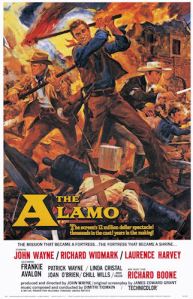
The Alamo (1960, directed by John Wayne, lost to The Apartment) — I’m a Texan which means that I’m legally required to watch both this film and the 2004 remake whenever they show up on television.  Both films are way too long and feature way too many characters speaking speeches as opposed to dialogue but, if I had to choose, I would have to go with the 1960 version of the story.  The original Alamo might be heavy-handed, poorly paced, and awkwardly acted but at least it’s sincere in its convictions.  I always cry when Richard Widmark dies.

Becket (1964, directed by Peter Glenville, lost to My Fair Lady) — This one is a personal favorite of mine.  The film is about the friendship and the eventual rivalry of King Henry II (Peter O’Toole) and Thomas Becket (Richard Burton).  Becket and Henry II start out the film drinking and whoring but eventually, Henry makes Becket Archbishop of Canterbury.  Becket, however, rediscovers his conscience and soon, Henry is famously asking, “Who will rid me of this troublesome priest?”  Becket is an exciting historical drama and Peter O’Toole is at his absolute best as the flamboyantly decadent Henry.

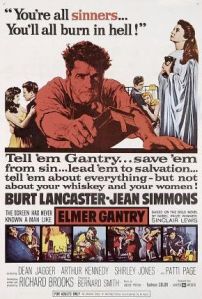
Elmer Gantry (1960, directed by Richard Brooks, lost to The Apartment) — Burt Lancaster plays Elmer Gantry, a traveling salesman and con artist who ends up falling in love with a saintly evangelist (played by Jean Simmons).  Gantry soon starts preaching himself and soon has an army of loyal followers.  However, Gantry’s new career is threatened when an ex-girlfriend-turned-prostitute (Shirley Jones) pops up and starts telling people how Gantry “rammed the fear of God into” her.  With its unapologetically corrupt lead character and its looks at how commerce and religion are often intertwined, Elmer Gantry makes a perfect companion piece to Paul Thomas Anderson’s There Will Be Blood.  Lancaster won an Oscar for his powerful and intense performance in the title role.

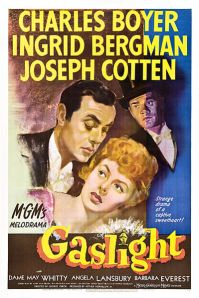
Gaslight (1944, directed by George Cukor, lost to Going My Way) — Evil Charles Boyer marries Ingrid Bergman and then attempts to drive her crazy.  Luckily, Inspector Joseph Cotten is on the case.  Gaslight is, in many ways, an old-fashioned melodrama but it’s still a lot of fun to watch.  Boyer is a suave devil and Joseph Cotten (one of my favorite of the old film actors) is a dashing hero.

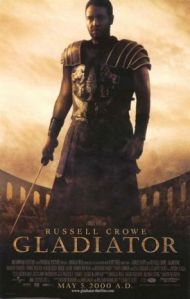
Gladiator (2ooo, directed by Ridley Scott, won best picture) — One thing that I’ve recently discovered is that men love Gladiator.  Seriously, they obsess over this film and hold Russell Crowe’s surly gladiator up as some sort of mystical ideal and if you dare to say a word against it in their presence, be ready for big and long argument.  So, I won’t criticize Gladiator too much other than to say that the film has always struck me as being kinda overlong, that the CGI is occasionally cartoonish, and that, despite his fearsome reputation, Russell Crowe is a lot more interesting as an actor when he plays a thinker as opposed to a fighter.  Joaquin Phoenix, playing the Emperor Commodus, is a lot of fun to watch.

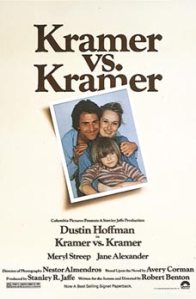
Kramer Vs. Kramer (1979, directed by Robert Benton, won best picture) — Dustin Hoffman plays a workaholic New York advertising executive who, after his wife Meryl Streep leaves him, ends up as a single father.  Kramer Vs. Kramer won best picture in 1979 but I have to admit that I didn’t care much for it.  Then again, I don’t think that I was the intended audience.  Instead, Kramer vs. Kramer appears to have been made to appeal to men frustrated with women wanting to have a life outside of being a domestic servant.  The film is well-acted though Hoffman’s character becomes insufferably smug once he gets comfortable with being a single father.

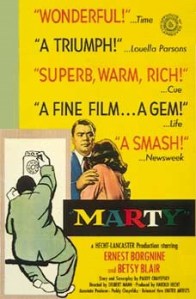
Marty (1955, directd by Delbert Mann, won best picture) — Lonely butcher Marty (Ernest Borgnine) romantically pursues a shy school teacher named Clara (Betsy Blair).  However, Marty’s friends and his family don’t like Clara and Marty soon finds himself having to choose between them.  Marty is a bit of an anomaly when it comes to best picture winners.  It’s not an epic, it doesn’t claim to solve any of the world’s problems, and it’s based on a tv show.  However, it’s also a sincerely sweet and heartfelt  film and also features excellent performances from Borgnine and Blair.

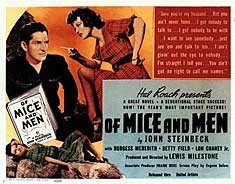
Of Mice and Men (1939, directed by Lewis Milestone, lost to Gone With The Wind) — “Tell me about the rabbits, George.”  Yes, it’s that film.  Smart and little George (Burgess Meredith) and big but simple Lenny (Lon Chaney, Jr.) are migrant farm workers who get a job working at ranch where Lenny ends up accidentally killing the rancher’s daughter-in-law.  Despite the fact that we all now tend to naturally smirk when we hear anyone say “Tell me about the rabbits, George,” Of Mice and Men remains an effective tear-jerker and both Meredith and Chaney give strong performances.

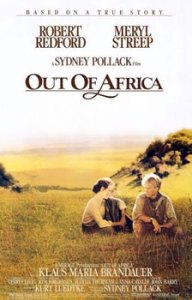
Out of Africa (1985, directed by Sydney Pollack, won best picture) — I recently sat down to watch this film because 1) my aunts love this film and get excited whenever they see that it’s going to be on TV and 2) Out of Africa was named the best film of the year I was born.  So, I sat down and watched it and then three or five hours later, I realized that the film was nearly over.  Anyway, the film is about a Danish baroness (Meryl Streep) who moves to a plantation in Africa and ends up having an affair with a British big game hunter.  The hunter is played by Robert Redford, who refuses to even try to sound British. (USA! USA! USA!)  Anyway, the film is pretty in that generic way that most best picture winners are but the film ultimately suffers because its difficult to care about any of the characters.  Streep acts the Hell out of her Danish accent but she and Redford (who seems to be bored with her) have absolutely no chemistry. I saw one review online that dismissed Out of Africa as a “big budget Lifetime movie” but Lifetime movies are a lot more fun.

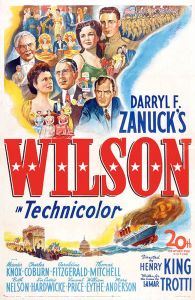
Wilson (1944, directed by Henry King, lost to Going My Way) — Wilson is a two-and-a-half biopic about Woodrow Wilson and his presidential administration.  Wilson is well-played by Alexander Knox, who later showed up in countless exploitation films.  Wilson shows up on cable occasionally and every time I’ve seen it, I’ve had mixed feelings about it.  The critical part of me tends to be dismissive of this film because it’s way too long, extremely stagey, and it glosses over the fact that Wilson was a virulent racist who idolized the Ku Klux Klan.  However, as a secret history nerd, I can’t help but enjoy seeing a film where Vincent Price plays the Secretary of the Treasury.

A Quickie With Lisa Marie: The Conversation (dir. by Francis Ford Coppola)


As a result of my continuing effort to see every single film ever nominated for best picture, I’ve been lucky enough to both discover and rediscover a handful of excellent films that, for whatever reason, have ended up forgotten and neglected in the years since they scored their nominations.  One of the more recent of these films was Francis Ford Coppola’s masterpiece of a paranoia, the 1974 Best Picture nominee The Conversation.*

The Conversation tells the story of Harry Caul (played by Gene Hackman), a surveillance expert who, along with his colleague Stan (played by the great John Cazale), is hired by a businessman (Robert Duvall) to bug a conversation between Duvall’s much younger wife (played by Cindy Williams) and a man who might be her lover (played by Fredric Forrest).  Harry, we quickly discover, is a man who values his privacy and who manages to find a balance between his unsavory job and his devout religious faith by maintaining an impenetrable shield of detachment from the rest of humanity.  He is a man who hides from the world inside of his apartment, only allowing himself to show the slightest hint of emotion when playing his saxophone.  In one of the film’s best scenes, Harry finds himself awkwardly socializing with a far more sleazy acquaintance (played by Alan Garfield, one of the great character actors of the 70s) and it becomes apparent that Harry may be the best in the business but he’s still the ultimate outsider.

However, Harry is forced to confront the contradictions of his own lifestyle when he listens to the conversation between Forrest and Williams and believes that he might have found evidence that both Forrest and Williams are in fear for their lives.  With Duvall’s operatives demanding the surveillance tapes, Harry Caul soon finds himself becoming more and more paranoid and unstable as he finds it more and more difficult to justify his detachment.  Harry finds himself obsessively listening to the conversation over and over again, going over every possible nuance and emphasis to try to figure out what’s actually being said.  Of course, by the end of the film, it’s obvious to both Harry and the audience that nothing is as simple as it sounds. 

Compared to the Godfather films and Apocalypse Now, the Conversation is a surprisingly low-key and rather muted film.  A lot of this is because, as opposed to the Corleones and Martin Sheen’s Captain Willard, Gene Hackman’s Harry Caul is a complete and total introvert, a man who makes his living by observing a world that he refuses to be a part of.  Though the film works quite well as a thriller, it works best when viewed as a sympathetic character study of a paranoid and anti-social human being.  Hackman full inhabits the role, bringing Harry — with all of his frustrating contradictions and conflicted actions — to oddly vibrant life.  The film ultimately serves as a sad-eyed look at how a good person can justify doing bad things and how the inevitable consequences of those bad things can only be delayed for so long.

On a final note, an impossibly young Harrison Ford shows up here as Duvall’s sinister assistant.  He plays the role with just the right amount of prissy arrogance and he has a great scene where he asks Harry is he wants to try a homemade cookie.  “They’re good,” Ford assures him.

So is The Conversation.

—–

* Of course, another Coppola film — The Godfather, Part II — beat the Conversation for best picture.  However, The Conversation did win the Palme D’Or at Cannes that year.  It was a good year to be Francis Ford Coppola.

Two Post Presidents Day Reviews: Frost/Nixon (dir. by Ron Howard) and All The President’s Men (dir. by Alan J. Pakula)


“Now Watergate doesn’t bother me/does your conscience bother you?” — Lynard Skynard, Sweet Home Alabama

As part of my continuing quest to see and review every film ever nominated for best picture, I want to devote my first post Presidents Day post to two films: 2008’s Frost/Nixon and 1976’s All The President’s Men.

During my sophomore year of college, I had a political science professor who, every day of class, would sit on his desk and ramble on and on and on about his past as a political activist.  He protested Viet Nam, he hung out with revolutionaries, he loved Hugo Chavez, and I assume he probably had a Che Guevara poster hanging in his office.  Whenever he wanted to criticize George W. Bush, he would compare him to Richard Nixon and then pause as if he was waiting for the class to all start hissing in unison.  He always seemed to be so bitterly disappointed that we didn’t.  What he, and a whole lot of other people his age, didn’t seem to understand was that Richard Nixon was his boogeyman.  The rest of us could hardly care less.

That was the same problem that faced the 2008 best picture nominee Frost/Nixon. 

Directed rather flatly by Ron Howard, Frost/Nixon tells the true story about how a light-weight English journalist named David Frost (played by Michael Sheen) managed to score the first televised interview with former President Richard Nixon (Frank Langella).  Both Frost and Nixon see the interviews as a chance to score their own individual redemptions while Frost’s assistants (played by Oliver Platt and Sam Rockwell) see the interview as a chance to put Richard Nixon on trial for Watergate, the Viet Nam War, and every thing else under the sun.  That may not sound like a very exciting movie but it does sound like a sure Oscar contender, doesn’t it?

I’ve always secretly been a big history nerd so I was really looking forward to seeing Frost/Nixon when it was first released in 2008.  When I first saw it, I was vaguely disappointed but I told myself that maybe I just didn’t know enough about Richard Nixon or Watergate to really “get” the film.  So, when the film later showed up on cable, I gave it another chance.  And then I gave it a chance after that because I really wanted to like this film.  Afterall, it was a best picture nominee.  It was critically acclaimed.  The word appeared to be insisting that this was a great film.  And the more I watched it, the more I realized that the world was wrong.  (If nothing else, my reaction to Frost/Nixon made it easier for me to reject the similarly acclaimed Avatar a year later.)  Frost/Nixon is well-acted and slickly produced but it’s not a great film.  In fact, Frost/Nixon is epitome of the type of best picture nominee that inspires people to be cynical about the Academy Awards.

Before I get into why Frost/Nixon didn’t work for me, I want to acknowledge that this was a very well-acted film.  By that, I mean that the cast (Frank Langella, Michael Sheen, Kevin Bacon, Sam Rockwell, and Oliver Platt) all gave very watchable and entertaining performances.  At the same time, none of them brought much depth to their characters.  Much like the film itself, nobody seems to have much going on underneath the surface.  Frank Langella may be playing a historic figure but, ultimately, his Oscar-nominated performance feels like just a typically grouchy Frank Langella performance.  Michael Sheen actually gives a far more interesting performance as David Frost but, at the same time, the character might as well have just been identified as “the English guy.”  In fact, a better title for this film would have been The Grouchy, the English, and the Superfluous.

For all the time that the film devotes to Rockwell and Platt blathering on about how they’re going to be giving Richard Nixon “the trial he never had,” this film is ultimately less about politics and more about show business.  Ron Howard devotes almost as much time to the rather boring details of how the interviews were set up and sold into syndication as he does to the issues that the interview brings up.  Unfortunately, for a movie about show business to succeed, the audience has to believe that the show is one that they would actually enjoy watching,  This, ultimately, is why Frost/Nixon fails.  While the filmmakers continually tell us that the Frost/Nixon interviews were an important moment in American history, they never show us.  Yes, everyone has hideous hair and wide lapels but, otherwise, the film never recreates the period or the atmosphere of the film’s setting and, as a result, its hard not to feel detached from the action happening on-screen.  For all the self-congratulatory claims made at the end of the film, it never convinces us that the Frost/Nixon interviews were really worth all the trouble.  Much like my old poli sci professor, Frost/Nixon never gives us a reason to care. 

For a far more interesting and entertaining look at the Watergate scandal, I would recommend the 1976 best picture nominee All The President’s Men.  Recreating the story of how two Washington Post reporters (played by Robert Redford and Dustin Hoffman) exposed the Watergate scandal that eventually led to Nixon’s resignation, All The President’s Men is the movie that Frost/Nixon wishes it could be.  Despite being made only two years after Watergate, All The President’s Men doesn’t take the audience’s interest for granted.  Instead, director Pakula earns our interest by crafting his story as an exciting thriller.  Pakula directs the film like an old school film noir, filling the screen with menacing shadows and always keeping the camera slightly off-center.   Like Frost/Nixon, All The President’s Men is a well-acted film with a bunch of wonderful 70s character actors — performers like Ned Beatty, Jason Robards, Jack Warden, Martin Balsam, and Robert Walden, and Jane Alexander — all giving effectively low-key and realistic performances.   The end result is a film that manages to be exciting and fascinating to those of us who really don’t have any reason to care about Richard Nixon or Watergate.

Both of these two films were nominated for best picture.  Frost/Nixon quite rightly lost to Slumdog Millionaire.  All The President’s Men, on the other hand, lost to Rocky.

Movies I Want To See: The Oscar


Well, it’s almost here!  One more week and then, it’s Oscar time.  This is the time of year that I always end up remembering an infamous little film from 1966 that I’ve always wanted to see.  The film in question was meant to be an expose of all the sordid side of show business but instead, it has since become legendary for the number of critics who have declared it to be one of the worst films ever made.  The film is called “The Oscar” and it even scored nominations for both its sets and its costumes.  Each year, around this time, I swear that I’m going to track down and finally watch this movie.  Will this be the year that it finally happens?

Probably not.  To be honest, this is going to be a pretty busy week for me and, once this year’s ceremony is over with, I’ll probably be burned out on Oscar talk. 

It happens.

However, even if I don’t see the film anytime soon, I can still share this YouTube video of highlights from 1966’s The Oscar.

Enjoy!

What Lisa Marie Watched Last Night: Trader Horn (dir. by W.S. Van Dyke)


Last night, as I attempted to drift off to sleep, I switched over to TCM and watched the 1931 film Trader Horn.

Why Was I Watching It?

I’m on a mission to see every film ever nominated for best picture and Trader Horn was nominated back in 1931.  (It lost to the first western ever to win best picture, Cimarron.)  Trader Horn is a bit of an oddity among Oscar contenders in that it received no other nominations save for best picture and it has never been released on DVD.  When I saw it on TCM’s schedule last night, I figured that might very well be my only chance to see this forgotten best picture nominee.

What’s It About?

So Trader Horn (Harry Carey) is a heroic ivory hunter.  Yes, this film was made a long time ago. He makes his living in Africa where he spends his time killing animals and explaining how, whenever the natives start playing their drums, it means that “every black devil is in the bush.”  Again, this film was made a very loooooooong time ago.

Anyway, at the start of the film, Trader Horn is introducing his apprentice (Duncan Renaldo) to the facts of life in Africa.  Eventually, they meet a missionary (Olive Golden) who is looking for daughter who was kidnapped by a tribe years ago.  When Golden is killed, Trader Horn takes it upon himself to find her daughter (played by Edwina Booth) and bring her back to civilization.

What Worked?

Trader Horn was the first non-documentary to be filmed on location in Africa and, as you watch the movie, it quickly becomes apparent that the film’s plot is really just an excuse to show off all the nature footage that director W.S. Van Dyke managed to capture.  Countless time the film’s story comes to a complete halt while Carey and Renaldo simply stop to watch a grazing giraffe or to watch a leopard hunt a wildebeest.  Normally, this is the sort of thing I would complain about but, in this case, the story was so predictable and silly that I was happy for the interruption.  It helps that the 80 year-old nature footage is still visually impressive and exciting to watch.   According to the research I did on the Internet after seeing the film, Trader Horn’s footage was used as a stock footage in countless “jungle” films over the next three decades in much the same way that the same old distressing mondo footage tends to show up in every single Italian cannibal film.

There’s a scene were Renaldo finds a lion cub and oh my God, it’s just the most adorable little kitty ever!

Trader Horn actually has an interesting production history and I enjoyed reading about it after I watched the movie.  Apparently, Van Dyke spent seven months in Africa making this film and almost the entire crew ended up falling ill.  At least two cameramen were killed while filming the wild animals and Edwina Booth returned so sick that her film career was pretty much ended. 

On one final note, there was apparently a pornographic remake of this film in the late 60s.  Its title?  Trader Hornee.

What Didn’t Work?

Did I mention this film was made a really looooooong time ago?  Because, seriously, it was.  On occasion, I’ve heard an old film described as being “creaky.”  I never really understood what that meant until I saw Trader Horn because, quite frankly, this film is amazingly creaky.   It moves slowly, the performers are rather melodramatic (though Harry Carey does a good job), and. while the cultural attitudes may have been acceptable in 1931, they now come across as extremely racist and its hard not to feel really uncomfortable with scenes where Renaldo ogles the bare-breasted native women and says, “Why, they’re not savages at all!  They’re like little children!”

Bleh.

“Oh My God!  Just Like Me!” Moments:

I would have wanted to adopt that lion cub too.

Lessons Learned:

1931 was a long, long time ago.