Late Night Retro Television Review: Highway to Heaven 4.4 “The People Next Door”


Welcome to Late Night Retro Television Reviews, a feature where we review some of our favorite and least favorite shows of the past!  On Thursdays, I will be reviewing Highway to Heaven, which aired on NBC from 1984 to 1989.  The entire show is currently streaming on Tubi and several other services!

This week, Jonathan and Mark take on prejudice.

Episode 4.4 “The People Next Door”

(Dir by Michael Landon, originally aired on October 21st, 1987)

Dr. William Martin (David Spielberg) is living a double life.  His family and his neighbors know him as a white doctor who lives in a suburban community and who is a part of the homeowner’s community.  He’s told his wife and his son that his parents died before he met them.

His mother knows him as Dr. Guillermo Martinez, who works at the free clinic in the economically disadvantaged area of town.  Anna Martinez (Mariam Colon) works as a maid and has no idea that her son is married and that she’s a grandmother.

Guillermo changed his name and lied about his ethnicity so that he could get ahead as a doctor and it’s worked for him.  His best friend is Brad Bowman (John Lawlor), the real estate agent who is dedicated to making sure that only “the right people” move into the neighborhood.  But when Jonathan and Mark show up as rival real estate agents and hire Anna to help them clean up the house next door, William/Guillermo is forced to face the truth about who he is.

At the start of this episode, Jonathan tells Mark that their assignment is not only to show William the foolishness of denying his heritage but to also help William’s neighbors become more tolerant.  They definitely help out William but they don’t really seem to have much luck with the neighbors.  Brad Bowman (no relation!) is as much of a bigot at the end of the show as he was at the start.  Jonathan and Mark do arrange for a black family to move into the empty house and then Jonathan and Mark promptly leave the neighborhood.  So, I guess the responsibility for teaching everyone else tolerance is going to be on the new homeowners.  This is one of those episodes where you wish Jonathan had actually gone to extremes to make his point, instead of just arranging for people to run into each other while wandering around the neighborhood.  I know that some people would say, “Well, Brad’s just a bad person,” but wasn’t one the original themes of this show that everyone had the potential to see the light, learn the errors of their ways, and be redeemed?

While the show suggested that there was no hope for Brad to see the error of his ways, it also let Guillermo off way too easy.  His wife was surprisingly understanding about her husband lying to her for years.  And, in the end, his mother was surprisingly forgiving about him lying about the fact that she had a grandson.  Jonathan scolded him briefly but that was pretty much it.  My grandmother, who came to this country from Franco’s Spain, would not have been as forgiving.

This episode was well-intentioned but didn’t quite work.

Retro Television Review: Malibu CA 2.21 “Parent Trap”


Welcome to Retro Television Reviews, a feature where we review some of our favorite and least favorite shows of the past!  On Thursdays, I will be reviewing Malibu CA, which aired in Syndication in 1998 and 1999.  Almost the entire show is currently streaming on YouTube!

Yes, this is from the first season. I don’t care. I refuse to waste my time looking for a second season advertisement.

Soon, I will be finished with this show.  I’m just trying to keep my spirits up.

Episode 2.21 “Parent Trap”

(Dir by Gary Shimokawa, originally aired on April 15th, 2000)

Peter is having a midlife crisis so Scott, Jason, and Traycee introduce him to Traycee’s mom, Candee (Wendi Winburn).  Peter falls for Candee and decides to ask her to marry him.  Traycee warns Scott and Jason that Candee has been proposed to by a lot of men — including Donald Trump! — and she always turns them down.  But, for some reason, Candee accepts Peter’s proposal.  But then, at the celebration dinner, Candee mentions that she wants to travel and Peter mentions that he wants to stay in Malibu and manage his restaurant (even though he tried to retire just a few episodes ago) and Candee and Peter decide not to get married.  They both share a laugh over the whole thing which struck me as odd.

Meanwhile, Lisa gets upset when Murray paints a naked picture of her.  She goes to Murray’s art showing and attempts to paint clothes on her body and seriously, I just wanted the police to arrest her and drag her away.  What a stupid storyline.  Lisa (the character, not me) is the worst.

This episode …. hey, it fit the running time and stuff happened.  Apparently, by this point in the second season, that’s all anyone was demanding from Malibu CA.  There’s an odd lack of conflict in this episode.  Candee wants to go on safari.  Peter doesn’t.  They laugh and call the whole thing off.  Uhmm, okay.  Most engagements end on a bit more of a dramatic (or, at the very least, an emotional) note.  When I was 18, I was briefly engaged until I found out that my fiancé’s family didn’t actually own all of those oil wells in South Texas, despite the fact that he claimed otherwise.  That was not a happy breakup.  Everyone in this episode is so agreeable that it’s boring.  For someone who was totally in love, Peter certainly seem to be cheerful about never seeing Candee again.  Seriously, he picked his tacky restaurant over the supposed love of his life.  What an idiot.

Oh well, at least this show is nearly over.

Late Night Retro Television Review: Monsters 3.24 “The Moving Finger”


Welcome to Late Night Retro Television Reviews, a feature where we review some of our favorite and least favorite shows of the past! On Wednesdays, I will be reviewing Monsters, which aired in syndication from 1988 to 1991. The entire series is streaming on YouTube.

This week, Monsters comes to its conclusion.

Episode 3.24 “The Moving Finger”

(Dir by Kenny Myers, originally aired on April 26th, 1991)

Monsters comes to a close with an adaptation of a Stephen King short story.

Nerdy Howard (Tom Noonan) is shocked to discover that, every time he goes to any of the various drains in his house, a bony finger pokes out.  Howard’s wife can’t see the finger but Howard becomes obsessed with it, attacking it with a corrosive liquid and eventually a hedge trimmer.  No matter how much damage Howard does to it, the finger comes back, longer and stronger….

Despite the Stephen King pedigree and the presence of the usually reliable Tom Noonan, The Moving Finger makes for a disappointing conclusion to Monsters.  King’s style, and this is especially true of his short stories, often doesn’t translate well into visual adaptations.  The signature inner monologues and the building sense of dread can be difficult to recreate visually.  (One reason why The Shining is the best King adaptation is because Stanley Kubrick made the material his own and didn’t worry about trying to recreate all of King’s trademark  bullshit literary flourishes.)  Tom Noonan doesn’t have much of a character to play and the finger itself becomes less effective as the episode drags on.

Oh well!  Monsters was a generally uneven show so it’s perhaps appropriate that it ended on an unsteady note.  It’s the curse of the anthology format.  When Monsters was good, it was really, really good.  When it was bad, it was kind of boring.  There were a lot of good episodes that aired during the final season but, sadly, there were a few bad ones as well.  That said, the good Monsters episodes to outweigh the bad and forgettable ones.

That’s it for Monsters!  Next week, something new will premiere in this time slot.  What will it be?  I have no idea but I look forward to finding my next show!

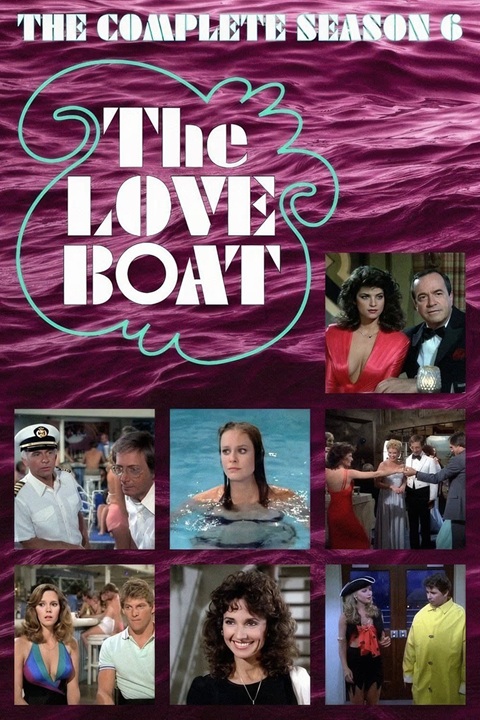
Retro Television Review: The Love Boat 6.6 “The Groupies/The Audition/Doc’s Nephew”


Welcome to Retro Television Reviews, a feature where we review some of our favorite and least favorite shows of the past!  On Wednesdays, I will be reviewing the original Love Boat, which aired on ABC from 1977 to 1986!  The series can be streamed on Paramount Plus!

This week, Doc starts to feel his age.

Episode 6.6 “The Groupies/The Audition/Doc’s Nephew”

(Dir by Don Weis, originally aired on November 6th, 1982)

When it comes to The Love Boat, there’s one question that always has to be asked.

In this episode, Julie appears to be moderately coked up.  She’s definitely not as coked up as she was in some of the earlier episodes of this season but there’s still that glint in her eye and the rapidness of his speech that leaves little doubt that there was probably some sniffing going on in the cruise director’s office.  On the How Coked Up With Julie Scale, I would give this one a solid 7 out of 10.

Of course, Julie had some competition on this cruise.  A pre-born again Willie Aames was on the cruise, playing Doc’s nephew Danny, and sporting the puffy eyes of someone who had been up all night on a date with the Devil’s Dandruff.  Danny and Doc both develop a crush on the same woman and Linda (Michelle Phillips) decides that she would prefer to spend her romantic time with a teenage Danny than with Doc, who has a medical degree and probably a lot more money than Danny.  This leads to Doc have yet another midlife crisis.  Danny, meanwhile, falls hard for Linda but, at the end of the cruise, Linda explains that she’s not looking to get tied down with a relationship.  She just wanted to bang someone who was ten years younger than her.  Okay, that’s not quite what she said but that was the general idea.  Doc learned that it was okay to be middle-aged and Danny was too high to learn much of anything.

Soap opera writer Paula Hastings (Susan Lucci!) boarded the cruise and was shocked to discover that one of the passengers was Barry Weldon (Tristan Rogers!), an actor who she turned down for a role on her soap.  Barry romanced Paula and convinced her that he was falling in love with her and then announced it was all just an act to prove that he deserved the role on her show.  Damn, Barry, that’s not nice at all!  But then it turned out that Barry actually had fallen in love with her so they decided to get married.  “Congratulations!” Julie said, her eyes shining with a manic edge.

Finally, a therapist (Richard Deacon) boarded the ship, just to discover that his patients (Jerry Van Dyke, Elaine Joyce, Morey Amsterdam, and Rose Marie) had all decided to take the cruise with him.  Why, that’s enough stress to make the idea of a little flakey relief seem appealing!  That said, the therapist and his patients were played by some old school sitcom mainstays and none of them seemed to be coked up.  They were definitely a whiskey and cigarettes crowd.

This was a pleasant cruise.  Bernie Kopell is always likable as Doc Bricker and I always enjoy his midlife crisis episodes.  The therapist storyline was pretty hokey but, on the other hand, Susan Lucci and Tristan Rogers!  That’s daytime drama royalty, babe!  I enjoyed this episode.

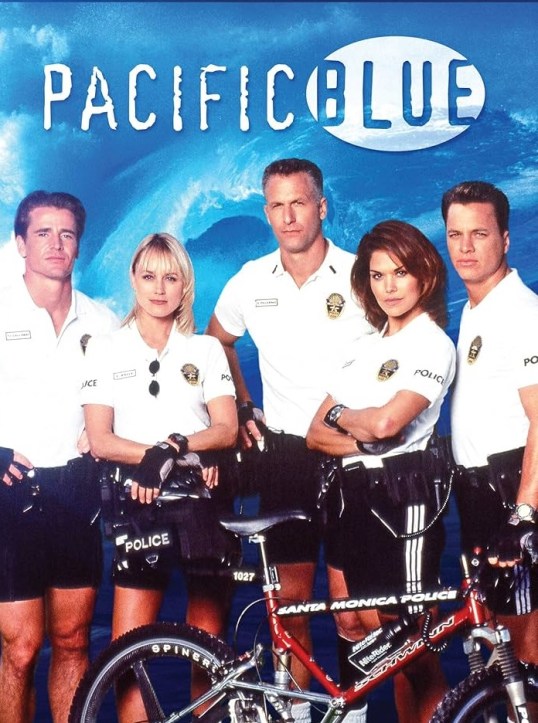
Late Night Retro Television Review: Pacific Blue 2.10 “Cranked Up”


Welcome to Late Night Retro Television Reviews, a feature where we review some of our favorite and least favorite shows of the past! On Tuesdays, I will be reviewing Pacific Blue, a cop show that aired from 1996 to 2000 on the USA Network!  It’s currently streaming everywhere, though I’m watching it on Tubi.

This week, Chris nearly gets everyone killed …. again!

Episode 2.10 “Cranked Up”

(Dir by Corey Michael Eubanks, originally aired on November 3rd, 1996)

The bike cops are taking part in an “eco-relay,” (which I guess is a bicycle race) through the mountains surrounding Santa Monica.  Upon arriving at the park, Chris and Corey spot two rednecks on ATVs.

“Those are illegal in state parks!” Chris says.

And you’re off-duty, Chris.  Seriously, Chris is the most annoying character on this show and that’s kind of amazing when you consider the competition.

Anyway, during the race, Chris spots a meth lab that is being run by those ATV-riding rednecks.  Even though she’s off-duty, doesn’t have a radio, and doesn’t have any way to bring in any backup, she still decides to take down the meth lab herself.  Instead, she gets captured by the rednecks and their girlfriend, Mary Lou (Maddie Corman).  Mary Lou lights a cigarette and Chris yells at her about it.  I’m surprised that they didn’t just give Chris back after having to spend ten minutes with her.

The other bike cops go to search for Chris.  Chris manages to escape on her own but, when she reaches the other bike cops, she explains that the meth lab could have “crank” out on the street by nightfall.  The cops — who are ALL off-duty — decide to take down the lab without bothering to call for back-up.  (Seriously, they could have just called the real police from the finish line.)  The end result is that Cory gets shot (but, luckily, doesn’t die) and all the other cops get captured, including Chris for a second time.  Luckily, Lt. Palermo shows up and rescues everyone.  They don’t win the race but they do take out a meth lab.  Of course, they could have easily won the race and then called the real cop to take out the meth lab afterwards and, as an extra bonus, Cory wouldn’t have gotten shot.

This was a Chris-centric episode, which means that the majority of the episode was divided between Chris bragging about being a badass and Chris complaining about situations that wouldn’t have happened if she wasn’t so freaking incompetent.  This would have been a fun episode CHiPs but, with Pacific Blue, it’s just another reminder that bicyclists are worthless.

One final note: Maddie Corman is the wife of former actor and director Jace Alexander who, in 2015, was arrested for possession and distribution of child pornography.  Corman did not divorce her husband but instead turned the experience of being married to pedophile into a one-woman off-Broadway play and even did a tour of all the morning shows promoting it.  I don’t blame her for her husband’s crimes and I can totally buy her claim that she didn’t know anything about what was on his computer until the police showed up but, still, to then use those crimes to promote herself …. that’s always struck me as being more than a little icky.

Retro Television Review: Fantasy Island 6.22 “Love Island/The Sisters”


Welcome to Retro Television Reviews, a feature where we review some of our favorite and least favorite shows of the past!  On Tuesdays, I will be reviewing the original Fantasy Island, which ran on ABC from 1977 to 1984.  Unfortunately, the show has been removed from most streaming sites.  Fortunately, I’ve got nearly every episode on my DVR.

Today, the sixth season of Fantasy Island comes to a close and so does Tattoo’s time on the show.

Episode 6.22 “Love Island/The Sisters”

(Dir by Philip Leacock, originally aired on May 14th, 1983)

This is it.  This is not only the finale of season 6 but it’s also the final episode to feature Tattoo as Mr. Roarke’s assistant.

Why did Herve Villechaize leave Fantasy Island after the end of the sixth season?  The story that you always hear is that Villechaize wanted more money to continue working on the show.  He felt that he deserved to be paid as much as Ricardo Montalban.  The show’s producers disagreed.  To them, Montalban was not only the star of the show but also someone who has just appeared in a hit movie, Star Trek II: The Wrath of Kahn.  They felt that they could keep the show going without Villechaize and …. well, it turns out they were totally and completely wrong about that.

I have not seen much of the seventh season, in which Villechaize was replaced by Christopher Hewett.  And, due to the vagaries of my DVR, there’s a lot of season 7 that I won’t be able to review.  What I do know is that the show went from being #39 to bring ranked #47 in the ratings after Villechaize left.  Obviously, being the 39th ranked show was nothing to brag about but it was still a helluva lot better than #47.  Villechaize left and a lot of the audience left with him.

I’ve made a lot of jokes about Roarke and Tattoo’s relationship.  Especially during the early seasons, Roarke and Tattoo sometimes did seem to be friendly rivals.  (That was when Roarke was a far more enigmatic fellow and Tattoo always seemed to be trying to figure out a way to make some extra money on Fantasy Island.)  Remember when Tattoo ran against Mr. Roarke in an Island election?  That said, Roarke and Tattoo’s relationship really was the heart of the series.  The fantasies themselves were often forgettable.  How many times can you get excited about seeing a member of the Brady Bunch as a guest star?  The thing that people really remember about Fantasy Island is the relationship between Roarke and Tattoo.  Regardless of what went on behind the scenes, Montalban and Villechazie had a good on-camera chemistry.  It was fun to watch them interact.  I always enjoyed the episodes that allowed Villechaize to reveal Tattoo’s sensitive side.  (In real life, Villechaize was an advocate for abused children, often taking the time to personally visit with children who had been rescued from abusive households.)

This is all my long-winded way of saying that they should have just agreed to pay Herve Villechaize more money.

At the very least, they should have given him a proper goodbye episode.  The sixth season ends with a rather basic episode, with no mention made of Tattoo leaving or even thinking of leaving.  Instead, we get Maureen McCormick going to a mysterious mansion to rescue her old sister (Britt Ekland) from an abusive man (played by Peter Mark Richman).  And then we get Bob Denver and Paul Kreppel as two wannabe womanizers who end up in prehistoric times, trying to romance a cavewoman while dealing with dinosaurs.  The dinosaur effects were cheap but likable but they were also the only thing that really made either of their fantasies stand-out.

And so, season 6 ends, not with a bang but a whimper.  Tattoo waves goodbye one last time.  I’m going to miss him.

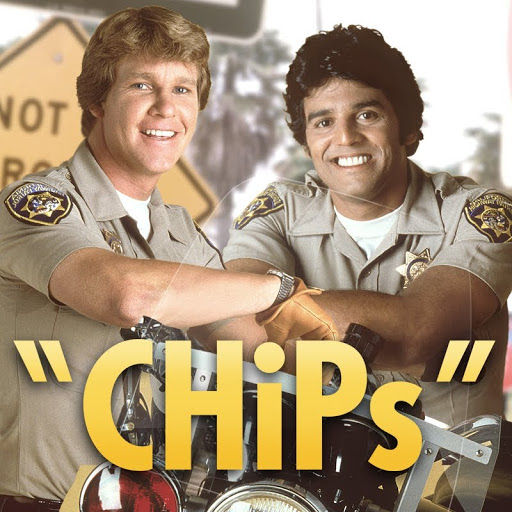
Late Night Retro Television Review: ChiPs 4.2 “Sick Leave”


Welcome to Late Night Retro Television Reviews, a feature where we review some of our favorite and least favorite shows of the past!  On Mondays, I will be reviewing CHiPs, which ran on NBC from 1977 to 1983.  The entire show is currently streaming on Prime!
This week, death comes to California.

Episode 4.2 “Sick Leave”

(Dir by John Florea, originally aired on September 28th, 1980)

Andy (Robert Viharo) is a veteran member of the highway patrol who, when he’s not chasing down bad guys, is a student at the the local college.  He wants to become an archeologist and go to Peru.  Unfortunately, Andy has a brain lesion and may not get the chance.  His behavior is erratic.  His vision is failing.  He refuses to admit that there’s anything wrong.  Can Ponch and Jon get him off the street before he gets someone killed?  Andy says that if he wants to die, he wants to go out saving someone’s life and not sitting behind a desk.  An escalating fraternity prank war makes Andy’s dream come true.  The theft of a fraternity’s prized bird sculpture leads to a high-speed chase and several overturned cars.  Andy manages to save a young woman from a crashed car but, when the car explodes, he ends up with a hunk of shrapnel sticking out of his back.  Ouch!  He dies in Baker’s arms.  If Ponch had been the one holding him, one can only assume that Andy would have been magically healed by the power of Estrada.

This is the rare episode of CHiPs in which someone dies.  In fact, I think this is only the third episode in which a traffic accident has led to a fatality.  It happened once during the pilotDuring the second season, several people were killed in a multi-car pileup.  For the most part, though, CHiPs features people who somehow manage to survive the most horrendous of crashes.  Andy is killed by a sharp hunk of metal but, the show suggests, he would have died anyway from the brain lesions.

Along with a rare death, this episode featured a lot of slo mo of doom.  At the start of the episode, Andy’s reckless driving causes Ponch to crash his motorcycle and we get to watch Erik Estrada’s stunt double fly through the air in slow motion.  Later, when Andy runs away from the exploding car, the entire scene is in slow motion.  It works.  There’s a reason why slow motion is so overused.  It’s incredibly effective.

Overall, this episode had good intentions but a somewhat shaky execution.  Robert Viharo went so overboard with his performance that you couldn’t help but wonder why Ponch and Baker were the only ones who noticed that Andy obviously wasn’t doing well.  Not even Sgt. Getraer seems to notice!  The main problem is that silly scenes of the fraternity prank war (one fraternity even rents a helicopter!) were mixed with scenes of Andy’s mind literally shutting down as we watched.  Tonally, this episode was a mishmash.  CHiPs, with its bass-heavy theme and Erik Estrada’s blinding smile, might not have been the right place to try to pull off a heart-rending drama.

Retro Television Review: Miami Vice 4.10 “Love At First Sight”


Welcome to Retro Television Reviews, a feature where we review some of our favorite and least favorite shows of the past!  On Mondays, I will be reviewing Miami Vice, which ran on NBC from 1984 to 1989.  The entire show can be purchased on Prime!

This week, as the drug epidemic rages out of control, Sonny searches for a serial killer.

Episode 4.10 “Love At First Sight”

(Dir by Don Johnson, originally aired on January 15th, 1988)

What the Hell, Miami Vice?

Seriously, remember when this show was about Crockett and Tubbs going after drug dealers while Phil Collins played in the background?  Season 4 feels like a completely different show.

This week’s episode finds Sonny going undercover (*massive eye roll as Sonny does his, “My name is Sonny Burnett” routine for the thousandth time*) and joining a video dating service.  The plan is for Sonny to bust prostitutes but instead, he finds himself as the latest client to be targeted by a serial killer.

Sonny goes on dates, never knowing if the woman he’s with is a killer.  One woman approaches him with something behind her back.  Is it a knife?  No, it’s a vibrator!  “I can see the headlines now — Undercover cop slugs woman after assault with a sex toy!” Sonny says while wearing a yellow sweater and having a nice grapefruit breakfast at his mansion.

Meanwhile, cocaine is flooding Miami, the crack epidemic is spiraling out of control, there are communist taking over Central America, Fidel Castro is still alive, there’s a lot of going on out there and apparently it’s being ignored so Sonny can be used as serial killer bait — hey Vice Squad, why don’t you let the homicide detective deal with the murders while you get back to what you’re supposed to be doing?

Caitlin, Sonny’s wife, worries.  Oh, how she worries.  Her best friend tells her that she’s knew what she was getting into when she married a cop.  If Sonny is trying to maintain his undercover identity, should Caitlin be telling people that she married a cop?  Shouldn’t she be like, “I’m married to drug dealer!  His name’s Burnett and he just looks like that guy who used to play college football?”  That Sheena Easton was not a professional actress is pretty obvious in this episode.  When she previously appeared, she was a singer playing a singer and that brought some authenticity to her performance.  Now, she’s having to pretend to be the worried wife of a cop and her acting limitations are much more easier to see.

The killer is eventually revealed to be a woman (played by David Bowie’s future wife, Iman) with multiple personalities.  When she feels threatened, she turns into her brother and uses a knife to castrate the men from the dating service.  Will Sonny survive?  Yes, he does.

Don Johnson directed this episode and usually, when a cast member directs an episode of their show, their character tends to take a background role so they can concentrate on directing.  Not our Don!  This episode is so much about Sonny that the rest of the Vice Squad is barely in it.

This episode really made me miss the subtlety of Brian Dennehy playing a televangelist or James Brown kidnapping people for aliens.  Get it together, Miami!

Late Night Retro Television Review: Degrassi High 2.9 “Extracurricular Activities”


Welcome to Late Night Retro Television Reviews, a feature where we review some of our favorite and least favorite shows of the past!  On Sunday, I will be reviewing the Canadian series, Degrassi High, which aired on CBC and PBS from 1989 to 1991!  The series can be streamed on YouTube and Tubi

This week, everyone’s either self-centered or foolish.

Episode 2.9 “Extracurricular Activities”

(Dir by John Bertram, originally aired on January 14th, 1991)

Caitlin or Lucy, it’s hard to say who is worse in this episode.

Caitlin is excited when her mother invites her to come home for a meeting with her father.  Caitlin, who has been imposing on friends ever since she discovered her father was cheating on her mother, is all excited because she thinks her parents are going to get divorced.  Instead, her parents announce that they’re staying together.  Caitlin gets angry, telling her friend Maya that she’ll just get an apartment and a job and she’ll never see her parents again.  Maya, who is in a wheelchair and actually knows a little more about hardship than Caitlin, reminds Caitlin that “they’re your parents,” which I think is Canadian for, “Good Lord, stop whining!”  Seriously, Maya — who actually has a lot that she could justifiably be upset about — never complains about anything while Caitlin — who is from a middle-class family and has a nice house and somehow only got a slap on the wrist after being arrested for trespassing and vandalizing — never shuts up about her difficult her life is.  We get it, Caitlin.  It sucks that everyone in the world isn’t as perfect and principled as you are.

(Does Caitlin ever ask anyone how they’re doing or does she just enter a room and automatically start talking about her life?  Based on the second season, the latter would appear to be true.)

Meanwhile, Lucy is dating Bronco, the student body president.  When Bronco tells Lucy that everyone’s favorite Degrassi band, the Savages, are going to be shooting a video at Degrassi, he swears Lucy to secrecy.  (Actually, Gourmet Scum was everyone’s favorite band on Degrassi High but I guess the Savages were cool too.)  So, of course, Lucy tells the creepy Farrell twins and then they make plans to break into the school on the weekend to watch the video shoot.  Joey and Snake also decide to break into the school for the video shoot.  Of course, they all get caught by Mr. Raditch and Bronco gets in a ton of trouble because Raditch assumes that Bronco let all of his friends into the school.

“Sorry,” Lucy says.

Gee, Lucy, that’ll really help!

You may have noticed this episode annoyed me.  Some of that is purely personal on my part.  With my mind slipping into summer and holiday mode, I’m missing both my mom and my dad so I wasn’t necessarily sympathetic to Caitlin’s demand that her parents split up or else never speak to her again.  As for Lucy and Bronco, Bronco should have known better than to tell Lucy.  And Lucy sure as Hell should have known better than to tell the Farrell twins.  Everyone was just too dumb this episode.

Next week, though, we have the first part of one of Degrassi High’s best-remembered episodes.  Fear not, we can put this episode behind us.

Retro Television Review: Homicide: Life On The Street 3.16 “Law & Disorder”


Welcome to Retro Television Reviews, a feature where we review some of our favorite and least favorite shows of the past!  On Sundays, I will be reviewing Homicide: Life On The Street, which aired from 1993 to 1999, on NBC!  It  can be viewed on Peacock.

This week, Munch gets away with murder.

Episode 3.16 “Law & Disorder”

(Dir by John McNaughton, originally aired on February 24th, 1995)

This week’s episode of Homicide gets off to a strange start, with a cameo from Chris Noth as Law & Order‘s Detective Mike Logan.  (Logan appeared early in the history of Law & Order, before North became known as the ill-fated Mr. Big on Sex And The City.)  Logan is transporting a prisoner to Baltimore and that prisoner is played by none other than John Waters!  Meeting Pembleton at the Amtrak station, Logan proceeds to bitch about Baltimore.  Pembleton bitches about New York.  Waters comments that Edgar Allan Poe hated New York.  When Pembleton says that Waters will be heading to prison but at least it will be a Baltimore prison, Waters says that’s why he didn’t fight extradition.  It’s a cute scene, though, as I watched it, I was struck by just how better of an actor Andre Braugher was than Chris Noth.  Noth delivered all of his line like a TV actor.  Braughter delivered his dialogue like a poet.

As for the rest of the show, we get several plotlines.  Bayliss is investigating the death of Gordon Pratt but, because Pratt shot Bolander, Felton, and Howard, none of his fellow detectives are that concerned about solving his murder.  Bayliss comes to suspect that it was a homicide detective who shot Pratt.  He asks Pembleton, Lewis, and Munch for their alibis and none of them really have a good one.  Myself, I think it’s pretty obvious that Much shot Pratt.  Munch’s hero-worship of Bolander, his anger after Pratt walked out of the station, all of it pretty much makes him the main suspect.  Lewis, who is still struggling to come to terms with Crosetti’s suicide, seems like he would be more likely to deal with his anger by drinking.  Even if he doesn’t want to admit it, Pembleton is too much of a wannabe Jesuit to do the eye for an eye thing.  Munch, though …. yeah, there’s no way Munch didn’t kill Gordon Pratt.  John Munch is a murderer.  (Okay, to be clear, the show leaves it ambiguous and never outright states that Munch was the killer but it’s still kind of obvious.)

And he gets away with it.  Bayliss tells Giardello that he’s followed-up every lead and that the Pratt case is just going to have remain open and go cold.  “Won’t help your clearance level,” Giardello shrugs.  It’s a decision that’s going to haunt Bayliss but the show suggests that Bayliss sees it as a sort of cosmic justice.  Before announcing that the case is going to go cold, Bayliss has a conversation with Pembleton and, of course, Bayliss brings up the Adena Watson case.  The Arabist got away with killing Adena Watson so Bayliss is going to let someone — Munch, let’s be honest — get away with killing Gordon Pratt.

Munch isn’t just a murder suspect in this episode.  He’s also a laughing-stock as a nude photo of him from his hippie days is the centerpiece of a photography exhibition that’s being put on by an ex-girlfriend (Valerie Perrine).  It was kind of strange, watching the episode go from Much being a suspected murderer to Munch being the comedic relief.  Still, I always enjoy it when the show remembers that Munch is basically a drug-addled survivor of the 60s.

Felton returns to the squad room, cleared for light duty.  He insists on going out to a crime scene with Giardello, leading to Felton stumbling around, making a fool of himself, and then throwing up afterwards.  Giardello informs Felton that he’s not a good detective in his current state but then again, Giardello adds, Felton has never been a good detective.  Ouch!  That’s harsh.  Of course, it’s also true.  As I’ve said before, I would not want sweaty, racist, borderline illiterate Beau Felton investigating the murder of anyone close to me.

Finally, Pembleton and Lewis investigated an apparently random shooting.  Pembleton thought the gunshot came from the projects.  Lewis insisted that the gunshot came from the white side of the neighborhood.  It turned out Lewis was right but Pembleton was unapologetic, saying he would investigate the case the exact same way if he had to do it all over again.  Watching this storyline, I found myself thinking about how black characters on television often feel interchangeable and they rarely have much of a personality beyond being a white person’s idea of what their black best friend might be like.  Homicide featured three prominent black characters — Lewis, Pembleton, and Giardello — and all three of them are portrayed as being unique individuals with their own different ways of viewing the world, the job, and each other.  Even today, when every television show is desperate to make sure everyone knows how “committed to diversity” they are, it’s rare to see a network show like Homicide, where black characters are portrayed as being individuals as opposed to just stereotypes.  This is something for which Homicide definitely deserves a bit more credit.

This was a good episode.  It appears the murder of Gordon Pratt will never be solved.  Of course, we all know Much did it.