Guilty Pleasure No. 92: Brewster’s Millions (dir. by Walter Hill)


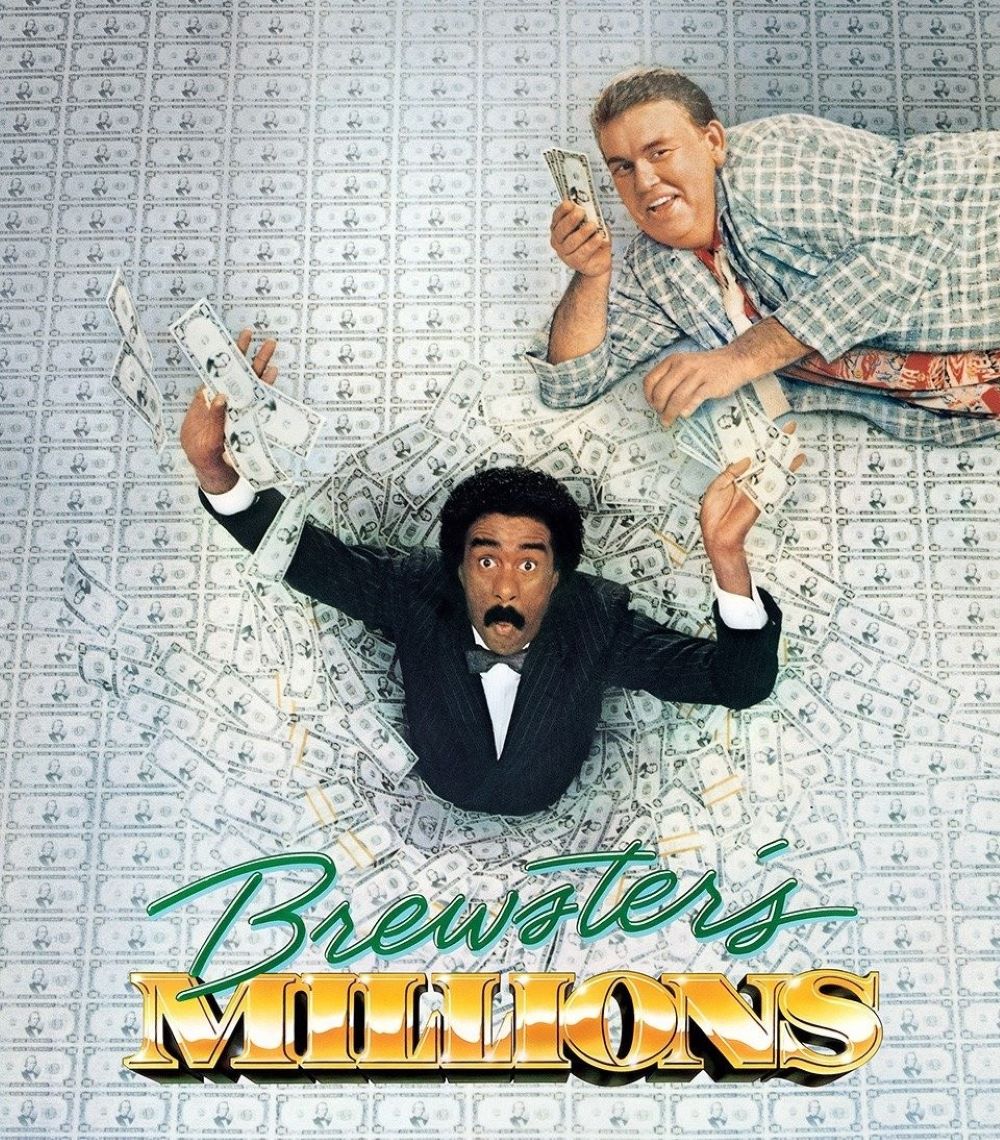
Walter Hill’s Brewster’s Millions (1985) isn’t a perfect movie by any stretch, but it’s the kind of film that sneaks up on you. It may not be sharp enough to qualify as great satire or consistent enough to hit every comedic note, but it has an undeniable charm that pulls you in regardless. It’s loud, uneven, and often ridiculous, yet few comedies from the 1980s are as weirdly entertaining when they’re firing on all cylinders. For many movie fans, it’s that quintessential “guilty pleasure”—a film you know has problems, but that somehow feels impossible to turn off once it starts. And in many ways, that’s exactly where Brewster’s Millions finds its lasting appeal.

The setup alone is too fun to resist. Richard Pryor stars as Montgomery Brewster, a minor league baseball pitcher who unexpectedly inherits the opportunity of a lifetime—to claim a $300 million fortune from a distant relative. The catch? Before he can get it, he has to spend $30 million in 30 days under a bizarre set of conditions that make financial ruin easier said than done. He can’t give the money away, can’t destroy it, can’t buy assets or investments that retain value, and can’t tell anyone why he’s doing it. Fail, and he gets nothing. Succeed, and he becomes one of the richest men alive. It’s the sort of gleefully absurd premise that could only have come from Hollywood in the 1980s, and it’s immediately clear that the film wants audiences to sit back, grab some popcorn, and watch Pryor tear through cash in increasingly funny and desperate ways.

Richard Pryor is, without doubt, the heart and soul of the movie. He imbues Montgomery Brewster with equal parts manic energy and human frustration, giving the character a real emotional arc beneath all the comic spectacle. Pryor’s talent for blending humor with exasperation makes Brewster’s predicament believable, even when it’s insane. Watching him scramble to lose money while the world keeps rewarding him is strangely satisfying. Pryor understood how to play ordinary men caught in extraordinary circumstances, and that quality grounds the film when it could have easily spiraled into total silliness. In scenes where he loses his patience with accountants, schemes wild spending sprees, or watches his good intentions backfire, Pryor’s comic timing keeps the chaos enjoyable.

John Candy adds another layer of charm as Brewster’s best friend and teammate, Spike Nolan. Candy brings warmth, loyalty, and that unmistakable good-heartedness that made him one of the decade’s most beloved comedic actors. The chemistry between Pryor and Candy keeps the film buoyant even through its weaker stretches. Their friendship defines the film’s tone—it’s loose, goofy, and full of bro-ish camaraderie. Without Candy’s infectious energy, the movie’s more hollow comedic beats might have hit the floor with a thud. Together, they create a dynamic that feels real, even inside a premise that’s totally absurd.

As a director, Walter Hill feels like an odd fit for this kind of broad comedy, but that’s part of what makes Brewster’s Millions interesting. Hill, better known for tough, kinetic action films like The Warriors and 48 Hrs., approaches this farce with a surprising amount of structure and visual precision. The film looks slicker and sharper than most comedies of its kind, which gives the excess on-screen an unintentionally epic flair. Hill’s direction keeps the story moving, and though he’s not naturally a comedic filmmaker, his grounded style adds a peculiar edge to all the craziness. It’s chaos with discipline—an aesthetic that somehow works in the movie’s favor.

Still, Brewster’s Millions can’t quite escape its shortcomings. The pacing is uneven, especially in the middle, where the film loses some steam as Brewster cycles through increasingly repetitive spending gimmicks. The story flirts with satire but rarely commits, brushing up against deeper commentary on wealth, politics, and capitalism before retreating to the comfort of broad comedy. The “Vote None of the Above” subplot, where Brewster’s money-wasting political campaign taps into voter cynicism, is one of the smartest parts of the film—but it’s introduced and resolved too quickly to leave a mark. And while the movie is full of lively energy, not every gag lands; a few supporting performances veer into caricature, and some jokes feel very much of their time.

Yet these flaws are partly what make Brewster’s Millions such a delightful guilty pleasure. It’s the cinematic equivalent of junk food—high on calories, low on nutritional value, but deeply enjoyable all the same. Pryor’s constant exasperation, the sheer absurdity of trying to “waste” money legally, and the exaggerated set pieces (like the overblown parties or his failed attempts to lose at gambling) make for irresistible entertainment. Even when the humor dips into predictable territory, the concept keeps pulling you back in. There’s a giddy satisfaction in watching Brewster try—and fail—to lose money, especially because the universe just won’t let him.

The romance subplot with Lonette McKee’s character, Angela Drake, adds just enough heart to balance the absurdity. McKee gives a grounded, intelligent performance that prevents the love story from feeling tacked on, even if it never fully takes center stage. Her presence keeps Brewster tethered to some kind of reality, and the moral through-line—learning that not everything valuable can be bought—lands gently rather than preachily. It’s not profound, but it fits the breezy tone perfectly.

As a comedy of excess, Brewster’s Millions is very much a product of its time. The slick suits, the gaudy parties, the blind faith in wealth, and the Reagan-era optimism about money’s moral neutrality all ooze from every frame. That time-capsule quality is part of its modern appeal. Watching it today, you can’t help but smile at how on-the-nose it feels—a movie from the “greed is good” decade that accidentally ends up mocking the very mindset it sprang from. It’s self-aware only in flashes, but those flashes are enough to make you recognize the movie’s satirical edge hiding beneath its loud surface.

In the end, that’s what makes Brewster’s Millions endure as a lovable guilty pleasure. It has flaws you can’t ignore—uneven pacing, scattershot tone, underdeveloped ideas—but none of them outweigh its charm. Pryor’s comic genius makes even the weakest joke land better than it should. Candy’s warmth keeps the film light. And Hill’s straightforward direction infuses the lunacy with just enough realism to make it believable. The result is a movie that’s too silly to take seriously but too fun to dismiss. You watch it, laugh at its audacity, shake your head at the logic gaps, and yet somehow come away smiling.

Brewster’s Millions may not be a comedy classic, but it’s easy to see why people keep revisiting it. It’s comfort food cinema—lighthearted, clumsy, and endlessly watchable. And like all the best guilty pleasures, it doesn’t need to be perfect to make you happy. Sometimes, seeing Richard Pryor outsmart the meaning of money for two hours is more than enough.

Previous Guilty Pleasures

  1. Half-Baked
  2. Save The Last Dance
  3. Every Rose Has Its Thorns
  4. The Jeremy Kyle Show
  5. Invasion USA
  6. The Golden Child
  7. Final Destination 2
  8. Paparazzi
  9. The Principal
  10. The Substitute
  11. Terror In The Family
  12. Pandorum
  13. Lambada
  14. Fear
  15. Cocktail
  16. Keep Off The Grass
  17. Girls, Girls, Girls
  18. Class
  19. Tart
  20. King Kong vs. Godzilla
  21. Hawk the Slayer
  22. Battle Beyond the Stars
  23. Meridian
  24. Walk of Shame
  25. From Justin To Kelly
  26. Project Greenlight
  27. Sex Decoy: Love Stings
  28. Swimfan
  29. On the Line
  30. Wolfen
  31. Hail Caesar!
  32. It’s So Cold In The D
  33. In the Mix
  34. Healed By Grace
  35. Valley of the Dolls
  36. The Legend of Billie Jean
  37. Death Wish
  38. Shipping Wars
  39. Ghost Whisperer
  40. Parking Wars
  41. The Dead Are After Me
  42. Harper’s Island
  43. The Resurrection of Gavin Stone
  44. Paranormal State
  45. Utopia
  46. Bar Rescue
  47. The Powers of Matthew Star
  48. Spiker
  49. Heavenly Bodies
  50. Maid in Manhattan
  51. Rage and Honor
  52. Saved By The Bell 3. 21 “No Hope With Dope”
  53. Happy Gilmore
  54. Solarbabies
  55. The Dawn of Correction
  56. Once You Understand
  57. The Voyeurs 
  58. Robot Jox
  59. Teen Wolf
  60. The Running Man
  61. Double Dragon
  62. Backtrack
  63. Julie and Jack
  64. Karate Warrior
  65. Invaders From Mars
  66. Cloverfield
  67. Aerobicide 
  68. Blood Harvest
  69. Shocking Dark
  70. Face The Truth
  71. Submerged
  72. The Canyons
  73. Days of Thunder
  74. Van Helsing
  75. The Night Comes for Us
  76. Code of Silence
  77. Captain Ron
  78. Armageddon
  79. Kate’s Secret
  80. Point Break
  81. The Replacements
  82. The Shadow
  83. Meteor
  84. Last Action Hero
  85. Attack of the Killer Tomatoes
  86. The Horror at 37,000 Feet
  87. The ‘Burbs
  88. Lifeforce
  89. Highschool of the Dead
  90. Ice Station Zebra
  91. No One Lives

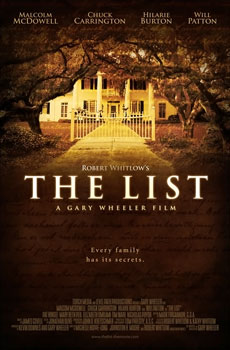
October Positivity: The List (dir by Gary Wheeler)


2007’s The List opens during the dying days of the American Civil War.

A group of wealthy plantation owners form a secret society.  They pool together their fortunes and they each sign onto a list.  Over the years, whenever a member of the Society passes away, their eldest male descendant replaces them on the List and also has access to the fortune that that the Society secretly holds.

In 2007, directionless attorney Renny Jacobsen (Chuck Carrington) is shocked when his father dies and leaves him next to no money.  As Renny tells us over and over again, he really could have used some of his father’s fortune.  However, his father does leave him a key the leads to Renny uncovering a tape that explains everything that he needs to know about the Society.  All Renny has to do is sign his name to the List.

The Society is now run by Desmond Larochette (Malcolm McDowell) and we know that he’s evil because his name is Desmond Larochette and he’s played by Malcolm McDowell.  Larochette seems to be more than happy to allow Renny to join the Society but he’s not quite as happy that another member of the group died and only left behind a female heir, Jo Johnston (Hilarie Burton).  The members of the Society are faced with quite a quandary.  Should they allow a woman to join their society?  And, if not, what should they do now that she know about the Society’s existence?

When Jo goes to the mansion for the Society’s meeting, she spots a portrait of a gray-haired gentleman and asks who he is.  Gus Eicholtz (Pat Hingle) explains that the painting is of John C. Calhoun, who served as Vice President under Andrew Jackson.  “He looks angry,” Jo says and honestly, that was a piece of historical and artistic criticism that was so simple-minded that Jo really should have been disqualified from joining the Society at that very moment.

First off, how are you going to join a Southern secret society if you don’t know how John C. Calhoun is?  Secondly, the portrait in question is actually a pretty famous one.  George Alexander Haley painted it while Calhoun was Secretary of State.  Even if you don’t know who John C. Calhoun is, chances are that you’ve seen the painting.  Finally, there’s the claim that “He looks angry.”  The painting was completed in 1845.  Everyone looked angry in 1840s!  Even the noted bon vivant Henry Clay looked angry in his 1848 State Department portrait.  (And Clay actually had his picture taken for his official portrait.  Imagine how furious he would look if someone had painted him?)

Anyway, Renny joins the society but Jo does not,  But then Renny discovers that it’s not as easy to get his hands on the money as he thought and he spends the entire movie complaining about it.  That’s pretty much it.  There is some suggestion that Desmond might have demonic powers, but it’s not really explored.  Another heir dies mysteriously and it seems like Jo is being targeted as well.  Again, it’s not really clear why.  In the end, Renny puts God before the money but it kind of comes out of nowhere.  It’s a muddled story and, by the end of the film, it’s still a struggle to figure out what it all meant.  At the very least, Malcolm McDowell seemed to be having fun, playing an evil character and speaking in an almost indecipherable accent.

Days of Paranoia: The Gauntlet (dir by Clint Eastwood)


In 1977’s The Gauntlet, Dirty Harry is sent….

Oh wait, sorry.  This is not a Dirty Harry movie.  It sure feels like a Dirty Harry movie but it’s not.  And really, the character that Clint Eastwood plays in this movie, Phoenix Detective Ben Shockley, is different from Dirty Harry Callahan.  Shockley is a cynical (and single) detective who does things his own way.  He’s got that in common with Callahan.  But Shockley is also an alcoholic and that’s something that Harry would never allow himself to become.  Harry may be unpredictable but he’s disciplined and he’s always in control.  The other big difference is that Shockley has a little more faith in his fellow cops than Harry does.  As a result, Shockley gets set-up in a trap that Harry would have seen coming from miles away.

Shockley is sent to Las Vegas to pick up a prostitute named Augustina and bring her back to Arizona.  Augustina — who goes by Gus — is played by Sondra Locke.  This was the second film that Eastwood and Locke made together.  As a result of preparing for today’s Eastwood marathon, I watched all of the Eastwood/Locke films.  The Gauntlet features Locke’s best performance opposite Eastwood.  (She was good in The Outlaw Josey Wales but her role was also fairly small and simple.)  As opposed to her later films, Locke actually has a good deal of romantic chemistry when Eastwood in this film and, even more importantly, she actually seems invested in the role.  She plays Gus as being a feisty asskicker.  It doesn’t matter that she’s in jail or that she’s handcuffed or that she’s been escorted to another state.  Gus isn’t going to let anyone tell her what to do.   It’s impossible not to root for both her and Shockley in this film.

Of course, it turns out that Shockley has been set up.  Phoenix Police Commissioner Blakelock (William Prince) and District Attorney John Feyderspiel (Michael Cavanaugh) both have their own reasons for not wanting Gus to make it to Phoenix and they’re both willing to sacrifice Shockley to get to her.  They assumed that Shockley, being an alcoholic, would be easy to defeat.  Did they not consider that, alcoholic or not, Ben Shockley is played by Clint Eastwood?  Every attempt that is made to stop him just makes Shockley all the more determined to get Gus to Phoenix.  The film becomes a particularly violent take on It Happened One Night, going as far as to have Gus and Shockley take over a bus on their way to Phoenix.

Ah, the bus.  The Gauntlet climaxes with a scene in which literally thousands of bullets are fired into a bus that Shockley and Gus are driving through Phoenix.  It’s an exciting sequence, one that’s so gloriously over-the-top that you can’t help but feel that Eastwood was poking fun at his own persona.  At the same time, the sequence also works as a commentary on the blind obedience necessary for an authoritarian to come to power.  The cops who have lined up to shoot at the bus open fire when they’re ordered to, without asking why a bus has to be riddled with bullets.  Eastwood manages to mix a healthy dose of paranoia with his satire.

Though the plot (much like the bus) is riddled with holes, The Gauntlet‘s an entertaining film.  Between Eastwood and Locke’s chemistry and the explosive action sequences, The Gauntlet is a film you can’t look away from.

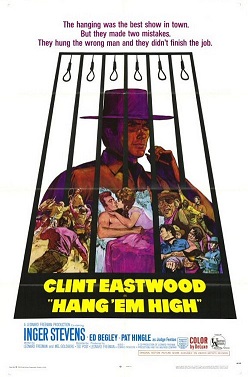
Hang ‘Em High (1968, directed by Ted Post)


1889.  The Oklahoma Territory.  A former lawman-turned-cattleman named Jed Cooper (Clint Eastwood) is falsely accused of working with a cattle thief.  A group of men, led by Captain Wilson (Ed Begley) lynch him and leave Cooper hanging at the end of a rope.  Marshal Dave Bliss (Ben Johnson) saves Cooper, cutting him down and then taking him to the courthouse of Judge Adam Fenton (Pat Hingle).  Fenton, a notorious hanging judge, is the law in the Oklahoma territory.  Fenton makes Cooper a marshal, on the condition that he not seek violent revenge on those who lynched him but that he instead bring them to trial.  Cooper agrees.

An American attempt to capture the style of the Italian spaghetti westerns that made Eastwood an international star, HangEm High gives Eastwood a chance to play a character who is not quite as cynical and certainly not as indestructible as The Man With No Name.  Cooper starts the film nearly getting lynched and later, he’s shot and is slowly nursed back to health by a widow (Inger Stevens).  Cooper is not a mythical figure like The Man With No Name.  He’s an ordinary man who gets a lesson in frontier justice as he discovers that, until Oklahoma becomes a state, Judge Fenton feels that he has no choice but to hang nearly every man convicted of a crime.  (Judge Fenton was based on the real-life hanging judge, Isaac Parker.)  Over the course of this episodic film, Cooper becomes disgusted with frontier justice.

HangEm High is a little on the long side but it’s still a good revisionist western, featuring a fine leading performance from Clint Eastwood and an excellent supporting turn from Pat Hingle.  The film’s episodic structure allows for Eastwood to interact with a motley crew of memorable character actors, including Bruce Dern, Dennis Hopper, L.Q. Jones, Alan Hale (yes, the Skipper), and Bob Steele.  HangEm High has a rough-hewn authenticity to it, with every scene in Fenton’s courtroom featuring the sound of the gallows in the background, a reminder that justice in the west was often not tempered with mercy.

Historically, Hang ‘Em High is important as both the first film to be produced by Eastwood’s production company, Malpaso, and also the first to feature Eastwood acting opposite his soon-to-be frequent co-star, Pat Hingle.  Ted Post would go on to direct Magnum Force.

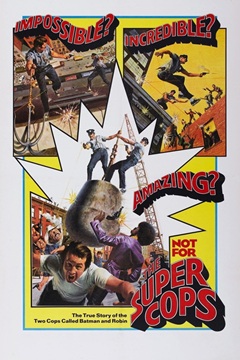
The Super Cops (1974, directed by Gordon Parks)


David Greenberg (Ron Liebman) and Robert Hantz (David Selby) are two tough and smart New York City cops who become detectives and play by their own rules.  They make arrests off-duty.  They drive their lieutenants crazy.  They bust drug dealers and prostitutes and single-handedly clean up their police precinct.  They’re the Super Cops and they’re even nicknamed Batman and Robin.  When they throw punches, a graphic “POW” appears on screen with a sound effect.

There’s an old saying about how, when the truth is different from the legend, always print the legend.  That’s certainly the case here.  The real-life David Greenberg went into politics and ended up doing time for mail fraud, insurance fraud, and obstruction of justice.  Robert Hantz was busted for possessing marijuana while he was on vacation in the Bahamas.  The arrest led to a demotion and Hantz quit the force as a result.  The film hints at Greenberg and Hantz’s involvement with the Knapp Commission, which investigated police corruption in the 70s.  (Lisa wrote about it when she reviewed Serpico.)  But the film does not mention that the Knapp Commission suspected that Greenberg and Hantz murdered two drug dealers.

You don’t get any of that with The Super Cops, which tries to mix the grittiness of films like The French Connection, The Seven-Ups, and Serpico with moments of cartoonish comedy and it really doesn’t work.  (Years after The Super Cops was released, Hill Street Blues proved that gritty drama and dark comedy could be mixed but it has to be done just right.)  Ron Liebman overacts while David Selby doesn’t seem to be acting at all.  (Liebman and Selby are both good actors but you wouldn’t know that from this movie.  For Liebman, I suggest checking out his performance in Night Falls On Manhattan.  For Selby, I recommend an overlooked dark comedy called Headless Body in Topless Bar.)  It’s hard to believe that Gordon Parks went from doing Shaft to doing this.  Shaft would have tossed the Super Cops through a window.  Popeye Doyle would have given him an assist.

There is one good thing to note about The Super Cops.  Edgar Wright is a fan of this film and it partially inspired the far superior Hot Fuzz.


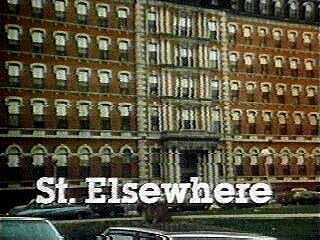
Retro Television Review: St. Elsewhere 1.17 “Brothers”


Welcome to Retro Television Reviews, a feature where we review some of our favorite and least favorite shows of the past! On Fridays, I will be reviewing St. Elsewhere, a medical show which ran on NBC from 1982 to 1988.  The show can be found on Hulu and, for purchase, on Prime!

Another day, another death in Boston.

Episode 1.17 “Brothers”

(Dir by Mark Tinker, originally aired on March 15th, 1983)

I swear, St. Eligius must have the worst security guards in Boston.

In this episode, Walter Schaefer (Pat Hingle), a blue collar fisherman, manages to smuggle a freaking hunting rifle into the hospital so that he can use it to kill his brother, Arthur (Richard Hamilton).  Arthur was dying of cancer and didn’t have much time left.  Walter had previously begged Dr. Westphall to cease giving Arthur chemotherapy and to just let his misery come to an end.  Westphall declined to do so so Walter killed his brother.  The episode was designed to make the viewer feel that Walter had no choice but …. eh, I don’t know.  I’m not a fan of euthanasia and I find the enthusiasm for it in television and film to be a bit icky.  This episode’s treatment of the issue was about as heavy-handed as they come.  And seriously, couldn’t Walter have just smothered Arthur with a pillow or something?  Shooting a man is dramatic but now I’m wondering about who had to clean up the room afterwards.  Plus. Arthur was hooked up to a bunch of medical equipment that was probably ruined as well.

(I don’t know, it’s hard for me to judge this storyline.  My Dad died in hospice care and I had to sign a DNR order before he could start it.  The aggressiveness that those people showed in demanding that I sign the order still haunts me.)

On a lighter note, Ehrlich managed to get another date with Shirley, despite the fact that their previous date ended with Ehrlich drunk and making a fool of himself.  Fiscus recommended a nice romantic restaurant.  Of course, when Ehrlich couldn’t make the date due to his work as a doctor, Fiscus took Shirley to the restaurant.  The end result is that Shirley has a crush on Fiscus and Fiscus needs to find a new place to stay because Ehrlich responded by kicking him out of the apartment.

Speaking of relationships, Dr. White is such a sleaze!  He’s separated from his wife so he’s now involved with a nurse.  While talking to that nurse on the phone, White was flirting with another nurse.  But then, Dr. White happened to see his wife out with another man and decided he had the right to get all jealous.  Ugh!  What a jerk!

Finally, the episode ended with Nurse Rosenthal on the operating table, about to undergo a mastectomy.  This was the subplot that actually got to me, not all of the stuff about Walter murdering his brother.  Christina Pickles, who has been such a steady presence during the first season, gave a wonderful performance as Rosenthal tried to keep it together as the day of her surgery approached.  This storyline brought tears to my eyes and that’s really all I have to say about it.

This was an uneven episode.  The stuff with the brothers didn’t do much for me but, when the episode just focused on the doctors and the nurses, it shined.

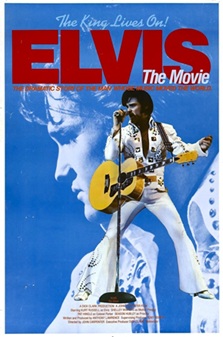
Elvis (1979, directed by John Carpenter)


Elvis, not to be confused with the later film starring Austin Butler, is a historically-interesting film for a number of reasons.

Made for television, it was the first of many biopics to be made about the King of Rock and Roll.  Seeing as how it went into production just a year after Elvis’s death and that its script was vetted and approved by Priscilla Presley herself, it’s not surprising that Elvis doesn’t really delve into the darker aspects of his life.  Elvis shoots a television, gets frustrated with his bad movies, and wonders who he can trust but we don’t see him get fat nor do we see him popping pills.  The movie ends with Elvis making his comeback in 1969, allowing a happy ending for the title character.

The film was directed by John Carpenter.  It was his first film to be released after the monster success of Halloween, though Carpenter actually started work on Elvis before Halloween was released.  Though the film’s television origins means there aren’t many examples of Carpenter’s signature style in Elvis, Carpenter does a good job recreating Elvis’s performances and, most importantly, he comes up with a film that holds your interest for three hours.

Finally, the role of Elvis is played by Kurt Russell, who was at the time still struggling to prove himself as being something more than just a Disney star.  Russell, who made his film debut kicking Elvis in the shins, throws himself into playing the role and captures the look, the swagger, and the voice of Elvis without ever descending into caricature.  His singing voice is dubbed for the performances but Russell is still convincing as the King.  It takes skill to wear that white jumpsuit without looking like you’re wearing a bad Halloween costume.  While this film showed that Russell was capable of more than just Disney films, it even more importantly launched his friendship with John Carpenter.  Escape From New York, The Thing, and Big Trouble In Little China all began with Elvis.

The movie doesn’t really tell us anything that we didn’t already know about Elvis but its entertaining and it has a big, colorful cast that include Pat Hingle as Tom Parker, Shelley Winters as Elvis’s mother, and Bing Russell (Kurt’s father) as Elvis’s father.  Priscilla is played by the beautiful Season Hubley, who married Kurt Russell shortly after filming.  (They divorced in 1983.)  Joe Mantegna, Ed Begley Jr., Ellen Travolta, and Dennis Christopher all appear in small roles and do their part to bring Elvis’s world to life.  Elvis is a fitting tribute to the King of Rock and Roll, one that gave Elvis a happy ending and started a great collaboration between a director and his star.

Going Berserk (1983, directed by David Steinberg)


John Bourgignon (John Candy) is a man of many talents.  He’s a limo driver.  He’s a drummer.  He is an occasional actor, having starred in Kung Fu U. for his friend, director Sal DiPasquale (Eugene Levy).  John is also improbably engaged to Nancy Reece (Alley Mills), the daughter of Congressman and presidential candidate Ed Reese (Pat Hingle).  As the wedding approaches, John deals with a number of things.  He chauffeurs around a group of Spanish Beatles impersonators.  He finds himself handcuffed to a fugitive (Ernie Hudson) who dies at an inopportune time.  A cult leader (Richard Libertini) attempts to brainwash John into assassinating Ed, though the process might just turn John into a “schmuck.”

Going Berserk was John Candy’s first lead feature role and it was obviously designed to play to Candy’s popularity as one of the stars of SCTVGoing Berserk doesn’t gave a plot as much as it’s a collection of skits, some of which work better than others but all of which are held together by Candy’s comedic timing and amiable presence.  Going Berserk is disjointed and wildly uneven but it’s also frequently funny and that is a testament to Candy’s talent.  Even an overlong parody of The Blue Lagoon raises a smile because John Candy is just so committed to playing out the joke.

Going Berserk also features several familiar faces, like Richard Libertini, Pat Hingle, Ernie Hudson, Dixie Carter, Kurtwood Smith, Paul Dooley, and two of Candy’s SCTV co-stars, Eugene Levy and Joe Flaherty.  I especially liked Levy’s performance as the sleazy director who blackmails his way into filming the wedding.  Going Berserk was frequently stupid but, more often than not, it made me laugh.

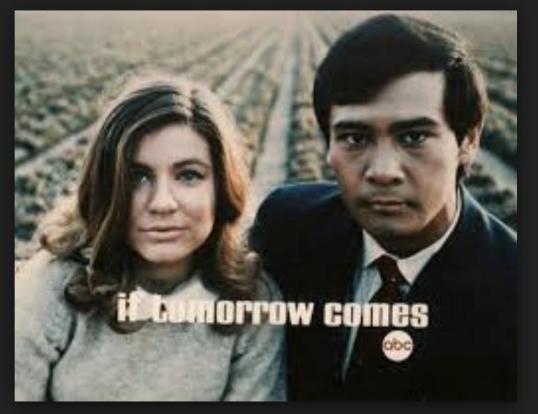
Retro Television Review: If Tomorrow Comes (dir by George McCowan)


Welcome to Retro Television Reviews, a feature where we review some of our favorite and least favorite shows of the past!  On Sundays, I will be reviewing the made-for-television movies that used to be a primetime mainstay.  Today’s film is 1971’s If Tomorrow Comes!  It  can be viewed on YouTube.

If Tomorrow Comes tells the story of a forbidden marriage.

In 1941, Eileen Phillips (Patty Duke) meets David Tayanaka (Frank Liu) and the two of them quickly fall in love.  David asks Eileen to marry him and Eileen says yes, even though they both know that it won’t be easy.  Eileen’s father (James Whitmore) and her brother, Harlan (Michael McGreevey), are both prejudiced against the Japanese and David’s parents (played by Mako and Buelah Quo) would both rather than David marry someone of Japanese descent.  Eileen and David decide to elope first and tell their parents afterwards.

On December 7th, Eileen sneaks out of the house and joins David at his church.  They are married by Father Miller (John McLiam), who agrees to keep their secret.  Eileen and David then drive over to the church attended by Eileen’s family but no sooner have they arrived than the local sheriff (Pat Hingle) pulls up and announces that the Japanese have bombed Pearl Harbor.  The sheriff instructs everyone to return home and to listen to their radios.  David slips his wedding ring off his finger.  Telling the parents will have to wait.

Eileen’s father and brother are convinced that every Japanese person in town, even though the majority of them were born in America and have never even been to Japan, is a subversive.  David and his family are harassed by government agents like the oily Coslow (Bert Remsen).  One morning, they discover that all of their farm animals have been killed and someone has written “REMEMBER PEARL HARBOR” with their blood.  When Franklin D. Roosevelt orders the internment of the Japanese, David’s father is among those taken away.  When Harlan continues to harass David, it eventually leads to not just one but two tragedies.

If Tomorrow Comes is a real tear-jerker, one that features a great performance from Frank Liu and a good one from Patty Duke.  Though it may seem a tad implausible that David and Eileen would get married just an hour before Japan attacked Pearl Harbor (and considering the attack occurred on a Sunday morning, I’m a little curious how they found a priest who was free to secretly marry them), the film does a good job of showing how fear can lead to otherwise good people doing terrible things.  One of the film’s strongest moments comes as David’s father is taken away to an internment camp and the Japanese prisoners try to prove their loyalty by spontaneously singing America, The Beautiful.  It’s a moment that reminds us of the danger of letting our fear destroy our humanity.

It’s a film that still feels relevant today, with its portrayal of heavy-handed government agents searching for subversives and ignoring the Constitution in order to save it.  When David visited his father at the internment camp, I thought about how, at the heigh of the COVID pandemic, it was not unusual to see people demanding that the unmasked and the unvaccinated by interned away from the rest of the world.  If Tomorrow Comes is a love story and a melodrama and tear-jerker but, above all else, it’s a warning about the destructive power of fear and prejudice.

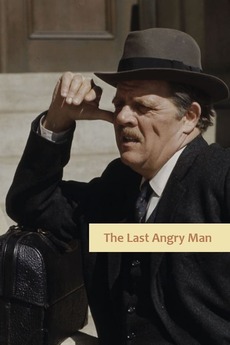
Retro Television Reviews: The Last Angry Man (dir by Jerrold Freedman)


Welcome to Retro Television Reviews, a feature where we review some of our favorite and least favorite shows of the past!  On Sundays, I will be reviewing the made-for-television movies that used to be a primetime mainstay.  Today’s film is 1974’s The Last Angry Man!  It  can be viewed on YouTube.

During the Great Depression, Dr. Sam Abelman (Pat Hingle) is a doctor who works in the slums of Brooklyn.  Dr. Abelman can be gruff.  Dr. Abelman can be crotchety.  Dr. Abelman can be, as the title suggests, a little bit angry.  He can’t help but get annoyed at how difficult it is to get his patients to pay him.  He gets easily annoyed with red tape and bureaucracy.  Dr. Abelman is an angry man.  In his eyes, he’s the last angry man.

But that doesn’t mean that Dr. Abelman doesn’t care about his patients or the community in which he lives.  Underneath his gruff exterior, Dr. Abelman is truly a man who wants to make the world a better place.  Sam Abelman is especially angry at the doctors who have abandoned the neighborhood that once supported them and who now work at hospitals that have little room for the poor.

The film focuses on Dr. Abelman’s attempts to help Frankie Parelli (Michael Margotta), a troubled teenager who has a reputation for being a bully and a petty criminal.  When Frankie starts to suffer from frequent seizures, Dr. Abelman comes to be convinced that Frankie is suffering from a brain tumor.  Dr. Abelman wants to get Frankie seen by a specialist and a surgeon but it’s difficult because of Frankie’s own bad reputation and also the fact that Frankie’s family doesn’t have much money.  Dr. Abelman uses a combination of shaming and outrage to finally get Frankie examined.  But, when it become apparent that Frankie is going to need an operation, is Dr. Abelman going to be able to get him under the knife?

The Last Angry Man was loosely based on a novel by Gerald Green.  The novel was previously adapted into a 1959 film, which starred the great actor Paul Muni in his final role.  (Muni received an Oscar nomination for his performance.)  If the novel and the 1959 film emphasized the grittiness of the neighborhood in which Dr. Abelman worked, the 1974 made-for-TV version takes place in a remarkably clean version of Brooklyn.  It’s a very pleasant slum.  There’s no trash to be seen.  The apartment buildings and the streets have the crisp look that only comes from shooting on a studio backlot.  Everyone in the neighborhood is remarkably friendly.  Even Frankie is a rather mild-mannered delinquent.  Dr. Abelman may be angry but everyone’s so nice that it sometimes seems like he’s going a little bit overboard.

The Last Angry Man was clearly meant to be a pilot for a television series and, as such, the movie’s action doesn’t really seem to build up to any sort of grand climax.  Instead, the film is more about introducing Dr. Abelman and all the quirky people in the neighborhood.  Pat Hingle was a good actor but, as Dr. Abelman, he’s all bluster with little depth.  It’s hard not to feel that both the film and the potential show would have been well-served by having Pat Hingle and Sorrell Brooke (who plays Abelman’s best friend, Dr. Vogel) switch roles.  When Sorrell Brooke gets annoyed and angry in this film, you have no doubt that the feeling is genuine.

Unfortunately, The Last Angry Man just isn’t angry enough.