Tag Archives: movie
Cleaning Out The DVR #23: The Adventures of Robin Hood (dir by Michael Curtiz)
(For those following at home, Lisa is attempting to clean out her DVR by watching and reviewing 38 films by this Friday. Will she make it? Keep following the site to find out!)
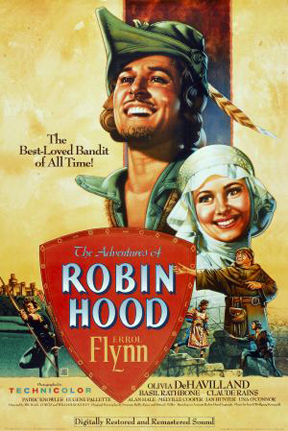
Flamboyant. Athletic. Joyous. Determined. Handsome. Outspoken. Bigger than life. Revolutionary. Anarchist. Sexy. Libertarian. Is there any doubt why Errol Flynn remains the definitive Robin Hood?
And. for that matter, is there any doubt why the 1938 film The Adventures of Robin Hood remains not only the definitive Robin Hood film but also one of the most influential action films in history?
The Adventures of Robin Hood tells the story that we’re all familiar with. The King of England, Richard The Lionhearted (Ian Hunter), is captured while returning from the Crusades. His brother, King John (Claude Rains, in full autocratic villain mode), usurps the throne while Richard is gone and immediately raises taxes. He claims that he’s only doing this to raise the money to set Richard free. Of course, the real reason is that John is a greedy tyrant.
The only nobleman with the courage to openly oppose John is Sir Robin of Locksely (Errol Flynn). Sir Robin protects his fellow citizens from John’s main henchman, Sir Guy of Gisbourne (Basil Rathbone, also in full autocratic villain mode). In fact, Robin is so brave that, on multiple occasions, he even enters Sir Guy’s castle so that he can specifically tell King John and Sir Guy that he has no use for their laws. This, of course, always leads to Robin having to make a dramatic escape while arrows flies and swords are unsheathed all around.
And through it all, Robin Hood keeps smiling and laughing. He’s a wonderfully cheerful revolutionary. He may be fighting a war against a ruthless and unstoppable enemy and he may be the most wanted man in England but Robin is determined to have fun. One need only compare Robin to his humorless foes to see the difference between freedom and bureaucracy.
(We could use Errol Flynn’s Robin Hood today, though I suspect our government would just blow him up with a drone and then issue a statement about how, by stealing money from the rich and giving it to the poor, Robin was keeping the government from being able to rebuild bridges and repair roads.)
When Robin isn’t exposing the foolishness of organized government, he’s hanging out in Sherwood Forest. He’s recruiting valuable allies like Friar Tuck (Eugene Pallette) and Little John (Alan Hale, Sr.) He’s playing constant pranks and promoting revolution and, to his credit, he’s a lot more fun to listen to than that guy from V For Vendetta. He’s also romancing Maid Marian (Olivia de Havilland) and good for him. Two beautiful people deserve to be together.
Even better, he’s doing it in glorious Technicolor! There’s a lot of great things about The Adventures of Robin Hood. The action scenes are exciting. The music is thrilling. The film is perfectly cast. Errol Flynn may not have been a great actor but he was a great Robin Hood. But what I really love about the film is just the look of it. We tend to take color for granted so it’s interesting to watch a film like The Adventures of Robin Hood, one that was made at a time when color film was something of a novelty. For those of us who spend a lot of time talking about how much we love old school black-and-white, The Adventures of Robin Hood is a film that says, “Hey, color can be great too!”
But what I mostly love about The Adventures of Robin Hood is just the pure joy of the film. Just compare this Robin Hood to the grimly tedious version played by Russell Crowe.
(True, nobody in The Adventures of Robin Hood shouts, “I declare him to be …. AN OUTLAAAAAAAAAAAAWWWWWWWW!” Actually, now that I think about it, Ridley Scott’s Robin Hood would have worked much better if Oscar Isaac and Russell Crowe had switched roles.)
The Adventures of Robin Hood was nominated for best picture and it probably should have won. However, the Oscar went to Frank Capra’s You Can’t Take It With You.
Cleaning Out The DVR #22: The Good Earth (dir by Sidney Franklin)
(For those following at home, Lisa is attempting to clean out her DVR by watching and reviewing 38 films by this Friday. Will she make it? Keep following the site to find out!)
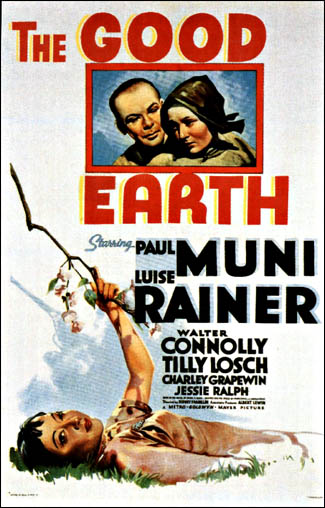
The 1937 film The Good Earth is a strange one.
It’s a big, epic film about life in China in the years before World War I. It opens with a poor farmer named Wang (Paul Muni) marrying a servant girl named O-Lan (Luise Rainer). O-Lan is quiet but strong and, with her support, Wang eventually starts to prosper. He buys land and they have children. Together, Wang and O-Lan manage to survive both famine and a political upheaval. In fact, it’s China’s volatile politics that occasionally allow the family to survive. When a revolutionary mob loots a mansion, O-Lan joins in just long enough to come across a bag of diamonds that the Wang uses to eventually buy the biggest house in town. Once he’s become wealthy and complacent, Wang ends up taking on a younger, second wife (Tilly Losch) and O-Lan finds herself competing for his attention. Ultimately, it’s only when Wang is again forced to tend to the Earth that he understands what is really important.
So, here’s the weird thing about The Good Earth. It’s a film about China. It covers several years of Chinese history and the story itself is rooted in Chinese culture. All of the characters are meant to be Chinese. When the movie was filmed, China was at war with Japan so it’s not surprising that the film was shot in California. But what is interesting (though not really surprising when you consider the history of Hollywood) is that there are very few Chinese people in the cast and none of them play any of the major roles.
Instead, Wang was played by Austria-born, Chicago-raised Paul Muni. O-Lan was played by German Luise Rainer. Wang’s comic relief uncle was played by American character actor Walter Connolly while his father was played by a former vaudeville star from Ohio named Charley Grapewin. All of the actors are heavily made up so that they’ll look Chinese but none of them act or sound Chinese. It makes for a very strange viewing experience.
And it’s a bit unfortunate because there are some very good scenes in The Good Earth. Technically, it’s a very strong film. Towards the end, there’s a locust invasion that is still thrilling to watch. The sets look great. The costumes look great. If you’re a history nerd like me, the story has the potential to be interesting. But, whenever you start to get sucked into the film’s story, Wang starts to speak and sounds totally like a guy from Chicago and it takes you out of the movie. The uneven mix of quality and miscast actors makes for a rather disjointed viewing experience.
As a big epic, it’s probably not surprising that The Good Earth was nominated for best picture. However, it lost to another Paul Muni film, The Life of Emile Zola.
Cleaning Out The DVR #20: Tom Jones (dir by Tony Richardson)
(For those following at home, Lisa is attempting to clean out her DVR by watching and reviewing 38 films by this Friday. Will she make it? Keep following the site to find out!)
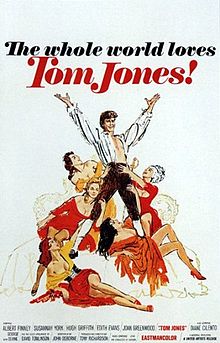
Oh, how I wanted to love Tom Jones!
No! Not that Tom Jones.
I’m talking about Tom Jones, the British film from 1963. Based on a novel by Henry Fielding, Tom Jones was a huge box office success and it was one of the few comedies to ever win the Oscar for best picture. Whenever you watch a documentary about the British invasion of the early 60s, chances are that you’ll see at least a clip or two from Tom Jones. The film (or perhaps I should say the film’s box office success) is a part of 60s pop history, right up there with The Beatles on The Ed Sullivan Show and Sean Connery shooting that guy in cold blood in Dr. No.
Up until last night, I had heard about Tom Jones but I had never seen it.
And I really wanted to love it.
The film takes place in 18th century England and it tells the story of young Tom Jones (Albert Finney). It starts with a lengthy sequence that plays out like a silent film, complete with title cards. Upright Squire Allworthy (George Devine) comes home and discovers that a baby has been left in his bed. He assumes that the child was born to two of his servants and declares that he will raise Tom Jones to be a good and worthy man.
Two decades later, Tom Jones has grown up and now he’s being played by Albert Finney (who, it must be said, was quite a handsome man when he was young). Because Tom is good-looking and kind-hearted, every woman in England lusts after him. But Tom is in love with innocent Sophie Western (Susannah York). However, Sophie is a member of the upper class and Tom is a “bastard,” at a time when that actually means something.
Indeed, Sophie’s aunt and uncle (played by Edith Evans and Hugh Griffith) demand that Sophie have nothing to do with Tom Jones. They decide that she will marry Blifil (David Warner, young but already typecast as a villain). Through clever lies and manipulations, Blifil convinces Squire Allworthy that Tom has turned bad and must therefore be exiled from his home. Does Blifil want to get rid of Tom just so he can marry Sophie or is it possible that there’s more to Blifil’s scheming?
Before we get the answer to that question, we spend a while following the exiled Tom as he wanders around England and attempts to prove himself worthy of Sophie. Along the way, Tom serves briefly in the army, gets into numerous fights, and has several affairs. One of those affairs is with Mrs. Walters (Joyce Redman), who he briefly thinks might be his mother. Eventually, Tom ends up as the lover to the decadent Lady Bellaston (Joan Greenwood). Through Blifil’s scheming, he also ends up framed for attempted murder and facing the gallows…
And, as melodramatic as that may all sound, Tom Jones is definitely a comedy. It doesn’t take itself seriously and there’s hardly a single scene that isn’t played for laughs. Director Tony Richardson goes out of his way to make sure that you never forget that you’re watching a movie. There are freeze frames. There’s plenty of characters around to supply sarcastic commentary. There’s even a few cases of fourth wall breaking.
As I watched Tom Jones, it was hard for me not to compare it to Stanley Kubrick’s Barry Lyndon. After all, both films take place during the same period of time and both deal with a young man making his way through European society. I would even argue that, in its way, Barry Lyndon is far more satirical than Tom Jones. The main difference between the two films is that Barry Lyndon is all about subtext whereas everything that happens in Tom Jones happens right on the surface.
As I said, I really wanted to like Tom Jones but, seen today, the entire film seems to be trying a little bit too hard. Tony Richardson’s direction is so manic that it gets a bit exhausting after a while. That said, I can understand why the film was such a success when it was first released. I’m sure in 1963 — after having to deal with decades of pompous costume dramas — viewers probably found Tom Jones to be a breath of fresh air. Not only was it a British film released at a time when all things British were in style but it was also a film that, by the standards of 1963, dealt frankly with sex. In short, Tom Jones is definitely a film of its time. If it doesn’t hold up as well today, that’s because it wasn’t made for 2016. It was made for 1963.
And obviously, if the judgment of the Academy is to be trusted, Tom Jones was the perfect film for 1963. That said, I would have given best picture to another British film, From Russia With Love.
4 Shots From 4 Films: Cleopatra, The Fall of the Roman Empire, Caligula, Titus
4 Shots From 4 Films is just what it says it is, 4 shots from 4 of our favorite films. As opposed to the reviews and recaps that we usually post, 4 Shots From 4 Films is all about letting the visuals do the talking.
Welcome to a special Ides of March edition of 4 Shots From 4 Films. These 4 shots are taken from 4 diverse films about the Roman Empire (which, of course, was a direct result of events that occurred long ago on the Ides of March).
4 Shots From 4 Films

Cleopatra (1963, directed by Joseph L. Mankiewicz)

The Fall of the Roman Empire (1964, dir by Anthony Mann)

Caligula (1979, dir by Tinto Brass, et al)
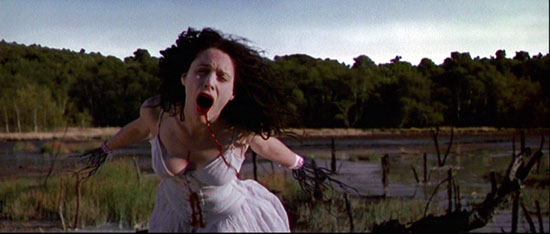
Titus (1999, dir by Julie Taymor)
Cleaning Out The DVR #19: The Awful Truth (dir by Leo McCarey)
(For those following at home, Lisa is attempting to clean out her DVR by watching and reviewing 38 films by this Friday. Will she make it? Keep following the site to find out!)
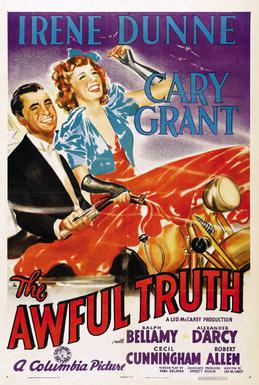
First released way back in 1937, The Awful Truth is one of the most delightful comedies that I’ve ever seen. In fact, if I could recommend one movie for you to make an effort to see, it would be The Awful Truth. This is definitely the best film to ever have the word “awful” in the title.
(Speaking of being the best, The Awful Truth is also the rare screwball comedy to receive a nomination for best picture. However, it lost to the far more serious The Life of Emile Zola.)
Jerry (Cary Grant) and Lucy Warner (Irene Dunne) are young, married, stylish, and rich. They seem to have it all but, as the result of Jerry’s lies and a misunderstanding concerning Lucy and her music teacher (Alexander D’Arcy), they end up getting a divorce. Fortunately, they still share a common bond. They both love their dog, Mr. Smith (played by Skippy, the same adorable and incredibly talented dog who played Asta in The Thin Man). Lucy wins custody of Mr. Smith and takes him with her when she moves in with her eccentric Aunt Patsy (Cecil Cunningham).
(It’s not a screwball comedy without an eccentric aunt.)
Jerry, however, has weekly visitation rights with Mr. Smith. It’s during once such visit that Jerry discovers that, with only two months to go before the final divorce decree, Lucy has become engaged to her next door neighbor, Dan (Ralph Bellamy). Dan is from Oklahoma and spends most of his time wistfully talking about tumbleweed, oil, and cattle. He also can’t wait to marry Lucy so that they can both move back to Oklahoma City. Dan is a nice guy but he’s no Cary Grant. (He’s also dominated by his judgmental mother.) Realizing that he still loves Lucy, Jerry wants to reconcile with her but complications and misunderstandings ensue.
(It’s not a screwball comedy without complications and misunderstandings.)
Eventually, in order to prove that he is over Lucy, Jerry starts to date a vacuous heiress, Barbara Vance (a hilariously shallow performance from Molly Lamont). Suddenly, Lucy finds herself in the same situation that Jerry was in with her and Dan. Now, it’s her turn to try to break up Barbara and Jerry…
Meanwhile, the day of the final divorce decree approaches…
There’s a lot of reasons to love The Awful Truth. There’s the snappy dialogue, the physical comedy (at one point, three different men are scurrying around Aunt Patsy’s apartment, two trying to hide from each other and one totally oblivious to everything going on around him), and Leo McCarey’s fast paced direction. There’s Mr. Smith, a dog so talented that even a confirmed cat person like me loved watching his performance. There’s the wonderful supporting turns of Ralph Bellamy and Molly Lamont.
But the main reason to see the film is because of the wonderful chemistry between Cary Grant and Irene Dunne. Grant is so smooth and effortless in his charm that it’s a lot of fun to watch him having to deal with the progressively strange world that he finds himself living in. The Awful Truth works best when Grant simply reacts to all the craziness around him. Grant could do more with one look than most actors could do with a Shakespearean monologue. Meanwhile, Irene Dunne … well, who wouldn’t want to get in a time machine, go back to 1937, and be Irene Dunne for a day? She’s lively, she’s beautiful, she’s witty, she’s classy, and she’s just neurotic enough to be relatable.
The Awful Truth is pure joy. If you haven’t seen it, you’re missing out. If you have seen it, watch it again.
Cleaning Out The DVR #18: How Green Was My Valley (dir by John Ford)
(For those following at home, Lisa is attempting to clean out her DVR by watching and reviewing 38 films by this Friday. Will she make it? Keep following the site to find out!)
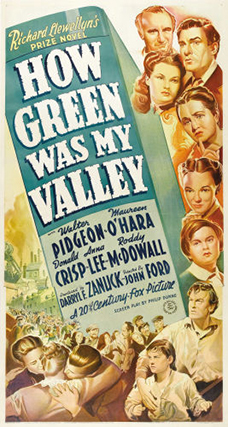
Before I really get into this review, I should admit that I watched How Green Was My Valley with a bias.
Before the movie started, I was expecting to be disappointed with it. I think that a lot of film lovers would have felt the same way. How Green Was My Valley won the 1941 Oscar for best picture. In doing so, it defeated three beloved films that have only grown in popularity and renown since they were first released: Citizen Kane, The Maltese Falcon, and The Little Foxes. (As well, just consider some of the 1941 films that weren’t even nominated for best picture: Ball of Fire, The Devil and Daniel Webster, Dr. Jekyll and Mr. Hyde, High Sierra, The Lady Eve, Never Give A Sucker An Even Break, The Sea Wolf, The Wolf Man, and Sullivan’s Travels.) Because it defeated so many great films and since we’re all used to the narrative that the Academy always screws up, there’s a tendency to assume How Green Was My Valley was really bad.
Well, after years of assumptions, I finally actually watched How Green Was My Valley? Was it bad? No, not really. Was it great? No, not all. If anything, it felt rather typical of the type of films that often win best picture. It was well-made, it was manipulative enough to be a crowd-pleaser while serious enough to appeal to highbrow critics, and, perhaps most importantly, it never really challenged the viewer. Unlike Citizen Kane and The Maltese Falcon, How Green Was My Valley is a film that doesn’t require that you give it too much thought and, as such, it really shouldn’t be surprising that it was named the best picture of the year.
How Green Was My Valley was directed by John Ford and, as you might expect from Ford, it deals with a changing way of life and features good performances and a few impressive shots of the countryside. Taking place in the late 1800s, How Green Was My Valley tells the episodic story of the Morgans, a large family of Welsh miners. The film is narrated by Huw (Roddy McDowall), a youngest member of the family. Though Huw’s eyes, we watch as his once idyllic and green village is transformed by the growing mining industry and blackened with soot, poverty, and death.
The film starts out as a fairly even mix of sentiment and drama. Huw has a crush on his brother’s fiancee. His sister, Angharad (Maureen O’Hara), has a flirtation with the new preacher, Mr. Gruffydd (Walter Pidgeon). Much emphasis is put on communal gatherings. There is a wildly joyful wedding celebration. We often see the villagers in church and hear them singing both hymns and folk songs. In their isolate village, they are are united against a changing world.
Or, at least, they think they are. As the mining industry grows, that united front and sense of community starts to vanish. A strike sets family members against each other, as each miner is forced to decide whether to side with management or with his fellow workers. Each year, the wages become lower. When management realizes that its cheaper to just continually hire new miners, several of the veteran workers are fired and end up leaving the village to seek a living elsewhere. As new people come to the village, even Mr. Gruffydd finds himself the subject of gossip.
As for Huw, he grows up. He goes to school, deals with a sadistic teacher, and learns how to defend himself against bullies. And eventually, like everyone in his family, he is sent down into the mines and soon, his once innocent face is covered in soot.
And, of course, there’s a big tragedy but you probably already guessed that. How Green Was My Valley is not a film that takes the viewer by surprise.
For the most part, it’s all pretty well done. The big cast all inhabit their roles perfectly and Roddy McDowall is extremely likable as Huw. Maureen O’Hara shows why she eventually became a star and even Walter Pidgeon gives a surprisingly fiery performance. How Green Way My Valley is a good film but it’s too conventional and predictable to be a great film, which is why its victory over Citizen Kane and The Maltese Falcon will always be remembered as a huge Oscar injustice.
But, taken on its own terms and divorced from the Oscar controversy, How Green Was My Valley may be a conventional but it’s not a bad film. It’s just no Citizen Kane.
Cleaning Out The DVR #17: Don’t Wake Mommy (dir by Chris Siverston)
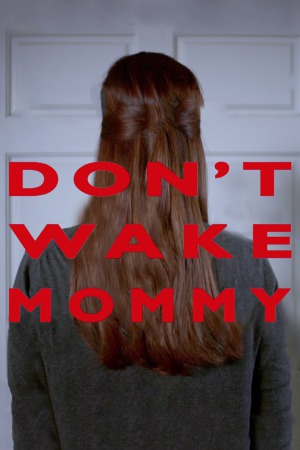
This morning, as I struggled to adjust to the tyranny of Daylight Saving Time, I watched yet another movie off of my DVR. As our regular readers know, I am currently in the process of cleaning out the DVR by trying to watch 38 films by Friday. Don’t Wake Mommy was film #17.
(Of course, what I didn’t realize, as I watched Don’t Wake Mommy this morning, was that the Lifetime Movie Network would be reshowing the film in just a few hours time.)
Don’t Wake Mommy premiered on Lifetime on January 3rd. It was the first Lifetime film of 2016 and somehow, that seems appropriate. When most people think of the stereotype of a Lifetime film, chances are that they’re thinking of something like Don’t Wake Mommy.
Ashley Bell, who was so good in the Last Exorcism films, plays Molly. Molly has a wonderful husband (Dean Geyer) and a great career (though don’t ask me to explain what she does, beyond the fact that she works in one of those generic Lifetime offices). However, ever since giving birth to her daughter, Molly has had to put her life on hold. Suffering from extreme postpartum depression, she joins an online support group and ends up meeting Beth (Sara Rue).
At first, Beth seems like she’s perfect. In fact, she’s too perfect. If you’re a veteran Lifetime viewer like I am, you’ll know that Beth is trouble from the first minute she offers to help Molly out. (The film also starts with a rather unnecessary prologue, in which Beth harasses another couple.) Beth is all smiles and good advice but soon, she is literally running Molly’s life.
While Molly’s husband is away, Beth moves into the house. She keeps Molly constantly medicated and insists on taking care of Ava herself. When Molly’s BFF stops by, Beth tells her that Molly no longer needs her around.
And then one day, Ava disappears…
Don’t Wake Mommy is a fairly predictable film. After the 1st 15 minutes or so, you will have figured out everything that is going to happen. That’s not necessarily a bad thing when it comes to Lifetime films. In many ways, their familiarity is a part of their appeal. But being familiar does not necessarily mean that a film should feel generic and, far too often, Don’t Wake Mommy feels generic.
That said, Sara Rue does a great job playing the unstable Beth and Ashley Bell proves that she’s a capable actress even when she isn’t playing someone possessed by the devil. Here’s hoping that both actresses get a lot more opportunities in the future to show off what they can do.
4 Shots From 4 Films: Perversion Story, Zombi 2, The Beyond, The New York Ripper

20 years ago today, the great Italian director Lucio Fulci passed away in Rome. In the years following his death, Fulci has somehow managed to be both one of the most influential and one of the most underappreciated directors of all time. This edition of 4 Shots From 4 Films is dedicated to Fulci’s memory and his legacy.
(We’ve dedicated two editions of 4 Shots From 4 Films to Fulci in the past. Take a look at them here and here. Fortunately, Fulci was one of the most visually inventive directors of all time. Even the lesser, low-budget films that he made towards the end of his career can be counted on to offer up at least one memorably surreal shot.)
4 Shots From 4 Films

Perversion Story (1969, dir by Lucio Fulci)

Zombi 2 (1969, dir by Lucio Fulci)

The Beyond (1981, dir by Lucio Fulci)

The New York Ripper (1982, dir by Lucio Fulci)
Cleaning Out The DVR #16: Johnny Belinda (dir by Jean Negulesco)

Continuing my effort to watch 38 films in 10 days (and, as of today, I only have 6 days left!), I spent part of last night watching the 1948 film Johnny Belinda.
Johnny Belinda takes place in Canada, on Cape Breton Island. The residents of the island are a hearty, no-nonsense group of people. They work hard, they don’t play hard because they never play, they farm, and they don’t have much use for outsiders. When a new doctor, Robert Richardson (Lew Ayres), arrives on the island, he has to work hard to earn their trust.
Dr. Richardson is fascinated by Belinda McDonald (Jane Wyman), a young woman who is deaf and mute. Belinda lives on a farm with her father (Charles Bickford) and her aunt (Agnes Moorehead). Everyone in the community assumes that Belinda is a simple-minded and, because her mother died giving birth to her, she is resented by her father. Only Dr. Richardson believes that Belinda is in any way intelligent and, over her father’s objections, he teaches Belinda sign language.
Dr. Richardson’s secretary, Stella (Jan Sterling), falls in love with him and grows angry when it becomes apparent that he’s more interested in taking care of Belinda than pursuing an adulterous romance with Stella. Meanwhile, Stella’s husband, a viscous alcoholic named Locky (Stephen McNally), gets drunk and rapes Belinda. 9 months later, when Belinda gives birth to a boy that she names Johnny, everyone assumes that Dr. Richardson is the father. Soon, both Richardson and the McDonald family are being shunned by the judgmental community.
Locky, meanwhile, is determined to keep anyone from finding out about his crime, to the extent that he’s willing to commit murder. Both Locky and Stella are determined to take Johnny away from Belinda and it all eventually leads to further tragedy and, somewhat inevitably, a dramatic murder trial.
Much like Random Harvest, Johnny Belinda is another film that I could imagine being remade for Lifetime. It’s a well-made melodrama that appeals to all of the emotions and features a cast of talented actors doing good work playing characters that are probably just a bit too familiar. In fact, there’s really not a single moment of Johnny Belinda that will take you by surprise but, despite that, the film still works. Jane Wyman does such a good job playing the silent Belinda that it makes the entire movie worth watching. (It’s interesting to contrast Wyman’s innocent, vulnerable, and sympathetic performance here with her far more severe work in The Yearling.) Reportedly, Wyman devoted so much time and effort to her performance that it was cited as a reason for her divorce from future President Ronald Reagan. For Johnny Belinda, Wyman lost the chance to be first lady but she did win an Oscar.
(And, for the record, Wyman voted for Reagan in 1980 and 1984, saying that it wasn’t often that you got to vote for your ex-husband.)
Johnny Belinda was nominated for best picture of the year and, with 10 nominations, it was the most nominated film of 1947. Though it won an Osar for Wyman, it lost best picture to Laurence Olivier’s Hamlet.

