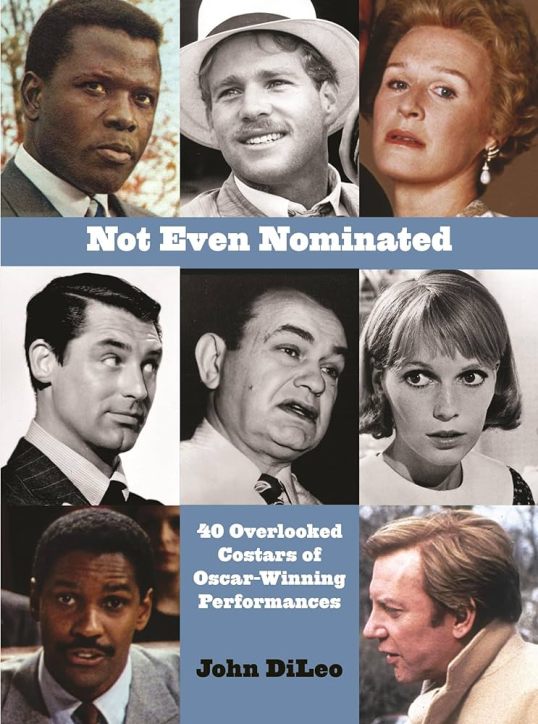
Rod Steiger won an Oscar for playing Chief Gillipsie in In The Heat of the Night but his co-star, Sidney Poitier, wasn’t even nominated. Despite the fact that Poitier delivered the line that everyone remembers — “They call me Mr. Tibbs!” — the Academy saw fit not nominate him alongside his co-star.
Timothy Hutton won an Oscar for his wonderful performance in Ordinary People but Donald Sutherland, cast against type as his conservative father and giving a heartfelt and heart-breaking performance, was not nominated.
In 1949, Walter Huston won a deserved Oscar for his performance in The Treasure of the Sierra Madre but, somehow, Humphrey Bogart was left out of the nominations.
Martin Landau was honored for playing Bela Lugosi in Ed Wood but Johnny Depp, playing the film’s title character, was ignored.
It’s something that has been happening since the announcement of the very first Academy Award nominations. Someone will win an Oscar and usually, they very much deserve it. Often, they’re a very popular winner because they’ve either overcome adversity or they’ve been nominated several times in the past without winning. But, in all the excitement over their victory, their equally worthy co-stars are overlooked.
John DiLeo’s Not Even Nominated takes a look at forty overlooked co-stars of Oscar-winning performers. Along with those that I mentioned at the start of this review, DiLeo also writes about performances from everyone from Charles Farrell in Seven Heaven to Cary Grant in The Philadelphia Story to Joseph Fiennes in Shakespeare in Love and Samuel L. Jackson in Django Unchained. Some of DiLeo’s picks are familiar to film lovers. The fact that Poitier wasn’t even nominated in 1968 despite starring in three popular and acclaimed films is something that has been discussed in many books and cultural histories. But DiLeo also gives some time to some equally strong performances that aren’t always cited, like Ryan O’Neal’s performance in Paper Moon and Dirk Bogarde’s turn in Darling and Stephen Boyd’s brilliant (and rather brave) work in Ben-Hur.
It makes for interesting reading. (It helps the DiLeo has an opinionated but enjoyable writing style.) For Oscar obsessives like you and me, it’s a must-have.
In 1990’s Days of Thunder, Tom Cruise plays Cole Trickle, a talented but headstrong racecar driver who is recruited by businessman Tim Daland (Randy Quaid) to become a NASCAR champion and to also provide some publicity for Daland’s Chevrolet dealership. Tim convinces Harry Hogge (Robert Duvall) to come out of retirement and serve as Cole’s crew chief. Harry builds cars in his barn and then he talks to them, whispering sweet nothings into their side mirrors. (This happens quite a bit.) Both Cole and Harry have something to prove. Cole has to prove that he’s the best. Harry has to prove, to himself, that an accident that killed one of his driver was not his fault. Harry also has to prove that he’s not insane. That’s not an easy thing to do when you’re always in the barn, talking to a car.
At first, Cole’s rival is Rowdy Burns (Michael Rooker) but, after Rowdy is seriously injured in a crash and told that he will never race again, Rowdy becomes Cole’s closest friend and supporter. With Rowdy off the circuit, Russ Wheeler (Cary Elwes) becomes Cole’s main rival. We know that Russ is a bad guy because he never has a hair out of place and he’s played by Cary Elwes, who for some reason was always cast as the smug bad guy in films like this despite having a rather charming screen presence.
Cole’s love interest is Dr. Claire Lewicki (Nicole Kidman), who is there to help Cole deal with his anger issues and who is surprisingly forgiving of all the times that Cole acts like a complete and total jerk. That happens quite a bit. Cole is a bit of brat but eventually, with the help of everyone around him, he learns how to be a great driver.
The first time I ever saw Days of Thunder, I was pretty dismissive of it. The film was producer and directed by the same people who were behind Top Gun and it pretty much tells the same story, except the jets are replaced with cars and the stakes are a bit less than saving democracy. Like Top Gun, it was a film where Tom Cruise played a character who wants to be the best but who has to learn how to set aside his own ego and take control of his impulsive nature. The first time I saw the film, I shrugged and said that, while Nicole Kidman and Tom Cruise had a lot more chemistry than Cruise and Kelly McGillis, it was still nothing that I hadn’t seen before.
But I have to admit that, since then, I’ve rewatched the film a few times. It’s one of those movies that I never specifically seek out but if I see it playing somewhere on cable, I’ll usually watch a bit of it. Some of it is because the race scenes actually are exciting, even if they do get a bit repetitive after a while. Tony Scott was a director who knew how to film action. The other major reason why I often find myself watching Days of Thunder is for the totally over-the-top performances of Robert Duvall and Randy Quaid.
“We looked like a monkey fucking a football out there!” Quaid exclaims, not once but twice. It’s a phrase that doesn’t make the least bit of sense and it’s one of those lines of dialogue that reminds us that Days of Thunder went into production with a script that was being written and rewritten on a daily basis. But Randy Quaid’s delivery is so emphatic that line works despite being totally stupid.
As for Robert Duvall, his performance here is a perfect example of how much fun it can be to watch a legitimately great actor overact. There’s nothing subtle about his performance and I doubt Days of Thunder will ever be a film that shows up when people are talking about the highlights of his legendary career. But when Duvall talks to his car, you believe every minute of it. It’s such a silly scene but Duvall pulls it off like the pro that he is.
Finally, if you’re going to watch a movie about two cocky race car drivers who are constantly taunting each other, wouldn’t you want them to look like Tom Cruise and Cary Elwes? Good lookin’ guys in fast cars, drivin’ around Southern racetracks, what’s not to love?
I swear, the crap that I watch just because it features Eric Roberts….
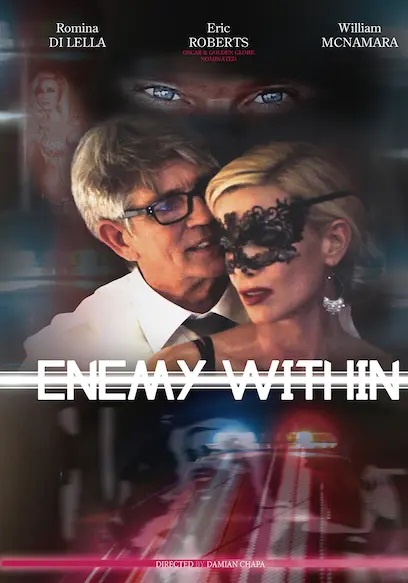
2016’s Enemy Within takes place in Los Angeles. A drug war is being fought on the streets and the local news is full of stories about violence, immigration, and the presidential election. Born in Italy, Concetta Masconi (Romina Di Lella) has come to Los Angeles to be a dancer and has ended up working as a stripper at a club owned by Jack (Eric Roberts).
When Concetta is attacked by an axe-wielding maniac, she is nearly raped until the sound of an approaching siren scares her attacker away. With Detective Solano (William McNamara) investigating the case and another detective named Nick (Damian Chapa) looking out for her, Concetta continues to date Max (Paulo Benedeti), despite the fact that Max has a history of abusing women and he’s the number one suspect in her own attack. Solano yells that Concetta is not taking any of this seriously. Little does he know that Concetta has been suffering from slow motion, black-and-white flashbacks.
When Concetta is attacked for a second time, she goes into hiding with a group of Latino gangsters. But can even they protect her from her attacker?
So, this is a pretty bad movie. It was obviously meant to be a showcase for Romina Di Lella but whatever hope she may have had of giving a good performance is pretty much sabotaged by a script that is full of confusing motivations and truly risible dialogue. Along with being poorly paced (certain scenes just go on forever!), the film itself is just truly unpleasant to watch. The rapes scenes were filmed to titillate and the inclusion of some light S&M feels less daring and more like an attempt to trick the 50 Shades crowd into watching. I’ve seen a lot of bad films in my quest to see every movie that Eric Roberts has made. This is one of the worst.
As for Roberts’s performance, he gets a few more scenes than usual and he does a good enough job with his one-dimensional role but his character still turns out to be a red herring. Roberts brings a few moments of intentional comedy to the film but otherwise, it’s a role that almost anyone could have played. In his autobiography, Eric Roberts wrote that he largely appears in films like this for the money. Hopefully, he got paid for this one.
Previous Eric Roberts Films That We Have Reviewed:
Godzilla gets a brand new backstory in 2002’s Godzilla against Mechagodzilla!
That’s not a surprise. At the start of the 21st century, when Toho was still trying to figure out how their biggest star would function in a new world, nearly every Godzilla film was a reboot that pretty much ignored all of the films that came before it, with the exception of the original Gojira. Godzilla against Mechagodzilla opens with Japan being attacked by Godzilla but it’s not the same Godzilla from the original film. That Godzilla actually did die as a result of the Oxygen destroyer. However, its relatives are still out there and occasionally, one will pop up and attack Japan. Japan has gotten a reputation for being cursed.
However, a discovery has been made that could change everything. The skeleton of the original Godzilla has been discovered and it has been used to create a cyborg Godzilla. The cyborg Godzilla is called Kiryu but, in appearance, it’s pretty much just Mechagodzilla all over again. Kiryu is able to defeat the new Godzilla but the battle triggers memories of its former life and soon, it’s going on a rampage of its own. Eventually, being a cyborg, it runs out of power but it’s obvious that Kiryu will need the guiding hand of a human. How about Lt. Akane Yushiro (Yukimo Shaku), who is undeniably talented but whose previous battle against the latest version of Godzilla has left her haunted by guilt and also caused others to doubt her abilities? Can she pilot Kiryu and save Japan from future Godzilla attacks?
Fortunately, Godzilla against Mechagodzilla know what its mission is. It understands that the majority of its audience is watching because they want to see Godzilla use his radioactive breath to destroy things and they want to see Mechagodzilla shoot lasers beams out of his eyes. The movie delivers both of those things, often in spectacular fashion. The special effects are certainly better than the special effects from Godzilla’s earlier Toho films but they still look primitive enough to retain the franchise’s B-movie charm. The film’s battle scenes are truly impressive and live up to the Godzilla name. As for the “human” story, Yumiko Shaku gives a strong performance and is likable as Akane and you actually do want her to get her chance to prove herself. While this film isn’t quite as enjoyably weird as some of the other entries, it’s still an above-average Godzilla film and a worthy chapter in the series. In fact, Godzilla against Mechagodzilla worked so well that the next entry in the series was not a reboot but a direct sequel! We’ll check that out next week.
First released in 1979 and directed by the great Werner Herzog, Woyzeck takes place in a small German town in the 19th century. It’s the type of town where everyone knows everyone else and not much happens. As is mentioned towards the end of the film, it’s been a while since the town has seen a “real murder.”
Franz Woyzeck (Klaus Kinski) is a soldier who lives in the town. He’s had a son with Marie (Eva Mattes), despite not being married to her. For that, Woyzeck’s Captain (Wolfgang Reichmann) continually tells him that he is immoral. Woyzeck replies that the poor cannot afford morals. To make extra money, Woyzeck does odd jobs for the Captain and he’s agreed to serve as an experimental test subject for the Doctor (Willy Semmelrogge). The Doctor, who looks down on Woyzeck, has put Woyzeck on a diet of only peas. He’s curious to see what this does to Woyzeck’s physical well-being but he has no interest in the fact that Woyzeck is obviously going mad.
Woyzeck, who, at the start of the film, is already hearing voices and talking about his apocalyptic visions, comes to suspect that Marie is cheating on him with a handsome Drum Major (Josef Bierbichler). While the film does make it clear that the Drum Major is interested in Marie, whether or not she’s actually cheating is left ambiguous. Woyzeck may believe that she is but Woyzeck also believes that he’s having visions of the end of the world so who knows whether one should trust his opinion. Eventually, Woyzeck’s madness leads to tragedy and another ambiguous ending. (The ambiguity reflects not only Werner Herzog’s customary aesthetic but also the fact that the film is based on a fragment of an unfinished play.)
What drives Woyzeck mad? Was he born mad or was he driven mad by his jealousy over the Drum Major? Does he truly love Marie or, as someone who has very little to his name, does he just want to possess her? Is he driven crazy by the inequality all around him or is he just looking for an excuse to justify his own disturbed thoughts? Herzog does not provide a definitive answer. Why Woyzeck goes mad is less important than the fact that the community around him is thoroughly and totally indifferent to the fact that he’s obviously losing his mind. The Captain lectures him as him as if he’s merely a teenager who needs to grow up. The Doctor only cares about Woyzeck as a test subject. Even Marie seems to be indifferent to his instability.
With each scene shot in one take and featuring a largely stationary camera, Woyzeck captures the claustrophobic feeling of being trapped in one’s circumstances. Woyzeck is desperate to escape both his circumstances and his madness but Herzog makes it clear that Woyzeck has nowhere to go. He’s trapped in his life and his fate feels almost pre-ordained. This film is dark, even by the standards of Werner Herzog, However, it also features one of Klaus Kinski’s rare sympathetic roles. It’s not surprising that Kinski is convincing as a madman as Kinski is often said to have been a bit mad in real life as well. What stands out is just how good a job Kinski does at playing the rather meek and subservient side of Woyzeck. Woyzeck features one of Klaus Kinski’s best performances.
In My Best Fiend, Herzog said (one hopes jokingly) that he was often tempted to have Kinski killed. Woyzeck shows us why we should be happy that he didn’t.
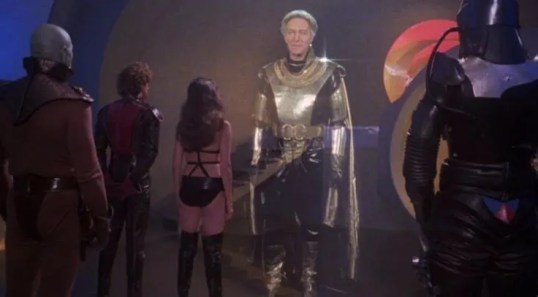
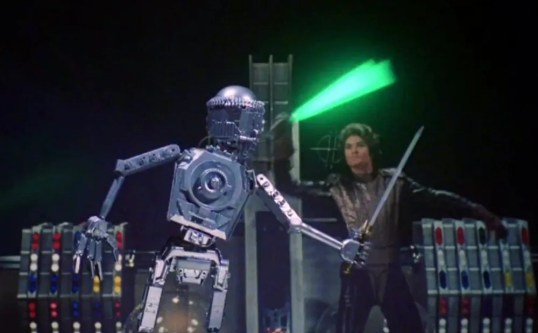
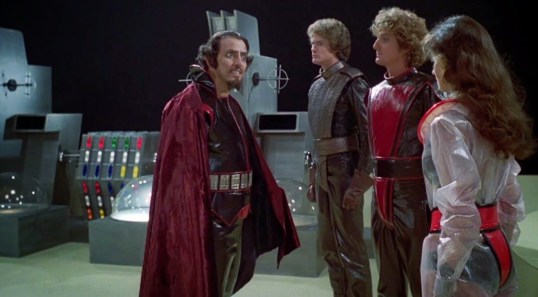
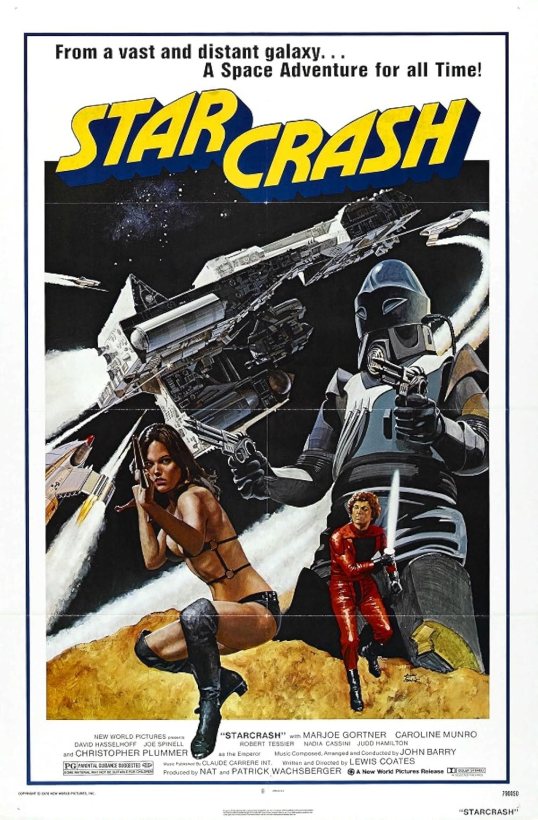
First released in 1978, Starcrash takes place in a galaxy that is probably far, far away. The evil Count Zath Arn (Joe Spinell) is attempting to overthrow the benevolent Emperor (Christopher Plummer). Zath Arn has built a weapon that is so large and so powerful that it can only be hidden inside of another planet. (“Like a Death Star?” you say. Hush, don’t go there….) The Emperor’s son, Prince Simon (David Hasselhoff), led an expedition in search of the weapon but a surprise attack of glowing red lights led to his ship crashing on the unknown planet. Simon is missing and Zath Arn’s power is growing.
Two legendary smugglers — Stella Starr (Caroline Munro) and the enigmatic Akton (Marjoe Gortner) — are released from prison and tasked with tracking down both the weapon and Simon. (Stella was already in the process of escaping when she got the news of her release.) Accompanied by the duplicitous Thor (Robert Tessier) and the loyal Elle (Judd Hamilton), a robot with a thick Southern accent, Stella and Akton set out to explore the haunted stars.
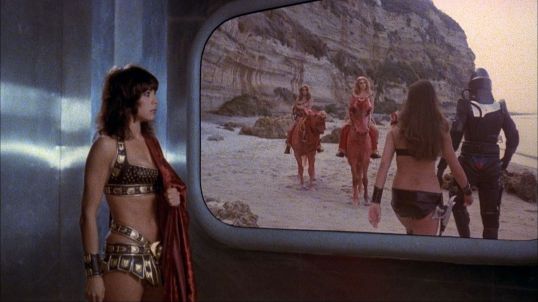
It’s a journey that leads them to …. well, actually, it only leads them to three planets. It turns out that the weapon wasn’t that well-hidden after all. Still, one planet is populated by Amazons and protected by a giant, tin robot. Another planet is populated by cannibals who wear stone masks. And then there’s an ice planet where the clouds race across the sky while Stella and Elle try to make it back to their ship without freezing to death. And if that’s not enough to make things exciting, this film also features David Hasselhoff with a light saber!
There’s no point in denying that Starcrash would never have been made if not for the success of the first Star Wars. Indeed, the film even begins with an opening crawl and features a shot that is almost a recreation of the first scene in Star Wars. However, director Luigi Cozzi doesn’t limit himself to just mining Star Wars for inspiration. The giant tin robot owes a huge debt to the creations of Ray Harryhausen. The judge that sentences Stella and Akton to prison is the same talking head that appeared in Invaders From Mars. A scene in which Stella explores an abandoned spaceship owes more than a little to 2001: A Space Odyssey. Even Akton, with his telepathic powers, seems like he could have stepped out of an episode of Star Trek.
Starcrash makes no secret of its influences but it’s such an energetic and good-natured film that all of the borrowing feels like like a rip-off and more like a very affectionate homage. It’s obvious that director Luigi Cozzi loved the films from which he borrowed and that love is present in every frame of Starcrash. Starcrash is a fast-paced space adventure and it’s a lot of fun. It’s certainly more fun than any of the recent entries in the Star Wars franchise. Working with a low-budget, an energetic cast, and some surprisingly creative special effects, Cozzi crafts a genuinely entertaining movie. Marjoe Gortner was never better than he was in Starcrash. Christopher Plummer, to his credit, brings a truly noble bearing to the role of the Emperor. Joe Spinell obviously understood that his role didn’t require subtlety and he delivers all of his lines like a villain in an old time serial. As for David Hasselhoff …. he’s the Hoff and he brings his trademark earnestness to the role of Simon. Starcrash is the best film that Cozzi ever directed.
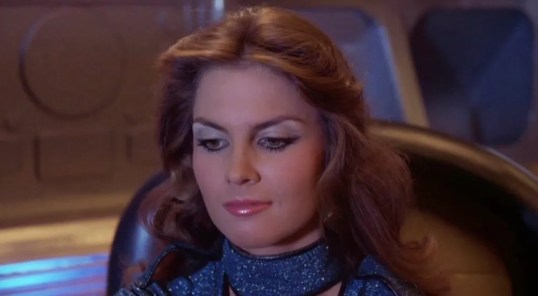
A good deal of the success of Starcrash is due to Caroline Munro, who gives such a committed and likable performance as Stella Starr that it’s hard not to mourn the fact that Cozzi was never able to make any more films about the character. As played by Munro, Stella Starr is a smart, confident, and strong. Stella loves doing what she does and it’s impossible not share her joy when she announces she’s taking the ship into “hyperspace.” Even though Stella spends the majority of the film running around in a leather bikini, Munro brings a definite touch of class to the role. No one is going to push Stella Starr around and certainly, no one is going to destroy the Galaxy on her watch. Thank to Caroline Munro’s fearless performance, Starcrash is one of the most empowering science fictions ever made.
Starcrash ends with hints of a possible sequel but sadly, there never came to be. (Not surprisingly, there was an unrelated film that was advertised as being a sequel but which was actually just a softcore science fiction version of Lady Chatterley’s Lover.) It’s a shame. Stella Starr definitely deserved to have many more adventures.
Traditionally, as far as pop culture goes, January doesn’t get much respect. If a studio has a film that they knew isn’t going to be a hit with critics or audiences, January is where they usually dump it with the full knowledge that, as bad as it is, everyone will have forgotten about it by the time summer rolls around. The same can often be said of publishers. With everyone busy getting caught up on what they missed during the last few months of the previous year, chances are that they won’t notice a few bombs dropped on the cultural landscape. That’s the theory anyways.
But, you know me! I’m an optimist. And I remain convinced that, even in January, there are things to which we can look forward, And here’s six of those things!
(Why six? Because Lisa Marie doesn’t do odd numbers!)
The Oscars
Yes, it’s that time of year! The Oscar nominations are going to be announced on January 17th! That’s two and a half weeks from now! Obviously, I’ve got quite a bit that I still need to watch. Wish me luck!
2. Sundance Film Festival
The first big film festival of the year opens on January 23rd. Which films will emerge as Oscar contenders from this year’s festival? It’s also possible that this year’s Sundance could be the last to be held in the snowy mountains of Utah. If Sundance does move to either Boulder or Cincinnati, this year’s festival will indeed be the end of an era. (Quite frankly, it’s hard for me to imagine a Sundance Film Festival without snow.)
3. Wolf Man
Directed by Leigh Whannell, the latest version of the Wolf Man will be released on January 17th. Will this Wolf Man be as full of self-pity as Lon Chaney Jr’s version was? We’ll find out!
4, Presence
As a filmmaker, Steven Soderbergh can be hit-or-miss. He’s directed some truly brilliant films. He’s also directed some rather pretentious dreck. His latest film, Presence, appears to be a horror film but, knowing Soderbergh, there will probably be some twist that will annoy me to no end. That said, the film stars Lucy Liu and she’s someone who definitely deserves to make a comeback. The film is due to be released on the 24th and I’m hoping for the best!
5. Screamboat
This is apparently a horror version of Steamboat Willie. This movie is probably going to suck but I’m just curious to see whether it’s going to be merely forgettable or a full-on disaster. Screamboat is destined to ruin some childhood memories on January 24th. Normally, I’d assign Case to check this out for us but I don’t think he’s forgiven me for making him watch Escape From Tomorrow.
6. Back In Action
Cameron Diaz came out of retirement to star in this action comedy. The script must have been really amazing, right? Uhmm….right? We’ll find out when the film is released on January 17th.
What are you looking forward to in January? Let us know in the comments!
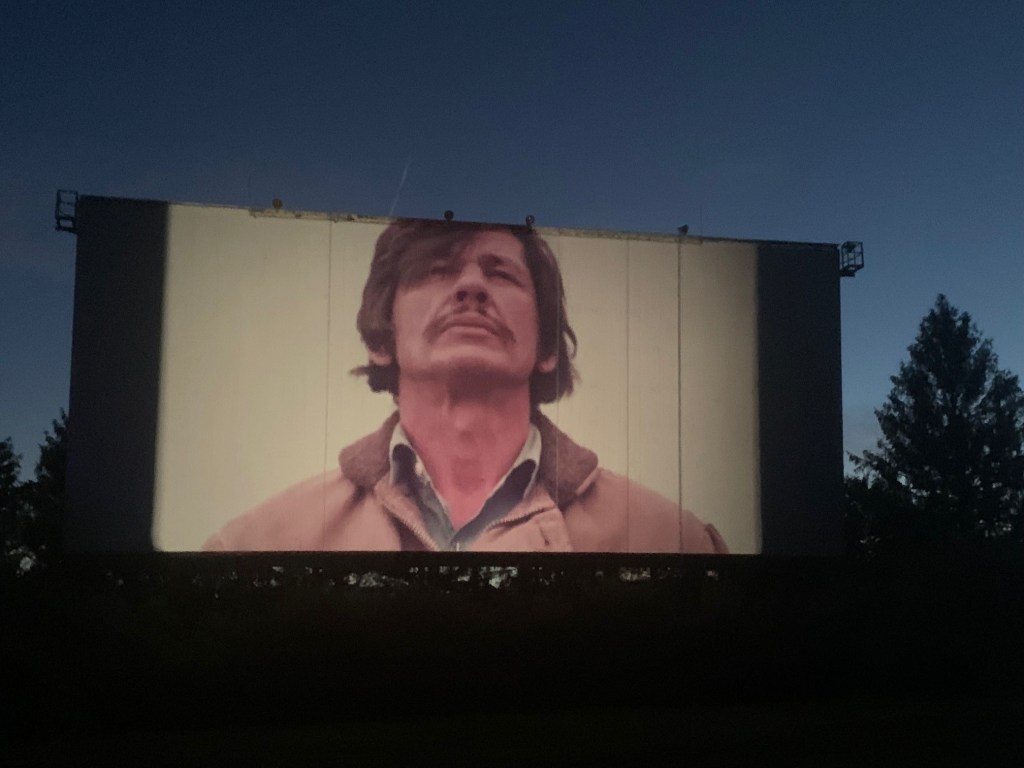
THE MECHANIC features an iconic performance by Charles Bronson, a performance that would represent a blueprint for the type of character he would play in many films…the strong, silent, unstoppable, man of action. Bronson plays Arthur Bishop, a hit man with a gift for planning and executing his hits in a way that make the deaths look like natural deaths rather than murders. Facing health issues and loneliness, he takes on a young protégé named Steve McKenna, played by Jan-Michael Vincent. This upsets his bosses in the underworld because he takes on the apprentice without asking them. Will they allow him to train up this new protégé and complete tag team hits going forward, or will they decide that Bishop is no longer worth the risk?
I’ll start off by stating up front that I love THE MECHANIC. The first Charles Bronson movie I ever owned on VHS was a nearly unwatchable, 2nd hand version of the film, but I still tried to watch it. The first Charles Bronson movie I ever saw on the big screen was a beautiful 35mm print of the film at the Mahoning Drive-in theater in Lehighton, PA. I also believe that this film has the best ending of any Charles Bronson film. Needless to say, the following review will be full of praise, so if you’re looking for a real critical take on the piece, this is probably not the place to look!
To start off, THE MECHANIC has a uniquely amazing opening sequence. The first 16 minutes of the film features hitman Bishop going through the mundane tasks of setting up a hit. We watch him set up shop across the street from the mark, we watch him break into the mark’s apartment to rig the things needed to accomplish the hit, we watch him squeeze a wax ball, etc. Bishop speaks no dialogue during these 16 minutes, and the only things we hear are the sounds of the soundtrack and the street. Bronson’s unique screen presence makes it mesmerizing. Could you imagine an action film trying this strategy in this day and age?
Once Bishop has successfully completed the first hit, we’re introduced to Bishop’s world outside of what we’d observed during the opening sequence. We meet Harry McKenna (Keenan Wynn), the “uncle-like” figure who has gotten himself in trouble with the organization. We’re not surprised who’s given the job to eliminate this problem. We meet Harry’s son Steve (Jan-Michael Vincent) who hits it off with Bishop at the funeral where their relationship really begins. On a side note, the film’s script featured these two characters as gay men, and the sexuality element was going to be a major way that Steve would get close enough to Bishop to gain his trust. That part of the script was changed to get Bronson and secure financing for the film. Since that element is not part of the movie I’ll move on. We meet a prostitute (Jill Ireland) who’s visited by Bishop. This is a very interesting scene that gives us a strong insight into just how lonely Bishop is and also helps us understand why he’s open to the idea of bringing on an apprentice. I think Jill Ireland is quite effective in her one scene.
Once the various characters are introduced, the film settles nicely into a mentoring relationship between Bishop & Steve. The experienced hitman shares his knowledge, and we follow along with them as they complete various assignments. The movie seems most interested in the relationship between the men, but this is an action movie, so we have a couple of very solid action sequences in the middle portion of the film, as well as the end. Director Michael Winner, who directed Charles Bronson in six different films, stages these sequences extremely well, especially the sequence that ends the film in Naples, Italy. We see necks snapped. We see faces knuckle punched. We see a motorcycle chase ending with a motorcycle flying off a cliff and exploding into a ball of flames upon impact. We see boats exploding. We see Bronson using my favorite weapon, the pump shotgun, with expert precision. We see cars chasing each other along the Italian coast. We see bombs being dropped out of moving cars with precision timing to blow up the cars behind them. We even see a bulldozer pushing a moving car off the side of a cliff. It’s some amazing stuff, with Bronson & Vincent appearing quite badass at times. And then the ending, the ending that proves just how awesome Bishop truly is! I won’t say anymore about that. Just watch and enjoy!
**BONUS CONTENT** – We dedicated an episode of the “This Week in Charles Bronson” podcast to THE MECHANIC. It was one of the most enjoyable episodes for me to record. If you’re interested in learning more about the film from a group of guys who love Charles Bronson, give it a listen!
On New Year’s Eve in 1972, a tragedy struck in the Aegean Sea. Just as the clock hit midnight and its passengers wished each other a happy new year, the cruise ship Poseidon was capsized by a tidal wave. The majority of the ship’s crew and passengers were killed in the disaster but a small group managed to climb up through the wreckage and make their way to the ship’s hull, where they were rescued. Gene Hackman sacrificed his life so that Ernest Borgnine, Red Buttons, Jack Albertson, Carol Lynley, and Pamela Sue Martin could all survive.
We all know the story of The Poseidon Adventure and some of us have even been goaded by our sisters into singing There’s Got To Be A Morning After for karaoke night at Grandpa Tony’s. (Grandpa Tony’s has since shut down but, for a while, it was the best place in Dallas for nachos and karaoke.) But do you know the story of what happened after that initial group of survivors was rescued from the ship? Have you gone Beyond The Poseidon Adventure?
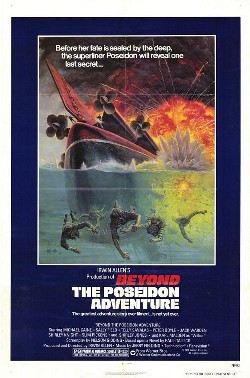
First released in 1979, Beyond The Poseidon Adventure picks up directly from where the first film ended. Mere minutes after the rescue helicopter flies off, a tugboat pulls up alongside the still capsized wreck of the Poseidon. Needing money to pay off his debts, Captain Mike Turner (Michael Caine) has decided to declare salvage rights and claim all of the cash and jewelry that he can find in the wreckage. Accompanying him is his mentor Dead Meat (Karl Malden) and his protegee, Annoying and Cutesy (Sally Field). Actually, Dead Meat is named Wilbur but, as soon as Karl Malden starts to dramatically grab at his chest, viewers will know that he’s destined to heroically sacrifice himself. Annoying and Cutesy’s real name is Celeste. Sally Field gives perhaps the worst performance of her career as the almost always perky Celeste. This movie came out the same year that Sally Field appeared in the film for which she won her first Oscar, Norma Rae. I have to imagine that Field was happy to win that Oscar because it meant she would never have to do another film like Beyond The Poseidon Adventure.
Before the tugboat crew can begin to explore the Poseidon, another boat shows up. This boat is captained by Stefan Svevo (Telly Savalas), who claims to be a doctor who is responding to an S.O.S. from the capsized ship. Svevo and his crew insist on accompanying the tugboat crew into the Poseidon. It’s obvious from the start that Svevo is not actually a benevolent doctor. For one thing, the men accompanying him are armed. For another thing, he’s played by veteran screen villain Telly Savalas.
The two crews finally enter the ship and …. hey, there’s even more people on the boat! At the end of The Poseidon Adventure, we were told that only six people had survived the disaster but apparently, that was just a damn lie. The ship is literally crawling with people who still haven’t gotten out. (Why didn’t the people who rescued the first batch of survivors check to make sure that they had gotten everyone?) There’s Tex (Slim Pickens), who says he’s from “Big D” and talks about how he owns an oil well (as we all do in Big D). There’s Frank Mazzetti (Peter Boyle, basically playing the same loudmouth that Ernest Borgnine played in the first film) and his daughter Theresa (Angela Cartwright) and Theresa’s new boyfriend, Larry (Mark Harmon). There’s a nurse (Shirley Jones) and a blind man (Jack Warden) and his wife (Shirley Knight). There’s Susanne (Veronica Hamel), the cool femme fatale who has a connection to Svevo.
While Svevo searches for a crate of plutonium (what the Hell was that doing on the Poseidon?), Mike tries to get the survivors to safety. That means once again climbing up to the hull while the ship shakes and the engines continue to explode. Both the first film and the sequel feature the exact same footage of the engines exploding. At this rate, I guess the Poseidon might finally sink sometime this year.
Directed by Irwin Allen (who produced the first film), Beyond The Poseidon Adventure is about as bad as a film could be. The first film had plenty of silly moments but it also had the entertaining spectacle of Gene Hackman and Ernest Borgnine competing to see who could yell the loudest. Beyond the Poseidon Adventure has Michael Caine and Telly Savalas both looking bored while Peter Boyle complains, “That was the worst New Year’s Party I’ve ever been to!” and Sally Field says stuff like, “I’ve been to Anzio! It’s the pits!” At one point, Slim Pickens says that he’s as phony as a three dollar bill. The same could be said of this film. Beyond The Poseidon Adventure looks and feels cheap and generates none of the suspense of the first film.
As Beyond The Poseidon Adventure ended, I found myself worrying that there might be other passengers still stuck on the ship. I mean, apparently, it’s very easy to not only survive on a capsized cruise ship but also to be overlooked by professional rescue crews. Unfortunately, there was not another sequel so those folks were just out of luck.
4 Shots From 4 Films is just what it says it is, 4 shots from 4 of our favorite films. As opposed to the reviews and recaps that we usually post, 4 Shots From 4 Films lets the visuals do the talking.
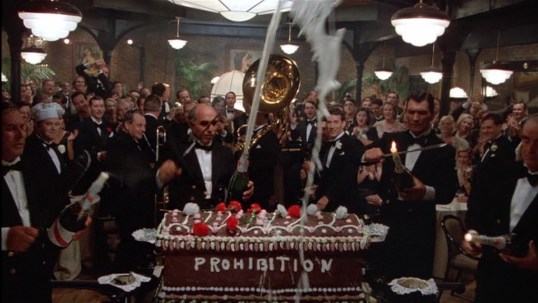
Happy New Year’s Day! Did you have as wonderful a celebration as the characters featured in today’s special edition of 4 Shots From 4 Films?
4 Shots From 4 Films
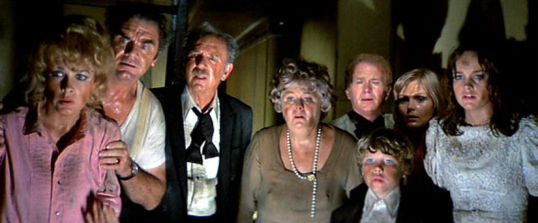
The Poseidon Adventure (1972, dir by Ronald Neame, DP: Harold E. Stine)
The Godfather Part II (1974, dir by Francis Ford Coppola, DP: Gordon Willis)
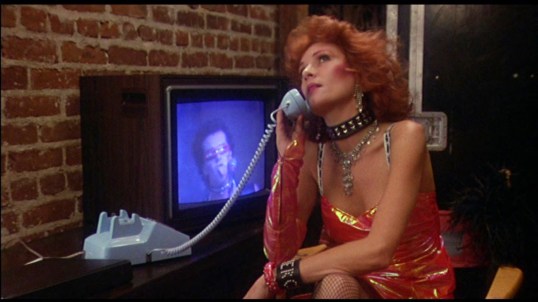
New Year’s Evil (1980, dir by Emmett Alston, DP: Edward Thomas)
Once Upon A Time In America (1984, dir by Sergio Leone, DP: Tonino Delli Colli)



 Through the Shattered Lens