I grew up on stuff like Jason and the Argonauts, Clash of the Titans and Jim Henson’s The Storyteller. Part of me looks at Christopher Nolan’s new Trailer for The Odyssey and is hopeful for crazy Harryhausen-like CGI and what his take may be on the Greek Gods. I’m also wondering if it’ll just focus on the humans and will give us something practical like Wolfgang Petersen’s Troy. Either way, The Odyssey will look amazing on the IMAX, I’m sure. The trailer keeps things simple, which is good.
This film hasn’t been on my radar much, but looking at the cast list, the line up is pretty nice. Nolan’s called a few friends back with Anne Hathaway (The Dark Knight Rises & The Devil Wears Prada 2), Elliot Page (Inception & Close to You) and Benny Safdie (Oppenheimer & The Smashing Machine). They are joined by Robert Pattinson (The Batman), Jon Bernthal (The Accountant 2), Lupita Nyong’o (A Quiet Place: Day One), Charlize Theron (Atomic Blonde), Mia Goth (Frankenstein) and Zendaya & Tom Holland (Spider-Man: No Way Home).
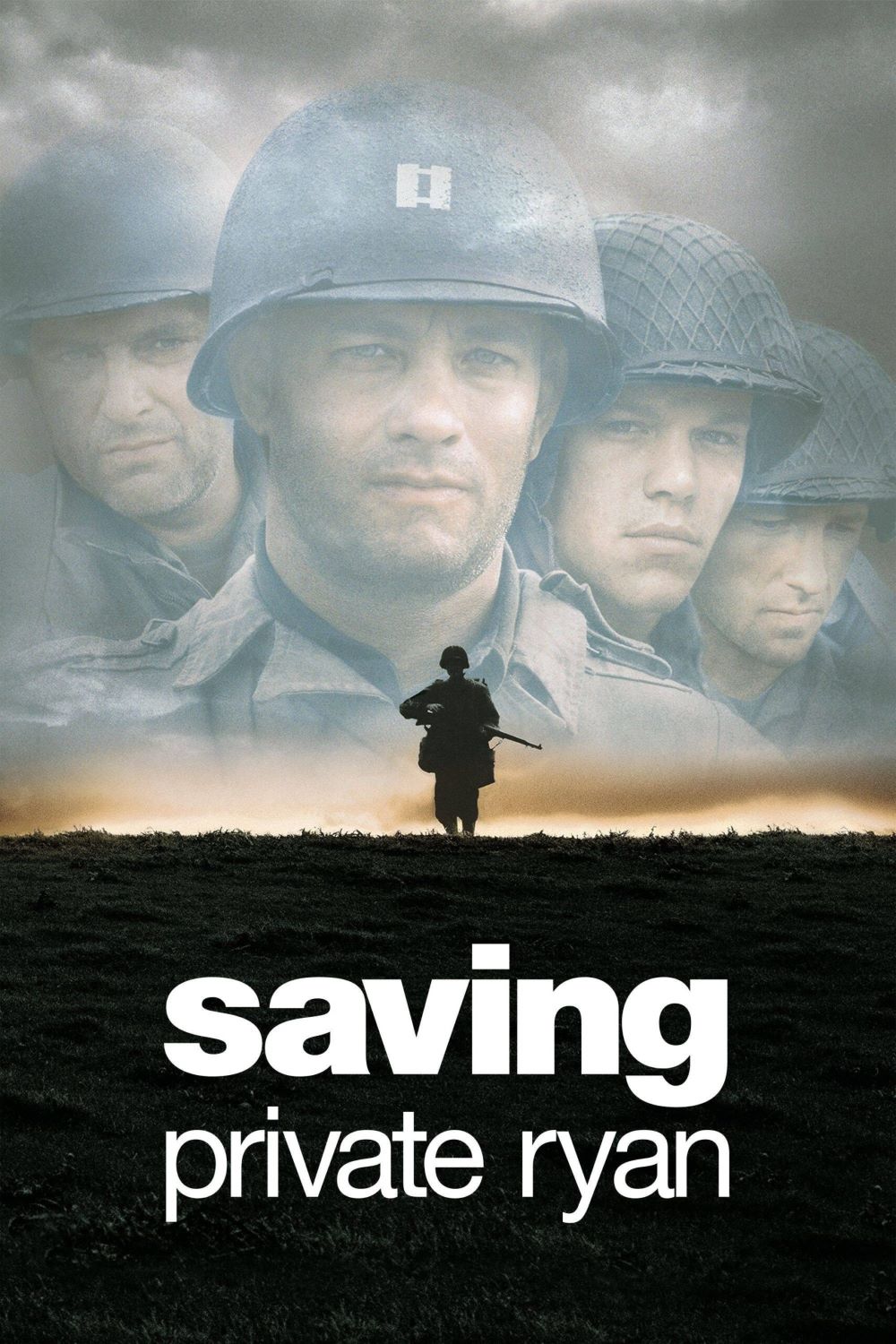
“Someday we might look back on this and decide that Saving Private Ryan was the one decent thing we were able to pull out of this whole godawful, shitty mess.” — Sergeant Horvath
Saving Private Ryan stands as a landmark achievement in war cinema, intricately weaving immersive battle scenes, rich character dynamics, and profound moral themes into a nearly three-hour exploration of World War II’s human cost. One of its most remarkable features is the opening Omaha Beach landing sequence, a meticulously crafted, over 24-minute depiction of warfare’s brutal reality. Spielberg deploys a cinema verité style with handheld cameras capturing disorientation and chaos through the soldiers’ eyes. The sound design envelops the viewer in a sensory onslaught—gunfire, shouting, explosions—creating a visceral experience that immerses audiences directly in the terror and confusion of D-Day.
The filming process drew heavily on historical accuracy, with the production shot on the coast of County Wexford, Ireland, employing amputee actors and practical effects over computer graphics to simulate violent injuries and battlefield horrors. Muted tones evoke wartime photographs, and rapid, shaky editing conveys the disorganized, frantic environment soldiers endured. Consulting WWII veterans and historians, Spielberg created a sequence that reshaped cinematic portrayals of war, influencing how future films would approach the genre’s raw immediacy and emotional weight.
The film’s narrative follows a squad led by Captain Miller on a mission to locate and bring home Private James Ryan, whose three brothers have been killed in combat. The mission is steeped in the real-life tragedy of the five Sullivan brothers who died together aboard the USS Juneau in the Pacific, prompting military policies to prevent similar familial devastation. This historical context frames the story’s ethical heart: risking several men’s lives to save one, raising enduring questions about the value of individual sacrifice within the broader war.
In Saving Private Ryan, sacrifice is portrayed ambiguously—not as the sacrifice of a single hero but as the collective cost borne by the men tasked with rescuing one individual under perilous conditions. As the squad journeys through the war-torn French countryside, the deaths, injuries, and tensions they face underscore war’s randomness and the difficulty of weighing one life against many. The narrative refuses to romanticize or simplify, instead confronting the audience with the tragic truth that countless soldiers lose their lives without recognition or purpose, while some survive against staggering odds.
Duty and camaraderie thread throughout the film, portrayed through the soldiers’ evolving relationships and personal struggles. Each grapples with loyalty not only to their mission but to their fellow men and their own moral codes.
Integral to the film’s power is Tom Hanks’s layered performance as Captain John Miller. Hanks breathes life and emotional depth into Miller, portraying him as a man shaped by civilian life—revealed poignantly when he discloses his pre-war profession as a schoolteacher—now transformed by the relentless demands of war. He embodies an officer who is both composed and vulnerable, carrying the heavy burden of leadership with quiet dignity. Hanks’s portrayal reveals the internal struggles beneath Miller’s stoic exterior: moments of doubt, moral conflict, and fatigue subtly expressed through a trembling hand or a weary gaze. This humanity makes Miller relatable, as a man trying to maintain order and purpose amid chaos.
Hanks skillfully balances Miller’s authoritative presence with warmth and empathy, particularly evident in his paternal interactions with younger soldiers, reinforcing Miller’s role as both a leader and protector. His nuanced acting delivers the complexity of a man constantly negotiating duty and compassion. In scenes of high tension or moral quandaries, Hanks conveys the weight of command while allowing glimpses into Miller’s psychological strain, deepening the film’s emotional resonance.
Following Hanks’s Miller, a standout amongst the supporting cast is Tom Sizemore’s portrayal of Technical Sergeant Mike Horvath, Miller’s steady second-in-command. Sizemore embodies the pragmatic, battle-hardened soldier whose loyalty and experience provide emotional grounding for the squad. Sizemore portrays Horvath’s weariness and quiet commitment, adding layers of realism that deepen the exploration of how war reshapes individuals. The chemistry and shared history between Miller and Horvath are palpable, illustrating the bonds that sustain soldiers through hardship and lending emotional weight to the narrative.
The film wrestles with intense moral ambiguity throughout. The mission’s premise—to risk many lives to save one—compels both characters and viewers to confront complex questions about justice, value, and the cost of war. Scenes presenting difficult choices, such as the decision to spare or execute prisoners, dramatize these ethical dilemmas and highlight the emotional burdens borne by soldiers.
Technically, the film excels, with Janusz Kaminski’s dynamic cinematography capturing both the chaos of battle and intimate moments with evocative clarity. The immersive sound design reinforces the brutal reality, stripping warfare of glamor and confronting audiences with its daunting human costs.
Despite the overwhelming destruction and loss, Saving Private Ryan offers moments of humanity and hope. The rescue mission serves as a fragile symbol of compassion in the midst of devastation, while the film’s closing reflections on memory and legacy emphasize the lasting significance of sacrifice and survival.
Saving Private Ryan stands as a monumental achievement in the war genre, combining visceral combat realism, compelling characters, and moral complexity. Through Hanks’s deeply human Captain Miller and the nuanced supporting performances, especially Sizemore’s grounded Horvath, the film explores themes of sacrifice, duty, and brotherhood with unflinching honesty. Its enduring legacy lies in its unvarnished yet empathetic portrayal of war’s cost and the profound sacrifices made by those who lived it.
Just when I thought I was through with Clint Eastwood, they pull me back in!
Actually, Clint Eastwood may have directed Invictus but that’s not why I’m writing about it today. I’m writing about it because today is Morgan Freeman’s 88th birthday. Everyone knows Morgan Freeman, of course, He’s the man with the amazing voice. If you ever want to hear someone narrate your life, you want that narrator to Morgan Freeman. Freeman is also one of our greatest actors and, for my money, Invictus is his best and more important performance.
Morgan Freeman plays the role of Nelson Mandela in Invictus. Taking place in 1994 and 1995, Invictus centers around the early days of the former political prisoner’s presidency of South Africa and how he used the 1995 Rugy World Cup to bring the tension-filled country together. While Afrikaner Francois Pinneaur (Matt Damon) unexpectedly leads South Africa to the finals of the World Cup, Mandela tries to guide South Africa into the post-Apartheid era.
Playing a role like Nelson Mandela would have to intimidate even the most confident of actors but Freeman gives a warm, humorous, and believable performance of a man who became a living icon. Freeman captures both Mandela’s humanity and his canny political instincts and he never allow the performance to become a caricature. Freeman projects the wisdom that comes from a lifetime of refusing to be broken or defeated, despite the best efforts of both the Apartheid regime and the activists who think that, as president, Mandela is too much of a moderate and too quick to forgive. Freeman (and Matt Damon) give performances that help the film get over a few spots where it falls into the typical clichés of the sports genre. Invictus is a good tribute to both Mandela and the way competition can bring people together.
One final note: Invictus was filmed on location in South Africa. When Matt Damon’s character is shown the cell were Mandela spent 27 years of his life, Eastwood shows us the actual cell and it’s a reminder of the strength of Mandela that he not only survived but that he went on to lead his country.
This may be my favorite for the Superbowl evening so far. Sometimes, a person can ask a lot of a friendship. Ben Affleck and Matt Damon’s friendship gets pushed to the limit in this Dunkin Donuts commercial. Like Wonder Woman once said, “Children. I work with Children.” Jennifer Lopez puts up with a lot. 🙂
Well, it’s that time of the month again! Here are my Oscar predictions for August!
This month, the biggest development in the Oscar race was Dune Part Two being moved to a 2024 release. With no end in sight for the SAG/AFTRA strike, it wouldn’t surprise me if more big productions — like The Color Purple — ended up following Dune to 2024. (One film that will not be moving back is Killers of the Flower Moon, as everyone knows that Martin Scorsese is the true star of that film.) With so many films potentially moving back, this Oscar race could end up paralleling the 2020 race, in which a lot of movie that might otherwise not be nominated moved into the slots that would have otherwise been reserved for the big studio productions. (Regardless of their individual strengths, both Nomadland and CODA owed a bit of their victory to the way COVID disrupted their Oscar races.)
Below are my predictions for August. Be sure to also check out my predictions for March and April and May and June and July!!
Well, it’s that time of the month again! Here are my Oscar predictions for July!
Probably the biggest development in the race is that both Barbieand Oppenheimer opened with a bang and established themselves as bona fide contenders, along with Scorsese’s Killers of the Flower Moon. I think people were expecting that as far as Oppenheimer was concerned whereas the critical acclaim (and criticism) received by Barbie was a bit more of a surprise. At this point, the debate over whether or not Barbie has a message can only work to the film’s advantage. Working against it is the same thing that kept the Lego movies from showing up in the Best Animated Feature category. For all the discussion about what Barbie means, there’s still the risk of certain members of the Academy viewing it as being an extended commercial. Still, for now, I think both films have to be considered strong contenders.
(What about Sound of Freedom? some may be asking. Regardless of the film’s box office success and what other qualities the film may or may nor have, there’s no way the Academy is going to consider a film about and starring an outspoken Trump supporter.)
If there’s anything that could truly upend the Oscar race, it’s how the studios are going to deal with the SAG/AFTRA strike. For instance, there’s been speculation that some contenders — like The Color Purple — will be pushed back until the strike is settled so that their casts will be able to do publicity for them. It’s totally possible that some of the big contenders that we’re expecting to see in November and December could instead be pushed back to 2024. We’ll see what happens.
Below are my predictions for July. Be sure to also check out my predictions for March and April and May and June!!
With the year almost halfway over, the Oscar race still feels pretty fluid, though I think things will come a bit more into focus next month with the release of Oppenheimer and Barbie. Obviously, Oppenheimer feels more like an Oscar picture than Barbie but you never know what could happen. The Academy appears to really like Greta Gerwig. Of course, both of those film have received so much hype that the true test could be just living up to expectations. Killers of the Flower Moon manage to pass that test at Cannes and, as a result, it’s the current Oscar front runner.
Below are my predictions for June. Be sure to also check out my predictions for March and April and May!
Well, for once, Cannes has helped the Oscar picture to come into focus. The triumphant premiere of Killers of the Flower Moon not only cemented the film’s status as an early front runner but it also confirmed that Leonardo DiCaprio will be in the running for Best Actor and Lily Gladstone for either Best Actress or Supporting Actress. It also sound like Robert De Niro could receive another nomination. (Despite the importance of his role, Jesse Plemons’s screen time is apparently limited.)
The other Oscar contender to come out of Cannes would appear to be Jonathan Glazer’s The Zone of Interest. There is some talk that the film itself could be a bit too chilly for the Academy and, being familiar with Glazer’s work, that would not necessarily surprise me. But, for now, The Zone of Interest is among my predicated Best Picture nominee. I’m also going to continue to predict that Oppenheimer will be nominated and, after seeing the trailer, I’m a bit more confident that The Color Purple will be nominated as well. And I’m still going to toss in Barbie because why not?
That said, the year isn’t even halfway over yet and there’s a lot of films to come. It’s entirely possible that the majority of the best picture nominees are going to be films that haven’t even shown up on anyone’s radar yet.
Below are my predictions for May. Be sure to also check out my predictions for March and April!
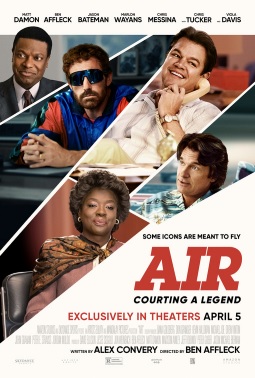
Air opens with a montage of the 80s. Ronald Reagan is President. MTV is actually playing music. Wall Street is full of millionaires. Sylvester Stallone is singing with Dolly Parton for some reason. Because the specific year is 1984, people are nervously giving George Orwell’s book the side-eye. Everyone wants an expensive car. Everyone wants a big house. Everyone wants the world to know how rich and successful and special they are.
What no one wants is a pair of Nike basketball shoes. All of the major players are wearing Adidas and Converse while Nike is viewed as being primarily a company that makes running shoes. CEO Phil Knight (played by Ben Affleck) is considering closing down the basketball shoe division. Sonny Vaccaro (Matt Damon), however, has a plan that he thinks will save the division. Instead of recruiting three or four low-tier players to wear and endorse Nike shoes, Sonny wants to spend the entire division’s budget on just one player. Sonny is convinced that a young Michael Jordan is destined to become one of the best players in the history of basketball and he wants to make a shoe that will be specifically designed for Jordan.
The problem is that Michael Jordan doesn’t want to have anything to do with Nike because Nike is not viewed as being a cool brand. Jordan wants to sign with Adidas, though he’s considering other offers as well. He also wants a new Mercedes. Even though everyone tells Sonny that he’s wasting his time and that he’ll be responsible for a lot of people losing their jobs if he fails, Sonny travels to North Carolina to make his pitch personally to Jordan’s mother (Viola Davis).
For it’s first 50 minutes or so, Air feels like a typical guy film, albeit a well-directed and well-acted one. Almost all of the characters are former jocks and the dialogue is full of the type of good-natured insults that one would expect to hear while listening to a bunch of longtime friends hanging out together. For all the pressure that Sonny is under, the underlying message seems to be one of wish fulfilment. “Isn’t it great,” the film seems to be saying, “that these guys get to hang out and talk about sports all day?” When Sonny runs afoul Michael Jordan’s agent, David Falk (Chris Messina), one is reminded of the stories of temperamental film executives who spent all day yelling at each other on the telephone. The efforts to sign Jordan feel a lot like the effort to get a major star to agree to do a movie and it’s easy to see what attracted Damon and Affleck to the material. Even though the majority of the film takes place in the Nike corporate offices, it deals with a culture that Damon and Affleck undoubtedly know well.
But then Jason Bateman delivers a great monologue and the entire film starts to change. Despite his reluctance to sign with Nike, Michael Jordan and his family have agreed to visit the corporate headquarters. Sonny has a weekend to oversee the creation of the shoe that will hopefully convince Jordan to sign. When Sonny shows up for work, he’s excited. But then he has a conversation with Rob Strasser (Jason Bateman), the head of marketing. Strasser talks about his divorce and how he only sees his daughter on the weekends. Every weekend, Rob brings his daughter the latest free Nike stuff. His daughter now his 60 pairs of Nike shoes. Rob admits that, even if he loses his job, he’ll probably still continue to buy Nike shoes because that’s now what his daughter expects whenever she sees him. Rob compares Sonny’s plan to the Bruce Springsteen song Born in the USA, in that the tune sounds hopeful but the lyrics are much darker. If the plan succeeds, Nike will make a lot of money. If it fails, Rob and everyone in the basketball division will be out of a job and that’s going to effect every aspect of their lives. Rob points out that Sonny made his decision to pursue only Michael Jordan without thinking about what could happen to everyone else. Sonny says that success requires risk. Rob replies that Sonny’s words are spoken, “like a man who doesn’t have a daughter.”
It’s an honest moment and it made all the more powerful by Bateman’s calm but weary delivery of the lines. It’s the moment when the film’s stakes finally start to feel real, even though everyone knows how the story eventually turned out. As well, it’s in this moment that the film acknowledges that the Air Jordan legacy is a complicated one. Rob talks about how the shoes are manufactured in overseas sweatshops. Later, when discussing whether or not Michael Jordan should get a percentage of the sales, Jordan’s mother acknowledges that the shoes aren’t going to be cheap to purchase. They’re going to be a status symbol, just as surely as the Mercedes that Jordan expects for signing with the company. Air becomes much like that Springsteen song. On the surface, it’s a likable film about a major cultural moment, full of dialogue that is quippy and sharply delivered without ever falling into the pompous self-importance of one of Aaron Sorkin’s corporate daydreams. But, under the surface, it’s a film about how one cultural moment changed things forever, in some ways for the better and in some ways for the worse.
It’s an intelligent film, one the creates a specific moment in time without ever falling victim to cheap nostalgia. Matt Damon gets a brilliant monologue of his own, in which he discusses how America’s celebrity culture will always attempt to tear down anyone that it has previously built up. Ben Affleck plays Nike’s CEO as being an enigmatic grump, alternatively supportive and annoyed with whole thing. As for Michael Jordan, he is mostly present in only archival footage. An actor named Damian Delano Young plays him when he and his parents visit Nike’s corporate headquarters but, significantly, his face is rarely show and we only hear him speak once. In one of the film’s best moments, he shrugs his shoulders in boredom while watching a recruitment film that Nike has produced to entice him and, because it’s the first reaction he’s shown during the entire visit, the audience immediately understands the panic of every executive in the room.
Air is a surprisingly good film. It’s currently streaming on Prime.
Here are my Oscar predictions for April! As always, when it’s this early in the year, I recommend taking all of these with a grain of salt. At this point, the only thing that anyone knows for sure is that it’s safe to remove Jonathan Majors and Magazine Dreams from any list of predictions.



 Through the Shattered Lens