Horror on the Lens: Robot Monster (dir by Phil Tucker)


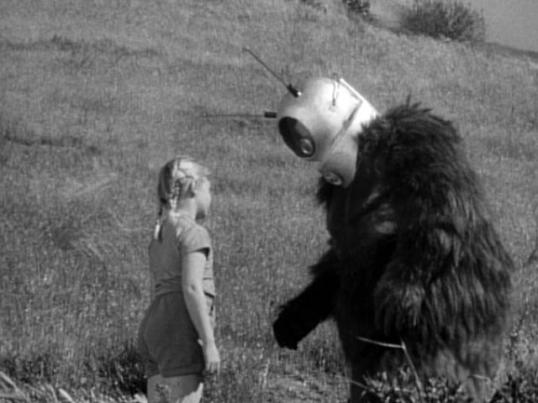
Today’s horror film is a true classic of its kind, the 1953 science fiction epic Robot Monster.

Now, I should admit that this is not the first time that I’ve shared Robot Monster in October.  I share it every year and, every year, YouTube seems to pull the video down in November.  That sucks because Robot Monster is one of those weird films that everyone should see.  So, I’m going to share it again.  And, hopefully, YouTube will let the video stay up for a while.

As for what Robot Monster is about…

What happens with the Earth is attacked by aliens?  Well, first off, dinosaurs come back to life.  All of humanity is killed, except for one annoying family.  Finally, the fearsome Ro-Man is sent down to the planet to make sure that it’s ready for colonization.  (Or something like that.  To be honest, Ro-Man’s exact goal remains a bit vague.)

Why is Ro-Man so fearsome?  Well, he lives in a cave for one thing.  He also owns a bubble machine.  And finally, perhaps most horrifically, he’s a gorilla wearing a diver’s helmet.  However, Ro-Man is not just a one-dimensional bad guy.  No, he actually gets to have a monologue about halfway through the film in which he considers the existential issues inherent in being a gorilla wearing a diver’s helmet.

Can humanity defeat Ro-Man?  Will Ro-Man ever get his intergalactic supervisor to appreciate him?  And finally, why are the dinosaurs there?

Despite the film’s reputation for being borderline incoherent, most of those above questions actually are answered if you pay attention to the first few scenes of Robot Monster.  In fact, one could even argue that Robot Monster is maybe a little bit more clever than it’s often given credit for.  Of course, it’s still a zero-budget mess of a film but it’s also undeniably fun and, in some sections, unexpectedly dark.  If you’ve never seen it before, you owe it to yourself to set aside an hour and two minutes in order to watch it.  You’ve never see anything like it before.

Finally, I should note that Robot Monster’s hero was played by George Nader, who actually did go on to appear in several mainstream films.  Despite his good looks and talent (which may not be obvious in this film but which he did have), George Nader struggled to get starring roles in Hollywood, where he was often dismissed as just being a member of Rock Hudson’s entourage.  (It’s been theorized that Nader struggled because the studios feared that giving him too big of a role would lead to the gossip magazines writing about Nader’s relationship with Hudson, though the two were just friends.  Nader was in a relationship with Hudson’s private secretary, Mark Miller, from 1947 until Nader’s death in 2001.)  Nader finally left Hollywood and went on to have a pretty successful career in Europe.  He was perhaps best known for playing secret agent Jerry Cotton in a series of films in the 60s.

Enjoy Robot Monster!
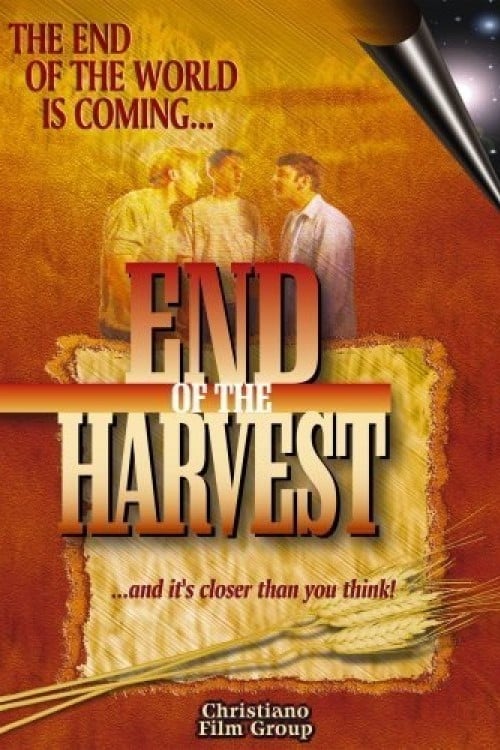
October Positivity: End of the Harvest (dir by Rich Christiano)


This 1995 film takes place on a college campus that is ruled over by the worst possible people …. THE PHILOSOPHY CLUB!

Okay, that might be an exaggeration.  It’s a big campus and undoubtedly, most of the students are just doing their own thing and don’t particularly care about any of the clubs or any of the Greek organizations or any of that stuff.  That said, it does seem like a surprisingly large amount of people are interested in the weekly Philosophy Club debates, despite the fact that the Philosophy Club itself seems to only have three members.

After seeing his religious friend get totally trampled while trying to debate the existence of God, Scott (Brad Heller) decides that it’s time to take a stand.  Scott used to be a wild frat boy and he even lost his license due to a DUI.  But now, he’s super Christian and he’s totally excited because he found a 50 year-old thesis about when the Bible says the world is going to end.  Scott challenges the Philosophy Club to a debate and soon, flyers are being put up all over campus.

The only problem is that Scott isn’t ready for the debate.  The Philosophy Club has uncovered the secrets of Scott’s dark past and, after they harass him on campus and start calling his ex-girlfriends, Scott starts to feel that he won’t be able to make his case.  He begs Matt (David A.R. White) for help but Matt says that it’s pointless to try to debate anything in front of the Philosophy Club.  The Philosophy Club doesn’t care about anything but Marx and Nietzsche.  Matt not only thinks that the debate will be a waste of time but he also thinks that it will actually drive people away from religion.

Of course, Matt has another reasons for not wanting to talk about the end of the world.  He’s been having odd dreams, in which he’s standing in a wheat field and watching an old farmer using a scythe to bring in the last harvest….

There have been several faith-base films that have been set on campus and they all have the same basic plot.  A religious person goes to college and has their faith tested by people who were raised differently and who insist that science or philosophy can serve as a substitute for religion.  It always seems to lead to a classroom debate and the religious student usually wins because all of the arguments have been slanted to their side.  Of course, it’s not just Christian films that do this.  If there’s one thing that Christians and atheists share in common, it’s an almost total ignorance about how the other side views the world and the questions of existence.  Anti-Christian films always fall back on the stereotype of the fanatical parents who refuse to allow their children to leave the house.  Christian films, on the other hand, always seem to feature an atheist who is angry at God.  End of the Harvest doesn’t go quite as far into those stereotypes as some other Christian films do but it’s still hard not to notice that the bizarrely smug members of the Philosophy Club are left speechless by some pretty basic arguments.  It’s the fantasy that both atheists and Christians tend to indulge in, the one where you come up with the pithy one-liner that no one can refute.  Christians always want to know how you can be angry at a God you don’t believe in.  Atheists always want to know, if God created everything, who created God.  In the real world, both arguments can be easily refuted but, in the movies, they’re always game changers.

End of the Harvest is a fairly standard religion-on-campus film.  It’s not going to convert anyone.  That said, the scenes of Matt standing in that wheat field have a nicely surreal feel to them.  In those scenes, it really does feel like the end is coming.

Lisa Marie’s Week In Review: 9/26/22 — 10/2/22


Happy October!  

Let’s got to it:

Films I Watched:

  1. Dark Was The Night (2014)
  2. Exterminators of the Year 3000 (1983)
  3. The Gabby Petito Story (2022)
  4. Police Academy (1984)
  5. This Island Earth (1955)
  6. Uncommon Valor (1983)
  7. Urban Cowboy (1980)
  8. Vampire in Vegas (2009)
  9. The Werewolf of Washington (1973)

Television Shows I Watched:

  1. Abbott Elementary
  2. The Amazing Race
  3. Atlanta
  4. Beyond the Headlines
  5. Bubblegum Crisis
  6. CHiPs
  7. Concentration
  8. East New York
  9. Ghosts
  10. Hell’s Kitchen
  11. Law & Order
  12. Law & Order: Organized Crime
  13. Law & Order: SVU
  14. Mike
  15. Mike Judge’s Beavis and Butt-Head
  16. Monarch
  17. Night Flight
  18. Password
  19. Saving Grace
  20. So Help Me Todd
  21. Super Password
  22. Survivor

Books I Read:

  1. Bad Dreams (1994) by R.L. Stine
  2. The I-5 Killer (1988) by Ann Rule
  3. The Serial Killer Letters (1998) by Jennifer Furio
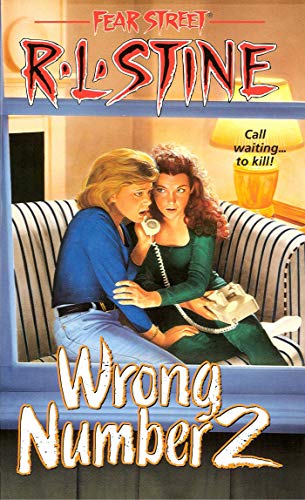
  4. The Wrong Number 2 (1995) by R.L. Stine

Music To Which I Listened:

  1. Arctic Monkeys
  2. Ashlee Simpson
  3. Avril Lavigne
  4. Big Data
  5. Bjork
  6. Blondie
  7. The Brady Bunch
  8. Britney Spears
  9. The Chordettes
  10. Christina Aguilera
  11. Ed Sheeran
  12. Fiona Apple
  13. Gary Jules
  14. Goblin
  15. Hilary Duff
  16. Jakalope
  17. Jessica Simpson
  18. John Carpenter
  19. Kim Wilde
  20. Lindsay Lohan
  21. Lorde
  22. Muse
  23. Nine Inch Nails
  24. Saint Motel

Live Tweets:

  1. Exterminators of the Year 3000
  2. Police Academy
  3. Uncommon Valor
  4. Dark Was The Night

Trailers:

  1. The Last of Us
  2. Smile
  3. 6 Trailers for October 2nd, 2022

Horror on the Lens:

  1. The Horror at 37,000 Feet
  2. The Giant Spider Invasion

Horror on Television:

  1. Ghost Story 1.1
  2. Ghost Story 1.2

4 Shots From Horror History:

  1. 1930s
  2. 1940s

News From Last Week:

  1. Rapper and actor Coolio dead at 59
  2. Actress Venetia Stevenson dead at 84
  3. Jim Root has issues with the new Slipknot album, takes a shot at Rage Against The Machine
  4. Trevor Noah to Exit ‘Daily Show’ After Seven Years
  5. ‘Community’ Movie Is Finally Happening, at Peacock, Fulfilling the Show’s Prophecy

Links From Last Week:

  1. Welcome To “Shocktober” 2022! Here Are Some Classic Horror Films To Get You Screaming!
  2. The World’s Common Tater’s Week in Books, Movies, and TV 10/1/22

Links From The Site:

  1. Erin shared Casper, Ghost, Trio, Park, Haunted Rock, Portal, and Margarita Ranch!
  2. Erin shared The Covers of Tales of Magic and Mystery, The Covers of La Paree, and the Adventures of Masked Detective!
  3. Erin reviewed Facing Nolan and The Furnace!
  4. Erin welcomed you to October!
  5. Erin shared a baseball moment that she loved!
  6. Case reviewed Waffle, Moon and Killer Pizza!
  7. Case wished you a Happy Horrorthon!
  8. Leonard shared the trailer for The Last of Us!
  9. Jeff shared music videos from The Dickies, Ozzy Osbourne, Winger, Deep Purple, Huey Lewis and the News, Meat Loaf, and Olivia Newton-John!
  10. Jeff reviewed Downdraft, Evil Toons, Death Kiss, Friend of the Family II, City of Bad Men, Revolver, and Vigilante!
  11. Jeff played Deathtrap and Deep In the Spooky, Scary Woods!
  12. Jeff shared a great moment in comic book history and a great moment in television history!
  13. I reviewed The Astrologer, A Little Game, Light Blast, The Gabby Petito Story, Texas Chainsaw Massacre 2, Second Glance, Exterminators of the Year 3000, Embrace of the Vampire, Bloody Moon, Await Further Instructions, Nightmare Alley, Father Stu, Urban Cowboy, Honk for Jesus Save Your Soul, Corrective Measures, Vendetta, Mike, and I Came By!
  14. I reviewed California Dreams, One World, City Guys, Love Boat, Fantasy Island, and Hang Time!
  15. I read Wrong Number 2, The Serial Killer Letters, Capital Crimes, Blood Sweat & Chrome, Night of Camp David, Altamont, Chiefs, The Nashville Chronicles, and The KGB Candidate!
  16. I shared my week in television, an amv of the day, and an anti-smoking commercialI shared ten things I’m looking forward to in October!
  17. I took a look at the casting of Frankenstein!
  18. I paid tribute to Michael Powell and Nicholas Winding Refn!
  19. I shared a scene from The Wolfman, Frankenstein and The Passenger!
  20. I shared my Oscar predictions for September!
  21. I wrote about a boy named Zac!

More From Us:

  1. At SyFy Designs, I shared My Favorite Time of Year, Happy Tuesday, It’s Wednesday, October Dreams, Be Sure To Answer, Happy October, and Relax!
  2. At Reality TV Chat Blog, I wrote about the finale of Big Brother, the latest episode of Survivor, and the latest episode of The Amazing Race!
  3. I wrote about Big Brother for the Big Brother Blog!
  4. At my music site, I shared songs from Gary Jules, John Carpenter, The Chordettes, Muse, Hilary Duff, Ashlee Simpson, and Lindsay Lohan!
  5. At my dream journal, I shared Last Night’s Fragment of Vaccine Booster Dream, Last Night’s Talking To Mom In The Rain Dream, Last Night’s Skipping High School Dream, Last Night’s Long Dream About A Dead Actor, Last Night’s Disney World Dream, Last Night’s Chess Playing Dream, and Last Night’s Cemetery Dream!
  6. For Horror Critic, I reviewed Attack of the Puppet People, This Island Earth, and The Giant Spider Invasion!
  7. At Pop Politics, Jeff shared 62 Years Ago Today, Mad Magazine on Top Gun, The Cure For The Political Blues, 83 Years Ago Today, Fordham Defeated Waynesburg, Fredric Wertham Prepares For October, The Thrilla in Manila, and Adam Kinzinger Loses it!
  8. At her photography site, Erin shared Branches, Alleyway, Fences, Stop, The Sun Through A Window, I Am With U, and The Tracks!

Want to check out last week?  Click here!

Horror on TV: Ghost Story 1.2 “The Concrete Captain” (dir by Richard Donner)


In the 2nd episode of Ghost Story, an important lesson is learned.  If you’re going to bury a sea captain, do not bury him in concrete because his spirit belongs to the ocean.  Upset his spirit and he’ll basically ruin whatever hopes you have of bringing tourists to the seashore!

This episode stars Gena Rowlands and Stuart Whitman and it was directed by none other than Richard Donner.  Donner, of course, would go on to direct such films as The Omen, Superman, and Lethal Weapon.

Enjoy!

(Despite the weird thumbnail, this video should work if you click play.)

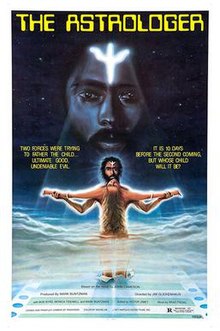
The TSL’s Horror Grindhouse: The Astrologer (dir by James Glickenhaus)


Quite possibly one of the most boring film ever made, 1975’s The Astrologer tells the story of …. well, I’m not really sure what the point of it all is.

Basically, an astrologer named Alexi Abarnel (Bob Byrd) has figured how to combine the zodiac with 70s technology and, as a result, everyone’s potential for good and evil can be determined simply by typing their birthdate into a computer.  The U.S. government funds his agency, which is known as Interzod.  And let’s be honest, that does sound like the type of dumbass thing that the government would fund, especially when the Democrats are in power.

According to the stars, the second coming of Christ is only a few days away.  Alexi is convinced that he has married the woman who is destined to give birth to the Savior.  Because of this, he refuses to consummate his marriage because it’s very important that she remain a virgin.  However, he hasn’t bothered to inform her of any of this so poor Kate (Monica Tidwell) spends all of her time wondering why her husband hasn’t touched her in five years of marriage and why it’s also so important to him that she never tell anyone the actual date of her birth.

Meanwhile, a group of gypsies are traveling the country and, under the leadership of Kajerste (Mark Buntzman), they are both murdering people and also compelling people to commit suicide.  Interzod is concerned about Kajerste because of his “zodiacal” potential but Alexei is also concerned that he doesn’t have Kajerste’s exact birthdate.  But the fact that Kajerste is commanding his followers to kill people should be enough to clue Interzod into the fact that Kajerste is bad guy, regardless of whether he’s a Capricorn or an Aquarius.  Fortunately, Interzod has come up with a plan on how to kill Kajerste, one that involves implanting thoughts in his head via electrodes and tranquilizer dots.  A young congressman (Al Narcisse) wants to help because he’s so interested in Interzod’s work.  However, it turns out that the ludicrously complicated plan to take out Kajerste is …. well, ludicrously complicated.  If my tax money is going to fund Interzod, I would hope they would make better use of it.

The film’s plot definitely has the potential to be interesting but, unfortunately, The Astrologer is a very, very talky film.  It only has a 78-minute running time and the majority of the film is made up people having very long and very dry conversations about how Interzod works and why its work is important.  The problem is that there’s not really any need to convince the viewers that Interzod is important or to show us how it works.  No watching this film is going to be interested in an in-depth examination of a fictional government agency.  Everyone knows that this isn’t 60 Minutes and it’s not like the NSA has hand-picked the correspondent who is going to be reporting on them.  This is a film about spies, astrology, and a killer cult.  It should be a lot of fun but instead it’s incredibly boring.

That’s not to say that it’s a total waste.  This was James Glickenhaus’s first film as a director.  Glickenhaus went to direct some well-regarded action films in the 80s and there are a handful of isolated moments in The Astrologer where it is obvious that the film was made by someone who had a good visual eye.   A cult ceremony scene that is almost totally made up of freeze frames is nicely done.  And, as always, it’s hard not to admire the ambition of someone trying to make a metaphysical thriller and tackle the big questions of existence on a budget.

In the end, though, the most interesting thing about The Astrologer is its insistence on having its characters frequently use the term “zodiacal.”  Take a drink every time that you hear someone say, “zodiacal” but don’t drive afterwards.

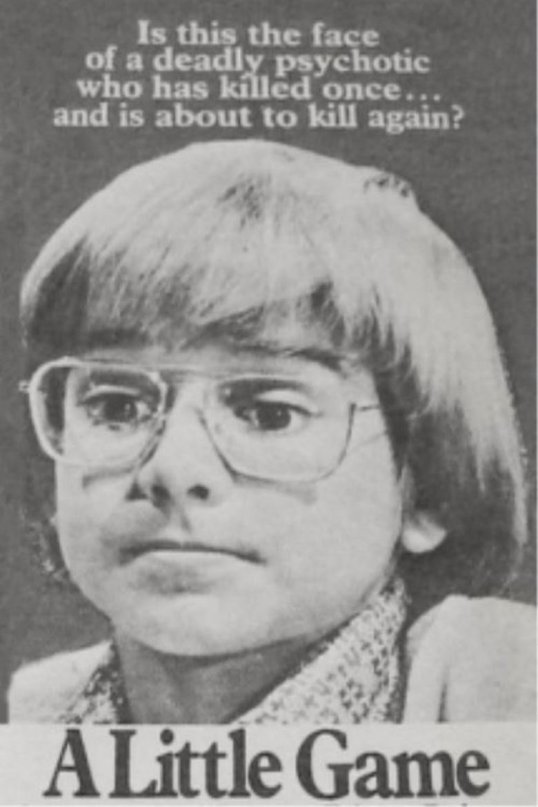
Retro Television Review: A Little Game (dir by Paul Wendkos)


Welcome to Retro Television Reviews, a feature where we review some of our favorite and least favorite shows of the past!  On Sundays, I will be reviewing the made-for-television movies that used to be a primetime mainstay.  Today’s film is 1971’s A Little Game.  It  can be viewed on YouTube!

Twelve year-old Robert Mueller (played by 13 year-old Mark Gruner, who would later go on to play one of Chief Brody’s kids in Jaws) just hasn’t been the same since his father died.  Robert idolized his father, who was an architect who built bridges and reportedly pushed his workers to take a lot of dangerous risks to get the job done.  Perhaps that explains why Robert is not getting along with his new stepfather, Paul Hamilton (Ed Nelson).  Robert’s mother, Elaine (Diane Baker), is convinced that Robert will eventually come to accept Paul but Paul isn’t so sure.

Robert is a student at a private military academy.  When he comes home for the holidays, he brings his “best friend” with him.  Stu Parker (Christopher Shea) is friendly and polite but he’s also easily led and has a difficult time standing up for himself.  Paul immediately sees that Robert is bullying Stu.  Elaine, however, thinks that Paul is being too critical.  That’s just the way boys are!

In his diary, Robert has written that he killed someone and that he’s sure that he got away with it.  When Paul comes across the entry, he worries that Robert might be telling the truth.  Paul goes as far as to hire a private detective (Howard Duff) to investigate whether there’s been any mysterious deaths at Robert’s school.  Stu, meanwhile, explains that he and Robert sometimes play “a little game” where they imagine that best way to murder someone and get away with it.  But Stu assures Paul that it’s just a game.  They don’t actually kill anyone.

Is Stu telling the truth or is Robert just as dangerous as his deceased father, a man who Paul claims was a psychopath?  Or is Paul himself the one who has become delusional with jealousy of his stepson?

The answer to those questions is pretty obvious from the minute that Robert and Stu show up at the house.  In fact, it’s so obvious that it kind of leaves the viewer wondering how everyone else in the film could be so clueless.  On the one hand, it’s understandable that Elaine would not want to admit that there is something seriously wrong with her son.  On the other hand, how many times can anyone close their eyes to a very obvious truth?  From the minute that Robert shows up, wearing his uniform and curtly ordering around the family’s maid (played by High Noon‘s Katy Jurado, who deserved a better role), he might as well have psychopath tattooed on his forehead.

That said, evil children movies are always somewhat effective, even the ones that are a bit too obvious in their approach.  Psychologically, we’ve been conditioned to always associate children with innocence, optimism, and hope.  Children are the future, so the saying goes. As such, it does carry some impact when they’re portrayed as being a force of danger.  As I watched this film, I did find myself wondering if there was any hope for Robert.  With all that he had done, could someone still reach him and turn him around?  Or was he destined to go from being an evil child to an evil adult?  It really does get to the question of whether evil is a real, almost supernatural force or if it’s something that’s created by a combination of environment and social taboos.  Was Robert born evil or did he become evil?  A Little Game doesn’t answer that question but I doubt that anyone could.  Some questions are destined to be forever unanswered.

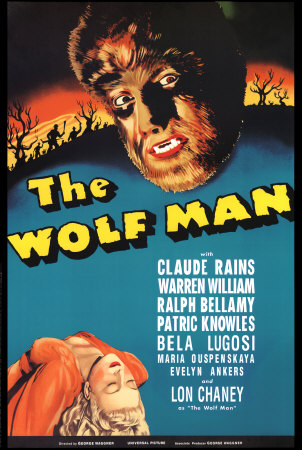
Horror Scenes That I Love: Lon Chaney Transforms Into The Wolfman


Today’s horror scene that I love comes from 1941’s The Wolf Man.  Watch as poor Larry Talbot transforms, for the first time, into The Wolf Man!  I’ll be the first to admit that, in the past, I’ve been pretty critical of Larry as a character and Lon Chaney, Jr.’s performance in the role.  But, in this scene, Chaney does an excellent job of capturing Larry’s helplessness as the curse takes effect for the first time.

Horror Book Review: Wrong Number 2 by R.L. Stine


The cover of Wrong Number 2 features two teenage girls huddled around a telephone and a blurb that reads, “Call waiting …. to kill!”

What does that even mean? “Call waiting …. to kill.”  That would seem to suggest that there’s a person named Call in this book who is waiting to kill someone.  I’ve read the book.  There’s no one named Call.  Alternatively, it could mean that we’ve got a Ring situation on our hands and actually answering the phone will lead to some sort of supernatural death curse.  In that case, the call itself would be waiting to kill.  But again, I’ve read the book.  There’s nothing supernatural about it.

“Call waiting …. to kill?”  It means nothing but let’s just be honest here.  It’s kind of charming in its meaninglessness.  It’s an R.L. Stine book, so it seems appropriate.  You can’t expect these thing to make any sort of logical sense.

Wrong Number 2 is a sequel to Stine’s The Wrong Number.  One year has passed since Deena and her friend Jade were nearly killed by the chainsaw-wielding Mr. Faberson.  They’ve both managed to recover nicely from almost being killed.  Deena is now dating an Australian exchange student.  Jade is dating the star of the school’s basketball team.  Deena’s half-brother Chuck (who is also Jade’s ex-boyfriend) is off at college but, unknown to the rest of his family, he’s planning on abandoning school so that he can move to Los Angeles and become a big time movie star.  Everything seems to be just fine …. until Deena and Jade start getting mysterious phone calls from a man who says that he’s going to get revenge on them.

Could it be Mr. Faberson?  He’s still in prison but apparently, he’s due to soon be released.  Could it be Mr. Faberson’s former mistress, a real estate agent who is trying to fiind a buyer willing to overlook the fact that a murder that occurred there and buy Mr. Faberson’s old house?  Or could it even be Chuck, who shows up in town and appears to be desperate to convince Jade to dump boring old Teddy and run away to California with him?

Reading the book, it was hard to avoid the feeling that Stine himself wasn’t really sure who he wanted the villain to be.  Towards the end of the book, there are three different scenes that, taken on their own, could have served as an ending for Wrong Number 2.  It’s as if Stine just kept tacking on possible endings and solutions until he finally found one that he felt worked.  The end result is a book that feels somewhat slapdash, even by the lenient standards of R.L. Stine.  If I had survived being attacked by chainsaw-wielding maniac and was now getting calls from someone claiming they were going to do the same thing to me again, I would perhaps be a bit more upset than either Deena or Jade seems to get.  At the very least, I would consider changing my number or maybe moving to a different town.  Not Deena and Jade, though.  And hey, good for them.  If nothing else, this incredibly silly book suggests that there’s not a single trauma that can’t be conquered by dating a basketball player.  The cast of Hang Time would agree, I’m sure.

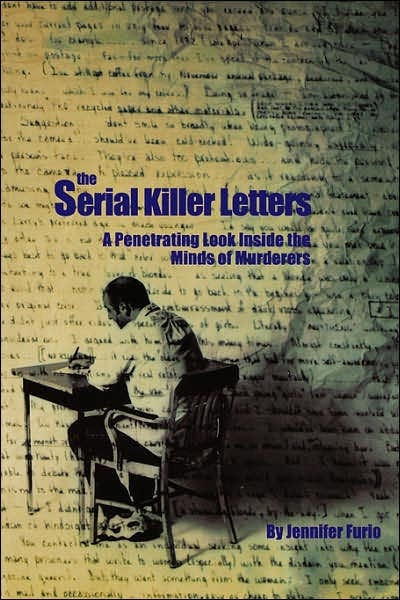
Non-Fiction Review: The Serial Killer Letters by Jennifer Furio


One thing that I would probably never have the courage to do would be to seek correspondence with a serial killer.

That’s just me.  I mean, I like horror movies.  I do have a bit of a morbid streak.  I devour true crime books and I do occasionally watch those trashy docudramas that show up on A&E and Netflix.  But I have never personally known any serial killers and I’m totally happy to keep it that way.  I don’t care if they are incarcerated and perhaps in serious mental need of pen pal to communicate with.  If you’ve killed over three people, I’m not sending you anything with my return address on it.

Jennifer Furio, however, disagreed.  In the 90s, she wrote to over 50 serial killers and several of them wrote back.  She then published that correspondence in the 1998 book, The Serial Killer Letters.  My main reaction, while reading the book, was a desire to ask, “What were you thinking!?”  Furio doesn’t include any of the letters that she wrote to the killers.  Instead, she only includes the letters that she got in return.  Still, just from reading those letters, it’s obvious that she revealed quite a lot of details about her life to these men.  Quite a few of them thank her for sending them a picture.  One complains that her smile is too wide and that “whoever told women to smile all the time should be cold cocked.”  Quite a few of them ask her to send them money.  Another offers her what appears to be marital advice.  Randall Woodfield, an ex-football player who was only convicted of one murder but who is suspected of having committed 18 others, sends several flirtatious letters and shirtless pictures of himself.  Judging from Woodfield’s comments, he was, at the very least, under the impression that Furio was flirting back.  There are times that the reader really does wish that Furio had included her own letters to the serial killers, if just to provide context for some of their replies.  Instead, it is left as an open question as to what she said to get some of them to open up to her in the way that they did.

However, even with Furio’s contribution to the conversation missing, the letters do make for interesting and disturbing reading.  Some of the killers admit their guilt.  Others continue to insist that they were railroaded by the cops or the FBI.  Quite a few claim that it was their partner who committed all of the murders and that they were just along for the ride.  Some, like Texas’s own Henry Lee Lucas, claim to have found God.  Some write about how ashamed they are of themselves while others show no shame at all.  What every single one of them has in common is an intense sense of victimhood.  Even the ones who admit their guilt and claim to feel shame over what they did are quick to argue that the world never gave them a chance to be anything other than a killer.  A few of them, like David Gore (who was executed for his crimes in 2012) did such good job of seeming to express contrition that it wasn’t until I re-read their letters that I noticed that most of them still managed to weasel out of actually accepting responsibility for their actions.  Instead, it was because they were raised by an abusive parent or because they fell in with the wrong crowd or the education system failed them or …. well, just about everyone had an excuse.  Even locked away in prison and with no hope of ever gaining freedom, the majority of the book’s killers continued to manipulate and try to control others.  With some, it was no doubt intentional.  With others, it was probably such a natural thing that they don’t even think before doing it.  It was just their nature.

It makes for disturbing reading but it also provides a valuable service.  At a time when it seems as if every serial killer is destined to either have a movie or miniseries centered around themselves and their crimes, it’s good to be reminded that these people are losers.  In this book, you can learn that from reading their own words and looking at the often childish handwriting that they used to scrawl out their claims of victimhood.  Jennifer Furio wrote letters to over 50 serial killers and there wasn’t a Hannibal Lecter or a Dexter Morgan to be found.

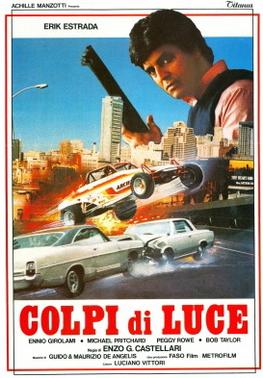
International Horror Film Review: Light Blast (dir by Enzo G. Castellari)


Produced in Italy and first released in 1985, Enzo G. Castellari’s Light Blast is a hybrid of several different genres.  There’s a lot of action, there’s a bit of horror, and there’s also some sci-fi.  Like the majority of Italian exploitation films that came out during the 80s, it’s designed to have a little something for everyone.

Erik Estrada plays Ronn Warren, a detective with the San Francisco Police Department.  (Though the film was filmed on location and it did star American television star Erik Estrada, it’s still very much an Italian production, complete with badly dubbed dialogue and clumsy attempts to capture the peculiarities of American culture.)  When we first see Ronn, he’s in his underwear and he’s carrying a turkey.  Two inbred criminals are trapped in a bank and they’ve taken hostages.  They’ve demanded that the police provide them with dinner and that the food be delivered by someone “not wearing a stitch of clothing.”  Ronn is happy to oblige, though he doesn’t go completely naked because Ronn is one of those police detectives who has trouble following orders.  Of course, as soon as he gets inside the bank, Ronn proves that he doesn’t need to be fully dressed to stop the bad guys.  He just needs for the bad guys to be stupid enough to continually let their guard down and fall for extremely obvious tricks.

While Ronn is showing off his physique, Dr. Yuri Svoboda (played by Enio Girolami, who is credited as Thomas Moore in this film) is planning on terrorizing the city of San Francisco.  He’s developed a giant laser gun that he transports on top of a van.  Whenever he shoots the laser at any digital clock, it causes people to melt and buildings to explode.  His first victims are a teenage boy and girl who are having sex in an abandoned railroad car.  His next victims are the innocent spectators of a stock car race.  What does Dr. Svoboda want!?

It turns out that he wants a lot of money.  Now, if Dr. Svoboda tried this today, I imagine the city would quickly pay up and Dr. Svoboda would be given a police escort to the airport.  But this film was made in the 20th Century, back when people were still willing to fight back against mad scientists with lethal death rays!  Soon, Ronn Warren is running around San Francisco, battling Dr. Svoboda’s henchmen while trying not to get melted himself.  And, of course, it would not be a movie about San Francisco if there wasn’t at least Bullitt-inspired car chase.  For this chase, Ronn steals a stock car and chases the bad guys throughout the city.  Whenever anyone gets in Ronn’s way, he and the car just jump over them while the film’s synth-heavy musical score goes appropriately crazy.

What to say about Light Blast?  It’s a bit of a dumb movie but, to its credit, it doesn’t take itself too seriously.  The melting effects are both so grotesque and so obviously fake that you won’t know whether to laugh or to scream.  Castellari keeps the action moving quickly and Estrada delivers all of his lines through gritted teeth, an indication that both of them knew better than to worry about things like logic or motivation.  Why Dr. Svoboda melting people?  Because he wants to.  How can he somehow get away with driving around in a van that has a very obvious laser gun on top of it?  There wouldn’t be a film otherwise.  That’s just the way Light Blast is.  It’s stupid but it’s so unapologetic in its stupidity that it’s hard not to be entertained.