12 Oscar Snubs From the 1950s


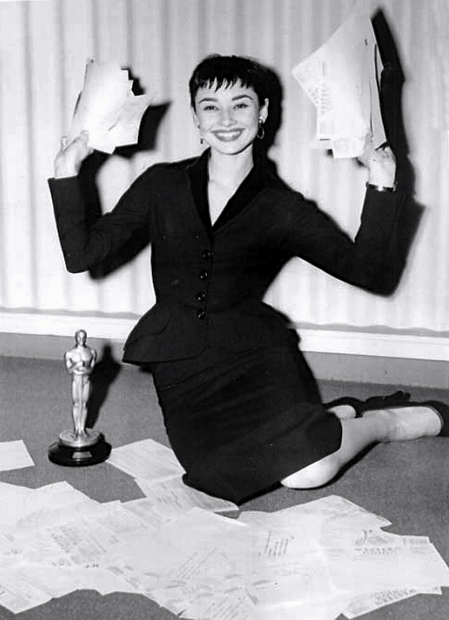
Audrey Hepburn and her Oscar.  At least the Academy didn’t snub her!

Continuing our look at the Oscar snubs of the past, it’s now time to enter the 50s!

World War II was over. Eisenhower was President. Everyone was worried about communist spies. And the Hollywood studios still reigned supreme, even while actors like Marlon Brando and James Dean challenged the establishment.  There were a lot great film released in the 50s.  There were also some glaring snubs on the part of the Academy.  Here’s twelve of them.

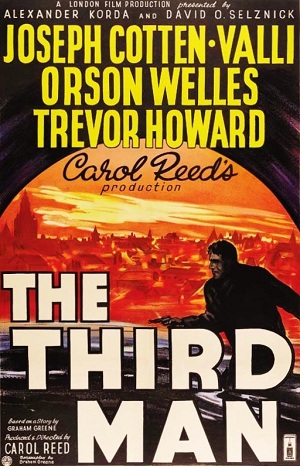
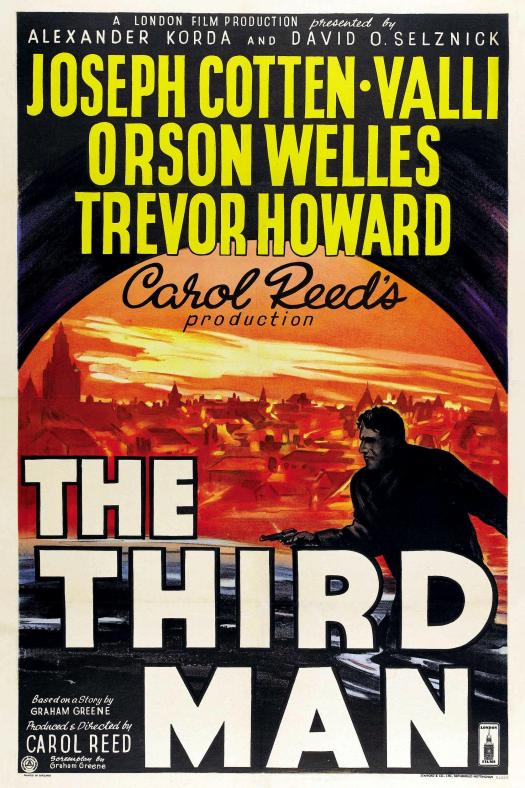
1950: The Third Man Is Not Nominated For Best Picture

….and Orson Welles was not nominated for Best Supporting Actor!  The Third Man received three Oscar nominations, for Director, Cinematography, and Editing.  The fact that Welles, Joseph Cotten, Alida Valli, and the film’s score were not nominated (and that King Solomon’s Mines was nominated for Best Picture instead of The Third Man) remains one of the more surprising snubs in Oscar history.

1952: Singin’ In The Rain Is Not Nominated For Best Picture

What the Heck, Academy!?  This was the year that The Greatest Show On Earth won the Best Picture Oscar.  Personally, I don’t think The Greatest Show On Earth is as bad as its reputation but still, Singin’ In The Rain is a hundred times better.

1953: Alan Ladd Is Not Nominated For Best Actor For Shane

How could Shane score a nomination for Best Picture without Shane himself receiving a nomination?

1954: Rear Window Is Not Nominated For Best Picture

Rear Window was not totally ignored by the Academy.  Alfred Hitchcock received a nomination for directing.  It also received nominations for Best Adapted Screenplay, Cinematography, and Sound.  However, Rear Window was not nominated for Best Picture and James Stewart, Grace Kelly, Raymond Burr, and Thelma Ritter all went unnominated as well.  Today, Rear Window is definitely better-remembered than the majority of 1954’s Best Picture nominees.  Certainly, it deserved a nomination more than Seven Brides For Seven Brothers and Three Coins in The Fountain.

1955: Ralph Meeker Is Not Nominated For Best Actor For Kiss Me Deadly

I guess I shouldn’t be surprised.  If the Academy wasn’t going to nominate Rear Window for Best Picture, there was no way that they would have nominated Ralph Meeker for playing a sociopathic private detective who, even if inadvetedly, helps to bring about the end of the world.

1955: Rebel Without A Cause Is Not Nominated For Best Picture or Best Actor

The 1955 Best Picture lineup was a remarkably weak one.  The eventual winner was Marty, a likeable film that never quite escapes its TV roots.  Picnic has that great dance scene but is otherwise flawed.  Mister Roberts was overlong.  Love Is A Many-Splendored Thing and The Rose Tattoo are really only remembered by those of us who have occasionally come across them on TCM.  Perhaps the best-remembered film of 1955, Rebel Without A Cause, received quite a few nominations but it was not nominated for Best Picture.  And while the Rebel himself, James Dean, was nominated for Best Actor, it was for his performance in East of Eden.  1955 was a strange year.

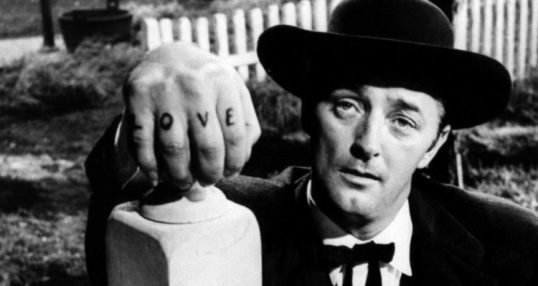
1955: Robert Mitchum Is Not Nominated For Best Actor For The Night of the Hunter

Robert Mitchum only received one Oscar nomination over the course of his entire career, for 1945’s The Story of G.I. Joe.  He deserved several more.  His performance as the villainous preacher in The Night of Hunter made Reverend Harry Powell into one of the most iconic film characters of all time.

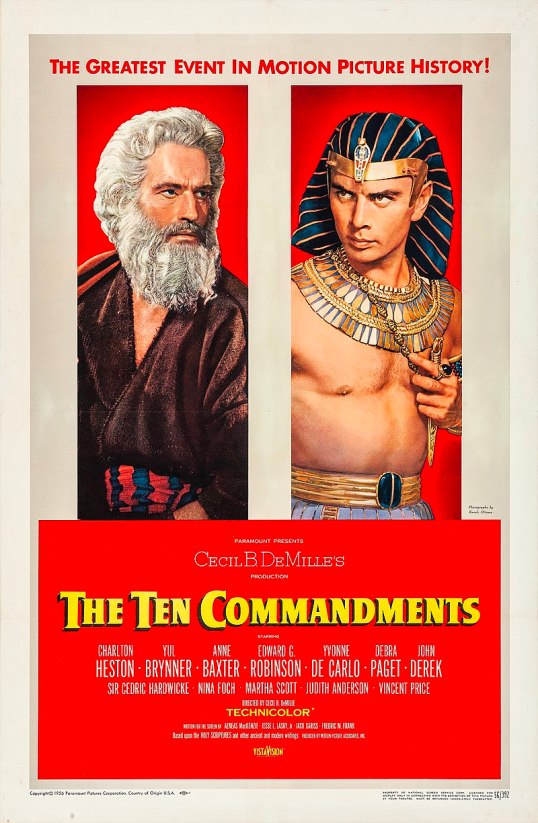
1956: Cecil B. DeMille Is Not Nominated For Best Director For The Ten Commandments

Cecil B. DeMille was only nominated once for Best Director, for 1952’s The Greatest Show On Earth.  DeMille, however, deserved to be nominated for The Ten Commandments.  As campy as DeMille’s films can seem today, he was an expert storyteller and that’s certainly evident when one watches The Ten Commandments, a film that holds the viewer’s attention for nearly four hours.  DeMille deserved a nomination for the Angel of Death scene alone.  The screams in the night are haunting.

1957: Henry Fonda Is Not Nominated For Best Actor For 12 Angry Men

With 12 Angry Men, Fonda did something that very few actors can.  He made human decency compelling.  One gets the feeling that, much like Tom Hanks in Captain Phillips, Fonda made it look so easy that the Academy took him for granted.

1958: Touch Of Evil Is Totally Ignored

Anyone who had researched the history of the Academy knows that there was no way that the 1950s membership would have ever honored Orson Welles’s pulp masterpiece, Touch of Evil.  That said, it still would have been nice if they had.  Touch of Evil has certainly go on to have a greater legacy than Gigi, the film that won Best Picture that year.

1958: Vertigo Is Almost Totally Ignored

Vertigo did receive nominations for Art Direction and Sound but Alfred Hitchcock, James Stewart, and the film itself were snubbed.

1959: Some Like It Hot Is Not Nominated For Best Picture or Best Actress

Some Like It Hot received 6 Oscar nominations, including nominations for Best Director, Best Actor, and Best Adapted Screenplay.  It did not receive a nomination for Best Picture and, sadly, Marilyn Monroe did not receive a nomination for Best Actress.  Much as with Henry Fonda in 12 Angry Men, one gets the feeling that the Academy took Monroe for granted.  It’s sad to realize that, while two actresses have been nominated for playing Marilyn Monroe, Monroe herself would never be nominated.

Agree?  Disagree?  Do you have an Oscar snub that you think is even worse than the 12 listed here?  Let us know in the comments!

Up next: Things get wild with the 6os!

Night of the Hunter (United Artists 1955; D: Charles Laughton)

10 Oscar Snubs From the 1940s


Ah, the 40s! For most of the decade, the world was at war and the Academy’s nominations reflected that fact. The best picture lineups alternated between patriotic films that encouraged the battle against evil and darker films that contemplated both the mistakes of the past and what threats might be waiting in the future.  With the Academy being even more aware than usual that films and awards could be used to send a message, the snubs continued.

1940: John Carradine Is Not Nominated For The Grapes of Wrath

John Carradine’s first credited film appearance was in 1930 but Carradine himself claimed that he had appeared as an uncredited extra in over 70 films before getting that first credit.  Carradine would continue to work until his death 58 years later.  John Carradine did so many films that he was still appearing in new releases in the 90s, years after his death.  He appeared in over 234 films and in countless television shows.  He was a favorite of not only Fred Olen Ray’s but also John Ford’s.

Unfortunately, Carradine was never nominated for an Oscar, despite the fact that he did appear in some classic films.  (He also appeared in a lot of B-movies, which is perhaps one reason why the Academy was hesitant to honor him.)  Personally, I think Carradine most deserved a nomination for playing “Pastor” Jim Casy in John Ford’s The Grapes of Wrath.  Carradine is ideally cast as the former preacher turned labor activist.  When he’s alive, he gives the Joads hope.  When he dies, both the Joads and the audience start to realize how difficult things are truly going to be.

1942: Ronald Reagan Is Not Nominated For Best Supporting Actor For Kings Row

Kings Row is an enjoyably over-the-top small town melodrama and future President Ronald Reagan is fantastic in the film, with his natural optimism providing a nice contrast to the truly terrible things that happen to him and his loved ones over the course of the film.  Reagan was not nominated for this performance, the one that both he and the most of the critics agreed was his best, but he should have been.

1943: Hangmen Also Die Is Not Nominated For Best Picture

Fritz Lang’s anti-Nazi classic was not nominated for Best Picture and only received two nominations (for Sound and Score).  That year, the Best Picture winner was another anti-Nazi classic, Casablanca.

1943: Shadow Of A Doubt Is Ignored

Today, it is recognized as one of Hitchcock’s best but, in 1943, Shadow of a Doubt couldn’t even score a nomination for Joseph Cotten’s wonderfully diabolical turn as Uncle Charlie.  One gets the feeling that the film’s satirical jibes at small town America and its theme of evil hiding behind a normal façade were not what the Academy was looking for at the height of World War II.  It’s a shame because, in many ways, Cotten’s Uncle Charlie was the perfect symbol of the enemy that the Allies were fighting.

1944: Tallulah Bankhead In Not Nominated For Best Actress For Lifeboat

Unlike Shadow of a Doubt, Hitchcock’s Lifeboat received several Oscar nominations.  However, Tallulah Bankhead was not nominated for Best Actress.  Perhaps the Academy was scared of what she might say if she won.

1944: Fred MacMurray and Edward G. Robinson Are Not Nominated For Double Indemnity

For all the nominations that this classic noir received, somehow neither Fred MacMurray nor Edward G. Robinson were nominated for their roles.  Both actors are brilliantly cast against type in this film.  MacMurray uses his trademark casual glibness to portray Walter Neff as being an arrogant man who is hardly as clever as he thinks that he is.  Meanwhile, Robinson’s more introspective performance leaves you with little doubt that, if anyone can solve this case, it’s him.  While Barbara Stanwyck was (rightfully) nominated, it’s had to believe that both MacMurray and Robinson were snubbed.

1946: Thomas Mitchell and Lionel Barrymore Are Not Nominated For Best Supporting Actor For It’s A Wonderful Life

As wonderful as James Stewart and Donna Reed are, it just wouldn’t be Bedford Falls without Uncle Billy and Mr. Potter!  Thomas Mitchell breaks your heart in the scene where he tries to remember what he did with the lost money.  And, for audiences who had just lived through the Great Depression, Lionel Barrymore represented every businessman who cared more about money than people.  It’s impossible to imagine the film without them …. or without Henry Travers, for that matter!  Seriously, very few films have received three best supporting actor nominations but It’s A Wonderful Life deserved to be one of them.

1948: Humphrey Bogart Is Not Nominated For Best Actor For The Treasure of the Sierra Madre

The Treasure of the Sierra Madre received four Oscar nominations.  Somehow, not one of those nominations was not for Humphrey Bogart.

1948 and 1949: Red River, Fort Apache, and She Wore A Yellow Ribbon Are Not Nominated For Best Picture

The public may have loved Westerns but the Academy largely shied away from them, with a few notable exceptions.  Howard Hawks’s Red River and John Ford’s Fort Apache and She Wore A Yellow Ribbon are today all recognized as being classic Hollywood films.  However, the Academy, then at the height of its bias towards “genre” films, didn’t honor any of them.

1949: James Cagney Is Not Nominated For Best Actor For White Heat

“Top of the world, ma!”  Maybe so, but not top of the Oscars.  The Academy was always more interested in honoring Cagney for being a song-and-dance man than for honoring him for his iconic gangster roles.

Agree?  Disagree?  Do you have an Oscar snub that you think is even worse than the 10 listed here?  Let us know in the comments!

Up next: Get ready to hate the commies and to love Ike because the 50s are coming!

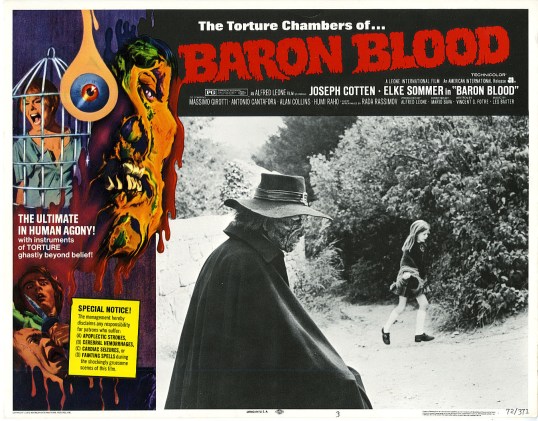
International Horror Film Review: Baron Blood (dir by Mario Bava)


Directed by the great Mario Bava, the 1972 Italian film, Baron Blood, tells a story of gothic horror.

During the 19th century, there was no one as feared in Austria as Baron Otto Von Kleist.  Much like the infamous Gilles de Rais, the Baron was a sadist who used his noble background as a cover for his macabre activities.  In his castle, he murdered hundreds of villagers and, for that, he was nicknamed Baron Blood.  He also had an accused witch burned at the stake.  As she died, she cursed the Baron, saying that he would continually rise from the dead just so he could be killed again and again.  When you think about it, that’s actually a pretty badass curse.

One hundred years later, the Baron’s American descendant, Peter Kleist (Antonio Cantafora), arrives in Austria to check out the family castle.  The castle is being converted into a tacky hotel where tourists can stay in the same rooms where the Baron used to kill his victims.  However, Peter is not particularly concerned with what’s about to happen to the castle.  Instead, he’s in Austria because he’s discovered a parchment that contains an incantation that will bring the Baron back to life.  He wants to give it a try, more for his own amusement than anything else.  Neither her nor Eva (Elke Sommer), a college student who is studying the hotel’s architecture, really think that they are going to bring the Baron back to life by reading the incantation at midnight.  Of course, they’re wrong.

It’s easy to make fun of Peter and Eva for being so naïve as to think that it wouldn’t be a big deal to cast a magic spell but it’s not like they realize that they’re characters in an Italian horror film.  They don’t know that their lives are being directed by Mario Bava.  To be honest, if I was there, I probably would have joined them in reading the spell.  Sometimes, it can be fun to tempt fate.

That said, in the case, fate should not have been tempted.  People are soon dying.  When the man behind the hotel project is murdered, a wheelchair-bound millionaire named Alfred Becker (Joseph Cotten) shows up and purchases the castle for himself and announces plans to restore it.  Will restoring the castle bring peace to the village or is the witch’s curse too powerful to defeat?

Baron Blood is often described as being one of Bava’s lesser films and is it true that it feels a bit conventional, particularly when compared to the subversive and satiric Bay of Blood and the surreal Lisa and the Devil.  Baron Blood was a film that Bava himself was reportedly not enthused about making, one that he took on only because his last few films had struggled at the box office and he didn’t feel he would get any better offers.  Perhaps that’s why a definite strain of melancholy and disillusionment runs through Baron Blood, a film in which a beautiful castle is destined to be turned into a tacky tourist trap by a businessman who could hardly care less about either history or aesthetics.

Though the story is a bit predictable (and you’ll have little trouble guessing which character is the Baron in disguise), I actually like Baron Blood.  Not surprisingly, considering that it was a Bava film, Baron Blood is heavy on gothic atmosphere, so much so that it feels almost like an extra-bloody Hammer film.  Both the castle and the village are full of shadows, from which anyone or anything could emerge at any moments and the cold grandeur of the castle is nicely contrasted with the garishness of 70s Europe.  A visually striking scene where Eva flees from an attacker is especially well-directed and the film ends on a properly macabre note, one that once again feels as if it’s putting a distinctly Italian spin on a situation one would usually expect to find in a Hammer production.

Antonio Cantafora is a bit of a stiff but Elke Sommer gives an energetic and committed performance as someone who is torn between preserving the past and embracing the modern world.  She doesn’t get to do as much in this film as she did in Lisa and the Devil but she’s still a sympathetic lead and someone to whom most viewers will be able to relate.  We care about her character and, as a result, we care about discover just what exactly the Baron has in store for her.

Baron Blood may not have been a critical or a box office success when it was originally released but it has achieved a certain immortality.  In a development that could have been lifted from one of Bava’s films, the sounds of the Baron’s victims screaming were later lifted from this film, remixed, and sold as being a recording that had apparently been made of sinners screaming from behind the gates of Hell.  To this day, there are sites that insist that this recording is genuine.  One hopes that Bava would have appreciated the admittedly dark humor of it all.

30 More Days of Noir: The Killer Is Loose (dir by Budd Boetticher)


Film noir comes to the suburbs!

The Killer is Loose opens with the robbery of a savings and loan.  At first, it seems like meek bank teller Leon Poole (Wendell Corey) behaved heroically and kept the robbery from being far worse than it could have been.  How meek is Leon Poole?  He’s so meek that his nickname has always been Foggy.  People have always made fun of him because of his glasses and his bad eyesight.  Everyone assumes that Poole is just one of those quiet people who is destined to spend his entire life in obscurity.

However, the police soon discover that Leon Poole is not the hero that everyone thinks that he is.  Instead, he was involved in the robbery!  When Detective Sam Wagner (Joseph Cotten) leads a group of cops over to Poole’s house to arrest the bank teller, Poole’s wife is accidentally shot and killed.  At the subsequent trial, Poole swears that he’ll get vengeance.  And then he’s promptly sent off to prison.

Jump forward three years.  Leon Poole is still in prison.  He’s still deceptively meek.  He still wears glasses.  Everyone still assumes that he’s harmless.  Of course, that’s what Poole wants them to believe.  He’s still obsessed with getting his vengeance.  Meanwhile, Detective Wagner and his wife, Lila (Rhonda Fleming), are living in the suburbs and have a somewhat strained marriage.  Lila wants Wagner to find a less dangerous and less stressful job.  Wagner wants to keep busting crooks.

When Poole see a chance to escape from prison, he does so.  That’s not really a shock because even the quietest of people are probably going to take advantage of the chance to escape from prison.  What is a shock is that Poole ruthlessly murders a guard while making his escape.  He then kills a truck driver and steal the vehicle.  He then tracks down his old army sergeant and guns him down while the man’s wife watches.  Always watch out for the quiet ones, as they say.

Now, Poole has just one more target.  He wants to finish his revenge by killing Lila Wagner.

The Killer is Loose is a tough and, considering the time that it was made, brutal film noir.  (Seriously, the scene where Poole kills his former sergeant really took me by surprise.)  While both Rhonda Fleming and Joseph Cotten give good performances in their roles, it’s Wendell Corey who really steals the film.  Corey plays Poole not as an outright villain but instead as a man who has been driven mad by years and years of taunts.  After spend his entire life being told that he was a loser, Poole finally decided to do something for himself and, as a result, his wife ended up getting killed by the police.  Now that Poole’s managed to escape from prison, he’s willing to do anything just as long as he can get his final revenge.  Corey plays Poole with a smoldering resentment and the performance feels very real.  (If the film were made today, it’s easy to imagine that Poole would be an anonymous twitter troll, going through life with a smile on his face while unleashing his anger online.)  It brings a very real spark and feeling of danger to a film that would otherwise just be a standard crime film.

The Killer Is Loose also makes good use of its suburban setting, suggesting that both Fleming and Cotten have allowed themselves to get complacent with their life away from the obvious dangers of the big city.  You can buy a new house, the film seems to be saying, but you can’t escape the past.

Horror On The Len: The Abominable Dr. Phibes (dir by Robert Fuest)


For today’s horror on the lens, we have one of Vincent Price’s most popular films, 1971’s The Abominable Dr. Phibes!

This is Price at his considerable best.  Be sure to read Gary’ review.

And watch the film below!

Enjoy!


4 Shots From 4 Films: In Tribute To Joseph Cotten


The Third Man (1949, directed by Carol Reed)

4 Shots From 4 Films is just what it says it is, 4 shots from 4 of our favorite films. As opposed to the reviews and recaps that we usually post, 4 Shots From 4 Films lets the visuals do the talking!

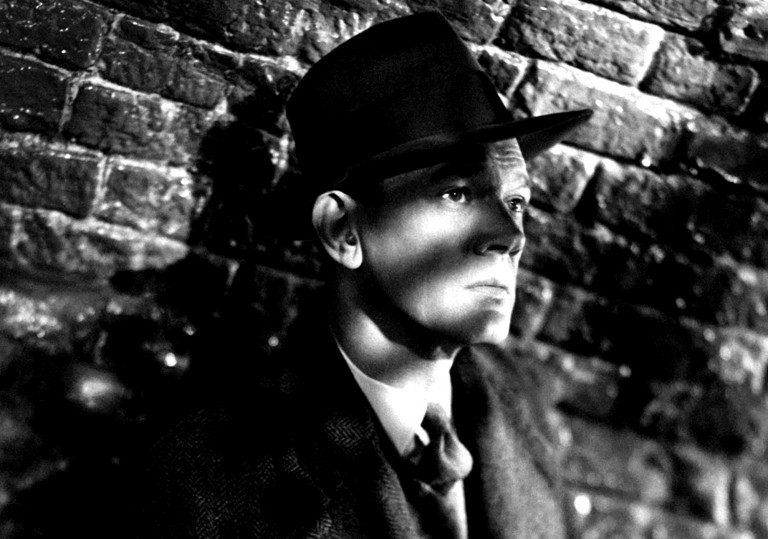
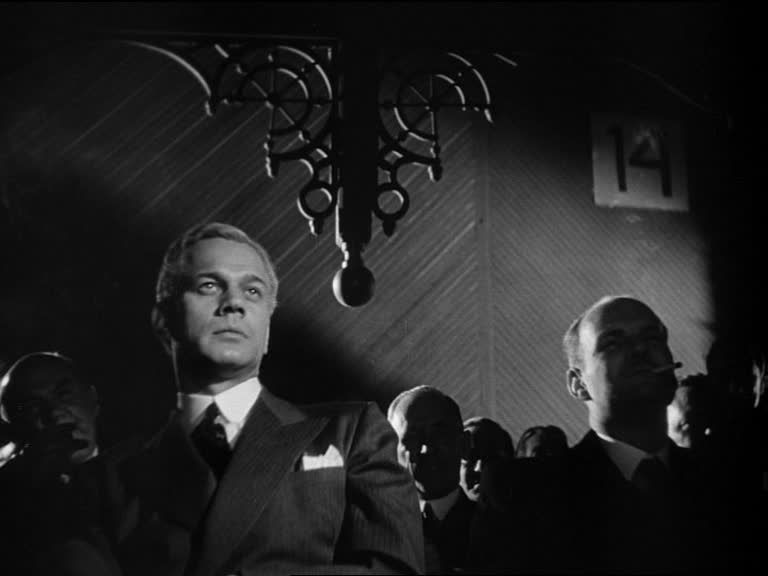
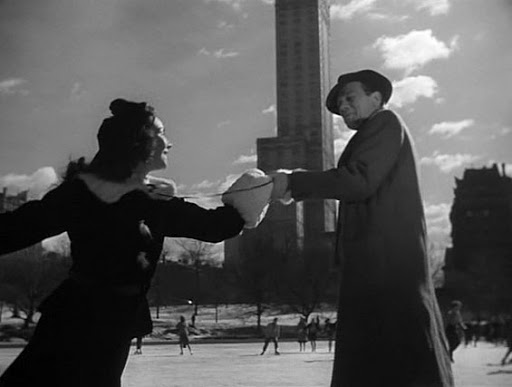
As you can probably guess from my pen name and my profile pic, Joseph Cotten is one of my favorite actors.  Born 115 years ago on this day, Cotten may be best known for his association with Orson Welles but he worked with several great directors over the years.  Along with playing Jedediah Leland in Welles’s Citizen Kane, he starred in Hitchcock’s Shadow of a Doubt and Carol Reed’s The Third Man.  Even while his film career was flourishing, Cotten continued to appear on the Broadway stage and, during the early days of television, he frequently appeared on anthology series, the majority of which were broadcast live.  Cotten even had a memorable cameo in Michael Cimino’s infamous film, Heaven’s Gate.

In honor of Cotten’s birthday, here are four shots from four of his best films.

4 Shots From 4 Films

Citizen Kane (1941, directed by Orson Welles)

Journey Into Fear (1943, directed by Norman Foster and Orson Welles)

Shadow of a Doubt (1943, directed by Alfred Hitchcock)

Portrait of Jennie (1948, directed by William Dieterle)


Horror on the Lens: The Screaming Woman (dir by Jack Smight)


Today’s horror on the lens is The Screaming Woman, a 1972 made-for-TV movie that’s based on a Ray Bradbury short story.

Olivia de Havilland plays Laura Wynant, who has just returned home from a stay at a mental institution.  Soon after her arrival, Laura starts to hear a woman crying for help.  Laura becomes convinced that the woman has been buried alive on her property but, because of her debilitating arthritis, she can’t dig the woman up on her own.  And, because of her own mental history, no one believes her when she tries to tell them about what she’s hearing!

The Screaming Woman features screen legend Olivia De Havilland giving a sympathetic performance as Laura.  It also features two other luminaries of the golden age of Hollywood — Joseph Cotten and Walter Pidgeon — in supporting roles.  It’s a good little thriller so watch and enjoy!

(And of course, I should mention that the great Olivia De Havilland is still with us, 103 years old and living in France.)

Goodnight, Vienna: THE THIRD MAN (British Lion 1949)


gary loggins's avatarcracked rear viewer

I’m just gonna come right out and say it: THE THIRD MAN is one of the greatest movies ever made. How could it not be, with all that talent, from producers Alexander Korda and David O. Selznick, director Carol Reed , screenwriter Graham Green, and cinematographer Robert Krasker, to actors Orson Welles, Joseph Cotten, Alida Valli , and Trevor Howard. It’s striking visuals, taut direction, and masterful acting transcend the film noir genre and make THE THIRD MAN one of the must-see films of 20th Century cinema.

The story starts simply enough, as American pulp novelist Holly Martins arrives in post-war Vienna to meet up with his old pal Harry Lime, only to learn that Harry was recently killed in a car accident. He attends the graveside service, meeting Harry’s mysterious actress girlfriend Anna Schmidt, and is quickly pulled down a rabbit hole of intrigue and deception involving the British…

View original post 363 more words

6 Good Films That Were Not Nominated For Best Pictures: The 1950s


The Governor’s Ball, 1958

Continuing our look at good films that were not nominated for best picture, here are 6 films from the 1950s.

The Third Man (1950, dir by Carol Reed)

Now, it should be noted that The Third Man was not ignored by the Academy.  It won the Oscar for Best Cinematography and it was nominated for both editing and Carol Reed’s direction.  But, even with that in mind, it’s somewhat amazing to consider all of the nominations that it didn’t get.  The screenplay went unnominated.  So did the famous zither score.  No nominations for Joseph Cotten, Alida Valli, Trevor Howard, or even Orson Welles!  And finally, no Best Picture nomination.  1950 was a good year for the movies so competition was tight but still, it’s hard to believe that the Academy found room to nominate King Solomon’s Mines but not The Third Man.

Rear Window (1954, dir by Alfred Hitchcock)

Alfred Hitchcock directed some of his best films in the 50s, though few of them really got the recognition that they deserved upon their initial release.  Vertigo is often described as being Hitchcock’s masterpiece but, to be honest, I actually prefer Rear Window.  This film finds the master of suspense at his most playful and, at the same time, at his most subversive.  Casting Jimmy Stewart as a voyeur was a brilliant decision.  This film features one of my favorite Grace Kelly performances.  Meanwhile, Raymond Burr is the perfect schlubby murderer.  Like The Third Man, Rear Window was not ignored by the academy.  Hitchcock was nominated and the film also picked up nods for its screenplay, cinematography, and sound design.  However, it was not nominated for best picture.

Rebel Without A Cause (1955, dir by Nicholas Ray)

Nicholas Ray’s classic film changed the way that teenagers were portrayed on film and it still remains influential today.  James Dean is still pretty much the standard to which most young, male actors are held.  Dean was not nominated for his performance here.  (He was, however, nominated for East of Eden that same year.)  Instead, nominations went to Sal Mineo, Natalie Wood, and the film’s screenplay.  Amazingly, in the same year that the forgettable Love Is A Many-Splendored Thing was nominated for best picture, this popular and influential film was not.

Kiss Me Deadly (1955, dir by Robert Aldrich)

It’s unfortunate but not surprising that Kiss Me Deadly was totally ignored by the Academy.  In the mid-to-late 50s, the Academy tended to embrace big productions.  There was no way they were going to nominate a satirical film noir that featured a psychotic hero and ended with the end of the world.  That’s a shame, of course, because Kiss Me Deadly has proven itself to be more memorable and influential than many of the films that were nominated in its place.

Touch of Evil (1958, dir by Orson Welles)

Speaking of underappreciated film noirs, Orson Welles’s Touch of Evil is one of the craftiest and most brilliant films ever made.  So, of course, no one appreciated it when it was originally released.  This cheerfully sordid film features Welles at his best.  Starting with a memorable (and oft-imitated) tracking shot, the film proceeds to take the audience into the darkest and most eccentric corners of a small border town.  Everyone in the cast, from the stars to the bit players, is memorably odd.  Even the much mocked casting of Charlton Heston as a Mexican pays off wonderfully in the end.

The 400 Blows (1959, dir by Francois Truffaut)

Francois Truffaut’s autobiographical directorial debut was released in the United States in 1959 and it was Oscar-eligible.  Unfortunately, it only picked up a screenplay nomination.  Of course, in the late 50s, the last thing that the Academy was going to embrace was a French art film from a leftist director.  However, The 400 Blows didn’t need a best picture nomination to inspire a generation of new filmmakers.

Up next, in an hour or so, we continue on to the 60s!


6 Good Films That Were Not Nominated For Best Picture: The 1940s


Gary Cooper. Joan Fontaine, Mary Astor, and Donald Crisp at the 1942 Oscars.

Continuing our look at good films that were not nominated for best picture, here are 6 films from the 1940s.

Shadow of a Doubt (1943, dir by Alfred Hitchcock)

Amazing, Alfred Hitchcock never won the Best Directing Oscar.  In fact, it was rare that his films were even nominated.  (Though Rebecca did win Best Picture, it could be argued that film’s style was as much to due to David O. Selznick as it was to Hitchcock.)  One of the best of Hitchcock’s unnominated films was Shadow of a Doubt.  With its dark sense of humor and wonderful performances from Joseph Cotten and Teresa Wright, Shadow of a Doubt was Hitchcock at his best.  It was also, perhaps, a bit too darkly subversive for the Academy.

Detour (1945, dir by Edgar G. Ulmer)

The ultimate film noir nightmare, Detour was actually well-received when it was originally released, though it would take a while for the film to be recognized as a true classic.  Still, there was no way that the Academy was going to nominate a low-budget B-movie about a guy who hitchhikes across America and manages to accidentally kill two people.  Detour was far too nightmarish and surreal for the Academy but it’s remained one of the most influential films ever made.

Gilda (1946, dir by Charles Vidor)

Another classic film noir, Gilda is the film that, for many, will always define Rita Hayworth.  Through the film was a financial and critical success, it was ignored by the Academy.  The success of this film and the popularity of Hayworth’s performance led to the fourth atomic bomb to ever be detonated being named Gilda.  Rita Hayworth was reportedly not happy to hear it.

Black Narcissus (1947, dir by Michael Powell and Emeric Pressburger)

One of the most visually stunning films ever made, Black Narcissus won Oscars for Best Cinematography and for Art Design but it received no other nominations, not even for the outstanding performances of Deborah Kerr and Kathleen Byron, as two nuns who have very different reactions to the Himalayas.

Out of the Past (1947, dir by Jacques Tourneur)

A world-weary private investigator (Robert Michum) is hired by a slick and psychotic gangster (Kirk Douglas) and ordered to track down the gangster’s girlfriend (Jane Greer).  So beings this rather melancholy and introspective film noir, one that is distinguished by wonderfully shadowy photography and which features one of Mitchum’s best performances.  Sadly, the Academy recognized neither the film nor Mitchum’s performance.

Portrait of Jennie (1948, dir by William Dieterle)

This haunting and dream-like fantasy stars Joseph Cotten as a painter who meets, paints, and falls in love with a mysterious woman (Jennifer Jones) who may not be what she seems.  The film was apparently not a huge success when it was first released but, seen today, it’s hard not to get swept up in the film’s romantic sadness.  Though it received a nomination for Best Cinematography, it was otherwise ignored by the Academy.

Up next, in about an hour or so, the 1950s!