Sinners Wins In Indiana


Yesterday, the Indiana Film Journalists Association announced its picks for the best of 2025.  The winners are listed in bold.

BEST FILM
28 Years Later
Black Bag
Bob Trevino Likes It
Bugonia
Frankenstein
Friendship
Hamnet
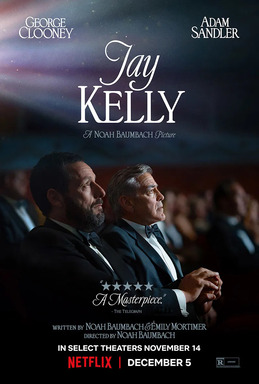
Jay Kelly
The Life of Chuck
Marty Supreme
No Other Choice
One Battle After Another (RUNNER-UP)
The Phoenician Scheme
The Plague
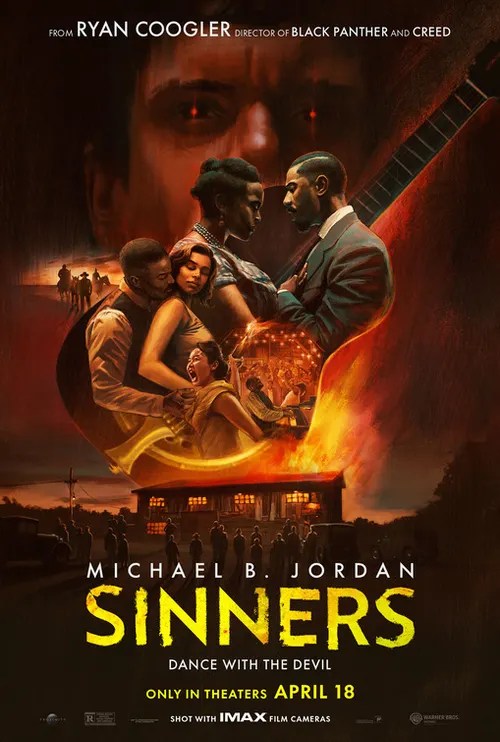
Sinners (WINNER)
Splitsville
Superman
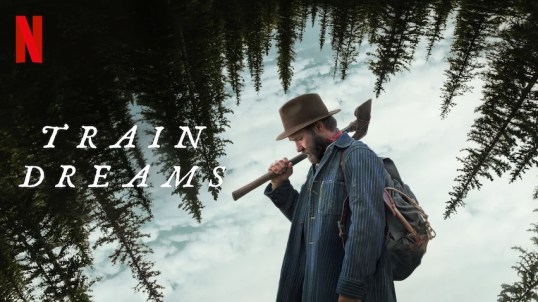
Train Dreams
Wake Up Dead Man: A Knives Out Mystery
Weapons

Other Best Film Finalists / Top 10 Films: (listed alphabetically)
Bob Trevino Likes It
Hamnet
The Life of Chuck
Marty Supreme
No Other Choice
Train Dreams
Wake Up Dead Man: A Knives Out Mystery
Weapons

BEST ANIMATED FILM
In Your Dreams
KPop Demon Hunters (WINNER)
The Legend of Hei 2 (RUNNER-UP)
Little Amélie Or The Character Of Rain
Ne Zha 2
Predator: Killer of Killers
Zootopia 2

BEST FOREIGN LANGUAGE FILM
Cloud
It Was Just an Accident
Left-Handed Girl
No Other Choice (WINNER)
Reflection In A Dead Diamond
Rental Family
The Secret Agent
Sentimental Value (RUNNER-UP)
Universal Language
The Voice of Hind Rajab

BEST DOCUMENTARY
Are We Good?
Deaf President Now!
Disposable Humanity
Grand Theft Hamlet
Hacking at Leaves
Orwell: 2+2=5 (RUNNER-UP)
Pavements
The Perfect Neighbor
The Tenderness Tour (WINNER)

BEST ORIGINAL SCREENPLAY
Noah Baumbach and Emily Mortimer – Jay Kelly
Mary Bronstein – If I Had Legs I’d Kick You
Ronald Bronstein and Josh Safdie – Marty Supreme (RUNNER-UP)
Ryan Coogler – Sinners (WINNER)
Michael Angelo Covino and Kyle Marvin – Splitsville
Zach Cregger – Weapons
David Koepp – Black Bag
Tracie Laymon – Bob Trevino Likes It
Jafar Panahi – It Was Just an Accident
Charlie Polinger – The Plague

BEST ADAPTED SCREENPLAY
Paul Thomas Anderson – One Battle After Another (WINNER)
Clint Bentley and Greg Kwedar – Train Dreams
Guillermo del Toro – Frankenstein
Mike Flanagan – The Life of Chuck (RUNNER-UP)
Alex Garland – 28 Years Later
Dan Gregor, Doug Mand, and Akiva Schaffer – The Naked Gun
James Gunn – Superman
Rian Johnson – Wake Up Dead Man: A Knives Out Mystery
Park Chan-wook, Lee Kyoung-mi, Don McKellar and Lee Ja-hye – No Other Choice
Will Tracy – Bugonia

BEST DIRECTOR
Paul Thomas Anderson – One Battle After Another (WINNER)
Clint Bentley – Train Dreams
Ryan Coogler – Sinners (RUNNER-UP)
Michael Angelo Covino – Splitsville
Zach Cregger – Weapons
James Gunn – Superman
Park Chan-wook – No Other Choice
Charlie Polinger – The Plague
Josh Safdie – Marty Supreme
Steven Soderbergh – Black Bag

BEST LEAD PERFORMANCE
Everett Blunck – The Plague
Jessie Buckley – Hamnet (RUNNER-UP)
Rose Byrne – If I Had Legs I’d Kick You
Timothée Chalamet – Marty Supreme (WINNER)
David Corenswet – Superman
Leonardo DiCaprio – One Battle After Another
Joel Edgerton – Train Dreams
Michael Fassbender – Black Bag
Barbie Ferreira – Bob Trevino Likes It
Ethan Hawke – Blue Moon
Michael B. Jordan – Sinners
Liam Neeson – The Naked Gun
Josh O’Connor – Wake Up Dead Man: A Knives Out Mystery
Jesse Plemons – Bugonia
Emma Stone – Bugonia

BEST SUPPORTING PERFORMANCE
Pamela Anderson – The Naked Gun
Miles Caton – Sinners
Benicio del Toro – One Battle After Another (WINNER)
Jacob Elordi – Frankenstein
Nicholas Hoult – Superman
Chase Infiniti – One Battle After Another
John Leguizamo – Bob Trevino Likes It
Amy Madigan – Weapons (RUNNER-UP)
Paul Mescal – Hamnet
Sean Penn – One Battle After Another
Adam Sandler – Jay Kelly
Stellan Skarsgård – Sentimental Value
French Stewart – Bob Trevino Likes It
Teyana Taylor – One Battle After Another

BEST VOCAL / MOTION-CAPTURE PERFORMANCE
Oona Chaplin – Avatar: Fire And Ash
Ebon Moss-Bachrach – The Fantastic Four: First Steps (RUNNER-UP)
Will Patton – Train Dreams (WINNER)
Dimitrius Schuster-Koloamatangi – Predator: Badlands
Zhu Jing – The Legend of Hei 2

BEST ENSEMBLE ACTING
Black Bag
Bugonia
The Life of Chuck
Marty Supreme
One Battle After Another (RUNNER-UP)
The Plague
Sinners (WINNER)
Superman
Wake Up Dead Man: A Knives Out Mystery
Weapons

BEST EDITING
Ronald Bronstein and Josh Safdie – Marty Supreme
Barry Alexander Brown and Allyson C. Johnson – Highest 2 Lowest
Mike Flanagan – The Life of Chuck
Jon Harris – 28 Years Later
Andy Jurgensen – One Battle After Another (RUNNER-UP)
Kim Sang-bum – No Other Choice
Brian Scott Olds – The Naked Gun
Sara Shaw – Splitsville
Michael P. Shawver – Sinners (WINNER)
Steven Soderbergh – Black Bag

BEST CINEMATOGRAPHY
Autumn Durald Arkapaw – Sinners (WINNER)
Michael Bauman – One Battle After Another (RUNNER-UP)
Steven Breckon – The Plague
Darius Khondji – Marty Supreme
Dan Laustsen – Frankenstein
Anthony Dod Mantle – 28 Years Later
Larkin Seiple – Weapons
Steven Soderbergh – Black Bag
Fraser Taggart – Mission: Impossible – The Final Reckoning
Adolpho Veloso – Train Dreams

BEST MUSICAL SCORE
Jerskin Fendrix – Bugonia
Ludwig Göransson – Sinners (WINNER)
Jonny Greenwood – One Battle After Another (RUNNER-UP)
Ryan Holladay, Hays Holladay and Zach Cregger – Weapons
David Holmes – Black Bag
Johan Lenox – The Plague
Daniel Lopatin – Marty Supreme
John Murphy and David Fleming – Superman
Nine Inch Nails – Tron: Ares
Young Fathers – 28 Years Later

BEST STUNT / MOVEMENT CHOREOGRAPHY
Wade Eastwood (second unit director / stunt coordinator) – Mission: Impossible – The Final Reckoning (WINNER)
Timothy Eulich (stunt coordinator) – Eddington
Tyler Hall (stunt coordinator / stunt driver) and Dave McKeown (stunt coordinator) – Splitsville
Brian Machleit (stunt coordinator) – One Battle After Another (RUNNER-UP)
Mandy Moore (choreographer) – The Life of Chuck
Alain Moussi (stunt coordinator), Brahim Chab (fight coordinator), László Kósa (stunt coordinator, Hungary) and Balázs Lengyel (fight coordinator, Hungary) – Fight or Flight
Celia Rowlson-Hall (choreographer) – The Testament of Ann Lee
Jacob Tomuri (stunt coordinator) – Predator: Badlands

BEST SPECIAL EFFECTS
Dennis Berardi, Ayo Burgess and Ivan Busquets (VFX supervisors) and José Granell (miniatures / models supervisor) – Frankenstein (WINNER)
Jeff Capogreco (VFX supervisor), Dave Funston (VFX supervisor, OPSIS), Ross McCabe (VFX supervisor, Image Engine), Abishek Nair (VFX supervisor, Industrial Light and Magic / VFX supervisor, second unit), Vincent Papaix (VFX supervisor, Industrial Light and Magic) and Cameron Waldbauer (SFX supervisor) – Tron: Ares
Stephane Ceretti, Enrico Damm, Stéphane Nazé and Guy Williams (VFX supervisors) – Superman
Olivier Dumont and Sheldon Stopsack (VFX supervisors, Wētā), Kathy Siegel (VFX producer / co-producer) and Karl Rapley (animation supervisor, Wētā) – Predator: Badlands
Dan Glass, Chris McLaughlin and Stuart Penn (VFX supervisors) and Dominic Tuohy (SFX supervisor) – Mickey 17
Joe Letteri (senior VFX supervisor), Richard Baneham (VFX supervisor, Lightstorm / virtual second unit director), Eric Saindon (senior VFX supervisor, Wētā Digital) and Daniel Barrett (senior animation supervisor, Wētā Digital) – Avatar: Fire And Ash
Charlie Noble (VFX supervisor), David Zaretti (VFX supervisor, ILM), Russell Bowen (VFX supervisor, beloFX) and Brandon K. McLaughlin (SFX coordinator) – The Lost Bus
Michael Ralla, Espen Nordahl and Guido Wolter (VFX supervisors) and Donnie Dean (SFX coordinator) – Sinners (RUNNER-UP)
Scott Stokdyk (VFX supervisor, Marvel), Robert Allman (VFX supervisor, Framestore), Daniele Bigi (VFX supervisor, ILM), Theodore Bialek (VFX supervisor, SPI) and Alistair Williams (SFX supervisor) – The Fantastic Four: First Steps

BREAKOUT OF THE YEAR
Clint Bentley (director / co-writer) – Train Dreams
Everett Blunck (performer) – The Plague
Miles Caton (performer) – Sinners (RUNNER-UP)
Aidan Delbis (performer) – Bugonia
Chase Infiniti (performer) – One Battle After Another (WINNER)
Jacobi Jupe (performer) – Hamnet
Tracie Laymon (director / writer) – Bob Trevino Likes It
Charlie Polinger (director / writer) – The Plague
Eva Victor (director / writer / performer) – Sorry, Baby
Alfie Williams (performer) – 28 Years Later

ORIGINAL VISION
Good Boy (WINNER)
If I Had Legs I’d Kick You
One Battle After Another
The Plague
Reflection In A Dead Diamond
The Testament of Ann Lee (RUNNER-UP)
Train Dreams

The Edward Johnson-Ott Hoosier Award
Chase Infiniti – One Battle After Another 

Here Are The 2025 Nominations Of The Indiana Film Journalists Association!


Here are the 2025 nominations of the Indiana Film Journalists Association.

There’s a lot of them.

BEST FILM
28 Years Later
Black Bag
Bob Trevino Likes It
Bugonia
Frankenstein
Friendship
Hamnet
Jay Kelly
The Life of Chuck
Marty Supreme
No Other Choice
One Battle After Another
The Phoenician Scheme
The Plague
Sinners
Splitsville
Superman
Train Dreams
Wake Up Dead Man: A Knives Out Mystery
Weapons

BEST ANIMATED FILM
In Your Dreams
KPop Demon Hunters
The Legend of Hei 2
Little Amélie Or The Character Of Rain
Ne Zha 2
Predator: Killer of Killers
Zootopia 2

BEST FOREIGN LANGUAGE FILM
Cloud
It Was Just an Accident
Left-Handed Girl
No Other Choice
Reflection In A Dead Diamond
Rental Family
The Secret Agent
Sentimental Value
Universal Language
The Voice of Hind Rajab

BEST DOCUMENTARY
Are We Good?
Deaf President Now!
Disposable Humanity
Grand Theft Hamlet
Hacking at Leaves
Orwell: 2+2=5
Pavements
The Perfect Neighbor
The Tenderness Tour

BEST ORIGINAL SCREENPLAY
Noah Baumbach and Emily Mortimer – Jay Kelly
Mary Bronstein – If I Had Legs I’d Kick You
Ronald Bronstein and Josh Safdie – Marty Supreme
Ryan Coogler – Sinners
Michael Angelo Covino and Kyle Marvin – Splitsville
Zach Cregger – Weapons
David Koepp – Black Bag
Tracie Laymon – Bob Trevino Likes It
Jafar Panahi – It Was Just an Accident
Charlie Polinger – The Plague

BEST ADAPTED SCREENPLAY
Paul Thomas Anderson – One Battle After Another
Clint Bentley and Greg Kwedar – Train Dreams
Guillermo del Toro – Frankenstein
Mike Flanagan – The Life of Chuck
Alex Garland – 28 Years Later
Dan Gregor, Doug Mand, and Akiva Schaffer – The Naked Gun
James Gunn – Superman
Rian Johnson – Wake Up Dead Man: A Knives Out Mystery
Park Chan-wook, Lee Kyoung-mi, Don McKellar and Lee Ja-hye – No Other Choice
Will Tracy – Bugonia

BEST DIRECTOR
Paul Thomas Anderson – One Battle After Another
Clint Bentley – Train Dreams
Ryan Coogler – Sinners
Michael Angelo Covino – Splitsville
Zach Cregger – Weapons
James Gunn – Superman
Park Chan-wook – No Other Choice
Charlie Polinger – The Plague
Josh Safdie – Marty Supreme
Steven Soderbergh – Black Bag

BEST LEAD PERFORMANCE
Everett Blunck – The Plague
Jessie Buckley – Hamnet
Rose Byrne – If I Had Legs I’d Kick You
Timothée Chalamet – Marty Supreme
David Corenswet – Superman
Leonardo DiCaprio – One Battle After Another
Joel Edgerton – Train Dreams
Michael Fassbender – Black Bag
Barbie Ferreira – Bob Trevino Likes It
Ethan Hawke – Blue Moon
Michael B. Jordan – Sinners
Liam Neeson – The Naked Gun
Josh O’Connor – Wake Up Dead Man: A Knives Out Mystery
Jesse Plemons – Bugonia
Emma Stone – Bugonia

BEST SUPPORTING PERFORMANCE
Pamela Anderson – The Naked Gun
Miles Caton – Sinners
Benicio del Toro – One Battle After Another
Jacob Elordi – Frankenstein
Nicholas Hoult – Superman
Chase Infiniti – One Battle After Another
John Leguizamo – Bob Trevino Likes It
Amy Madigan – Weapons
Paul Mescal – Hamnet
Sean Penn – One Battle After Another
Adam Sandler – Jay Kelly
Stellan Skarsgård – Sentimental Value
French Stewart – Bob Trevino Likes It
Teyana Taylor – One Battle After Another

BEST VOCAL / MOTION-CAPTURE PERFORMANCE
Oona Chaplin – Avatar: Fire And Ash
Ebon Moss-Bachrach – The Fantastic Four: First Steps
Will Patton – Train Dreams
Dimitrius Schuster-Koloamatangi – Predator: Badlands
Zhu Jing – The Legend of Hei 2

BEST ENSEMBLE ACTING
Black Bag
Bugonia
The Life of Chuck
Marty Supreme
One Battle After Another
The Plague
Sinners
Superman
Wake Up Dead Man: A Knives Out Mystery
Weapons

BEST EDITING
Ronald Bronstein and Josh Safdie – Marty Supreme
Barry Alexander Brown and Allyson C. Johnson – Highest 2 Lowest
Mike Flanagan – The Life of Chuck
Jon Harris – 28 Years Later
Andy Jurgensen – One Battle After Another
Kim Sang-bum – No Other Choice
Brian Scott Olds – The Naked Gun
Sara Shaw – Splitsville
Michael P. Shawver – Sinners
Steven Soderbergh – Black Bag

BEST CINEMATOGRAPHY
Autumn Durald Arkapaw – Sinners
Michael Bauman – One Battle After Another
Steven Breckon – The Plague
Darius Khondji – Marty Supreme
Dan Laustsen – Frankenstein
Anthony Dod Mantle – 28 Years Later
Larkin Seiple – Weapons
Steven Soderbergh – Black Bag
Fraser Taggart – Mission: Impossible – The Final Reckoning
Adolpho Veloso – Train Dreams

BEST MUSICAL SCORE
Jerskin Fendrix – Bugonia
Ludwig Göransson – Sinners
Jonny Greenwood – One Battle After Another
Ryan Holladay, Hays Holladay and Zach Cregger – Weapons
David Holmes – Black Bag
Johan Lenox – The Plague
Daniel Lopatin – Marty Supreme
John Murphy and David Fleming – Superman
Nine Inch Nails – Tron: Ares
Young Fathers – 28 Years Later

BEST STUNT / MOVEMENT CHOREOGRAPHY
Wade Eastwood (second unit director / stunt coordinator) – Mission: Impossible – The Final Reckoning
Timothy Eulich (stunt coordinator) – Eddington
Tyler Hall (stunt coordinator / stunt driver) and Dave McKeown (stunt coordinator) – Splitsville
Brian Machleit (stunt coordinator) – One Battle After Another
Mandy Moore (choreographer) – The Life of Chuck
Alain Moussi (stunt coordinator), Brahim Chab (fight coordinator), László Kósa (stunt coordinator, Hungary) and Balázs Lengyel (fight coordinator, Hungary) – Fight or Flight
Celia Rowlson-Hall (choreographer) – The Testament of Ann Lee
Jacob Tomuri (stunt coordinator) – Predator: Badlands

BEST SPECIAL EFFECTS
Dennis Berardi, Ayo Burgess and Ivan Busquets (VFX supervisors) and José Granell (miniatures / models supervisor) – Frankenstein
Jeff Capogreco (VFX supervisor), Dave Funston (VFX supervisor, OPSIS), Ross McCabe (VFX supervisor, Image Engine), Abishek Nair (VFX supervisor, Industrial Light and Magic / VFX supervisor, second unit), Vincent Papaix (VFX supervisor, Industrial Light and Magic) and Cameron Waldbauer (SFX supervisor) – Tron: Ares
Stephane Ceretti, Enrico Damm, Stéphane Nazé and Guy Williams (VFX supervisors) – Superman
Olivier Dumont and Sheldon Stopsack (VFX supervisors, Wētā), Kathy Siegel (VFX producer / co-producer) and Karl Rapley (animation supervisor, Wētā) – Predator: Badlands
Dan Glass, Chris McLaughlin and Stuart Penn (VFX supervisors) and Dominic Tuohy (SFX supervisor) – Mickey 17
Joe Letteri (senior VFX supervisor), Richard Baneham (VFX supervisor, Lightstorm / virtual second unit director), Eric Saindon (senior VFX supervisor, Wētā Digital) and Daniel Barrett (senior animation supervisor, Wētā Digital) – Avatar: Fire And Ash
Charlie Noble (VFX supervisor), David Zaretti (VFX supervisor, ILM), Russell Bowen (VFX supervisor, beloFX) and Brandon K. McLaughlin (SFX coordinator) – The Lost Bus
Michael Ralla, Espen Nordahl and Guido Wolter (VFX supervisors) and Donnie Dean (SFX coordinator) – Sinners
Scott Stokdyk (VFX supervisor, Marvel), Robert Allman (VFX supervisor, Framestore), Daniele Bigi (VFX supervisor, ILM), Theodore Bialek (VFX supervisor, SPI) and Alistair Williams (SFX supervisor) – The Fantastic Four: First Steps

BREAKOUT OF THE YEAR
Clint Bentley (director / co-writer) – Train Dreams
Everett Blunck (performer) – The Plague
Miles Caton (performer) – Sinners
Aidan Delbis (performer) – Bugonia
Chase Infiniti (performer) – One Battle After Another
Jacobi Jupe (performer) – Hamnet
Tracie Laymon (director / writer) – Bob Trevino Likes It
Charlie Polinger (director / writer) – The Plague
Eva Victor (director / writer / performer) – Sorry, Baby
Alfie Williams (performer) – 28 Years Later

ORIGINAL VISION
Good Boy
If I Had Legs I’d Kick You
One Battle After Another
The Plague
Reflection In A Dead Diamond
The Testament of Ann Lee
Train Dreams

Review: Violent Night (dir. by Tommy Wirkola)


“Ho Ho holy shit.” — Santa Claus

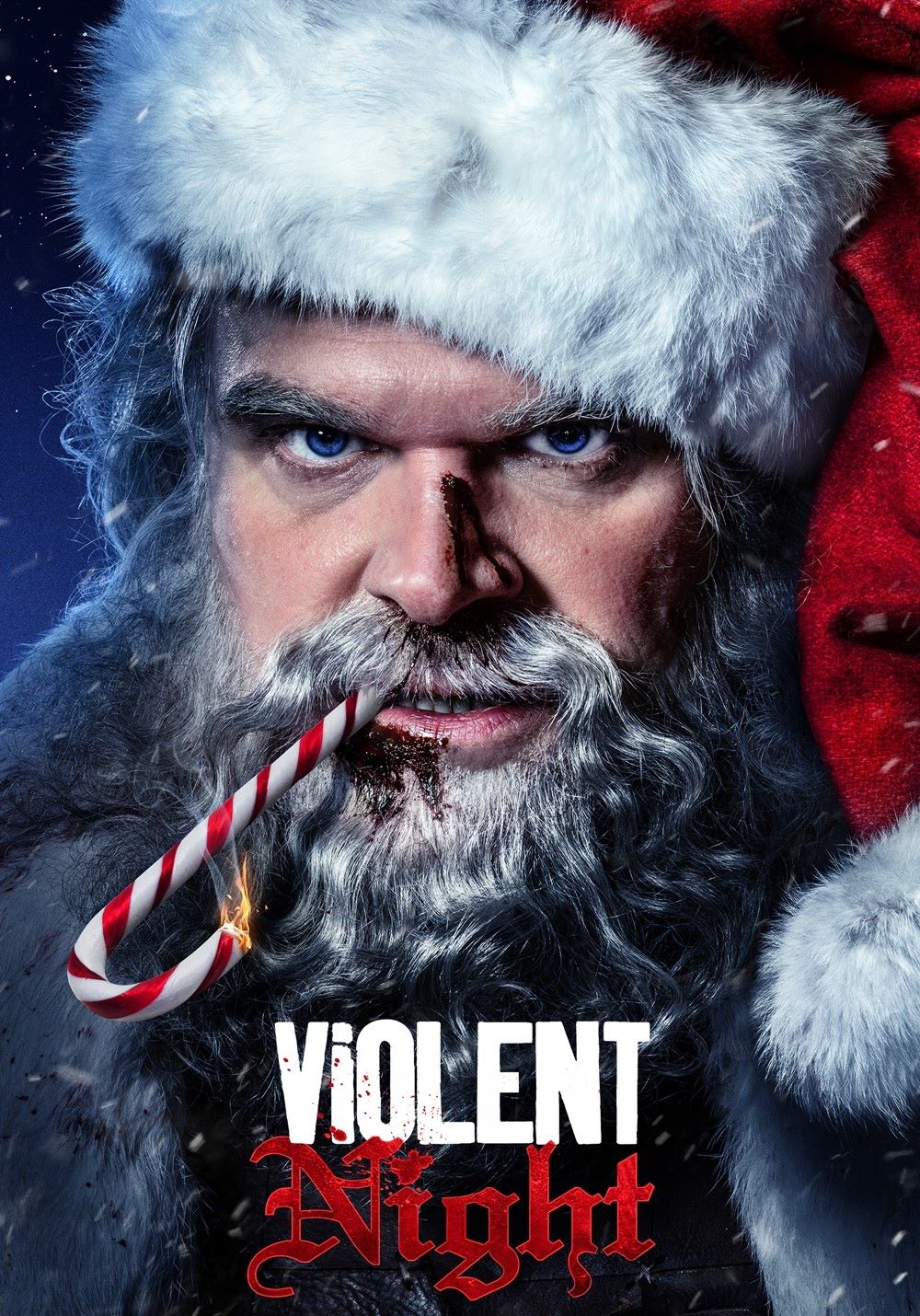
Violent Night (2022), directed by Tommy Wirkola, is a wild ride that shakes up the traditional Christmas movie formula by turning Santa Claus into a battle-hardened warrior. David Harbour stars as this unconventional Santa, who is far from jolly; he’s a grizzled, somewhat cranky, and disillusioned figure with a Viking warrior past. The movie sets itself apart with a premise that throws a group of ruthless mercenaries into a wealthy family’s Christmas Eve gathering, only to discover Santa isn’t the harmless old man they expected. Instead, he’s a fierce protector who fights back with brutal efficiency.

The story unfolds at the mansion of the affluent Lightstone family during their holiday reunion. The family is full of tension, with secrets and resentments bubbling just beneath the surface. When a gang of mercenaries led by the villainous Scrooge (John Leguizamo) invades the house to steal a fortune rumored to be stashed there, the family members become hostages. Among them is Trudy, a young girl who still believes in Santa and becomes an emotional anchor for the story. What follows is a chaotic clash as Santa unleashes his warrior skills in a bloody and often darkly humorous fight to protect Trudy and take down the intruders.

One of the strongest aspects of Violent Night is David Harbour’s performance. His Santa is not the usual cheerful holiday icon but a rough-around-the-edges hero with a quick wit and a fierce sense of duty. Harbour brings a compelling mix of grit and warmth, making Santa both intimidating and surprisingly endearing. His fight scenes are impressively choreographed, with inventive use of Christmas-themed props that add a unique flavor to the action. The humor, often delivered through clever one-liners and absurd situations, enhances the movie without overloading it, striking a balance between dark comedy and action thriller.

The action sequences are a highlight, filled with creative and over-the-top violence that turns traditional Christmas decorations into lethal weapons. From candy canes to Christmas lights, the film embraces its outrageous concept fully, often with a smirk and knowing wink to the audience. This approach to action and humor makes it feel like a holiday-themed grindhouse film, which will certainly appeal to viewers looking for something different from typical festive fare.

However, the film is not without flaws. The storyline sometimes leans too heavily on clichés and predictable twists, particularly around family drama and criminal motives. While the Lightstone family members are meant to add complexity to the narrative, many come across as caricatures, which lessens emotional impact. The pacing occasionally suffers as well, with some scenes dragging or feeling repetitive amid the barrage of action. Furthermore, the movie’s tone can be uneven—certain moments of humor or sentimentality clash with brutal violence, which might alienate viewers who prefer more consistent storytelling.

The supporting cast delivers performances that range from serviceable to over-the-top, fitting the film’s campy and exaggerated style. John Leguizamo’s Scrooge is a memorable villain with a sneer and attitude that fits the tone, while Beverly D’Angelo adds a touch of dark humor as the wealthy matriarch. The character of Trudy serves as the emotional heart of the film, grounding the chaos with a child’s innocent belief in magic and goodness. Yet, some secondary characters feel underdeveloped, existing mostly to provide fodder for the violence or comedic moments.

Visually, Violent Night embraces the glitz and cold grandeur of a wealthy family’s mansion, contrasted sharply by the gritty and bloody action that unfolds. The cinematography and production design showcase the holiday setting effectively, using wintery landscapes and elaborate Christmas decor as backdrops that add to both the festive and lethal atmosphere. The film keeps a brisk pace, aided by energetic direction, though it sometimes prioritizes style over substance.

In terms of themes, Violent Night plays with the clash between holiday cheer and harsh realities, exploring ideas about family, belief, and redemption through its unusual take on Santa Claus. It taps into a more cynical view of Christmas but ultimately doesn’t abandon the underlying message of hope and protection. This mixture, however, occasionally feels forced, as the violent antics often overshadow character development and emotional depth.

Overall, Violent Night is an entertaining and unconventional holiday film that is best enjoyed with an appetite for absurdity and dark humor. It stands out for pushing boundaries with its brutal action scenes and a refreshingly gruff Santa, offering a festive movie experience that fits more in the niche of chaotic fun rather than heartwarming tradition. While it may not win over purists looking for classic Christmas storytelling, it offers a distinctive alternative for those who want their holiday films with a hard edge and plenty of explosive moments. For viewers who can embrace its mix of camp, carnage, and seasonal spirit, Violent Night delivers a wild, memorable ride that defies expectations.

Brad reviews REGARDING HENRY (1991), starring Harrison Ford!


I noticed that today is Harrison Ford’s 83rd birthday. Like most people born in the early 1970’s, I’m a big fan of Harrison Ford. My formative years included the Star Wars movies, the Indiana Jones movies, and many other great films like BLADE RUNNER (1982) and WITNESS (1984). He would go on to make more classics like THE FUGITIVE (1993) and AIR FORCE ONE (1997) as I got older and moved into adulthood, but one of my personal favorite films starring Harrison Ford is REGARDING HENRY (1991).

In REGARDING HENRY, Harrison Ford stars as Henry Turner, a ruthless bastard, who also happens to be a hugely successful and cutthroat attorney in New York City. This horrific approach to being a human being does seem to provide plenty of money for his wife Sarah (Annette Bening) and his daughter Rachel (Mikki Allen), but you don’t get the feeling there’s that much actual love being shared between the three. Then one night, after another successful day of sticking it to the masses, Henry’s world is turned upside down when he’s shot in the head at the corner convenience store by a guy sticking up the place (John Leguizamo). The bullet to the brain doesn’t kill Henry, but it does leave him with severe brain damage and extremely impaired motor skills. This turns out to be a nice turn of events for Henry, and his family, for several reasons. First, he meets Bradley (Bill Nunn), his physical therapist and all around nice guy, who really helps him get headed back in the right direction in health, and in life, again. Second, he begins to reconnect with his wife who likes this more thoughtful, caring and affectionate version of Henry that seems to be emerging. Finally, he starts to show his daughter some much needed love and attention, rather than just wanting to ship her off to boarding school as quickly as possible. Wouldn’t you know it though, just when things are going so perfect, the sweet, innocent Henry stumbles up some very uncomfortable truths about his former life. Will these revelations upend his new life, or will he be able to move forward with a fresh start and a household filled with love?!!

There are two main reasons that I love REGARDING HENRY. The first reason is undoubtedly the feel-good story at the heart of the film. This is J.J. Abrams second writing credit and his screenplay takes Henry from being an arrogant, selfish jerk who is only interested in his own glorification, to a sweet-natured man of integrity who elevates his wife and his daughter to the prominent positions they rightfully deserve. Is this transformation grounded in reality… no, but I love movies because I want to escape reality and live vicariously through the heroes on the screen. Henry may not be a hero in the same way as Superman, Charles Bronson, or Chow Yun-Fat, but he is someone that I can relate to. I want to be a better dad. I want to be a better husband. I want to be a man of principle and integrity in the workplace. I may not always be perfect, but watching Henry navigate his life and correct past wrongs is very satisfying and uplifting to see. I love the look in the eyes of his wife and daughter as they are so proud of him. I want my family to look at me in that same way. This movie just makes me feel good. When I want realism, I’ll go visit a shrink and watch documentaries about men and women dealing with traumatic brain injuries. 

The second reason I love REGARDING HENRY stems from the performances of several of the cast members. Harrison Ford is so good in the title role. His transformation from a cold hearted lawyer to a simple-minded family man is one of those things that could be really bad with the wrong actor, but I’ll gladly follow Ford through the process. He’s believable on both sides, and he has to be for the movie to work. Annette Bening is also great as his wife, Sarah. Her transformation isn’t a physical transformation, but an emotional transformation, and she’s just as convincing. The love she conveys toward Henry as he embraces his new life, followed by the way she plays the scenes when Henry uncovers some of the painful truths of their former life, are actually some of the strongest moments in the film. Finally, I want to give an extra shoutout to Bill Nunn as Bradley, possibly the greatest physical therapist on earth. If dictionaries had pictures, the word “likable” should have a picture of Bill Nunn from REGARDING HENRY. Nunn was a fine character actor, with many credits to his name, but I will never see him in a role that doesn’t take me back to his performance in this film. 

Overall, I highly recommend REGARDING HENRY to any person who enjoys a well-made and well-acted feel good story. It’s not the most realistic film in the world, but it’s one that I truly love. 

Casualties of War (1989, directed by Brian DePalma)


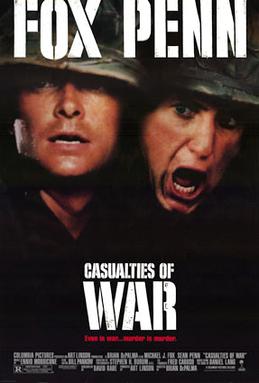
Private Max Eriksson (Michael J. Fox) is a new arrival in Vietnam, a young infantryman who is called a “cherry” by his fellow soldiers.  No one wants to get close to Eriksson because everyone knows that it’s the new guy who is most likely to make a mistake and get himself killed.  The only person who seems to care whether Eriksson lives or dies is Sgt. Tony Messerve (Sean Penn), a squad leader who is so tough and battle-worn that it is easy to forget that he is only 20 years old.  After a member of Messerve’s squad is killed in a firefight and Messerve’s squad had been denied leave despite all of the stress and pressure that they’ve been under, Messerve decides that, during their next mission, the squad is going to kidnap a woman from a village and take her with them.

Eriksson, who is still naive enough to sincerely say, “We’re supposed to be here to help these people,” is horrified by Messerve’s actions.  At first, only he and Diaz (John Leguizamo) refuse to take part in raping the terrified woman (Thuy Thu Le).  Diaz soon caves to the pressure from the rest of the squad and joins in.  Only Eriksson continues to refuse but his attempt to help the woman escape fails when the members of the squad murder her during a firefight with the Viet Cong.  After the battle, the wounded Eriksson discovers that no one in command wants to hear about what happened.  Messerve’s second-in-command, Clark (Don Patrick Harvey), targets Eriksson, trying to shut him up permanently.

One of the many Vietnam films to come out after the success of Platoon, Brian De Palma’s Casualties of War is an intense and disturbing recreation of a true story.   After years of being accused of making misogynistic and exploitive films, De Palma made an effective and sensitive anti-war film, one that did not exploit the suffering of the kidnapped woman but instead portrays the depravity of war and the courage it takes to do the right thing when everyone around is ordering you not to.  While it always takes a while to get used to Michael J. Fox in a serious role (and, at the start of the film, he really does seem to be miscast), he eventually gives the best performance of his career in Max Eriksson and, by using a framing device of Eriksson back in the United States after completing his tour, both De Palma and Fox show how the Eriksson, like countless other veterans, is still haunted by what he saw in Vietnam even after he returns home.  Sean Penn is equally impressive as Messerve, playing him as someone who sacrificed his soul in order to survive in Vietnam.  Messerve has come to view the entire country with contempt and, in his twisted way, he sees kidnapping the woman as a way to reward his squad for all that they’ve endured.  The rest of the cast is also strong, with John C. Reilly making his acting debut as a member of the squad.

Not surprisingly, the dark and disturbing Casualties of War was a box office disappointment.  It’s still one of most harrowing films made about Vietnam and one of De Palma’s best.

Film Review: Executive Decision (dir by Stuart Baird)


In 1996’s Executive Decision, terrorists hijack an airplane.  Their leader, Nagi Hassan (David Suchet) demands that the U.S. government not only give him and his men safe passage but that they also release Hassan’s commander, Jaffa (Andreas Katsulas).

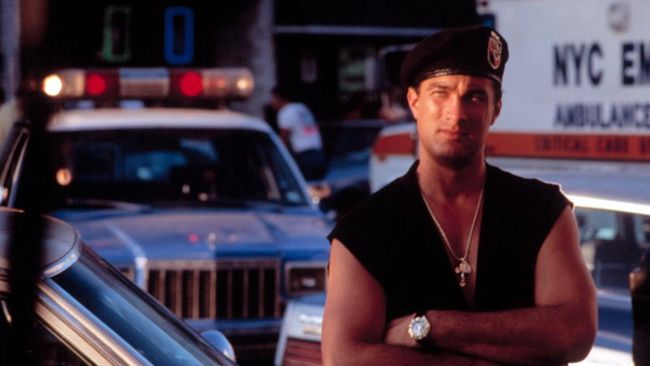
In Washington D.C., it is decide to use a stealth plane to transport Col. Austin Travis (Steven Seagal) and his men into the passenger plane.  Accompanying them will be Dr. David Grant (Kurt Russell), a consultant for U.S. Intelligence.  Dr. Grant is the world’s leading expert on Hassan, even though neither he nor anyone else is even sure what Hassan looks like.  Travis distrusts Grant because he’s a civilian and also because he holds Grant responsible for a botched raid on a Russian safehouse in Italy.  Dr. Grant is going to have to prove himself to Col. Travis because Travis doesn’t have any time for people who can’t get the job done.  And Travis is determined to get on that plane and save all those passengers.

In other words, Travis is a typical Steven Seagal character and, for the first fourth of this movie, Seagal gives a typical Steven Seagal performance.  He delivers his line in his trademark intimidating whisper, he glares at everyone else in the film, and essentially comes across as being a total douchebag who can still handle himself in a fight..  However, when it’s time to board the airplane through a docking tunnel, something goes wrong.  Everyone — even nervous engineer Dennis Cahill (Oliver Platt) is able to slip through the stealth plane’s docking tunnel and get into the hijacked airplane cargo hold without being detected.  But the two planes are hit by severe turbulence.  Suddenly, it becomes apparent the one man is going to have to sacrifice his life and close the hatch before the docking tunnel decompresses.

David, already in the cargo hold, looks down at Austin in the tunnel.  “We’re not going to make it!”

“You are!” Austin replies before slamming the hatch shut and getting sucked out of the tunnel.  (There’s your Oscar Cheers Moment of 1996!)  After all that build-up, Steven Seagal exits the film early and now, it’s up to Kurt Russell and what’s left of Austin Travis’s men to somehow stop the terrorists.  Not only do they have to stop Hassan but they also have to do it before the Air Force — which has no way of knowing whether or not any of their men were able to get on the plane before the tunnel fell apart — shoots down the airliner.

(If the airplane looks familiar, that’s because Lost used the same stock footage whenever it flashed back to the plane crash that started the show.)

It’s actually a rather brilliant twist.  When this film came out, Seagal was still a film star.  He played characters who always got the job done and who were basically infallible.  He wasn’t a very good actor but he did manage to perfect an intimidating stare and that stare carried him through a lot of movies.  No one would have expected Seagal to die within the first 30 minutes of one of his movies and when Col. Travis, who the film has gone out of its way to portray as being the consummate warrior, is suddenly killed, there really is a moment where you find yourself wondering, “What are they going to do now?”  In just a matter of minutes, Executive Decision goes from being a predictable Steven Seagal action film to a genuinely exciting and clever Kurt Russell thriller.  For once, Russell is not playing a man of action.  He’s an analyst, a thinker.  And, to the film’s credit, he uses his mind more than his brawn to battle Hassan’s terrorists.  With excellent support from Halle Berry (as a flight attendant who discreetly helps out David and the soldiers), Oliver Platt, B.D. Wong, Whip Hubley,  David Suchet, Joe Morton, and even John Leguizamo (as Travis’s second-in-command), Executive Decision reveals itself to be an exciting and ultimately rewarding thrill ride.

And to think, all it took was sacrificing Steven Seagal.

Retro Television Review: Miami Vice 3.17 “The Afternoon Plane”


Welcome to Retro Television Reviews, a feature where we review some of our favorite and least favorite shows of the past!  On Mondays, I will be reviewing Miami Vice, which ran on NBC from 1984 to 1989.  The entire show can be purchased on Prime!

This week, Tubbs has an adventure!

Episode 3.17 “The Afternoon Plane”

(Dir by David Jackson, originally aired on February 20th, 1987)

While attending a New Age-y wedding with his latest girlfriend Alicia (Maria McDonald), Tubbs wins a vacation to a tropical island!

It’s about time something …. well, I was going to say something good but honestly, I guess we should just be happy that anything is happening to Tubbs at all.  When this show started, Tubbs was the audience surrogate.  He was the one who came down to Miami and learned about the drug scene.  We saw Miami through his eyes.  But, by the time the third season rolled around, it was pretty clear that Miami Vice hard largely become the Crockett show.  Don Johnson was the star and Philip Michael Thomas often seemed like a supporting character.  Tubbs may have been cooler than Switek but, often times, both of them took a backseat to Crockett.  This week, however, Tubbs finally get his own episode.  Crockett shows up for a few minutes at the start of the episode and that’s it.  This is the Tubbs show!

Of course, it turns out that the vacation does not go the way that Tubbs was expecting.  He runs into a drug dealer named Leon Wolf (Vincent D’Onofrio, making his television acting debut), someone who Tubbs previously put in jail.  Tubbs soon discovers that his old enemies, the Calderone family, are on the Island and they’re looking forward to getting their revenge on Tubbs.  Tubbs, of course, has no legal jurisdiction on the island and the local police certainly aren’t going to help him out.  In fact, many people on the island resent Tubbs because they blame America’s war on drugs for their poverty.  Drug smuggling is big business and it provides an income to a lot of people who would starve otherwise.

Orlando Calderone (John Leguizamo) is coming on the next afternoon plane and no one is willing to defy Orlando by helping Tubbs get off the island.  The episode becomes a Caribbean High Noon, with the clock ticking down and no one willing to stand up and help the endangered law man.  There are some on the island who want to fight back and drive away the Calderones.  But no one is willing to take the chance.

It would have been a lot more compelling if Orlando had been played by someone other than John Leguizamo, who is just as cartoonishly unconvincing here as he was the first time that he appeared on the show.  I know that Miami Vice was early in Leguizamo’s career but his performance here is so unconvincing that it really does make the Calderones just seem like a bunch of low-level punks instead of a feared criminal syndicate.  The final gun battle between Tubbs and the Calderones is handled well-enough but it’s never quite as compelling as it would be if Orlando Calderone was actually an intimidating villain.  In typical Miami Vice fashion, Alicia is seriously wounded in the battle.  It pays not to get involved with either Tubbs or Crockett.

This episode was a slight change of pace.  Apparently, everyone but Philip Michael Thomas got to take some time off during filming and, as a result, Thomas gets to show his own unique style as Rico Tubbs.  Still, this episode was never as compelling as it needed to be.  Hopefully, we are now done with the Calderones.

Retro Television Review: Miami Vice 2.23 “Sons and Lovers”


Welcome to Retro Television Reviews, a feature where we review some of our favorite and least favorite shows of the past!  On Mondays, I will be reviewing Miami Vice, which ran on NBC from 1984 to 1989.  The entire show can be purchased on Prime!

This week, the second season comes to a close with …. TRAGEDY!

Episode 2.23 “Sons and Lovers”

(Dir by John Nicolella, originally aired on May 9th, 1986)

The final episode of the second season Miami Vice opens with Crockett and Tubbs getting their cover blown for what seems like the 100th time.  Seriously, has there every been an episode featuring these two going undercover in which their cover has not been blown?  This time, they’re nearly executed by the drug dealers they were trying to arrest but, at the last minute, a sniper with a laser-guided sight shoots one of the dealers.  In the confusion, Sonny and Tubbs are able to subdue most of the other dealers and disarm a booby trap that would have blown up Switek and Zito.

When Crockett mentions that they would have been dead if not for the sniper with the laser pointer, Switek says, “None of our guys have a laser.”

(Why not, Switek!?  Are you guys trying to win the War on Drugs or not!?)

It turns out that the sniper worked for Angelina Medera (Phanie Napoli), the daughter of Calderone, the Colombian drug lord whose murder of Tubb’s brother led to Tubbs coming to Miami in the first place.  Though she is still bitter over Crockett killing her father, Angelina has come to Miami to introduce Tubbs to his son, infant Ricardo, and to warn Tubbs that her half-brother, Orlando (John Leguizamo, in his first screen role), has put a contact out on his life.

Tubbs is a father!  Tubbs is in love!  Well, as Crockett could warn him, there’s nothing worse than being happy when you’re a member of the Vice Squad because it’s guaranteed that your happiness will be ripped away from you in the most violent way possible.  Orlando comes to Miami and kidnaps Angelina and little Ricardo.  With the help of a corrupt DEA agent named Harrison (J.C. Quinn), Orlando tries to set Tubbs up.  Drawing Tubbs out to a pier where Angelina is bound in a car, Orlando plans to blow up his rival.  Tubbs, being the star of the show, does manage to survive being near the car when it explodes.  Angelina is not so lucky.  Tragically, Tubbs believes that his son was in the car as well.  (Actually, Orlando set little Ricardo back to Colombia.)  At Angelina’s funeral, Tubbs receives a letter from Orlando.  “I’ll be back!” it reads.

And so, season 2 ends!

The finale was a bit of a let down, largely because a good deal of the running time was devoted to flashbacks to remind us just who the Calerdones were in the first place.  As well, John Leguizamo is not exactly the most intimidating of actors and his performance as Orlando was a bit stiff and awkward.  (It makes sense when you consider that he was only 19 years old and making his debut on a hit television show.  Anyone would be nervous.)  Much like the Frank Zappa episode, it’s obvious that this episode was meant to launch a storyline that would be revisited in the future.  While Leguizamo would return, it would appear that this episode is the only one to feature Tubbs’s son.  So, I guess Tubbs will have to live the rest of his life thinking his childhood was blown up by a Colombian drug lord.

That’s dark!

That’s Miami Vice dark!

Despite the weak finale, I thought the second season of Miami Vice was a good one.  There were a few weak episodes but, for the most part, it was a strong and stylish season and one that continued to explore just why exactly the War on Drugs proved to be unwinnable.  Episodes like Out Where The Buses Don’t Run, Bushido, One Way Ticket, Little Miss Dangerous, and Trust Fund Pirates were all examples of Miami Vice at its cynical and surreal best.

Next week, we begin season 3 with a guest appearance by Liam Neeson!

October True Crime: Summer of Sam (dir by Spike Lee)


First released in 1999, Summer of Sam is Spike Lee’s sprawling, frustrating, flawed, occasionally compelling, and ultimately rather intriguing film about the summer of 1977 in New York City.

As one can guess from the title, it was a summer that was dominated by the reign of terror of the serial killer known as the Son of Sam.  While New York suffered one of the hottest summers on record, the Son of Sam shot couples while they sat in their cars.  Because all of his victims had been women with long, dark hair, women across the city wore blonde wigs.  While the police searched for the killer, the city was also caught up in the World Series.  Club 57 was the hottest club in New York but a growing number of rebels, inspired by the news that was coming out of the UK, eschewed the glitz of disco for the gritty and deliberately ugly aesthetic of punk and the Mud Club.

Though the film is centered around the murders of the Son of Sam, he remains a largely shadowy figure in the film.  Played by Michael Badalucco, David Berkowitz spends most of his time in his filthy home, yelling at the dog across the street and writing cryptic messages on the walls.  He only gets a few minutes of screen time because the film is ultimately less about the Son of Sam’s crimes and more about how one Italian-American neighborhood in New York deals with the atmosphere of fear and paranoia created by those crimes.  It’s a neighborhood that’s ruled over by the ruthless but benevolent Luigi (Ben Gazzara).  When the two detectives (Anthony LaPaglia and Roger Guevener Smith) come to the neighborhood in search of information, they know that Luigi is the man to see.

Vinny (John Leguizamo) is one of the neighborhood’s citizens, a hairdresser who hasn’t let his marriage to Dionna (Mira Sorvino) stand in the way of his compulsive womanizing.  Vinny is the type who cheats on his wife and then goes to Confession to get forgiveness.  He’s the type who gets angry whenever Dionna wants to have sex with the lights on or do anything other than a quick three minutes in the missionary position.  When he realizes that the Son of Sam was watching him while he was having sex in a car with Dionna’s cousin and that he could have been one of his victims, Vinny starts to spin out of control.  Vinny’s childhood friend is Ritchie (Adrien Brody), who shocks everyone when he spikes his hair, puts on a Union Jack t-shirt, and starts speaking with a fake British accent.  Ritchie and his girlfriend, Ruby (Jennifer Esposito), embrace the punk lifestyle and even put one the Son of Sam’s letters to music when they perform at the Mud Club.

It’s an ambitious film but it’s also an overlong film, one where the slow spots can truly test the viewer’s patience.  With a 142-minute running time, Summer of Sam finds the time to touch on almost every trope of the late 70s.  Vinny and Dionna hit the clubs, where the usually quiet Dionna truly comes to life as she dances.  (Vinny’s moves are far less impressive.  Tony Manero would have laughed at him.)  Ritchie not only embraces punk rock but he also makes his money by performing in live sex shows.  When a mysterious man offers to give Vinny and Dionna a ride in his limo, it’s hard not to smile when it’s revealed that he’s taking them to the infamous sex club, Plato’s Retreat.  One can respect Lee’s ambition while still finding the film itself to be a bit too self-indulgent for it’s own good.

Spike Lee, for all of his other talents, has never been a particularly subtle director.  Vinny and his friends spend a lot of time hanging out at the end of street, strategically placed in front of a sign that loudly proclaims, “DEAD END.”  At one point, Vinny is inspired to run to his window and start screaming insults at the Son of Sam and Leguizamo’s histrionic delivery of the lines make it impossible to take his anguish seriously.  At the same time, there are moments that work brilliantly.  I particularly liked the scenes that took place during the blackout of 1977.  Luigi automatically knows how to keep control in his neighborhood and he sends his men out with baseball bats, channeling their aggression into a search for the phantom serial killer.  For every scene that doesn’t work, there’s a scene like the Baba O’Riley montage or Vinny, Dionna, Ritchie, and Ruby having a candlelit dinner.

“We really dig your vibe.”

John Leguizamo is shrill and miscast as Vinny, though I’m not sure if anyone could have made much of such a one-dimensional characters.  I preferred the performances of Mira Sorvino, Adrien Brody, and Jennifer Esposito, who all brought their characters to authentic life.  (I especially liked how Brody switched from being tough to being a wounded child at the drop of a hat.)  As is so often the case with Lee’s films, it’s the supporting actors who make the strongest impression.  I loved Mike Starr’s earthy performance as Ritchie’s father and Ben Gazzara’s sly turn as the neighborhood mobster.  Bebe Neuwirth is underused but memorable as Vinny’s boss.

The film is overstuffed and overlong but it effectively portrays a community in the grips of paranoia and anger.  In the end, the film is epitomized by a scene in which the neighbor’s dog enter David Berkowtiz’s living room and starts yelling at him in the voice of John Turturro.  It’s a scene that’s so ludicrous that it somehow becomes effective.  It’s a scene that most directors would have left on the editing room floor but Spike Lee included it.  It takes courage to write, film, and keep a scene like that.  Summer of Sam is a wreck of a film but it’s also ultimately a compelling portrait of a community coming apart.  In the end, just as in real life, Berkowitz is brought to justice and a community is left wondering what to do now.

Summer of Sam features some of Spike Lee’s best work and also some of his worst.  The film opens with columnist Jimmy Breslin describing New York as being the city that he both loves and hates and that’s the way that I feel about this film.  For all of its flaws, there’s enough strengths to make up for them.  It’s a New York story and, appropriately, it’s just as messy as the city that it is about.

Holiday Film Review: Die Hard 2: Die Harder (dir by Renny Harlin)


During 1990’s Die Hard 2, John McClane (Bruce Willis) asks himself, “How can the same shit happen to the same person twice?” and he does have a point.

I mean, consider the situation.  In 1988, McClane spent his Christmas sneaking around a skyscraper and saving his wife from a group of sadistic mercenaries.  Two years later, John McClane spends his Christmas sneaking around an airport and saving his wife from a group of sadistic mercenaries.

There are a few differences of course.  In 1988, the mercenaries were only interested in stealing as much money as they could and each mercenary had his own properly ghoulish personality.  In 1990, the mercenaries are really more of a cult, led by the fanatical Col. Stuart (William Sadler).  And, along with trying to make some money, they are also trying to free General Ramon Esperanza (Franco Nero), a Central American drug lord and former CIA asset.  Despite the fact that the mercenaries are played by familiar actors (like Robert Patrick, John Leguizamo, Tony Ganois, and Vondie Curtis-Hall), none of them are quite as memorable as the henchmen that Alan Rickman commanded in the first film.  And while Sadler has charisma and makes a big impression during his first scene, his character is nowhere near as interesting or entertaining as Hans Gruber.  Franco Nero, it must be said, is as dashing as ever.  He really seems to be having fun in this movie.

A lot more people die in Die Hard 2 than died in the first Die Hard and the majority of them are innocent bystanders.  This isn’t like the first film, where Harry Ellis died because his coke-addled mind led him to believe that he could outsmart Gruber.  The victims in Die Hard 2 include a friendly church caretaker and over 200 passengers of an airplane that Stuart tricks into crashing on an airport runway.  The scene where the plane crashes remains disturbing no matter how many times that you see it and it truly makes you hate Colonel Stuart.  When the plane crashes, despite McClane’s futile efforts to warn the pilots, McClane sobs and it’s a powerful scene because it’s the first scene in which McClane has not had a quip or a one-liner ready to go.  In this scene, McClane fails to save the day and, for a few minutes, he’s helpless.  I usually end up crying with McClane.  Today, those tears are also a reminder of what a good actor Bruce Willis truly could be whenever he let down his defenses and allowed himself to be vulnerable on screen.

Die Hard 2 is usually dismissed as not being as good as the first movie and …. well, that’s correct.  It’s not as good but then again, few actions films are.  There’s a reason why Die Hard continues to be held in such high regard.  That said, Die Hard 2 is not bad.  The stakes are a bit higher and the action scenes a bit more elaborate, as you would expect from a film directed by Renny Harlin.  Bruce Willis plays McClane with the blue collar swagger that made his such an awesome hero in the first film.  Bonnie Bedelia and William Atherton also return from the first film and Atherton once again gets his comeuppance in a crowd-pleasing moment.  The cast is full of character actors, all of whom get a chance to make an impression.  Dennis Franz is the profane head of security who eventually turns out to be not such a bad guy.  John Amos is the major who eventually turns out to be not such a good guy.  Colm Meaney has a few heart-breaking moments as the pilot of the doomed airplane.  My favorite supporting performance is given by Fred Thompson, bringing his quiet authority to the role of tough but fair-minded Air Traffic Control director.  Watching Die Hard 2, it does feel as if the viewer has been dropped in the middle of these people’s lives.  Everyone seems real.  No one seems like a mere plot device.

Is Die Hard a Christmas movie?  You bet it is!  But so is Die Hard 2 and it’s not a bad one.