Review: By Dawn’s Early Light (dir. by Jack Sholder)


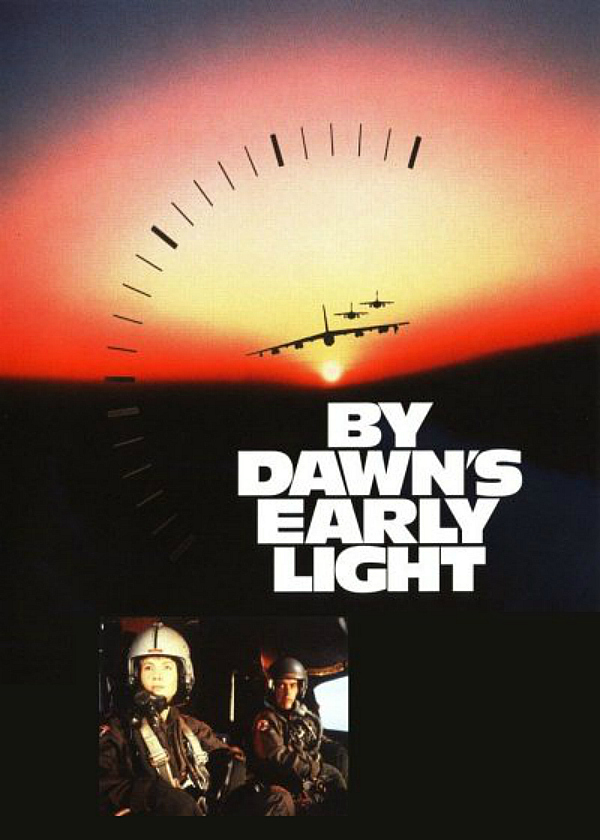
1990’s By Dawn’s Early Light is a film adaptation by HBO of William Prochnau’s novel Trinity’s Child. The film, when it first aired on HBO, seemed dated since the Soviet Union was ultimately going through its death throes as the military build-up initiated during the Reagan Administration crippled the USSR economically (they too tried to match the build-up in conventional and nuclear forces). Yet, despite the ending of the Cold War, recent events domestically and around the world has shown that the world never truly left behind the shadow of nuclear war.

The film is simplicity in the way the plot unfolds. A failed coup by dissident Soviet military commanders fails, but it’s after-effects of creating a “hot war” between the US and the USSR succeeds as both US President and Soviet Premiere make mistakes in their decisions. Decisions heavily influenced by their military commanders who see only black and white in how their respective nations should respond militarily. By Dawn’s Early Light shares some similarities to the classic 60’s Cold War films like Dr. Strangelove and Fail-Safe. Both films deal with the human frailties and flaws helping influence events that could lead to nuclear Armageddon for the whole planet. By Dawn’s Early Light concentrates on several storylines to highlight the stress and difficulties individuals must face to either follow their orders to their inevitable conclusion or allow their conscience to help make the moral decisions in trying to stop the madness spiraling out of control. Though some people’s decisions are left wanting, the film ends with a glimmer of hope that may just bring the world from the brink of annihilation.

The acting by the cast of Rebecca DeMornay, Powers Boothe, James Earl Jones, Darrin McGavin, Martin Landau and Rip Torn are well done. Rebecca DeMornay and Powers Boothe anchor one of the subplots as romantically involved B-52 crew pilots whose conflict comes from their own intimate closeness affecting command decisions and from the stress of families lost by the rest of the bomber crew. Darrin McGavin, Rip Torn and Martin Landau anchor the other subplot of competing Presidents. One a physically incapacitated US leader trying to avert escalating the conflict to the point of no return with another recently sworn in who fears of losing a nuclear war and thus wanting to strike back full and hard. In between these two leaders is the diabolical performance by Rip Torn as a warmongering Army colonel who sees only winning the war as the only objective. At times, the performances do become hampered by the simplicity of the script, but the cast power through to the end.

In the end, the film might look a bit dated in its production design (this was 1990 and many years before HBO became known for premiere television production) but the story itself is very current and relevant.  What might have been a nice Cold War relic fairy tale when it first aired in 1990 on HBO has taken on more of a cautionary tale as more nations begin to acquire nuclear weapons with some of these nations not just enemies of the US and the world in general, but also led by men whose hold on sanity seem tenuous at best. By Dawn’s Early Light is a great piece political “what if” that hopefully remains just that and not a prediction of reality to come.

The Eric Roberts Collection: Best of the Best (dir by Bob Radler)


“No!” James Earl Jones says towards the end of 1989’s The Best of the Best, his already deep voice made even more imposing by the use of slow motion.

“No, Tommy, no!” Eric Roberts joins in as he watches martial artist Tommy Lee (Phillip Rhee) internally struggle with whether or not to strike a blow that will definitely kill his opponent and, if James Earl Jones is all gravitas and stern wisdom, Eric Roberts is all emotion and desperation.

The Best of the Best is a bit of an oddity, in that the script features just about every martial arts tournament cliche imaginable (right down to the other “bad” team having a history of killing people in the ring) but those cliches are all acted out by a surprisingly distinguished cast.  I counted four Oscar nominees (and one winner) in the cast.  James Earl Jones (nominated for The Great White Hope) plays Coach Couzo, who gets a team of Americans prepared to fight in an international tournament.  Sally Kirkland (nominated for Anna) plays their trainer, who worries not just about the team’s physical health but also their mental burdens.  Eric Roberts (nominated for Runaway Train) is Alex Grady, the former martial arts champion-turned-auto worker who makes the team despite having a bad shoulder.  Louise Fletcher (who won for One Flew Over The Cuckoo’s Nest) plays Alex’s mother, who looks after his son while Alex is off getting ready to face the Korean team.  And then there’s Chris Penn  (who seems like, if not for his early death, he would have eventually been nominated for something) as the arrogant Travis, a cowboy who can throw a punch.

(The American team is filled out by John Dye as Virgil, an intellectual Buddhist, David Agresta as Sonny “I’m Italian” Grasso, and Phillip Rhee, who not only plays Tommy but also wrote the film’s script.)

Roberts gets top-billing in this and he does get a lot of important moments, including a scene where he breaks the Coach’s rules so that he can visit his son in the hospital.  That said, the story centers around Phillip Rhee’s Tommy.  Tommy’s older brother was killed in the ring by the one-eyed Dae Han Park (Simon Rhee) and — wow, what a coincidence! — that just happens to be who Tommy needs to beat for the Americans to win the big tournament.  Both of the Rhee brothers actually are martial artists and they are very convincing in the fight scenes, which is good because neither Phillip nor Simon Rhee were particularly strong actors.  Eric Roberts is not a particularly convincing martial artist but it doesn’t matter because he acts the Heck out of every scene in which he appears.  What happens when you bring method intensity to the type of martial arts film that Jean-Claude Van Damme would later make his specialty?  You get scenes of a heavily-bruised Eric Roberts crying but, because Roberts is a good actor, the tears feel earned.  Still, whenever I saw Alex’s eyes starting to glisten, I imagined James Earl Jones saying, “Noooooooo!”  How can you win the world’s greatest tournament when you’re constantly on the verge of tears?  Well, maybe you don’t need to win.  Maybe you just need to show that you have more honor than anyone else there.

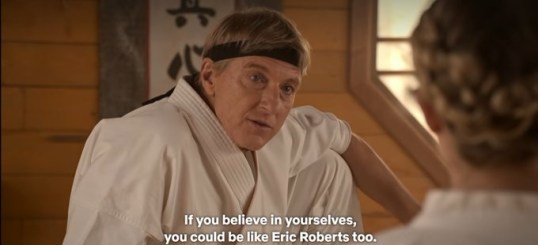
Best of the Best is a classic of its kind.  There’s nothing surprising about it but it’s entertaining in its own dumb way and, in the end, it reminds us that America doesn’t need medals to be the best.  It just needs Eric Roberts.

Previous Eric Roberts Films That We Have Reviewed:

  1. Star 80 (1983)
  2. Runaway Train (1985)
  3. Blood Red (1989)
  4. The Ambulance (1990)
  5. The Lost Capone (1990)
  6. Love, Cheat, & Steal (1993)
  7. Voyage (1993)
  8. Love Is A Gun (1994)
  9. Sensation (1994)
  10. Dark Angel (1996)
  11. Doctor Who (1996)
  12. Most Wanted (1997)
  13. Mercy Streets (2000)
  14. Raptor (2001)
  15. Rough Air: Danger on Flight 534 (2001)
  16. Wolves of Wall Street (2002)
  17. Border Blues (2004)
  18. Mr. Brightside (2004)
  19. Six: The Mark Unleased (2004)
  20. We Belong Together (2005)
  21. Hey You (2006)
  22. Depth Charge (2008)
  23. Amazing Racer (2009)
  24. In The Blink of an Eye (2009)
  25. Bed & Breakfast (2010)
  26. Enemies Among Us (2010)
  27. The Expendables (2010) 
  28. Sharktopus (2010)
  29. Beyond The Trophy (2012)
  30. The Dead Want Women (2012)
  31. Deadline (2012)
  32. The Mark (2012)
  33. Miss Atomic Bomb (2012)
  34. Assault on Wall Street (2013)
  35. Bonnie And Clyde: Justified (2013)
  36. Lovelace (2013)
  37. The Mark: Redemption (2013)
  38. The Perfect Summer (2013)
  39. Self-Storage (2013)
  40. A Talking Cat!?! (2013)
  41. This Is Our Time (2013)
  42. Inherent Vice (2014)
  43. Road to the Open (2014)
  44. Rumors of War (2014)
  45. Amityville Death House (2015)
  46. Deadly Sanctuary (2015)
  47. A Fatal Obsession (2015)
  48. Las Vegas Story (2015)
  49. Stalked By My Doctor (2015)
  50. Enemy Within (2016)
  51. Joker’s Poltergeist (2016)
  52. Prayer Never Fails (2016)
  53. Stalked By My Doctor: The Return (2016)
  54. The Wrong Roommate (2016)
  55. Dark Image (2017)
  56. Black Wake (2018)
  57. Frank and Ava (2018)
  58. Stalked By My Doctor: Patient’s Revenge (2018)
  59. Clinton Island (2019)
  60. Monster Island (2019)
  61. The Reliant (2019)
  62. The Savant (2019)
  63. Seven Deadly Sins (2019)
  64. Stalked By My Doctor: A Sleepwalker’s Nightmare (2019)
  65. The Wrong Mommy (2019)
  66. Exodus of a Prodigal Son (2020)
  67. Free Lunch Express (2020)
  68. Her Deadly Groom (2020)
  69. Top Gunner (2020)
  70. Deadly Nightshade (2021)
  71. The Elevator (2021)
  72. Just What The Doctor Ordered (2021)
  73. Killer Advice (2021)
  74. Night Night (2021)
  75. The Poltergeist Diaries (2021)
  76. The Rebels of PT-218 (2021)
  77. A Town Called Parable (2021)
  78. Bleach (2022)
  79. My Dinner With Eric (2022)
  80. 69 Parts (2022)
  81. D.C. Down (2023)
  82. Aftermath (2024)
  83. Bad Substitute (2024)
  84. Devil’s Knight (2024)
  85. The Wrong Life Coach (2024)
  86. When It Rains In L.A. (2025

Late Night Retro Television Review: Highway to Heaven 3.16 “A Song of Songs”


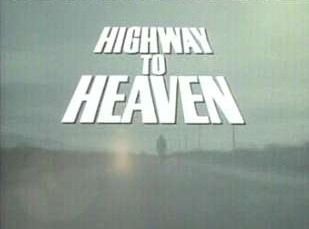
Welcome to Late Night Retro Television Reviews, a feature where we review some of our favorite and least favorite shows of the past!  On Thursdays, I will be reviewing Highway to Heaven, which aired on NBC from 1984 to 1989.  The entire show is currently streaming on Tubi and several other services!

This week, not even the presence of the great James Earl Jones can save Highway to Heaven.

Episode 3.16 “A Song of Songs”

(Dir by Michael Landon, originally aired on January 21st, 1987)

Mark and Jonathan are driving out in the middle of nowhere, waiting for their next assignment.  Mark is annoyed.  He says he’s been driving for ten hours.  Personally, I think Mark has every right to be annoyed.  I’ve noticed that Jonathan never drives.  Are angels not allowed to drive?  Did he never learn how?  It seems a bit self-centered to make Mark do all the driving.

Eventually, Jonathan and Mark stop off at a roadhouse.  Mark order a huge amount of ribs.  Jonathan smiles, even though Mark is going to give himself a heart attack if he’s not careful.  By an amazing coincidence, an old friend of Mark’s is also at the roadhouse.  Gabe (James Earl Jones) is a blind jazz pianist.  He’s also this week’s assignment.

Jonathan and Mark are hired to work at a storefront church that is led by Eleanor (Rosalind Cash).  Eleanor is strict and demanding and when her daughter (Akosua Busia) wants to go off on her own and perform her own type of music, Eleanor accuses her of only caring about “the devil’s music.”  It turns out that Eleanor is also Gabe’s ex-girlfriend!  Eleanor was not always so strict.  Can Jonathan and Mark bring these two back together and also repair the relationship between Eleanor and her daughter?

Eh, this episode didn’t do much for me.  I hate to say that because James Earl Jones was one of our best actors and he’s definitely the strongest thing about this episode but overall, the plot was a bit too predictable and both Rosalind Cash and Akosua Busia gave such over-the-top performances that it was hard to take their storyline seriously.  This was Highway to Heaven at its most predictable and the episode didn’t even benefit from Michael Landon’s trademark earnestness.  It just fell flat.

Oh well, there’s always next week.  Maybe Mark will finally get a break from always having to do the driving!  I wouldn’t count on it, though.

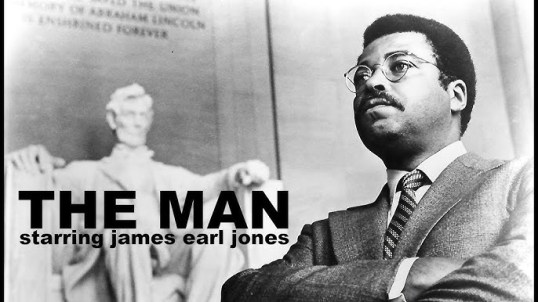
Starring James Earl Jones: The Man (dir by Joseph Sargent)


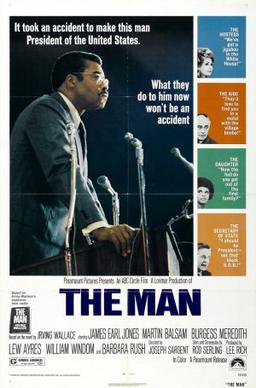
In 1972’s The Man, James Earl Jones stares as Douglass Dilman.

Dilman is a black college professor and a U.S. Senator.  To his friends, he’s a symbol of progress.  To his enemies, he’s a sell-out who is viewed as being improperly radical.  The U.S. Senate, eager to prove that it’s not a racist institution, has elected Dilman as the President Pro Tempore.  He is now fourth in line for the presidency but that doesn’t concern racist senators like Senator Watson (Burgess Meredith).  A lot would have to happen before Dilman would ever become President.

Needless to say, a lot does happen.

The President and the third-in-line Speaker of the House are attending a conference at a historic building in Frankfort when the roof collapses on them.  We don’t actually see this happen.  We just hear the people in the White House talk about how it’s happened.  We also don’t really learn many details about why the roof collapsed.  Someone nonchalantly says, “It’s an old building.”  Myself, I spent the entire movie waiting for some sort of big revelation of a conspiracy behind the roof collapse but it didn’t happen.  Apparently, in 1972, the Secret Service just let the President go anywhere without checking the place out first.  That said, it’s not a good thing when a serious movie opens with a dramatic plot development that, at the very least, draws a chuckle from the audience.  Seriously, we lost our President because a roof fell on him?  How is America ever going to live that down>

Vice President Noah Calvin (Lew Ayres) is wheeled into the White House cabinet room.  This was not the first time that a Ayres played a Vice President called upon to succeed the President.  Unlike in Advice and Consent, the Vice President announced that he cannot accept the honor of being sworn in because he’s too sick.  (Since when does the Vice President have the option to refuse to do his Constitutional duty?)  With Calvin putting the country ahead of his own ambition, Senator Watson announces that Secretary of State Eaton (William Windom) will be the new President.  No, Eaton says, Dilman will be the new president.  But once Dilman screws up and is either impeached or resigns, fifth-in-line Eaton will be sworn in.

Except …. it wouldn’t work that way.  Excuse me while I put my history/political nerd hat on….

First off, Calvin is apparently still Vice President so if Dilman did step down, Calvin would once again be the successor.  What if Calvin refused a second time?  As soon as the Speaker of the House died, the House of Representatives would elect a new Speaker and that person would be third-in-line.  And, as soon as Dilman became President, the Senate would elect a new President Pro Tempore and that person would be fourth-in-line.  In other words, Eaton is no closer to being President than he was before.

My reason for going  into all of this is to illustrate that The Man is a film about American politics that doesn’t really seem to know much about American politics.  That said, it does feature the great James Earl Jones as Douglass Dilman and Jones gives such a good and thoughtful performance that it almost doesn’t matter that no one else in the film seems to be taking it all that seriously.  Jones plays Dilman as being a careful and cautious man, one who understands that he occupies a huge place in history (Barack Obama was only 11 years old when this film came out) but whose main concern is just doing a good job as President.  Dilman finds himself in the middle.  On one side, he has advisors warning him not to scare America by being too radical.  On the other side, his activist daughter (Janet MacLachlan) brands Dilman a sell-out.  When a black student named Robert Wheeler  (Georg Stanford Brown) is arrested for assassinating a South African government official, Dilman’s first instinct is to believe Wheeler’s been framed but, as the film progresses, doubts start to develop and Dilman must decide whether or not to risk an international incident.  It’s an interesting story, well-played by James Earl Jones and Georg Stanford Brown.

It was originally mean to be a made-for-TV movie but, in order to capitalize on the excitement on the 1972 presidential election, it was released into theaters.  As a result, the film often has the cheap look of a made-for-TV movie and quite a few members of the cast give performances that feel more appropriate for television than the big screen,  (Some members of the cast, like Burgess Meredith, just overact with ferocious abandon.)  In the end, The Man is mostly of interest from a historical point of view.  (In 1972, the idea of a black man being elected President seemed so unrealistic that the movie actually had to drop the roof on 50% of the government just to get Dilman into the Oval Office.)  James Earl Jones, who would have turned 94 today, is the main reason to watch.

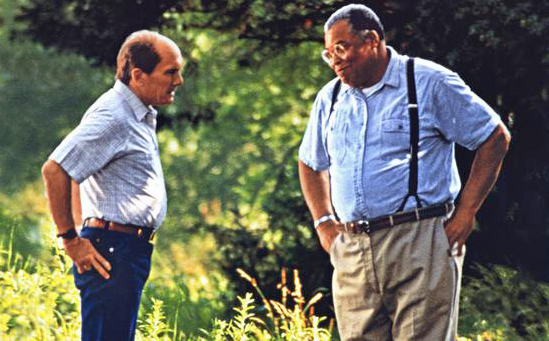
A FAMILY THING (1996) – Robert Duvall & James Earl Jones are brothers!


Just for the hell of it, I went on a little Robert Duvall marathon for his birthday on January 5th. I started the marathon off with his superior western with Kevin Costner, OPEN RANGE (2003). Next up was Duvall’s excellent crime film with Joe Don Baker and Robert Ryan, THE OUTFIT (1973). Duvall was in badass mode in this one. Based on one of Richard Stark’s “Parker” books, this was my first time to watch the film and damn, it was excellent. After that, I watched the bleak THE ROAD (2009), starring Viggo Mortensen, where Duvall just had a small part. It was a downer. I finished off the marathon late in the evening with A FAMILY THING (1996). I remember when this movie came out in the 1990’s because it was co-written by Billy Bob Thornton. Thornton was still a year away from his massive success with the movie SLING BLADE, but I knew him from his writing and co-starring in the superior crime film ONE FALSE MOVE (1991), as well as his small role in TOMBSTONE (1993). As an Arkansan, I knew Thornton was from Arkansas so I had taken a particular interest in him. But I was only 22 years old when A FAMILY THING was released, and a movie about a couple of old guys resolving family issues didn’t seem that appealing to me. As a guy into his 50’s, the entire concept seems more interesting to me now, so I gave it a spin for the first time to close out the marathon.

The story opens up in rural Arkansas with Earl Pilcher Jr. (Robert Duvall) getting the shock of his life when his beloved mother writes a final letter to him and instructs her local pastor to deliver it a few days after her death. The letter tells Earl that his biological mother was a black woman named Willa Mae who died in childbirth. It seems that Earl’s dad had gotten Willa Mae pregnant, and since he came out white, his “mother” was able to raise him as her own without having to tell him the truth. The letter also tells him that he has a half-brother named Ray Murdock (James Earl Jones) living in Chicago. It’s her dying wish that he meet Ray and get to know him as family. Pissed at his dad, and wanting to honor his mom, Earl heads to Chicago to meet Ray. Earl knows that Ray is a cop so he’s able to track him down. They immediately don’t like each other, but through a variety of circumstances, Earl ends up staying at Ray’s house for a couple of days. While there, he meets Ray’s wise, old Aunt T., Willa Mae’s sister (Irma P. Hall) and his sullen son Virgil (Michael Beach). Will the two men continue to push each other away, or will they eventually find the family connection that exists under all that messy past? 

I was surprised how deeply I was affected by A FAMILY THING. I’d be lying if I said I didn’t get teary-eyed a couple of times. The movie may use issues of adultery and racism to get the ball rolling, but more than anything else, it seems to understand that life is messy and that people are messy. We’ll disappoint ourselves, we’ll disappoint other people, and other people will disappoint us. There’s a reason that many people find their love in dogs and cats instead of people, because real relationships can be tough. The truth about my own life is that I could not have appreciated this film in 1996 at only 22 years of age. I was too naive. That’s no longer the case in 2025, and I can now truly relate to this story of two men who share a painful history, find common ground, and decide it’s worth moving forward together because family really does matter.

A movie like A FAMILY THING has no chance of working without a great cast, and this movie is a thespian jackpot. Robert Duvall is spot on perfect as the good ole guy from Arkansas, with a little bit of a racism engrained down deep into his soul, who now has to deal with the fact that he is half black. The scene where he confronts his dad about the lies that had been told to him all his life is as good as it gets. James Earl Jones matches Duvall in the even trickier role as the man who has always known about his “white” half brother Earl. This man has buried his hatred away for Earl’s father for decades, who he blames for the death of his own mother, and now has to deal with those feelings being dredged back up to the surface when Earl shows up in Chicago. Jones perfectly balances his character’s desire to keep the past in the past, with his decency as a man who doesn’t want to just throw Earl out on the street. He eventually softens towards him no matter how much bitterness he has for Earl’s dad. And neither Duvall or Jones even give the best performance in the film. That honor goes to Irma P. Hall as the blind, but extremely perceptive Aunt T. She sees through all of their bullshit, as she states to each of them on different occasions, and encourages them to get to know each other because they’re family. As they play games of racism and bitterness, she reminds them they are brothers no matter the color of their skin. It’s the performance of a lifetime and was at least worthy of an Oscar nomination in my opinion. 

Overall, A FAMILY THING may compress the amount of time and potential therapy it would take to resolve the type of family history presented here, but it does find a certain truth in the power of relationships. Earl and Ray don’t have to recognize the fact that they are brothers. As a matter of fact their lives are just fine without each other. But it’s their willingness to embrace the messy truth and find a way to connect with each other that makes the movie meaningful to me! 

Here’s the trailer for A FAMILY THING.

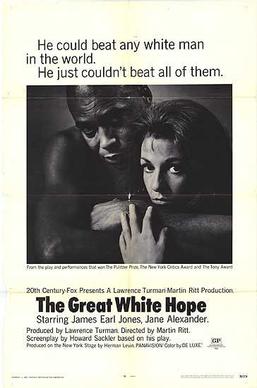
The Great White Hope (1970, directed by Martin Ritt)


The year is 1910 and the sports world is in a panic.  For the first time, a black man has won the title of the heavyweight champion of the world.  Jack Jefferson (James Earl Jones) had to go to Australia because no American city would agree to host the fight but he came out of it victorious.  The proud and outspoken Jefferson finds himself targeted by both the white establishment and black activists who claim that Jefferson has not done enough for his community.

It’s not just Jefferson’s success as a boxer that people find scandalous.  It’s also that the married Jefferson has a white mistress, a socialite named Eleanor Brachman (Jane Alexander, in her film debut).  While boxing promoters search for a “great white hope” who can take the title from Jefferson, the legal authorities attempt to arrest Jefferson for violating the Mann Act by supposedly taking Eleanor across state lines for “immoral purposes.”  Jefferson and Eleanor end up fleeing abroad but even then, their relationship is as doomed as Jefferson’s reign as the heavyweight champ.

Based on a Pulitzer-winning stage play by Howard Sackler, The Great White Hope features Jones and Alexander recreating the roles for which they both won Tonys.  Both Jones and Alexander would go on to receive Oscar nominations for their work in the film version.  It was the first nomination for Alexander and, amazingly, it was the only nomination that Jones would receive over the course of his career.  (It surprises me that he wasn’t even nominated for his work in Field Of Dreams.)  Both Jones and Alexander give powerful performances, with Jones dominating every scene as the proud, defiant, and often very funny Jack Jefferson.  Jones may not have had a boxer’s physique but he captured the attitude of a man who knew he was the best and who mistakenly believed that would be enough to overcome a racist culture.  (Speaking of racist, legendary recluse Howard Hughes reportedly caught the film on television and was so offended by the sight of Jones kissing Alexander that he thought about buying NBC to make sure that the movie would never be aired again.)  Hal Holbrook, Chester Morris, Moses Gunn, Marcel Dalio, and R.G. Armstrong all do good work in small roles.

Unfortunately, The Great White Hope still feels like a filmed stage play, despite the attempts made to open up the action.  Martin Ritt was a good director of actors but the boxing scenes are never feel authentic and the middle section of the film drags.  Jones and Alexander keep the film watchable but The Great White Hope is never packs as strong of a punch as its main character.

Scenes That I Love: The Two Sides of James Earl Jones in Field of Dreams


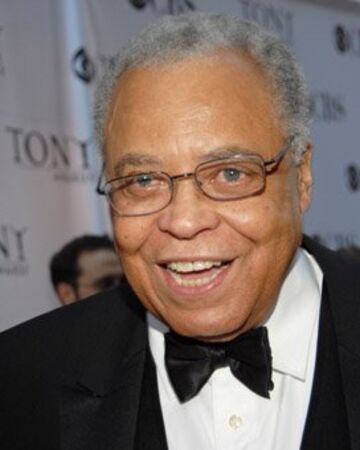
Rest in peace to one of our greatest actors, James Earl Jones.

It’s hard to pick just one scene when it comes to honoring James Earl Jones.  I’m going to go with two and they both come from 1989’s Field of Dreams, a film that is a favorite for a lot of folks here at the Shattered Lens.  I think they show the two sides of James Earl Jones.  We all know the inspiring side of Jones and how his voice could make anything sound like the wisest words ever spoken.  But Jones was just as good at comedy and just as good at playing people who, for lack of a better term, were just fed up with all the stupidity in the world.

In honor of James Earl Jones, here are two scenes from Field of Dreams.

4 Shots From 4 Films: Special James Earl Jones Edition


4 Or More Shots From 4 Or More Films is just what it says it is, 4 shots from 4 of our favorite films. As opposed to the reviews and recaps that we usually post, 4 Shots From 4 Films lets the visuals do the talking!

Today, we wish a happy birthday to the one and only James Earl Jones!

4 Shots From 4 James Earl Jones Films

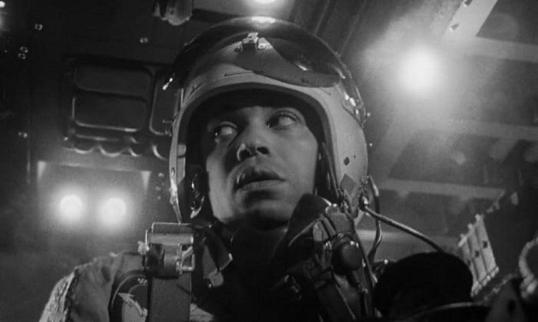
Dr. Strangelove: Or How I Learned To Stop Worrying And Love The Bomb (1964, dir by Stanley Kubrick, DP: Gilbert Taylor)

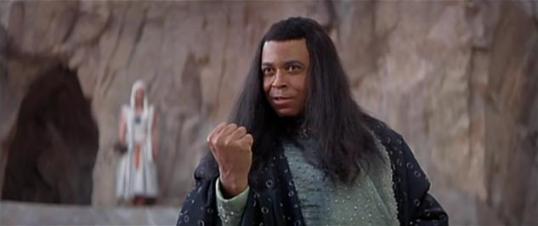
Conan The Barbarian (1982, dir by John Milius, DP: Duke Callaghan)

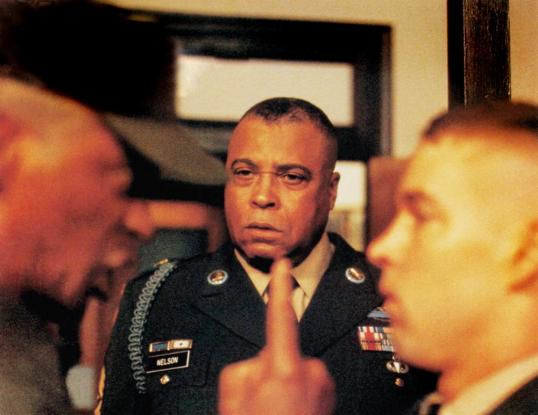
Gardens of Stone (1987, dir by Francis Ford Coppola, DP: Jordan Cronenweth)

Field of Dreams (1989, dir by Phil Alden Robinson, DP: John Lindley)

Film Review: Deadly Hero (dir by Ivan Nagy)


First released in 1975, Deadly Hero tells the story of Edward Lacy (Don Murray).

Lacy is an 18-year veteran of the New York Police Department and a proud family man.  Lacy is clean-cut, handsome in a blandly pleasant way, and he has a wife and several children.  He’s a member of the Knights of Columbus and there are times when he imagines himself pursuing a career in politics.  One of the first things that we see Lacy do is introduce an anti-crime mayoral candidate named Reilly (George S. Irving) at a Knights of Columbus rally.  Lacy goes out of his way to make sure that he and his family make a good impression but Reilly barely seems to notice him.

Lacy is also a racist who enjoys pulling and using his gun.  He was once a detective but a long string of brutality complaints has led to him being demoted back down to being a patrolman.  He and his partner (Treat Williams, making his film debut) spend their time patrolling the streets of New York City, getting dirty looks and verbal abuse from the people who they are supposed to be protecting.  Much like Travis Bickle in the following year’s Taxi Driver, Lacy obsesses on the crime and the decay that he sees all around him.

Sally (Diahn Williams) lives a life that is a hundred times different from Lacy’s.  She’s a cellist and a conductor.  She spends her days teaching and her nights conducting at an avant-garde theater.  Sally and Lacy have little in common but their lives become intertwined when Sally is attacked and briefly held hostage by a mentally disturbed mugger named Rabbit (James Earl Jones).  Responding to a call put in by Sally’s neighbor (Lila Skala), Lacy discovers Rabbit holding a knife to Sally’s throat in the hallway of Sally’s apartment building.  At first, Lacy handles the situation calmly and he manages to talk Rabbit into not only releasing Sally but also dropping his knife.  However, instead of arresting the now unarmed and docile Rabbit, Lacy shoots and kills him.

Knowing that he’s about to be investigated and that he’s made enemies in the department due to his political activities, Lacy convinces the still-shocked Sally to lie and say that she witnessed Rabbit lunging for Lacy’s gun before Lacy fired.  Lacy is proclaimed a hero and soon, Reilly is inviting him to appear at rallies with him.  Lacy’s political dreams seem to be coming true but Sally starts to feel guilty about lying.  Realizing that Sally is planning on revealing the truth about what happened, Lacy goes to extreme measures to try to keep her quiet.

Deadly Hero is an interesting film, one that is certainly flawed but which ultimately works as a portrait of the authoritarian mindset.  Ivan Nagy directs without much visual flair and, especially at the start of the film, he struggles to maintain a consistent pace.  For instance, the scene where Rabbit initially menaces Sally seems to go on forever, long beyond whatever was necessary to convince the audience that Rabbit was a dangerous guy.  (With the amount of time that Nagy lingers over shots of Sally being menaced by Rabbit, I was not surprised to read that Nagy and Dianh Williams apparently did not get along during filming.)  That said, the film’s low budget actually works to its advantage, with the grainy cinematography giving the film a gritty, documentary feel.  The film was shot on location in New York City and it’s interesting to watch the actors interact with real New Yorkers.  While Lacy is never a sympathetic character, seeing the actual streets of New York does go a long way to explaining why he’s so paranoid.  This is one of the many 70s films in which the overriding message seemed to be that New York City was the worst place on the planet.

The film is dominated by Don Murray, who plays Lacy as being a blue-collar fascist who has learned how to hide his anger and his hatred behind a quick smile and an outwardly friendly manner.  Feeling confident that everyone will back him up, he has no hesitation about executing an unarmed black man.  Even when it becomes obvious that Sally is not going to continue to lie about what happened, Lacy is still arrogant enough to assume that he can charm her into changing her mind.  When that doesn’t work, Lacy becomes increasingly unhinged and vindictive.  The film’s final ambiguous image suggests that there really is no way to escape the Edward Lacys of the world.

With its portrayal of a violent cop who is convinced that he will be protected by the system, Deadly Hero feels extremely relevant today.  Of course, Deadly Hero also suggests that the same system that Lacy is exploiting can be used to take him down, with Lacy eventually being investigated by both Internal Affairs and the District Attorney’s office.  The film leaves it ambiguous as to whether or not the rest of the police are as dangerous as Lacy.  Is Lacy a product of the system or is he just someone who has figured out how to exploit the system?  To its detriment, that’s a question that the film doesn’t answer.  Still, much like Harvey Hart’s similarly underappreciated Shoot, Deadly Hero is an always-interesting and occasionally insightful look at the authoritarian mindset.