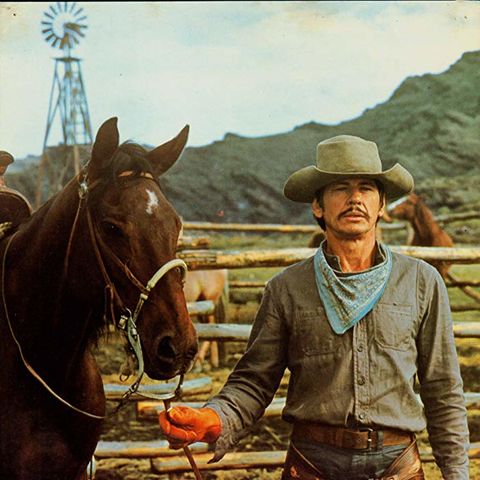
Director John Sturges was born on January 3rd, 1910. He directed some of my favorite movies, and many of them starred my movie hero, Charles Bronson. The picture above is from 1973’s CHINO!
Charles Bronson’s second role in a film was in Sturges’ THE PEOPLE AGAINST O’HARA from 1951, starring Spencer Tracy. The picture below isn’t a very good picture as Bronson was only in one scene. Can you spot Bronson??
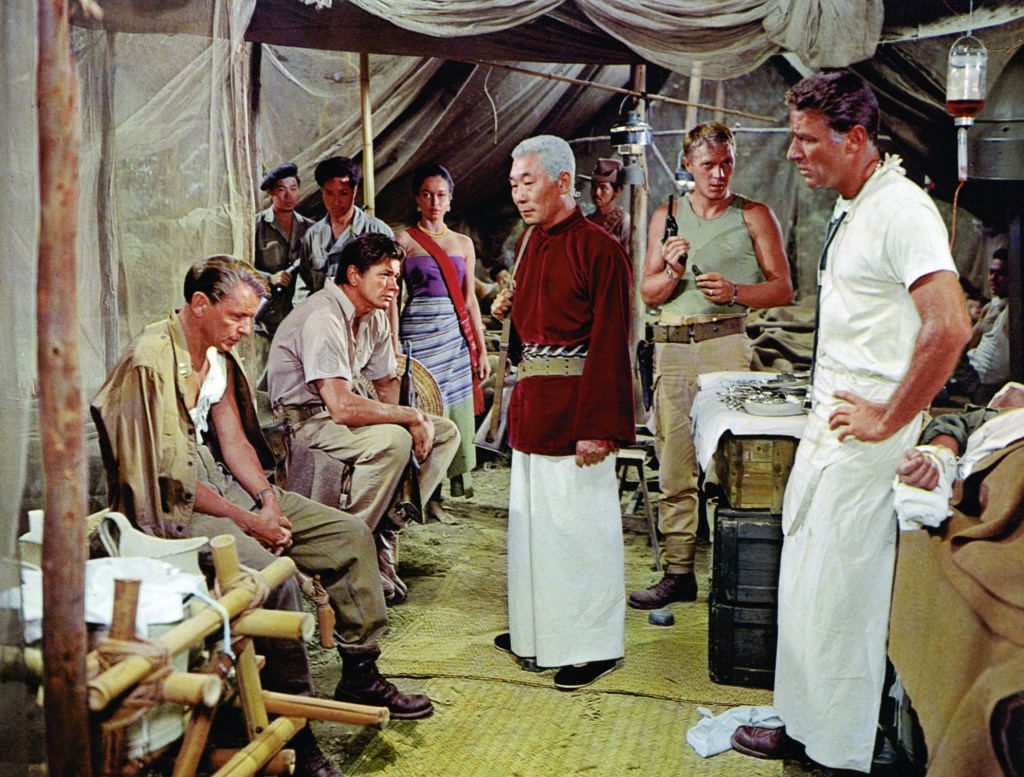
In 1959, Sturges would direct Charles Bronson in NEVER SO FEW, which co-starred Frank Sinatra and Steve McQueen.
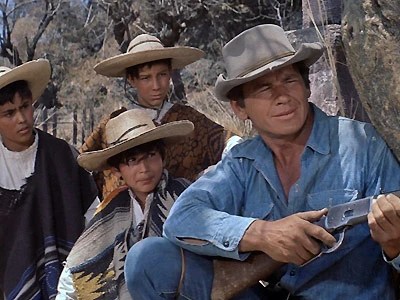
Just a year later in 1960, Sturges would direct Bronson and an all star cast that included Yul Brynner, Steve McQueen, James Coburn and Robert Vaughn in THE MAGNIFICENT SEVEN, a remade of the Akira Kurosawa classic THE SEVEN SAMURAI. Bronson’s role as Bernardo O’Reilly is one of the best in the entire film.
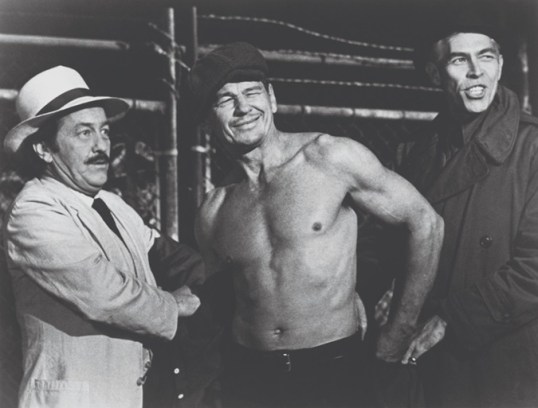
John Sturges would direct Charles Bronson again in 1963 in the classic film THE GREAT ESCAPE, which also starred Richard Attenborough, Steve McQueen, James Garner, James Coburn and Donald Pleasence. Charles Bronson drew on his experience in the coal mines of Pennsylvania when he played “The Tunnel King” in the classic World War II film. Charles Bronson is one of the characters who actually escapes, which made me very happy!
John Sturges would direct Charles Bronson one more time in the underrated western from 1973, CHINO (pictured at the top). Sturges was a phenomenal director, and Charles Bronson was in some of his very best work! As Charles Bronson’s biggest fan, Sturges will always be one of my favorite directors!!
HARD TIMES is probably the best movie that features Charles Bronson in the lead, and it’s my personal favorite movie of all time as of the date of this review. I reserve the right to change this opinion at any time!
Charles Bronson is Chaney, a drifter who’s riding the rails in the south during the great depression. Soon after getting off the train in some unnamed southern town, Chaney comes across an underground “fight” where we first meet Speed, played by the great James Coburn. It seems Speed is the money man for this big lug of a fighter who gets his butt kicked in front of God, the local underground fighting world, a man with horrible teeth, and Chaney. After witnessing this fiasco, Chaney follows Speed to a local restaurant where he apparently waits in the shadows until Speed goes up to the counter to get a refill of oysters and a couple of lemons. I say this because when Speed turns from the counter with his newly filled tray, Chaney is sitting at Speed’s table. I’m surprised that Speed even talks to him because the first thing Chaney does is help himself to an oyster, WITHOUT EVEN ASKING! Even with this breach of etiquette, Speed discusses the fight from earlier in the evening with Chaney, who offers his fighting services to Speed since the “big lug” is clearly not a good investment into the future and who is probably in a hospital overnight dealing with a concussion. Speed is hesitant to accept this offer since Chaney appears to be fairly old (Bronson was 53 when he made the film), but he changes his mind when Chaney offers his last $6 bucks to Speed to bet on him. Cut to Chaney getting his chance to fight. This is a fun scene because his opponent is the same fighter from earlier who kicked the big lug’s butt. The guy even taunts Chaney for being too old. The fight starts and it consists of two hits, Chaney hits the smartass, the smartass hits the ground. Somewhat amazed, Speed takes Chaney to New Orleans, and the two embark on an odyssey together to win fights and make thick wads of cash. The remainder of the film documents that odyssey, although it does take time out for a few “in-betweens.”
HARD TIMES is one of Bronson’s best films, and one of the main reasons why is that it provides a boatload of audience satisfaction. There are many examples of this. First is the scene mentioned above where Chaney takes out the smirking, dismissive fighter who sees our hero as too old. Too old my ass! In another scene, a bunch of unrefined Cajuns out in the boondocks refuse to pay up after Chaney kicks their fighter’s butt. Rather than pay up, the slimy Cajuns pull out a gun and dare Speed and Chaney to come take the money. Our heroes leave at that time, but Chaney convinces them to hang around out in the country for awhile so they can surprise the Cajuns under the cover of darkness at the local honkytonk, which happens to be owned by the head slimy Cajun. Chaney takes the gun, takes the money, and then shoots up the place with the gun, grinning as he saves the last bullet to shoot a mirror he’s looking directly into. It’s a fun scene that ends with Chaney, Speed and the gang speeding off into the night laughing like hyenas! In another scene, Chaney takes on the big, bald-headed, unbeatable fighter Jim Henry (Robert Tessier) in an awesome cage match. Let’s just say Jim Henry thought he was unbeatable and leave it at that. And finally, a competing New Orleans money man (Jim Henry’s guy) just can’t stand that he no longer has the top fighter in town, so he brings in a fighter from Chicago to take on Chaney. I won’t tell you what happens, but it’s some really fun stuff!
The cast of HARD TIMES also elevates the film to top tier status. I’ve already discussed Bronson and Coburn, but Strother Martin and Jill Ireland also add to the joy. Martin plays Poe, Chaney’s drug addict cut man, who dresses up like he could grow up to be Colonel Sanders in his older age. It’s a fun performance that adds a lot to the film. Jill Ireland plays Chaney’s love interest. She’s quite beautiful, but she seems to always be giving Chaney a hard time about what he does for a living. His response is usually to simply leave when she starts that BS. I thinks that’s kind of fun too.
And finally, this was the directorial debut of Walter Hill, the man behind THE WARRIORS, THE DRIVER, THE LONG RIDERS, SOUTHERN COMFORT, 48 HOURS, and RED HEAT. His movie is lean and mean, without a wasted moment that isn’t moving the film along. Hill has crafted a fun movie, filled with great performances. I think it’s one of the most underrated films of the 1970’s!
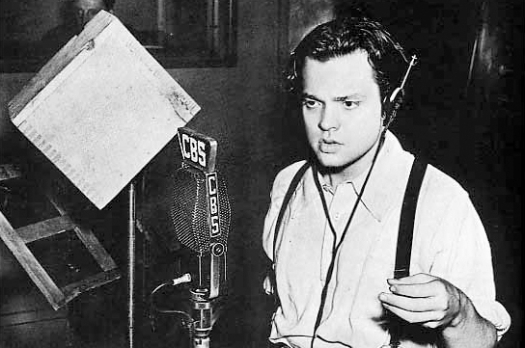
Filmed in 1957 for a television program called Westinghouse Studio One, The Night America Trembled is a dramatization of the night that Orson Welles terrified America with his radio adaptation of War of The Worlds.
For legal reasons, Orson Welles is not portrayed nor is his name mentioned. Instead, the focus is mostly on the people listening to the broadcast and getting the wrong idea. That may sound like a comedy but The Night America Trembled takes itself fairly seriously. Even pompous old Edward R. Murrow shows up to narrate the film, in between taking drags off a cigarette.
Clocking in at a brisk 60 minutes, The Night America Trembled is an interesting recreation of that October 30th. Among the people panicking: a group of people in a bar who, before hearing the broadcast, were debating whether or not Hitler was as crazy as people said he was, a babysitter who goes absolutely crazy with fear, and a group of poker-playing college students. If, like me, you’re a frequent viewer of TCM, you may recognize some of the faces in the large cast: Ed Asner, James Coburn, John Astin, Warren Oates, and Warren Beatty all make early appearances.
It’s an interesting little historical document and you can watch it below!
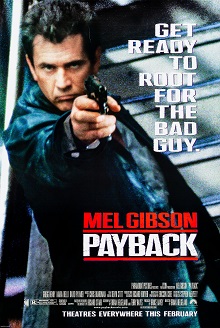
The 1999 film, Payback, opens with Porter (Mel Gibson) lying on a kitchen table while a grubby-looking doctor digs two bullets out of his back. The scene takes place in almost nauseating close-up, with the emphasis being put on the amount of pain that Porter endures to get rid of those bullets. Immediately, we know that Porter is not someone who can safely go to a regular hospital. Porter is someone who exists in the shadows of mainstream society.
He’s also someone who spends a lot of time getting beaten up. Even back when he was still a big star, Mel Gibson always seemed to spend a good deal of his films getting beaten up and tortured in various ways and that’s certainly the case with Payback. Porter gets punched. Porter gets shot. Porter has a encounter with an over-the-top dominatrix (played by Lucy Liu). At one point, Porter allows two of his toes to be smashed by a hammer, just so he can trick the his enemies into doing something dumb. As played by Gibson, Porter stumbles through the film and often looks like he’s coming down from a week-long bender. It’s interesting to think that Payback is a remake of 1967’s Point Blank, which starred Lee Marvin as Walker, an unflappable career criminal who never showed a hint of emotion or weakness. Porter, on the other hand, is visibly unstable and spends the entire film on the verge of a complete mental collapse. A lot of people try to kill Porter and Porter kills almost all of them without a moment’s hesitation.
(Of course, both Porter and Point Blank‘s Walker are versions of Parker, a career criminal who was at the center of several crime novels written by Donald “Richard Stark” Westlake.)
After helping to pull off a $140,000 heist from a Chinese triad, Porter was betrayed and left for dead by his former friend Val Resnick (Gregg Henry) and his wife, Lynn (Deborah Kara Unger). Porter, who just wants the $70,000 cut that he was promised, starts his quest for the money by tracking down Val and Lynn, and then continues it by going after the three bosses (played by William Devane, James Coburn, and Kris Kristofferson) of “The Outfit,” a shadowy organization that Val had gotten involved with. Along the way, Porter deals with a motely crew of corrupt cops, violent criminals, and sleazy middlemen. (David Paymer has a memorable bit as a low-level functionary with atrocious taste in suits.) Porter also hooks up with a prostitute named Rosie (Maria Bello), who might be the only person that he can actually trust.
I have mixed feelings about Payback. (So did director Brian Hegeland, who was reportedly fired towards the end of shooting and later released a far different director’s cut.) Though the film does a good job of capturing the visual style of a good neo-noir, the story itself is so violent and grim that it actually gets a little bit boring. The film’s advertising encouraged audiences to “Get ready to root for the bad guy,” but there’s really no reason to root for Porter. He’s an inarticulate and ruthless killer with no sense of humor. If anything, the people that he kills seem to be far more reasonable and likable than he does. In Point Blank, Lee Marvin may have been a bastard but he was good at what he did and you at least got the feeling that he wouldn’t go after any innocent bystanders. In Payback, Porter is such a mess that his continued survival is largely due to dumb luck. It’s hard to root for an idiot.
That said, the film does do a good job of capturing the feeling of people living on the fringes of society. The Outfit is not a typical Mafia family but instead, a collection of businessmen who work out of nice offices and, in the case of William Devane’s Carter, come across as being more of a senior executive than a crime boss. (James Coburn and Kris Kristofferson, meanwhile, come across as being two former hippies who made it rich on Wall Street. They’re elderly versions of Abbie Hoffman and Jerry Rubin.) The film does a good job of creating a world where no one trusts anyone and everyone is being watched by someone. In one memorable scene, the three men sent to watch for Porter discover that he’s been watching them the entire time. Never forget to look over your shoulder to see who might be following.
Flaws and all, this 1999 film does a good job of capturing the atmosphere of paranoia that, for many, would come to define the early part of the 21st Century.
Filmed in 1957 for a television program called Westinghouse Studio One, The Night America Trembled is a dramatization of the night in 1938 when Orson Welles’s adaptation of H.G. Wells’s The War of the Worlds reportedly caused a panic amongst listeners.
For legal reasons, Orson Welles is not portrayed nor is his name mentioned. Instead, the focus is mostly on the people listening to the broadcast and getting the wrong idea. That may sound like a comedy but The Night America Trembled takes itself fairly seriously, complete with Edward R. Murrow narrating and taking drags off of a cigarette.
Clocking in at a brisk 60 minutes, The Night America Trembled is an interesting recreation of that October 30th. Among the people panicking are a large collection of future stars and character actors. Ed Asner, James Coburn, John Astin, Warren Oates, and Warren Beatty all make early appearances.
It’s an interesting historical document and you can watch it below!
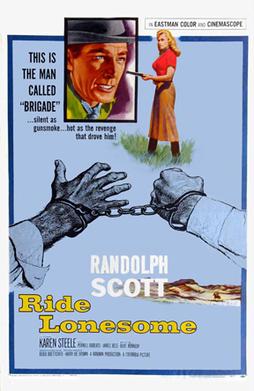
In the western Ride Lonesome, Randolph Scott plays Ben Brigade. Brigade is a bounty hunter. The only thing that really differentiates him from the outlaws that he captures is that he gets paid for what he does. When Brigade arrests a young outlaw named Billy John (James Best), he gives Billy just enough time to send word to his older brother, Frank (Lee Van Cleef). And when Brigade starts to lead Billy John back to the town of Santa Cruz, he takes his time and fails to cover his tracks, almost as if he is intentionally making time for Frank to eventually catch up to him. Along the way, Brigade meets up with three others, a woman named Carrie (Karen Steele) and two outlaws named Boone (Pernell Roberts) and Whit (James Coburn). Carrie is searching for her husband while Boone and Whit want to arrest Billy John themselves so that they can turn him in and get a pardon for their own crimes.
Ride Lonesome is one of the best of the many films that Randolph Scott made with director Budd Boetticher. Boetticher specialized in making fast-paced westerns that had deceptively simple plots. Nobody in a Boetticher western was totally good or totally bad and that’s certainly the case with Ride Lonesome, which may seem like a typical western but which is actually a character study of 6 very different people. Brigade is often only the hero by default and his actions are often as ruthless as those of the men who are tracking him. It’s only after he meets and gets to know Carrie that he starts to seriously consider that his plans could lead to innocent people getting hurt. Billy John may be a wanted killer but, underneath his bravado, he’s just someone trying to live up to his brother’s example. Meanwhile, Boone and Whit may be outlaws but they turn out to be the most morally upright characters in the film. Ride Lonesome takes a serious look at frontier justice and suggests that maybe black-and-white morality isn’t all that it’s cracked up to be.
Needless to say, the cast is great. Randolph Scott was one of the great western heroes and Karen Steele, Pernell Roberts, Lee Van Cleef, and James Best all turn in memorable performances. Best of all is James Coburn, making his film debut and showing that, even at the start of his career, he was already the epitome of cool. Ride Lonesome is one of the best of of the Boetticher/Scott westerns and a true classic of the genre.
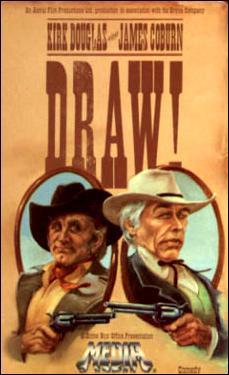
Harry Holland (Kirk Douglas) is an aging cowboy who used to be one of the old west’s more fearsome outlaws. When the newly reformed Harry wins $200 in a poker game, local weasel Reggie Bell (Derek McGrath) tries to get out of paying him by accusing Harry of cheating. A gunfight leads to Harry getting wounded, the sheriff accidentally getting killed, and Harry locking himself away in a hotel room with a Shakespearean actress, Bess (Alexandra Bastedo).
Unsure of how to get Harry to leave the hotel room and surrender himself, the townspeople send meek Deputy Wally Boldgett (Graham Jarvis) to track down the legendary lawman Sam Sterrett (James Coburn). Like Harry, Sam is a veteran gunfighter and if anyone can face down Harry Holland, it’s him! Unfortunately, as Wally soon discovers, Sam is now an alcoholic who no longer has much interest in enforcing the law on the frontier.
While Wally tries to sober up Sam and deliver him to the town, Harry and Bess remain in the hotel room and fall in love.
Draw! is a light-hearted western comedy. Though it deals with the classic western theme of aging outlaws trying to find their place in a changing society, Draw! is more interested in laughs than pathos. Reggie Bell, for instance, is such a weasel that he’s never a credible villain, despite all of the times that he tries to be. Even once he’s trapped in the hotel room, Harry is never really worried. Even when the gallows start to go up in the towns square, it’s mostly played for laughs.
The main appeal of this film is to watch two genre vets act opposite of each other and both Kirk Douglas and James Coburn deliver. The film is split almost evenly between the two actors, with Coburn especially digging into his role. When he’s first introduced, Sam is so drunk that he can barely see straight and it’s not until he actually reaches the town and pins on his old sheriff’s badge that he starts to straighten up and become the cool and confident James Coburn that we all know. Coburn does a great job of showing Sam gradually starting to once again care about things like justice and doing the right thing (regardless of what the law says). Coburn’s laid back style compliments Douglas’s natural intensity. When Sam and Harry finally speak to each other, their shared history as friends and competitors comes across naturally.
Draw! is both a good western and a showcase for two iconic actors.
4 Shots From 4 Films is just what it says it is, 4 shots from 4 of our favorite films. As opposed to the reviews and recaps that we usually post, 4 Shots From 4 Films lets the visuals do the talking!
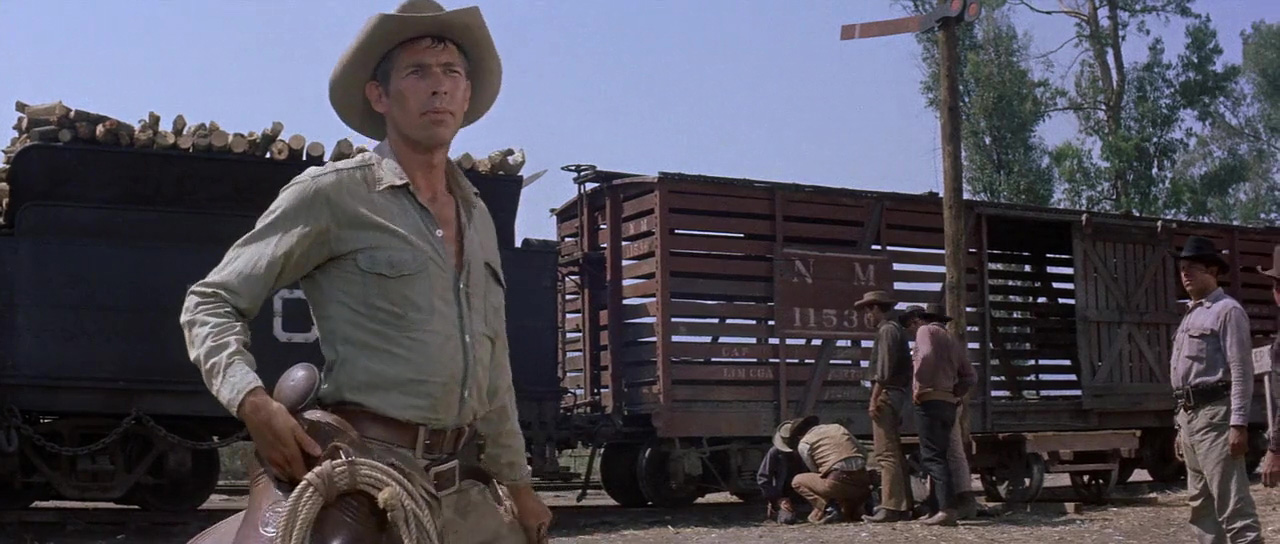
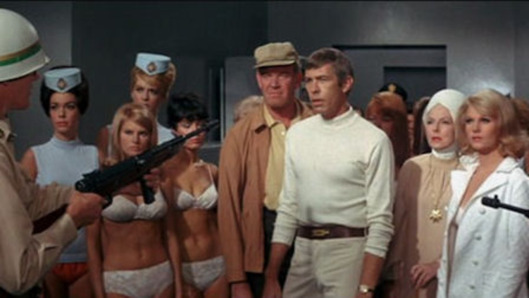
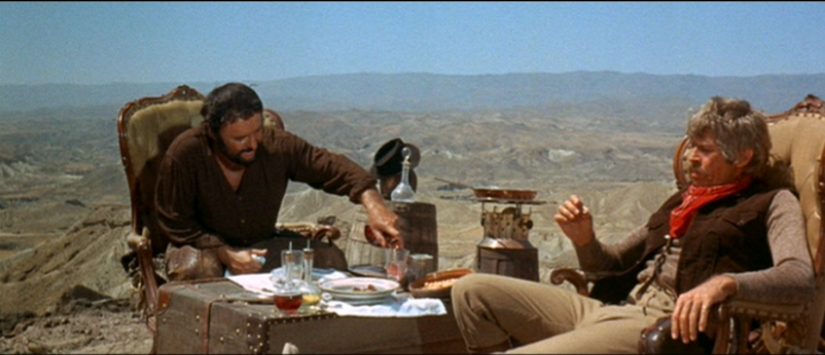
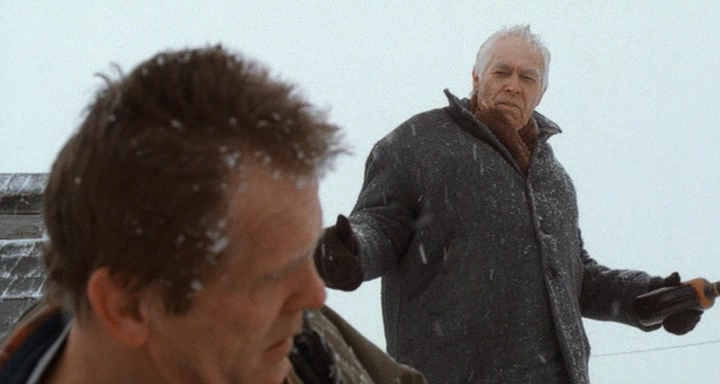
Whether he was appearing in a western, a spy film, a war film, a comedy, or a dark drama, James Coburn was one of the coolest and most underapperciated actors around. He made bad films tolerable and good films even better. Regardless of the role, Coburn brought his own unique style to each and every performance. He was born 92 years ago today in Nebraska so here are just four of the films from his legendary career.
4 Shots From 4 Films
The Magnificent Seven (1960, directed by John Sturges)
In Like Flint (1967, directed by Gordon Douglas)
A Fistful of Dynamite (1971, directed by Sergio Leone)
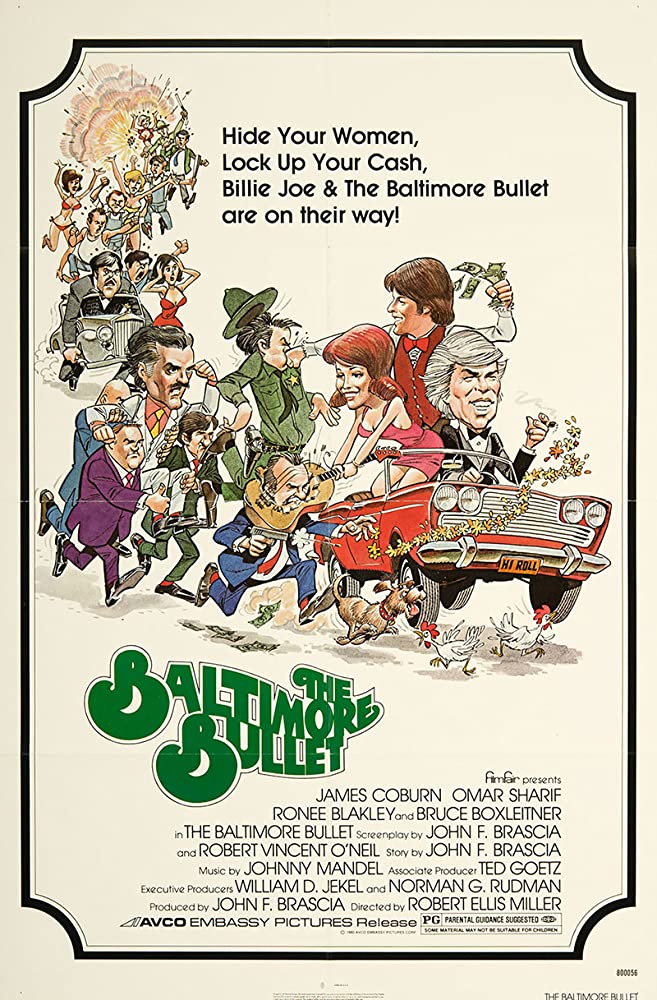
James Coburn was one of those actors who improved any film in which he appeared in. Take The Baltimore Bullet, for example. Without Coburn, The Baltimore Bullet is basically The Hustler without any of that film’s grit or edginess. With Coburn, it’s still a bad remake of The Hustler but at least it’s got James Coburn.
Coburn plays Nick Casey, who was once known as The Baltimore Bullet. He was the top pool player in the country but now, he makes a meager but enjoyable living traveling the country with his protegee, Billie Joe Robbins (Bruce Boxleitner), and hustling people out of their money. Nick’s plan is to raise enough money so that he and Billie Joe can go down to New Orleans, enter the national pool championship, and defeat the reigning champion, a man known only as the Deacon (Omar Sharif). The episodic film follows Nick and Billie Joe as they travel across the country, having comedic adventures and trying to stay one step ahead of all of the people that they’ve cheated. Along the way, they pick up an aspiring country singer named Carolina Red (Ronee Blakley, who somehow went from her Oscar-nominated debut in Nashville to this).
The Baltimore Bullet doesn’t work for any number of reasons. A big problem is that Nick and Billie Joe’s friendship never really makes sense. There’s no real reason for Nick to need a protegee and Billie Joe often seems to be more interested in playing poker than playing pool. We never understand why Nick would take someone as erratic as Billie Joe under his wing. Another problem is that The Deacon never seems like a formidable opponent. He’s just Omar Sharif, looking bored and carrying a pool cue. Because we don’t like Billie Joe and don’t care about the Deacon, we don’t really care who wins the tournament. Probably the most interesting thing about The Baltimore Bullet is that, while it was obviously meant to be a rip-off of The Hustler, its plot, with a veteran hustler teaming up with a callow protegee, actually has more in common with The Hustler‘s sequel, The Color of Money (which would be released 6 years after The Baltimore Bullet).
All of that almost doesn’t matter, though, just because James Coburn’s in the movie. James Coburn always came across like the coolest human being on the planet, even in something like The Baltimore Bullet. There’s not much depth to Nick as a character but Coburn plays the role with a gleam in his eyes and a leer that looks like it belongs on the face of a cartoon wolf and it’s impossible not to like him. While everyone else is struggling with the bad dialogue and their inconsistent characters, Coburn looks like he’s having the time of his life. Coburn was an actor who was incapable of giving a bad performance and he’s the main reason to see The Baltimore Bullet.
Charlie Pike (Jeff Fahey) is an assassin with a conscience. He learned how to kill while serving in the military and now, he uses his skills to help out the Committee, a shadowy organization of lawyers who are determined to take out the leaders of organized crime. When Charlie announces that he has decided to retire from the killing game, the Committee’s Peter Mayhew (James Coburn!) asks him to take on one more job as a personal favor to him.
Mayhew puts Charlie in contact with the beautiful and alluring Jordan (Yancy Butler, making her film debut). Jordan is the widow of a businessman who was murdered by the mob. Jordan asks Charlie to kill the man who killed her husband. Charlie agrees but, after he does the job, he discovers that the man he killed was actually a government informant who was scheduled to testify to Congress! Someone double-crossed Charlie and now, Charlie’s got both the police and another group of assassins trying to track him down. Jordan claims that Mayhew told her that the informant was responsible for her husband’s death. Mayhew denies it and says that Jordan must have set Charlie up. Charlie has to figure out who to trust before it’s too late. Complicating matters is that Charlie and Jordan have become lovers.
The Hit List is essentially a 40s film noir reinterpreted for the direct-to-video age. Jeff Fahey has the Alan Ladd role while Yancy Butler does her best imitation of Lana Turner. Fahey was one of the best actors to routinely star in the neo-noirs that used to populate late night Cinemax and The Hit List features one of his best performances. Fahey is a convincing killer but he still brings enough humanity to the role that you believe Charlie could find himself falling for Jordan. Yancy Butler is a sultry and sexy femme fatale and James Coburn is James Coburn, supercool, slick, and always in control. It shouldn’t be too hard to figure out which one of the two is betraying Fahey but all three commit to their roles and give enjoyable performances. I especially liked the scene where Mayhew accuses Jordan of double-crossing Charlie and James Coburn grins like he’s having the time of his life. James Coburn was one of those actors who could liven up and improve any scene in any movie and he proves that here.
The Hit List is a well-made B-noir that’s elevated by its cast and which will leave you nostalgic for Cinemax in the 90s.