Ignore It (Dir. Sam Evenson), Short Film Review by Case Wright


“Ignore It” hit home. For the uninitiated, it was a story about alcoholism, abuse, and the pathological need to ignore it. I know this because I lived it. I can spot an alcoholic miles away. I was so afraid of my father, who was a car guy, that even today, when I smell motor oil or a garage, an icy chill shoots down my spine. He was the beat the snot out of his son type and I ended up being the party guy or isolation varietal.

I watched the film and then confirmed it with the short story “You’re going to notice a woman in your home, you must ignore her” by Jeff Speziale that the story was about a different alcoholic than my dad. In this story, the alcoholic abuser was the mother. An alcoholic mom hits harder because she’s supposed to protect you from everyone. Women are the foundation of a civilized society and family that’s why when men are dying on the battlefield, they cry for their mothers. We see this evidenced in psychology because female psychopaths are underdiagnosed; it is too hard even for a mental health professional to admit that a woman could be an evil pathological liar. We could always accept evil men, but evil women were portrayed as lacking agency- they were possessed or a succubus. In other words, it either was not their fault or they weren’t really human in the first place. Denial, the absolute rejection of an obvious fact, rules the day. Alcoholism lives in denial because it the perfect form of secrecy.

In this short, the father explains to the son that the monster is back and it has to be ignored; so, I read this as mom is on a bender again -the monster is back. During dinner, the father tries to maintain order, but the mother finally gets up and goes to the kitchen because it is the favorite place of the hidden stash. There is also a moment where there is a monster hand on the daughter’s shoulder; it is not a claw. It is a caress, but still terrifying because a drunk mom is unpredictable like dynamite. When the daughter sees the monster and she lets a tear out; it is shame falling down her face, causing an immediate and violent reaction from the monster.

The narrator in the short story tells the reader to share the infection. The narrator’s request has two interpretations: a positive one and a real one. The positive one is that we need to out the disease and take power from it to stop it. The real one is that the pain is too great for him to experience alone; so, if you share it, you lessen his own burden.
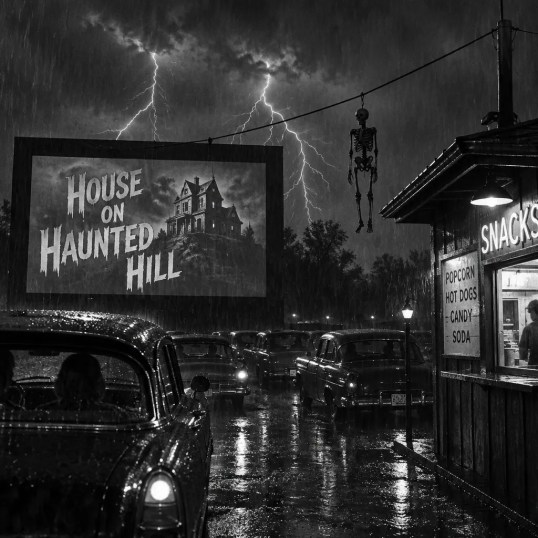
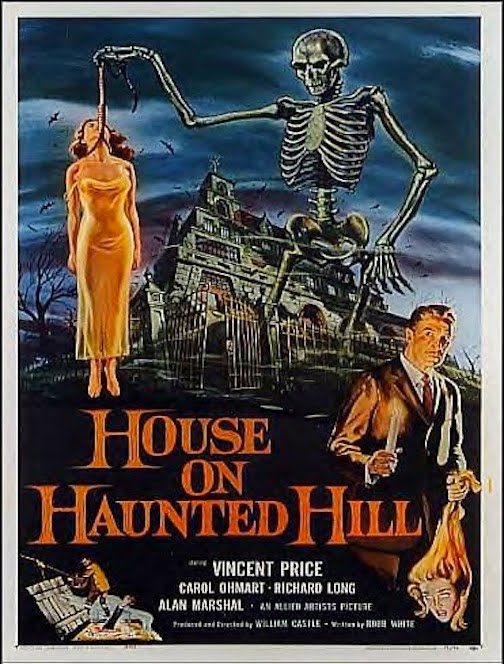
Horror On The Lens: The House On Haunted Hill (dir by William Castle)


Watching the original House on Haunted Hill is a bit of a Halloween tradition here at the Shattered Lens.

First released in 1959, The House on Haunted Hill features Vincent Price as a millionaire who invites five people to a party that he and his wife are throwing in a supposedly haunted house.  Price explains that anyone who can actually make it through the entire night will receive $10,000.  (That’s the equivalent of a $110,000 today.)   Is the house truly haunted?  The groundskeeper (Elisha Cook, Jr.) certainly seems to think so!

This is a classic haunted house movie, featuring Price at his best and a number of genuinely fun twists.  Even if you’ve seen it a hundred times, you need to watch it again.  Here is …. THE HOUSE ON HAUNTED HILL!


Horror Song of the Day: Mater Tenebrarum by Keith Emerson


Inferno (1980, dir by Dario Argento, DP: Romana Albano)

Today’s horror song of the day comes from Keith Emerson’s soundtrack of Dario Argento’s Inferno.  Emerson did not have an enviable task, having to follow up Goblin’s soundtrack for Suspiria.  But Emerson pulled it off, crafting a score that compliments Goblin’s earlier work while maintaining an identity of its own.

Horror Scenes That I Love: The Opening of House on Haunted Hill


Today’s horror scene that I love comes from 1959’s House on Haunted Hill.  As the film opens, Vincent Price takes a moment to speak directly to the audience and introduce the characters who are coming to spend the night at the house.  Price, who is one of the patron saints of October, delivers his lines with such relish that it’s impossible not to stick around to see who survives the night.

4 Shots From 4 Horror Films: October 11th


4 Or More Shots From 4 Or More Films is just what it says it is, 4 shots from 4 of our favorite films. As opposed to the reviews and recaps that we usually post, 4 Shots From 4 Films lets the visuals do the talking!

4 Shots From 4 Horror Films: October 11th

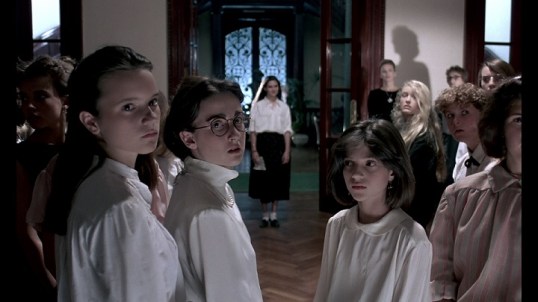
Phenomena (1985, dir by Dario Argento)

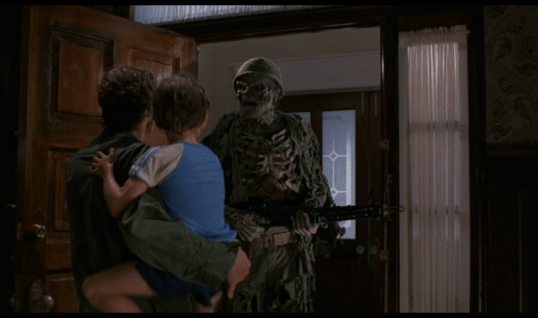
House (1985, dir by Steve Miner)

Demons (1985, dir by Lamberto Bava)

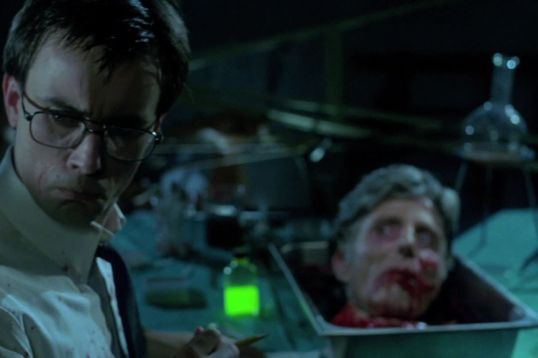
Re-Animator (1985, dir by Stuart Gordon)

Music Video of the Day: Spellbound by Siouxsie and the Banshees (1981, directed by Clive Richardson)


Spellbound was the lead single off of Siouxsie and the Banshee’s fourth studio album, Juju.  In later interviews, Siouxsie would describe Juju as being an accidental concept album as all of the songs dealt with dark themes and subject manner.  Juju was a horror-themed album but the horror was psychological and not supernatural.  As a sign of that theme, Spellbound was named after an Alfred Hitchcock film about a man who is troubled by disturbing dreams.

Clive Richardson directed several videos from Siouxsie and the Banshees.  He also worked with Depeche Mode, Steve Winwood, Big Country, and Tears for Fears.

Enjoy!

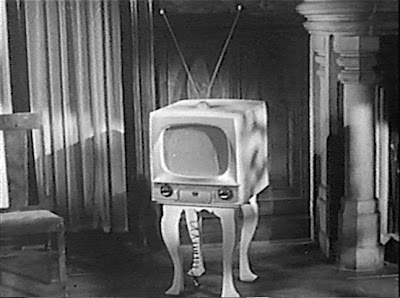
Bonus Horror On Television: Final Curtain (dir by Edward D. Wood, Jr.)


1957’s Final Curtain is a short, 22-minute film in which a mysterious man (Duke Moore) wanders around a creepy and seemingly abandoned theater.  While Dudley Manlove (who played Eros the Alien in Plan Nine From Outer Space) provides narration, the man sees many strange things in the theater.  What is real and what is merely a hallucination?  Watch to find out!

Final Curtain was envisioned, by director Edward D. Wood, as being the pilot for a horror anthology series.  Though none of the networks were interested in buying Wood’s proposed series, Wood considered Final Curtain to be his finest film and it certainly is a bit more atmospheric than the typical Wood film.  The role of the mysterious man was written for Bela Lugosi but, after Lugosi passed away, Duke Moore was cast in the role instead.

From 1957, here is Final Curtain.

Horror on TV: Fear Itself 1.10 “Chance” (dir by John Dahl)


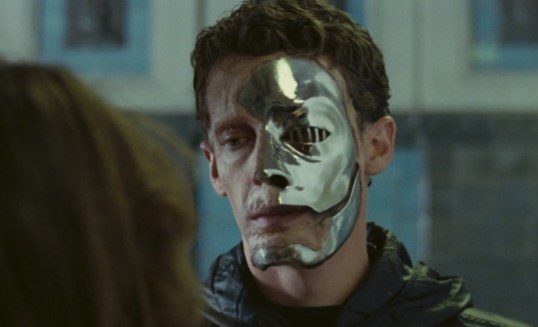
Tonight’s episode of Fear Itself features Ethan Embry as Chance Miller, whose run of bad luck gets even worse once he finds himself having to deal with an evil doppelganger of himself.  This psychological thriller was directed by noir specialist, John Dahl.

This was one of the episodes of Fear Itself that was filmed in 2008 but wasn’t aired before the show went on hiatus.  It was included when the show was released on DVD in 2009.

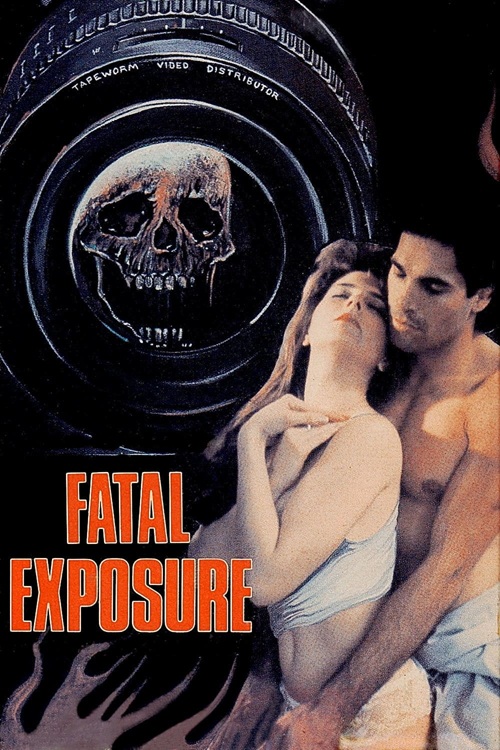
SOV Horror Review: Fatal Exposure (dir by Peter B. Good)


In his mansion in Alabama, fashion photographer Jack B. Rippington (Blake Bahner) kills people in ways that are cruel and grotesque. He does it with a smile on his face and a spring in his step, and he always remembers to take pictures first because, I guess, he really does take the whole fashion photographer thing seriously. He has standards. He’s a professional. When he meets and starts dating a model named Erica (Ena Henderson), she soon finds herself unwittingly leading victims to their doom.

Why is Jack B. Rippington so obsessed with murdering anyone who comes by his house? Well, you could say that it runs in the family. He’s the great-grandson of Jack the Ripper. He informs the audience of this. Myself, I have to wonder if Rippington is a family name or if it’s just his nom de meurtre. If Jack the Ripper’s last name really was Rippington, that would be a hell of a coincidence, and it would also show that Scotland Yard really wasn’t doing a very good job of investigating the crimes at Whitechapel. I mean, why did they devote so much time to investigating poor Montague John Druitt when there was a guy named Rippington wandering around?

Of course, it’s also possible that Jack the Ripper moved to the United States, had a daughter, and then she married someone named Rippington. Still, that seems like it would be an amazing coincidence.

(For the record, the real Jack the Ripper was some guy that you’ve never heard of and who probably died without ever telling anyone the truth. The fact that he was never captured would seem to indicate that the police were investigating the wrong suspects. And don’t start in with any of that royal conspiracy nonsense either. Honestly, that’s one of the silliest theories that I’ve ever heard.)

Anyway, where was I? Oh yeah, Fatal Exposure. Fatal Exposure is a shot-on-video epic that has some surprisingly effective gore effects. Between burning people with acid and chopping off their heads, Jack B. Rippington really gets into his work, and the results are often difficult to look at. If I were to compare this to any other film, it would probably be William Lustig’s Maniac, which featured Joe Spinell playing an equally homicidal photographer whose crimes seemed to owe more than a little to Jack the Ripper. Of course, Jack B. Rippington is much more handsome than Joe Spinell was in Maniac. If Maniac was a plunge into darkness and a trip to the realm of absolute zero, Fatal Exposure tries to be a bit of a comedic romp. Jack B. Rippington may be a murderer, but he also enjoys talking to the audience. In its use of dark humor and its breaking of the fourth wall, the film has quite a bit in common with Lucio Fulci’s Touch of Death.

There’s not really much of a plot to Fatal Exposure. Jack B. Rippington takes pictures of women in lingerie. He kills anyone who comes to the house. Erica eventually gets suspicious. But director Peter B. Good keeps the action moving, and it looks surprisingly good for a SOV film. (Good was best-known as a cinematographer.) Blake Bahner gives a good performance as Jack B. Rippington. It’s not a film for everyone, but, at the very least, it feels like a real movie. That puts it ahead of most SOV productions.