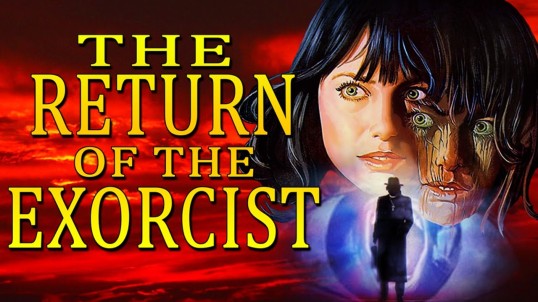
Horror Film Review: The Return of the Exorcist (dir by Angelo Pannaccio and Luca Damiano)


The 1975 Italian film, The Return of the Exorcist, opens with a disjointed series of flashbacks that gradually reveal why a young man named Piero (Jean-Claude Verne) is currently bound in a bed in a monastery.  What the flashbacks do not reveal is why Piero features one of the most fearsome mullets to ever been seen in an Italian film.  Seriously, I get that this film was shot in 1975 but it’s a little bit hard to be intimidated by someone who obviously spends hours a day obsessing over his mullet, regardless of what may or may not have possessed him.

Piero, we learn, is 17 years old and his troubles started when he was outside with his camera and he came across a naked woman (Mimma Biscardi) standing in the middle of a lake.  Piero took her picture and the woman laughed at him.  When Piero’s friends approached, the woman suddenly vanished.  When Piero developed the pictures, the woman was not in them.  He went back to the lake and discovered a medallion which, rather foolishly, he chose to wear.

Of course, because of the film’s flashback structure, we already know that the woman was previously sacrificed at a Satanic orgy and that her body was possessed by a succubus and, because Piero was stupid enough to put on that medallion, the succubus has now entered him.  Piero is soon acting strangely.  When he insults his girlfriend, Sherry (Sonia Viviani), she abandons him and eventually ends up at a club where she dances the night away.  Meanwhile, in his bedroom, Piero has a vision of the woman mocking him.  Piero grabs a knife and slashes it across the woman’s throat.  While this doesn’t effect the woman, it does lead to Sherry dying at the club.

The strangeness continues and Piero’s actions become progressively more and more disturbing.  After Piero attempts to assault both his mother (Francoise Prevost) and his sister, a nun named Elena (Patrizia Gori), the decision is made to call in an Exorcist.  The Exorcist arrives at the monastery and….

IT’S BARZINI!
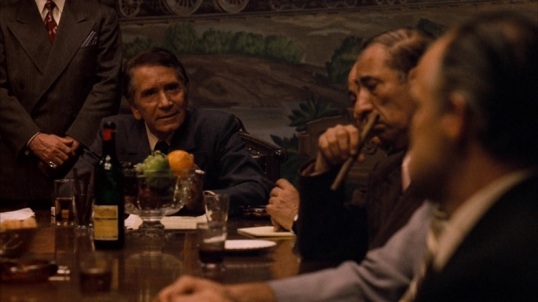
Well, no, actually The Exorcist does not have a name.  In the credits, he is simply listed as “Exorcist.”  One can guess from the film’s title that the plan was to trick audiences into thinking that the character was either Father Merrin or Father Karrras from The Exorcist but anyone who has seen that film know that would be impossible.  The important thing is that this film’s Exorcist is played by Richard Conte, who previously played Barzini in The Godfather.

(For the record, Richard Conte actually had a pretty long career and played a lot of roles before he was cast as Barzini.  In fact, Conte was prominent enough that he was initially considered for the role of Don Vito Corleone.  Before The Godfather, Conte appeared in films like Ocean’s 11, The Greatest Story Ever Told, The Big  Combo, Tony Rome, and Lady in Cement.  After The Godfather, Conte appeared in several Italian films, like this one.  The Exorcist was actually his final film role, as he died of a heart attack shortly after shooting.)
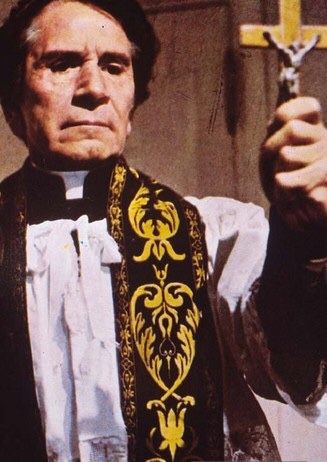
What type of exorcist is Richard Conte?  He’s a very tough one.  As opposed to the scholarly Merrin and the conflicted Father Karras, Conte’s Exorcist comes across as if he’s ready to step into that bedroom and just literally slap the Hell right out of Piero.  And considering just how annoying a character Piero was, I don’t think anyone would have objected.

Anyway, Conte really doesn’t show up in the film until it’s close to being over and the Exorcism plays out pretty quickly.  The majority of this film is made up of scenes of Piero imagining the Succubus naked or the Succubus taking over Piero’s body so that it can go after his girlfriend, his mother and his sister.  There’s reason why this film is also known as Naked Exorcism.  It’s unapologetically sleazy, as many of the Italian Exorcist films were.  It’s also a bit boring, mostly because Piero is such a doofus that you really don’t care what happens to him.  They should have just tossed him in the lake and tested whether he weighed more than a duck.  Conte is a tough exorcist but the film itself is forgettable.
4 Shots From 4 Horror Films: Special Freddie Francis Edition


4 Shots From 4 Films is just what it says it is, 4 shots from 4 of our favorite films. As opposed to the reviews and recaps that we usually post, 4 Shots From 4 Films is all about letting the visuals do the talking.

This October, I am going to be using our 4 Shots From 4 Films feature to pay tribute to some of my favorite horror directors, in alphabetical order!  That’s right, we’re going from Argento to Zombie in one month!

Today’s director is Freddie Francis.  Though Francis may be best remembered as a cinematographer (who worked on three David Lynch films), he was also a director who did memorable work for both Hammer and Amicus in the 60s and 70s.

4 Shots From 4 Freddie Francis Films

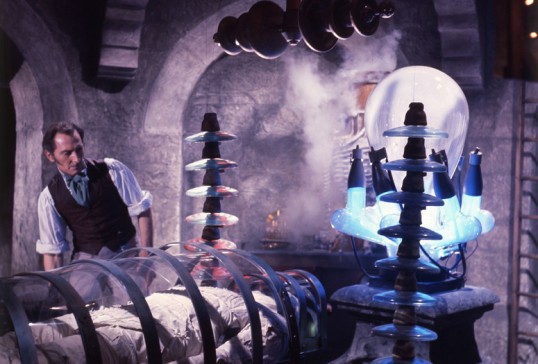
The Evil of Frankenstein (1963, dir by Freddie Francis, DP: John Wilcox)

The Skull (1965, dir by Freddie Francis, DP: John Wilcox)

Dracula Has Risen The Grave (1968, dir by Freddie Francis, DP: Arthur Grant)

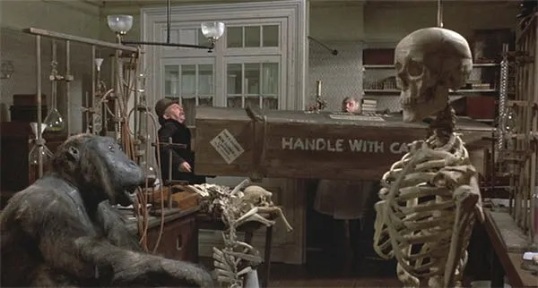
The Creeping Flesh (1973, dir by Freddie Francis, DP: Norman Warwick)

The Horror Covers of Argosy


July, 1923. Cover by Stockton Mulford

Argosy was one of the earliest and longest-lived of the American pulp magazines.  Initially, it was published from 1882 to 1978.  It was subsequently revived from 1989 to 1994 and then a second time in 2005 and 2006.  Over the years, there were many different variations on the publication’s name but no matter what exactly Argosy was called, each issue featured stories by prominent pulp writers.  Argosy published all genres, from adventure to mystery to science fiction to westerns to horror.  The covers were done by some of the prominent of the pulp artists.  Here are just a few horror-themed covers from Argosy:

June, 1924. Cover by Stockton Mulford

February, 1931. Cover by Paul Stahr.

March, 1931. Cover by Paul Stahr.

June, 1931. Cover by Paul Stahr.

June, 1933. Cover by Paul Stahr.

October, 1933. Cover by C.C. Beall

1934, January. Cover by Paul Stahr.

December, 1934. Cover by C.C. Beall

December, 1936. Cover by Rudolph Belarski

July, 1938. Cover by Rudolph Belarski

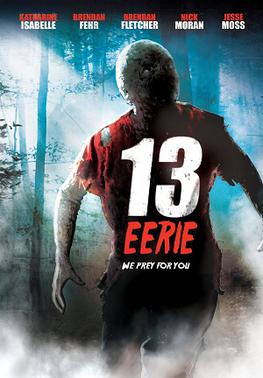
Horror Film Review: 13 Eerie (dir by Lowell Dean)


The 2013 film, 13 Eerie, takes place on an island that is not quite as deserted as our heroes originally assumed.

The island, known as the Eerie Strait, was once the home of a brutal, maximum security prison.  The island is full of abandoned buildings and abandoned vehicles, all of which sit there as monuments to the brutality of mass incarceration.  Prof. Tompkins (Michael Shanks) teaches a class in Forensic science and he brings six of his best students (played by Katharine Isabelle, Brendan Fehr, Brendan Fletcher, Jesse Moss, Kristie Patterson, and Michael Eisner) to the island.  With the help of an ex-convict named Larry (Nick Moran), Tompkins has set up several fake crime scenes (often featuring very real corpses) for his students to investigate.  For the class, the students are required to work in teams of two and the teams are not allowed to communicate with each other.  However, each team is given a walkie-talkie so that they can still communicate with Tompkins.

Now, just speaking for myself, I would probably drop the class rather than take part in any of this.  Seriously, as soon as you tell me that I’m going to have to spend my weekend hanging out at an abandoned prison and examining real corpses, I would probably walk out of the classroom and switch majors.  (Then again, I probably wouldn’t be majoring in forensics to begin with.)  But Tompkins’s students are very enthusiastic about heading off to the island.  I guess if doing obviously dumb things, going off to an isolated location with an ex-con would be an attractive option.

Anyway, the students head over to the Island and — surprise! — it turns out that there’s a lot of extra dead bodies lying around.  At first, the students think that the extra bodies are all a part of their class but then some of the dead bodies come back to life.  It turns out that the island — much like the prison camp in Garden of the Dead — was once used a place to experiment on prisoners.  As a result, many of the former prisoners have now been transformed into flesh-eating zombies who roam the island and look for new victims.

(And again, anyone who has ever seen a zombie movie, should have realized that this would happen.  It always amazing me that people in zombie movies have apparently never come across Night of the Living Dead on television late at night.  At the very least, you would think that these people would have at least read an article or two about The Walking Dead.  And really, even if you have somehow gone your entire life without being exposed to any zombie media, the sight of the dead walking around should be enough to convince most people to run away.)

13 Eerie has some atmosphere but it doesn’t really bring anything new to the zombie genre.  In fact, it so closely follows the rules of the genre that it actually gets kind of boring.  I appreciated, as always, the committed performance of Katharine Isabelle and I also liked that the film ended on a bit of a down note.  But, for the most part, 13 Eerie doesn’t bring anything new to the world of the living dead.

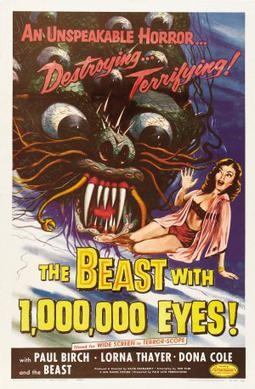
Horror Film Review: The Beast With A Million Eyes (dir by David Kramarsky, Lou Place, Donald Myers, and Roger Corman)


The 1955 film, The Beast With A Million Eyes, has three credited directors and reportedly, Roger Corman also stepped in and took over the direction as well, even though he received no screen credit.  That’s a lot of directors for a relatively simple sci-fi/horror film.  Reportedly, the problem with the directors came from the fact that The Beast With A Million Eyes was a non-union production and, after one day of production, the unions threatened to picket the set and basically shut down production unless the entire cast and crew signed up for the guilds.  The unions eventually got their members and their money but all of the drama set production so far behind that Roger Corman stepped in, fired award-winning cinematographer Floyd Crosby, and proceeded to finish up the film himself.

As for the film itself, it takes place in the California countryside.  Allan Kelly (Paul Birch, who was one of the first guys to get killed in The War of the Worlds and later played the dying alien in Corman’s Not Of This Earth) has no use for modern society and he has moved his family to a ranch in the California desert.  His family is not particularly happy about this.  His wife, Carol (Lorna Thayer), hates being isolated from the world.  Their teenage daughter, Sandy (Dana Cole), is lonely and has a strained relationship with her mother.  The only thing that makes Sandy happy is her boyfriend (played by Dick Sargent, who would later take over the role of Darin on Bewitched) and her dog.  Perhaps the worst part of living out in the desert is that their handyman is a weirdo known as Him (Leonard Tarver).

Now, I should mention that, when I was growing up, my family moved around a lot.  I spent a while living on a few farms that were owned by my aunts, uncles, and grandparents.  Even after we finally settled down in Texas, I would still frequently visit their farms.  I enjoyed visiting the farms, even though I’m pretty much a city girl at heart.  I can say that The Beast With A Million Eyes definitely captured the isolated feel of country life.  Watching the film, I could feel the heart of the unforgiving sun.  I could feel the feeling of tall grass against my bare legs.  And, at times, I could even remember the sound of roosters in the distance and crickets and grasshoppers chanting in the night.

Fortunately, my family was never bothered by aliens while we were on the farm.  Unfortunately, the same cannot be said for the family at the center of The Beast With A Million Eyes.  An alien decides to test its invasion plan on the family.  First, the animals turn against the family, including the poor family dog.  (This is probably not a film to watch if you feel about dogs the way that I feel about cats.)  Then, the handyman suddenly turns against the family as well.  The alien is taking over the minds of the living beings around, starting with animals and then moving on to humans.  Can the family defeat the aliens?  And will nature ever be the same?

Hey, I liked The Beast With A Million Eyes!  Usually, when the film has a lot of directors, it results in a disjointed mess but The Beast With A Million Eyes actually had an interesting story and a lot of country atmosphere.  As opposed to the stereotypically perfect 50s family, the family at the center of The Beast With A Million Eyes is believably dysfunctional but, in the end, they have to come together to save the humanity.  I just hope the rest of the world would be willing to do the same.

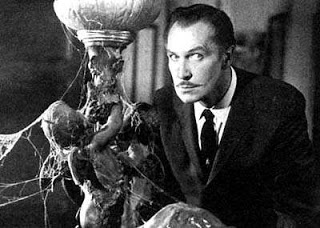
Horror On The Lens: House On Haunted Hill (dir by William Castle)


The original The House on Haunted Hill is a classic and one that we make it a point to share every Halloween.  And since October is now halfway over, now seems like the perfect time to do so!

Be sure to check out Gary’s review by clicking here!

Enjoy Vincent Price at his best!

Music Video of the Day: Spirit by Bauhaus (1982, directed by Christopher Collins)


In this video, the Bauhaus perform their song Spirit for actual spirits.  Spirit was the seventh single to released by Bauhaus.  It peaked at Number 42  on the UK Singles Chart.

Director Christopher Collins is directed with overseeing three other videos, all for Bauhaus: Bela Lugosi’s Dead, Mask, and In The Flat Field.

Enjoy!

Horror on TV: The Hitchhiker 5.16 “Hootch” (dir by Leon Marr)


Tonight’s episode of The Hitchhiker depicts what happens with a greedy woman (Stephanie Zimbalist) attempts to force her Vietnam vet brother out of the house that has been his only sanctuary from all the troubles of the world.  Needless to say, things do not go well.

This episode originally aired on September 16th, 1989.

The TSL Horror Grindhouse: Garden of the Dead (dir by John Hayes)


The 1972 film, Garden of the Dead, takes place in a prison camp that sits out in the middle of what appears to the bayous.  The prisoners spend their days working on the chain gang, breaking rocks and cleaning highways.  The tough-as-nails guards spend their days watching the prisoners and carrying around their rifles.  This is the type of prison camp where the prisoners are all talkative and boastful and the guards all wear sunglasses and every day is just like the next.

A group of prisoners are trying to brighten things up on the chain gang by using some experimental formaldehyde to get high.  I’m sure that won’t lead to any complications!  When the prisoners later try to escape from the prison camp, they’re quickly captured by the guards who proceed to violate all sorts of laws by gunning the prisoners down and then ordering the other prisoners to bury the dead bodies in the prison camp’s garden.

That night, the dead prisoners come back to life as zombies.  Does this happen because they were getting high off of the formaldehyde or is it because the chemicals themselves were leaked into the garden?  The film doesn’t make it particularly clear but it doesn’t matter.  What’s important is that they’re now zombies.  You really don’t need a whole lot of explanations when it comes to zombies.  The dead prisoners are still obsessed with getting high and they start to kill everyone in the camp as a part of their effort to get their precious formaldehyde.

I’ll just admit right now that I absolutely love Garden of the Dead.  Some of that is because Garden of the Dead is a very short movie, clocking in at barely an hour’s running time.  It was a film that was obviously designed to be the second half of a double feature but no matter!  That short running time means that there’s no need for extra padding and the action move quickly.  The film ends before the viewer gets bored with the somewhat repetitive zombie action.  Seriously, we need to normalize 50 minute films.

Another thing that I love about Garden of the Dead is that it is full of foggy bayou atmosphere.  The film itself was obviously shot on a very low budget and on very cheap film but the grainy images actually contribute to the film’s nightmarish feeling.  The film captures the feeling of being isolated in the middle of nowhere.  One reason why the zombies in this film are frightening is because there’s literally nowhere safe to hide from them.  Even if you can get out of the prison camp, you’ll still have to brave the wilderness that surrounds it.

Finally, I liked that the zombies in Garden of the Dead were smarter than the average zombies.  Instead of just stumbling around and trying to eat every living thing that they met, these zombies worked together to get what they wanted.  I especially liked the spazzy zombie who was always running around the prison camp and jumping and yelling at everyone.  These are zombies who clearly enjoy being zombies and it makes Garden of the Dead all the more effective.

Garden of the Dead is a grindhouse gem!

<– October Hacks: Meatcleaver Massacre (dir by Ed Wood)

The Phillies Win Game One Of The NLCS  –>