Based on a best-seller by Rona Jaffe, 1982’s Mazes and Monsters tell the story of some college students who enjoy playing a game called…. well, Mazes and Monsters. Now, I realize that Mazes and Monsters may sound a lot like Dungeons and Dragons but they are actually two separate games. One game takes place in a dungeon. The other takes place in maze, got it?
When the players decide to play the game in some nearby caves, it causes the newest member of the group (Tom Hanks — yes, Tom Hanks) to snap and become his character. Convinced that he’s living in a world full of monsters and wizard, Hanks runs away to New York. How does that go? During a moment of clarity, Hanks calls his friends and wails, “There’s blood on my knife!”
It’s all fairly silly. There was a moral panic going on about role playing games when this film was made and this film definitely leans into the panic. But, in its own over-the-top way, it works. If you’ve ever wanted to see Tom Hanks battle a big green lizard, this is the film for you. And I defy anyone not to tear up a little during the final scene!
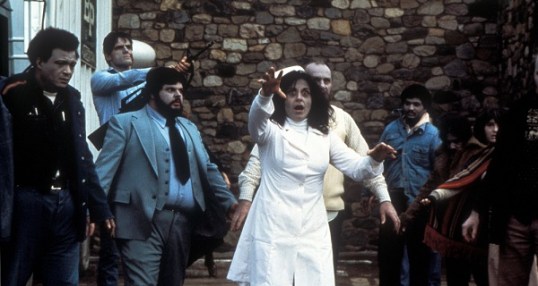
Dawn of the Dead (1978, dir by George Romero, DP: Michael Gornick)
Dario Argento not only produced and edited the European cut for 1978’s Dawn of the Dead, he also introduced George Romero to Goblin. The Italian band, famous for their horror movie soundtracks, provided the classic score to Dawn of the Dead.
(Admittedly, the score is is used far more prominently in Argento’s cut of the film than in Romero’s.)
For today’s horror song of the day, here is Goblin’s Main Theme From Dawn of the Dead.
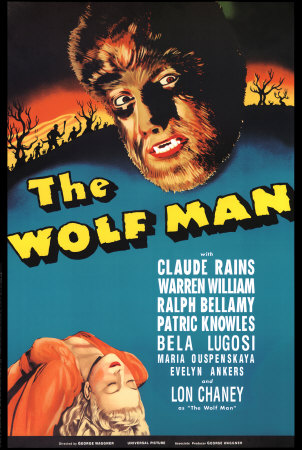
Today’s horror scene that I love comes from 1941’s The Wolf Man. Watch as poor Larry Talbot transforms, for the first time, into The Wolf Man! I’ll be the first to admit that, in the past, I’ve been pretty critical of Larry as a character and Lon Chaney, Jr.’s performance in the role. But, in this scene, Chaney does an excellent job of capturing Larry’s helplessness as the curse takes effect for the first time.
4 Or More Shots From 4 Or More Films is just what it says it is, 4 shots from 4 of our favorite films. As opposed to the reviews and recaps that we usually post, 4 Shots From 4 Films lets the visuals do the talking!
4 Shots From 4 Horror Films
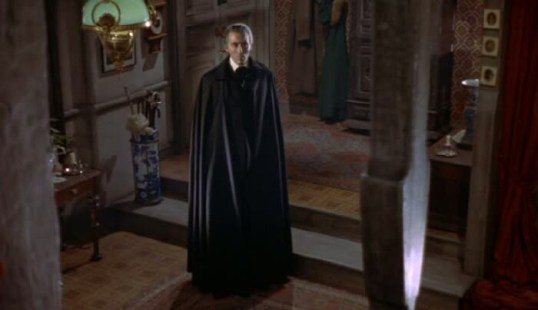
The Horror of Dracula (1958, dir by Terence Fisher, DP: Jack Asher)
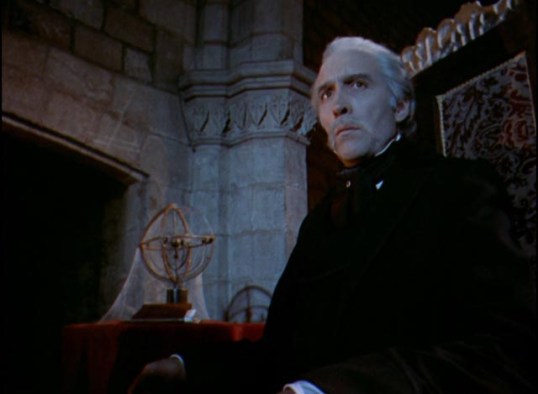
Count Dracula (1970, dir by Jess Franco, DP: Manuel Merino and Luciano Trasatti)
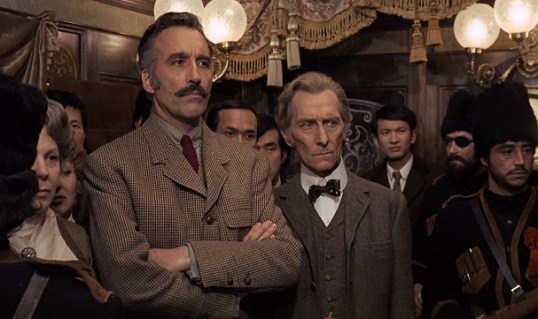
Horror Express (1972, dir by Eugenio Martin, DP: Alejandro Ulloa)
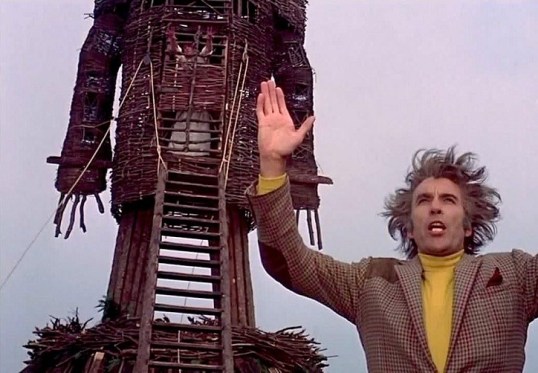
The Wicker Man (1973, dir by Robert Hardy. DP: Harry Waxman)
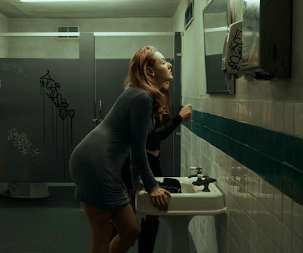
I was not able to relate too much to this film because I don’t spend a lot of time in bathrooms. In this film, women are in the bathroom, try to leave, and are confronted by a demon; so, they hide in the stall, which works … I guess?
All I can write is that this was a film that was made…on purpose. You must have better things to do than watch this.
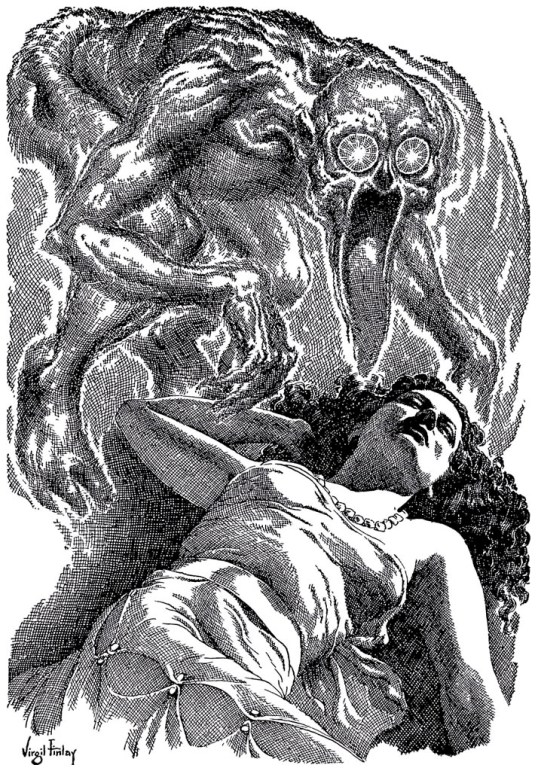
“Even if she be not harmed, her heart may fail her in so much and so many horrors; and hereafter she may suffer–both in waking, from her nerves, and in sleep, from her dreams.” ― Bram Stoker, Dracula
For all the analysis that has been dedicated to this song and Neil Tennant’s reasons for writing it, Tennant himself has said that the song itself isn’t as a serious as everyone makes it out to be. As he explained it in a 2009 interview with Andrew Sullivan:
“People took it really seriously; the song was written in about 15 minutes, and was intended as a camp joke and it wasn’t something I consciously took very seriously. Sometimes I wonder if there was more to it then I thought at the time. But the local parish priest in Newcastle delivered a sermon on it, and reflected on how the Church changed from the promise of a ghastly hell to the message of love.”
Not surprisingly, the video is full of religious imagery, along with representations of the seven deadly sins. In the video, Tennant’s fellow Pet Shop Boy, Chris Lowe, plays Tennant’s jailer while the judge is played by the distinguished British actor Ron Moody. An Oscar nominee for playing Fagin in 1968’s Oliver!, Ron Moody also came very close to being cast as the Third Doctor on Doctor Who. Though the role was offered to him, Moody turned it down to focus on his film career. Instead, Moody’s friend, Jon Pertwee, received the role and Moody would often later say that the decision to turn down Doctor Who was one of his biggest mistakes.
This video was directed by Derek Jarman, the experimental British director who is perhaps best known for his adaptation of Christopher Marlowe’s Edward II. A political activist and a pioneer in the British gay rights movement, Jarman would sadly pass away just seven years after directing the video but he left behind a body of work that continues to be influential to this day. Along with directing Laurence Olivier in his final performance (in War Requiem), Jarman is also often credited with having “discovered” Tilda Swinton.
It’s A Sin was one of the Pet Shops Boys’s biggest hits. Would it have been a hit without this video? Probably. But the video definitely didn’t hurt.
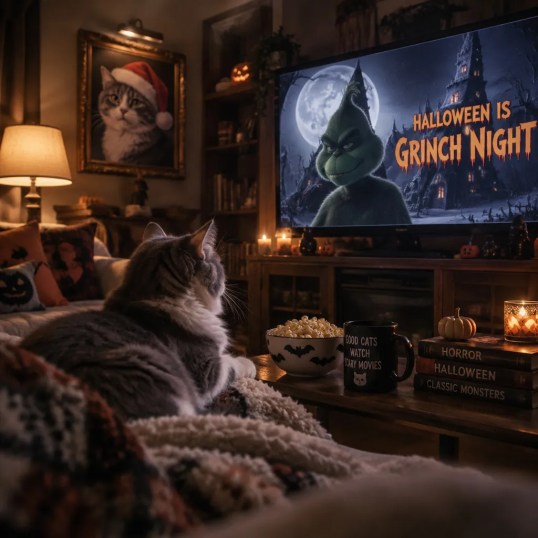
So, we all know that the Grinch once tried to steal to Christmas and then his heart grew a few sizes but did you know that apparently, the Grinch also tried to steal Halloween?
Until about 10 or 12 years ago, I did not. I was going through YouTube, searching for horror films that I could share here on the Shattered Lens, and guess what I came across?
A TV special from 1977 entitled Halloween is Grinch Night!
Unlike How The Grinch Stole Christmas, Halloween is Grinch Night apparently never became a holiday classic. Perhaps that’s because Halloween is Grinch Night is not exactly the most heart-warming of holiday specials. Whereas How The Grinch Stole Christmas tells us about how the Grinch learned the true meaning of Christmas, Halloween is Grinch Night gives us a Grinch who has no redeeming features. There is no hope for this Grinch. This Grinch will steal your soul and probably drink your blood. This Grinch is pure Grinchy evil.
This is the Grinch of our nightmares.
Check out Halloween is Grinch Night below and hope the Grinch doesn’t capture you this Halloween….
1998’s Psycho tells the story of real estate secretary Marion Crane (Anne Heche). Marion is in love with Sam Loomis (Viggo Mortensen), but Sam feels that they can’t get married because he doesn’t have much money and he has to send a monthly alimony payment to his ex-wife. Sam says he doesn’t want Marion to have to spend her married life “licking the stamps.” “I’ll lick the stamps,” Marion replies in a tone that suggests she has no intention of ever licking a stamp.
Marion steals some money from work and goes on the run. While she drives around the Southwest with a blank expression on her face, she thinks about how everyone will react to the theft. She imagines what people are saying about her. She has a scary experience with a highway patrolman (James Remar). She imagines her sister (Julianne Moore) looking for her. Eventually, when it starts to rain, she pulls into an isolated motel for the night and she meets a nervous man named Norman Bates (Vince Vaughn).
Fresh from the success of Good Will Hunting, director Gus Van Sant decided that it was time to pursue a dream project. He remade Alfred Hitchcock’s Psycho. That in itself was a pretty dumb idea. The first film is one of the few films that almost everyone seems to agree is perfectly made. There was no great need to remake it and, after several sequels, there was probably not great demand for it either. Van Sant also decided that he would remake the film by using the exact same script (with just a few minor updates to reflect changing times) and that he would recreate Hitchcock’s film shot-for-shot.
Now, I know what you may be thinking. If Van Sant used the same script and the exact same shot list from the first film, why did he even bother to remake the movie in the first place? My personal theory is that remaking Psycho was probably something that Van Sant first thought of doing while he was a film student. It’s probably something that he came up with and he carried with him for years. Because no one ever thought it would actually happen, his friends humored him and didn’t tell him what a pointless idea it was. Then Van Sant became a success and, once you’re a success, no one’s going to tell you no. Making an Oscar-friendly box office hit like Good Will Hunting temporarily gave Van Sant the opportunity to do whatever he wanted and what he wanted to do was remake Psycho without changing the script or any of the shots.
Despite all of that, there are a few differences. This version of Psycho is shot in color and is full of tacky wallpaper and garish colors. Marion wears some of the ugliest outfits that I’ve ever seen. Of course, the cast is entirely new. The instantly relatable Janet Leigh is replaced by the dull and androgynous Anne Heche. Viggo Mortensen is equally dull as Sam. Julianne Moore is much more take-charge as Lila but, physically, is in no way believable as being related to Anne Heche. (Vera Miles and Janet Leigh, on the other hand, very much seemed like sisters even if they didn’t share any scenes together.) Martin Balsam’s wiseguy private eye is replaced by William H. Macy’s nerdy detective. The biggest change is that Anthony Perkins has been replaced by a totally miscast Vince Vaughn. Norman Bates is someone who has spent the last ten years of his life isolated from the world, living like a hermit. Vince Vaughn, an actor who I usually like, comes across like he can’t wait to get down to the local bar and order everyone a beer.
You don’t hear much about Gus Van Sant’s Psycho anymore. Everyone pretends like it doesn’t exist and that’s probably for the best. If anything, it’s a reminder that almost every director has at least one bad idea that he’s waiting to spring on the world once he becomes successful enough. For Gus Van Sant, the idea was Psycho.
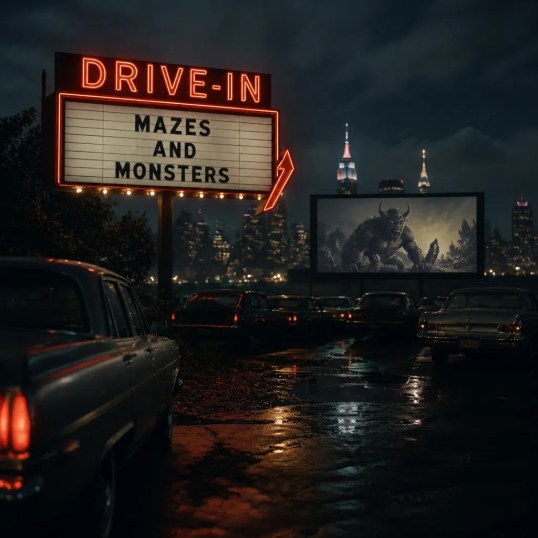 Based on a best-seller by Rona Jaffe, 1982’s Mazes and Monsters tell the story of some college students who enjoy playing a game called…. well, Mazes and Monsters. Now, I realize that Mazes and Monsters may sound a lot like Dungeons and Dragons but they are actually two separate games. One game takes place in a dungeon. The other takes place in maze, got it?