“They have to apologize for their damned war. They’re trying to end it now, so they need scapegoats.” — Harry Morant
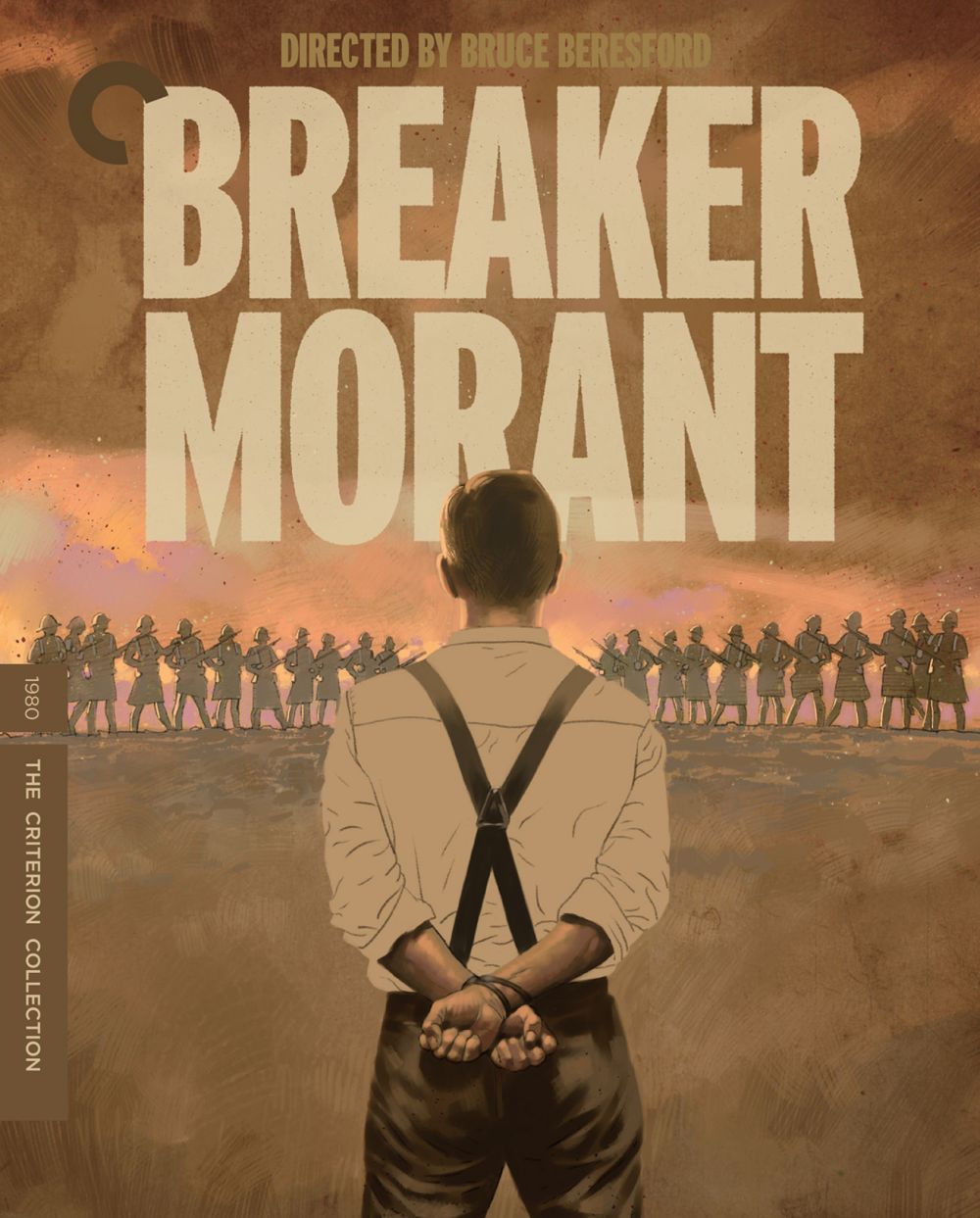
The most disturbing thing about Breaker Morant isn’t that soldiers commit terrible acts during wartime. It’s how smoothly the people running the war can turn those soldiers into a problem to be disposed of. Bruce Beresford’s 1980 film looks at what happens when military necessity stops being a useful excuse and starts becoming a political embarrassment. It’s a courtroom drama, a war film, and a bitter examination of loyalty, held together by performances that keep its arguments from becoming abstract. What makes it compelling is the uncomfortable possibility that the men on trial are both responsible for their actions and being betrayed by their commanders.
Set during the Boer War, the story follows Harry “Breaker” Morant, Peter Handcock, and George Witton, three lieutenants facing a British military court over the killing of prisoners and a German missionary. Their defense is that they operated under orders that encouraged taking no prisoners, although those instructions conveniently lack the documentation needed to protect them. Assigned to defend them, Major J. F. Thomas finds himself fighting more than the prosecution’s evidence. He’s up against a military establishment whose political interests seem to require a particular outcome. The suspense comes less from discovering what happened than from wondering whether the court will acknowledge the circumstances surrounding it.
Beresford handles that material with an understated confidence. He doesn’t turn every exchange into a grand confrontation or bury the drama beneath swelling emotion. Instead, he lets the courtroom’s procedures become quietly suffocating. Questions, objections, and carefully phrased answers gradually reveal how much power rests with whoever controls the terms of the discussion. The flashbacks open up the film visually while complicating the testimony. Outside the courtroom, decisions emerge from exhaustion, anger, retaliation, and uncertainty. Inside it, those same decisions are discussed as though they occurred under conditions of perfect clarity. The contrast exposes the distance between fighting a war and explaining one afterward.
Edward Woodward gives Morant the combination of charisma and severity that the role needs. His Morant is articulate, proud, and capable of bitter humor, but there’s something stubbornly closed off about him too. Woodward never makes him so agreeable that the audience can comfortably overlook what he has done. At times, his confidence feels like courage; at others, it looks like a refusal to face the full meaning of his choices. That tension makes the performance work. We can sympathize with his predicament without being asked to believe that intelligence, charm, or mistreatment automatically makes someone morally right.
Bryan Brown’s Handcock is more openly irreverent, and his blunt humor gives the film some welcome breathing room. He has little patience for the court’s dignified performance of fairness, and Brown makes that contempt entertaining without removing the character’s darker edges. Lewis Fitz-Gerald brings a more exposed, youthful quality to Witton, emphasizing how differently the three men experience their situation. Jack Thompson, meanwhile, gives Thomas a decency that never feels sugary. His growing frustration becomes our way into the proceedings. He keeps searching for an argument that will make the court listen, even as it becomes increasingly doubtful that listening is the point.
The film’s central concern is the relationship between obedience and abandonment. Commanders demand that men finish the mission, crush resistance, and do whatever the situation supposedly requires. The practical message is that results matter more than restraint. But when those methods become difficult to defend publicly, the men carrying them out discover that their superiors’ expectations are much harder to prove than their own actions. In the film’s telling, the chain of command becomes a one-way arrangement: authority flows downward, but responsibility never travels back up. The soldiers are expected to understand what their commanders want without expecting those commanders to stand beside them afterward.
That betrayal is especially ugly because it exploits the loyalty military service depends on. Men are trained to trust their superiors and act decisively under pressure, yet afterward they may be judged as though they acted entirely independently. Breaker Morant captures the cruelty of that switch. The institution can encourage brutality through implication, tolerate it while it remains useful, and then present punishment as proof of its own moral seriousness. Discarding a few men allows everyone above them to look cleaner. Justice becomes less a full accounting of responsibility than a way of drawing a protective line around the people who still have power.
Still, the defense that the men followed orders cannot settle everything, and the film is most interesting when it leaves that discomfort intact. Killing prisoners doesn’t become acceptable because a superior encouraged it. Personal responsibility matters, even within a corrupt or hypocritical system. The troubling question is why that responsibility should stop with the men closest to the victims. Beresford makes a strong case that condemning individual crimes and examining command responsibility belong together. The defendants don’t need to be innocent for the proceedings to be compromised. Their guilt, where established, shouldn’t function as an excuse to stop asking who created the conditions in which they acted.
The film does, however, lean so heavily toward the accused that the people they killed receive much less attention. Their suffering can become background to the more fully developed suffering of the defendants. That imbalance limits the film’s moral reach, even as it strengthens its emotional pull. Its account of disputed orders and political scapegoating also needs to be understood as a dramatic interpretation rather than an unquestionable historical verdict. Yet those reservations don’t diminish the skill of the filmmaking. They make it worth watching critically, recognizing both the force of its argument and the places where its sympathies narrow our view.
By the end, the courtroom’s formalities feel more chilling than reassuring. Everyone has a role, the procedures have been observed, and the machinery can keep moving once these particular men are gone. That is what gives Breaker Morant its lasting sting. Beresford doesn’t simply show soldiers discovering that war is cruel; he shows them discovering that their own side’s loyalty has limits they were never told about. With its measured direction and deeply felt performances, the film leaves behind a bitter question: when commanders demand dirty work but refuse to own the consequences, what exactly is the honor they claim to defend?