Concerts have been a major part of a teenager’s transition into adulthood. Often have we begged our parents to get us tickets to our favorite band’s concert as they toured straight into our hometowns. We’d beg, cajole, promise whatever just to be able to attend that big show that we thought everyone we knew would be attending. Rock concerts have been a huge part of this coming-of-age journey. It’s the show that our parents dreaded (especially the metal shows) and the ones that pulled in the outcasts kids.
We would either outgrow this youthful event because it’s not something that interests us, but most often it’s just because we either do not have the time to attend rock concerts due to work and other adult responsibilities. While we would still go to a concert of our favorite band when time and money affords for it in the end it’s something that’s become more of a past-time to reminisce about.
Metallica: Through the Never is the latest concert film that could change all that. Filmed during Metallica’s latest world tour, the film was directed by Nimrod Antal (Armored, Predators) and turns what could’ve been just your typical concert film into a surreal mixture of excellent concert footage and an apocalyptic narrative involving one of the band’s roadies. The latter felt like an extended music video and the lack of dialogue by the film’s narrative lead in Dane DeHaan does give this part of the film it’s surreal vibe. This part of the film could easily come off as one of Metallica’s music videos. It has mayhem involving nameless rioters battling an equal number of police right up to a nameless, gas-masked horseman who ends up paying particular attention to our beleaguered roadie.
Yet, while this apocalyptic-like narrative makes for a nice sideshow the main reason to see Metallica: Through the Never is the concert footage. While Antal does a good job with the story going outside the concert it’s inside where he shines. Making use of over 20 cameras on cranes, dollies and handhelds, Antal is able to make the concert footage feel like one was actually at the show. He uses every trick in the book from close-ups of each band member to sweeping crane shots that gives a bird’s-eye view of the concert.
It’s this part of the film that may just be one way for those of us who grew up going to concerts but have lost the time to return to such events to finally experience them again. It helps that the 3D used helps give the feel of not just being there but an enhanced experience that one may not find while actually attending the show live. But it doesn’t end in just the visuals.
A concert film can only go so far on how it looks. In the end, if the film doesn’t do a great job capturing the audio of the event then why even bother watching. Metallica: Through the Never doesn’t skimp on the audio assault. It is just exactly what I mean when I say audio assault. The audio in this film brought me back to attending past metal shows from my youth in near-perfect volume and clarity.
Metallica: Through the Never needs to be experienced in as big a screen as possible and if one’s able to see it on IMAX then I recommend they do so, but if that’s not possible then I still say go out and see this unique take on the ubiquitous concert film. It might not be the same as attending a Metallica concert, but it’s the next best thing to actually attending one.
I’ll just say it outright and get it out of the way and say that Guillermo Del Toro is one of the few filmmakers whose body of work has earned him my admiration. The Mexican-born filmmaker has made some of the most fully-realized and visually-beautiful films of the last twenty years. It doesn’t matter whether its genre staples like Blade II and the two Hellboy films or arthouse fares like The Devil’s Backbone and Pan’s Labyrinth, Del Toro has a unique talent for making one believe in the world his films inhabit. This is probably the reason why Peter Jackson had tapped him to direct the film adaptation of J.R.R. Tolkien’s The Hobbit. The man just has an eye for every detail, no matter how big or small, that he believes will add to the overall experience of watching his films.
When delays and behind-the-scenes studio bickerings kept the production of The Hobbit from moving forward Del Toro was already two years into pre-production of the long-awaited new trilogy, but finally backed out. He would try to make one of his dream projects his next move with the film adaptation of H.P. Lovecraft’s classic At the Mountain of Madness. This was a film that looked to set the horror and genre scene by storm. It was a story that was right in Del Toro’s wheelhouse. The film would require him to create a believable world where cosmic Elder Gods and Old Ones existed and still make it terrifying and awe-inspiring. But once again his ideas would require a huge budget from the studios and his stance on making the film an R-rated one finally shelved it (though hopefully not for good).
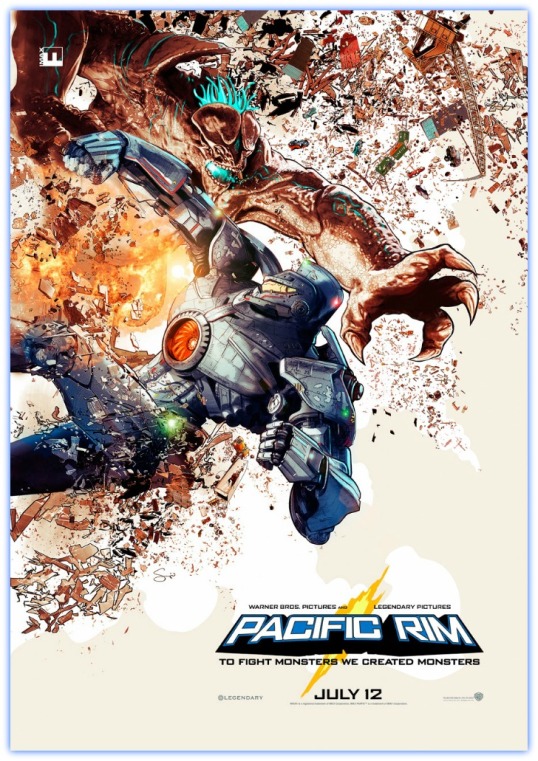
With two major productions either cancelled or dropped out of, Guillermo Del Toro was now without a film to direct and it’s been years since his last (Hellboy II: The Golden Army). Maybe it was providence or just plain ol’ dumb luck, but in comes a screenplay from Travis Beacham which included such terms as “Jaegers” and “Kaiju” and Del Toro finally got a film that wasn’t an adaptation of someone elses work, but something he could build from the ground up and make his own. That film was and is Pacific Rim.
Pacific Rim finally arrives in cinemas around the world and it couldn’t come at a better time. The last couple years have seen summer blockbusters get bigger and bigger. Each new blockbuster tried to outdo the next with something more extravagant, louder and, to their detriment, more complex and convoluted in their storytelling. This is not the case for Pacific Rim which comes in with a simple premise that managed to stay together from start to finish: giant robots fighting giant monsters.
From that idea was born a film that lends itself well into Guillermo Del Toro’s visual and world-building talent. He had to find a way to make this film, that harkens back to the old kaiju films from Japan’s Toho studio and its mecha/giant robot anime genre, a believable world where adventure and spectacle ruled and not post-modern deconstruction and cynical characters and storytelling. It’s an endeavor that succeeds, though not perfectly, to do more than just entertain but also show that sometimes the old ways of telling a story does belong in this new world of hi-tech filmmaking.
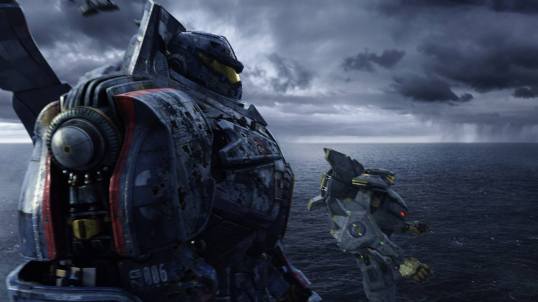
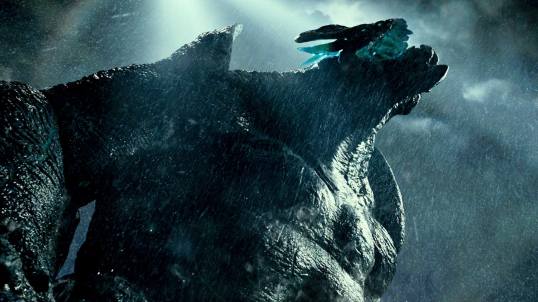
The plot to Pacific Rim is simple enough and an extended opening prologue narrated by one of it’s lead character (Charlie Hunnam of Sons of Anarchy fame playing the role of Jaeger pilot Raleigh Becket). Sometime in the very near future an interdimensional rift (called The Breach) in the Pacific Ocean where two tectonic plates meet open up to allow gigantic creatures dubbed by people as “kaiju”. These kaiju wreak destruction and havoc on a massive scale to the world’s Pacific coastline cities like San Francisco, Manila, Cabo and Tokyo. When conventional military means take too long and and only nuclear options remain on the table the world’s governments band their resources and technical know-how to find a new weapon to combat these kaiju. In comes the “Jaeger Program” where two pilots control 25-story tall giant robots through a “dark science” called “The Drift” to finally fight the kaiju on even terms.
We see through this prologue how the “Jaegers” and their pilots have become rock stars in the eyes of the public as their successes stems and stops the tide that’s been destroying cities in the Pacific Rim for years. It’s also in this prologue that we get to the point of the film where this success has led to overconfidence and the beginning of the end of not just the “Jaeger Program” but that gradual slope that leads to humanity’s inevitable extinction.
The bulk of the film deals with the last few days of the war when the world’s government have stopped funding the Jaeger Program and instead have pooled all resources and manpower towards building massive anti-kaiju walls along city coastlines as a measure of defense. The Jaeger Programs leader, Marshal Stacker Pentecost (played by the ever-present Idris Elba who seem to live the role), believes that his Jaegers and the Rangers piloting them still can finish the war once and for all with a final strike on The Breach with the remaining four Jaegers left in his arsenal. When the politicians tell him no he resorts to dealing with the less than legitimate sector to fund this final strike. But for this last mission to succeed he needs one of his best pilots back from the brink of remorse and mourning to pilot an older, refurbished Jaeger by the name of Gipsy Danger.
From then on the film takes on the premise that Del Toro promised when he first took on the project. We finally get to see giant robots fighting giant monsters.
Pacific Rim lives on it’s simplicity. Whether the simplicity of it’s story, dialogue, characters and themes. The film works within those parameters and does it well. One never feels lost with in the film’s narrative. There’s nothing convoluted with this film’s story. Some have said this need to be simple is an inherent flaw. I would agree with this if someone with less talent took on the job. Del Toro understands that keeping the story simple doesn’t mean dumbing it down, but keeping the promise of what the audience expects from a genre film of giant robots fighting giant monsters needs to deliver. The film’s simplicity allows for the story to flow from it’s hi-octane action sequences to it’s more personal moments without having it seemed forced.
Even the characters themselves come off as the archetypes of past adventure films. Whether it’s the stern father figure leading the pack to the hot-shot hero looking to redeem himself for a past failure to the cocky rival whose hothead personality acts as a counter-balance to the hero’s. Even the mysterious newcomer whose past acts as one of the film’s central emotional anchors harkens back to an earlier era of storytelling that preceded the more realistic and gritty era of film narrative born during the late 60’s and 70’s.
These characters some would call one-dimensional or plain cardboard cutouts, but in the context of the film being seen they work. We get enough of what motivates each character to fully understand why their characters do what they do in the film. The motivations range from honor-bound duty to accomplishing the mission, to revenge, redemption and just plain old-school heroism. Yes, this film brings back heroism minus the recent trend to downplay such an archaic notion. The film treats heroism as something noble born out of the shared sacrifice and the need to do what’s right and to protect not just the person next to them but everyone else who cannot fight the monsters that are at their doors.
The characters of Raleigh Becket, Stacker Pentecost, Mako Mori (played by Oscar-nominatedted actress Rinko Kikuchi who channels her inner anime not just in her attitude but even her appearance) and even the dueling scientists Newton Geizler and Gottlieb (played with manic and eccentric enthusiasm by Charlie Day and Burn Gorman respectively) all come off as heroes who accepts the challenge and nobility inherent in the term. They don’t balk at the duty put on their shoulders, but go full-bore in making sure what they do doesn’t have any moments of self-doubt or cynicism. These are characters who don’t become heroes because they were forced into it. They’ve made their choice and thus have to realize that taking on the mantle of heroism would mean making the ultimate sacrifice.
Yet, for all the talk of themes and narrative styles the film will ultimately live or die on the film’s promise. Does the giant robot fighting giant monsters hold up?
I can honestly say that it does and goes beyond what the studios have been hyping it up to be.
The action sequences between the Jaegers and the kaiju have to be some of the best action sequences of the past decade if not even farther back. It’s a loving homage to the classic daikaiju and mecha of old from Japan that Westerners grew up watching on Saturday mornings on the local UHF channels. It’s mecha anime like Mazinger Z, Macross, Gundam, Neon Genesis Evangelion, Tetsujin-28, Tengen Toppa Gurren Lagann and many others seamlessly melded with the old-school monsters flicks from the Toho Studios with kaiju bearing the iconic names of Godzilla, Gamera, Rodan, Mothra, King Ghidorah and many more. Pacific Rim is a film aimed at the inner-child of men and women who grew up watching these films and shows, but also one that seeks to fire up the imagination of the current generation of children who have been fed on the latest trend of snarky and self-doubting heroes.
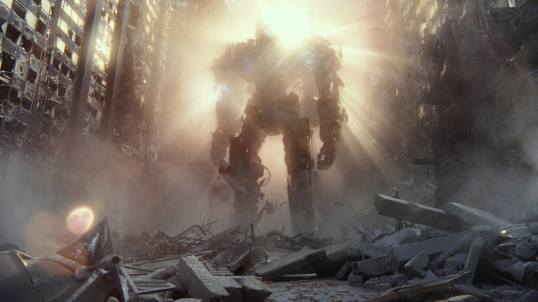
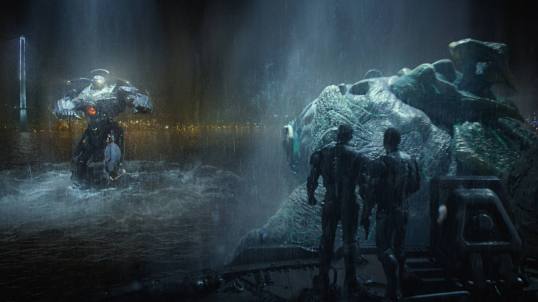
The fights between the the jaegers and kaiju also does one thing that most Hollywood filmmakers who make action films have been unable to pull off. I’m talking about action sequences that remains as kinetic and explosive as any we’ve seen in the past but also aware of it’s space and environment. Pacific Rim’s action sequences never come off as being confusing. There’s no hand-held, cinema verite stylistic choices when it came to filming these sequences. We know exactly which jaeger is doing to fighting and which kaiju is fighting back. Even while set mostly at night and in the rain (or in some cases in the water and underneath in ocean), these fights and the digital effects created by ILM (with some practical ones from Legacy Effects) come off just as clear as if they were done for daytime. In fact, having them set at night with the many differing kinds of light sources available in the scene sometimes gave the fight scenes an almost psychedelic look with Hong Kong’s neon-lit streets and cityscape to the reflected bio-luminescence of the kaiju to the utilitarian lights on the jaegers themselves.
Yet, it still all comes down on whether the promised throwndown delivers and yes it does. We’ve come to learn that even ILM can make the most awesome looking digital effect visuals but still having them end up being confusing because of the filmmaker involved. Some have called this the Michael Bay Effect. Even some of today’s most visually talented filmmakers have fallen prey to it, but not Del Toro who eschews rapid-fire editing and shaky-cam moves. He instead goes from strady shots both close-up and wide to show the battle progress from one move to the next as we see each counter-move develop into more counter-moves. These jaeger-kaiju fight scenes have an almost balletic grace to them despite the massive amount of destruction heaped not just on each other but their surrounding environment as well. They also have a sense of weight to both jaeger and kaiju. With each step, punch, crash and bodyslam there’s a sense of real actual weight being protrayed on the screen unlike films like the Transformers trilogy and, more recently, Man of Steel during some of it’s major action sequences.
Once again this boils down to the simplicity of the scenes and how this choice makes the fights more exciting and thrilling than anything we’ve seen this summer. Up-and-coming filmmakers looking to find out how to set, block and choreograph action scenes could find no better filmmaker than Guillermo Del Toro to learn from.
So, does this mean that Pacific Rim is a perfect film which has no flaws and can do no wrong. It’s a question that probably splits critics and those who talk endlessly about film, but the simple answer is that Pacific Rim is not a perfect film. It does have it’s faults that’s born out of it’s simple narrative and simple-drawn characters. Yet, these flaws also comes across as strengths depending on who ones asks. But as a piece of action-adventure filmmaking that promised the simple idea of giant robots fighting giant monsters the film was perfect.
Pacific Rim reminds us that Guillermo Del Toro is one of the few filmmakers who definitely earns the label of genius. It’s not hyperbole. It’s just fact. It takes a genius filmmaker to do the sort of varied films as he has done throughout his career both as director and producer and still have each and everyone of them feel original (whether they are or not), thought-provoking and just plain old fun. Pacific Rim may be Del Toro’s love letter to his childhood loves of mecha anime and daikaiju films from Toho and other such studios, but it’s really a rallying cry to audiences both young and old that blockbuster filmmaking doesn’t have to be gritty, journeys through psychological darkness to be successful. He’s brought the fun back in epic, grandiose filmmaking that hopefully becomes a trend and not a one-shot.
P.S.: Also, make sure to stay to watch the end title sequence that was created by Imaginary Forces to make a sequence similar to the awesome end titles for The Avengers last year. Plus, there’s a small scene mid-credits at the end that ends the film on the proper note.
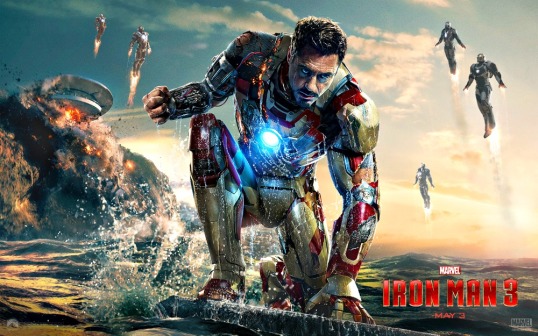
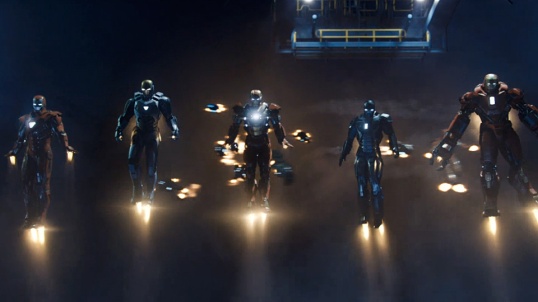
That line above would make such a great send-off for what could be the final Iron Man film. In a perfect world, having Shane Black’s Iron Man 3 as the final one in the franchise wouldn’t be such a bad thing. This doesn’t mean that Iron Man will not appear in any future Marvel Studios endeavors, but as a solo franchise a series couldn’t have found a better way to fly into the Malibu sunset. I say this because in over 5 years Marvel Studios has created a trilogy that took a character in Tony Stark and put him through a character journey encompassing four major film releases and one cameo. They did so in such a way that we saw the character grow from a rich genius dilletante, to a desperate asshole trying to find his identity as Iron Man to finally realizing that he’s the hero with or without the Mark suits he’s has created.
Iron Man 3 is the culmination of what Jon Favreau began with Iron Man in 2008 and Joss Whedon expanded on in 2012’s Marvel’s The Avengers. It took a writer of renown such as Shane Black (who also replaced Favreau as director) to get to the heart of what makes Iron Man ticks. It helped that the returning cast led by Robert Downey, Jr. as Tony Stark and Iron Man once again did a great job in their roles with some characters even getting to do some surprising heroic stuff on the screen.
Iron Man 3 starts off with a flashback scene just hours before the arrival of the new millennium. This is just Tony Stark before he becomes Iron Man so we see the character in full charming asshole mode. This sequence is important in that it sets up the whole plot of the film and, in my opinion, the overall story for the entire trilogy. We’re introduced to the geeky Aldritch Killian (played with equal amounts of geeky desperation and overconfident megalomania by Guy Pearce) who sees in Stark the mentor he needs to get his think tank going. With only sex with brilliant scientist Maya Hansen (played by Rebecca Hall) on his mind Killian is soon forgotten and humiliated by Stark.
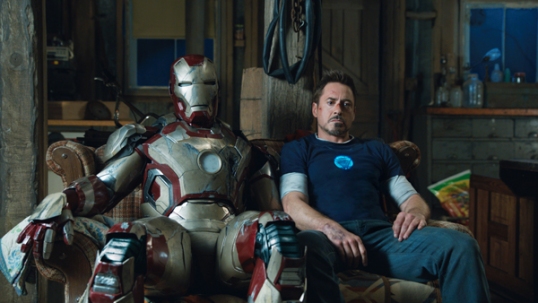
The rest of the film sees Tony Stark having to pay a steep price for his behavior towards Killian in that flashback and, in conjunction, with his days and nights haunted by the events in New York with the invading Chitauri invasion having given him a case of the PTSD the film looks to bring Tony Stark at his most vulnerable and lowest. It’s a return to the proverbial “Cave” for Tony Stark as he must contend not just with the elusive terrorist mastermind The Mandarin, but also solve the mystery of who or what’s causing the inexplicable explosions and bombings occurring around the nation. All this he must do through most of the film without the use of his Iron Man suits and relying mostly on his own genius intellect and skill with making weapons and gadgets out of anything readily available.
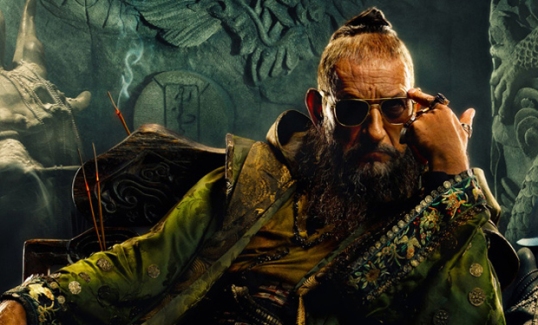
Speaking of The Mandarin (in an excellent performance by Sir Ben Kingsley), Shane Black and co-writer Drew Pearce made a controversial decision (for comic book fanboys at least) to make the iconic Iron Man villain more than he appears to be. It’s a decision that won’t sit well with the more vocal and rabid comic book fans who sees any deviation from Iron Man lore as an affront worth of loud, vociferous rabble, rabble, rabbling that would make Randy Marsh and the people of South Park proud.
To say that the twist in the story that explains who The Mandarin was such a surprise would be quite the understatement. The most important and iconic nemesis of Tony Stark comes out with both barrels of deliberate menace and sociopathic showmanship. We’re meant to see this character as the face of all the evils and troubles that has plagued Tony Stark since the first film. Kingsley plays this part of the character in the film to the hilt. Yet, it’s not until the second half of the film when we find out just who exactly The Mandarin really was and is that Black and Pearce finally put to rest whether the producers and writers would be able to handle a character that’s been seen as a racial caricature from a less than enlightened time.
Whatever howls and apoplectic ravings fanboys might be having about changing the traiditional character of The Mandarin into the pill-popping, drunk British wanna-be actor Trevor Slattery as a bait-and-switch was a brave move on the parts of Black and Pearce. To find out that The Mandarin was just a conjuration by Aldritch Killian to keep the eyes of the world’s governments and superheroes on someone else was very Bond-like. The fact that Killian himself is the true Mandarin and the Ten Rings terrorist organization his creation to have his revenge on Stark for humiliating him on the even of the new millennium closes the circle on what was begun all the way back in the first Iron Man.
This so-called “twist” was so unexpected (the internet scouring for any tidbits about the film’s plot having found nary a hint of this change) that it seemed like some sort of gimmick but as the film barreled on through the second half into it’s explosive conclusion one had to admire the massive stones by Black and Pearce to change such an iconic character knowing how it could easily alienate and anger fans of comic book. It’s this thinking outside the box by this franchise’s new director and screenwriter which makes me feel like Marvel Studios (especially studio head Kevin Feige) have their Phase 2 plan set to spring surprises on comic book and non-comic book fans alike as it marches on towards Avengers 2.
Iron Man 3 was a definite improvement over the bloated second film in the series. It also manages to reach the high bar set by the first film, though as an origin story it still comes away as being the best of the trilogy, but not by much. There was much trepidation from fans of the film franchise when Favreau was replaced by Marvel Studios as director by one Shane Black. While Black was well-known for being a top-notch screenwriter who literally redefined the buddy cop genre his work as a filmmaker was just still only the suprise film Kiss, Kiss, Bang, Bang. While this third film still had some holes in it’s plot that was explained rather conveniently by some brief bits of dialogue it still managed to tell a compelling story of actions and consequences and the discovery that our hero finally makes about just who is the hero of the saga: the man or the machine.
If there’s to be another film bearing the title of Iron Man I would surely hope that Feige and the powers-that-be over at Marvel Studios and Walt Disney just speed-dial Shane Black’s name and to also bring back his co-conspirator Drew Pearce. The franchise is well and good in their keeping. As the final moments of the end credits tick by we’re promised that Tony Stark will return. I sure hope so.
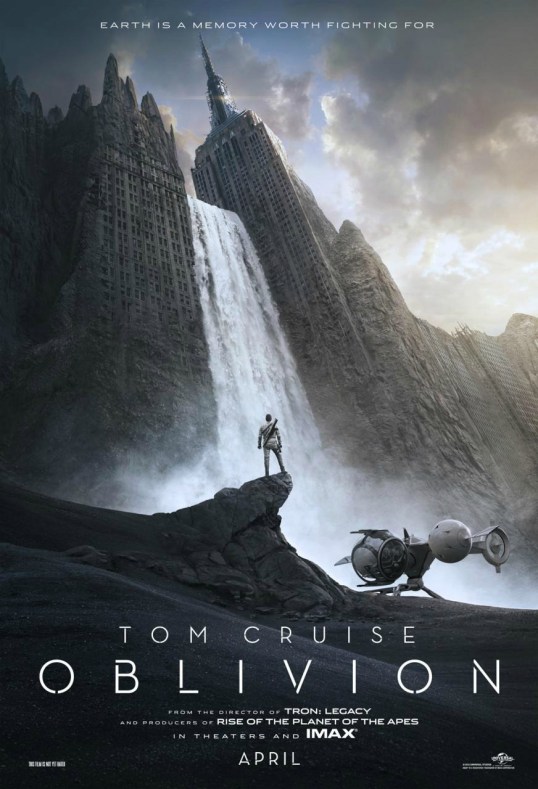
Good science-fiction films tend to be far and few between. Most of the time the ideas and ambition to make a good or great science-fiction film are right there on paper, but loses much once people actually have to create it for others to see. This puts the latest sci-fi film from Tron: Legacy filmmaker Joseph Kosinski in a weird position. His follow-up to the underwhelming sequel to the classic sci-fi film Tron is called Oblivion and it manages to be thought-provoking and entertaining, yet also have a sense of a been there and done that to the whole proceeding.
Oblivion quickly gets the introductions to the film’s backstory out of the way. Earth was attacked 60 years ago by aliens who were called “Scavengers” (Scavs for short) who destroyed the moon thus causing massive tectonic upheaval and gigantic tsunamis to ravage the planet. Humanity in its desperation would fight back with the only weapons it had left once the aliens began landing troops and that would be the nuclear kind. The planet is now devastated with the surviving population leaving Earth for a new colony on Saturn’s moon of Titan and in a massive tetrahedron space station orbiting Earth simply called “The Tet”.
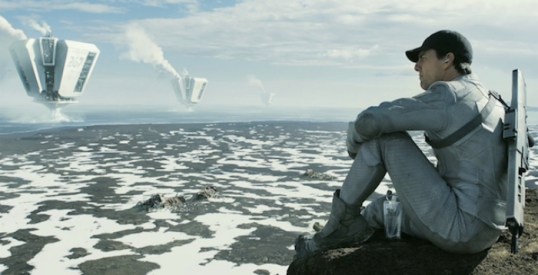
It’s the story of the technician pair left behind to provide support for the array of armed drones who patrol Earth for any remaining Scavs and protect the reclamation factories that has been removing the remaining resources that the planet has to be used as an energy source for the Titan colony. This pair of technician are Jack (Tom Cruise) and Victoria (Andrea Riseborough) who live in a towering base above the clouds. Jack does the dirty work by flying patrols in the area that encompasses what used to be the East Coast of the United States while Victoria (who also happens to be Jack’s lover) provides comm and technical support back at their base.
Victoria can’t wait to finish their five-year stint on Earth and with two weeks left before they can rejoin the rest of humanity on Titan her dream is coming closer. Yet, Jack doesn’t seem to want to leave Earth behind. He has begun to dream about Earth before the war that he should have no memory of. First they’re dreams while he’s asleep but as the film shows it soon begins to invade and distract his waking hours as well.
It’s during one such mission where he comes across the a sudden arrival of a human spacecraft with surviving humans aboard that his dreams become reality. A woman he has dreamed off that he’s never met is one of the survivors (played by Olga Kurylenko) and she becomes the key to unlocking the secret that’s been kept from him about the true nature of the war that devastated Earth sixty years past and why he continues to have flashes of memories that he should never have had.
Oblivion sounds like it’s original at first glance, but as the story moves along we begin to see influences (at times outright plot point lifts) from past innovative sci-fi films such as Moon and The Matrix. While Kosinski (who co-wrote the film as well as directed it) does put his own spin on these ideas it’s not enough to fully distinguish the film from past sci-fi films which did them better. Oblivion is not bad by any means, but it fails to stretch beyond it’s influences that would’ve made it a great film instead of just being a good one. It doesn’t help that the script lags behind Kosinski’s talent for creating some beautiful images and vistas. The world-building he does with art director Kevin Ishioka manages to make a devastated Earth look serenely beautiful which when paired with cinematographer Claudio Miranda’s panoramic sweeps of the Icelandic location shoot make Oblivion one of the best looking film of 2013.
Yet, the script tries too hard to explore some heavy themes such as the nature of memory and identity. The film doesn’t explore them enough to make this film come off as something heavy sci-fi like Solaris. It just teases the audience enough to start a spark that could lead to conversations afterwards. The action that does punctuate the more introspective sections of the film does come off quite well despite coming only few at a time and not for any extended length.
What seems to hold the film together outside of it’s visuals would be the performance of the cast which sees Tom Cruise doing a very workman-like performance as Jack. We’ve seen him do this sort of performance time and time again that it seems to be second-nature to him by now and something audiences come to expect now. Even Morgan Freeman as an aged resistance fighter lends a bit of serious gravitas to the film whenever he’s on-screen. But it’s the performances of the two female leads that sells the film despite it’s flaws. Olga Kurylenko has less to work with in the role of Jack’s mystery woman Julia. What she does get she does so with a level of empathy that instantly sells the notion that Jack and her were destined to be together despite the vast gulf of time and space.
The stand-out performance comes from Andrea Riseborough as Jack’s lover and partner Victoria. Where Jack comes off as restrained chaotic glee who marvels at the sight he sees every day he’s out on patrol the opposite is Victoria. Her organized and reserved demeanor comes off as sexy in a cold and calculated way, yet just behind that British reserve we see glimpses of her hanging on by a thread at the chaos she sees in Jack. Andrea Riseborough plays Victoria so well that every scene she’s in she steals it from Cruise. Her performance was all about slight changes to her body movement, a quick glance that speaks volumes of what she’s thinking. While this film may not make Riseborough an outright star it will get her noticed by other filmmakers soon enough.
With the summer blockbuster season of 2013 coming closer like a freight train with the approach of Iron Man 3 it’s a good thing that Oblivion was released weeks before this hectic season. For despite it’s flaws in it’s script and the lack of originality in it’s premise the film does succeed in being entertaining and thought-provoking enough that people should see it on the big-screen. Plus, nothing but the massive screen (especially IMAX) does full justice to some of the vistas shot of Iceland that doubles as devastated Earth. So, while Oblivion may not be the slam-dunk hit for Kosinki after failing with Tron: Legacy it is still a film worth checking out.
“The most protected building on Earth has fallen.”
Die Hard has become it’s very own subgenre of action films since it was first released in 1988. It was a simple enough story that combined the “one against many” type of story with the “siege tale”. It was a perfect combination that has since been copied, imitated, but truly never duplicated to the highest level of success the original film had upon release. There’s been a few films that added their own unique take on this action film template. There was “Die Hard on a boat” with the underappreciated Under Siege. Then we have Air Force One which was “Die Hard on a plane”. The latest action film to try and put a new spin on the Willias-McTiernan classic is Antoine Fuqua’s latest film, Olympus Has Fallen.
The film pretty much takes what worked with the three films before it that’s been mentioned above and combines them to make a film. We have a lone, highly skilled operative in the form of Secret Service Agent Mike Banning in the role that made Bruce Willis famous and, for a time, resuscitated Steven Seagal’s career. Then we have the Presidential angle but instead of Air Force One it’s the White House this time around. The plot of the film is simple enough that even a person not well-versed in film could follow it. A group of dedicated and highly-trained North Korean terrorists do a surprise attack on the White House as the President of the United States and his South Korean counterpart try to find a way to defuse a situation that’s been growing in the DMZ between the two Koreas. It’s now up to Agent Banning, on his own, to try and stop whatever plans the terrorists have brewing with the President as hostage while also dealing with an inept group of higher-ups trying to deal with it far from the action.
Olympus Has Fallen doesn’t break new ground with the way it’s story unfolds and it’s characters develop. The film was pretty much beat-for-beat and scene for scene lifted from the three other films mentioned above. The characters may be different and the circumstances they find themselves in somewhat different, but the screenwriters played everything safe except the action sequences part of the film. It’s these action scenes which brings Olympus Has Fallen to a new level of violent artistry that the previously mentioned films never reached.
To say that this film was violent would be an understatement. Where other films of this type a certain cartoonish tone to it’s violence this time around Fuqua goes for a much more serious and, at times, disturbingly difficult to watch level of violence to make the film stand out from the rest of it’s kind. The assault on the White House itself and the surrounding area has less a look of a fun action film and more of a war film. People die in droves and it doesn’t matter whether they’re Secret Service, police, terrorists or innocent civilians. All were fair game in this film.
Even the action once we get to Banning playing the Willis role looked more brutal than what Willis and even Seagal ever got to do. Gerard Butler may not have had the charisma and wit of Willis in the same role, but he convincingly played his role as more Jack Bauer than Officer McClane. Butler as Banning was all business and efficiency while Willis as McClane was more the witty, smartass who just keeps finding himself in the wrong place at the wrong time.
Olympus Has Fallen won’t be hailed as one of the best films of 2013. It won’t even be talked about as one of the top action films this year, but despite the story being a derivative of every Die Hard and it’s clones before it the film does succeed in being a very enjoyable piece of popcorn flick. It was full of tension and big action setpieces (though the CG effects looked very cheap at times) that Fuqua has gradually become known for. The characters in the film were just a step above being one-dimensional and the story itself becomes less eye-rolling and more worrisome considering the real tensions coming out of the Korean Peninsula at this very moment.
One thing I’m sure of is that of the two “Die Hard-in-the-White-House” films this year (there’s the bigger-budgeted White House Down later this summer from Roland Emmerich) I have a feeling that Olympus Has Fallen might be the more fun. It’s probably going to be the more violent of the two and that’s an assumption I’m willing to make without even seeing how Emmerich’s film turns out.
I don’t know that many people who, in the thrall of a weak September, dished out the $5, $10, $12, to see Dredd 3-D. This is curious, because I saw it the day that it came out, and I sang its praises til… wait, when am I writing this? I suppose the singing goes on. If you’ve seen Dredd 3-D, you probably had the same initial reaction I did – that this movie is much, much, much better than you ever thought it would be. But, having seen it three times in theaters, and roughly one billion times since the DVD release… there’s more to this movie. This is a truly great film. And since we’re in the season of handing out awards, and because movies like Dredd 3-D know from the moment of their inception that they will never sniff a nomination, it seems like a fine time to extol the virtues of what might be the best action movie made since the calendar flipped over from 1989.
If you’ve seen the film, I can probably spare you most of this song of praise. Of the few people that I know who have seen the film (most of them forced to see it by me), I have heard very few complaints. Of course, I have targeted the film’s audience amongst my own friends, and I’m not trying to win it the support of the Academy. But for a film to be so universally heralded amongst fans of a certain genre is actually fairly impressive in 2013, let alone for that very same film – a gritty B action film, by all accounts – to command a startling 77% fresh rating at Rotten Tomatoes, is nothing short of incredible.
For the uninitiated, let’s start at the beginning. What is Dredd 3-D?
Well, it’s an exploration of a dystopian future that is the primary subject of the long-running Judge Dredd comic strip, an American hero who has been published almost exclusively in the United Kingdom. Dredd is a living metaphor, he is blind justice, the implacable and unrelenting arm of the law. He is fearless, he is formidable… he is the law. In a desolate future, North America is a nuclear wasteland. Outside of the boundaries of the incredible Megacity One, all is irradiated desolation. The Megacity runs from Boston to Washington DC, and contains twice as many people as lived in all of North America in 2012. Within the city limits, only one organization is still fighting to maintain order… the Judges of the Hall of Justice. They are judges, they are juries, and if necessary, they are executioners.
In Dredd 3-D, this is effectively all of the exposition we need. Judge Dredd (Karl Urban) is the merciless reality of a law that is actively losing its struggle to serve and protect. Megacity One is falling apart day by day. But if Dredd himself is dismayed, he does not show it. Our opening sequence is a bloodbath of a high-speed chase through the streets of Megacity One that is given all the feel of a totally average day on the job. Innocent people die, vehicles are destroyed, drugs are consumed, and assault weapons are in abundance. So routine does the film make the bust feel, that it drew me into the world of Judge Dredd. Once I was there, and once the action started, the film never released its talons.
From there, Judge Dredd hauls rookie Judge-Candidate Anderson (Olivia Thirlby) out into the real world. As befits an assessment, Anderson takes the lead, committing herself and Dredd to respond to a multiple homicide at Peach Trees, one of the massive megastructures of Megacity One, a single tenement that houses over 75,000 people. Upon arrival, the Judges determine that the corpses – skinned and thrown off the balcony of Peach Trees’ level 200 – were executions, intended to send a message. From there, we’re off. The Judges fight their way up the megastructure and toward survival, battling against the savage druglord Ma-Ma (Lena Headley) and her minions. Most of the effects are practical, most of the dialogue is minimal, and while the story does have its emotional aspect, the action is the centerpiece of this film.
So, given that, why would I prop this film up as one of 2012’s best? Why would I, had I an Academy vote, have nominated Dredd 3-D for Best Picture (and probably Best Direction and Best Score, but probably nothing else). Because Dredd 3-D understands its genre, and its audience, and it attempts to be a perfect film within that framework. There is no pretension here. There are no regal accents, timeless proclamations of love, or elaborate Victorian costumes. That probably disqualifies Dredd from an award this year, but it shouldn’t. Because Dredd is a better film than Les Miserables (which, earnestly, has been done better more than once before). It is a better film than Lincoln (no one has ever claimed that they felt Dredd 3-D’s length)… because Dredd 3-D is a perfect action movie. If we do not ascribe any deeper motivations or requirements to a film than it be relentlessly entertaining and that it fill the basic requirements of its genre, there are few films ever made that will fill this criteria better.
Dredd 3-D sets up its scenario expertly, in a handful of scenes, and without much in the way of dialogue. Karl Urban has proved time and again that he is both versatile and talented (and criminally underrated, but that’s neither here nor there) but he is not asked to do much here. Dredd delivers his lines in the same tone of voice regardless of the situation. Where Dredd’s catch-phrases seemed campy and over-wrought in the 1995 adaptation starring Sylvester Stallone, Urban seems to have the better measure of his character. He is mercilessly deadpan, transforming one-liners into either tiny morsels of dry humour or vaguely ominous threats. Because Dredd’s persona is so unvarying, it never seems like he’s delivering a line. He is simply stating facts, as he observes them, and we are reacting in turn. Throughout the film, Dredd delivers roughly three facial expressions – a default look of grim severity, a look of significant disappointment (when a particular misfortune befalls rookie Judge Anderson) and one that I would not describe otherwise than grim fury (when a particularly more unfortunate misfortune befalls rookie Judge Anderson).
Dredd 3-D doesn’t demand much from its audience, but it outputs entertainment at an almost unvarying rate. The action scenes and set-pieces are actually remarkably varied (such as they can be) despite the confined nature of the film’s locations. As we watch, Dredd’s relentless implacability, and the sense that he literally cannot be stopped, actually become a fun part of the story. There is literally nothing to recommend the villains of the piece to us, despite a fairly layered performance by Lena Headley, who manages to be savage, determined, exhausted, and regretful basically all at once. This is one circumstance in which we very much want “the law” to prevail… and if what you hunger for is watching the law burn gang-bangers to death with incendiary ammunition, this film will grant you your fondest wish.
So, while Dredd 3-D may not have been nominated for any prestigious awards this season, please do it the favour of checking it out. It is a nearly-perfect action movie, and it is that way in spite of, not because of, its source material. Show it some love, and hope that the who’s-who of Hollywood realizes why this film is worth our time – and that they make many more films just like it.
Full disclosure (this paragraph is something of an insane rant and has nothing to do with the Hobbit, so feel free to skip it): I am in the incredibly tiny minority who was not overly impressed with the Lord of the Rings films. While I thought that they did an exemplary job of capturing the setting, sights and sounds of Middle Earth, and even the grand scope of Tolkien’s masterwork, I found some of the inexplicable changes to the core story that started appearing in The Two Towers (why is Faramir a dick? The whole point of his character is that he is unlike Boromir in aspect. He is something greater. Like Aragorn. He’s a reason to hope. Why does Faramir take Frodo and Sam to Osgiliath? So we can see it under siege? Probably. Sam then somehow fends off a Nazgul on winged steed by tackling Frodo and crying out. Hmmmmm…swiss cheese. If Aragorn’s army of ghosts can simply sweep across the field and massacre Sauron’s entire army without apparent effort or effect… and Aragorn knows Sauron has another, bigger army… why doesn’t he just go ahead and spend the ten minutes to kill that army too? I’m sure the spirits of the dead would be willing to stay off their eternal rest for ten minutes. Especially because they’re under you control, Aragorn. King of the Dummies.) In addition, Return of the King in particular is much too long. Since the Hobbit has now been split into a stunning three films (!) … in retrospect it seems like Return of the King could definitely have occupied two. Particularly since some of the action elements from The Two Towers were woven into it and… okay.
Moving on.
I saw The Hobbit! Against my wishes, and against my better judgment, I went on a double date sort of affair in the bitter cold to take in this pre-coronated motion picture just days after its release. Fearing the worst, I brought along a large flask filled to the brim with Kraken spiced rum and decided I wouldn’t be shy about pulling off of it. I didn’t really end up needing to, much to my surprise… because here’s the thing about The Hobbit: I liked it. Sort of. Mostly. Oh, more full disclosure: I saw the film in two dimensions at the standard twenty-four frames per second. We didn’t feel like driving to a fancy theater.
As I’d come to expect from Jackson’s Lord of the Rings films, the production here is outstanding. From the very instant The Hobbit begins, we’re drawn back into the realm of Middle Earth. Dwarves, Elves, and now… a dragon. Of course, one of the major reveals that Jackson is keeping for his second film is Smaug, so we don’t see more than the ophoid slit of his eye in what really amounts to an extended intro that describes the history of Erebor, its fall, and the escape of a few dwarves, including Thorin Oakenshield (Richard Armitage). Once we’re all caught up, we return to Hobbiton, and meet Bilbo Baggins (Martin Freeman). Freeman is excellent as the earnest, earthy Bilbo, who is friendly and considerate, but really doesn’t feel like he wants to be involved in an adventure at all … at first. It’s in this first section at Bilbo’s hobbit hole that, in my estimation, the film shines most. The dwarves of Thorin’s company arrive in a steady stream, along with the wizard Gandalf (Ian McKellen), and treat Bilbo to a night of drinking and feasting… and reminiscing about their lost home, the twilight of the dwarven people, and their enmity with the goblins of the mountains. The music, the mood, the performances, are superb, and by morning… I was as ready as Bilbo was to follow Thorin on his damn fool idealistic crusdade.
The film’s tone throughout mostly remains what I feel to be appropriate to the story being told. The Hobbit is a much more lighthearted affair than the ponderous material of The Lord of the Rings. Instead of twisted Uruks made by the unholy marriage of man and goblin, we have goblins that do a lot of singing and arguing among themselves, and who ultimately don’t seem particularly organized or threatening. Perhaps without the all-possessing will of Sauron behind them, goblins are an essentially pathetic people. There are stupid trolls, dumb goblins, and running axe and sword fights to spare, including some invented and extended action sequences which are a necessity in any three hour long fantasy film epic. The problems that the Hobbit suffers, and they are relatively few but fairly damning, universally occur when it drifts away from this lighthearted tone and fast pacing.
Without going into too much detail, let me just say that Jackson crams the final meeting of the White Council (if you don’t know what that is, believe me, there is not time for a lengthy explanation, but check the footnote at the bottom for the cliff notes version) as a scene in the middle of the film that, frankly, goes on forever. Christopher Lee and Cate Blanchette reprise their roles (Saruman and Lady Galadriel, respectively) from the Lord of the Rings films and join Elrond (Hugo Weaving) and Gandalf in some lengthy pontificating about the threat posed by The Necromancer, the evil force which is corrupting Mirkwood from within. Because this film doesn’t ever reach Mirkwood, we haven’t seen enough of Mirkwood yet to really understand its corruption, and while the White Council’s final meeting does happen concurrently with the events of the Hobbit, it has essentially nothing to do with that story, this scene is dead weight. It absolutely kills the momentum of the film. Worse yet? It’s book-ended by two long sequences where Bilbo Baggins has, essentially, no lines at all and spends huge periods of time off the screen. Now, I may not be a famous movie director, but I have watched a lot of movies in my life… and I can tell you that there’s a problem if your character driven fantasy story about a single unlikely hero and his friends excludes that unlikely hero from a third of its run time. It’s triply aggravating because Freeman is so magnetic as Bilbo when he’s on-screen.
Because of this real problem in the mid-point of the film, the Hobbit very much loses its way for a while, even if you happen to have read the novel and already know how the story is going to play out. This was a real disappointment for me, as I actually thought one of the few genuinely great bits of the script and directing in the Lords of the Rings trilogies was editing action and plot points smartly to keep the films moving. That doesn’t happen here. The setting and music eventually drug me back in (also, the riddle-telling sequence with Gollum (a returning Andy Serkis) is delightful. It has a lot to do with Martin Freeman. I might have a little man crush.) and I was with the movie again by the finale, but I really did feel disappointed when I walked out of the theater, and that sucked after such a promising start.
Anyway, if you’re looking for a recommendation, see The Hobbit! I can’t speak as to the technology additives I’m afraid, but the film itself is enjoyable enough. Just don’t expect a masterpiece, because this film, while good… falls well short of great.
Tolkien Nerd Footnote: The White Council – This is a group comprised of the wizards (Saruman, Gandalf, Radagast the Brown, and two Blue Wizards who are MIA) and the leaders of the Elves (Elrond, Galadriel, and Ciridan), though as Gandalf bears Ciridan’s ring and he spends all his time building escape ships, he doesn’t show up for this dance. Basically, the White Council was the body of good powers in the world that kept things peaceful and friendly during Sauron’s long slumber. They’re mentioned only in passing except during The Fellowship of the Ring when Gandalf tells the story that is recounted for us live in this film. Their last act was to put the Necromancer out of Mirkwood, after Gandalf discovered that the Necromancer was, in all likelihood, Sauron garbed in a lesser form to pull the proverbial wool over the council’s eyes.
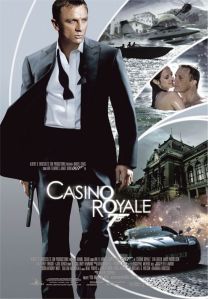
Welcome, one and all! Leading up to the North American release of the latest James Bond film, Skyfall, The Shattered Lens has taken on the task of reviewing each and every one of the twenty two James Bond films that precede it. Today’s is the penultimate review, Casino Royale, the first film of the series to star current-iteration Bond Daniel Craig. It serves as a reboot of the James Bond character, looking back to the beginning of his career, and entirely unconnected from all of the previous films in the series. The only returning actor is Dame Judi Dench, who reprises her role as M, in a more maternal overseer role looking out for a young Bond, despite his rash actions potentially causing trouble for MI6.
Our cold open this time has a black and white Bond confronting a crooked MI6 section chief – one who has been selling secrets to make money on the side. Bond kills both the section chief and his contact, which is enough to earn him his 00-status. The freshly minted 007 heads to Madagascar in pursuit of an international bomb maker. He attempts to find a way to apprehend the bomb maker alive, but is made, and is forced to pursue this man across the city. Bond eventually corners the bomb maker in an embassy building and kills him, blowing up part of the wall, and effecting his escape.
Back in England, M chides Bond for his itchy trigger finger, pointing out that while the world has one less small-time terrorist, they had hoped to get information which would let them fight international terrorism on the organisational level. Bond seems suitably chastened, but M goes further, asserting that she promoted Bond too early, that he is reckless, and a danger. Bond coldly replies that, since the 00-agent’s life is not typically a long one, she will not have to live with her mistake for long.
That’s the sort of Bond that we’re dealing with under the handling of Daniel Craig. While the character is still capable of being charming, he’s a very far cry from Sean Connery’s easy smile and one liners, or Pierce Brosnan’s especially terrible puns. This is sort of the crux of the movie; what controversy exists surrounding its qualities is heavily tied into how you respond to this new take on James Bond. Like all things 2000s, our hero is much grittier than before. Absent is all of Q’s high tech wizardry, and as I stated before, we are not even dealing with a seasoned killer in James Bond, but rather a freshly minted 00 agent. As a result of all these factors, this film has a distinctly different feel from every Bond produced before it. If you like the changes, everything is cool. If you don’t, you may still find yourself appreciating Casino Royale, which has a relatively simple plot, but spends quite a bit of effort on setting up and establishing its characters, including this new James Bond, for the audience.
The main plot of Casino Royale revolves around a high-stakes Texas Hold ‘Em tournament held at the titular casino, located in Montenegro. James Bond is assigned to win the tournament which is being staged by terrorist financier Le Chiffre (Mads Mikkelsen) to recoup the terrible losses he suffered when he used the money of his clients to short sell stock, predicting that a terrorist strike which he himself had planned would send prices into free fall. M hopes that by pushing Le Chiffre to the point of desperation, they can force him to cut a deal with MI6 – sanctuary in exchange for everything he knows about terrorists around the world. Bond is assisted in his goal by fellow MI6 agent Rene Mathis (Giancarlo Giannini) and Vesper Lynd (Eva Green), this iteration’s Bond girl, an agent from HM Treasury, who is assigned to manage Bond’s $10M buy-in, and to provide him with a $5M re-buy if she believes it would be a good investment. However, since a failure on Bond’s part would mean that Her Majesty’s Treasury was directly funding international terrorism, there is incentive to be cautious.
It takes us nearly an hour to begin to engage in the meat of the film, at the titular Casino Royale. Or, at least, this should be the meat of the film. However, the structure of Casino Royale is a little bit off. It feels like it has enough action, but it doesn’t feel properly paced, with the front half of the film (really just a series of subplots to get us to Montenegro) feels like classic “action Bond”. The scenes in the Casino could have been pulled (well, if Daniel Craig could smile, at any rate) from any other Bond film, as his history is littered with a rich litany of casino sequences. Before and after the casino sequences, however, are framing bits that involve idyllic locations, and if I may be so bold, it doesn’t exactly zoom along. The spacing between the casino sequences and the finale, in particular, made the final act feel very tacked on and a little out of place, even as deliberately intended setup for Quantum of Solace. This can also be off-putting, as it feels like there are two different movies going on here.
For the most part though, I think Casino Royale works. If you can live with a grimmer, grittier, low-talking James Bond, you may really appreciate this low-tech return to basics for our favourite 00-agent.
Tomorrow you’ll get a healthy dose of Quantum of Solace, but before I sign off, let me leave you with the theme from Casino Royale, one of the cooler James Bond themes in the franchise, performed by Chris Cornell.
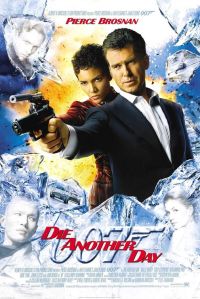
Leading up to the North American release of the latest James Bond feature film, Skyfall, The Shattered Lens is reviewing each and every James Bond film in the history of the franchise. Today’s film is the controversial Die Another Day, the twentieth film in the James Bond franchise, and the final such film to feature Pierce Brosnan in the titular role as 00-agent James Bond. Despite launching to mixed reviews – particularly overseas, where it generated significantly negative reaction in North and South Korea – it was at the time the highest grossing Bond film of all time.
Our cold open for this film has us in North Korea. There, 007 is assuming the identity of a diamond smuggler who is assisting a North Korean Colonel, Tan-Sun Moon, in laundering blood diamonds as part of an ongoing search for advanced military hardware. In order to bypass the landmines of the Korean Demilitarized Zone, the good Colonel has constructed an entire army of hover vehicles which can cross the region without triggering the mines, allowing for a land invasion of South Korea. Bond proceeds with the exchange, but is identified by Zao (Rick Yune), Colonel Moon’s right hand man. Bond triggers an explosion which badly disfigures Zao’s face, which becomes embedded with dozens of diamonds. Colonel Moon attempts to escape on a hovercraft, and Bond pursues him, eventually chasing the Colonel off the edge of a waterfall, apparently killing him. Afterward, Bond is captured by General Moon, the Colonel’s father, and is imprisoned.
After over a year of imprisonment and torture, Bond is traded during a prisoner exchange for Zao. Upon returning to MI6, M (Dame Judi Dench) tells Bond that his 00-status has been suspended. Both she and the Americans believe that Bond cracked under torture and revealed classified information, necessitating the prisoner exchange that brought him back. However, the release of Zao leaves both M and Bond extremely bitter. Determined to recapture Zao, Bond evades MI6’s security and disappears. He travels to Hong Kong, seeking a way back into North Korea, but his contact there informs him that Zao has attempted to disappear in Cuba and provides him with the necessaries to travel there instead.
After he arrives in Havana, Cuba, Bond investigates a clinic there which specializes in gene therapy that is virtually unknown in the first world. Bond’s local contact describes it as prolonging the lives of their leading citizens, and the richest folks in the West, but Bond also learns that the gene therapy would allow a person to totally restructure their appearance and assume a whole new identity. During his investigation, he meets a woman who introduces herself as Jinx (Halle Berry) who, initially unknown to Bond, is an NSA agent on a similar investigation, albeit one with presumably very different goals. Bond locates Zao inside the clinic, and a chase ensues. Although Zao ultimately manages to escape by helicopter (and Jinx in dramatic fashion by diving off the sea wall and boarding a waiting boat which drives her off), Bond recovers a pendant left behind by Zao. Upon unscrewing it, Bond discovers a cache of diamonds. Upon inspection, the diamonds are chemically identical to diamonds found in Sierra Leone, but they bear the identifying mark of a diamond mine owned by a British billionaire and thrill seeker, Gustav Graves (Toby Stephens). Bond is determined to investigate.
This forms the basis of the remaining plot. Our set pieces this time aren’t quite so varied, as much of the remaining story plays out in Iceland, where Graves’ diamond mine is situated, and where he has constructed a special ice hotel for the purpose of a technology convention. Eventually, we return to Korea, for a final showdown that seems somehow empty, despite the increasingly high stakes in terms of both explosions and technology.
The truth, ultimately, is that Die Another Day is a bit of a mess. It has a seemingly incessant procession of action sequences, but they raise the stakes primarily through CGI and improbable wizardry, in a way that threatens our suspend disbelief. I know that this is Bond, and that in 80s-early 00s Bond very much fell into the trap (who didn’t?) of ‘bigger and better’. However, this film takes things a bit too far in my estimation. Its villains aren’t quite as fun as the ones in the past two films (well, Mr. Stamper is kind of a drag I suppose), and don’t really fit the Bond mold. The story is pretty straightforward, but probably doesn’t receive quite the treatment that it deserves to get us established in it. The interactions between Bond and M are a bit too stiff, and I say that even keeping in mind tomorrow’s review piece, Casino Royale. There’s something about Die Another Day that made me think everyone involved was just going through the motions, like a sense of fatigue just hung over the proceedings. It was a bit of a bummer.
As for the women of Bond, Die Another Day actually has a lot to recommend. Breaking convention, this section is heavy with spoilers, but I’m going to risk it just this once. Don’t read on if you’re new to this film and planning to watch it!
Die Another Day continues to feature Dame Judi Dench as a pleasantly strong and uncompromising intelligence chief (I probably haven’t made enough of how much I enjoy her in the role of M in my reviews up to this point). In addition, we’re treated to Halle Berry as Jinx, an ass-kicking NSA agent who seems to do a lot of getting outmaneuvered and captured for being so adept. I didn’t care for Berry’s performance in this film, and I’d be lying if I said she stacked up well against Tomorrow Never Dies’ Michelle Yeoh as a Chinese intelligence agent. Still, compared to some of the other Bond girls, Berry is definitely a warrior. The other major female character, however, is Miranda Frost (Rosamund Pike), a frigid and beautiful MI6 agent… actually, a double agent, who betrayed Bond in the cold open. Pike’s character definitely gives off the edge of competence and deadliness that I, for one, am rooting for in female characters in any Bond movie, and she sells it well. Unfortunately, she’s not nearly as fun as Elektra King, as her motivations are completely unexplored and she just feels like an add-on to the existing plot surrounding some dangerous North Koreans.
Overall, this is probably not one of the better Bond films, though I’d argue that it doesn’t deserve the bad rap that some have given it either. It’s not a terrible film, just overwrought in a kind of Michael Bay way that undermines the characters and concepts. This is a common complaint of all four Pierce Brosnan films, especially, as well as some of the Roger Moore and Timothy Dalton efforts. However, this is the one that I most agree with that assessment of. This film really gets out of control with effects and gadgetry.
That’s it for today’s review. I leave you with the theme from Die Another Day, performed by Madonna. Tomorrow’s review will be of 2006’s Casino Royale.
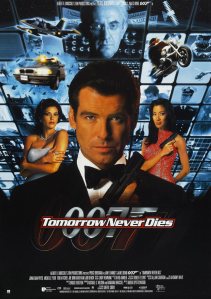
In anticipation of the North American release of the latest 007 adventure, Skyfall, we here at The Shattered Lens are systematically going through each and every film of the James Bond franchise and reviewing them for you! Today, we’ll take a look at the eighteenth film of the James Bond franchise, and the second one to star Pierce Brosnan as James Bond. It’s one of my personal favourites… Tomorrow Never Dies.
It’s the return of Pierce Brosnan as Agent 007, a cold-war relic modernized for a more discerning audience. While the Bond of old – Connery in particular – could flash his smile, make a pun, and have a girl in bed, the modern Bond is often challenged by the women in his life. As a modern viewer, I’m much more comfortable with this view of the sexes, though it would be quite a stretch to say that Bond has ‘struggles’ trying to find the affections of women. Anyway.
Our cold open takes us to the Russian border, and a so-called Terrorist bazaar. Yes, it’s more or less a marketplace of weapons, illegal technology, and mercenary services. And it’s under surveillance by MI6 and the British armed forces, led by M (Dame Judi Dench) and Admiral Roebuck (Geoffrey Palmer). MI6’s analysis is being led by the strangely memorable Charles Robinson (Colin Salmon), M’s Chief of Staff in this film, and the next two. Although his part is minor, Salmon impressed me enough in this part (the first time I can recollect seeing him; Tomorrow Never Dies was a first day viewing for my father and I when it released) that I instantly associate him any time I see him with his role in this film, not in the newer Resident Evil franchise, or in any of his other work. Robinson is in contact with an unidentified (but I’ll bet you can guess!) agent on the ground who is observing the terrorist bazaar through a telephoto lens. In addition to the formidably terrifying hardware, the as-yet-un-named agent also identifies cyber terrorist Henry Gupta (Ricky Jay) an American wanted for all kinds of technology-related crimes. Although he seems to have obtained an extremely secret, extremely valuable, American GPS code cracking machine, I’m sure he won’t turn up later.
Eager to be rid of “half the world’s terrorists” as he describes it, Admiral Roebuck first attempts to negotiate a Soviet strike using ground assets against the bazaar. When the Soviet liaison reports that casualties would be inconvenient to the electorate so close to party elections, Roebuck instead opts for a British naval strike which will dismantle the bazaar – cruise missiles launched from afar. Overriding M’s objections that the survey of the bazaar is not yet complete, Roebuck provides authorization for missile launch, and in no time, two massive cruise missiles are en route.
It’s about this time that we learn that the mysterious, unnamed, ground agent in Russia is Agent 007 – an unsmiling Pierce Brosnan. Bond has detected a pair of L-39 Albatross fighters, one of which has been outfitted with nuclear-yield weapons of Soviet origin. At best, the cruise missile attack will scatter weapons-grade plutonium over a huge area, and Admiral Roebuck immediately orders the cruise missiles to be aborted remotely. Unfortunately, the missiles are already out of range in the network of (presumably Afghani) canyons they are maneuvering down. If nuclear disaster is to be averted, it’s up to an unsmiling 007 – now revealed as M’s agent in the field.
As anyone could have predicted, Bond chooses a heroically stupid solution. He charges into the bazaar, knocking out several terrorists and seizing an automatic weapon. Clearing enemies from his area, he makes his way to the L-39 with the nuclear payload. After dispatching the pilot, Bond boards the aircraft, and barely manages to get airborne before the cruise missiles detonate behind him, wiping out most of the terrorists involved. Suspiciously, it seems that Henry Gupta survived the naval strike. I continue to remain convinced that he won’t pop up again later in the story, though. After escaping aboard his stolen aircraft, Bond’s reel man inexplicably feels the need to strangle him which will crash and kill them both while Bond is pursued by a second L-39. Eventually, Bond manages to eject his would-be strangler straight up into the other aircraft, neatly eliminating his problems, and he heads home.
In a reveal with our evil super-villain, Elliot Carver (Jonathan Pryce), we learn that he is manipulating headlines for the profit of his super powerful Viacom-esque media conglomerate. I wonder if that Gupta fellow and his stolen GPS controller will show up again?
I probably don’t need to spoil much more about the plot than that. Suffice to say that the concept behind this Bond yarn is actually a touch on the original side. It correctly anticipated the importance of mass media, its complete transformation into a corporate entity (rather than a ‘news’ entity), and some of the possible consequences. Of course, the plot of the film has also aged terribly, because the internet has changed everything about communication in a way that we would never have anticipated in the mid 90s. Still, Tomorrow Never Dies has always struck a chord with me for both the nature of its villain, and his designs upon the world. The rest of the villainous cast is somewhat less impressive, as beyond Carver, we have the eminently forgettable Mr. Stamper (Götz Otto) and the certainly-not-a-plot-point Henry Gupta to satiate our need for nemeses. Oh, and a hired assassin, but I’ll get to him in a moment. Suffice to say that Mr. Stamper is not exactly this generation’s Oddjob, and we can probably leave it there.
Once we pass the initial setup, the action of Tomorrow Never Dies doesn’t really let up. It’s very tech-heavy, the true realization of the gadet-heavy accusations that are often levied against post-Connery bond. Yes, Pierce Brosnan has a huge variety of gadgets at his disposal. Notable in this particular film is Bond’s seemingly indestructible BMW, which leads to a humourous exchange between he, a hired hitman named Dr. Kaufmann (Vincent Schiavelli), and a gaggle of minions attempting to break into the vehicle with hammers and other tools.
As usual, the women around Bond are beautiful. In this incarnation, we get a heavy dose of Paris Carver (Teri Hatcher), Elliot’s trophy wife, and a former flame of James Bond’s (to, I assume, no one’s surprise) as well as Colonel Wai Lin (Michelle Yeoh) an ass-kicking Chinese intelligence agent who is assigned to the same case as Bond. Yeoh’s character enters the film relatively late, but repeatedly proves her chops as Bond’s Chinese counterpart. She is healthily proficient with firearms and has all of the ninja skills that we would expect from any slight Asian female character in a Bond film.
The set pieces of Tomorrow Never Dies are probably also worth noting, as they range from Elliot Carver’s bizarrely fortress-like mass media headquarters (notably, also, a haven for both digital media and the printing of a newspaper), to extensive time spent in China, to Elliot Carver’s special stealth boat. The production values of the film are certainly not lacking, and unlike so many more ‘modern’ action films, Bond is not immersed in a CGI universe, but rather surrounded by practical effects that make it easy for us to fall into the story and its various locales.
Let me leave you with the theme to Tomorrow Never Dies, also oddly amongst my favourites!



 Through the Shattered Lens