Sometimes, you see a film that is just so weird and incoherent that you can’t help but love it.
Of course, it also helps if the film has a once-in-a-lifetime cast of actors who you would never expect to see acting opposite each other.
For me, that’s certainly the case with 1990’s Backtrack. Directed by Dennis Hopper, Backtrack is a film about an artist (Jodie Foster, channeling Jenny Holzer) who witnesses a mob murder committed by Joe Pesci, Dean Stockwell, Tony Sirico, and John Turturro. An FBI agent played by Fred Ward suggests that the artist should go into the witness protection program but she doesn’t want to give up her life as a New York sophisticate who creates challenging LED displays and who can eat Sno Balls whenever she gets the craving for one. (Yes, this is a plot point.) Turturro and Sirico break into the artist’s apartment and kill her boyfriend, who is played by a wide-eyed Charlie Sheen. The artist puts on a blonde wig and goes on the run, eventually getting a job in advertising.
Realizing that his men can’t get the job done, mob boss Vincent Price decides to hire a legendary hitman played by Dennis Hopper (who also directed this film) to track down the artist. However, the hitman becomes fascinating with the artist’s work, finds pictures of her posing in black lingerie, and immediately falls in love with her. Not only does he wants to save her life but he wants her to wear the same lingerie exclusively for him. (Yes, this is a pretty big plot point.) At first, the artist refuses and views the hitman as being some sort of pathetic perv. But then she discovers that he’s covered her bed with Sno Balls….
Meanwhile, a young Catherine Keener shows up as the girlfriend of a trucker who briefly considers giving the artist a ride to Canada.
And then Bob Dylan shows up, handling a chainsaw.
And there’s Helena Kallianiotes, the outspoken hitch-hiker from Five Easy Pieces, yelling at Joe Pesci!
And there’s Dennis Hopper’s The Last Movie co-star, Julie Adams! And there’s Toni Basil! And there’s director Alex Cox!
Dennis Hopper not only starred in Backtrack but he also directed and it’s obvious that he placed a call into just about everyone he knew. In fact, one could argue that the only thing more shocking than Vincent Price showing up as a mob boss is that Peter Fonda, Karen Black, Elliott Gould, Robert Walker Jr., and Kris Kristofferson are nowhere to be found in the film. Hopper’s first cut of Backtrack was reportedly 3 hours long but the studio cut it down to 90 minutes, renamed it Catchfire, and Hopper insisted on being credited as Alan Smithee. Later, Hopper released a two-hour version with the Backtrack title and his directorial credit restored.
Regardless of which version you see, Backtrack is an odd film. It’s hardly the first film to be made about a hit man falling for his target. What distinguishes this film is just how bizarre a performance Dennis Hopper gives in the role of the hitman. It’s as if Hopper gave into every method instinct that he had and the end result was a mix of Blue Velvet‘s Frank Booth and the crazed photojournalist from ApocalypseNow. Jodie Foster’s cool intelligence makes her the ideal choice for a conceptual artist but it also makes it hard to believe that she would fall for a jittery hitman and, in her romantic scenes with Hopper, Foster often seems to be struggling to resist the temptation to roll her eyes. Somehow, their total lack of romantic chemistry becomes rather fascinating to work. They are two talented performers but each appears to be acting in a different movie. What’s interesting is that I think a movie just about Hopper’s spacey hitman would be interesting (and, if you’ve ever seen The American Friend, it’s hard not to feel that such a movie already exists) but I think a movie about just about Foster’s artist and her life in New York would be just as fascinating. Taken as individuals, the artist and the hitman are both compelling characters. Taken as a couple, they don’t belong anywhere near each other.
But let’s be honest. This is a film that most people will watch for the parade of character actors delivering quirky dialogue. Even if one takes Hopper and Foster out of this mix, this is an amazingly talented cast. One need only consider that John Turturro did Do The Right Thing before appearing in this film while Joe Pesci and Tony Sirico did Goodfellas immediately afterwards. This film features a once-in-a-lifetime cast, made up of actors who were apparently told to do whatever they felt like doing. Turturro plays up the comedy. Sirico plays his role with cool menace. Stockwell barely speaks above a whisper. Fred Ward plays the one sane man in a world of lunatics. Vincent Price delivers his line as if he’s appearing in one of Roger Corman’s Poe films and somehow, it makes sense that, in the world of Backfire, an Italian gangster would have a snarky, mid-Atlantic accent.
It’s an odd little film, an example of 80s filmmaking with a 70s sensibility. While it’s not touched with the lunatic genius that distinguished Hopper’s The Last Movie, Backtrack is still something that should be experienced at least once.
As some of our regular readers undoubtedly know, I am involved in a few weekly live tweets on Twitter and Mastodon. I host #FridayNightFlix every Friday, I co-host #ScarySocial on Saturday, and I am one of the five hosts of #MondayActionMovie! Every week, we get together. We watch a movie. We tweet our way through it.
Tonight, at 10 pm et, #FridayNightFlix has got 1990’s Backtrack, an enigmatic thriller starring Jodie Foster, Dean Stockwell, Joe Pesci, John Turturro, Vincent Price, Fred Ward, Charlie Sheen, Tony Sirico, Bob Dylan, and Dennis Hopper (who also directed).
If you want to join us this Friday, just hop onto twitter, start the movie at 10 pm et, and use the #FridayNightFlix hashtag! It’s a friendly group and welcoming of newcomers so don’t be shy.
Backtrack is available on Prime and Tubi! See you there!
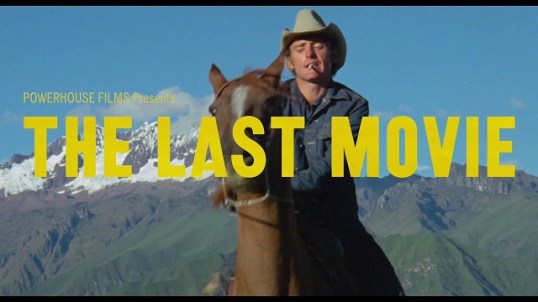
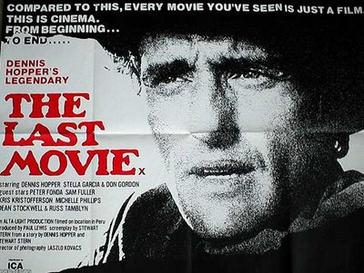
The story behind the making of 1971’s The Last Movie is legendary. It’s also a bit of a cautionary tale.
In 1969, Hollywood was stunned by the box office success of an independent, low-budget counter-culture film called Easy Rider. Easy Rider not only made a star out of Jack Nicholson but it was also the film that finally convinced the studios that the way to be relevant was not to continue to crank out big budget musical extravaganzas like Doctor Doolittle and Hello, Dolly! Instead, it was decided that the smart thing to do would be to hire young (or, at the very least, youngish) directors and basically just let them shoot whatever they wanted. The resulting films might not make much sense to the executives but, presumably, the kids would dig them and as long as the kids were paying money to see them, everyone would continue to get rich. Because Dennis Hopper had directed Easy Rider, he suddenly found himself very much in demand as a director.
Of course, almost everyone in Hollywood knew Dennis Hopper. Long before he became an icon of the counter-culture, Dennis Hopper had been a part of the studio system. John Wayne even referred to Hopper as being his “favorite communist.” Everyone knew that Dennis could be a bit arrogant. Everyone knew that Dennis was very much into drugs and that, as a result, he had a reputation for being a bit unstable. Everyone knew that Dennis Hopper deliberately cultivated an image of being a bit of a wild man and a revolutionary artist. But Dennis Hopper had just directed Easy Rider and Universal was willing to give Hopper some money to go down to Peru and direct his follow-up.
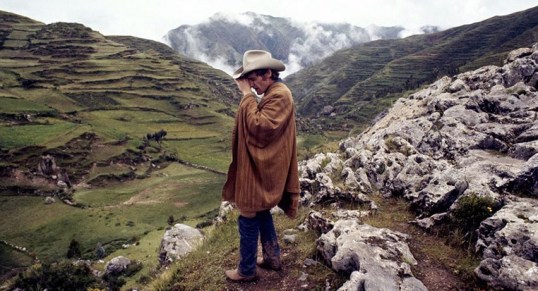
The Last Movie was a film that Hopper had been planning on making for a while. The film’s original script told the story of an aging and broken-down stuntman named Kansas who retires to Mexico and searches for a gold mine with a friend of his. Hopper first tried to get the film going in 1965, with Montgomery Clift in the lead role. After Clift died, Hopper tried to interest John Wayne in the starring role but, though Wayne enjoyed having Hopper in his films so that he could threaten to shoot him whenever Abbie Hoffman said something shocking, he had no interest in being directed by him. When Universal finally agreed to put up the money for the film, Hopper offered the lead role to Jack Nicholson. Nicholson turned it down and told Hopper that it was obvious that Dennis wanted to play the role himself. Dennis decided that he agreed with Nicholson and he cast himself as Kansas. Dennis also made the fateful decision to not only change the story’s setting to Peru but to also film on location.
Dennis and a group of friends flew down to Peru, which, at that time, was the cocaine capitol of the world. Drug use was rampant on the set, with Dennis reportedly being one of the main offenders. The cast and crew filmed during the day and partied at night and no one was particularly sure what the film was supposed to be about. Amazingly, Hopper finished filming on schedule and within budget but, much as he did with Easy Rider, he also overfilmed and ended up with 40 hours of footage. Not wanting to be bothered by the studios, Hopper edited the footage in his compound in Taos, New Mexico. Working slowly and continuing to consume a large amount of drugs and alcohol, Hopper still managed to put together a film that had a straightforward storyline. When Hopper showed his initial cut to filmmaker Alejandro Jodorowsky, the director of El Topo accused Hopper of being too conventional in his approach, which led to Hopper chopping up the film and reassembling it. Finally, after spending over a year working with the footage, Hopper turned in his final edit.
Universal had no idea what to make of the film that Hopper delivered to them. Still, they released it with the hope that the same crowd that loved Easy Rider would embrace The Last Movie. While the film did win an award at the Venice Film Festival, critics hated it and, even worse, audiences stayed away. The film’s reception was so overwhelmingly negative that Hopper found himself largely exiled from Hollywood, with only a few directors (like Francis Ford Coppola) willing to take the chance of working with him. It wasn’t until the 80s, when he finally got clean and sober, that Dennis Hopper was able to reestablish himself as a character actor and, ultimately, a beloved cultural institution.
But what about The Last Movie? Was is it really as bad as the critics claimed? Or was it, as some more recent reviewers have suggested, an unacknowledged masterpiece that was ahead of its time? I recently watched The Last Movie to find out for myself.
Despite its reputation, The Last Movie gets off to a pretty strong start. Samuel Fuller (playing himself) is directing a hilariously over-the-top and violent western in the mountains of Peru. Kansas (Dennis Hopper) is working as a stuntman. He’s fallen in love with a local sex worker named Maria (Stella Garcia). Kansas is meant to be an aging Hollywood veteran, someone who has broken a lot of bones and who carries a lot of aches as a result of his line of work. (One can see why Hopper initially imagined an actor like John Wayne in the role.) He knows that this is going to be his last job and, as we see over the first 25 minutes of the film, he feels alienated from the rest of the cast and crew. Admittedly, Hopper does appear to be a bit too young for the role. The ideal Kansas would have been someone like Ben Johnson, L.Q. Jones, or perhaps Warren Oates. But, still, Hopper does a good job of capturing Kansas’s mixed feelings about the western that’s being filmed around him.
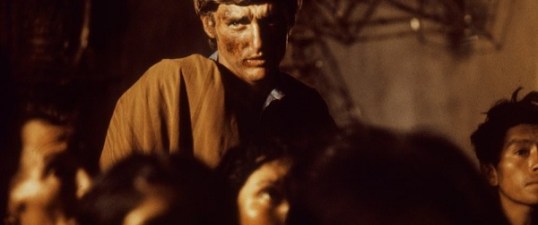
A lot of familiar faces pop up in the film’s fictional western. Dean Stockwell plays an outlaw. Jim Mitchum, Russ Tamblyn and Kris Kristofferson plays his associates. Peter Fonda is the youthful sheriff. Michelle Phillips is the daughter of the town’s banker and apparently, she’s also the girlfriend of one of the outlaws. We watch as the actors pretend to shoot guns and kill each other while the cameras are rolling, just to get up off the ground once “Cut” is yelled. When a local Indian who has been cast as an extra grows upset at the violence, an assistant director explains to him that no one really dies while the cameras are rolling. When shooting wraps, the film company goes home but Kansas stays behind with Maria. One day, the local priest (Tomas Milian) warns Kansas that the local indigenous people have moved into the abandoned film set and are trying to shoot their own movie. Kansas discovers that they have built wooden cameras and wooden boom mics and that their chief is giving orders in the style of Sam Fuller. They’re also firing the guns that the Americans left behind.
The first part of the film works quite well. Hopper’s camera captures the beautiful and isolated Peruvian landscape. The violent western is a pitch perfect and affectionate parody of a generic studio film. Though Hopper is a bit too young for the role, he still does a good job of capturing Kansas’s alienation from his fellow Americans. Even more importantly, the first part of the film seems to have an identifiable theme. The American film crew invaded an isolated part of Peru and changed the culture of the natives without even realizing it. Now, they’ve left but the natives are still dealing with the after effects of the American “invasion.” It’s easy to see, within that part of the story, a critique of both American culture and American foreign policy.
The second part of the film is where things start to fall apart. Kansas meets an old friend named Neville (Don Gordon). Neville has discovered a gold mine in the Peruvian mountains. With Kansas as his partner, he tries to get a businessman named Harry Anderson (Roy Engel) to invest in it. Kansas and Neville try to impress Harry and his wife (Julie Adams, best-known for being stalked by The Creature From The Black Lagoon). Kansas and Neville take the Andersons to a brothel and, in the process, Kansas offends Maria. Kansas then paws Mrs. Anderson’s fur coat and mentions that human beings are covered in hair. For all of their efforts, Harry will not invest, no matter how desperately Neville begs him to reconsider.
The second part of the film drags, with many of the scenes being obviously improvised between Hopper, Gordon, Garcia, Engel, and Adams. Unfortunately, the improved conversations aren’t particularly interesting and they tend to go on forever. Usually a reliable character actor, Don Gordon ferociously chews the scenery as Neville and it doesn’t take long before one grows tired of listening to him yell. (Gordon was far more impressive in Hopper’s Out of the Blue.) With the use of improvisation and overlapping dialogue, the second half of the film tries to feel naturalistic but instead, it’s a migraine-inducing method exercise gone wrong. It’s also during the second part of the film that a “scene missing” title card flashes on the screen, an indication that the discipline that Hopper showed as a director during the beginning of the film is about to be abandoned.
Finally, the third part of the film — well, who knows? The final 25 minutes of the film is collection of random scenes, some of which may be connected and some of which may not. The natives have decided that the only way to properly end their “film” is to kill Kansas. Kansas is shot several times and rides away on his horse. Suddenly, Kansas is back at his home and Maria is taunting him for getting shot. Then, Kansas is riding his horse again. Then suddenly, Dennis Hopper and Tomas Milian are laughing at the camera. A script supervisor tries to get Dennis to look at the shooting schedule while Dennis drinks. This happens:
Milian points out that the blood on Hopper’s shirt is dry. Hopper looks at his shoulder, where Kansas was previously shot, and says that someone needs to add his scar before he can shoot the scene. Ah! So, now we’re acknowledging that it’s all just a movie. Thanks, Dennis! Suddenly, Dennis is Kansas again and he’s collapsing over and over again in the dust. He appears to be dead but no, now he’s Dennis again and he’s standing up and smiling at the camera. And now, he’s singing Hooray for Hollywood. And now, suddenly, Kansas and Neville are talking about The Treasure of the Sierra Madre and then….
Well, let’s just say that it goes on and on before finally ending with a scrawled title card.
It’s a disjointed mess and it’s all the more frustrating because the first 30 minutes of the film is actually pretty good. But then, Dennis apparently remembered that he was supposed to be the voice of the counter-culture and he gave into his most pretentious impulses. Of course, just because a film is a mess, that doesn’t mean that it can’t be entertaining. And again, the first part of the film is entertaining and third part of the film is weird enough that it’ll hold most people’s attention for at least a few minutes. But the middle section of the film is so slow and pointless that it pretty much brings down the entire film.
In the end, what is The Last Movie about? In The American Dreamer(a documentary that was filmed while Hopper was editing The Last Movie in New Mexico), Hopper spends a lot of time talking about revolution and taking over Hollywood but The Last Movie is hardly a revolutionary film. The film is at its most alive when it is focused on the shooting of its fictional western. For all the satirical pokes that The Last Movie takes at the studio system, it’s obvious that Hopper had a lot of affection for Old Hollywood and for directors like Sam Fuller. Kansas may say “Far out,” but he’s hardly a hippie. Even the film’s jumbled finale seems to be saying, “It’s all Hollywood magic!” In the end, the film’s call for a new style of cinema is defeated by its love for the old style of cinema.
Instead, I think The Last Movie works best when viewed as a portrait of paranoia. Hopper himself admitted that he was naturally paranoid and the heavy amount of drugs that he was doing in the 70s didn’t help. One reason why Hopper filmed in Peru and edited in New Mexico was so the studios couldn’t keep track of him and, while directing, he worried about being arrested by the Peruvian secret police. As an actor, Hopper plays Kansas as being someone who views the world with caution and untrusting eyes. He doesn’t trust the other members of the film crew. He loves Maria but he’s still convinced that she’s going to betray him. Even the natives ultimately try to destroy him and the script supervisor tries to get him to stick to the shooting schedule. The film works best as a disjoined portrait of one man’s paranoid and fatalistic world view.
The Last Movie pretty much ended the studio’s attempts to harness the counter-culture by giving money to self-described revolutionaries. The new wave of directors — like Spielberg and Lucas — may have shared Hopper’s then-politics but they weren’t looking to burn down the system. (Hopper himself later became a Republican.) The Last Movie may not have been the literal last movie but it was, for a while at least, the last of its kind.
Ah, the 80s! Ronald Reagan was president. America was strong. Russia was weak. The economy was booming. The music was wonderful. Many great movies were released, though most of them were not nominated for any Oscars. This is the decade that tends to drive most Oscar fanatics batty. So many good films that went unnominated. So many good performers that were overlooked. Let’s dive on in!
1980: The Shining Is Totally Ignored
Admittedly, The Shining was not immediately embraced by critics when it was first released. Stephen King is still whining about the movie and once he went as far as to joke about being happy that he outlived Stanley Kubrick. (Not cool, Steve.) Well, none of that matters. The Shining should have been nominated across the board. “Come and play with us, Danny …. AT THE OSCARS!”
1981: Harrison Ford Is Not Nominated For Best Actor For Raiders of the Lost Ark
Raiders received a lot of nominations. Steven Spielberg was nominated for Best Director. The film itself was nominated for Best Picture. (It lost to Chariots of Fire.) But the man who helped to hold the film together, Harrison Ford, was not nominated for his performance as Indiana Jones. Despite totally changing the way that people looked at archeologists and also making glasses sexy, Harrison Ford was overlooked. I think this was yet another case of the Academy taking a reliable actor for granted.
1982: Brian Dennehy Is Not Nominated For Best Supporting Actor For First Blood
First Blood didn’t receive any Oscar nominations, not even in the technical categories. Personally, I think you could argue that the film, which was much more than just an action film, deserved to be considered for everything from Best Actor to Best Director to Best Picture. But, in the end, if anyone was truly snubbed, it was Brian Dennehy. Dennehy turned Will Teasle into a classic villain. Wisely, neither the film nor Dennehy made the mistake of portraying Sheriff Teasle as being evil. Instead, he was just a very stubborn man who couldn’t admit that he made a mistake in the way he treated John Rambo. Dennehy gave an excellent performance that elevated the entire film.
1984: Once Upon A Time In America Is Totally Ignored
It’s not a huge shock that Once Upon A Time In America didn’t receive any Oscar nominations. Warner Bros. took Sergio Leone’s gangster epic and recut it before giving it a wide release in America. Among other things, scenes were rearranged so that they played out in chronological order, the studio took 90 minutes off of the run time, and the film’s surrealistic and challenging ending was altered. Leone disowned the Warner Bros. edit of the film. Unfortunately, in 1984, most people only saw the edited version of Once Upon A Time In America and Leone was so disillusioned by the experience that he would never direct another film. (That said, even the edited version featured Ennio Morricone’s haunting score, which certainly deserved not just a nomination but also the Oscar.) The original cut of Once Upon A Time In America is one of the greatest gangster films ever made, though one gets the feeling that it might have still been too violent, thematically dark, and narratively complex for the tastes of the Academy in 1984. At a time when the Academy was going out of its way to honor good-for-you films like Gandhi, it’s probable that a film featuring Robert De Niro floating through time in an Opium-induced haze might have been a bridge too far.
1985: The Breakfast Club Is Totally Ignored
Not even a nomination for Best Screenplay! It’s a shame. I’m going to guess that the Academy assumed that The Breakfast Club was just another teen flick. Personally, if nothing else, I would have given the film the Oscar for Best Original Song. Seriously, don’t you forget about me.
1986: Blue Velvet Is Not Nominated For Best Picture
Considering the type of films that the Academy typically nominated in the 80s, it’s something of a shock that David Lynch even managed to get a Best Director nomination for a film as surreal and subversive as Blue Velvet. Unfortunately, that was the only recognition that the Academy was willing to give to the film. It can also be argued that Kyle MacLachlan, Laura Dern, Isabella Rossellini, and Dean Stockwell were overlooked by the Academy. Dennis Hopper did receive a Supporting Actor nomination in 1986, though it was for Hoosiers and not Blue Velvet.
1987: R. Lee Ermey Is Not Nominated For Best Supporting Actor For Full Metal Jacket
One of the biggest misconceptions about Full Metal Jacket is that R. Lee Ermey was just playing himself. While Ermey was a former drill instructor and he did improvise the majority of his lines (which made him unique among actors who have appeared in Kubrick films), Ermey specifically set out to play Sgt. Hartmann as being a bad drill instructor, one who pushed his recruits too hard, forgot the importance of building them back up, and was so busy being a bully that he failed to notice that Pvt. Pyle had gone off the deep end. Because Ermey was, by most accounts, a good drill instructor, he knew how to portray a bad one and the end result was an award-worthy performance.
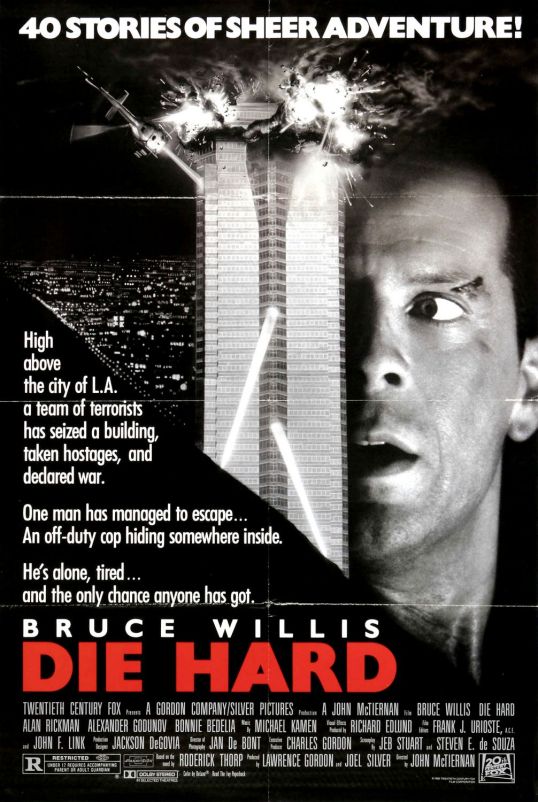
1988: Die Hard Is Not Nominated For Best Picture, Actor, Supporting Actor, or Director
Die Hard did receive some technical nominations but, when you consider how influential the film would go on to be, it’s hard not to feel that it deserved more. Almost every action movie villain owes a debt to Alan Rickman’s performance as Hans Gruber. And Bruce Willis …. well, all I can say is that people really took Bruce for granted.
1989: Do The Right Thing Is Not Nominated For Best Picture
Indeed, it would take another 30 years for a film directed by Spike Lee to finally be nominated for Best Picture.
Agree? Disagree? Do you have an Oscar snub that you think is even worse than the 10 listed here? Let us know in the comments!
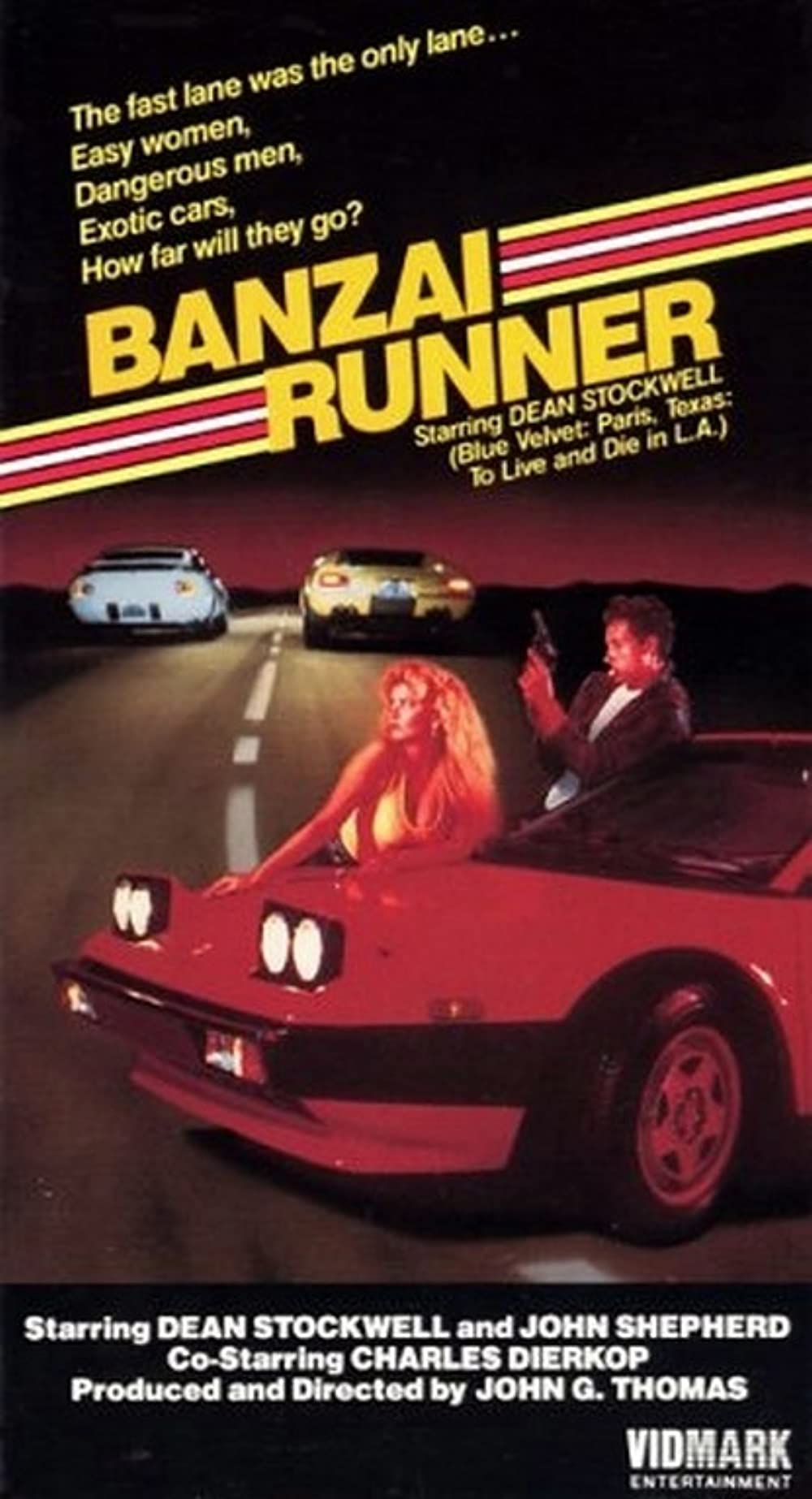
Last night, I watched the 1987 film, Banzai Runner!
Why Was I Watching It?
Last night, it was my turn to host the #MondayActionMovie live tweet! The loyal members of MAM trusted me to find an exciting, action-filled movie with which they could start their week. I failed.
What Was It About?
Listen, it’s not totally my fault. I checked with the IMDb. I checked Wikipedia. I read the film’s description on YouTube. They all said that the film starred Dean Stockwell as a cop who goes undercover to bring down a group of wealthy street racers.
And technically, that is what the film’s about but only at the very end. Before we get around to any of that fun stuff, the film is basically just Highway Patrolman Billy Baxter (Dean Stockwell) driving around the desert and trying to keep his dumbass nephew, Beck (John Shepard), from getting into trouble. How big of a dumbass is Beck? He’s so dumb that he lights up a joint while he’s driving and while his uncle — the policeman — is sitting right next to him. Needless to say, Billy gets upset about that. (The scene is amusing if — and only if — you know that Dean Stockwell was one of Hollywood’s most prominent hippies.)
Eventually, Billy and Beck do go undercover to take out Syszek (Billy Drago), a wealthy drug dealer who likes to street race but who also does to much cocaine. In a coincidence that comes out of nowhere, it turns out that Syszek is responsible for the death of Billy’s brother and Beck’s father. Neither Billy nor Beck really seem to be too upset about it, though.
What Didn’t Work?
(Usually I like to start with what did work but I’m making an exception here.)
It’s an 84 minute film (not counting the end credits). It takes 60 minutes for Billy to go undercover. It takes another 5 minutes or so for Billy to actually meet Syszek. The only reason that anyone is going be watching this film is because they want to see Dean Stockwell and Billy Drago race against each other but that part of the film doesn’t even kick in until the movie is nearly over! Instead, we get an hour of Billy aimlessly doing his job and Beck complaining about his uncle being too strict. It’s very slow and dull.
Dean Stockwell was a good actor who gave some wonderfully eccentric performances in his adult years but he’s miscast as Billy. John Shepherd played Tommy in Friday the 13th: A New Beginning and I’ve always preferred Shepherd’s interpretation of the character over Thom Matthews’s performance in Jason Lives. Shepherd had an appealing vulnerability in A New Beginning but none of that is present in Banzai Runners. It doesn’t help that the script portrays Beck as being a combination of every bad boyfriend I had from the sixth grade through my senior year of high school.
What Worked?
I’m a Southern girl and I’m also enough of a country girl that I do have a weakness for fast cars and the people who drive them. So, I could appreciate the film on that level. The car chases were fun, I just wish that there had been more of them. All of those scenes of Billy worrying about paying his mortgage (and yes, that was a huge subplot during the first hour of the film) should have been edited out and replaced with scenes from The Wraith. Or maybe just the Shangri-Las singing Leader of the Pack.
“Oh my God! Just like me!” Moments
There’s a scene where the rich daughter of one of the racers announce that she’ll remove a piece of clothing for every mile that Beck goes over 55. On the one hand, it’s a scene that feels like it was lifted from a Crown International cheerleader film. On the other hand …. well, like I said, I had a weakness for bad boys who drove fast cars. So, even in this rather bland film, I still found someone to whom I could relate. Yay!
Lessons Learned
Never assume that a movie is exciting just because of its name.
Johnnie Moore (Brent Jennings) is a former limo driver turned criminal mastermind. The members of his gang look up to him with cult-like admiration. On his orders, they have been robbing businesses all over town. Johnnie says that he is a man of God but he has no hesitation when it comes to ordering his men to threaten and sometimes kill any witnesses. When Detective Tom Williams (Michael Gross) comes to close to finally convincing someone to testify against the gang, Moore orders his assassination. When the members of his gang fail to get the job done because none of them want to shoot Tom when his family is around, Johnnie does it himself by dressing up as a clown and gunning Tom down in front of Tom’s son. That was Johnnie’s biggest mistake because now, he’s got Tom’s best friend, Detective Jack Lowe (Dean Stockwell), after him.
After Street Wars, NBC’s next two In The Line of Duty films both focused on FBI sieges. Both The Siege at Marion and Ambush in Waco featured true stories of the FBI trying to arrest religious fanatics and having to wait out a stand-off. Ambush in Waco was controversial because it was not only based on the Branch Davidian stand-off but it was actually filmed while the stand-off was still going on. Perhaps because of the controversy, The Price of Vengeance tells a much simpler and less exploitive story. Johnnie Moore is a criminal who kills a cop. Jack Lowe makes it his mission to put him away. There’s no risk of anyone watching siding with Johnnie Moore like they may have done with David Koresh while watching Ambush in Waco. Moore kills a man in front of his son and then laughs about it. Everyone watching is going to want to see him get punished and they are going to cheer on the efforts of law enforcement to make sure the punishment fits the crime.
The Price of Vengeance is a typical police procedural but it has a good cast. After playing a killer in the first In The Line of Duty movie and the lead FBI man in the third one, Michael Gross is cast as the victim here and he’s so likable that you’ll be angered when he gets gunned down. Dean Stockwell brings his no-nonsense, down-to-Earth style to the role of Gross’s best friend and Brent Jennings is smug and evil as Johnnie Moore. Mary Kay Place, Kathleen Robertson, and Justin Garms play the members of Gross’s family and they all do a good job of showing the trauma that they’ve suffered as a result of his murder. Keep an eye out for Courtney Gains, playing a member of Moore’s criminal crew. Gains played this same character in a dozen different films. If you see Courtney Gains in a movie, look out because he’s up to no good!
The Price of Vengeance is a standard 90s cop show. Nothing about it will take you by surprise but it’s partially redeemed by its cast.
With the 2022 Cannes Film Festival coming to a close in the next few days, I’ve been watching some of the films that previously won the prestigious Palme d’Or. They’re an interesting group of films. Some of them have been forgotten. Some of them are still regarded as classics. Some of them definitely deserve to be seen by a wider audience. Take for the instance that winner of the 1984 Palme d’Or winner, Paris, Texas. This is a film that is well-regarded by cineastes but it definitely deserves to be seen by more people.
Though released in 1984, Paris, Texas opens with an image that will resonate for many viewers today. A dazed man stumbles through the desert while wearing a red baseball cap. Though the cap may not read “Make America Great Again,” the sight of it immediately identifies the owner as being a resident of what is often dismissively referred to as being flyover country, the long stretch of land that sits between the two coasts. Travis (Harry Dean Stanton) is lost, both figuratively and literally. After he stumbles into a bar and collapses, he’s taken to a doctor (played by German film director Bernhard Wicki) who discovers that Travis has a phone number on him. When the doctor calls the number, he speaks to Travis’s brother, Walt (Dean Stockwell). Walt has not seen Travis for three years and the viewer gets the feeling that Walt spent those years assuming that Travis was dead. Walt agrees to travel to West Texas to retrieve his brother and take him back to Los Angeles.
When Walt retrieves his brother, he’s annoyed that Travis refuses to explain where he’s been for the past three years. In fact, for the first fourth of the film, Travis doesn’t say anything. He just stares into space. Finally, when he does speak, it’s to tell Walt that he wants to go to Paris. Walt tells him that going to Paris might have to wait. Travis elaborates that he wants to go to Paris, Texas. He owns an empty parking lot in Paris, Texas.
It takes a while to learn much about Travis’s past. Like many of Wim Wenders’s films, Paris, Texas moves at its own deliberate pace and it features characters who tend to talk around their concerns instead of facing them head-on. What we do eventually learn is that Travis has a son named Hunter (Hunter Black). Travis’s wife, Jane, (played by Natassja Kinski) disappeared first. Travis disappeared afterwards, leaving Walt and his wife (Aurore Clement) to raise his son. At first, when Travis arrives in Los Angeles, he struggles to reconnect with Hunter but eventually, he does. He tries to be a father but, again, he sometimes struggles because, while Travis has a good heart, he’s also out-of-step with the world.
As for Jane, we eventually learn that she’s in Houston. She’s working in a tacky sex club, one where the customers and the strippers are separated by a one-way mirror. The customer can see and talk to the stripper but the stripper can’t see the customers. It’s all about manufactured intimacy. The customer can delude themselves into thinking that the woman is stripping just for him while the woman doesn’t have to see the man who is watching her. There are no emotions to deal with, just the illusion of a connection.
Even as Travis begins to make a life for himself in Los Angeles, he finds himself tempted to return to Houston to search for his wife….
As I said, Paris, Texas is a deliberately paced film. With a running time of 2 hours and 20 minutes, it feels like it’s actually three films linked together. We start with Travis and Walt traveling back to Los Angeles. The second film deals with Travis’s attempts to bond with his son. And the third and most powerful film is about what happens when Travis finally finds Jane. It all comes together to form a deceptively low-key character study of a group of lost souls, all of whom are dealing with the mistakes of the past and hoping for a better future. The film’s most memorable moment comes when Travis delivers a long and heartfelt monologue about his marriage to Jane. Beautifully written by Sam Shephard (who co-wrote the script with L.M. Kit Carson) and wonderfully acted by Harry Dean Stanton, it’s a monologue about regret, guilt, forgiveness, and ultimately being cursed to wander.
Despite the heavy subject matter, Paris, Texas is an undeniably joyful film. In a rare leading role, Harry Dean Stanton plays Travis as someone who is full of regrets but who, at the same time, retains a spark of hope and optimism. Life has beaten him down but he has yet to surrender. Once he reaches Los Angeles and Travis starts to fully come out of his fugue state, there’s a playful energy to Stanton’s performance. The scene where he dresses up as what he thinks a dad should look like is a highlight. For Travis, being a responsible adult starts with putting on a suit and walking his son home from school. Stanton’s excellent performance is matched by good work from Dean Stockwell and, especially, Natassja Kinski.
Visually, the film is all about capturing the beauty and the peculiarity of the landscape of the American southwest. Like many European directors, Wim Wenders seems to be a bit in love with the combination of rugged mountains and commercialized society that one finds while driving through the west. In the scenes in which Stanton wanders through West Texas, the landscape almost seems like it might consume him and, later, in Los Angeles and Houston, the garishness of the city threatens to do the same. Wherever he is, Travis is slightly out-of-place and the viewer can understand why Travis is compelled to keep wandering. At times, it seems like Travis will never fit in anywhere but the fact that he never gives up hope is comforting. In many ways, Travis’s own journey mirrors Stanton’s career in Hollywood. He had the talent of a leading man but the eccentric countenance of a great character actor. He may have never been quite fit in with mainstream Hollywood but he never stopped acting.
The film itself never visits Paris, Texas. Travis just talks about the fact that he owns an empty lot in the town and that he would like to see it. Still, I like to think Travis eventually reached Paris and I like to think that he did something wonderful with that lot.
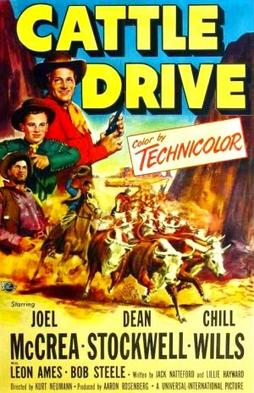
In this coming-of-age Western, Dean Stockwell plays Chester Graham, Jr., the spoiled and unruly son of a railroad owner (Leon Ames). While riding on his father’s train and making trouble for the conductor, Chester overhears his father talking about sending him to a military school. When the train makes as top, Chester impulsively runs away. The train leaves without him and Chester finds himself stranded in the middle of the wilderness. That’s when he sees cowboy Dan Matthews (Joel McCrea) trying to catch a wild stallion.
Dan is a part of a cattle drive. Knowing that he can’t leave Chester to die in the wilderness, Dan brings him back to his camp. The other members of the company aren’t too keen on having to look after a spoiled brat along with the cattle and Chester isn’t too happy to hear that he’ll be expected to work if he expects to get fed. But with no choice but to work together, Chester, Dan, and the rest of the company make the journey to Santa Fe. Chester finally drops his attitude enough to work with the company’s cook (Chill Wills) while Dan deals with a rival cowboy named Currie (Henry Brandon). Chester learns about responsibility and Dan finally finds the courage to consider settling down.
Of the many westerns that Joel McCrea made over the course of his career, he considered Cattle Drive to be his favorite and it’s easy to see why. Cattle Drive features McCrea doing what he did best, playing a tough but good-hearted and down-to-earth cowboy who looked after an outsider. If you were ever lost in the old west, Joel McCrea is precisely the type of cowboy that you would hope would come to your rescue. The plot features almost every single cattle drive cliché that you could imagine but McCrea plays his role with a winning combination of grit and compassion and he and Dean Stockwell, who is also very good, make a good team. Shot in Death Valley and Utah, Cattle Drive feels and look authentic and should be enjoyed by anyone looking for good, heartfelt western.
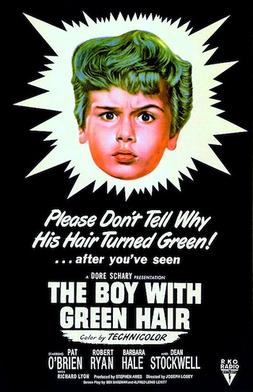
Who is Peter Fry (played by a 12 year-old Dean Stockwell), the young boy at the center of the 1948 film, The Boy With Green Hair?
When we first meet him, Peter is a nearly mute child who has had all of his hair shaved off and who refuses to talk about either one of his parents. He’s mysteriously shown up in a small town and it’s only after a kindly psychologist (played by Robert Ryan) speaks with him that we discover that Peter is an orphan. Both of his parents are dead, victims of the Second World War. Fortunately, a retired actor named Gramps (Pat O’Brien) is willing to adopt Peter and raise him as his own. Gramps has all sorts of stories about the times that he performed in Europe. The film hints that Gramps might be a damn liar but he’s well-meaning, nonetheless.
Peter starts to attend school and slowly, but surely, he comes out of his shell. Soon, he appears to be just another carefree child and his hair even grows back. But then, one day, he sees a poster featuring other war orphans, children like him who have lost their families to war. When Peter overhears adults talking about how the world may go to war again and how there are now even bigger and more destructive bombs that can be dropped on America’s enemies, Peter start to get upset. What’s the point of going to school and preparing for the future if there’s not going to be any future?
One night, Peter goes to sleep. When he wakes up in the morning, he discovers that his hair has turned green!
Why has Peter’s hair turned green? It’s hard to say but the town is remarkably unsympathetic. It’s perhaps understandable that Peter’s classmates would make fun of him because they’re children and children are the worst about not being able to handle change. But not even the adults seem to be able to handle Peter having green hair! They want to shave his head again!
With even kindly old Gramps prepared to take away Peter’s green hair, Peter flees into the woods. There’s where he runs into the spirits of all the children who have either died or been orphaned by war. They have a message for Peter….
The Boy With Green Hair is both an antiwar parable and a plea for tolerance. There’s not a subtle moment to be found in the entire film but, considering that it was made at a time when the world was still in ruins and people were still getting used to living in the shadow of the atomic bomb, it’s perhaps understandable that the film would be a bit heavy-handed. It was, after all, made during a heavy-handed time. That said, the film actually works better as a parable about racism than as a pacifist statement. It’s kind of hard to see how Peter having green hair could convince people to pursue world peace but the way that Peter is ostracized for being different from everyone else is something to which many viewers could undoubtedly relate.
There’s some weird padding in the film. For instance, there’s a weird musical number involving Gramps that comes out of nowhere. Still, one can see why the film made an impression on some viewers. Dean Stockwell gives a sympathetic and, most importantly, naturalistic performance as Peter and the film’s message is a sincere one. One could easily imagine and also easily dread the prospect of this film being remade with Peter’s hair turning green over climate change. I’m a little surprised that hasn’t happened yet, especially considering the amount of coverage that was once given to Greta Thunberg, whose pronouncements and fame have made her a somewhat angrier version of the boy with green hair. Hopefully, a remake won’t ever happen, as the original film works just fine as it is. Not everything has to be remade.
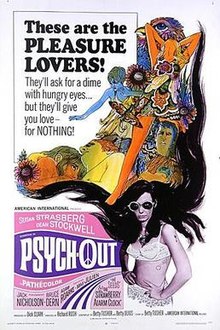
There’s a scene in the 1968 film, Psych-Out, in which a group of hippies are talking to be a liberal-minded minister, asking him if a mysterious figure known as “The Seeker” has even come by his church. The minister tells them that he has not seen the Seeker, though he has heard of him. As the hippies politely leave the church, one of them accidentally brushes past a middle-aged woman. Though the hippie politely apologizes, the woman is still obviously disgusted by his presence in the church. She asks her companion how the minister can possibly allow people who “dress like that” into the church.
As the woman complains, the camera focuses in on the stained glass window directly over her shadow. There’s Jesus and the disciples. They’ve all got beards. They all have long hair. They’re all wearing simple clothing …. oh my God, they’re hippies!
That’s actually one of the more subtle moments to be found in Psych-Out, an entertainingly heavy-handed film about hippies and wanderers in California. Psych-Out was made at the height of the counter culture. It was filmed on location in the San Francisco neighborhood of Haight-Ashbury, where both the love and the clothes are free and no one is about judging anyone else’s thing. Into this neighborhood comes Jenny Davis (Susan Strasberg), who has run away from home and who is looking for her brother, Steve (Bruce Dern). Jenny may have been raised in a conservative household but she’s eager to embrace the counter-culture. Jenny is also deaf but she can read lips. She also has the police looking for her but fear not! The residents of Haight-Ashbury look after one another! They have to, considering that there are still cops and even a few rednecks hanging out around the neighborhood.
No sooner has Jenny arrived in San Francisco than she falls in with a 30-something hippie named Stoney (Jack Nicholson, with a pony tail). Stoney is a member of a band, along with Elwood (Max Julien) and Ben (Adam Roarke). Even though Stoney says that he doesn’t care about material goods, he’s still eager to become a rock star. Stoney also says that he doesn’t want to get tied down by any commitments. He wants to do his own thing. He may sleep with Jenny but that doesn’t mean that either one belongs to the other. Stoney may say that but he certainly gets jealous when he sees Jenny talking to the local guru, Dave (Dean Stockwell). Dave calls Stoney for being a phony. “You may be righteous but you’re not hip,” Dave tells him. Can Stoney become both righteous and hip before the film ends? Can Jenny find her brother? Will the band get signed to a recording contract and will the menacing junkyard rednecks ever see the errors of their fascist ways?
Today, of course, Jack Nicholson is probably the main reason why most people would want to see Psych-Out. Ironically, for a figure who is so identified with the counter-culture, Jack Nicholson did not make for a very convincing hippie. A lot of that is because Nicholson’s trademark sarcasm (which is on full display in Psych-Out, as this is a far more typical Nicholson performance than the one that would make him a star a year later in Easy Rider) owed more to the beats than to the hippies. Nicolson’s persona always had more in common with Jack Kerouac than Abbie Hoffman. In Psych-Out, he comes across as being too much of a natural skeptic to fit in with the free-spirited hippies all around him. Nicholson is fun to watch because he’s Jack Nicholson but you never buy him as someone who would really want to live in a commune where no one has any possessions and money is frowned upon.
Dean Stockwell, on the other hand, is a totally believable hippie guru though, to his credit, his still brings some welcome wit to his role. The script may call for him to recite some fairly shallow platitudes but he does so with just enough of a smile to let use know that not even Dave takes himself that seriously. As for the rest of the cast, Bruce Dern gets to do his spaced-out routine and Henry Jaglom, who would later become an insufferably self-important director, plays an artist with huge sideburns who tries to chop off his hand while having a bad trip. Jenny is horrified but everyone tells her not to judge. Susan Strasberg is sympathetic as Jenny and is convincing as a deaf character. Unfortunately, the film doesn’t give her much to do other than walk around San Francisco with a dazed expression on her face and stare lovingly up at Jack Nicholson.
Psych-Out‘s greatest value is probably as a time capsule. It was filmed on location and it features actual hippies. Watching it is like getting a chance to step into a time machine and go back to San Francisco in 1968. Of course, judging from this film, San Francisco in 1968 wasn’t that appealing of a place but still, Psych-Out remains an entertainingly silly historical document. Just a year after the release of Psych-Out,Charles Manson and his followers would come out of the canyons and the Altamont Free Concert would end in murder and the 60s would come to an abrupt end. Watching Psych-Out, it’s hard to believe all of that was right around the corner.