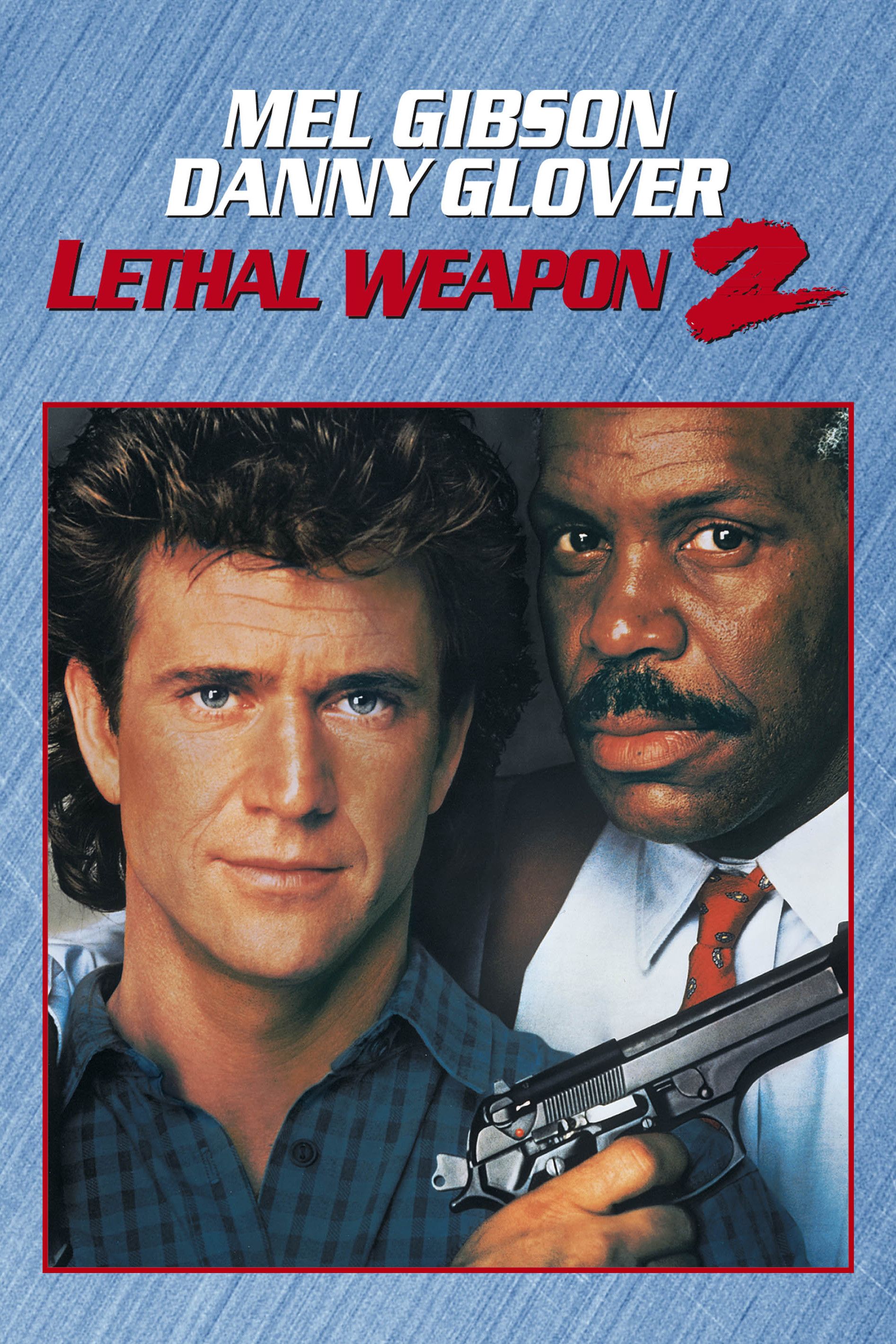
Review: Lethal Weapon 2 (dir. by Richard Donner)


“We’re back, we’re bad. You’re black, I’m mad. Let’s go!” — Martin Riggs

Lethal Weapon 2 is the kind of sequel that doesn’t really try to reinvent what worked the first time so much as crank the volume on everything: the action is bigger, the jokes come faster, and the chaos feels almost constant. Depending on what you loved about Lethal Weapon, that approach delivers more of the high-energy partnership in a flashier package. It’s a confident, very entertaining 80s action movie that knows it’s a sequel and leans into the spectacle that status allows.

Plot-wise, Lethal Weapon 2 wastes no time reminding you what this world feels like. It drops Riggs and Murtaugh into a wild car chase almost immediately, and from there the story locks onto a case involving South African diplomats hiding behind apartheid-era “diplomatic immunity” while running a massive drug and money-laundering operation. It’s a cleaner, more high-concept hook than the original’s murkier web of Vietnam vets and heroin smuggling, and the script makes the villains broad on purpose, almost cartoonishly arrogant, to give the audience someone very easy to hate. The trade-off is that the plot feels a bit more mechanical this time; you always know who the bad guys are and what the destination is, so the film’s real energy comes from the detours, jokes, and set-pieces rather than any mystery.

One of the big shifts from Lethal Weapon to Lethal Weapon 2 is tone. The first film balanced brutal violence and dark humor with a surprisingly heavy focus on Riggs’ suicidal grief and Murtaugh’s fear of getting too old for the job. The sequel keeps those elements in the background but leans harder into banter, slapstick timing, and outrageous gags like the now-famous exploding toilet sequence, with Richard Donner’s direction pushing the script toward action comedy. It’s still R-rated and not shy about blood or cruelty, but the emotional intensity is dialed down compared to the original’s raw edges.

Mel Gibson and Danny Glover remain the anchor, and their chemistry is as sharp as ever. Gibson’s Riggs is still reckless and unhinged, but there’s a looser, more playful side to him this time; he’s less haunted and more of a live-wire prankster until the story gives him something personal to latch onto. Glover’s Murtaugh continues to be the grounded center, constantly exasperated and always half a step away from just walking off the job, and the film has a lot of fun putting his straight-man persona through increasingly humiliating situations while still letting him be competent when it counts. Compared to the first film, where their partnership slowly thawed from suspicion to genuine trust, Lethal Weapon 2 starts from “these guys are already a team” and builds its best moments from how comfortably they now bounce off each other.

The biggest new ingredient is Joe Pesci as Leo Getz, a federal witness turned tagalong who basically functions as the franchise’s third stooge. Pesci leans into the motor-mouthed, paranoid, endlessly complaining energy that would become his signature, and his presence tips some scenes from gritty cop story into broad comedy. He undercuts tension at times, but he also gives the movie a different rhythm, especially in the quieter in-between beats where the first film might have lingered more on Riggs’ inner damage.

In terms of action, Donner clearly has more money and confidence to play with, and it shows. The chases are bigger, the shootouts are staged with a slicker sense of geography, and there’s a steady escalation in scale that makes the film feel like a genuine summer sequel rather than just another mid-budget cop movie. The original had a grimy, street-level intensity, with brutal fistfights and sudden bursts of violence; Lethal Weapon 2 is more interested in creative set-pieces, crowd-pleasing payoffs, and moments designed to make an audience cheer. It’s less intimate, but it is rarely dull.

Where the film lands in a more complicated space is its attempt to keep some emotional stakes alive while also going bigger and funnier. Riggs’ grief over the loss of his wife is still part of his character, and the story finds ways to poke at that wound again, including a new relationship that lets him imagine some kind of future beyond the constant death wish. Those beats are there to echo what worked so well in the first movie, but they have less room to breathe, often getting squeezed between an action scene and a joke instead of shaping the entire film’s tone. You can feel the push and pull between wanting to keep the darker emotional spine and delivering the kind of lighter, more easily marketable sequel a studio would understandably chase.

The villains themselves are effective in that pulpy 80s way: not nuanced, but very punchable. Arjen Rudd, with his smug talk of “diplomatic immunity,” is a villain designed to make audiences grind their teeth, and his main henchman adds a physically intimidating, quietly sadistic presence to the mix. Compared to the original’s more grounded ex-military antagonists, these guys feel one step closer to Bond territory, and that shift mirrors the film’s overall move toward heightened, almost comic-book stakes. What the sequel loses in plausibility, it gains in revenge-fantasy satisfaction.

When stacked directly against Lethal Weapon, the second film feels like a classic case of “if you liked hanging out with these characters once, here’s more time with them.” The original is tighter, more emotionally focused, and arguably more distinctive, with a stronger sense of danger and genuine unpredictability around Riggs’ mental state. Lethal Weapon 2 smooths some of those jagged edges and replaces them with quips, bigger set-pieces, and a more overtly crowd-pleasing structure, which makes it an easier, more consistently fun watch but also a slightly less resonant one. It is still a good film, but in many ways it is also the moment where the franchise shifts from a character-driven cop thriller with action to a full-on action-comedy machine.

As a fair, middle-of-the-road assessment, Lethal Weapon 2 works very well on its own terms and delivers exactly what most people want out of a late-80s buddy-cop sequel. The chemistry is intact, the action is energetic, and the film moves with the kind of confident pace that never really lets you get bored. At the same time, the tonal tilt toward broader humor and more cartoonish villains means it doesn’t quite have the same staying power or emotional punch as Lethal Weapon, especially if what hooked you the first time was how wounded and volatile it all felt. For fans of the original, it’s an enjoyable continuation—a louder, flashier second round that may not hit as hard, but still knows how to entertain.
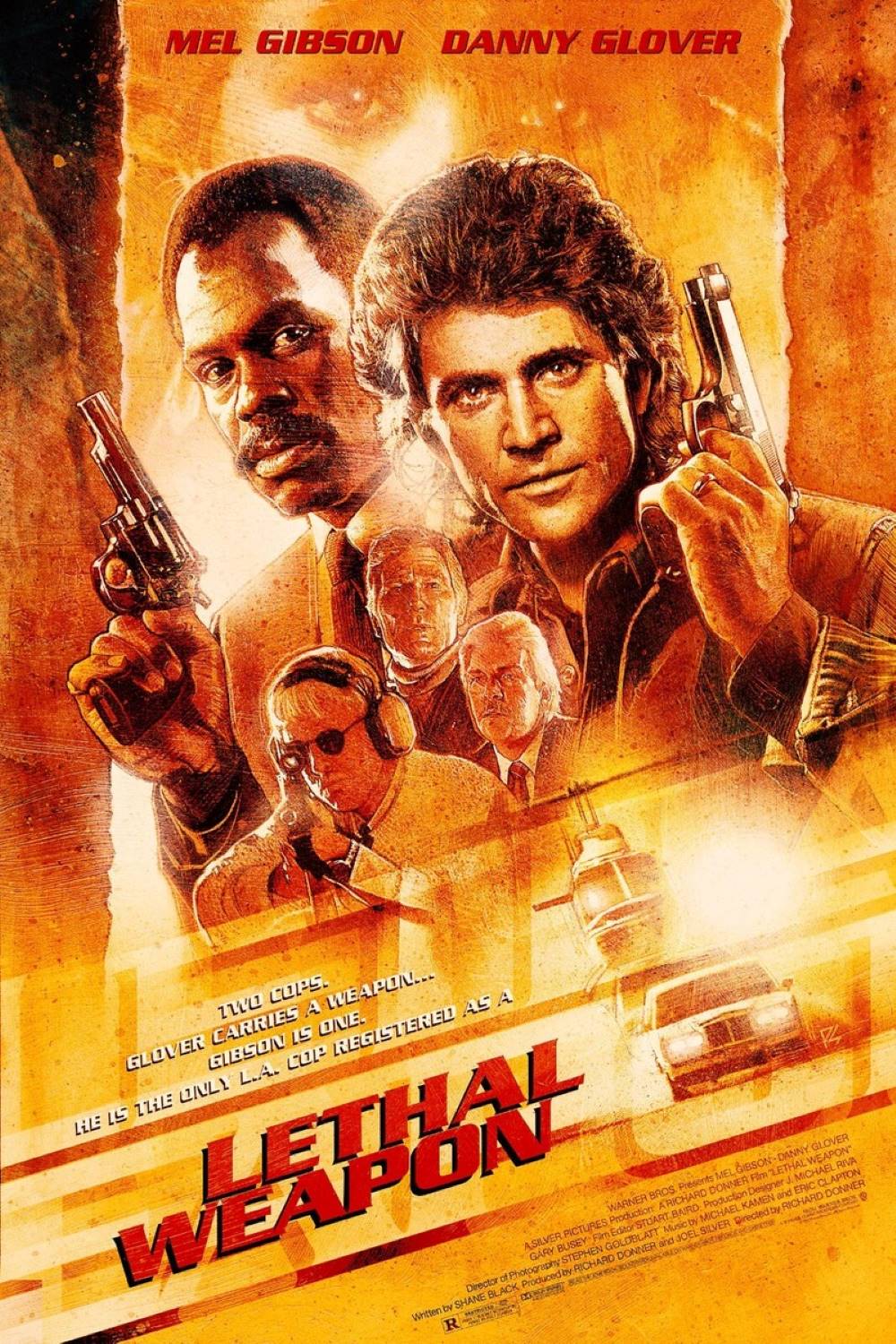
Review: Lethal Weapon (dir. by Richard Donner)


“I’m too old for this shit.” — Roger Murtaugh

Lethal Weapon is one of those action movies that looks like pure genre formula on paper but somehow plays like lightning in a bottle on screen. From the opening moments, it feels like a film that knows exactly what kind of ride it wants to deliver and leans into that mission with confidence, attitude, and just enough heart to make the bullets and explosions actually matter.

The premise itself is as straightforward as they come, and that simplicity is part of the charm. Martin Riggs is the textbook “cop on the edge,” a former special forces sniper whose life has completely fallen apart after the death of his wife. He’s volatile, depressed, and teetering on the edge of suicidal, which gives everything he does an extra layer of danger. On the other side of the pairing is Roger Murtaugh, a seasoned detective staring down his 50th birthday, trying to balance a long career in homicide with the quiet, constant pull of his family at home. When these two are thrown together and assigned to a case involving drugs, dead bodies, and shady ex-military criminals, the story plays out across familiar beats: suspicious deaths, escalating confrontations, close calls, and a trail that leads them deeper into a dangerous operation. The crime plot is pulpy and direct rather than twisty, but the film uses it as a sturdy framework rather than the main point of interest, keeping the investigation moving while the characters come into focus. Much of that sharp setup and snappy progression comes from Shane Black’s script, which crackles with knowing genre savvy, pitch-perfect banter, and a keen eye for how personal pain fuels action-hero antics.

What really makes Lethal Weapon feel alive is how much time it spends letting Riggs and Murtaugh exist as people before they fully morph into the “classic duo” that pop culture remembers. The film doesn’t rush past the small stuff. Riggs is introduced living in a rundown trailer on the beach with his scruffy dog for company, drinking and stumbling through life with the casual recklessness of someone who genuinely doesn’t care if he sees tomorrow. Those early moments of him alone, flirting with self-destruction, give his later heroics a sense of tragic context: he’s not just fearless, he’s half-convinced he has nothing left to lose. Murtaugh’s introduction is a complete contrast: a crowded home, kids, a loving wife, and the kind of loud, chaotic domestic life that’s full of relatable irritation and warmth. Seeing him grumble through birthday milestones or awkwardly handle family situations does more for his character than any speech about his years on the force could. These slices of everyday life build a strong emotional foundation so that when the bullets start flying, there’s something at stake beyond catching bad guys. Black’s writing shines here, weaving those intimate details into the thriller beats without ever feeling forced or preachy.

The chemistry between Mel Gibson and Danny Glover is the film’s true secret weapon. Gibson plays Riggs as an unpredictable live wire, able to flip from goofy physical comedy to chilling seriousness in an instant. He sells the idea that this is a man barely keeping it together, yet still razor-sharp when it comes to the job. There’s a constant sense that his jokes and antics are a flimsy barrier over something very raw. Glover, by contrast, keeps Murtaugh grounded and human; his performance is packed with little sighs, muttered reactions, and weary facial expressions that speak volumes. He comes across as a guy who has seen too much, loves his family, and genuinely wants to do the right thing, but is exhausted by how hard that is in practice. Their initial friction hits the expected “mismatched partners” beats: Murtaugh thinks Riggs is unstable and dangerous, while Riggs treats Murtaugh like a fussy old man who doesn’t get it. Yet as they move through stakeouts, interrogations, and gunfights, their banter evolves from pure irritation into an easy rhythm filled with barbs, mutual respect, and eventually real affection. Shane Black’s dialogue is the glue for all of it—witty, profane, and laced with just enough vulnerability to make the laughs land harder and the tension feel real.

Richard Donner’s direction is a huge part of why all of this clicks as well as it does. He has a knack for blending big, commercial genre instincts with an eye for character detail, and Lethal Weapon is a textbook example of that balance. He stages action scenes with clear geography and rhythm, so even when things get loud and chaotic, you always know where you are and what everyone is trying to do. At the same time, he’s just as interested in the quiet beats: a pause on Riggs’ face after a joke lands flat, Murtaugh’s body language when he walks into his noisy home after a brutal day, the way a conversation in a car can shift from banter to confession in a couple of lines. Donner keeps the film moving at a brisk pace, but he knows when to let a shot linger or a silence hang long enough to tell you what the characters can’t quite say out loud. His tonal control—jumping from dark to funny to tense without completely losing the thread—is a big reason the movie doesn’t collapse under its own genre juggling, and it pairs beautifully with Black’s script that sets up those shifts so precisely.

Tonally, Lethal Weapon walks a tricky line, and that’s a big part of its identity. On one hand, this is a story with genuinely dark undercurrents. Riggs’ suicidal impulses are not a throwaway character quirk; the film gives time to scenes where he nearly acts on them and struggles in a very raw way with his grief and loneliness. The case they’re working breaks open into territory involving drugs, exploitation, and violence that’s sometimes nasty rather than cleanly heroic. On the other hand, the film is full of humor, ranging from quick one-liners to broad physical bits. The Murtaugh household provides a lot of that levity: awkward conversations with his kids, Riggs stumbling through family dynamics, and the contrast between domestic calm and the chaos of the streets. The movie often jumps from heavy emotional beats to comedic ones and back again, and while the transitions can be abrupt, that mixture is part of what keeps it from feeling like just another grim cop story. The laughter doesn’t erase the darker material, but it does give the movie a sense of momentum and charm that keeps it entertaining instead of oppressive. Black’s screenplay nails this push-pull, using humor as both release valve and revelation.

As an action film, Lethal Weapon delivers a steady run of sequences that are energetic, clear, and tactile. The action is built around physical stunts, dangerous-looking falls, and gunfights that feel chaotic without becoming incoherent. One memorable sequence has Riggs dealing with a jumper on a rooftop in a way that instantly tells you everything about his mentality and willingness to risk himself. Another set piece in a more open, exposed environment lets the film escalate tension step by step before violence finally erupts. Through it all, Donner keeps a strong sense of spatial clarity; you can track where the characters are, what they’re trying to do, and how each decision raises the stakes. The fights feel scrappy and painful rather than overly slick, and that slightly rough quality actually works in the movie’s favor, making each impact land harder. Riggs, especially, moves like a human weapon, hurling himself into situations with a recklessness that ties directly into his psychological state, all fueled by Black’s clever plotting that makes those risks feel personal.

Underneath the gunfire and explosions, there’s a surprisingly sturdy emotional core tying everything together. Riggs’ grief isn’t just window dressing; it’s the lens through which his every decision makes sense. The movie doesn’t lecture you about what he’s feeling, but it shows it—through quiet moments alone, through the anger that erupts at all the wrong times, and through the way he throws his body into danger almost as if daring the world to take him out. Murtaugh’s arc is more subtle but still strongly drawn. He’s at an age where he has to confront the reality that he can’t keep pace with younger, more reckless colleagues forever, and yet his sense of duty keeps pulling him into situations where his family might lose him. Throughout their investigation, Murtaugh’s protective instincts—toward his loved ones, toward Riggs, and toward innocent people caught in the crossfire—become as important as his skills as a detective.

The relationship that develops between Riggs and Murtaugh is the heart of the film and the main reason it sticks in the memory. At first, Murtaugh just wants to survive partnering with a man he genuinely believes might be unhinged, while Riggs seems to treat their pairing as just another chaotic twist in a life already off the rails. As they trade confessions, back each other up in tight spots, and slowly understand what the other is carrying, their bond shifts into something like brotherhood. Murtaugh becomes a kind of anchor for Riggs, offering not just backup in a fight but also a place at the table, both literally and figuratively. Riggs, in turn, forces Murtaugh out of his comfort zone, reminding him that he still has plenty of courage and fire left in him. The film doesn’t turn their connection into a sentimental soapbox, but it lets small moments—a shared laugh after a narrow escape, a quiet conversation after the chaos—do the emotional lifting, with Black’s words giving those scenes their understated power.

If there’s a clear weak spot, it’s that the villains are fairly thinly drawn, operating more as looming threats than fully realized characters. They are dangerous and organized, capable of serious brutality and clearly involved in serious criminal operations, but the movie doesn’t spend much time exploring their motivations or inner lives. They’re the kind of antagonists designed to be obstacles: formidable enough to make the heroes’ victories feel earned, but not so complex that they distract from the central duo. For a character-driven action film, that trade-off mostly works. When Lethal Weapon is firing on all cylinders, the tension doesn’t come from wondering what the bad guys will do next so much as from seeing how Riggs and Murtaugh will handle whatever gets thrown at them and what that reveals about who they are.

Structurally, the film keeps a tight pace, always nudging the story forward even when it pauses for character beats. Expository scenes rarely feel like dry info dumps; they’re often laced with jokes, personal jabs, or subtle shifts in how the two leads relate to each other. The downtime moments—a quiet drink, a shared meal, a conversation in a car between partners who would rather pretend they’re fine—are as important as the louder ones. By the time the case ramps up to its most intense passages, there’s been enough time with these characters to care less about the mechanics of the plot and more about whether these two damaged, stubborn men can come out the other side with something to hold onto.

What ultimately makes Lethal Weapon work so well is that it doesn’t settle for being just a checklist of genre requirements. Yes, it has gunfights, dark humor, car chases, and tough-guy posturing. But wrapped around all of that is a story about grief, aging, loyalty, and how unlikely partnerships can change the trajectory of a person’s life. Donner’s steady hand behind the camera, Shane Black’s razor-sharp script, and the powerhouse performances turn what could have been a forgettable cop thriller into something much more memorable. For anyone who enjoys action movies that care as much about the people pulling the triggers as the bullets they fire, Lethal Weapon stands out as a defining entry in the buddy-cop mold, powered by the messy, heartfelt dynamic at its center and the sure-footed craftsmanship that brings it all together.

Brad’s Scene of the Day – Jet Li in LETHAL WEAPON 4 (1998)!


Happy 62nd Birthday, Jet Li!!

I had never heard of Jet Li until I saw a trailer for LETHAL WEAPON 4 that mentioned him. Now, as a rabid fan of Hong Kong cinema, I consider him a legend. And the scene that started it all for me is this badass scene where he dismantles Riggs, Murtaugh, their guns and their family members. Enjoy, my friends!

Silverado (1985, directed by Lawrence Kasdan)


In the old west, a cowboy named Emmet (Scott Glenn) teams up with a reformed outlaw named Paden (Kevin Kline) and they bust Emmet’s wild younger brother, Jake (Kevin Costner), out of jail.  After Mal (Danny Glover) helps the three of them escape from a posse, they all end up going to the town of Silverado, where all four of them have business.  Emmett and Jake want to protect their sister from the corrupt son (Ray Baker) of a cattle baron who was previously killed by Emmett.  Mal wants to save his sister Rae (Lynn Whitfield) from an evil gambler (Jeff Goldblum).  Paden discovers that Cobb (Brian Dennehy), his former partner-in-crime, is now the sheriff of Silverado and working for the cattle barons.  When Paden tries to protect the new settlers (including Rosanne Arquette), it leads to a confrontation with his former partner.

In the 80s, when he wasn’t directing films like The Big Chill and The Accidental Tourist, Lawrence Kasdan specialized in paying homage to the films of Hollywood’s golden age.  He started his directorial career with Body Heat, a modern film noir.  He worked on the screenplays of both Empire Strikes Back and Raiders of the Lost Ark.  With Silverado, Kasdan tried to resurrect the western.

Silverado is a traditional western with a few modern touches, like casting Jeff Goldblum as a gambler and John Cleese as the sheriff who wants to execute Kevin Costner.  Silverado also has more humor than a typical western, largely thanks to Kevin Kline.  Silverado starts out as a comedy before turning serious and grim once the four heroes finally reach Silverado.

Kasdan’s love of the genre is obvious in every frame of Silverado but, in trying to tell multiple stories at once, the movie spreads itself too thin.  I like that Kasdan tried to shake things up by casting actors who most people wouldn’t expect to see in a western but both Kevin Kline and Brian Dennehy seem miscast in their roles and their final confrontation never becomes the epic moment that it needs to be.  Scott Glenn and Kevin Costner are far more believable in their roles.  Danny Glover is also believable but his character is underused.

Silverado was obviously a labor of love for Kasdan and it shows that, if nothing else, Kasdan understood the appeal of the genre and the beauty of the wide open frontier.  The movie has its flaws but fans of westerns will appreciate his effort.

Film Review: Scared Straight! and Scared Straight! 20 Years Later (dir by Arnold Shapiro)


Remember Beyond Scared Straight?

Beyond Scared Straight used to air on A&E.  It was a reality show, one where teenagers would be taken into a prison and harassed by the guards and eventually the prisoners.  The teenagers were usually guilty of things like skipping school, shoplifting, and either smoking weed or underage drinking.  Oddly, I can remember one episode where all of the teens had to wear signs that announced what their crime was.  One of them was wearing a sign that simply read, “I disrespect my parents.”  I mean, that may be bad manners but is it really a crime for which you can be sent to jail?

Beyond Scared Straight was best known for the segments in which prisoners would yell at the teens and tell them about life in prison and say stuff like, “You don’t belong here!  This is not for you!”  What is often forgotten today is that the prisoners were usually only a small part of each episode of Beyond Scared Straight.  Usually, more time was spent on the guards.  Beyond Scared Straight visited a lot of towns and a lot of jails but the guards always seemed to remain the same.  The male guards were always bulked up and bald and would try to yell like a drill sergeant.  The female guards would always scream at anyone who didn’t stand up straight.  “Kids today,” one of them said during one particular episode, “do not respect authority the way they should.”  Considering what we’ve seen of authority over the past few years, that lack of respect is perhaps understandable.  In fact, there’s a lot of evidence that suggests that the Scared Straight program does more harm than good.  Whenever I watched Beyond Scared Straight, it always seemed like the program was more about humiliating the teens than actually trying to help them or to understand why they were doing the things that they were doing.  It reminded me a bit of something that I read about the psychology behind spanking.  It’s more about the anger of the adults than the behavior of the children and it usually leads to a lot of resentment down the line.  There’s only so many times that anyone can be spanked or yelled at before they strike back.

I have to admit that, whenever I watched Beyond Scared Straight, I always enjoyed it whenever one of the “bad teens” would smirk at some screaming guard.  There were a few episodes where a teen would actually take a swing at a guard and those were my favorite episodes.  (I guess I have issues with authority, too.)  If I had a difficult time taking Beyond Scared Straight seriously, it was because it hard for me to watch it without thinking of Steve Carell’s performance as Prison Mike on The Office.

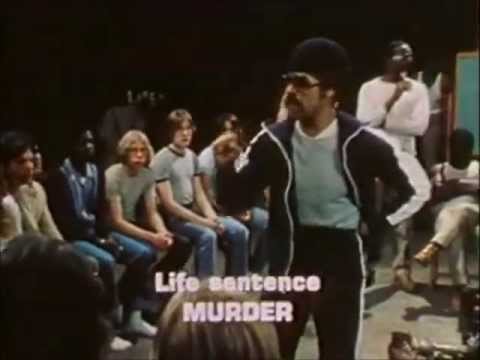
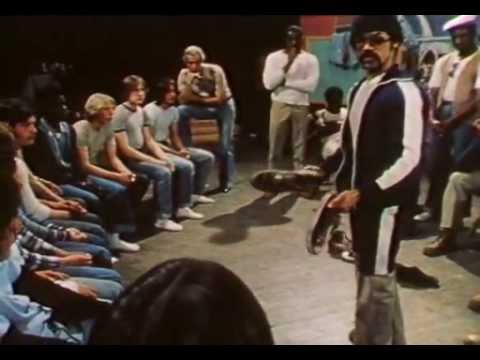
Far more effective than Beyond Scared Straight was the documentary that inspired it, 1978’s Scared Straight!  Scared Straight! followed a group of juvenile delinquents who were taken to a prison in New Jersey.  The film didn’t waste any time with the guards and indeed, the documentary emphasized the fact that the convicts ran the prison and not the guards.  (That’s the sort of thing that Beyond Scared Straight, with all of its “respect my authority” rhetoric, would never have the guts to admit.)  In fact, the documentary really didn’t even reveal much about the teenagers being yelled at, beyond the fact that they all thought that they were tough (or, at least, they did before going into prison) and that all the boys had really thin, barely-there mustaches.

Instead, it’s the prisoners who dominated this documentary.  The majority of them were serving life sentences.  A few of them were murderers.  They were angry, they were loud, and they made it clear that they didn’t like the people listening to them, filming them, or watching them.  They left the audience with no doubt that the prisoners would hate them just as much as they hated the teens in the program.  The prisoners stole everyone’s shoes.  They knocked a stack of cards out of one teen’s hands.  They regularly threatened to break one kid’s neck.  They talked about what it was like to be raped in prison.  They talked about what the teens would have to do in order to survive in prison.  Scared Straight! was narrated by Peter Falk who, early on, informed the audience that they would be hearing some “rough language.”  Falk wasn’t lying.  The prisoners in this film were frightening in a way that their later television counterparts never could be.  One doesn’t have to be a believer in the Scared Straight! program (and you’ve probably noticed by now that I’m not) to find the prisoners to be both compelling and disturbing at the same time.  All of the prisoners were obviously intelligent but, just as obviously, prison had left physical, mental, and emotional scars that would never heal.

Scared Straight! was a huge success, winning both an Oscar and an Emmy.  It led to various follow-up documentary, which explored whether or not the teens had actually been scared straight.  After I watched the original Scared Straight!, I watched Scared Straight: 20 Years Later.  Released in 1999, this documentary was narrated by Danny Glover and featured interviews with the surviving prisoners and program participants.  At the time the documentary was released, almost all of the prisoners had been paroled.  Three of them had died, one from a drug overdose, one from AIDS, and another from a sudden heart attack.  A few of the parolees had been re-arrested and were now back in prison and, just as importantly, a few others had stayed out of trouble.  As for the teens, one had died of AIDS and one was in prison but the rest of the surviving teens claimed that they had all learned from the program.  At least two were involved in the ministry.  The others all had families and steady jobs.  None of them seemed to be particularly well-off financially but, at the same time, the majority of them seemed to be happy.

Of course, Scared Straight: 20 Years Later was filmed over 20 years ago.  Things change.  One of the graduates of the original program, Angelo Speziale, appeared in 20 Years Later, playing with his children and talking about how he had a few minor run-ins with the law immediately after the program.  At the time, Speziale said that was all behind him and he was now just focused on being the best father that he could be.  As I watched Angelo Speziale talk about how perfect his life was, I couldn’t help but think that there was something slightly off about him.  He seemed to be trying too hard to come across as just a regular suburban dad.  In 2011, long after he was interviewed for 20 Years After, Angelo Speziale was arrested and charged with raping and murdering one of his neighbors in 1982, four years after he took part in the Scared Straight program.  Angelo Speziale is now serving a life sentence at the same prison where the original Scared Straight! was filmed.  As for the rest of the participants, who knows?  Hopefully, they’re doing well.

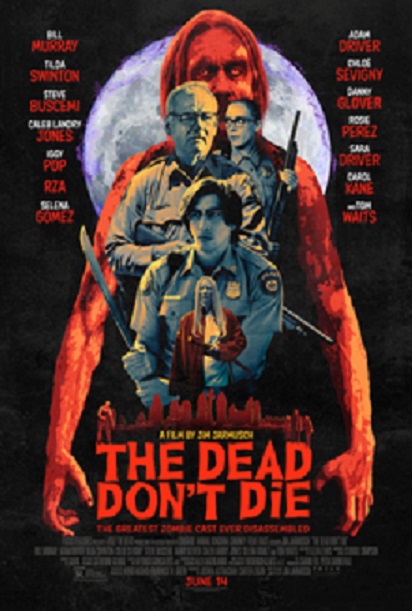
Playing Catch-Up With The Films Of 2019: The Dead Don’t Die (by Jim Jarmusch)


Uh-oh, the dead are rising again.

Seriously, I’ve lost track of how many zombie films I’ve seen over the past ten years.  This last decade was the decade when zombies went mainstream and I have to admit that I have mixed feelings about it.  Zombies have become so overexposed that they’re no longer as scary as they once were.  I mean, there’s even PG-rated zombie movies now!  How the Hell did that happen?  Everyone’s getting in on the act.

There were a brief flurry of excitement when Jim Jarmusch announced that his next film would be a zombie film.  Myself, I was a bit skeptical and the release of a terrible trailer didn’t really help matters.  The fact that the film was full of recognizable names also made me uneasy.  Would this be an actual zombie film or would it just be a bunch of actors slumming in the genre?  The film opened the Cannes Film Festival and received mixed reviews.  By the time it opened in the United States, it seemed as if everyone had forgotten about The Dead Don’t Die.  It was widely chalked up as being one of Jim Jarmusch’s rare misfires, like The Limits of Control.

Last month, I finally watched The Dead Don’t Die and you know what?  It’s a flawed film and yes, there are times when it even becomes an annoying film.  That said, I still kind of liked it.

In The Dead Don’t Die, the Earth’s rotation has been altered, the result of polar fracking.  No one seems to be particularly concerned about it.  Instead, they’re just kind of annoyed by the fact that the sun is now staying up in the sky a bit longer than usual.  Cell phones and watches stop working.  House pets abandon and occasionally attack their owners.  In the rural town of Centerville, the dead rise from their graves and start to eat people.  Whether or not that’s connected to the Earth’s rotation is anyone’s guess.  (I like to think that the whole thing about the Earth’s rotation being altered was Jarmusch’s homage to Night of the Living Dead‘s suggestion that the zombies were the result of space radiation.)

We meet the inhabitant of Centerville.  Zelda (Tilda Swinton) is the enigmatic mortician.  Bobby (Caleb Landry Jones) is the horror movie expert.  Farmer Miller (Steve Buscemi) is the red-hatted farmer who hates everyone.  Zoe (Selena Gomez) is the traveler who is staying at the run-down motel with two friends.  Cliff Robertson (Bill Murray) is the police chief who wants to save everyone but Farmer Miller.  Ronnie (Adam Driver) and Mindy (Chloe Sevigny) are police officers.  They’re all in the middle of a zombie apocalypse but very few of them seem to really be that surprised by any of it.

Throughout the film, we hear Sturgill Simpson singing a wonderful song called The Dead Don’t Die.  Cliff demands to know why the song is always one the radio.  Ronnie replies that it’s the “theme song.”  Ronnie, we discover, has an answer for almost everything.  He explains that he knows what’s going to happen because he’s the only one that “Jim” allowed to read the entire script.  Cliff isn’t happy about that.

That’s the type of film that The Dead Don’t Die is.  It’s an elaborate in-joke, a zombie movie about people who know that they’re in a zombie movie but who are too detached to actually use that information to their advantage.  The script has been written so they have no choice but to do what the script says regardless of whether it makes them happy or not.  It’s a clever conceit, though a bit of a thin one to build a 103-minute movie around.

As I said, the film can occasionally be an endurance test.  Everyone is so deadpan that you actually find yourself getting angry at them.  But, whenever you’re on the verge of giving up, there will be a clever line that will draw you back in or the theme song will start playing again.  Bill Murray and Adam Driver are fun to watch and Driver reminds us that he’s actually a good comedic actor.  (In the year of Marriage Story and Rise of Skywalker, that can be easy to forget.)

It’s a flawed film and definitely not one of Jim Jarmusch’s best.  At the same time, though, The Dead Don’t Die is not as bad as you may have heard.

Lisa’s Far Too Early Oscar Predictions For March


So, it’s that time of the month again!

No, not that time.  I meant, that it’s time for me to share my Oscar predictions.  Here are the usual disclaimers: I haven’t seen any of these films, it’s way too early in the year for me to attempt to do this, this list is all about instinct and wishful thinking, blah blah blah blah.

To see how my thinking has evolved, be sure to check out my predictions for January and February!

Best Picture

A Beautiful Day In The Neighborhood

Call of the Wild

Fair and Blanced

Ford v. Ferrari

Harriet

The Irishman

The Last Black Man in San Francisco

Little Women

Once Upon A Time In Hollywood

Torrance

Best Director

Greta Gerwig for Little Women

Kasi Lemmons for Harriet

Martin Scorsese for The Irishman

Joe Talbot for The Last Black Man In San Francisco

Quentin Tarantino for Once Upon A Time In Hollywood

Best Actor

Ben Affleck in Torrance

Robert De Niro in The Irishman

Tom Hanks in A Beautiful Day In the Neighborhood

John Lithgow in Fair and Balanced

Eddie Murphy in My Name Is Dolemite

Best Actress

Amy Adams in The Woman In The Window

Cynthia Erivo in Harriet

Blake Lively in The Rhythm Section

Saoirse Ronan in Little Women

Afre Woodard in Clemency

Best Supporting Actor

Matt Damon in Ford v Ferrari

Harrison Ford in Call of the Wild

Danny Glover in The Last Black Man in San Francisco

Malcolm McDowell in Fair and Balanced

Brad Pitt in Once Upon A Time In Hollywood

Best Supporting Actress

Laura Dern in Little Women

Tiffany Haddish in The Kitchen

Nicole Kidman in The Goldfinch

Janelle Monae in Harriet

Margot Robbie in Once Upon A Time In Hollywood

A few notes on the predictions:

A Beautiful Day In The Neighborhood is a biopic about Mr. Rogers.  Mr. Rogers is played by Tom Hanks and this sounds like the type of role that could get him his first Oscar nomination since …. well, forever.

Call of the Wild is an adaptation of Jack London’s novel.  It apparently features a CGI wolf.  It also has a potentially good supporting role for Harrison Ford, who has only one previous nomination to his name.

Fair and Balanced is about the history of Fox News and it was directed by Jay Roach.  It sounds terrible but if Vice and Adam McKay could get a nomination just for attacking Dick Cheney, I wouldn’t be surprised if Fair and Balanced manages to do the same.  John Lithgow plays Roger Ailes while the never-nominated Malcolm McDowell plays Rupert Murdoch.

Ford v Ferrari is a film about cars and competition and, if it’s a box office success, it sounds like it could pick up some nominations.  The film stars Christian Bale and Matt Damon.  I placed Damon in the supporting category because he plays Bale’s boss and his character is described as being “eccentric.”

Harriet is a biopic of Harriet Tubman.  It just sounds like it should be an Oscar nominee.  Cynthia Erivo plays Harriet while Janelle Monae …. well, I’m not sure who she plays.  But I’m going to predict she’ll get a supporting actress nomination.  What can I say?  It’s early in the year and supporting actress is always hard to predict.

The Irishman is directed by Martin Scorsese and it has a cast to die for: Robert De Niro, Al Pacino, Joe Pesci, Harvey Keitel, Anna Paquin, Bobby Cannavale, Ray Romano, and more!  The Irishman should also have the full force of Netflix behind it.  My one concern is that the film is apparently going to use CGI to “de-age” its cast so that they can play characters who are in their 30s and 40s.  If it works, it’ll be great.  If it doesn’t, it’s going to be a huge distraction from whatever else is going on in the movie.

The Last Black Man in San Francisco was a big hit at Sundance.  Can Joe Talbot get a nomination for his directorial debut?  Can Danny Glover score his first ever nomination?  We’ll find out!

Little Women is Greta Gerwig’s follow-up to Lady Bird.  Previous adaptations of Little Women have done well at the Oscars.  I’m predicting acting nominations for Saoirse Ronan and Laura Dern but Meryl Steep is also in this film so she’s definitely a possibility as well.  At this point, Meryl could get nominated for appearing in a two-minute video on YouTube.

Once Upon A Time In Hollywood is Quentin Taranino’s 9th film.  Tarantino’s film usually do well with the Oscars and Once Upon A Time In Hollywood is about Hollywood’s favorite subject, itself.  Some would say that Brad Pitt is overdue for an acting win.  Margot Robbie, meanwhile, is a rising star and some feel that she should have won for I, Tonya.

Torrance features Ben Affleck in what sounds like an Oscar bait role.  Affleck plays an alcoholic who ends up coaching a high school basketball team.  Director Gavin O’Connor previously worked wonders with Warrior so Torrance sounds right up his alley.

My Name is Dolemite is a biopic of the comedian and blaxploitation film star, Rudy Ray Moore.  Eddie Murphy plays Moore and the role sounds like it could allow him to display both his comedic and dramatic skills.  In theory, the Academy loves a comeback.

The Woman In The Window is based on an excellent novel and features Amy Adams as an agoraphobic woman who thinks that she may have witnessed a murder.  Adams is definitely a bit overdue for an Oscar.

The Rhythm Section is also based on a novel.  While it’s thriller plot doesn’t sound like typical Oscar bait, the film’s release was moved from February to November.  That would seem to indicate that Paramount has faith in both it and Blake Lively’s lead performance.

Clemency was another hit at Sundance.  Alfre Woodard is an acclaimed actress who has only been twice nominated for an Oscar.  A nomination here would honor not just Woodard’s performance but her entire career.

The Kitchen is a crime drama.  Tiffany Haddish, who is definitely an up-and-coming star, plays the wife of a Irish mobster who, when her husband is sent to prison, takes over his rackets.  It sounds like a good role and there are a lot of people who think Haddish’s performance in Girls Trip was unfairly snubbed.

The Goldfinch is based on a novel by Donna Tartt.  Nicole Kidman plays a wealthy widow who adopts the survivor of a terrorist bomber.  It just sounds like the type of role for which Kidman would be nominated.

In the end, nobody knows anything.  Especially me!  We’ll see how all of this plays out over the next few months!


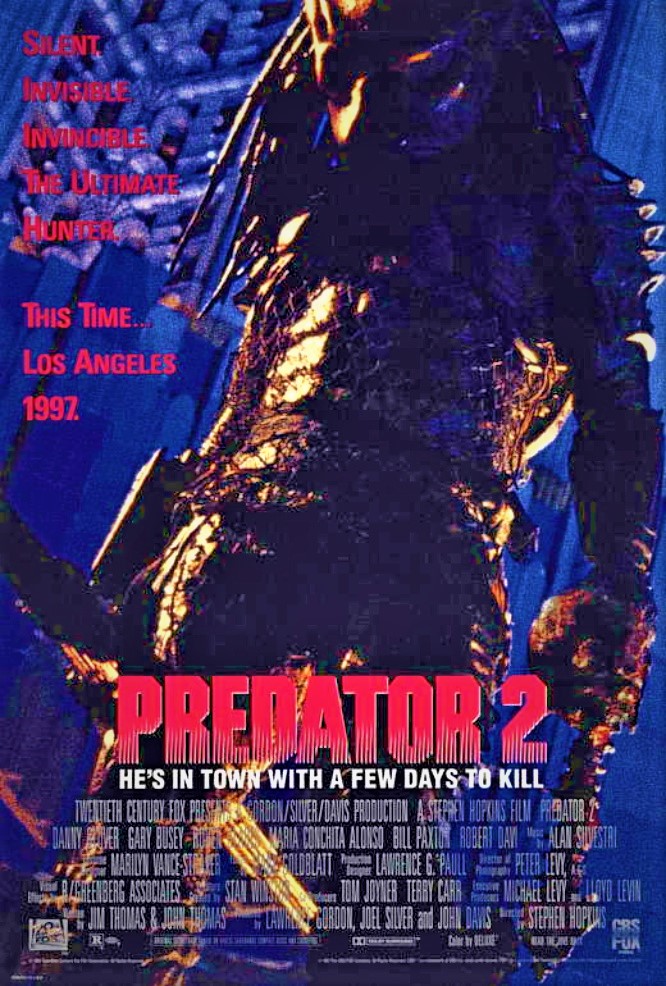
Review: Predator 2 (dir. by Stephen Hopkins)


Predator 2

Like any successful genre film, Predator would remain in the consciousness of filmgoers during the late 80’s. The film was that popular and successful. This also meant that the studio who produced and released the film were more than happy to try and replicate what made them a lot of money.  So, a sequel was quickly greenlit within the halls of 20th Century Fox.

Yet, despite the success the first film was able to garner despite some major production problems, this time around luck wasn’t with Predator 2. The follow-up film would have different production issues than the first but they would affect the film in the long run.

First off, John McTiernan wouldn’t be on-board to direct the sequel. His back-to-back successes with Predator and Die Hard has suddenly made him a coveted action director. His schedule would keep him from directing Predator 2 as his slate was already full with The Hunt for Red October being his next film. In comes Stephen Hopkins to helm the sequel.

Yet, the biggest blow to the production would be not being able to get Arnold Schwarzenegger to return in the role of Dutch, the sole survivor of the elite rescue team from the first film. As with most stars and sequels, this time it would be over a salary dispute that would keep Arnold from returning so in comes Danny Glover to take on the sequel’s lead role.

Now, Danny Glover has more than pulled his own action film weight with two Lethal Weapon films already under his belt, but in terms of on-screen charisma he would be a major downgrade from the presence Schwarzenegger provided the first film. But Glover was more than game to take on the role of Lt. Harrigan of the LAPD as the setting for the sequel moves from the steaming jungle canopy of Central America to the blistering asphalt and concrete jungle of gang-ridden Los Angeles.

This change in location made for an interesting take as it helped establish some world building that showed these Predators have visited Earth many times in the past and not just in the faraway jungles but more towards areas and places rife with conflict. We learn that it hunts those who have survived the conflicts of the area they’re in. Only the strongest for these extraplanetary hunters.

Unlike, the original film, Predator 2 fails in not having a cast of characters that the audience could empathize and root for. This follow-up is mostly about action and even more gore than the first. Even the opening sequence tries to one-up the jungle shooting scene from the first film, yet instead of shock and awe the sequence just seems loud and busy,

Predator 2 suffers from a lot of that as the film feels more than just a tad bit bloated. The Thomas brothers (Jim and John) who wrote the original film return for the sequel but were unable to capture lightning in a bottle a second time around. Where the first film was very minimalist in it’s narrative and plot, the sequel goes for the throw everything in but the kitchen sink approach. We have warring drug gangs, inept police leadership, secretive government agencies with their own agendas.

What does work with Predator 2 and has made it into a cult classic as years passed was the very worldbuilding I mentioned earlier. We learn a bit more of this predator-hunter. While some comes as exposition from Gary Busey’s special agent role Peter Keyes, the rest comes from just seeing the new look of this particular Predator courtesy of special effects master Stan Winston.

The biggest joy for fans of the films comes in an all-too-brief scene showcasing the trophy case of the Predator inside it’s spacecraft. Within this trophy case are the skulls of the prey it’s hunted and killed. One skull in particular would ignite the imagination of scifi action fans worldwide. It’s a skull of a xenomorph from the Alien franchise. It made fans wonder if the two films were part of a larger tapestry. Both properties were owned by 20th Century Fox, so there was a chance and hope that the two meanest and baddest alien creatures on film would crossover together.

It would be many, many years before such a team-up would happen. Even when it finally did fans of the franchises would be let down with what they get after waiting for over a decade.

Predator 2 could be seen as trying to make lightning hit the same patch twice or it could be seen as a quick cash grab by a studio seeing a potential franchise. Both are true and without its two biggest stars, Arnold Schwarzenegger and John McTiernan, returning to reprise their roles for the sequel the film was already behind the eight-ball before filming began.

While the follow-up had some interesting new ideas that helped round out the Predator as one of film’s greatest onscreen villains, it also failed to capitalize on those ideas in a creative way. There’s some good in Predator 2, but way too much baggage and too much bad to have it live up to the success and popularity of the original.

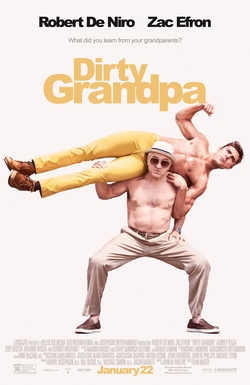
Film Review: Dirty Grandpa (dir by Don Mazer)


dirty_grandpa_teaser_poster

Epix is doing a free preview this weekend so, earlier tonight, I watched Robert De Niro and Zac Efron in Dirty Grandpa.  You may remember Dirty Grandpa as being the film that came out in January and made a ton of movie despite the fact nobody will admit to having seen it.

Myself, I hope that the cast of Dirty Grandpa was paid in cocaine because then, at the very least, I could be assured that they had a better time making the movie than anyone else has had watching it.  The plot, as it is, features De Niro as a widower who is obsessed with getting laid and Efron as his straigher-than-straight grandson who takes him down to Daytona for Spring Break.  Efron is engaged to Meredith (Julianne Hough) who we’re supposed to dislike because of …. reasons, I guess.  The film certainly hates her, even though all she’s trying to do is plan a nice wedding.  De Niro would rather Efron get together with a boring political activist (Zooey Deutch).  Meanwhile, De Niro himself is obsessed with Deutch’s friend, played by Aubrey Plaza.

Anyway, this is one of those films that’s even worse than it sounds.  The pacing is so off that even the scenes that should work fall flat and visually, the film resembles a high quality YouTube video.  The majority of the humor is racist, misogynistic, and homophobic (but, of course, we’re not supposed to notice because the “good” girl is vaguely defined as being a liberal political activist).  Zac Efron, who is really only a credible actor when he’s playing dumb (read into that whatever you want), is miscast as someone who actually has something that’s going on in his life and Aubrey Plaza, one of the most unique comedic performers working today, is almost totally wasted.  Both Zooey Deutch and Julianne Hough struggle within the confines of a script that obsessively hates women.

(By the way, would you believe that the script for this movie was included on the Black List, the annual list of the “best” unproduced scripts in Hollywood?  I would.  Being included on the Black List is perhaps the most overrated honor that Hollywood can provide, seeing as how most Black List films end up sucking.)

As for Robert De Niro, his performance actually isn’t that bad.  But that doesn’t change the fact that he’s Robert freaking De Niro playing a role that could have just as easily been performed by Johnny Knoxville in old age makeup.

Anyway, I watched Dirty Grandpa because I wanted to see if it was as bad as everyone said it was and it was.

Go to Hell, Dirty Grandpa.