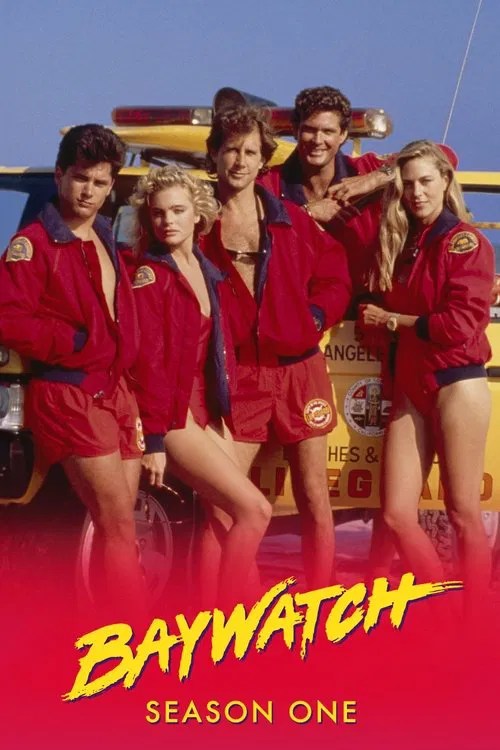
Welcome to Retro Television Reviews, a feature where we review some of our favorite and least favorite shows of the past! On Saturdays, I will be reviewing Baywatch, which ran on NBC and then in syndication from 1989 to 2001. The entire show can be viewed on Tubi.
This week …. it’s times for volleyball!
Episode 1.12 “Armored Car”
(Dir by Michael Ray Rhoades, originally aired on January 5th, 1990)
Another pier on the verge of collapse!
(Seriously, what was the deal with California in the 90s? Why were all the piers on the verge of collapse? Was California just not investing in infrastructure?)
A local businessman is holding a carnival to raise funds to save the pier! Yay! He’s also decided that it would be a smart idea to park an extremely heavy armored car on the edge of the pier so that people can see all the money sitting inside of it. Hey, wait a minute. That seems kind of dumb. Why would anyone be that stupid? The businessman says that the armored car is sitting on the pier so that people can have their picture taken with the money. (It’s five dollars per picture.) That seems like a pretty stupid promotion but, beyond that, is there a reason why it has to be done on a pier that’s on the verge of collapsing?
Needless to say, the pier does start to collapse, which leaves the armored car teetering right on the edge. A little girl is trapped in the car so Eddie and Shauni — despite it being their off-day — jump into the back of the car and save the little girl. But then the door slams shut and the armored car falls into the ocean below. Eddie cracks several ribs. Shauni declares her love for him as they wait to be rescued.
Have no fear, they are rescued. This is one of those Baywatch episodes where the emphasis is on a bunch of people working together as a team to save not only two lives but also all the money in the armored car. This episode celebrates first responders, many of whom seem to be playing themselves. Most of the heroes in this episode have never been seen on the show before and will probably never be seen again but they still come together to accomplish the impossible. If you ask David Hasselhoff, episodes like this are what Baywatch was all about. The Hoff may have a point, though I think the red swimsuits probably had more to do with the show’s eventual popularity than the earnest initial intentions.
One person who is not working to rescue Eddie and Shauni is Jill. Jill is on the other side of the beach, taking part in a volleyball tournament. Her partner is Trevor, the arrogant Australian lifeguard and her motivation for playing is to defeat her ex-boyfriend Chris Barron (Jon Lindstrom). Jill aggravates an old shoulder injury while playing but she refuses to withdraw from the tournament because defeating an ex is totally worth a serious injury that could cause her to lose her job as a lifeguard. Needless to say, Jill and Trevor win the tournament. There’s a lot of slow motion volley ball scenes, which would probably have been more effective if not for the weird faces that Jill made whenever she had to spike the ball. Still, seeing as how Jill is going to get eaten by a shark in just a few more episodes, we should probably be happy that she got to have a moment of triumph.
This was an average Baywatch episode. If I cared about Jill and Trevor, their storyline would have perhaps been more effective. As for the armored car stuff, it would have been more effective if the reason for the car being on the pier wasn’t so dumb to begin with.
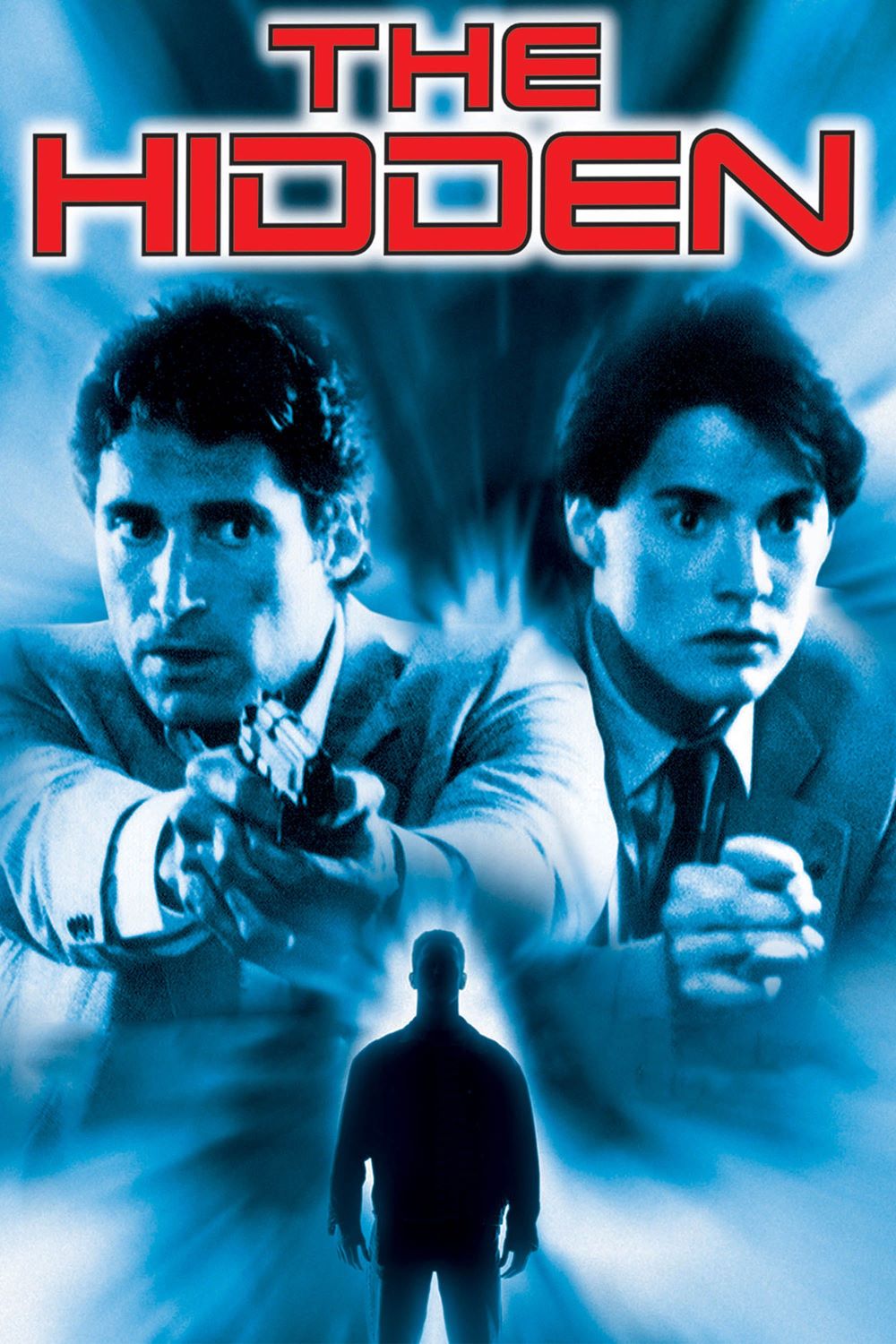
The Hidden is a guilty pleasure from 1987, a sci-fi action romp that barrels into B-movie territory with zero brakes and maximum glee. It’s the kind of flick you stash away for those late-night binges when no one’s judging.
Right from the explosive opener, a squeaky-clean bank clerk named Jack DeVries flips the script. He storms a Wells Fargo branch like a one-man apocalypse, gunning down guards and peeling out in a stolen Ferrari for a high-octane chase that leaves LAPD scrambling. Cops riddle him with bullets in a spectacular crash, but as he flatlines in the hospital, out slithers a pulsating alien parasite—a glowing, tentacled slug that prizes luxury cars, blaring rock anthems, and indiscriminate slaughter above all else.
It wastes no time hopping into fresh meat, turning an arms dealer into a walking arsenal, then a sultry stripper who turns deadly seduction into a bloodbath. Cue Detective Tom Beck, Michael Nouri’s world-weary LAPD vet with divorce papers and a pint-sized daughter sharpening his edges. He teams up with the enigmatic FBI agent Lloyd Gallagher, Kyle MacLachlan dialing up the eerie charm like he’s fresh off Blue Velvet. Gallagher’s no standard G-man—he skips the coffee, eyes suspects like prey, and knows way too much about this interstellar joykiller. Beck’s gut screams “weirdo,” but with bodies piling up, he’s along for the parasitic ride. Their mismatched partnership becomes the beating heart of this wild chase.
Diving deeper into why The Hidden earns its guilty pleasure crown, it’s all about that unapologetic mash-up of genres. Think Lethal Weapon‘s buddy-cop fireworks fused with The Thing‘s body-horror paranoia, wrapped in a low-budget package that punches way above its weight.
The alien doesn’t just possess—it corrupts with cartoonish vice. It blasts Metallica’s Master of Puppets while mowing down traffic, guzzles ice cream cones mid-rampage, and even puppeteers a German Shepherd into a jogger-shredding beast. Hosts shrug off shotgun blasts, car wrecks, and point-blank headshots, laughing through the pain like invincible demons. This cranks the tension during chases from neon-lit strip joints to posh art auctions gone haywire.
Picture Brenda Lee, played with fierce allure by Claudia Christian, grinding on a mark before ventilating him and trading bullets with highway patrol—it’s equal parts sexy, scary, and stupid fun. Then there’s the mannequin factory showdown, a claustrophobic bullet ballet with plastic dummies exploding in slow-mo glory. Director Jack Sholder, hot off A Nightmare on Elm Street Part 2, keeps the pedal floored across 98 taut minutes. He blends practical effects that ooze tangible grossness—no lazy CGI, just squelching tentacles and slime trails that still unsettle on modern screens. The creature’s big reveal, bursting from a gut in a hospital bed? Pure visceral nightmare fuel that lingers like bad takeout.
But let’s talk about the real magic: Nouri and MacLachlan’s chemistry, which transforms potential cheese into something oddly heartfelt. Beck is the everyman anchor—tough exterior hiding a soft spot for his ex and kid. She clocks Gallagher’s off vibes immediately, hiding behind Dad during their first meet-cute awkwardness. Gallagher’s the alien hunter in human skin, pursuing his nemesis from the galaxy’s edge to Earth. MacLachlan nails the wide-eyed alien tourist act: fumbling forks at pizza joints, blanking on human etiquette, yet unleashing a phaser-like zapper with cold precision.
Their dialogue zings with natural friction—Beck barking “What the hell are you?” while Gallagher parries with vague cosmic lore. It builds to warehouse confessions amid flying lead. It’s 48 Hrs. with extraterrestrials, punctuated by hilarious side beats: Beck’s partner Cliff Willis (Ed O’Ross) biting the dust early, precinct captain Ed Malvane (Clarence Felder) getting briefly slimed into a foul-mouthed tyrant, even a senator’s rally turning into invasion bait. The supporting roster shines without stealing thunder—Christian’s tragic dancer, Richard Brooks’ scumbag john. They all flesh out LA’s underbelly as the perfect playground for alien anarchy.
Layer on the sly socio-satire, and The Hidden reveals sneaky smarts beneath the schlock. This parasite’s a yuppie id unleashed, embodying Reagan-era ’80s gluttony: crashing Porsches, bankrolling hooker sprees, amassing arsenals. All while plotting to hijack presidential hopeful Senator Holt for an Oval Office coup that’d summon its mothership armada. It’s a gleeful middle finger to excess, with the slug reveling in what humans suppress—pure hedonistic rampage from Malibu beaches to political podiums. Sholder doesn’t belabor the point; he lets the absurdity sell it. Like the arms dealer’s arsenal haul or the dog’s park massacre underscoring unchecked impulses.
Sound design throbs with synth-wave synths and guitar riffs that propel every stunt. Michael Convertino’s score swells dramatically for emotional beats. Dialogue veers from pulpy gold (“Pain? What’s that?”) to poignant, especially Gallagher schooling Beck on alien resilience versus human spirit.
Flaws? Sure—the third act rushes to a flamethrower climax and bittersweet farewell. Some effects betray the budget in brighter scenes, and plot holes gape if you squint (how’d the slug learn English so fast?). Yet it owns every imperfection, turning cheese into charm.
Ultimately, The Hidden endures as peak cult guilty pleasure, outshining flashier ’80s peers by blending brains, brawn, and balls-to-the-wall entertainment. It foreshadows Men in Black‘s fish-out-of-water agents and Venom‘s symbiote chaos. All while delivering practical FX wizardry that CGI eras envy. Nouri’s magnetic lead turn should’ve rocketed him higher; MacLachlan’s proto-Lynchian quirkiness fits like a glove. Stream it on whatever dusty platform hosts it, or snag a VHS for authenticity—pair with beer and zero expectations for two hours of adrenaline-spiked joy.
The finale’s sacrificial gut-punch lands because you’ve bonded with these oddballs, capped by Beck’s wry nod to humanity’s messy soul. It’s dumb when it wants, deep when it surprises, always a rush. Slug-slinging sci-fi doesn’t get guiltier or greater. Dive in, emerge grinning, no regrets.
Directed by Martin Scorsese, 1985’s After Hours opens in an office. This isn’t the type of office that one might expect a Scorsese movie to open with. It’s not a wild, hedonistic playground like the office in The Wolf of Wall Street. Nor is it a place where an aging man with connections keeps his eye on the business for his friends back home, like Ace Rothstein’s office in Casino. Instead, it’s a boring and anonymous office, one that is full of boring and anonymous people. Scorsese’s camera moves around the office almost frantically, as if it’s as trapped as the people who work there.
Paul Hackett (Griffin Dunne) works in the office, at a job that bores him but presumably pays him enough to live in New York. Paul is not a typical Scorsese protagonist. He’s not a fast-talker or a fearsome fighter. He’s not an artist consumed by his own passion or an amoral figure eager to tell his own story. Instead, he’s just a guy who wears a tie to work and who spends his day doing data entry. He’s a New Yorker but he doesn’t seem to really know the city. (He certainly doesn’t know how much it costs to ride the subway.) He stays in his protected world, even though it doesn’t seem satisfy him. Paul Hackett is not Travis Bickle. Instead, Paul is one of the guys who would get into Travis’s cab and, after spending the drive listening to Travis talk about how a storm needs to wash away all of New York’s sin, swear that he will never again take another taxi in New York.
One day, after work, Paul has a chance meeting with a seemingly shy woman named Marcy (Rosanna Arquette). Marcy lives in SoHo, with an artist named Kiki (Linda Fiorentino) who sells plaster-of-Paris paperweights that are made to look like bagels. Marcy gives Paul her number and eventually, Paul ends up traveling to SoHo. He takes a taxi and, while the driver is not Travis Bickle, he’s still not amused when Paul’s last twenty dollar bill blows out the window of the cab.
Paul’s trip to SoHo doesn’t goes as he planned. Kiki is not impressed with him. Marcy tells him disturbing stories that may or may not be true while a search through the apartment (not cool, Paul!) leads Paul to suspect that Marcy might have disfiguring burn scars. Paul decides to end the date but he then discovers that he doesn’t have enough change on him to take the subway home. As Paul attempts to escape SoHo, he meets a collection of strange people and finds himself being hunted by a mob that is convinced that he’s a burglar. Teri Garr plays a sinister waitress with a beehive hairdo and an apartment that is full of mousetraps. Catherine O’Hara chases Paul in an ice cream truck. Cheech and Chong play two burglars who randomly show up through the film. John Heard plays a bartender who appears to be helpful but who also has his own connection to Marcy. Even Martin Scorsese appears, holding a spotlight while a bunch of punks attempt to forcibly give Paul a mohawk. The more that Paul attempts to escape SoHo, the more trapped he becomes.
Martin Scorsese directed After Hours at a time when he was still struggling to get his adaptation of The Last Temptation of Christ into production. If Paul feels trapped by SoHo, Scorsese felt trapped by Hollywood. After Hours is one of the most nightmarish comedies ever made. It’s easy to laugh at Paul desperately hiding in the shadows from Catherine O’Hara driving an ice cream truck but, at the same time, it’s impossible not to relate to Paul’s horror as he continually finds himself returning again and again to the same ominous locations. In many scenes, he resembles a man being hunted by torch-wielding villagers in an old Universal horror film, running through the shadows while villager after villager takes to the streets. Paul’s a stranger in a strange part of the city and he has absolutely no way to get home. I think everyone’s had that dream at least once.
Paul is not written to be a particularly deep character. He’s just a somewhat shallow office drone who wanted to get laid and now just wants to go home. Fortunately, he’s played by Griffin Dunne, who is likable enough that the viewer is willing to stick with Paul even after Paul makes some very questionable decisions and does a few things that make him a bit less than sympathetic. Dunne and John Heard keep the film grounded in reality, which allows Rosanne Arquette, Linda Fiorentino, Catherine O’Hara, and especially Teri Garr to totally play up the bizarre quirks of their character. Teri Garr especially does a good job in this film, revealing a rather frightening side of the type of quirky eccentric that she usually played.
Scorsese’s sense of humor has been evident in almost all of his films but he still doesn’t get enough credit for his ability to direct comedy. (One need only compare After Hours to one of Brian De Palma’s “comedies” to see just how adroitly Scorsese mixes laughs and horror.) After Hours is one of Scorsese’s more underrated films and it’s one that everyone should see. After Hours is a comedy of anxiety. I laughed while I watched it, even while my heart was racing.
It made me sad when I saw that writer/director Jim Abrahams had passed away on November 26, 2024 at 80 years of age. Growing up in the 1980’s, Mr. Abrahams is responsible for some of my favorite comedies. AIRPLANE, TOP SECRET, and THE NAKED GUN would not exist without Jim Abrahams. As much as I love all of those movies, my personal favorite film that Jim Abrahams co-directed is RUTHLESS PEOPLE. I remember when our family rented this film and watched it in the ‘80’s. We thought it was so funny. I specifically remember my mom laughing out loud on multiple occasions as the ridiculous scenario played out. That was a fun movie night in the Crain household.
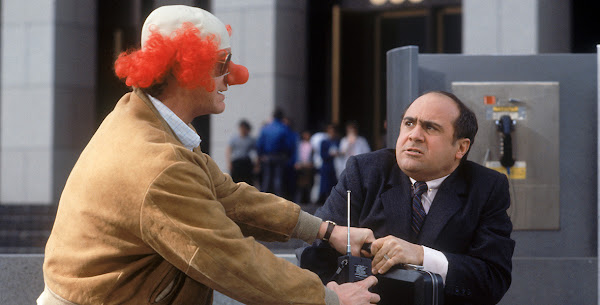
RUTHLESS PEOPLE is about a rich businessman named Sam Stone (Danny DeVito) who truly hates his wife Barbara (Bette Midler), and hatches a plan to kill her so he can inherit her money. Unfortunately he runs into a couple of problems. First, his mistress Carol (Anita Morris) knows about the plan, so she and her dimwitted boy toy Earl (Bill Pullman) want to film Sam dumping his wife’s body so they can blackmail him for millions. Second, before Sam can execute his plan, Barbara is kidnapped and held for a ransom of $500,000 by Ken and Sandy Kressler (Judge Reinhold and Helen Slater). It seems that Sam stole Sandy’s idea for the spandex miniskirt, screwed them out of millions with a handshake deal, and then kept the money for himself. This seems like an answer to prayer at first for Sam because they threaten to kill Barbara if he doesn’t meet their needs or if he calls the police or the media. After saying no to their demands, and then immediately calling the police and the news, Sam realizes that they don’t want to kill her when they keep coming back with lower demands. Sandy tells Barbara that Sam refuses to pay even $10,000 for her safe return. Eventually the kidnappers and Barbara join together to try to take the unfaithful and unethical Sam for everything he’s worth!!
RUTHLESS PEOPLE is one of my favorite comedies of the 1980’s. It has such a great cast. Danny DeVito and Bill Pullman are especially hilarious and have some of the film’s best lines. At the time the movie came out in 1986, DeVito was already established as a master of comedy, so Pullman’s performance as Earl, the dumbass Sonny Crockett wannabe, was the real revelation to me. Pullman made his film debut in RUTHLESS PEOPLE, and I never see him to this day that I don’t think of his character Earl’s excitement over the prospect of his newfound blackmail money:
“And then we’re off, to Haiti!”
“It’s Tahiti, you moron!”
One of the most interesting things about RUTHLESS PEOPLE is just how different it is from the directing trio’s (Zucker / Abrahams / Zucker) other popular films like THE KENTUCKY FRIED MOVIE and AIRPLANE. Those films are based on non-stop visual and verbal gags. I love those films, but this is quite different. The comedy of RUTHLESS PEOPLE is based on the story itself, which is a comedy of confusion, coincidence, and character. I know it’s awesome because I still think of the film often. “Give the bag to bozo” and “a little poke in the whiskers” are phrases I’ll remember up to the point I go to my grave.
Even though the film is almost 40 years old, if you’re looking for a laugh, I don’t think you can do much better than RUTHLESS PEOPLE.
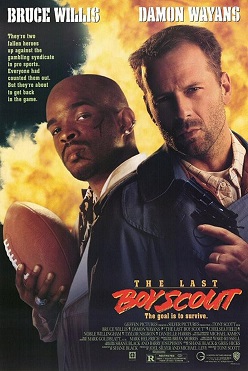
Like the majority of the films that have been written and/or directed by Shane Black, The Last Boy Scout takes place in December. It’s not quite as Christmas-y as some of Black’s other films. I think that I may have spotted a few decorations in the background of some of the scenes. And there’s a scene where private investigator Joe Hallenbeck (Bruce Willis) discovers that his daughter (played by a very young Danielle Harris) has been drawing pictures of “Satan Claus.” Otherwise, there’s not a lot of Christmas to be found in this December-set film and perhaps that’s for the best. Seriously, this movie is violent! Not even the comedic relief characters are safe from getting a bullet to the head. This is a film that actually begins with a football player shooting three other players during a game and then saying, “Ain’t life a bitch,” before shooting himself in the head.
The film’s plot isn’t always easy to follow. Joe is a private investigator who drinks too much and whose partner has just been blown up in front of his house. (His partner was also sleeping with Joe’s wife so guess who is now a suspect!) Joe is also hired to act as a bodyguard for a stripper named Cory (Halle Berry). Cory is dating Jimmy Dix (Damon Wayans), a former quarterback who used to be Joe’s hero. Then Jimmy got kicked out of the league for gambling and Joe stopped watching football. Cory says that she has a tape recording that will get Joe back into the NFL. But then, Cory is brutally gunned down in the middle of the street and the tape is accidentally destroyed by Joe’s crappy tape player. It’s time for Jimmy and Joe to team up, trade one liners, and uncover the conspiracy.
It all links back to the efforts of football team owner Shelley Marcuse (Noble Willingham) to legalize gambling. Senator Calvin Baynard (Chelcie Ross) is standing in Marcuse’s way because Marcuse didn’t offer him a big enough bribe. Marcuse is planning to assassinate the senator and he’s going to frame Joe for the crime because, in an amazing coincidence, Joe used to be a secret service agent until he caught Senator Baynard torturing a sex worker. Of course, the actual assassination will be carried out by Marcuse’s chief henchman, Milo (Taylor Negron, who is absolutely chilling in the role). Milo rarely shows emotion and always refers to everyone by their formal name. (Joe is called Joseph. Jimmy is called James.) Milo is also a total sociopath, one who will shoot anyone in the head without a second thought.
Shane Black, who is a genius regardless of what I may think of this particular film, has said that he wrote The Last Boy Scout after he broke up with a longtime girlfriend and he was suffering from depression. Disillusionment hangs over almost every frame of the movie. Joe did the right thing and lost his career. Jimmy lost his family on the same night that he played the best game of his career. The Senator is opposed to Marcuse’s scheme solely because he’s not getting enough of a cut. Marcuse is a respected businessman who thinks little of killing strangers. Jimmy and Joe are heroes not because they’re particularly good but because everyone else around them is just so bad. This is also very much a movie about guys doing guy things. I watched it with my brother-in-law and I have to say that I think he got a bit more out of the film than I did. Then again, I also think my sister Megan also got more out of it than I did so maybe I just wasn’t in the mood to watch so many people get shot in the head. It happens.
The Last Boy Scout was directed by Tony Scott so, no matter what else you might want to say about it, the movie looks great. Willis seems a bit bored with the film and Wayans sometimes struggles with the more dramatic moments. In many ways, the film feels like a precursor to Shane Black’s The New Guys, though Willis and Wayans never have the same chemistry as Russell Crowe and Ryan Gosling did in that underrated film. However, The Last Boy Scout’s action moves quickly and the screen is always full of neon lights. It’s a well-made action movie though, unlike Lethal Weapon, Die Hard, and The Nice Guys, it’s not one that really sticks around in your head after the end credits roll. Personally, I think it needed a little more holiday spirit.
 Through the Shattered Lens